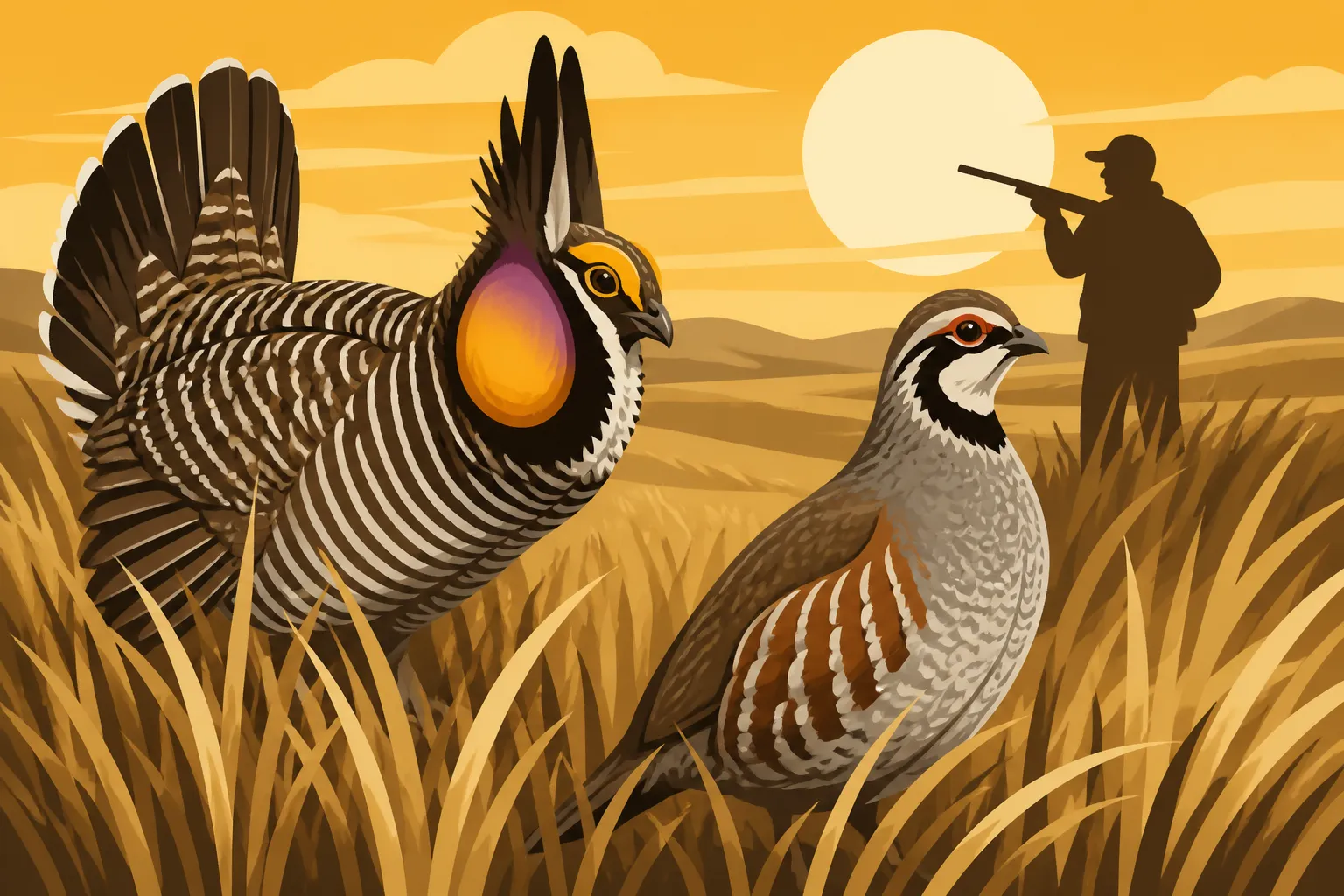
South Dakota Prairie Grouse and Partridge
For many hunters, South Dakota is synonymous with pheasants, and rightly so. But if you’ve spent any time chasing those wily roosters, you know there’s a whole other world of upland birds out there that offer a completely different, often more challenging, and deeply rewarding experience. This guide will walk you through everything you need to know about hunting South Dakota's prairie grouse and partridge, from identifying them in the field to finding their prime habitats and the tactics needed to put them in your vest.
Understanding South Dakota's Prairie Grouse Species
While pheasants dominate the conversations, South Dakota is also home to two incredible species of prairie grouse: the sharp-tailed grouse and the greater prairie chicken. These birds offer a true taste of wild, open-country upland hunting. They're not found in the same dense cover as pheasants, and their habits demand a keen eye and a willingness to cover serious ground. Many hunters find themselves utterly captivated by the unique challenge these native birds present.
Sharp-tailed Grouse: Identification and Behavior
Sharp-tailed grouse, often affectionately called "sharptails," are perhaps the most widespread of the prairie grouse in South Dakota. They're typically found in the western two-thirds of the state, particularly in areas with a mix of native grasslands, sagebrush, and light timber. Identifying them in the field is usually pretty straightforward: they're a medium-sized game bird, larger than a pheasant but smaller than a turkey, with a beautiful mottled brown and white plumage that blends seamlessly with their prairie environment.
What really sets them apart, and gives them their name, is their tail. It's relatively short, pointed, and made up of stiff, dark feathers with white outer edges. When they flush, they often let out a cackle and fly with a distinctive "whirring" wing beat, often leveling out quickly and gliding long distances, making for some truly challenging shots. Their flight pattern is much more direct than a pheasant's explosive, vertical burst, and they often pitch down into the next swale or rise, forcing you to mark them carefully if you hope for a second chance. They tend to hold a bit better for a pointing dog than prairie chickens do, though both can be notoriously cagey.
Sharp-tailed grouse are primarily ground feeders, favoring seeds, insects, and berries. They often gather in larger coveys, especially outside of the breeding season, which can make for some exciting flushes. You'll find them gravitating towards rolling hills, native pastures, and even the edges of agricultural fields, but always with an emphasis on vast, open grasslands. Their adaptability makes them a bit more predictable than prairie chickens, especially once you start to understand their daily patterns of feeding and loafing.
Greater Prairie Chickens: Distinguishing Features and Habitat Preferences
The greater prairie chicken is a bird steeped in history, a true icon of the tallgrass prairie. In South Dakota, their population is more restricted than sharptails, primarily found in the central and eastern parts of the state where remnant tallgrass prairies persist, often intermixed with agricultural lands. They are slightly larger and darker than sharp-tailed grouse, with more distinct barring on their underparts. The most notable distinguishing feature on a prairie chicken is their shorter, rounded tail, which lacks the pointed shape of the sharptail. When they flush, their flight is strong and direct, much like a domestic chicken, but surprisingly fast.
Prairie chickens are a bit more particular about their habitat than sharptails. They absolutely thrive in extensive tracts of native tallgrass prairie, particularly those with good nesting and brood-rearing cover. You'll often find them near undisturbed grasslands adjacent to cornfields or other grain crops, which provide a reliable food source. Unlike sharptails, they are less fond of brushy cover and prefer the wide-open expanse, making them feel like truly wild birds. Their preference for these specific habitats means knowing where to look is half the battle, and when you find them, you know you’re in a special place.
Hunting prairie chickens requires a lot of legwork and patience. They are known for being very wary, often flushing far out of gun range. They also have a habit of running, rather than flushing, especially if they sense pressure. This is where a good dog and a well-planned approach become absolutely critical. Often, you'll hear them before you see them, their distinct clucking and cackling sounds carrying across the vast prairie. If you can anticipate their movements and work the terrain to your advantage, a successful prairie chicken hunt is an unforgettable achievement.
Lekking Behavior and Spring Scouting
One of the most fascinating aspects of prairie grouse behavior, particularly for both sharp-tailed grouse and greater prairie chickens, is their elaborate spring mating ritual known as "lekking." Leks are traditional display grounds where male grouse gather at dawn and dusk during the spring (typically April and May) to perform dazzling courtship displays. These areas are usually elevated, open spots in the prairie that offer good visibility for both the displaying males and the hens observing them.
On these leks, the males puff up their feathers, stamp their feet, and emit unique vocalizations – a guttural "boom" from prairie chickens (using inflatable orange air sacs on their necks) and a more cooing sound from sharp-tails. They engage in sparring matches, all designed to attract a mate. While you can't hunt during the spring lekking season, these sites are absolutely invaluable for scouting. Locating active leks in the spring can give you a massive head start for the fall hunting season, as these birds tend to stay in the general vicinity of their breeding grounds.
Visiting leks in the spring is not just for scouting; it's an incredible wildlife viewing opportunity and a chance to truly connect with the natural rhythms of the prairie. You'll need to be stealthy, arriving before sunrise and setting up in a blind or concealed spot to avoid disturbing them. This kind of early reconnaissance, sometimes aided by detailed maps from resources like GoHunt, can dramatically increase your chances of finding birds when the season opens. Understanding where these crucial breeding grounds are helps you anticipate where birds will be throughout the year, making your fall hunts far more productive.
The Elusive Hungarian Partridge: A Different Kind of Challenge
Beyond the glamour of the grouse, South Dakota also offers fantastic opportunities for hunting Hungarian partridge, often simply called "Huns." These diminutive but feisty birds provide a fast-paced hunt that can be incredibly rewarding. They are often overlooked by hunters focused solely on pheasants or grouse, but those who discover the joy of hunting Huns rarely look back.
Identifying Huns in the Field
Hungarian partridge are small, plump game birds, noticeably smaller than pheasants or grouse. Their plumage is a beautiful, subtle mix of gray, brown, and rufous, with a distinctive reddish-brown patch on their face and throat. You'll also notice prominent chestnut-barred flanks and a short, rust-colored tail that flashes when they flush. Their flight is explosive and rapid, often accompanied by a high-pitched, whirring sound, making them one of the fastest flushing birds on the prairie.
When a covey of Huns bursts into the air, they don't typically fly very far, usually pitching down within a few hundred yards. However, their speed and erratic flight path can make them incredibly challenging targets. They fly low to the ground and disperse quickly, often disappearing into what seems like minimal cover. This characteristic flight behavior and their small size mean hunters need to be quick on the draw and accurate with their shots. They are a genuinely sporting bird, demanding precision and fast reflexes.
Unlike pheasants that prefer heavy cover, or grouse that dominate vast grasslands, Huns tend to be found in agricultural areas, particularly near grain fields, hayfields, and along fencelines and grassy ditches. They are often found in areas that pheasants might frequent, but they prefer a bit more open space within those agricultural landscapes. This overlap means you might even encounter them while pheasant hunting, adding an exciting bonus to your day.
Covey Dynamics and Flushing Habits
Hungarian partridge are classic covey birds, almost always found in groups. These coveys can range from just a few birds to upwards of twenty or more, especially early in the season. They are incredibly social and stick together tightly, making a covey flush a thrilling, if sometimes overwhelming, experience. When disturbed, the entire covey will often explode into the air simultaneously, creating a dizzying array of targets.
One of the most frustrating, yet endearing, habits of Huns is their tendency to run. Much like prairie chickens, if they sense pressure, they will often sprint ahead of a dog or hunter, rather than flushing. This running behavior makes getting a good point or a close flush challenging, and it requires a methodical, patient approach. You might walk a significant distance, thinking you’re closing in on a covey, only for them to flush far out of range because they've been running for yards ahead of you.
However, once a covey has been flushed and scatters, the individual birds often hold much tighter. This presents an excellent opportunity to work your dog and pick off singles or doubles. The trick is to mark exactly where they land and then slowly, deliberately, work those areas. This "scatter" technique is often the most productive way to put Huns in the bag, turning a frustrating covey flush into a rewarding series of single bird flushes. Understanding these dynamics is key to success when Hunting Pheasants Without a Dog or even with one, as Huns require a different touch.
Preferred Terrain and Cover
Hungarian partridge thrive in specific types of habitat. You'll primarily find them in agricultural landscapes, particularly those with a mosaic of small grain fields (like wheat, barley, or oats), fallow fields, grassy field margins, and shelterbelts. They appreciate the edges and transitions of these areas, using the cover for roosting and protection, and the fields for feeding. Unlike pheasants that can dive into dense cattails or heavy CRP, Huns prefer more open, yet still protective, cover.
Look for them along drainage ditches, fencelines grown up with grass and weeds, abandoned farmsteads, and the edges of hayfields. They are particularly fond of areas where fields meet native grassland, offering them a balance of food and refuge. In South Dakota, this often means focusing your efforts in the eastern and central parts of the state, where agriculture and suitable grassy cover intertwine. They don’t usually venture deep into vast, unbroken prairie like the grouse, nor do they seek out the heaviest cover like pheasants.
Their preference for these "edge" habitats means that finding Huns often involves walking a lot of linear cover. Think about long fencelines, strips of grass between fields, or the perimeter of large stubble fields. These areas provide both travel corridors and places to hide. Don't be afraid to hunt seemingly thin cover; Huns can hide remarkably well in short grass. Using a mapping app like the one offered by GoHunt to identify these transitional zones and property lines can significantly narrow down your search and maximize your time in productive areas.
Prime Habitats and Where to Find Them
Understanding the general range of each bird is one thing, but pinpointing the exact spots on the ground where you’ll actually find them is the real challenge, and the true art of upland bird hunting. South Dakota’s vast and varied landscape offers distinct pockets for each species, and knowing what to look for can save you countless miles of unproductive walking.
Key Prairie Grouse Strongholds
For sharp-tailed grouse, the western two-thirds of South Dakota is your best bet. This includes much of the West River country, characterized by rolling mixed-grass prairie, sagebrush flats, and the occasional cedar breaks or deciduous draws. Counties like Harding, Perkins, Corson, Ziebach, Dewey, and Meade often hold good numbers of sharptails. Look for large expanses of native pasture that haven't been heavily grazed or broken up by agriculture. The key is to find that untouched, natural prairie that offers both food and cover.
Greater prairie chickens, on the other hand, are more concentrated in the central and eastern parts of the state, specifically where significant tracts of tallgrass prairie still exist, often interspersed with row crops. Think of counties around the Fort Pierre National Grassland or the Glacial Lakes region further east, although their populations can be spottier. Jones, Lyman, Stanley, and Sully counties might offer opportunities, but extensive scouting and local knowledge are crucial. When you're Scouting South Dakota Public Ground Before the Season, pay close attention to the grass types and the presence of adjacent grain fields.
Both species benefit from undisturbed grasslands. CRP (Conservation Reserve Program) fields that have been in grass for several years can be excellent, as they provide critical nesting and escape cover. The edges of large food plots and cornfields can also draw them in for feeding, especially during the colder months. Don't overlook gently rolling hills that offer a vantage point for the birds; they love to sit on the rises and observe their surroundings, making them easier to spot from a distance if you're glassing.
Top Hungarian Partridge Areas
Hungarian partridge are predominantly found in the eastern half of South Dakota, where agriculture is more prevalent, particularly in the northern and northeastern regions. Counties like McPherson, Edmunds, Faulk, Brown, and Spink can be excellent choices. These areas feature a patchwork of small grain fields, hayfields, and ample grassy edges along roads and fencelines. The key is finding that mix of cultivated land and undisturbed, waist-high grassy cover.
Unlike grouse that might inhabit vast, uninterrupted tracts of prairie, Huns prefer a more fragmented landscape. Think farm country with plenty of small grain stubble, sunflower fields, and diverse field borders. They also thrive in areas with good road ditch habitat—those often-overlooked strips of grass and weeds alongside county roads can be prime spots. Their affinity for these specific edge habitats means you often won't find them deep in vast cattail sloughs like pheasants, but rather along the transition zones where agriculture meets more sparse, grassy cover.
When you're looking for Huns, consider areas with light snow cover. Their tracks are easily visible, and they often seek out the sunniest, most protected spots. This can be a real advantage in the late season. Don't be afraid to knock on doors and ask for permission on private land, as many landowners are happy to allow partridge hunting, especially if you emphasize you're not targeting pheasants. Always prioritize good landowner relations, as this is often the key to finding consistent Hun hunting.
Using Public and Private Land Resources
South Dakota offers extensive public hunting opportunities, many of which hold prairie grouse and partridge. The most well-known are the Walk-In Areas (WIAs) and Game Production Areas (GPAs). These lands, designated by the South Dakota Game, Fish and Parks (GFP), are marked with distinctive yellow signs. The GFP's Public Hunting Atlas, available online and through their app, is an indispensable tool for locating these areas. It provides detailed maps, showing property boundaries and land ownership, which is crucial for staying legal.
When researching South Dakota Walk-In Areas Explained, you'll quickly learn that these areas often consist of private land enrolled in a public access program, offering fantastic hunting. While many WIAs are managed for pheasant habitat, plenty also offer prime conditions for grouse and Huns, especially those with native grasslands or extensive field edges. National Grasslands, such as the Fort Pierre and Grand River National Grasslands, are also phenomenal public land options for prairie grouse. These vast federal lands offer hundreds of thousands of acres of contiguous habitat, perfect for covering a lot of ground and finding those elusive birds.
For private land, getting permission is often your best bet, especially for Huns. Don't be shy about asking farmers and ranchers. Many are receptive to ethical hunters, particularly if you offer to help with chores or share your harvest. Tools like GoHunt's mapping system can be invaluable here, allowing you to identify landowners, property boundaries, and potential contact information, making those permission requests much easier. Remember, gaining permission is a privilege, so always be respectful, leave no trace, and follow any specific rules the landowner might have.
Seasons, Regulations, and Licensing for Upland Birds
Hunting in South Dakota requires a solid understanding of the state's regulations, which can differ slightly for various upland species. It's crucial to be well-versed in these rules before you ever step foot in the field to ensure a safe, legal, and enjoyable hunt. The South Dakota Game, Fish and Parks (GFP) publishes a comprehensive hunting handbook annually that should be your first point of reference.
General Upland Bird Season Dates
South Dakota's upland bird seasons typically kick off in the fall, generally starting with pheasants in mid-October. However, seasons for prairie grouse (sharp-tailed grouse and greater prairie chicken) and Hungarian partridge usually open earlier, often in mid-September. This earlier start offers a unique opportunity to chase these birds before the pheasant opener crowds descend upon the state, and often in more pleasant weather conditions. It’s a great way to warm up your dog and sharpen your shooting skills.
The season dates for prairie grouse are usually concurrent, meaning you can hunt both sharp-tails and prairie chickens at the same time in the open units. Hungarian partridge often share the same season dates, or very similar ones, allowing for a fantastic mixed-bag opportunity. These seasons typically run through early January, providing ample time to pursue these birds throughout various stages of their fall and early winter behavior. Always double-check the current year's hunting handbook for exact dates, as they can shift slightly from year to year.
It's important to note that the state is divided into units for prairie grouse. While most of West River is open for sharp-tails, prairie chickens are restricted to specific units, mainly in the central part of the state. Make sure you understand these unit boundaries perfectly using the GFP hunting atlas. There are no specific units for Hungarian partridge; they can be hunted statewide in open areas, adding to their accessibility across the eastern and central regions.
Daily Bag and Possession Limits
Understanding bag and possession limits is non-negotiable. For prairie grouse, the daily bag limit is typically set at two birds, with a possession limit of six. This applies to both sharp-tailed grouse and greater prairie chickens combined. This means you can't shoot two sharptails and two prairie chickens for a total of four; it's a combined limit of two. This lower limit reflects the more limited populations and the conservation-minded approach to these native species.
Hungarian partridge often have a more generous daily bag limit, typically four birds, with a possession limit of twelve. This higher limit makes them an excellent target for hunters seeking more action and a higher likelihood of bringing home a full game vest. When hunting for both grouse and Huns, it’s crucial to keep a mental tally (or even a written one) of how many of each species you've harvested to stay within legal limits. It’s easy to get caught up in the excitement of a covey flush and lose track.
Remember, possession limits apply to birds stored at your home, cabin, or vehicle, and also to birds in transit. If you're staying for multiple days, you can accumulate birds up to your possession limit, but never exceed your daily bag limit on any single hunting day. Ethical hunting also means only taking what you can use and respect. These limits are in place to ensure sustainable populations for future generations of hunters, so adherence is vital.
Required Licenses and Stamps
To hunt prairie grouse and Hungarian partridge in South Dakota, residents and nonresidents alike will need a valid hunting license. For nonresidents, this typically means purchasing the Nonresident Small Game License, which covers pheasants, grouse, partridge, quail, and other small game species. This license is often structured as a two-period license, meaning you choose two consecutive 5-day periods to hunt, or a full season option. Always check the current cost for the South Dakota Nonresident Hunting Licence Cost. Residents have more straightforward options, typically an annual Small Game License.
In addition to the base hunting license, you'll also need a South Dakota Habitat Stamp. This stamp is mandatory for all hunters 16 years of age or older (both residents and nonresidents) and the funds generated directly support habitat improvement and public access programs across the state. It's a small fee that goes a long way towards ensuring the future of South Dakota's wildlife and hunting opportunities.
For waterfowl hunters, a Federal Duck Stamp and HIP registration would also be required, but for upland birds like grouse and partridge, these are not necessary. However, if you plan to combine your upland hunt with a waterfowl outing, be sure you have all the appropriate stamps and registrations. Always purchase your licenses and stamps before heading into the field. The GFP website is the most reliable source for current licensing requirements and allows for online purchases, making it convenient for both residents and out-of-state hunters.
Effective Hunting Tactics for Grouse and Partridge
Hunting prairie grouse and partridge is a unique pursuit that requires different tactics than simply walking a cornfield for pheasants. These birds demand patience, strategic planning, and often, a willingness to cover a lot of ground. It's a more traditional, almost "old-school" style of upland hunting that truly tests a hunter's skill and endurance.
Covering Ground for Prairie Grouse
When hunting sharp-tailed grouse and greater prairie chickens, expect to walk. A lot. These birds live in vast, open country, and finding them often means covering significant mileage. A systematic approach is crucial. Instead of aimlessly wandering, plan your attack using aerial maps (like those available through GoHunt) to identify key features such as subtle changes in elevation, draws, swales, and pockets of denser cover within the prairie. These subtle terrain features often concentrate birds.
Work into the wind whenever possible. This allows your dog (if you have one) to better scent birds and gives you a better chance to hear flushes. Grouse, particularly prairie chickens, can be incredibly wary and will often flush far out of range. By working into the wind, you might get a few extra yards closer, or at least be able to anticipate their direction of flight. Don't be afraid to take advantage of terrain features to break up your silhouette as you approach likely holding spots. Sometimes, slowly cresting a rise or coming up out of a draw can surprise birds that are less wary of a gradual approach.
One effective strategy is to "circle" or "grid" areas that look promising. Instead of walking a straight line, work in a zigzag pattern or wide circles, hitting all the potential pockets of cover. In large prairie expanses, it’s easy to miss birds if you’re not being thorough. Remember that grouse will often sit tight if they feel concealed, but flush if they feel pressured. A steady pace is key—not too fast that you blow past birds, and not too slow that they have ample time to run or slip away. For insights on walking speed, consider reading Walking Speed That Holds Roosters, which offers transferable principles even for different birds.
Working Coveys of Hungarian Partridge
Hunting Hungarian partridge often involves a slightly different set of tactics due to their smaller size, covey dynamics, and preferred habitats. While you still need to cover ground, it's often more focused on linear features rather than vast expanses. Think about hunting fencelines, drainage ditches, field edges, and brushy shelterbelts. These are the highways and hiding spots for Huns.
When you encounter a covey of Huns, they'll often flush wildly and scatter. The most critical step here is to mark exactly where they land. If you don't mark them, they will disappear into seemingly nonexistent cover. Once they've scattered, the individual birds will usually hold much tighter, offering excellent opportunities for your dog to work singles. Slow down your pace significantly after the initial flush and work the area meticulously. This is where a good pointing dog truly shines, locking up on individual birds that might otherwise be overlooked.
If you don't have a dog, or even with one, systematically walking back and forth through the area where the covey scattered is effective. Pay close attention to any small depressions, clumps of grass, or even sparse weeds; Huns can hide in incredibly minimal cover. Remember their tendency to run before flushing. If your dog gets birdy but isn't locking up, the birds might be running ahead. Try to circle ahead of your dog or push aggressively through the suspected area to force a flush. The satisfaction of breaking down a Hun covey and picking off singles is immense.
The Role of a Good Bird Dog
A well-trained bird dog is, without a doubt, the most valuable asset when hunting prairie grouse and Hungarian partridge. Their superior sense of smell and their ability to methodically cover ground, locate birds, and either point or flush on command, can exponentially increase your success. For grouse, a dog with a wide-ranging search pattern is beneficial, capable of covering large swaths of prairie without constantly checking in. For Huns, a more methodical, closer-working dog can be advantageous once a covey has scattered.
Pointing breeds like German Shorthaired Pointers, English Pointers, Brittanys, and Setters are often preferred for grouse and Huns. They excel at locking up on scent, giving the hunter time to move into position for a shot. The sight of a solid point on a wild sharp-tail or a hidden Hun is one of the most rewarding experiences in upland hunting. Flushers, such as Springer Spaniels or Labs, can also be effective, especially on Huns after they've scattered, but they need to be well-trained to stay within gun range. The debate between Pointing Dogs Versus Flushers on Wild Birds is long-standing, but for these specific birds, a pointing dog often provides a distinct advantage.
Beyond finding birds, a dog is invaluable for retrieving downed game, especially in thick cover or tall grass where a small bird can vanish. A strong retrieve is vital for ethical hunting and for ensuring no bird goes to waste. Just remember to keep your dog's safety in mind, especially on warm early-season days. Hydration and checking for burrs are crucial when Dog Water and Burrs on the Prairie. The bond you share with your dog, working together in the vastness of the prairie, is often more important than the birds in the vest.
Gear and Preparation for a Successful Hunt
Hunting prairie grouse and partridge in South Dakota is physically demanding and requires specific gear to ensure comfort, safety, and success. Being well-prepared for the elements and the unique challenges of the terrain will make all the difference in your enjoyment and effectiveness in the field.
Essential Clothing and Footwear
Layering is absolutely critical for South Dakota upland hunting. The weather can change dramatically throughout the day, especially in the fall. Start with moisture-wicking base layers to manage sweat, add insulating layers like fleece or wool for warmth, and top it off with a windproof and water-resistant outer shell. Mornings can be chilly, even frosty, but by midday, you might be shedding layers in surprisingly warm sunshine. Having options allows you to adapt to fluctuating temperatures and stay comfortable. Remember, staying warm and dry when Layering for South Dakota Wind is key to an enjoyable hunt.
For footwear, invest in high-quality, comfortable, and waterproof boots. You will be covering many miles, often through dew-soaked grass, muddy ditches, or even across small streams. Good ankle support is crucial for navigating uneven terrain and avoiding sprains. Look for boots that are breathable but also durable enough to withstand abrasive prairie grasses and potential burrs. Many hunters prefer snake-proof boots, particularly for early season hunts when snakes are still active, as a precaution in the West River country. Break in your boots well before your hunt to avoid painful blisters.
Don't forget blaze orange. While not always legally mandated for small game in all situations, it is highly recommended for safety, especially if hunting with a group or on public land where other hunters might be present. A blaze orange vest or hat significantly increases your visibility to other hunters and can prevent accidents. Gloves, a warm hat, and eye protection (shooting glasses) are also essential for comfort and safety.
Shotguns, Ammunition, and Accessories
For prairie grouse and Hungarian partridge, a fast-handling shotgun is paramount. These birds explode from cover and offer fleeting opportunities, so a gun you can shoulder quickly and accurately is key. Common gauges include 12, 20, and even 28 gauge. While the 12 gauge offers more pellets and punch, many hunters prefer the lighter weight and quicker swing of a 20 or 28 gauge, especially after miles of walking. Whatever gauge you choose, ensure it's one you shoot confidently.
Ammunition choice is also important. Given the smaller size of these birds, lighter loads and smaller shot sizes are generally preferred. For both grouse and Huns, target loads with #6, #7.5, or even #8 shot are usually sufficient. Early in the season, when birds might hold tighter, #7.5 or #8 can be deadly. As the season progresses and birds become wilder, you might opt for #6 shot for a bit more range and knockdown power, especially on grouse that tend to fly further. Open chokes like improved cylinder or modified are versatile choices for the varied scenarios you'll encounter.
Beyond your firearm, a comfortable game vest or strap vest is essential for carrying shells, water, snacks, and your harvested birds. A good compass or GPS device (either handheld or on your phone with an app like GoHunt) is indispensable for navigating vast open areas, especially if you venture far from roads or landmarks. Binoculars can also be incredibly useful for scanning distant rises for grouse or locating potential habitat features. Don't forget a basic first-aid kit, a whistle, and a knife for field dressing.
Navigation and Communication Tools
Navigating the vastness of South Dakota's prairie, especially on public lands or unfamiliar private ground, requires reliable tools. A good GPS unit, whether a dedicated handheld device or a robust smartphone app like GoHunt, is absolutely essential. These tools allow you to pinpoint your exact location, track your path, mark bird flushes, and identify property boundaries with precision. The GoHunt app, for example, often provides detailed parcel information, which is invaluable for ensuring you stay on legal hunting ground and avoid trespassing. Always download offline maps before heading out, as cell service can be spotty or non-existent in remote areas of West River country.
Beyond just navigation, having a way to communicate is critical for safety. While cell phones are ubiquitous, as mentioned, service is not. Consider carrying a satellite communication device like an InReach or Zoleo, especially if you plan to hunt solo or in very remote areas. These devices allow you to send emergency messages, check-in with loved ones, and access weather forecasts even without cell service. A simple whistle can also be a lifesaver for signaling your location to hunting partners if you get separated.
Always let someone know your hunting plans: where you're going, when you expect to return, and who you're with. This simple step, often called leaving a trip plan, can be vital if an emergency arises. Even if you're hunting with a group, having a backup plan for communication and navigation for each individual is wise. South Dakota's prairie can be unforgiving, and being prepared with robust navigation and communication tools is an investment in your safety and peace of mind.
Conservation Efforts and Future Outlook
The health of South Dakota's prairie grouse and partridge populations is closely tied to habitat availability and conservation efforts. These native birds are indicators of prairie ecosystem health, and their future depends on continued commitment to preserving and restoring their natural environments. Understanding these efforts can give you a greater appreciation for the birds you pursue.
Habitat Restoration and Preservation
One of the biggest challenges for prairie grouse, particularly the greater prairie chicken, is the loss and fragmentation of native tallgrass prairie habitat. Modern agricultural practices, urban sprawl, and development have significantly reduced these critical ecosystems. Conservation programs, often spearheaded by organizations like the South Dakota Game, Fish and Parks (GFP), Pheasants Forever, and the National Wild Turkey Federation, work tirelessly to restore and protect these vital grasslands.
Programs like the Conservation Reserve Program (CRP) play a crucial role by incentivizing landowners to convert marginal cropland back to native grasses. While often thought of for pheasants, these CRP acres provide essential nesting, brooding, and winter cover for sharp-tailed grouse, prairie chickens, and Hungarian partridge. The challenge lies in ensuring these programs remain robust and effectively managed to benefit all upland species. The impact of CRP Acres and South Dakota Bird Numbers is undeniable.
Preserving existing native prairie, through easements, land acquisitions, or working with ranchers who practice sustainable grazing, is equally important. Maintaining healthy, diverse native grasslands with a mosaic of cover types is key to the long-term viability of these prairie dwellers. These efforts aren't just about hunting; they're about preserving an entire ecosystem that benefits countless other species of wildlife.
Population Monitoring and Research
The South Dakota GFP actively monitors prairie grouse and partridge populations to ensure sustainable hunting seasons and to understand population trends. This research often involves brood surveys, lek counts in the spring, and hunter harvest data analysis. While prairie grouse numbers can fluctuate year to year due to weather, particularly severe winters or dry nesting seasons, long-term trends are carefully scrutinized.
The "why" behind these population changes is complex. Factors like winter severity (which can impact overwinter survival), spring rainfall (critical for nesting success and chick survival), and predator populations all play a role. The GFP uses this scientific data to inform season setting, ensuring that hunting pressure remains within sustainable limits. As hunters, participating in harvest surveys when requested is vital, as this data helps biologists make informed management decisions.
Research also delves into habitat use, genetic diversity, and disease monitoring. Understanding how these birds utilize different cover types, their movement patterns, and their resilience to environmental changes is crucial for effective conservation. This ongoing scientific effort ensures that management strategies are based on the best available data, safeguarding these incredible birds for generations to come.
Hunter's Role in Conservation
Hunters are, and always have been, key conservationists. Our license fees and excise taxes on firearms and ammunition (through the Pittman-Robertson Act) directly fund wildlife research, habitat acquisition, and management programs. Beyond financial contributions, ethical hunting practices are fundamental to conservation. This includes respecting bag limits, promptly retrieving all downed birds, and practicing responsible land stewardship.
Advocacy for habitat conservation is another critical role. Supporting organizations that work on prairie restoration, engaging with local wildlife agencies, and educating others about the importance of native grasslands all contribute to the future of prairie grouse and partridge. Becoming familiar with the distinct conservation challenges facing these species, compared to those for South Dakota Ring-Necked Pheasants, deepens your understanding and commitment.
The future of hunting these unique birds depends on a collective effort. By being informed, responsible, and engaged, hunters can ensure that the distinctive cackle of the prairie chicken, the swift flush of the sharp-tail, and the explosive rise of the Hun covey will continue to echo across the South Dakota landscape for many years to come. It's about more than just the hunt; it's about being part of something bigger – the preservation of a wild heritage.
Meat Care and Culinary Considerations
After a successful hunt for prairie grouse or Hungarian partridge, the work isn't over. Proper field care and handling are crucial to ensuring the meat is delicious and free from spoilage. These birds offer some of the finest table fare available, but only if treated with respect from field to fork.
Field Dressing and Cooling
The immediate priority after harvesting any upland bird is to get it cooled down as quickly as possible. The warm body temperature of the bird, especially combined with external temperatures, can quickly lead to bacterial growth and spoilage. As soon as you retrieve your bird, consider field dressing it. This involves removing the entrails, which helps dissipate heat from the body cavity. You can do this by making a small incision near the vent and carefully pulling out the internal organs. This also reduces the weight you're carrying in your vest.
Once field dressed, get the birds into a game bag that allows for airflow. Avoid plastic bags, which can trap heat and moisture, accelerating spoilage. If you're hunting on a warm day, consider carrying a small cooler with ice packs in your vehicle to place the birds in as soon as you get back. Even a few degrees of cooling can make a significant difference. For more general advice, consider reading Keeping Birds Cool in a Warm Truck. The goal is to reduce the internal temperature of the bird as quickly and efficiently as possible.
Back at camp or home, you can either pluck the birds whole (if you prefer skin-on meat) or breast them out. Plucking is more time-consuming but yields more meat and often a richer flavor from the skin. Breasting is quicker, yielding boneless, skinless breast meat. Both methods are perfectly acceptable. Always clean your birds thoroughly, removing any shot, feathers, or debris.
Flavor Profile and Cooking Methods
Prairie grouse and Hungarian partridge offer distinct, yet equally delicious, flavor profiles. Generally, wild upland birds have a richer, more complex taste than their farm-raised counterparts, often described as earthy or subtly gamey. This is a positive trait, reflecting their wild diet and active lives.
Sharp-tailed grouse meat is lean and mild, with a slightly darker color than chicken. It takes well to a variety of cooking methods. Roasting whole, pan-searing the breasts, or even grilling are excellent choices. Their delicate flavor can be enhanced with herbs like thyme or sage, and often pairs well with fruit-based sauces or wild rice.
Greater prairie chicken meat is often described as having a slightly stronger, more distinctive "gamey" flavor than sharptails, though still quite mild. It's lean and benefits from cooking methods that prevent it from drying out. Braising, stewing, or slow-cooking are excellent options for whole birds, allowing the meat to become tender. Breasts can be pan-seared or grilled, but pay close attention to cooking times to avoid overcooking.
Hungarian partridge meat is exceptionally delicate, lean, and very mild, often compared to quail or squab. It's some of the finest wild game meat you can harvest. Due to their small size and leanness, Huns cook very quickly. Pan-searing the breasts for just a few minutes per side, or roasting small whole birds, are popular methods. They pair wonderfully with light sauces, lemon, butter, and fresh herbs. The key to all these birds is not to overcook them; a medium-rare to medium internal temperature will ensure the most tender and flavorful result.
Storage and Freezing
Once cleaned, the meat should be stored properly to maintain its quality. For short-term storage (a few days), fresh birds or breasts can be kept in the refrigerator, loosely wrapped or in a breathable container. However, for longer storage, freezing is the best option.
To freeze, wrap the individual breasts or whole birds tightly in plastic wrap, then place them in freezer-safe bags or vacuum seal them. Vacuum sealing is highly recommended as it removes air, preventing freezer burn and significantly extending the storage life of the meat. Properly packaged upland bird meat can last 6-12 months in a deep freezer without significant loss of quality. Label each package with the date and species to keep track of your harvest.
When you're ready to cook, thaw the meat slowly in the refrigerator overnight. Avoid thawing at room temperature, as this can promote bacterial growth. Taking the time to care for your birds in the field and kitchen ensures that the reward of the hunt extends to the dinner table, providing delicious, healthy, and sustainably harvested meals for you and your family.
Disclaimer
The information provided in this guide is for informational purposes only and is not a substitute for official regulations. Hunting laws and regulations in South Dakota can change, and it is the hunter's responsibility to review and comply with all current rules set forth by the South Dakota Game, Fish and Parks (GFP). Always consult the most recent South Dakota Hunting Handbook before planning and executing your hunt.