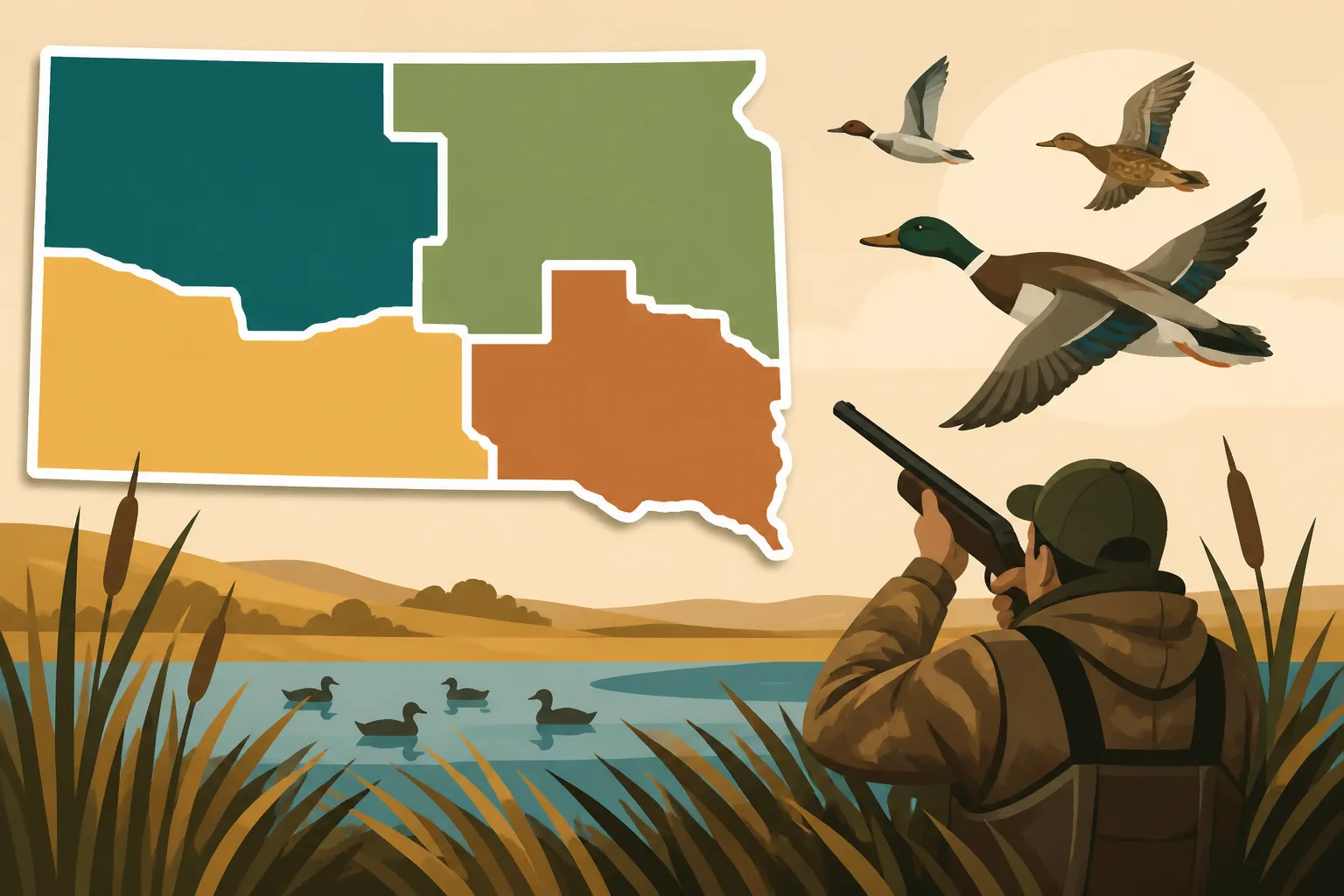
South Dakota Waterfowl Seasons and Zones
Hunting waterfowl in South Dakota can feel like trying to solve a complicated puzzle, especially when you're staring at a rulebook full of varying season dates, split zones, and specific bag limits. It’s enough to make even a seasoned hunter scratch their head and wonder if they’ll ever get it all straight. This comprehensive guide is here to untangle that complexity, giving you a clear understanding of South Dakota's waterfowl seasons and zones so you can plan your hunts with confidence and, most importantly, success.
Understanding South Dakota's Waterfowl Landscape
South Dakota isn't just a place birds pass through; for millions of ducks and geese, it's a vital pit stop, a crucial staging area, and even a breeding ground. To truly grasp the nuances of waterfowl hunting here, you first need to appreciate the state's unique position in the grand scheme of North American bird migration and its diverse habitats.
The Central Flyway's Lifeline
South Dakota sits squarely in the heart of the Central Flyway, one of North America's four major migratory bird routes. Think of it as a superhighway for waterfowl, funneling birds from their breeding grounds in the Canadian prairies and northern U.S. states down to their wintering areas further south. This geographical advantage means that during peak migration, the skies over South Dakota can literally darken with wings, offering a spectacle that's hard to beat anywhere else. The sheer volume of birds that stage here, resting and refueling on their long journey, makes it a true bucket-list destination for duck and goose hunters alike.
What makes South Dakota so special is not just its location but its incredible network of wetlands. From the prairie potholes that dot the eastern half of the state, remnants of ancient glaciers, to the vast reservoirs of the Missouri River, and the seemingly endless expanses of agricultural fields, there's a smorgasbord of habitats catering to every waterfowl species imaginable. These varied landscapes provide everything a duck or goose needs: abundant food, safe roosting areas, and crucial protection from the elements, especially as winter starts to set in.
Understanding this vital role helps you anticipate bird movements. Early in the season, you'll often find local birds that were born and raised here. As fall progresses, wave after wave of new migrants arrive, pushed south by colder temperatures further north. This constant influx means that even if one area seems quiet, a fresh front might just bring in thousands of new birds, completely changing the hunting dynamics overnight.
Key Species and Their Habits
South Dakota plays host to an impressive array of waterfowl species, and knowing their individual habits is paramount to putting together a successful hunt. For ducks, you'll encounter a mix of dabblers and divers. Dabblers, like mallards, pintails, gadwalls, wigeon, and various teal, prefer shallower water, tipping up to feed on submerged vegetation and invertebrates. They're often found in prairie potholes, sloughs, and shallow edges of larger lakes. These are the birds that readily decoy into realistic spreads and respond to lively calling.
Then there are the divers – redheads, canvasbacks, bluebills (scaup), ring-necked ducks, and goldeneyes – which favor deeper, open water where they can dive for food. You'll typically find them on the larger Missouri River reservoirs like Lake Oahe and Lake Sharpe, or the deeper glacial lakes in the northeast. Hunting divers often requires larger decoy spreads, heavier anchors, and specific boat setups, as they can be more wary and fly faster.
Geese, on the other hand, often present a different challenge. You'll primarily target Canada geese, from the giant resident populations to the smaller migratory subspecies. Snow geese and Ross's geese also migrate through in incredible numbers, particularly during the spring conservation order. Geese are often field feeders, flying from large roosting bodies of water to agricultural fields to graze on waste grain. Understanding their daily patterns – where they roost, their flight lines, and where they prefer to feed – is critical. A good way to learn more about their movements and patterns is to study resources on topics like Field Hunting Geese in South Dakota Cut Corn. Knowing which species you're pursuing will dictate your location, your decoy spread, and your calling techniques, making the hunting experience more focused and ultimately more rewarding.
Deciphering South Dakota's Waterfowl Zones
One of the biggest hurdles for waterfowl hunters in South Dakota is understanding the state's distinct hunting zones. These aren't just arbitrary lines on a map; they're carefully drawn boundaries designed to manage specific bird populations, migration patterns, and hunting pressure across a vast and diverse landscape. Getting these zones right is absolutely non-negotiable for staying legal and maximizing your hunting opportunities.
The Eastern and Western Zone Divide
For duck hunters, South Dakota is primarily split into two major zones: the East River Zone and the West River Zone. The dividing line is quite clear and easy to find on any map: it's Interstate 90 from the Minnesota border west to the Missouri River, then the Missouri River itself south to the Nebraska border. This isn't just a convenient highway; it marks a significant ecological transition. The East River Zone is characterized by its high density of prairie potholes, smaller agricultural fields, and sloughs, making it prime dabbling duck country. The West River Zone, by contrast, is generally drier, with fewer wetlands but offers vast grasslands, large reservoirs, and river breaks that attract different waterfowl populations.
The reasoning behind these zones is rooted in observed migration patterns and habitat differences. Birds migrating through the eastern part of the state often follow distinct routes and utilize different wetland complexes than those funneling through the western plains. By having separate seasons and regulations for each, the South Dakota Game, Fish and Parks (GFP) can tailor management strategies to the specific conditions and bird populations in those areas. This allows for more precise control over harvest rates and ensures sustainability.
What this means for you, the hunter, is that you need to be acutely aware of which zone you're hunting in. The opening dates, season lengths, and even some species-specific regulations can differ between the East and West River Zones. You cannot simply apply a uniform set of rules across the entire state. If you plan a trip to hunt near Watertown in the east, those rules will be different from a hunt planned near Fort Pierre in the west. Always double-check the current year's regulations for the specific zone you intend to hunt before you head out. Websites and apps like GoHunt can be incredibly helpful for visualizing these zone boundaries and quickly referencing the associated regulations, ensuring you're always on the right side of the law.
Goose Zones and Management Units
While ducks are managed through the East and West River zones, goose hunting in South Dakota introduces an even more detailed set of zones and management units, particularly for Canada geese. These often overlap with the duck zones but have their own distinct boundaries, sometimes even creating smaller units within the larger geographical areas. For instance, you'll find zones like Unit 1 and Unit 2, along with specific West River and East River designations for Canada geese. These divisions are much more granular because goose populations, especially resident Canada geese, often have very localized breeding and staging areas that require specific management attention.
These intricate goose zones exist to target different segments of the Canada goose population. Some zones are designed to manage the burgeoning resident populations that breed within South Dakota, offering earlier and more liberal seasons. Other zones are tailored to manage migratory populations that pass through later in the fall. The GFP uses banding data, harvest surveys, and population estimates to define these units, aiming to maintain healthy numbers while providing ample hunting opportunities.
The practical implication of these multiple goose zones is that you absolutely must consult the current year's waterfowl proclamation. A quick glance might show you a general Canada goose season, but digging deeper will reveal varying start and end dates, and different daily and possession limits for each specific zone. For example, the early Canada goose season, designed to target local birds, will have different boundaries and regulations than the later migratory season. Failing to differentiate between these zones could lead to a violation, so take the time to study the maps and understand the specific unit you'll be hunting. It's an extra step, but a necessary one for a successful and legal goose hunt.
South Dakota Duck Season Breakdown
South Dakota's duck season is far from a one-size-fits-all affair. It's a carefully orchestrated series of different seasons, each designed to coincide with specific migratory movements or to provide unique hunting opportunities. From the lightning-fast action of early teal to the main statewide seasons and special youth days, there's a specific window for every type of duck hunter.
Early Teal Season – A Quick Thrill
For many, the first whisper of fall migration in South Dakota is the highly anticipated early teal season. This brief, action-packed period typically opens in early September and only lasts a couple of weeks, making it a sprint rather than a marathon. The purpose of this special season is to allow hunters to harvest blue-winged, green-winged, and cinnamon teal before they continue their rapid migration south, often ahead of the main duck flights. It's a fantastic way to kick off the waterfowl season, offering fast-flying targets in generally warm weather.
One of the challenges of early teal season, especially for newer hunters, is accurate bird identification. Teal are small and incredibly fast, often zipping over decoys with a blur of wings. It's crucial to be able to identify them quickly in flight to avoid accidentally shooting other duck species that might also be present but are not yet legal to harvest. Paying attention to their smaller size, rapid wing beats, and sometimes distinct iridescent wing patches (like the sky-blue patch on blue-winged teal) is key. The energy of these early birds can be infectious, with flocks wheeling and diving into decoys at breakneck speed.
To maximize your chances during this brief window, focus your scouting efforts on shallow water bodies like small prairie potholes, flooded crop fields, and the muddy edges of larger sloughs. Teal love these areas for their abundant aquatic insects and vegetation. A spread of a dozen or two teal decoys, perhaps with a spinning-wing decoy for added attraction, can be highly effective. The mornings are usually the most productive, as teal move from roosts to feeding grounds. Hunters often find success walking into smaller, less accessible potholes where teal feel safe, or by setting up along known flight corridors between feeding and roosting areas.
General Duck Seasons – East River and West River
After the early teal season concludes, the general duck seasons for both the East River and West River zones take center stage, typically opening in late September or early October. These are the workhorse seasons, lasting through much of the fall and often into early winter, providing opportunities to hunt a broader spectrum of duck species. The specific opening dates and season lengths for these zones can vary slightly each year, so always consult the current South Dakota waterfowl proclamation for precise dates. Generally, the East River Zone, with its dense pothole country, might have a slightly longer or earlier season due to its differing migration dynamics.
As the season progresses, the types of ducks you encounter will change dramatically. Early in the season, you'll still find plenty of local mallards, gadwalls, and wood ducks, alongside some early-arriving pintails and wigeon. The weather is often mild, and the birds are typically less wary. This is a great time to enjoy hunts over smaller spreads in secluded potholes or along river backwaters. As November rolls around and colder weather pushes down from the north, the migration truly kicks into gear. You'll start seeing larger numbers of big, greenhead mallards, as well as an increasing presence of diver ducks on larger bodies of water. For a detailed guide on how to approach these hunting areas, consider reading up on Waterfowl Hunting the South Dakota Prairie or Decoying Ducks on a South Dakota Prairie Pothole.
Later in the season, as ice begins to form on smaller waters, the ducks will concentrate on larger, open water bodies, often the Missouri River reservoirs or spring-fed sloughs that remain unfrozen. Hunting these late-season birds can be incredibly challenging, requiring durable cold-weather gear, large spreads of decoys, and often more robust boat setups for diver hunting. However, the rewards can be substantial, with opportunities for heavy mallards and fast-flying canvasbacks. The season culminates around late December or early January, depending on the zone and specific regulations, typically concluding when harsh winter conditions push the remaining birds further south.
Youth Waterfowl Hunting Days
South Dakota understands the critical importance of introducing the next generation to the joys and responsibilities of hunting. To that end, the state offers dedicated Youth Waterfowl Hunting Days, specifically designed to provide a mentored and less pressured hunting experience for young hunters. These days are usually scheduled outside of the regular season, often a weekend before the general duck opener and sometimes an additional weekend later in the season. This timing allows youth hunters to experience fresh birds that haven't been heavily pressured, increasing their chances of success and fostering a positive first impression of waterfowl hunting.
Eligibility for these special days typically requires hunters to be 10 to 17 years old, possess a valid hunting license, and have completed a hunter education course. However, they are generally exempt from needing a federal duck stamp during youth days. The rules are designed to be inclusive and educational, focusing on mentorship. A licensed adult hunter (18 years or older) must accompany the youth, but the adult cannot hunt ducks or geese themselves during these specific youth days. This ensures that the focus remains entirely on the young hunter's experience.
The benefits of these youth days extend far beyond just shooting birds. They provide invaluable opportunities for experienced hunters to pass on their knowledge of waterfowl identification, calling techniques, decoy placement, and most importantly, ethical hunting practices and firearm safety. It's a chance to instill a love for the outdoors, an appreciation for conservation, and an understanding of the role hunters play in wildlife management. By creating a dedicated, supportive environment, South Dakota helps to ensure that the rich traditions of waterfowl hunting continue to thrive for generations to come.
Navigating South Dakota Goose Seasons
Hunting geese in South Dakota is a different beast altogether compared to ducks. These larger, often field-feeding birds present unique challenges and opportunities, requiring specialized scouting, gear, and strategies. South Dakota’s goose seasons are also segmented to manage resident populations, migratory flocks, and even specific species like snow geese.
Early Canada Goose Season – Resident Birds
Before the main duck seasons even begin, South Dakota hunters get their first taste of waterfowl action with the Early Canada Goose Season. This season usually kicks off in early September and runs for a few weeks, sometimes overlapping briefly with the early teal season. Its primary purpose isn't to target migratory birds pushed down from the north, but rather to manage the robust and often rapidly growing population of resident Canada geese that breed and raise their young within South Dakota's borders. These local birds can become quite numerous, and this early season helps to keep their numbers in check, mitigating potential agricultural damage and urban conflicts. For specific dates and zone information on this, you'll want to check South Dakota Early Canada Goose Season.
Hunting resident Canada geese during this early period can be incredibly rewarding. These birds haven't experienced the intense hunting pressure of later seasons, making them somewhat less wary. Bag limits are often more liberal than during the general season, sometimes allowing for a daily limit of 5-8 geese. The best hunting opportunities often revolve around scouting agricultural fields where geese are feeding on waste grain, or smaller ponds and sloughs where they roost. Since these birds are local, their patterns are often predictable; they'll fly from a known roost to a specific feeding field day after day.
Successful strategies for early resident goose hunting involve meticulous scouting to identify preferred feeding fields. Once you've located a hot field, setting up a spread of full-body or shell decoys, coupled with a few motion decoys, can be highly effective. Concealment is still key, as geese have excellent eyesight. Layout blinds, especially those well-camouflaged in corn stubble or grass, are essential. Often, you'll find these birds feeding on barley, wheat, or cut silage fields. The mild September weather also makes for comfortable hunting, though it's still crucial to stay hydrated and protect yourself from the sun.
General Canada Goose Seasons
Following the early season, the general Canada goose seasons begin, typically aligning with the opening of the main duck seasons in late September or early October and extending well into December or even January in some zones. These seasons are designed to intercept the waves of migratory Canada geese that begin to pour into South Dakota from their northern breeding grounds. Unlike the early resident season, these periods are carefully structured to manage both resident and various migratory subspecies, and they often come with more conservative bag limits.
The general Canada goose seasons are often divided into specific zones (e.g., Unit 1, Unit 2, and the broader East River/West River distinctions) which might have different start/end dates and bag limits. This complexity reflects the diverse populations of Canada geese that utilize South Dakota. Hunters need to pay close attention to the specific zone they're in, as rules can vary significantly. For example, a zone designated for "dark geese" might encompass Canada geese, white-fronted geese (specklebellies), and Brant, each potentially having its own specific bag limit within the overall dark goose limit.
Hunting migratory Canada geese requires a keen understanding of weather patterns and large-scale bird movements. Cold fronts, snow, and strong north winds can push thousands of new birds into the state overnight, creating phenomenal hunting opportunities. Field hunting remains a dominant strategy, requiring large spreads of full-body decoys, aggressive calling, and perfect concealment in layout blinds. The large expanses of cut corn and other grain fields in South Dakota provide ideal feeding grounds. Successfully decoying these wary, experienced migrants is a testament to meticulous scouting, skilled calling, and often, a touch of good luck. For more insights on blending into the environment, especially on vast open fields, check out articles on Layout Blinds on South Dakota Stubble.
Snow and Ross's Goose Seasons
For many waterfowl hunters, the sheer spectacle of a mass migration of light geese—snow and Ross's geese—is something to behold. South Dakota experiences two distinct hunting periods for these birds: a regular fall/winter season and the highly popular Spring Snow Goose Conservation Order. The regular season typically runs concurrently with other duck and goose seasons, often opening in late September or early October and extending through the winter, often with generous bag and possession limits due to their abundant populations.
Hunting snow geese during the regular fall season is notoriously challenging. These birds are extremely wary and travel in massive flocks that can number in the tens of thousands. Traditional decoy spreads often involve hundreds, if not thousands, of white rag decoys, windsocks, or shell decoys. Electronic calls are generally not permitted during the regular season, and hunters must adhere to standard shotgun plug and magazine capacity rules. Success often depends on intercepting smaller, less experienced flocks or catching birds off guard during adverse weather conditions.
However, the real excitement for many comes with the Spring Snow Goose Conservation Order, which typically runs from early March into May. This special order is not a "hunting season" in the traditional sense, but a management tool enacted by the U.S. Fish and Wildlife Service to reduce an overabundant population of snow and Ross's geese that are damaging their Arctic breeding grounds. During the Conservation Order, regulations are significantly relaxed: hunters can use unplugged shotguns (no magazine limit), electronic calls are permitted, and there are no daily bag or possession limits. This allows for incredibly high-volume hunting and helps to put a dent in their vast numbers as they migrate north. Hunting the Spring Snow Goose Conservation Order requires immense dedication, often large crews, and literally thousands of decoys, but the experience of seeing a tornado of white geese descend into your spread is unforgettable.
Licensing, Stamps, and Essential Regulations
Navigating the legal requirements for waterfowl hunting in South Dakota can feel like a minefield of permits and paperwork. Missing a single stamp or failing to register for a specific program could turn a great day afield into a costly encounter with a game warden. Understanding these essentials is the bedrock of responsible and legal hunting.
Required Licenses and Stamps
First and foremost, every waterfowl hunter in South Dakota, whether resident or nonresident, needs a valid hunting license. Nonresidents typically purchase a nonresident small game license, which covers pheasants, grouse, ducks, and geese, often available for a full season or in two consecutive five-day periods. Residents have various options, including an annual hunting license. Beyond this base license, several other stamps are mandatory.
You'll need a South Dakota State Habitat Stamp. This stamp is crucial because the funds generated directly support wildlife habitat development and enhancement projects across the state, benefiting waterfowl and other game species. It's a small fee that has a significant impact on the quality of hunting in South Dakota. Next, and equally important, is the Federal Duck Stamp. This beautiful stamp, often referred to as the "Migratory Bird Hunting and Conservation Stamp," is required for all waterfowl hunters aged 16 and older. A staggering 98% of the proceeds from Federal Duck Stamp sales go directly to the Migratory Bird Conservation Fund, which is used to purchase or lease wetland habitat for the National Wildlife Refuge System. It's truly one of the most effective conservation tools in existence.
Lastly, every waterfowl hunter in South Dakota, regardless of age, must be registered with the Harvest Information Program (HIP). This is a federal program that collects harvest data on migratory birds. When you register for HIP, you'll answer a few simple questions about your migratory bird hunting success from the previous season. This data is vital for wildlife biologists to make informed decisions about season lengths and bag limits. You must register for HIP annually. All these licenses and stamps can typically be purchased online through the South Dakota Game, Fish and Parks (GFP) website, or at authorized license vendors throughout the state. It's essential to have proof of all your required licenses and stamps in your possession while hunting, whether that's physical copies or digital versions on your phone. Planning tools like GoHunt often integrate state-specific license information, making it easier to identify and acquire all the necessary documents before your trip. For detailed information on the specific process, you might find resources on HIP Registration helpful.
Daily Bag and Possession Limits
Understanding the difference between daily bag limits and possession limits is critical to staying legal in the waterfowl blind. The daily bag limit refers to the maximum number of a particular species or combination of species you are allowed to harvest in a single day. This is the number you can legally shoot from one-half hour before sunrise until sunset. For ducks, this is often a cumulative number for various species, but with specific restrictions within that total. For instance, you might have a total duck limit of six, but within that six, you might only be allowed two mallard hens, one pintail, or two canvasbacks. These species-specific restrictions are put in place to protect populations that are more vulnerable or have lower breeding numbers.
The possession limit, on the other hand, is the maximum number of legally harvested game birds you can have in your possession at any given time, including those stored at your home or transported. Typically, the possession limit for waterfowl is two or three times the daily bag limit. So, if the daily bag limit for ducks is six, the possession limit might be 18. This accounts for multiple days of hunting. It's crucial to remember that cleaned, processed birds still count toward your possession limit until they are consumed. When transporting birds, especially across state lines, specific regulations apply regarding the head or a wing remaining attached to allow for species identification.
Adherence to these limits is non-negotiable. Game wardens are diligent in checking bags, and exceeding these limits carries significant penalties, including hefty fines, confiscation of birds and equipment, and potential loss of hunting privileges. Before every hunt, review the current year's waterfowl proclamation to refresh your memory on the specific daily and possession limits for each duck and goose species in your hunting zone, as these can change annually based on population surveys and management goals.
Shooting Hours and Legal Methods
Beyond licenses and bag limits, South Dakota imposes strict rules on when you can hunt and what methods you can employ to pursue waterfowl. These regulations are in place to ensure fair chase, promote hunter safety, and maintain sustainable harvest levels.
General waterfowl shooting hours in South Dakota typically begin one-half hour before sunrise and conclude at sunset. This precise timing is crucial. Being caught shooting before legal hours, or continuing after sunset, can result in citations. It's always a good idea to have a reliable source for sunrise and sunset times, whether that's a hunting app or a local weather report, and to err on the side of caution. For example, if sunrise is at 7:00 AM, legal shooting starts at 6:30 AM. Don't be that hunter who fires a shot in the dim light of dawn just moments too early.
When it comes to legal methods, shotguns are the only permitted firearm for waterfowl. There are also specific restrictions on your shotgun setup:
- Shotgun Gauge: Any gauge is generally allowed.
- Shot Size: Only non-toxic shot is permitted for all waterfowl hunting. This means steel, bismuth, tungsten, or other approved non-toxic alternatives. Lead shot is strictly prohibited for waterfowl to prevent lead poisoning in birds.
- Plug Requirements: Your shotgun must be "plugged" so that it cannot hold more than three shells in the magazine and chamber combined. This is a federal requirement for migratory birds. The only exception to this rule is during the Spring Snow Goose Conservation Order, when unplugged shotguns are allowed.
Beyond these firearm specifics, other legal considerations include:
- Baiting: It is illegal to hunt waterfowl over baited areas. This includes grains, salts, or other food items placed to attract birds. This doesn't apply to normal agricultural practices.
- Motorized Vehicles: You cannot shoot waterfowl from a motorized vehicle or boat unless the motor is completely shut off and the boat's forward motion has ceased.
- Tagging: While you don't typically tag individual ducks like big game, when transporting birds, especially if someone else is transporting them for you, specific identification requirements apply. Often, one fully feathered wing must remain attached to the bird while in transit from the field to your home or processor, allowing game wardens to identify the species.
Staying informed about all these regulations is an ongoing responsibility. Consulting the South Dakota Game, Fish and Parks website or the annual hunting proclamation is the best way to ensure you're always up-to-date. Resources like South Dakota Hunter Safety Requirements provide a comprehensive overview that often includes these vital legal details.
Planning Your South Dakota Waterfowl Hunt
A successful South Dakota waterfowl hunt isn't just about showing up with a shotgun; it's the result of meticulous planning, keen observation, and strategic decision-making. From finding the right spots to having the right gear, preparation is the key to unlocking the prairie's potential.
Scouting and Habitat Prioritization
Effective scouting is the single most important factor in waterfowl hunting success. You can have the best decoys and call like a champion, but if you're not where the birds want to be, you won't connect. Scouting isn't just about driving around the day before the hunt; it's an ongoing process. Start by utilizing satellite imagery and mapping apps like GoHunt, which overlays property boundaries and public lands, allowing you to identify potential hotspots from the comfort of your home. Look for concentrations of potholes, areas adjacent to large reservoirs, and expansive agricultural fields, particularly cut corn or bean fields. These digital tools can save you countless hours of driving.
Once you have potential areas identified, it's time for boots-on-the-ground (or wheels-on-the-road) scouting. The goal is to identify active feeding and roosting patterns. Drive rural roads at dawn and dusk, observing flight paths and concentrations of birds. Pay attention to specific habitat preferences:
- Shallow Potholes and Sloughs: These are magnets for dabbling ducks like mallards, pintails, and gadwalls, offering abundant vegetation and invertebrates. Look for areas with a mix of open water and emergent cover.
- Large Reservoirs and Deeper Lakes: These attract diver ducks (canvasbacks, redheads, bluebills) and provide safe roosting for all waterfowl, especially as smaller waters begin to freeze.
- Cut Grain Fields: Canada geese, snow geese, and even many duck species will flock to cut corn, wheat, or barley fields to feed on waste grain. Note which fields have fresh droppings or large groups of birds.
Remember to be discreet while scouting. You don't want to alert birds or other hunters to your finds. Observe from a distance with binoculars, note wind direction, and try to pinpoint where birds are flying to and from. Always respect private property boundaries while scouting, and never trespass. By prioritizing habitats that align with current bird behavior, you'll put yourself in the best position when opening day arrives.
Public vs. Private Land Access
One of the great things about hunting in South Dakota is the abundance of public access, but knowing where to go and how to navigate private land is paramount. Public hunting lands include a vast network of Walk-In Areas (WIAs), Game Production Areas (GPAs), Waterfowl Production Areas (WPAs), and federal lands along the Missouri River reservoirs.
- Walk-In Areas: These are private lands leased by the South Dakota GFP for public hunting access. They are clearly marked with distinctive yellow signs. Many are excellent for ducks and pheasants. To learn more about navigating these properties, refer to Hunting South Dakota Walk-In Areas.
- Game Production Areas (GPAs): These are lands owned and managed by the GFP specifically for wildlife habitat and public hunting. Many GPAs include wetlands and are excellent for waterfowl.
- Waterfowl Production Areas (WPAs): Managed by the U.S. Fish and Wildlife Service, these are critical nesting and staging grounds for ducks and geese, and often provide excellent hunting opportunities.
- Federal Lands (e.g., Corps of Engineers): Along the Missouri River reservoirs, significant tracts of land managed by the Army Corps of Engineers are open to public hunting. These often offer access to large water bodies for divers and river blinds. South Dakota Waterfowl Production Areas can provide more details on these areas.
While public land offers abundant opportunities, securing private land access can often lead to less pressured birds and potentially more consistent hunting. Many South Dakota farmers are willing to grant permission, especially if you approach them respectfully, offer to help with chores, or share a portion of your harvest. It's always best to ask in person well in advance of your hunt, rather than showing up on opening morning. Be polite, state your intentions clearly, and always leave the property cleaner than you found it. Resources like Finding Private Land Access in South Dakota offer excellent tips for this. The pros of public land are obvious – readily available access. The cons can be higher hunting pressure, especially on opening weekend. Private land often means less competition and potentially more birds, but securing access requires effort and good communication. A balanced approach, utilizing both public and well-vetted private ground, will give you the most flexibility.
Essential Gear and Preparation
Being properly equipped for a South Dakota waterfowl hunt is not just about comfort; it's about safety and effectiveness. The weather can change on a dime, from mild Indian summer days to brutal blizzards, sometimes within hours.
Here’s a breakdown of essential gear:
- Decoys: Your spread will vary based on what you're hunting. For ducks on potholes, a dozen mallard decoys, perhaps with a few teal and a spinning-wing decoy, might suffice. For geese in fields, you'll need dozens, if not hundreds, of full-body or shell decoys, often combined with large numbers of windsocks or rag decoys for snow geese. Motion decoys, like Lucky Ducks or other flappers, can add crucial realism.
- Calls: A good duck call (mallard call is essential, but adding gadwall or wigeon calls can be beneficial) and goose calls (Canada goose, and potentially snow goose calls if legal in your season) are critical. Practice, practice, practice! There's a fine line between effective calling and over-calling.
- Waders and Clothing: Waterproof and insulated chest waders are non-negotiable for wading into potholes or setting decoys. Layering is key for clothing. Start with a moisture-wicking base layer, add insulating layers (fleece or down), and top it off with a waterproof, windproof outer shell in a good camouflage pattern. Don't forget waterproof gloves and a warm hat.
- Blinds and Concealment: For field hunting geese, layout blinds are standard. For ducks, natural cover, A-frame blinds, or portable boat blinds are common. Good concealment is paramount, as waterfowl have incredible eyesight. Make sure your blind blends in seamlessly with the surrounding environment.
- Shotgun and Ammunition: A reliable 12-gauge shotgun is the workhorse of waterfowl hunting. Bring plenty of non-toxic ammunition appropriate for the birds you're targeting – larger shot sizes (BB, 1, 2) for geese, and smaller sizes (2, 3, 4) for ducks. Pattern your shotgun with your chosen load before the season to understand its effective range.
- Logistical Considerations:
- Dog Care: If you hunt with a retriever, ensure they have a dog stand or platform to keep them out of the cold water, plenty of fresh water to drink, and protection from burrs and sharp stubble.
- Navigation: A GPS device or a reliable mapping app (like GoHunt) is essential, especially on large public areas or if you're exploring new ground.
- Safety: Always carry a first-aid kit, a fully charged cell phone (though service can be spotty in remote areas), and inform someone of your hunting plans and expected return time. If hunting from a boat, life jackets are mandatory.
Proper preparation ensures a safer, more comfortable, and ultimately more successful hunting experience, allowing you to focus on the birds and the camaraderie, not on missing gear or freezing cold fingers.
Advanced Strategies for Success
Once you've got the basics down—licenses, zones, and essential gear—it's time to elevate your game. The most successful waterfowl hunters aren't just lucky; they're masters of adaptation, constantly analyzing conditions and tweaking their approach.
Reading the Weather and Migration Patterns
Waterfowl are incredibly sensitive to weather, and understanding its impact is arguably the most crucial advanced strategy for success. Cold fronts, significant drops in temperature, and especially snow events to the north will often trigger major migrations, pushing fresh birds into South Dakota. A strong north wind accompanying a cold front is a duck and goose hunter's best friend, often bringing in new waves of wary birds. Conversely, prolonged periods of mild weather can stall migration, making hunting tougher as local birds become more educated.
Pay close attention to long-range weather forecasts, not just for your immediate hunting area, but for regions directly north of South Dakota. If a major winter storm is brewing in North Dakota or Canada, start preparing, because those birds are likely headed your way. Websites and apps that track bird migration (some features are integrated into platforms like GoHunt) can give you real-time insights into major bird movements, helping you predict peak hunting windows.
Wind direction and speed also profoundly affect how birds fly and decoy. Ducks and geese almost always land into the wind. This means your decoy spread should be set up so that birds flying into the wind will land directly in front of your blind, giving you ideal shot opportunities. On very windy days, birds might fly lower and hug terrain features, making certain areas more productive. On calm days, birds can be more challenging to decoy as they have more time to inspect your spread from a distance. Adjusting your blind location or spread shape to account for wind is a critical skill honed over many hunts.
Decoy Spreads and Calling Techniques
Mastering decoy spreads and calling techniques is an art form that can significantly increase your success rates. There isn't one "magic" spread, as it needs to be adapted to the specific water body, weather conditions, and species you're targeting.
For ducks, especially dabblers on potholes or small sloughs, common spreads include:
- J-hook or U-shape: This creates an inviting landing zone in the "hook" or "U," with the open end facing into the wind.
- Loose Groups: Rather than a tight clump, scatter small groups of decoys, mimicking natural feeding activity. Mix in a few diver decoys if hunting larger water, or a single spinning-wing decoy to grab attention from afar.
- The "Hole" Concept: Create an open water area (the "hole") in the middle of your spread, which birds naturally key in on for landing.
For geese, particularly in agricultural fields, scale is important:
- Numbers: You generally need more goose decoys than duck decoys to feel confident. Start with a few dozen full bodies, then augment with windsocks or shells.
- Family Groups: Geese often land in family groups, so arrange decoys in clusters of 3-7, with some feeders and a few sentries.
- Landing Strip: Create a wide, open landing strip directly upwind from your layout blinds, giving approaching flocks ample space to commit. Motion decoys, like flying flyers on tall stakes, can greatly enhance realism.
Calling is equally nuanced. For ducks, start with subtle greeting calls or a simple three-note "comeback" call if birds are distant. As they approach, switch to feeding chuckles or contented quacks. Avoid over-calling, especially if birds are already committed. For geese, basic clucks and honks are essential. A good "hail call" to get their attention, followed by a mix of excited clucks and moans as they work, can be deadly. The key to both duck and goose calling is realism and moderation; sound like real birds, not a competition caller. Observing real birds and trying to mimic their vocalizations is the best teacher.
Understanding Hunting Pressure and Its Effects
One of the undeniable realities of hunting, especially on popular public lands, is hunting pressure. South Dakota's reputation as a waterfowl haven means many areas, particularly on opening weekend or during peak migration, can see significant hunter activity. This pressure can profoundly impact bird behavior, making them warier and more challenging to hunt. For a deeper dive into how this pressure manifests, consider reading Hunting Pressure Patterns on Walk-In Areas.
Birds that have been shot at repeatedly become "educated." They'll fly higher, circle wider, and meticulously scrutinize decoy spreads before committing. They might also change their patterns, abandoning heavily hunted feeding fields for less disturbed areas, or shifting their flight times to later in the morning or closer to sunset. On public areas, you might also encounter competition from other hunting parties, which can inadvertently educate birds or make them shy away.
To counter the effects of hunting pressure, several strategies can prove effective:
- Hunt Less Accessible Areas: Look for potholes or sloughs that require a longer walk, a tougher wade, or a boat to access. Many hunters won't make the extra effort, leaving these spots less pressured.
- Focus on Midday or Late Afternoon: Most hunters are out at first light. Birds that have been pushed off fields in the morning might return for a quiet midday meal, or shift their main feeding flight to late afternoon when most early risers have packed up.
- Adapt Your Approach: If birds are flaring from your spread, try making it smaller and more natural. If they're coming in high, improve your concealment. Sometimes, simply backing off on the calling can be the trick.
- Scout Consistently: Birds change patterns quickly under pressure. What worked yesterday might not work today. Constant scouting helps you stay on top of their movements and find newly used areas.
- Utilize Waterfowl Refuges: Many federal and state waterfowl refuges, while closed to hunting, act as sanctuaries. Birds will roost in these areas and fly out to feed. Setting up on the perimeter of a refuge, along known flight lines, can be highly productive, though you must respect refuge boundaries.
By understanding how pressure impacts birds and being willing to adapt, you can significantly increase your chances of success even when the birds are wise to the game.
Special Considerations and Conservation
Waterfowl hunting is more than just pulling a trigger; it's an intricate dance with nature that demands respect, knowledge, and a commitment to conservation. A truly successful hunter understands their role in the broader ecosystem and embraces responsible practices.
Waterfowl Identification in the Field
Accurate waterfowl identification in the field is a skill that takes time to develop but is absolutely essential for legal and ethical hunting. With species-specific bag limits (e.g., only two mallard hens, one pintail, one canvasback), shooting the wrong bird can lead to a violation. More importantly, it demonstrates respect for the resource and ensures you're selectively harvesting within regulations designed to protect vulnerable populations.
There are several key cues to look for when identifying birds in flight:
- Size and Shape: Is it a large Canada goose or a smaller cackling goose? Is it a stocky mallard or a slender pintail?
- Flight Pattern: Do they fly in tight formations (snow geese) or loose groups? Do they have a rapid wing beat (teal) or a slower, deeper stroke (mallard)? Do they dive straight down into decoys or circle cautiously?
- Plumage and Markings: Look for distinct colors or patterns, especially on the wings, head, and speculum (the colorful patch on a duck's secondary feathers). A green head is a clear sign of a mallard drake, but what about a duller brown body?
- Vocalizations: Learning the calls of different species can also aid in identification, though visual confirmation is always best before shooting.
Resources for improving your identification skills are abundant. Field guides like those from the Cornell Lab of Ornithology, online tutorials, and apps can be incredibly helpful. The best way to learn, however, is through practice. Spend time observing birds in non-hunting situations, study photos, and go afield with experienced hunters who can point out identification markers. Making identification a priority before you raise your gun ensures you're making responsible choices in the field.
Conservation Efforts and Hunter Contributions
Waterfowl hunting is inextricably linked to conservation. In fact, hunters are the primary drivers of waterfowl conservation in North America. The system of funding, known as the "North American Model of Wildlife Conservation," relies heavily on hunter contributions to protect and enhance wetland habitats for ducks, geese, and countless other species.
Every time you purchase a hunting license, a state habitat stamp, or a federal duck stamp, you are directly contributing funds that are funneled back into habitat protection, wetland restoration, and wildlife management programs. For example, over 98 cents of every dollar from the sale of a Federal Duck Stamp goes directly to acquire or lease wetlands for the National Wildlife Refuge System. This funding helps preserve critical breeding grounds, migration corridors, and wintering areas, not just for waterfowl but for thousands of other wetland-dependent species.
Beyond direct financial contributions, organizations like Ducks Unlimited, Delta Waterfowl, and local conservation groups work tirelessly to restore and enhance wetlands across the prairie. Hunters often volunteer their time and resources to these efforts, understanding that a healthy habitat is the foundation of healthy bird populations. Ethical hunting practices, such as shooting within range, ensuring a quick and clean kill, and making every effort to retrieve downed birds, also contribute to the conservation ethos. By participating in these efforts, hunters ensure that the tradition of waterfowl hunting, and the vibrant ecosystems that support it, will continue to thrive for future generations. Resources like South Dakota Duck Production on South Dakota Prairie Potholes further illustrate the local importance of these efforts.
Safe and Responsible Waterfowl Hunting
Safety is paramount in any hunting endeavor, but waterfowl hunting carries its own unique set of risks, from cold water exposure to the inherent dangers of firearms in group settings. Responsible hunters prioritize safety above all else.
Key safety aspects include:
- Firearm Handling: Always follow the four fundamental rules of firearm safety: 1. Treat every firearm as if it were loaded. 2. Always point the muzzle in a safe direction. 3. Be sure of your target and what is beyond it. 4. Keep your finger off the trigger until ready to shoot. In a blind or boat with multiple hunters, establish clear zones of fire and communicate before raising your gun.
- Blind Safety: Ensure your blind is stable and won't tip over. If using layout blinds, make sure they are properly brushed in to avoid tripping hazards. Be aware of your hunting partners' locations at all times, especially when birds are working.
- Cold Water and Weather: South Dakota weather can be brutal. Dress in layers, wear waterproof and insulated clothing, and always have extra dry clothes. If hunting from a boat, ensure everyone wears a life jacket. Hypothermia is a real risk; know its symptoms and how to treat it. If someone falls into cold water, immediate action is necessary.
- Boat Safety: If hunting from a boat, ensure it's in good working order, has all required safety equipment (life jackets, signaling devices, bailer), and that you're aware of weather conditions. Never overload a boat.
- Communication: Clearly communicate with your hunting party about who will shoot, which birds to target, and any potential hazards. Leaving a trip plan with someone not on the hunt, detailing your location and expected return time, is also a wise precaution, especially in remote areas.
A responsible hunter not only knows the rules of the hunt but actively practices safety and stewardship. This approach ensures that every outing is enjoyable, successful, and contributes positively to the legacy of waterfowl hunting in South Dakota.
| Season Type | Primary Species | General Dates (Approximate) | Typical Zones | Key Regulations (e.g., limits, methods) |
|---|---|---|---|---|
| Early Teal | Blue-winged, Green-winged, Cinnamon Teal | Early September | Statewide | Daily Bag 6, Possession 18; Non-toxic shot, 3-shell capacity. |
| Early Canada Goose | Resident Canada Geese | Early September | Specific Goose Management Units (e.g., Unit 1) | Daily Bag 5-8 (varies), Possession 3x Daily; Non-toxic shot, 3-shell capacity. |
| General Duck Season | Mallard, Gadwall, Pintail, Wigeon, Divers | Late Sept/Early Oct – Early Jan | East River, West River | Daily Bag 6 (species-specific restrictions), Possession 3x Daily; Non-toxic shot, 3-shell capacity. |
| General Canada Goose | Migratory Canada Geese, White-fronted Geese | Late Sept/Early Oct – Late Jan | East River, West River, Specific Units | Daily Bag 2-5 (varies by zone/species), Possession 3x Daily; Non-toxic shot, 3-shell capacity. |
| Snow/Ross's Goose | Snow Geese, Ross's Geese | Late Sept/Early Oct – Mid Jan | Statewide | Daily Bag 20, Possession 3x Daily; Non-toxic shot, 3-shell capacity. |
| Spring Snow Goose Conservation Order | Snow Geese, Ross's Geese | Early March – Mid May | Statewide | No daily/possession limit; Electronic calls, unplugged shotguns allowed. |
Note: All dates, limits, and regulations are subject to annual change. Always consult the current South Dakota Game, Fish and Parks waterfowl proclamation before hunting.
Disclaimer
The information provided in this guide is for general informational purposes only and is not intended as legal advice. Hunting regulations, season dates, and licensing requirements can change annually. It is the responsibility of each individual hunter to consult and comply with the most current regulations published by the South Dakota Game, Fish and Parks (GFP) and the U.S. Fish and Wildlife Service before engaging in any hunting activities. Failure to do so may result in legal penalties.