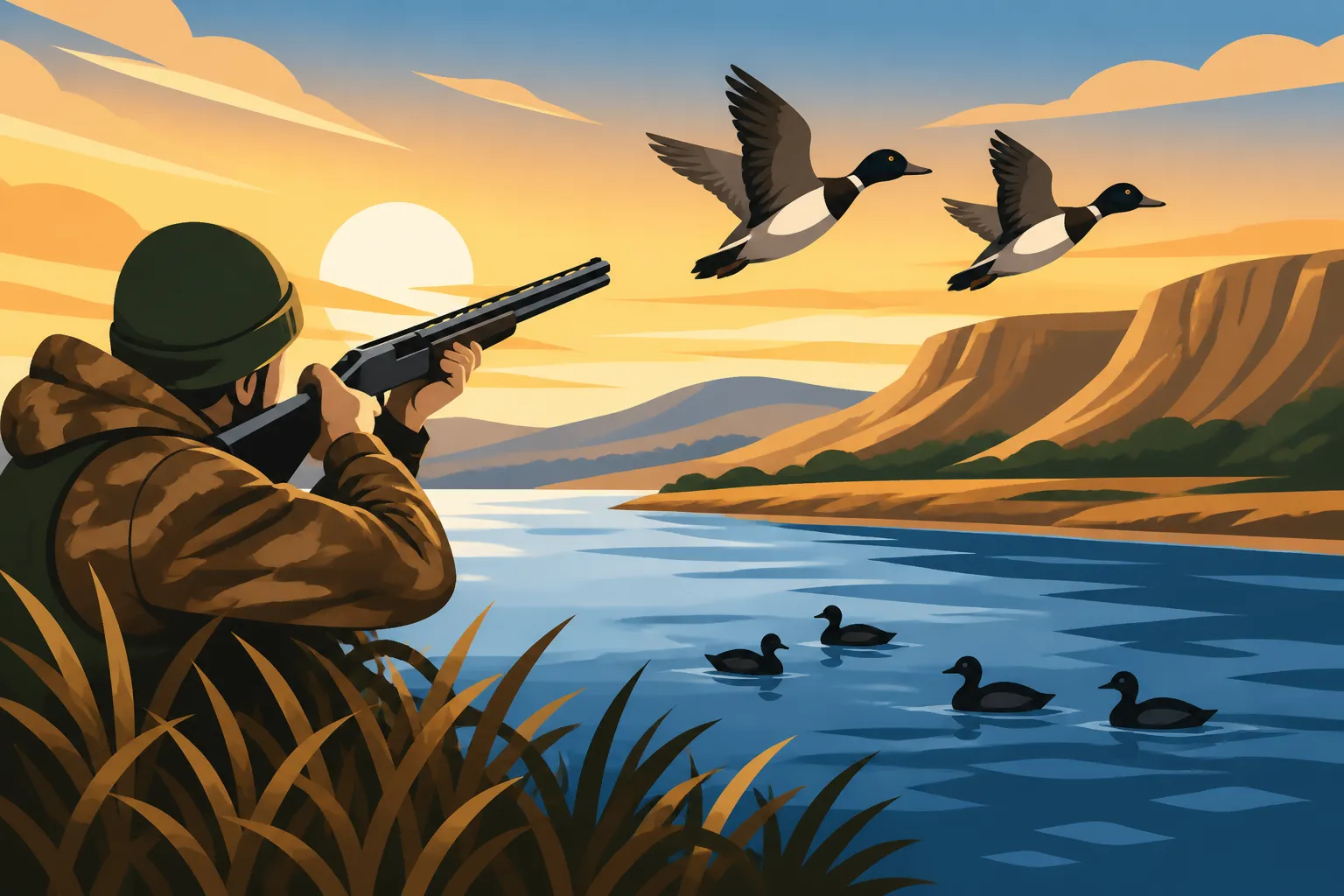
Hunting the Missouri River for Divers
Hunting diver ducks on South Dakota's mighty Missouri River can feel like a whole different beast compared to chasing pheasants in a cattail slough. The sheer scale of the water, the unpredictable weather, and the unique habits of these fast-flying birds present a challenge that can leave even seasoned hunters scratching their heads. But with the right knowledge and preparation, this expansive waterway offers incredible opportunities for an unforgettable waterfowl experience. This guide will walk you through everything you need to know to successfully pursue diver ducks on the Missouri, from understanding the diverse habitats of the reservoirs to mastering specialized gear and tactics.
Understanding the Missouri River System for Diver Ducks
The Missouri River in South Dakota isn't just a river; it's a series of massive reservoirs – Lake Oahe, Lake Sharpe, and Lake Francis Case – that stretch for hundreds of miles, creating vast, open-water habitats. These immense bodies of water are a magnet for migrating diver ducks, offering abundant food sources and expansive resting areas. But don't let the sheer size intimidate you; with a strategic approach, you can learn to read this dynamic landscape and find success.
The Big Water Challenge and Opportunity
Hunting the Missouri River for divers is not for the faint of heart, nor for the underprepared. The challenges are numerous: strong winds can whip up substantial waves in minutes, temperatures can plummet, and the water itself is deep and unforgiving. Unlike hunting smaller prairie potholes, where you might be able to set up a few dozen decoys and rely on simple jump shooting tactics, the Missouri demands a dedicated approach. You're dealing with immense distances, potentially treacherous conditions, and ducks that are often accustomed to seeing large decoy spreads and boat blinds.
However, these challenges also create incredible opportunities. When the migration is on, the Missouri River acts as a major artery in the Central Flyway, channeling thousands upon thousands of ducks. Divers, in particular, favor these large, deep waters for their foraging habits, feasting on submerged aquatic vegetation, clams, and other invertebrates. The sheer volume of birds that can pass through or reside on these reservoirs means that if you hit it right, you can experience some of the most spectacular diver hunting anywhere. It’s a game of patience, preparation, and knowing when and where to be.
Key Reservoir Sections and Their Characteristics
Each of the major Missouri River reservoirs in South Dakota has its own unique characteristics that can influence diver duck movements and hunting strategies. Understanding these differences is crucial for effective scouting and setup.
- Lake Oahe: This is the largest and deepest of the reservoirs, stretching from Bismarck, North Dakota, all the way south to Pierre, South Dakota. Its vast expanses of open water and numerous deep bays make it a prime staging area for divers, especially late in the season when shallower waters begin to freeze. The sheer size of Oahe means that winds can quickly build massive waves, demanding a robust boat and careful attention to weather forecasts. Divers here will often be found over deep, submerged flats or around points that offer protection from prevailing winds, particularly where food sources are concentrated.
- Lake Sharpe: Located between Oahe and Francis Case, Lake Sharpe is a narrower, more river-like reservoir but still maintains significant size and depth. It can offer slightly more predictable currents than Oahe and often has areas with more defined river channel structure. While it still gets its share of diver traffic, it might be a bit more challenging to pinpoint specific concentrations compared to Oahe's sprawling bays or Francis Case's more defined patterns. However, it can be excellent during periods of strong migration.
- Lake Francis Case: Situated further south, near Chamberlain and Pickstown, Lake Francis Case is often characterized by more timbered shorelines and a slightly narrower profile in many areas compared to Oahe. It still holds tremendous numbers of divers, especially bluebills and redheads, which can be found feeding in large rafts over extensive submerged flats and in shallower, protected bays. The lower river sections can provide excellent hunting as ducks move south, often concentrating in predictable patterns around specific points or islands. Access to Lake Oahe Hunting Access or other major access points along these reservoirs is vital for effective hunting.
When you're trying to decide where to focus your efforts, remember that these big water bodies are constantly changing with the wind and the migration. What was hot one day might be dead the next. Using mapping apps like GoHunt can be invaluable for pinpointing specific contours, submerged structures, or historical holding areas that divers prefer. These tools allow you to study the bottomland and shoreline features from your home, giving you a serious edge once you're on the water.
Diver Species You'll Encounter
The Missouri River system is a buffet for many different species of diver ducks. While they all share a propensity for diving to feed, each species has slightly different habits and preferences, which can influence your hunting strategy. Knowing your birds is key to understanding their movements and how best to entice them into your spread. For a broader look at waterfowl opportunities, check out Diver Ducks on South Dakota Reservoirs.
- Bluebills (Scaup): Both Greater and Lesser Scaup are incredibly common on the Missouri. They are often seen in huge rafts, feeding on small invertebrates, snails, and mussels. Bluebills are typically less wary than some other divers and respond well to large spreads. They are known for their fast, erratic flight.
- Canvasbacks: These "King of Ducks" are a highly prized species, famous for their speed and distinctive sloped forehead. Canvasbacks primarily feed on submerged aquatic vegetation and can often be found in areas with abundant sago pondweed or wild celery. They respond well to large, realistic spreads, but tend to circle a bit more than bluebills.
- Redheads: Recognizable by the male's vibrant red head and blue bill, redheads are another common diver that feeds on submerged vegetation and invertebrates. They often decoy readily and can be found mixed in with bluebills or canvasbacks. They are generally less pressured than canvasbacks and can provide fast action.
- Goldeneyes: Both Common and Barrow's Goldeneyes can be found, though Common Goldeneyes are more prevalent. These birds are late arrivals, often showing up when the weather gets truly cold. They prefer deeper water and feed heavily on aquatic insects, crustaceans, and small fish. They have a distinctive whistling flight.
- Buffleheads: These small, striking divers are often found closer to shore, in more sheltered bays or even river sections. They're not typically targeted in massive open-water diver spreads but are a welcome addition to the bag. They feed on insects, crustaceans, and small fish and are incredibly agile fliers.
Understanding the behavior and preferred diet of these species will help you choose your hunting locations more effectively. For instance, if you're targeting canvasbacks, you'll want to scout for areas with significant submerged vegetation beds. For bluebills, vast open water with abundant mollusk beds will be key.
Essential Gear and Setup for Missouri River Divers
Successfully hunting diver ducks on the Missouri River demands specialized gear and a meticulous setup. This isn't your grandfather's pothole hunt; the scale of the water, the cold temperatures, and the specific habits of divers require a more robust and thought-out approach. Cutting corners here isn't just inefficient, it can be dangerous.
Boat and Motor Considerations
Your boat is your lifeline on the Missouri. You need a vessel that can handle big water, often in challenging conditions. A small johnboat suitable for a prairie slough won't cut it.
- Size and Type: A minimum of 16-18 feet is generally recommended, with many serious diver hunters opting for 20-foot or larger V-hull or semi-V hull boats. These designs handle waves much better than flat-bottomed boats. Dedicated duck boats, often with low profiles and stable platforms, are also excellent choices. Stability is paramount, especially when deploying and retrieving large decoy spreads or managing a downed bird in choppy water.
- Power: You'll need sufficient horsepower to safely navigate the reservoirs, often against strong currents and winds. A main outboard motor in the 75-150 HP range is common. Equally important, if not more so, is a reliable kicker motor (e.g., 9.9 HP) for emergencies. Imagine your main motor failing miles from the ramp in freezing temperatures – a reliable kicker could save your life. Ensure both motors are well-maintained and cold-weather ready.
- Safety Features: Beyond the standard safety equipment (PFDs, throw cushions, fire extinguisher), consider additional features like a marine radio for communication, a GPS (many hunters use dedicated units in addition to phone apps like GoHunt), and a powerful bilge pump. Big water means spray and waves, and you need to be able to clear your boat quickly.
Decoy Spreads for Big Water
Diver ducks are used to seeing large groups of their kind on vast open water, so your decoy spread needs to reflect that reality. Forget the dozen decoys you use for mallards; you're thinking hundreds here.
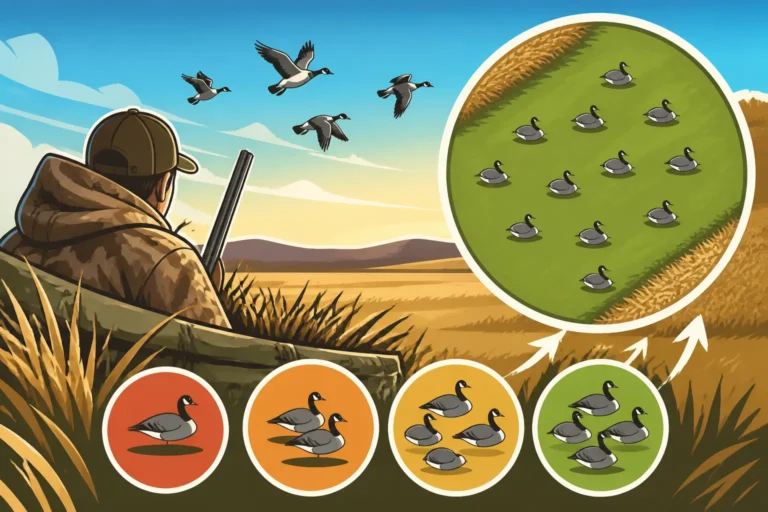
- Quantity is King: A typical diver spread on the Missouri might range from 75 to 200+ decoys. The goal is to create a massive, visible silhouette on the water that mimics a large raft of feeding ducks.
- Diver Rigs: Instead of individual weights, many big water hunters use longline or Texas rig setups. Longlines involve clipping multiple decoys to a single main line, which is then weighted at both ends. Texas rigs use a single length of heavy mono or braided line with a sliding weight, making deployment and retrieval quicker.
- Keel Types: Diver decoys often have weighted keels to keep them upright in rough water. Make sure your decoys are stable and float naturally.
- Motion Decoys: While spinning wing decoys are less common for divers than dabblers, subtle motion decoys like jerk cords (though challenging in deep water) or simple floating feeder butts can add realism. Sometimes, just the sheer numbers and movement from the waves are enough. It's a different game compared to Decoy Spreads on a South Dakota Prairie Pothole, where a few spinning wings might do the trick.
Blind and Concealment Strategies
Concealment on open water is a unique challenge. You can't just tuck into a cattail slough here.
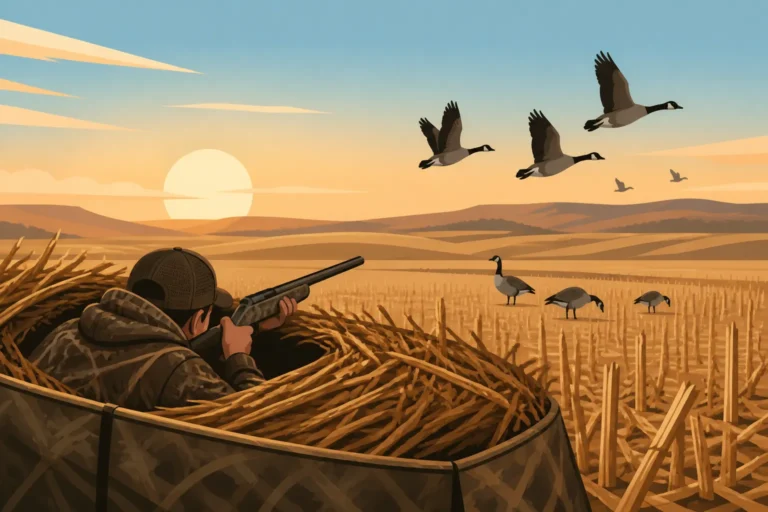
- Boat Blinds: The most common method is a well-built boat blind that completely conceals you and your hunting party. These blinds need to be sturdy enough to withstand wind and waves, yet quick to deploy and retrieve. Natural camouflage materials, like bundles of native grasses or artificial camo netting, should match the surrounding shoreline or open water conditions. A low profile is generally better for divers, as they often approach at high speeds.
- Natural Cover/Islands: In some areas, islands or specific points might offer natural cover like fallen timber or dense brush. If you find such a spot, you can set up a ground blind, but be absolutely certain of public access and private land boundaries using your mapping tools.
- Shoreline Blinds: For hunters who prefer not to use a boat blind or don't have a large enough boat, setting up a permanent or portable blind on the shoreline can work, provided you have legal access and the ducks are working relatively close to shore. This often means finding points or shallow flats where divers naturally funnel or feed.
Cold Weather and Safety Gear
The Missouri River in fall and winter can be brutally cold. Hypothermia is a very real threat. Your personal gear needs to be up to the task.
- Layering: The key to staying warm is proper layering. Start with moisture-wicking base layers, add insulating mid-layers (fleece, down), and finish with a waterproof, windproof outer shell. Your outer shell should be durable and quiet. For more tips, refer to Staying Warm in a December Blind.
- Flotation Suits/PFDs: Absolutely essential. Wearing a full flotation suit (like those from Mustang Survival or Striker Ice) offers both warmth and vital flotation should you go into the frigid water. If not a full suit, a high-quality, comfortable PFD should be worn at all times in the boat, not just stored under a seat.
- Footwear: Insulated, waterproof boots are a must. Many hunters opt for chest waders or even full dry suits for boat work, as you will inevitably get wet when deploying and retrieving decoys.
- Emergency Kit: Beyond the basic boat safety gear, pack a dry bag with extra warm clothing, a first-aid kit, emergency blankets, a fully charged cell phone (in a waterproof case), and a way to start a fire (lighter, waterproof matches). Tell someone your float plan, especially your launch and expected return times.
Effective Tactics for Hunting Diver Ducks on the Missouri River
Once you've got your gear dialed in, it's time to talk strategy. Hunting divers on the Missouri isn't just about throwing out decoys; it's about understanding the environment, the ducks' behavior, and putting all the pieces together for a successful hunt.
Scouting and Location Selection
This is perhaps the most critical step. You can have the best gear in the world, but if you're in the wrong spot, you'll be staring at empty skies.
- Pre-Season Work: Start long before opening day. Use satellite imagery (available on platforms like GoHunt) to identify submerged flats, old river channels, points, and bays. Look for areas with significant aquatic vegetation, as this is where canvasbacks and redheads often feed. Note potential protected areas where birds might rest during high winds.
- On-the-Water Scouting: Once the season approaches or begins, spend time on the water, even if it's just glassing. Look for rafts of divers. Pay attention to how they use the water – where they feed, where they rest, and their flight paths. GoHunt's detailed maps can help you mark these observations directly onto your electronic map for future reference.
- Reading the Wind and Current: Diver ducks notoriously respond to wind and current. They almost always land and take off into the wind. The current can also dictate where they feed and rest. Identify locations that offer food, protection from harsh winds, and natural funnel points. A deeper understanding of Reading Wind on a Big Water Set is crucial here. Look for "eddy lines" or current breaks near points or submerged structures where food might accumulate.
Setting Up for Success: Wind, Current, and Decoy Placement
Your setup needs to be dynamic and adaptable to the ever-changing conditions of the Missouri River.
- Anchor Your Spread: Due to strong currents and winds, proper anchoring of your decoy lines is paramount. Use heavy weights at the ends of your longlines, and consider adding additional anchors if the current is particularly strong. You don't want your spread to drift away.
- The "J" or "V" Spread: A common and effective diver spread configuration is a large "J" or "V" shape, with the open end of the "J" or the mouth of the "V" facing into the wind. This creates a natural landing zone for incoming birds directly in front of your blind. Place your blind at the bend of the "J" or the apex of the "V."
- Spacing: While quantity is important, don't clump decoys too tightly. Divers like to have room to land. Vary the spacing, with perhaps tighter groups towards the main body of the spread and more widely spaced "stragglers" towards the landing zone.
- Species-Specific Placement: If you're targeting multiple species, place a few groups of species-specific decoys (e.g., a small cluster of canvasbacks) within your main bluebill spread. This adds realism and can entice those specific birds.
- Consider the Current: Always factor in the current. Your decoys will stream down-current from their anchor points. Position your spread so that the landing zone is exactly where you want it relative to your blind, taking into account how the current will pull the ducks as they approach.
Calling and Finishing Strategies
Unlike dabblers, diver ducks are not typically aggressive callers. Your calling strategy will be more subtle, focusing on confidence and reassurance.
- Confidence Calls: Focus on low-pitched "purrs" and "growls" for bluebills and redheads, and the classic "rattle" for canvasbacks. These aren't loud, attention-grabbing calls, but rather soft sounds that tell approaching ducks that everything is safe in your spread.
- Less is More: Overcalling divers can often spook them. Use calls sparingly, mainly to get the attention of distant birds or to reassure those that are working your spread. Let your large, realistic decoy spread do most of the work.
- Finishing Birds: When birds commit and start to drop, stop calling and remain absolutely still. Divers will often cup their wings and dive into the decoys at high speed. Be ready for fast action and challenging shots.
- Wind Calls: Divers are inherently linked to the wind. Learn to anticipate their flight paths based on the wind direction. For more on this, check out Reading Wind on a Big Water Set. They will almost always approach from downwind, landing into the breeze, and often swing wide before committing.
Retrieving Birds in Big Water
Retrieving downed birds on the Missouri River can be one of the most challenging aspects of diver hunting. The combination of waves, current, and cold water makes it dangerous for both hunters and dogs.
- Dog Safety: If using a retriever, ensure your dog is conditioned for cold water and wears a protective vest. Be incredibly mindful of ice forming on their fur or paws. Do not send your dog into dangerously rough or icy water. Some hunts are simply too risky for even the toughest retrievers.
- Boat Handling: Mark the spot where the bird fell immediately. As soon as you shoot, have someone point or keep eyes on the bird. The current can carry a downed duck a considerable distance in a short amount of time. Navigate slowly and safely to retrieve the bird, keeping an eye on your spread to avoid tangling lines.
- "Pick-up" Spreads: Some hunters will have a smaller, separate "pick-up" spread of decoys, often using individual weights, that they can deploy quickly to retrieve birds without disturbing their main spread too much.
- Boat Hooks and Nets: Keep a long boat hook or a large landing net handy for retrieving birds directly from the boat. This minimizes the need for people or dogs to enter the water.
Navigating Regulations and Access on the Missouri River
Hunting the Missouri River for divers requires not only tactical prowess but also a solid understanding of South Dakota's specific waterfowl regulations and public access rules. Overlooking these details can lead to fines or a ruined hunt.
South Dakota Waterfowl Regulations Specifics
South Dakota has clear rules for waterfowl hunting, and it's your responsibility to know them inside and out. Always consult the current year's South Dakota Game, Fish and Parks (GFP) hunting handbook, as regulations can change annually.
- Licensing: You'll need a valid South Dakota hunting license, a small game license, a state waterfowl stamp, and a federal migratory bird hunting and conservation stamp (federal duck stamp). Additionally, you must be HIP (Harvest Information Program) registered. Don't forget to review South Dakota Federal Duck Stamp Rules and South Dakota HIP Registration to ensure you're fully compliant.
- Season Dates and Bag Limits: Pay close attention to the specific South Dakota Waterfowl Season Dates for ducks, as these can vary by zone and year. Diver ducks often have specific bag limits that differ from dabblers. For instance, there are usually specific limits on species like Canvasbacks, Redheads, and Scaup. Always double-check the current South Dakota Duck Bag Limits before you head out.
- Shooting Hours: Legal shooting hours for waterfowl in South Dakota generally begin one-half hour before sunrise and extend to sunset. Be meticulous with your timing; shooting outside these hours is a serious offense.
Public Access Points and Boat Ramps
Gaining legal access to the Missouri River is generally straightforward, but it's important to know where you can launch and hunt.
- Main Boat Ramps: The major reservoirs (Oahe, Sharpe, Francis Case) are dotted with numerous public boat ramps, often managed by the U.S. Army Corps of Engineers or the South Dakota Game, Fish and Parks. Popular ramps include those near Pierre, Fort Randall Dam, Chamberlain, and Mobridge. These ramps are usually well-maintained, but can be very busy during peak hunting seasons, so plan to arrive early.
- Shoreline Access: While boating is the primary method for diver hunting on the Missouri, there are often opportunities to hunt from the shoreline on public lands. Use the South Dakota GFP Public Hunting Atlas or mapping applications like GoHunt to identify specific tracts of public land (such as Game Production Areas, National Grasslands, or Corps of Engineers lands) that offer shoreline access. For general information on where to find these, you can refer to Missouri River Reservoir Shoreline Hunting.
- Island Hunting: Many islands along the Missouri River are public land and can offer excellent hunting opportunities, particularly for setting up blinds. However, always verify land ownership before setting foot on an island. Strong currents and changing water levels can also make access to some islands challenging or dangerous.
Understanding Corps of Engineers Land
A significant portion of the land surrounding the Missouri River reservoirs in South Dakota is managed by the U.S. Army Corps of Engineers (USACE). Understanding the rules for these lands is crucial.
- General Access: USACE lands are generally open to public hunting, but specific rules and restrictions can apply to different areas. Some areas might have camping restrictions, or limitations on vehicle access.
- Leased Lands: Be aware that some areas of USACE land are leased for agricultural purposes or grazing. While hunting is often still allowed on these leased tracts, it's wise to be extra respectful and cautious, and always double-check for specific signage.
- Refuge Areas: The Corps also manages certain areas as wildlife refuges or restricted zones, particularly around dams or heavily trafficked recreational areas. These areas are typically closed to hunting, so always consult the latest GFP map or use your GoHunt app to confirm boundaries before you go. Detailed information can be found in Corps of Engineers Land Along South Dakota's Missouri River.
Always practice good outdoor ethics, retrieve all your spent shell casings, and leave no trace behind. The Missouri River is a shared resource, and its continued availability for hunting depends on all of us being responsible stewards.
Diver Duck Species and Missouri River Habitat Preferences
Understanding the nuances of each diver species is invaluable when planning your Missouri River hunt. While they all appreciate big water, their specific diets and behaviors mean they'll favor different parts of the expansive reservoirs.
| Species | Key Identification (Male) | Typical Behavior | Preferred Forage | Habitat Preference on Missouri River |
|---|---|---|---|---|
| Canvasback | Red head, black chest, white body | Very fast flight, often in V-formations. Can be wary. | Submerged aquatic vegetation (sago pondweed, wild celery) | Large, open bays with extensive submerged vegetation beds. |
| Redhead | Red head, gray body, black chest | Agile fliers, respond well to decoys. | Submerged vegetation, seeds, aquatic insects | Shallower, protected bays and flats with vegetation. |
| **Bluebill | Black head/chest, gray body | Often in large rafts, erratic flight. | Mussels, clams, aquatic insects, snails | Vast open water, deep flats, points with mollusk beds. |
| Common Goldeneye | Green-black head, white body spot | Late-season arrival, whistling wings, agile. | Aquatic insects, crustaceans, small fish | Deeper water, often near current breaks, in colder weather. |
| Bufflehead | Black head, large white patch | Small, agile, often closer to shore or in sheltered areas. | Aquatic insects, crustaceans, small fish | Sheltered bays, coves, river sections. Rarely in large flocks. |
By learning to recognize these birds on the wing and understanding their likely locations based on food sources and water conditions, you'll significantly increase your chances of success on the Missouri. Remember, even though they're all "divers," their individual preferences mean you can tailor your approach for specific species.
Disclaimer
Hunting is an inherently dangerous activity. Always prioritize safety, understand and follow all local, state, and federal regulations. This guide provides general information and should not replace official hunting handbooks or professional safety instruction. Be aware of weather conditions, practice ethical hunting, and always inform someone of your hunting plans and expected return.