Keeping Birds Cool in a Warm Truck
There's nothing quite like a successful day chasing pheasants in the expansive fields of South Dakota, but the excitement can quickly turn to frustration if you don't take proper care of your hard-earned birds, especially when the weather decides to be unseasonably warm. Many hunters experience the disheartening reality of game meat spoiling in the back of a hot truck, ruining not only a meal but also disrespecting the bird. This guide is dedicated to equipping you with practical, field-tested strategies to keep your pheasants cool and fresh, ensuring that every bird makes it from the field to your table in prime condition, regardless of the temperature outside.
The Critical Need for Proper Bird Cooling
The moment a pheasant hits the ground, the clock starts ticking. While we often think of "spoilage" as something that happens days later, the process begins almost immediately, especially in warm conditions. Neglecting proper cooling isn't just about potentially losing a meal; it impacts the taste, texture, and overall quality of the meat you've worked hard to acquire.
Why Heat is the Enemy for Game Meat
Think of your pheasant as a fine cut of beef or chicken from the grocery store. You wouldn't leave that in a warm car for hours, right? The same principle applies, but with wild game, there's an added layer of challenge. When an animal is alive, its body temperature is around 100-104°F. After death, metabolic processes continue for a short period, generating heat, and if this internal heat isn't dissipated quickly, it creates a perfect breeding ground for bacteria. Bacteria multiply rapidly in temperatures between 40°F and 140°F, commonly known as the "danger zone." A warm South Dakota afternoon, especially during the early pheasant opener, can easily keep a bird's carcass in this zone for far too long. The muscle tissues begin to break down, leading to a gamey flavor, mushy texture, and eventually, outright spoilage. Moisture combined with heat only accelerates this process, which is why a bird left bundled in a plastic bag on a warm truck bed is essentially cooking itself from the inside out.
Recognizing the Signs of Spoiled Game
Nobody wants to get home, excited to clean their birds, only to find them starting to turn. Knowing the signs of spoilage can save you time, effort, and prevent a potentially unpleasant culinary experience. The most obvious indicator is smell. Fresh pheasant has a mild, slightly gamey aroma. If you detect any strong, foul, or sour odor, it's a clear red flag. The color of the meat is another clue; fresh breast meat should be a healthy pinkish-red. If it appears brownish, greenish, or slimy, it's likely compromised. Pay attention to the texture too. Fresh meat is firm and resilient. If it feels excessively soft, mushy, or sticky to the touch, especially in the breast cavity or under the wings, it's probably best to discard it. While some slight "gaminess" is natural for wild birds, these visual and olfactory cues are your best defense against wasting an animal or, worse, getting sick.
Immediate Field Dressing: The First Line of Defense
Proper cooling starts literally moments after the shot. You can't just toss a bird into a bag and hope for the best. Taking a few crucial steps right there in the field significantly reduces the internal temperature and sets the stage for successful transport.
Cooling Birds from the Inside Out
The most effective way to cool a bird is to remove its internal organs, often called "evisceration" or Cleaning Pheasants in the Field. This eliminates a major source of internal heat and exposes the body cavity to cooler air. As soon as you retrieve your bird, take a moment to perform this essential step. Make a small incision just below the breastbone, being careful not to puncture the intestines. Reach in and remove the entrails, heart, and liver. Some hunters also choose to remove the crop, which can be full of grain and continue to generate heat. Once the cavity is clear, give it a quick wipe with a clean cloth or a handful of grass to remove any blood or debris. This immediate action drastically reduces the bird's core temperature and prevents gut bacteria from contaminating the meat as it cools. For practical purposes, many hunters keep a small, sharp knife and some paper towels or wipes specifically for this task in their vest or truck. Even if you plan on doing a full breasting or Breasting Versus Plucking Birds later, this initial step is paramount.
Minimizing Contamination During Field Care
While speed is important for cooling, cleanliness is equally vital to prevent contamination. When field dressing, always use a clean knife. If you're doing multiple birds, wipe your knife blade between each one. Try to keep the bird's carcass off the dirt as much as possible, especially if the ground is wet or muddy. Laying it on a clean game bag, a piece of old newspaper, or even your hunting vest (if it's clean) is better than direct contact with the soil. If you're near water, a quick rinse of the cavity can be beneficial, but make sure to dry it thoroughly afterward to prevent bacterial growth in a moist environment. Many seasoned hunters will carry disposable gloves to maintain hygiene and protect themselves. Remember, the goal is to get the bird clean and cool, not just cool. Keeping things tidy from the start will make final processing much easier and safer when you get back to camp or home.
In-Vehicle Cooling Strategies for Pheasants
Once your birds are field-dressed, the next challenge is keeping them cool and well-ventilated during the drive back. A truck bed can become an oven on a sunny day, and even the cab can get surprisingly warm. It’s all about creating an environment that encourages cooling, not cooking.
The Power of Airflow and Shade
One of the simplest yet most overlooked methods for keeping birds cool is ensuring good airflow and protecting them from direct sunlight. Never, ever, throw your pheasants into a closed-up plastic bag and leave them in the sun in the back of your truck. That's a recipe for disaster. Instead, utilize mesh game bags. These breathable bags allow air to circulate around the bird, promoting evaporative cooling and preventing heat buildup. You can find excellent quality mesh bags from brands like Allen or ALPS OutdoorZ. If you don't have mesh bags, simply laying the birds out individually (not stacked!) in a shaded area is far better than bundling them.
When driving, if possible, hang your birds in a shaded, airy part of your truck bed, or if you have a dog box with good ventilation, that can work too. Many hunters will place a canopy or even a tarp over the truck bed to create a makeshift shaded area, ensuring air can still flow underneath. Even opening the rear windows of your cab slightly to create a cross-breeze can help if the birds are inside. Avoid placing birds directly on hot truck bed liners, which can absorb and radiate heat for hours. A thoughtful scout of your hunting area, perhaps using tools like GoHunt to identify potential shaded areas for breaks, can be invaluable for mid-day cooling of both birds and dogs. Remember, direct sun is your enemy – think about Where Roosters Sit at Midday – they seek shade too!
Insulated Containers and Ice Management
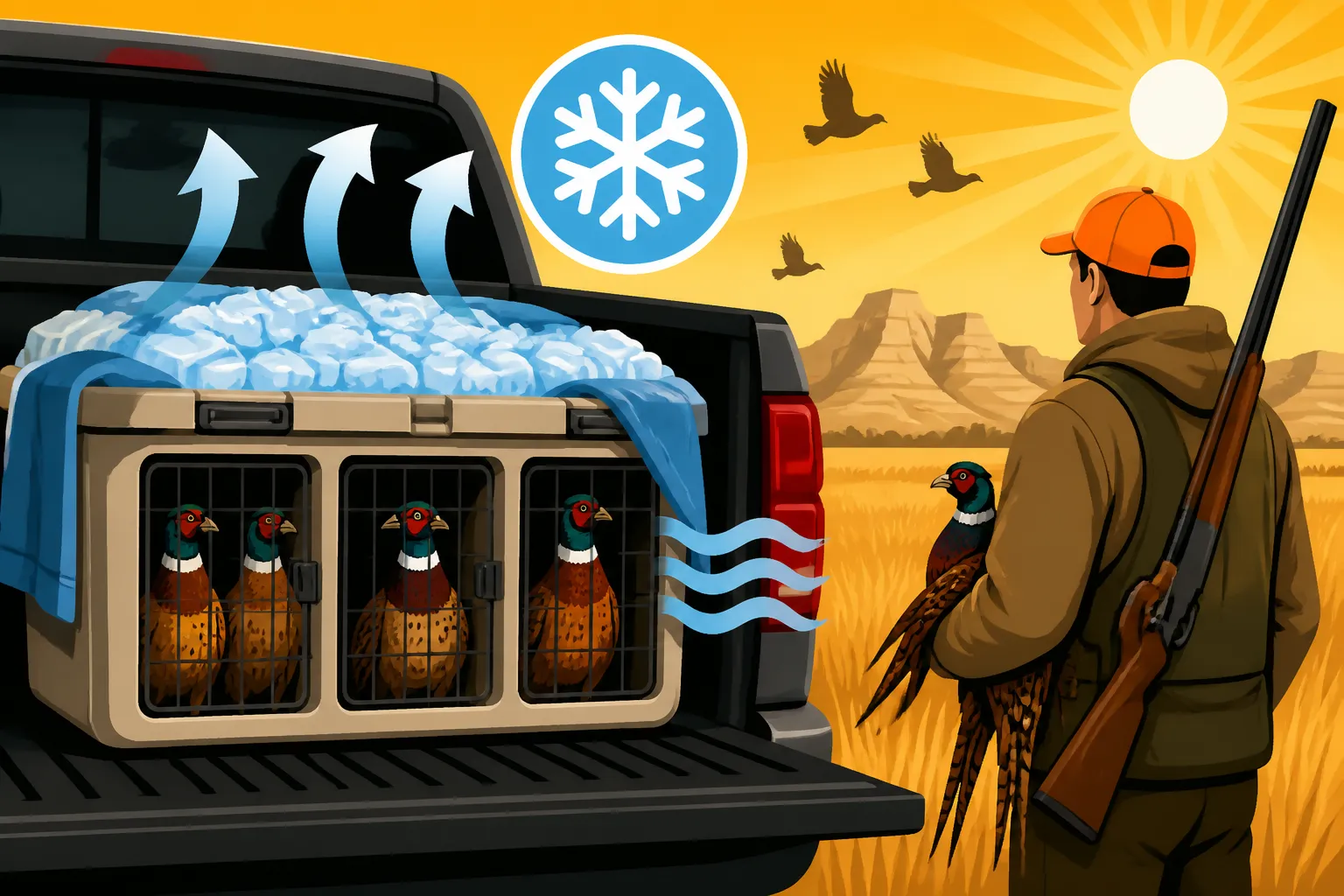
For longer drives or warmer days, insulated coolers and ice become your best friends. But there's a trick to using them effectively. Don't just dump warm birds directly onto ice. This can lead to "ice burn," where the extreme cold damages the outer layers of the meat without truly cooling the interior, and the melting ice can create a watery mess that compromises quality.
Instead, the ideal method is a "false bottom" or "indirect ice" system. Place a layer of ice at the bottom of your cooler, then add a grate or a few small sticks to create space. Lay your field-dressed birds above the ice, ensuring they aren't sitting directly in melted water. Alternatively, you can put ice in sealed plastic bags or jugs and place them around and above the birds. This cools the air inside the cooler, which in turn cools the birds, without them getting waterlogged.
Here’s a simple table to illustrate the pros and cons of different in-vehicle cooling methods:
| Method | Pros | Cons | Best Use Case |
|---|---|---|---|
| Mesh Game Bags | Excellent airflow, lightweight, reusable | Limited cooling on very hot days, exposed to sun | Short drives, mild weather, constant shade |
| Cooler with Ice (Indirect) | Highly effective cooling, protects from elements | Requires ice, takes up space, needs proper setup | Long drives, warm weather, multiple birds |
| Shaded Truck Bed | Free, simple, good airflow | Relies on natural shade, less effective for long periods | Short breaks, mild conditions, quick transport |
| Dog Box (Vented) | Good airflow, secure, often already present | May not be enough space for many birds, can get warm in sun | Transporting a few birds with your dog (Keeping a Dog Cool on an Early Opener) |
Consider adding a small, battery-operated fan inside your cooler or dog box for extra airflow, especially when the vehicle is stationary. Keeping Dog Water and Burrs on the Prairie is important, and similarly, keeping your birds dry is key. For those longer trips, a dedicated hunting cooler that can maintain temperature for extended periods, like those from Yeti or RTIC, can be a game-changer.
Vehicle Setup for Optimal Cooling
Beyond the specific containers, how you set up your vehicle plays a role. If you're driving a pickup, an open topper can offer shade while still allowing decent airflow. For SUV or enclosed vehicle owners, rolling down windows or running the air conditioning on full blast can help cool the entire interior where birds might be stored (again, in mesh bags or a cooler). Avoid placing birds in the trunk of a car, which is often the hottest and least ventilated space.
Many hunters dedicate a specific area in their vehicle for game transport. This might involve a designated cooler spot in the truck bed, secured so it doesn't slide around, or a protected space in the cab for smaller game. If you're hunting with a large group and anticipate a good haul, consider a dedicated game hauler or a second, large cooler. For nonresident hunters particularly focused on the South Dakota Pheasant Season and Licences, preparing your vehicle setup beforehand is crucial, especially if you're hitting the field during the South Dakota Pheasant Opener Date which can often be surprisingly warm. A little forethought in vehicle organization can prevent a lot of headaches later.
Best Practices for Post-Hunt Bird Storage
You've successfully kept your birds cool on the drive back to camp or home – fantastic! But the journey isn't over yet. The final steps in processing and storage are just as important for preserving the quality of that delicious Pheasant Meat Handling and Cooking.
Processing Upon Arrival
The moment you arrive at your destination, whether it's a lodge or your home, it's time to get those birds fully processed. Don't let them sit in the cooler or vehicle any longer than necessary. The faster you can get them cleaned and into a truly cold environment, the better.
First, decide how you're going to process them. Are you going to Breasting Versus Plucking Birds? If you're plucking the whole bird, you'll want to get started quickly. If you're simply breasting them out, this can be a faster process. Once processed, inspect the meat one last time for any signs of contamination or bruising. Rinse the meat thoroughly under cold running water, then pat it completely dry with paper towels. Excess moisture on the meat's surface can encourage bacterial growth even in cold temperatures.
Many outfitters and lodges in South Dakota offer bird cleaning and packaging services, which can be a huge convenience, especially after a long day in the field. If you're self-guided, setting up a clean, well-lit processing station is key. Have plenty of clean water, sharp knives, and a designated waste receptacle ready. This immediate processing is what truly locks in the freshness and prevents the meat from developing the dreaded "gamey" taste that sometimes gives wild birds a Why Pheasant Meat Gets a Bad Name.
Long-Term Preservation Methods
After processing, your goal is to get the meat into long-term storage as quickly as possible. The freezer is your friend here. For best results, package the pheasant meat in a way that minimizes air exposure, which can cause freezer burn.
Vacuum sealing is by far the superior method. It removes all air, preventing ice crystals from forming and preserving the meat's quality for months, even up to a year or more. If you don't have a vacuum sealer, heavy-duty freezer bags or wrapping the meat tightly in plastic wrap followed by aluminum foil will work. When using freezer bags, try to press out as much air as possible before sealing. Label each package with the date and type of meat so you know exactly what you have on hand.
If you're staying at a lodge for several days, ensure they have adequate freezer space. If you're driving a long distance home, having a dedicated cooler for frozen meat, separate from your field cooler, is a smart move. Line it with dry ice or plenty of regular ice in sealed bags. For hunters flying home, check airline regulations on transporting game meat. Typically, it needs to be frozen solid and packed securely in a leak-proof container. A well-cared-for pheasant can provide delicious meals long after your hunt, making all the effort worthwhile.
Disclaimer
The information provided in this article is for general guidance and informational purposes only, and does not constitute professional advice. Always consult with the South Dakota Game, Fish and Parks (GFP) official regulations for the most current and accurate hunting laws and safety guidelines. Hunting involves inherent risks, and hunters should always prioritize safety and ethical practices.