Working Food Plots at Midday
We’ve all been there: the sun climbs high, the morning hunt fizzles out, and you’re left wondering if you should just head back to camp for lunch. That mid-morning to mid-afternoon "lull" can feel like a death sentence for your chances, and many hunters pack it in, assuming all the deer are bedded down tight. But what if I told you that, for certain deer, and especially around well-placed food plots, the midday hours can actually be incredibly productive? This guide is going to dig deep into why deer might still be active around food plots during the middle of the day and how you can strategically capitalize on it in the diverse landscapes of South Dakota.
The Midday Lull Myth: Why Food Plots Break the Rules
The idea that deer completely shut down between 10 AM and 3 PM is a widespread belief, and often, it holds true for general timber or prairie hunting. Most deer activity indeed peaks around dawn and dusk. However, food plots aren't "general" hunting areas; they are concentrated food sources designed to attract and hold deer. This crucial difference means that a well-chosen food plot can be an exception to the midday lull, especially under certain conditions or for specific deer. Understanding why deer might deviate from their typical patterns is the first step to turning slow afternoons into successful ones.
Nutrition and Energy Needs
Deer are essentially eating machines, particularly during the crucial periods leading up to and during the rut, or in colder late-season conditions when they need to pack on calories. A food plot, especially one rich in highly digestible forage, provides an irresistible draw. Think about it: during periods of high stress, like the chasing phase of the rut, bucks burn an incredible amount of energy. They're constantly on the move, asserting dominance, and pursuing does. This intense activity means they need to refuel, and a prime food plot offers a concentrated, high-calorie meal without having to travel far or expend excessive energy browsing scattered natural forage.
For instance, a buck that has been dogging a doe all night and into the early morning might retreat to a thicket to bed down for a few hours, but hunger will drive him out sooner than you might expect. If there's a lush brassica or turnip plot just a hundred yards from his bedding cover, he might not wait until dusk to grab a quick, energy-rich snack. Similarly, in the late season when temperatures drop and natural forage is sparse or covered in snow, a food plot designed for winter palatability, like standing corn or specific brassica varieties, becomes a vital survival tool. Deer know this and will often risk midday movement to access these essential calories, especially if they haven't had their fill during a short, cold morning. Companies like GoHunt offer detailed mapping overlays that can help you identify these critical food sources in relation to bedding areas.
Pressure and Security
Another key factor in midday food plot activity is hunting pressure. While many hunters are heading out of the woods or back to the truck during the middle of the day, deer are aware of these patterns. A food plot that is generally left alone during midday hours can, paradoxically, become a secure feeding location for deer that have been bumped or pressured during the early morning. Deer learn quickly. If they associate evening feeding with hunter presence, they might adjust their schedule to feed when human activity is minimal.
Consider a large agricultural field adjacent to a dense river bottom, a classic South Dakota whitetail habitat. Most hunters will hit the field edges at first and last light. If there's a smaller, secluded food plot tucked back into the timber, perhaps only an acre or two in size, deer might feel safer entering that plot during the quiet midday period. They know the main field will be busy later, but this hidden gem offers a chance to feed with less perceived risk. This is especially true for older, wiser bucks who are masters at avoiding detection. They'll use the quiet hours to their advantage, slipping into a plot from thick cover, grabbing a bite, and retreating before the evening rush of hunters. Understanding South Dakota Hunting Pressure Patterns on Walk-In Areas can give you an edge in predicting how deer might react to various situations.
Identifying Prime Midday Food Plots
Not all food plots are created equal when it comes to midday potential. A wide-open, perfectly manicured plot in the middle of a short-grass prairie is unlikely to hold deer during the daylight hours, no matter how hungry they are. The most successful midday food plots share specific characteristics that cater to a deer's need for both sustenance and security.
Cover and Escape Routes
The absolute most critical element for a midday food plot is its proximity to thick, secure cover. Deer, particularly mature bucks, are extremely wary of exposing themselves in open areas during daylight. A successful midday plot is one that deer can access, feed in, and exit with minimal exposure. This means thick woods, dense cattail sloughs, rugged coulees, or heavy brush are usually only a stone's throw away.
Imagine a small soybean plot nestled deep within a finger of timber, perhaps bordering a dense shelterbelt or a choked-out creek bottom. Deer can literally step out of the cover, feed for a short period, and dart back into safety at the slightest sign of danger. The shorter the distance between the food and the sanctuary, the more comfortable deer will be using it during the day. Often, these plots are smaller, irregularly shaped, or have "nooks and crannies" that allow deer to stay partially hidden even while feeding. When you're scouting, pay close attention to the transition zones – where the food plot meets the timber or brush. Look for well-used trails leading directly into the thick stuff. These indicate a preferred path for deer seeking quick access to food and safety. Platforms like GoHunt are excellent for E-Scouting Walk-In Areas Before the Season or private ground by showing you aerial imagery to pinpoint these ideal locations and access routes.
Food Type and Stage
The type of forage planted and its stage of growth also play a significant role in midday attraction. Deer's dietary preferences change throughout the year, influenced by nutritional needs and palatability.
Here's a quick breakdown of common food plot types and their midday potential:
| Food Plot Type | Peak Season | Midday Potential | Why it works/doesn't |
|---|---|---|---|
| Cereal Grains (Wheat, Oats, Rye) | Early Fall, Late Season | Moderate to High | Highly palatable, quick energy. Deer will browse for extended periods. |
| Brassicas (Turnips, Radishes, Rape) | Late Fall, Winter | High | Develops high sugar content after a frost, crucial winter forage. |
| Clover/Alfalfa | Spring, Summer, Early Fall | Low to Moderate | Excellent year-round protein, but less critical for midday hunger in fall/winter. |
| Soybeans | Late Summer, Early Fall | High (pods) | High protein and fat in pods, very attractive as they mature. |
| Corn | Late Fall, Winter | High | Critical late-season energy source, offers good visual cover while feeding. |
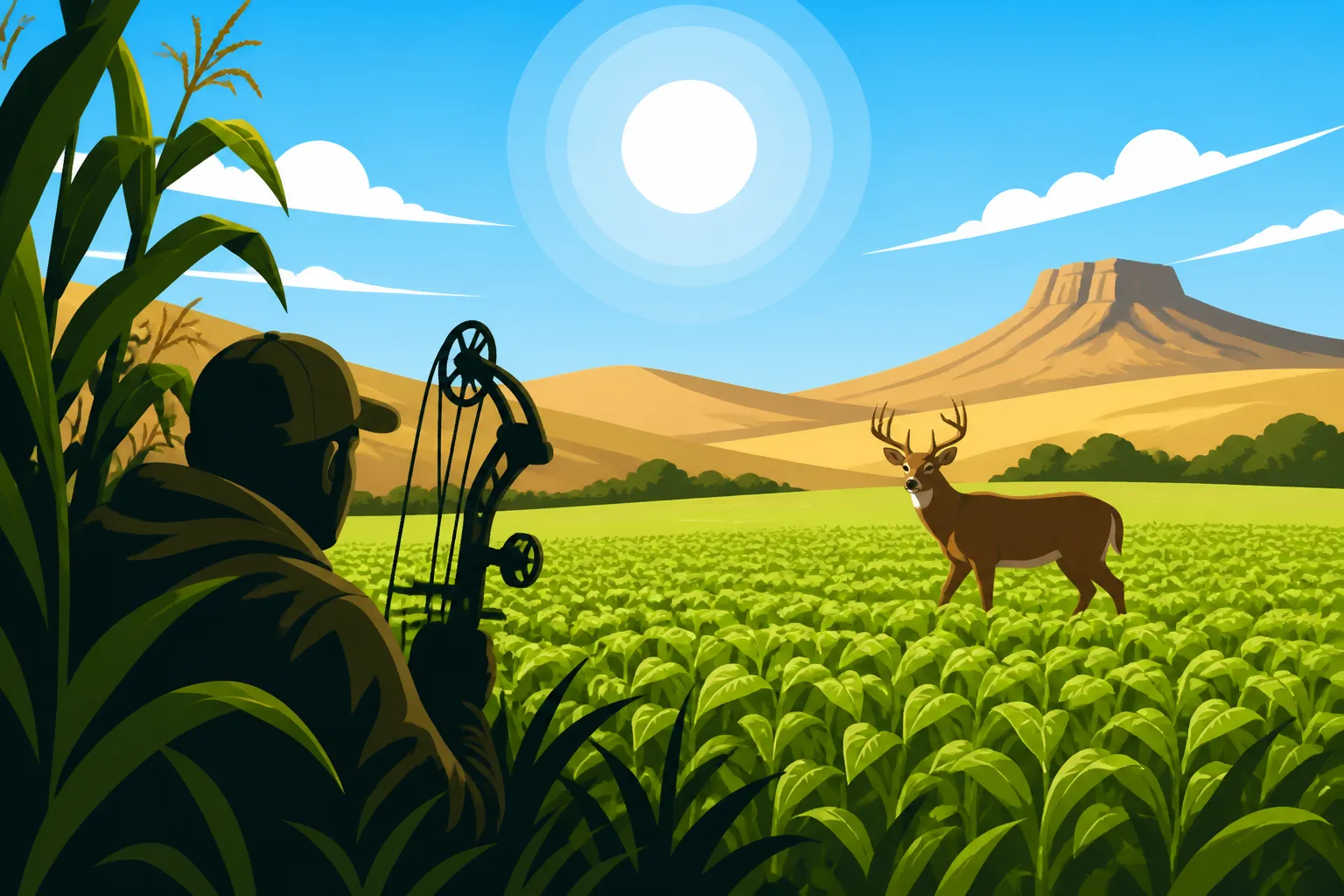
In the early bow season in South Dakota, a plot of lush soybeans with developing pods might see midday activity, as deer seek out that protein-rich food source to build up for the rut. Later in the season, after a few hard frosts, a brassica plot that has sweetened up becomes incredibly attractive. The deer know where the easiest, most nutritious meal is, and they might make a midday move for it. Don't forget standing corn plots either; they offer not just food, but incredible security within the rows, making deer feel much safer feeding during daylight hours. This is especially relevant in a state known for its Corn Rows and Running Roosters, where deer often share habitat with pheasants.
Strategic Approaches to Midday Food Plot Hunting
Once you've identified a promising midday food plot, the next challenge is actually hunting it effectively. This isn't a "run-and-gun" situation; it requires careful planning and a disciplined approach to avoid spooking the very deer you're trying to intercept.
Scent Control and Wind Direction
This cannot be overstated: scent control is paramount when hunting food plots at midday. Deer are relaxed and relying heavily on their senses, and even a slight whiff of human odor can send them scattering. You absolutely must play the wind. Before you even consider approaching a midday stand, confirm the prevailing wind direction. A good rule of thumb is to have the wind blowing your scent away from where you expect deer to approach and from their bedding areas.
Even with meticulous scent elimination (clean clothes, scent-reducing sprays, ozone treatments), residual human odor will still be a factor. Therefore, always approach your stand with the wind in your face or quartering to you, allowing any lingering scent to be carried away from the plot. Having an understanding of Wind Direction on a Prairie Stalk can translate directly to your food plot hunting, as the principles of scent travel remain the same. Many hunters use apps from providers like GoHunt to get hyper-local wind forecasts and understand terrain features that might swirl winds. This preparation often dictates which stand you can hunt on a given day, or if you can even hunt that plot at all. If the wind isn't right, don't force it. You'll only educate deer and potentially ruin the spot for future hunts.
Elevated Stands and Ground Blinds
The choice between an elevated treestand and a ground blind depends heavily on the specific plot, available cover, and your hunting style.
- Elevated Treestands: These are often the preferred option for food plots, offering several advantages. Getting your scent above a deer's nose is a huge plus, and an elevated vantage point provides a better view of the entire plot, allowing you to see deer approaching from different angles and identify potential shooting lanes. When setting up a treestand, focus on locations within the timber edge that offer good cover behind you, breaking up your silhouette. Make sure your approach and exit routes keep you concealed. For plots bordering river timber or shelterbelts, a well-placed treestand can be incredibly effective, similar to strategic Treestand Setups on Narrow River Timber.
- Ground Blinds: Ground blinds can be excellent choices, especially in areas with limited trees, such as the edge of a cattail slough or a brushy fenceline, or in late season when leaf cover is gone. They offer excellent concealment, shelter from the elements, and allow for more movement inside. However, scent control becomes even more critical with a ground blind, as your scent cone is closer to the ground. Position your blind carefully, ensuring it blends into the natural surroundings and that you have a solid backdrop. Brushing it in thoroughly is a must. Also, consider setting up a blind several weeks before your hunt, allowing deer to get accustomed to its presence.
Regardless of your choice, ensure your setup allows for quiet entry and exit. Nothing busts a midday hunt faster than crunching through dry leaves or scraping against a metal ladder on your way in or out.
Patience and Timing
Midday food plot hunting is a game of patience. Deer might not be in the plot when you arrive, but they could show up an hour or two later. You need to commit to staying on stand for the long haul. A common mistake is to enter the stand around 10:00 AM after the morning activity dies down and leave by 1:00 PM, just as deer might be starting to move again.
If you're going to hunt a midday plot, plan to be in your stand by late morning (say, 9:30-10:00 AM) and stay until at least 2:00-3:00 PM, or even until dusk. This extended sit increases your odds significantly. Bring snacks, water, and anything else you need to stay comfortable and focused for several hours. Minimize movement, and resist the urge to check your phone constantly. Focus on scanning the edges of the plot and the surrounding cover for any signs of movement. Sometimes, the only activity you'll see is a flicker of an ear or a tail from deep within the brush before a deer finally commits to stepping out into the open.
Gear and Planning for a Midday Stand
Successful midday food plot hunting in South Dakota demands more than just knowing where to go; it requires thoughtful preparation and the right gear to endure hours in the stand, often in variable weather conditions.
Optics and Scouting Tools
High-quality optics are absolutely essential for midday hunting. With deer often moving subtly or lingering on the edge of cover, a good pair of binoculars (10×42 or 12×50) can make all the difference. You'll be spending hours scrutinizing distant cover and the edges of the plot for any sign of movement. Spotting a deer's leg, an ear twitch, or even just a change in the texture of the brush that indicates a hidden animal can be crucial. This is where tools like the GoHunt app really shine, allowing you to mark observations, track game movement patterns, and plan future stand locations based on real-time and historical data.
Additionally, a rangefinder is non-negotiable for ethical shot placement. Food plots can vary widely in size, and judging distances accurately to a moving deer can be challenging, especially after hours of quiet sitting. Practice with your rangefinder before the season, knowing the exact distances to key landmarks around your stand. This preparation ensures that when that midday buck finally steps out, you're ready to make a confident shot.
Weather Considerations
South Dakota weather can be unpredictable, and a midday hunt can expose you to a full range of conditions. Layering is always key, even if the morning feels mild. The sun can beat down surprisingly hot in October, while a cold front might roll through quickly, dropping temperatures dramatically.
- Sun and Heat: If hunting during warmer midday periods, consider light, breathable clothing in camouflage patterns. Hydration is crucial, so bring plenty of water. Positioning your stand where you'll be in the shade for at least part of the day can also greatly increase comfort and reduce detection.
- Cold and Wind: For late-season hunts, especially when pursuing Late-Season South Dakota Pheasants in Heavy Cover which often means cold temperatures that push deer to food, proper insulation is vital. Layering for South Dakota wind is an art form. Start with a moisture-wicking base layer, add insulating layers (fleece, down), and top it with a windproof and waterproof outer shell. Hand warmers, insulated boots, and a warm hat are also critical for extended comfort. A cold hunter is a distracted, fidgety hunter, and fidgety hunters spook deer.
Also, be mindful of how weather patterns influence deer movement. A warm, sunny day after a cold snap might encourage deer to move into sunny plots to feed and soak up warmth. Conversely, a blustery, windy day might keep them tucked deeper into cover, only venturing to the most secluded plots that offer some protection from the elements.
Disclaimer
Please remember that hunting regulations and seasons can change. Always consult the latest South Dakota Game, Fish and Parks regulations handbook before planning any hunt. This article is for informational purposes and does not endorse illegal hunting practices.