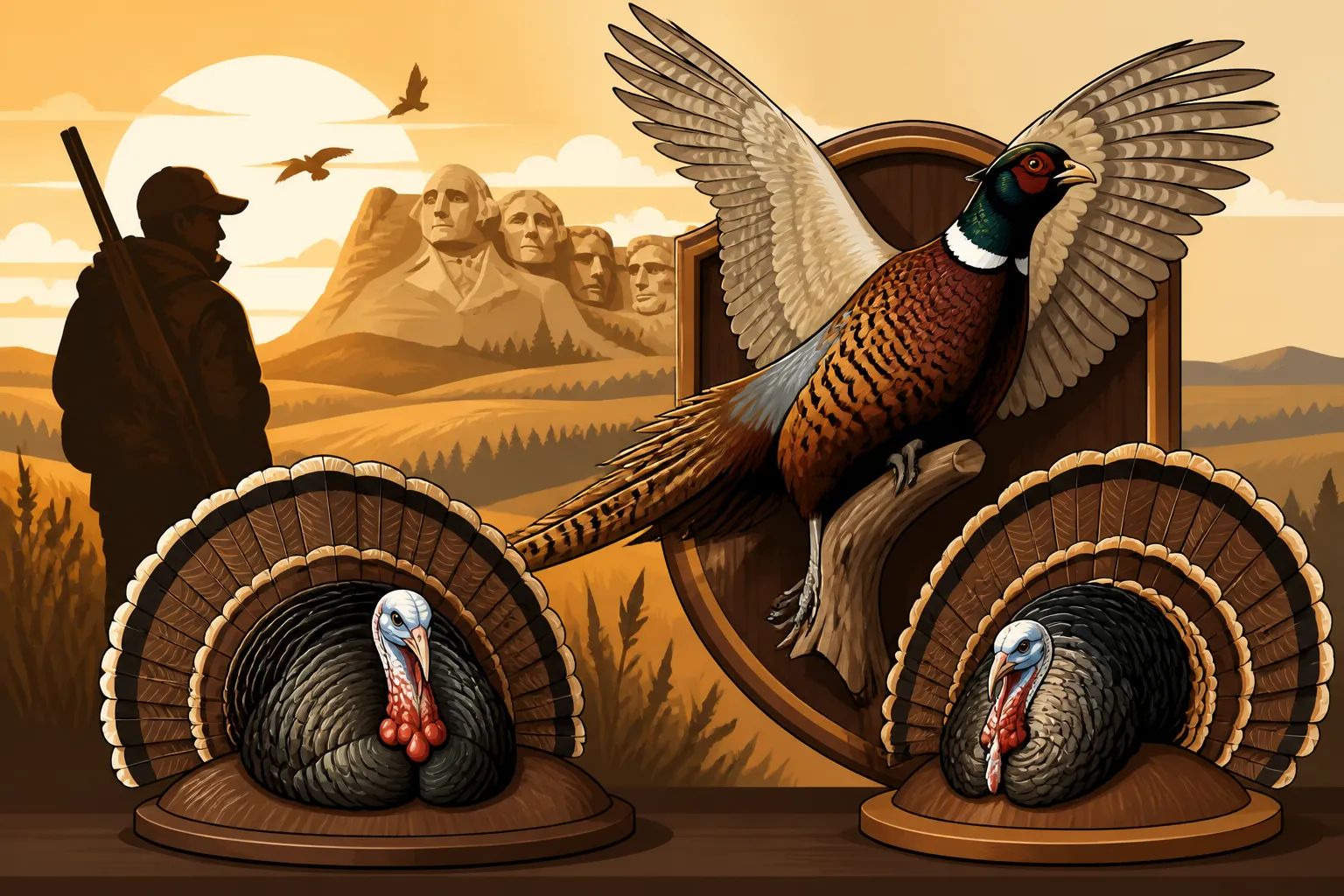
Bird Mounts and Fan Displays
You’ve just wrapped up an incredible hunt in South Dakota, your boots are tired, your dog is happily panting at your side, and you’re looking at a magnificent pheasant or perhaps a beautiful prairie grouse that represents more than just a meal—it’s a memory. Now comes the exciting, yet sometimes daunting, decision: how do you preserve that memory? This guide will walk you through the world of bird mounts and fan displays, helping you decide the best way to honor your hard-earned trophy and keep the spirit of your hunt alive for years to come.
Preserving the Memory: Full Mounts vs. Fan Displays
After a truly memorable hunt, there's a natural desire to keep a tangible piece of that experience. For many South Dakota hunters, a pheasant, sharp-tailed grouse, or even a majestic gobbler's fan becomes more than just game meat; it's a testament to their skill, perseverance, and the wild beauty of the prairie. The first big decision is whether to go with a full body mount, capturing the bird in a lifelike pose, or a more compact and often DIY-friendly fan display. Each option has its own charm, requirements, and considerations that can make a big difference in how you relive that hunting tale.
The Allure of a Full Body Mount
A full body mount is truly a piece of art. Imagine your pheasant, wings outstretched in mid-flush, or perhaps standing proudly as if surveying its domain. These mounts offer an incredible level of detail and realism, recreating the bird as it was in life. A skilled taxidermist can bring out the vibrant colors, intricate feather patterns, and characteristic posture of your specific bird, making it a dynamic focal point in any room.
The process for a full body mount is intricate and time-consuming, requiring the taxidermist to carefully skin the bird, preserve the skin, mount it over a form, and meticulously arrange every feather. This dedication to craftsmanship results in a stunning piece that often sparks conversation and vivid recollections of the hunt. Many hunters choose a full mount for a particularly large, colorful, or memorable bird, perhaps their first pheasant or a bird taken on a bucket-list trip.
Elegant Simplicity: Fan and Tail Displays
For those who prefer a more understated or space-saving option, a fan and tail display is a fantastic choice. This method focuses on the bird's most iconic and often colorful feature: its tail feathers. Pheasant tail fans, with their long, iridescent central plumes, are particularly popular. A fan display usually involves preserving the tail feathers, spreading them out, and mounting them on a plaque, often accompanied by the bird's spurs, leg bones, or even a spent shell casing from the hunt.
Fan displays are not only beautiful but also typically more affordable and require less space than a full mount. They can be incredibly personal, especially when you take the time to prepare them yourself. You can get really creative with the plaques, using different wood types, engravings, or even adding photos from the hunt. They’re a subtle nod to your passion for hunting and a wonderful way to commemorate multiple successful hunts over the years without filling your entire home with full mounts.
Considerations for Space, Cost, and Maintenance
When choosing between a full mount and a fan display, practical considerations are key. A full body mount, while impressive, demands significant space. A flying pheasant mount, for instance, might require a wall section several feet wide and deep to accommodate its wingspan and natural posture. This can be a concern if you have limited display areas or anticipate accumulating many trophies over time. Furthermore, full mounts are a substantial investment, with costs varying significantly based on the size of the bird, the complexity of the pose, and the taxidermist's reputation. They also require careful maintenance, including dusting and protection from direct sunlight and humidity, to ensure their longevity.
Fan displays, on the other hand, are much more forgiving. They can fit on smaller wall spaces, shelves, or even in shadow boxes. The cost is considerably lower, especially if you opt for a DIY approach for the fan itself and purchase an affordable plaque. Maintenance is also simpler; a quick dust is usually all that's needed. For many hunters, especially those who frequent the South Dakota fields for pheasants, the ease and versatility of a fan display make it an ideal choice for celebrating each season's successes. Think about what truly fits your lifestyle and your home before committing to either option. Cleaning Pheasants in the Field is an important first step no matter your display choice.
Finding a South Dakota Taxidermist and Field Prep Essentials
Once you've decided on the type of display, the next critical step is ensuring your bird is prepared correctly and, if you're going the professional route, finding a skilled taxidermist. The quality of your mount or display hinges heavily on how the bird is handled immediately after the shot and the expertise of the person doing the work. South Dakota has many talented taxidermists, but like any specialty, their styles and availability can vary.
Choosing the Right Artisan for Your Bird
Finding the right taxidermist is like choosing an artist for a portrait—you want someone whose style aligns with your vision and who has a proven track record. Start by looking for local taxidermists in hunting hubs like Aberdeen, Mitchell, or even smaller towns that cater to hunters. Ask for recommendations from fellow hunters, outfitters, or at your local sporting goods store. Many taxidermists have websites or social media pages showcasing their work, which is an excellent way to assess their skill and artistic approach. Pay close attention to the eyes, feather symmetry, and the overall lifelike quality of their bird mounts.
When you contact a potential taxidermist, don't hesitate to ask questions. Inquire about their experience with the specific bird species you've taken. Ask about their turnaround time, which can range from several months to over a year, depending on their workload. Discuss pricing, deposit requirements, and what's included in the cost (e.g., habitat base, custom poses). It’s also wise to ask for references from previous clients. A good taxidermist should be transparent and willing to discuss all these details to ensure you're comfortable with the process. A trusted outfitter you might find through resources like BookYourHunt or GoHunt will often have excellent recommendations for local taxidermists that they regularly work with, providing a valuable starting point.
Crucial Field Care for a Quality Mount
The taxidermy process truly begins the moment you retrieve your bird from the field. Proper field care is paramount, especially for a full body mount. Any damage, bloodstains, or mishandling can significantly impact the final quality and even make a bird unmountable. The goal is to keep the feathers clean, dry, and undisturbed.
Here are the essential steps for field preparation:
- Handle with Care: Never carry the bird by its head or legs if you intend to mount it. Hold it by the feet, allowing the body to hang naturally, or cradle it gently.
- Prevent Bloodstains: If possible, wipe any blood from the feathers immediately with a damp cloth or snow. Avoid getting blood on light-colored feathers, as it can be very difficult to remove once dry.
- Smooth Feathers: Gently smooth down any ruffled feathers, particularly around the breast and wings.
- Cooling and Freezing: This is arguably the most important step. As soon as possible, get the bird into a cool environment.
- Placement for Freezing: Place the bird head-first into a nylon stocking or pantyhose to keep the feathers compressed and prevent damage. This also helps hold the wings close to the body.
- Bagging: Place the bird (still in the stocking) into two heavy-duty plastic garbage bags, ensuring all air is squeezed out before sealing them tightly. This prevents freezer burn and protects the feathers from ice crystals.
- Freeze Flat: Lay the bagged bird flat in your freezer, ensuring no other items can crush or bend the feathers. The quicker it freezes, the better.
If you are travelling, especially during early season South Dakota hunts when temperatures can still be quite warm, keeping the bird cool is paramount. Keeping Birds Cool in a Warm Truck is vital; consider bringing a cooler dedicated solely to your trophy bird, packed with ice or ice packs, but never let the bird sit directly in melted ice water. The goal is to get it to a taxidermist or into a freezer as soon as humanly possible.
Crafting Your Own Legacy: DIY Fan Displays and More
For hunters who appreciate a hands-on approach or are looking for a more cost-effective way to preserve their memories, creating your own pheasant tail fan or other small keepsakes is a rewarding endeavor. It's a fantastic way to personally connect with the hunt long after the season ends. While it takes a little patience and attention to detail, the sense of accomplishment from displaying your own crafted trophy is hard to beat.
Step-by-Step Guide to a Pheasant Tail Fan
Making a pheasant tail fan is a popular DIY project and relatively straightforward. Here's a basic rundown of the process:
- Remove the Tail: Using a sharp knife or strong shears, carefully cut the tail section from the bird's body. You want to take enough skin and flesh to keep the tail feathers attached at their base, typically about 1-2 inches from the quill ends. Try to keep the skin intact, not tearing it.
- Clean and Scrape: Carefully scrape away as much meat, fat, and tissue from the base of the tail section as possible. This is crucial for proper drying and preventing odor. A dull knife or spoon works well for this.
- Spread the Fan: Gently spread the tail feathers into your desired fan shape. This can be a natural half-circle or a tighter, more upright display.
- Secure the Shape: Use stiff cardboard or a piece of wood to pin the tail in its fanned position. You can use clothesline pins, push pins, or even staples to hold the base skin section flat and open on the cardboard. Ensure the feathers are evenly spaced and positioned correctly.
- Apply Preservative: Liberally apply borax powder to the exposed flesh and skin at the base of the fan. Borax is a natural drying agent and insect repellent. Cover all the remaining flesh. You can also use a mixture of borax and non-iodized salt.
- Dry: Place the fanned tail in a cool, dry, well-ventilated area away from direct sunlight. Allow it to dry completely, which can take several weeks, depending on humidity. You'll know it's dry when the base is hard and brittle, and there's no lingering odor.
- Final Touches: Once dry, remove the pins or staples. You can gently spray the feathers with a clear, matte sealant (available at craft stores) to add a layer of protection and sheen, though this is optional.
- Mounting: Attach your finished fan to a pre-made wooden plaque using strong adhesive or small screws through the hardened base. Many craft stores and online retailers sell decorative plaques specifically designed for turkey or pheasant fans.
This process, while simple, creates a lasting tribute to your hunt. It's a great activity for a quiet evening, allowing you to reflect on the season.
Adding Personal Touches: Spurs, Legs, and Other Keepsakes
Beyond the tail fan, many hunters also preserve other small parts of their birds to add to their displays or create unique mementos. Pheasant spurs are a prized trophy, indicating the bird's age and hardiness. You can preserve the entire leg and foot or just the spur itself.
To preserve pheasant spurs:
- Remove the Lower Leg: Cut the leg just above the foot and below the knee joint.
- Clean and Dry: Carefully strip off the skin and as much meat as possible from the bone.
- Degrease: Soak the leg bones in a solution of dish soap and water for a few days, changing the water daily, to remove any remaining grease.
- Whiten: After degreasing, you can soak the bones in hydrogen peroxide (not bleach) for a day or two to whiten them.
- Dry and Display: Once dry, the spur can be attached to the fan plaque, integrated into a shadow box, or even made into a necklace or keychain.
Some hunters also preserve a bird's head, although this is a more advanced taxidermy technique and usually best left to professionals to avoid shrinkage and discoloration. You might also consider simply framing a beautiful feather, or saving the small iridescent feathers from the bird's neck for an artistic display. These small tokens truly capture the essence of the hunt. You can read more about various approaches to handling birds after a successful hunt in Breasting Versus Plucking Birds.
Documenting the Hunt and the Trophy
A mount or fan display is more than just a decorative object; it's a tangible story. To truly bring that story to life, it's worth putting effort into documenting the hunt itself. From the early planning stages to the moment you retrieve your bird, every detail adds richness to the final display and the memories it evokes. This comprehensive approach ensures that your trophy not only looks good but also carries the full weight of the experience.
Capturing the Story Beyond the Mount
Think of your mount or fan as the final chapter in a much larger story. The real depth comes from the journey that led to that moment. Before you even head out, consider keeping a hunting journal. Jot down notes about the weather conditions, the specific location (perhaps a South Dakota Walk-In Area), the challenges you faced, and the memorable moments with your hunting partners or dog. Did you have a spectacular point, a particularly tricky shot, or an unforgettable retrieve? These details, often forgotten over time, will make your future appreciation of the mount so much richer.
Photography also plays a huge role. Take photos of the landscape, your hunting group, your dog, and of course, the bird shortly after it's retrieved. Make sure to capture good, clear photos of the bird from different angles, which can also be helpful for your taxidermist. These images, displayed alongside your mount or fan, transform it from just an object into a vibrant narrative. Some hunters even create small photo albums or digital slideshows to accompany their displays, showing the full scope of their South Dakota adventure.
Deciding Which Bird to Preserve
Not every bird needs to be mounted, and frankly, trying to preserve every single one would quickly overwhelm your space and wallet. The decision of which bird to preserve is a personal one, often driven by the significance of the hunt. Was it your child's first pheasant? A particularly challenging rooster taken in heavy cover after a long track? Or perhaps a beautifully plumed bird from a unique location in South Dakota's diverse hunting landscape?
Consider the condition of the bird as well. A bird with pristine plumage, undamaged by the shot, will always make for a better mount. Sometimes, a bird might be too heavily damaged to create a quality full body mount, but its tail fan might still be perfect. Don't feel pressured to mount something just for the sake of it. Instead, choose the birds that genuinely represent a special memory or a significant achievement. These are the trophies that will truly resonate with you for years to come, reminding you of the beauty of the hunt and the wild places you explored in South Dakota. For those considering guided hunts for these special birds, remember to check out resources like Questions to Ask a South Dakota Outfitter to ensure a quality experience.
| Display Type | Pros | Cons | Typical Cost (Estimate) | Space Requirement | Maintenance Needs |
|---|---|---|---|---|---|
| Full Body Mount | Lifelike, artistic, highly detailed | Expensive, large, long turnaround time | High | Significant | Regular dusting, humidity control |
| Tail Fan Display | Affordable, space-saving, DIY-friendly | Less intricate, fewer details of the bird | Low to Medium | Minimal | Occasional dusting |
| Spur/Leg Display | Unique, small, very personal | Very specific to certain birds | Very Low | Minimal | Minimal |
| Feather Display | Simple, artistic, minimalist | Lacks full context of the hunt | Very Low | Minimal | Minimal |
Disclaimer
This article is for general informational purposes only and does not constitute professional advice. Laws, prices and regulations vary by location and change over time. Consult a qualified professional for guidance on your specific situation.