Camping Limits on South Dakota Public Land
It's a common dream for hunters heading to South Dakota: waking up right where the action is, coffee brewing with the sunrise painting the prairie. There’s something truly special about being immersed in the landscape you intend to hunt. But when you start looking into camping on South Dakota's public lands, you might quickly realize it's not always as straightforward as just pulling over and pitching a tent. This guide is here to untangle the varying rules and help you understand exactly where you can set up camp and where you absolutely cannot, so you can plan your hunt without any unwelcome surprises.
Navigating the Maze: Understanding South Dakota's Public Land Camping Policies
South Dakota is an incredible state for hunting, boasting vast stretches of open country, but its public lands are far from a single, uniform entity. This is often where hunters get tripped up. Unlike some western states where large swaths of federal land might have blanket dispersed camping rules, South Dakota presents a patchwork quilt of different land designations, each with its own set of guidelines – or outright prohibitions – regarding overnight stays. You might be picturing wide-open spaces, but the reality on the ground often involves specific regulations tied to the agency managing that particular piece of dirt.
Understanding these distinctions is the first, most crucial step. You can't assume that because one type of public land allows camping, all public land does. For example, a parcel managed by the Bureau of Land Management or the National Forest Service might have different regulations than a state-managed Game Production Area or a privately owned Walk-In Area. These rules aren't arbitrary; they exist for a host of reasons, including protecting fragile habitats, preventing overuse, ensuring public safety, and respecting the land's primary purpose, whether it's wildlife production, agriculture, or multiple-use recreation. Hunters who fail to grasp this often find themselves confused, or worse, in violation of regulations, which can quickly turn a great hunting trip sour. Before you even pack your tent, you need to understand which type of land you'll be on. A tool like onX Hunt becomes invaluable here, as it clearly delineates property boundaries and land ownership types, helping you immediately identify if you're on federal, state, or private ground, and thus, what rules likely apply.
Federal Freedom: Camping on National Grasslands and Corps of Engineers Land
When it comes to flexibility for overnight stays, federal lands in South Dakota generally offer the most options for hunters. These are often the places where that dream of truly roughing it and being right on your hunting spot can come to life, provided you follow the specific guidelines.
Dispersed Camping on National Grasslands
South Dakota is home to several National Grasslands, including the Buffalo Gap, Fort Pierre, and Grand River National Grasslands. These expansive tracts of land, managed by the U.S. Forest Service, are often the hunter's best friend when it comes to dispersed camping. Dispersed camping simply means camping outside of a designated campground, usually without amenities like picnic tables, fire rings, or restrooms. This is where you can often pull your truck or RV off a gravel road, find a secluded spot, and set up your temporary home. The key here is "leave no trace." You're expected to pack out everything you pack in, including your waste, and minimize your impact on the environment.
Typical limitations on National Grasslands involve staying a certain distance from roads, water sources, and developed areas. Most regulations also specify a maximum length of stay, often 14 days, before you need to move a certain distance to a new location. This prevents long-term encampments and ensures equitable access for all users. Fire restrictions are also a serious consideration, especially during dry periods. A small campfire might be allowed under normal conditions, but in drought years, even charcoal grills can be prohibited, and a portable propane stove might be your only option for cooking. These grasslands are fantastic for big game opportunities like mule deer and antelope, and being able to camp directly on the ground, such as when you're planning for Buffalo Gap National Grassland Hunting, means more time in the field and less time driving. Always check the local Forest Service office or website for current conditions and fire bans before your trip. Using your onX Hunt app to confirm you're within National Grassland boundaries is essential, as these federal lands often border private property, and accidentally setting up camp on the wrong side of the fence can lead to an awkward conversation with a landowner. For hunters seeking true solitude, the freedom of dispersed camping on these federal lands is a major draw.
Corps of Engineers Land Along the Missouri River
The vast reservoirs along the Missouri River – Lake Oahe, Lake Sharpe, Lake Francis Case, and Lewis and Clark Lake – are managed by the U.S. Army Corps of Engineers. These areas can be tricky. While many developed campgrounds exist along the shorelines, dispersed camping outside of these designated sites is often much more restricted or outright prohibited, especially in close proximity to the water or within high-use recreational areas. The intent here is typically to preserve the natural banks, manage erosion, and concentrate human impact in specific, maintained locations.
If you're looking to hunt near these bodies of water, which are prime areas for Missouri River Hunting Access in South Dakota for species like whitetails and waterfowl, you'll need to pay close attention to the specific signage and rules for each particular area. Some stretches of Corps land might allow day use but explicitly forbid overnight camping. It's not uncommon to find areas where you can park and access the water or adjacent hunting ground, but setting up a tent or an RV for the night is a no-go. The best practice is always to consult the official Corps of Engineers website for the specific reservoir you plan to visit or look for clear signage on the ground. Hunters often find that combining a day hunt on Corps land with a stay in a nearby town or a designated private campground is the most practical approach to avoid any issues.
State-Specific Stays: Game Production Areas and Walk-In Land Rules
Unlike the more lenient federal lands, state-managed public hunting areas in South Dakota generally have much stricter rules regarding camping. This is where many hunters, especially those new to the state or those used to different state land policies, can run into trouble if they don't do their homework.
Camping on Game Production Areas (GPAs)
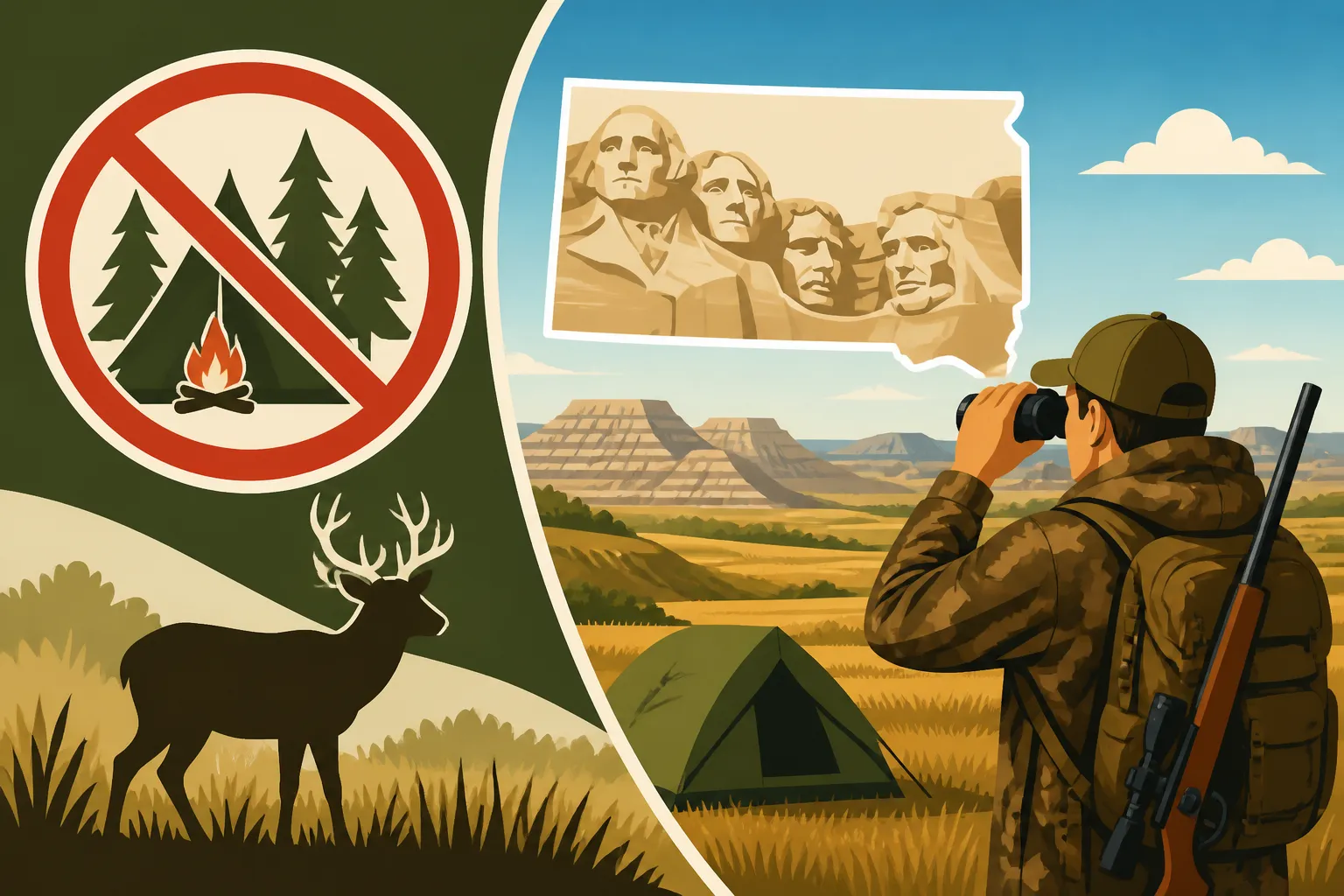
South Dakota Game Production Areas (GPAs) are parcels of land acquired and managed by the South Dakota Department of Game, Fish and Parks (SDGFP) primarily for wildlife habitat and public hunting. These areas are vital for maintaining healthy populations of game animals and providing accessible hunting opportunities. However, as a general rule, camping is NOT allowed on Game Production Areas. This is a critical distinction that every hunter planning to use these lands must understand.
The rationale behind this strict "no camping" policy is multi-faceted. GPAs are often smaller, more intensively managed parcels compared to federal grasslands. Allowing camping could lead to significant habitat degradation, increased litter, and potential conflicts between various user groups or with wildlife. The SDGFP prioritizes these areas for their intended purpose: wildlife production and hunting. Keeping them free of long-term human encampments helps preserve their ecological integrity. You can review the South Dakota Game Production Area Rules on the GFP website, and you'll find that overnight stays are consistently prohibited. While you might be able to park your vehicle in a designated lot for the day while you're hunting, setting up a tent, building a campfire, or leaving a camper overnight is not permitted. Hunters often need to secure alternative lodging, whether that's a private campground, a hotel in a nearby town, or dispersed camping on adjacent federal lands if available, after a long day of walking Hunting Food Plots and Corn Edges on a GPA.
Overnight Rules on Walk-In Areas (WIAs)
Walk-In Areas (WIAs) are another fantastic resource for hunters in South Dakota, providing access to hundreds of thousands of acres of private land through voluntary agreements with landowners. The South Dakota Walk-In Area program is incredibly valuable, expanding hunting opportunities significantly. However, it's crucial to remember that these are private lands enrolled for public access and hunting, not for public camping. For this reason, camping is almost universally PROHIBITED on Walk-In Areas.
The agreement between the landowner and the SDGFP is specific: it grants hunters foot-traffic access for hunting. It does not extend permission for overnight stays, establishing a camp, or any activities beyond the specified hunting use. Landowners, who are generously opening their property, are not consenting to individuals setting up long-term camps on their ground. Respecting these rules is paramount, not just for your individual hunt, but for the continued success and expansion of the WIA program. Violating camping policies on a WIA is a direct breach of trust and can jeopardize a landowner's willingness to re-enroll their property in the future, ultimately reducing public access for everyone. When you see the distinct yellow "Walk-In Area" signs, understand that it means hunting access, but not a place to pitch your tent. For more details on these vital hunting grounds, check out South Dakota Walk-In Areas Explained. Hunters using WIAs should plan to return to a town or a legal camping area after their hunt.
Being a Responsible Camper and Hunter on South Dakota Public Ground
Regardless of where you ultimately decide to set up your overnight accommodations in South Dakota, embracing responsible camping practices is non-negotiable. As hunters, we have a direct responsibility to be stewards of the land, ensuring that our presence leaves minimal impact and preserves opportunities for wildlife and future generations of outdoor enthusiasts. This is particularly important given the public nature of these lands and the scrutiny that outdoor recreation often faces.
Embrace Leave No Trace Principles
The seven principles of Leave No Trace aren't just good suggestions; they're the bedrock of ethical outdoor conduct. When camping on public land, especially in a state like South Dakota with diverse land management, these principles become even more critical. This means planning ahead and preparing, traveling and camping on durable surfaces, disposing of waste properly (pack it in, pack it out, including all trash and even food scraps), leaving what you find, minimizing campfire impacts (know local fire restrictions!), respecting wildlife, and being considerate of other visitors. For hunters, leaving no trace also extends to respecting land boundaries, not driving off-road where prohibited, and taking care not to disturb agricultural operations adjacent to public ground. Your actions directly reflect on the hunting community, so setting a good example is crucial.
Planning Your Overnight Stays and Using Resources
The best way to avoid issues is to plan meticulously. Before you head out, specifically identify the type of public land you'll be hunting and then consult the managing agency's website for their current camping regulations. For federal lands (National Grasslands), check the U.S. Forest Service website. For state lands (GPAs, WIAs), the South Dakota Game, Fish and Parks website is your primary source. Don't rely on outdated information or assumptions. Seasonal restrictions, such as fire bans or temporary closures, can change rapidly, so Checking South Dakota Area Closures right before your trip is a smart move.
Consider bringing alternative accommodations if you're hunting in an area with limited or no camping options, such as booking a room in a nearby town or utilizing private campgrounds. Many South Dakota towns that serve as hunting hubs have excellent motel options that cater to hunters. For hunters using mapping tools, onX Hunt is an essential resource for verifying land ownership and identifying designated public areas. It can highlight National Grassland boundaries, GPAs, and WIAs, allowing you to visually confirm where you are and what rules apply. Another tool like GoHunt can help with broader hunt planning, including unit breakdowns, which can indirectly help you identify areas with more camping flexibility. Being prepared with accurate information means less stress and more focus on your hunt.
To help visualize the general rules, here's a quick overview:
| Public Land Type | General Camping Allowance | Key Considerations |
|---|---|---|
| National Grasslands | Dispersed camping generally allowed | Leave No Trace, 14-day stay limit, distance from roads/water, fire restrictions. Check specific Forest Service district. |
| Corps of Engineers Land | Varies; designated campgrounds mostly | Dispersed camping often restricted or prohibited. Check specific reservoir regulations and signage. |
| Game Production Areas | NOT allowed | Day use only for hunting. No overnight stays, tents, or campfires. Parking in designated areas only. |
| Walk-In Areas | NOT allowed | Private land, public access for hunting only. Respect landowner agreements. No overnight stays whatsoever. |
| Black Hills National Forest | Dispersed camping generally allowed in most areas | Similar to National Grasslands; follow Leave No Trace, 14-day limits, fire restrictions. Designated campgrounds also available. Black Hills Forest Roads and Access is important. |
| State Park/Recreation Areas | Designated campgrounds (fee required) | Camping only in developed sites, typically with amenities. Reservations often recommended or required, especially during peak season. |
This table provides a snapshot, but always remember that on-the-ground signage and current conditions (like fire bans) override any general guide. A quick call to the local SDGFP office or Forest Service office can save you a lot of grief. Being proactive and informed ensures your South Dakota hunting adventure is memorable for all the right reasons.
Disclaimer
This article is for general informational purposes only and does not constitute professional advice. Laws, prices and regulations vary by location and change over time. Consult a qualified professional for guidance on your specific situation.