Section Line Access in South Dakota
Navigating South Dakota's vast landscapes for hunting can often feel like you need a law degree just to figure out where you can legally put your boots on the ground. One of the biggest head-scratchers for many hunters, especially those new to the state or our unique laws, is understanding "section line access." It's not always a clear-cut road, and the rules around these historic easements can be a source of real frustration and confusion. This guide is here to untangle the complexities of section line access in South Dakota, helping you hunt confidently and legally while respecting private landowners.
Understanding the Foundation of Section Lines
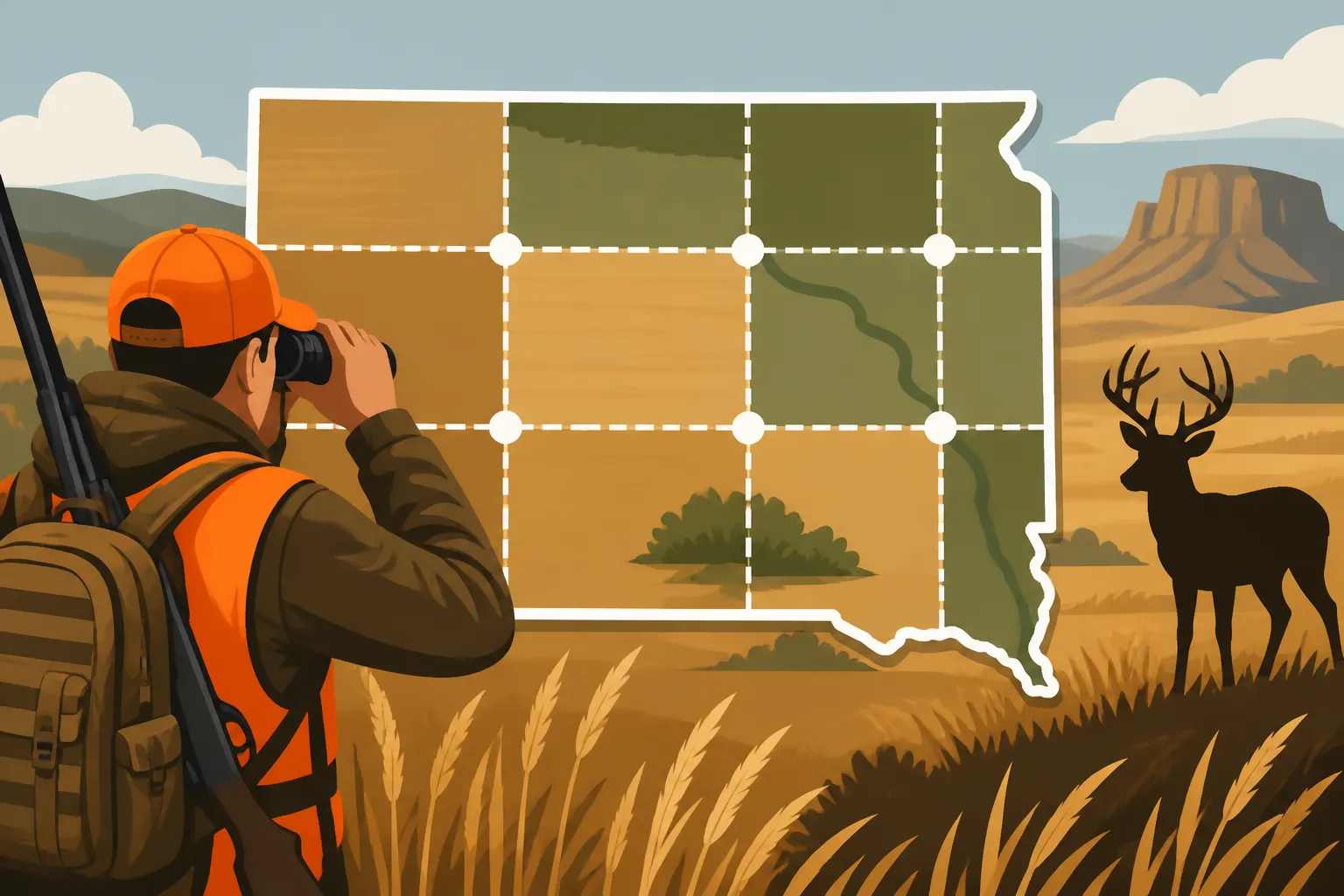
To really grasp section line access, we need to take a quick trip back in time to how much of the American West was surveyed. The Public Land Survey System (PLSS), often referred to as the Township and Range system, was established to divide land into an orderly grid. Imagine a massive checkerboard laid over the entire state. Each of these squares, or townships, is six miles by six miles, and within each township, there are 36 individual sections, each measuring one mile by one mile, or 640 acres.
Historically, when these lands were surveyed and settled, a certain amount of public right-of-way was set aside along the boundaries of these sections. This was intended to provide access for roads and travel between properties. In many places, these section lines became actual roads, graded and maintained, or at least two-track trails. But in vast areas of South Dakota, particularly in the West River country and even in some East River regions, many of these section lines were never developed into physical roads. They remain simply lines on a map, often crossing through private agricultural fields, pastures, or dense cover. This is where the confusion, and the opportunity, for hunters often begins.
The idea is simple in theory: public access along these lines. The reality, however, is a little more nuanced, particularly when you’re standing at the edge of a section line that looks like nothing more than a fence line or a strip of tall grass. Hunters often get nervous because they don't want to accidentally trespass or cause an issue, and that anxiety is totally valid. It's not always obvious where the legal public right-of-way begins and ends, especially when there aren't any physical markers.
South Dakota's Specific Rules on Section Line Access
South Dakota has specific statutes that govern the use of these undeveloped section line highways. It's one of the few states that provides public access along all section lines, whether they are maintained as roads or not, unless they have been legally vacated. This is a huge advantage for hunters, offering significant access to areas that might otherwise be completely landlocked by private property.
The crucial term here is "undeveloped section line highways." These are the section lines that haven't been opened, maintained, or improved for public travel by a governmental entity. Even if they're just a line on a map or a faint trail, they are generally considered public right-of-way. The standard width for these section line easements is 66 feet, meaning 33 feet on either side of the actual section line. Imagine a 66-foot wide strip of public ground, potentially stretching for miles, through otherwise private land.
However, this public access comes with some very important caveats that every hunter must understand. While you can walk or physically traverse these undeveloped section lines, you generally cannot drive on them unless they are clearly maintained roads. Driving on an undeveloped section line can lead to accusations of trespass or damage to private property, even if you technically could access it. The rule of thumb is: if it doesn't look like a road, don't drive on it. This means parking legally at the nearest maintained public access point and walking in. You can learn more about general road access in South Dakota Road Right-of-Way Hunting.
Another critical point relates to permanent structures. You cannot erect a permanent blind, stand, or other structure on an undeveloped section line without landowner permission. These are corridors for travel, not places for permanent hunting setups. Also, while you are legally on public ground when on the section line, you are still bound by all other hunting regulations, including shooting hours and safety zones. Your shots must remain within legal bounds and not cross into private property where you do not have permission.
The "Vacated" Section Line Exception
It's important to be aware that some section lines can be legally "vacated" by local county commissions. When a section line is vacated, it ceases to be a public right-of-way and typically reverts to the adjoining private landowners. These are rare, but they do happen, often in areas where there is no practical need for public access, and the landowners request it. It's another reason why relying on up-to-date maps and verification is so important, which we'll cover next.
The frustration here is that a hunter can't always tell if a section line has been vacated just by looking at it. It might look exactly the same as an un-vacated one. This is why tools like the South Dakota Public Hunting Atlas and private mapping apps are so incredibly valuable – they often have the most current information available, though nothing beats checking with the local county or Game, Fish and Parks office if you have specific doubts.
Navigating Section Lines Legally and Respectfully
Successful and ethical hunting on or near section lines in South Dakota requires diligence, preparation, and a healthy dose of respect for private property. You want to ensure you're on the right side of the law and maintaining good relations with the agricultural community that makes so much of our hunting possible.
Identifying Legal Section Line Access with Confidence
The absolute best way to identify legal section line access is by using modern mapping technology. Forget the old paper maps that might not show the nuances of public versus private land. Tools like onX Hunt have become indispensable for hunters in South Dakota for this very reason. These apps overlay property ownership data, including public land, private parcels, and often, the exact location of section lines and their 66-foot buffer. You can literally see an orange-shaded strip indicating the public right-of-way as you walk it. GoHunt and other similar platforms also offer valuable mapping features that can help.
Before you even leave home, spend time e-scouting with these tools. Zoom in on areas you plan to hunt. Look for the distinct lines of public access that run between large blocks of private ground. Identify where these lines intersect with maintained public roads or other public access points, as that's where you'll need to park and begin your walk. Don't just rely on a general sense of where the section lines should be; confirm their exact location and status. This step can save you a lot of headache and potential legal trouble. Finding Property Lines in South Dakota goes into more detail on how to use these tools effectively.
Even with the best digital maps, always be aware of your surroundings. Fences often mark property boundaries, but sometimes a section line runs right along a fence or even through the middle of a field with no fence at all. Be mindful of crops, livestock, and any signs of active farming operations. Your presence on an undeveloped section line should be as low-impact as possible.
Respecting Private Property Boundaries is Paramount
While section lines offer public access, the land immediately adjacent to them is still private property, and respecting those boundaries is non-negotiable. This means:
- Stay within the 66-foot corridor: When walking or hunting on an undeveloped section line, make every effort to stay within that 33 feet from the centerline on either side. Straying off, even a few feet, can constitute trespass.
- No shooting onto private land: You cannot legally shoot across a private fence line onto private land where you do not have permission, even if you are standing on a public section line. Your shot must originate and terminate within legal bounds, which means your target should either be on public land or on private land where you have explicit permission.
- Game Retrieval: This is a common sticky point. If you shoot an animal legally on a section line or other public land, and it runs onto private property, you must obtain permission from the landowner before pursuing or retrieving it. Knock on doors, make a phone call – do not cross that boundary without permission. This is one of the biggest challenges for hunters, and a situation where good relations with landowners really pays off. For more on this, check out Retrieving Game From Private Land.
- Avoid Disturbing Livestock or Crops: If a section line runs through a pasture with cattle or a standing crop, use common sense and avoid causing any disturbance. Give livestock a wide berth. If crossing a fence, use a designated crossing, or if none exists, carefully climb over without damaging the fence.
Remember, the vast majority of South Dakota is privately owned. The ability to use section lines is a privilege, and any misuse could jeopardize this access for everyone. Landowners are often very understanding if you approach them respectfully, especially when it comes to tracking wounded game. But assuming you have rights beyond the 66-foot strip is a recipe for trouble.
Tools and Etiquette for Section Line Access
Hunting effectively using section lines requires not just knowledge of the law, but also the right tools and a strong commitment to ethical behavior.
Essential Mapping Technology for Hunters
As mentioned, digital mapping apps are your best friend when it comes to section line access.
- onX Hunt: This app is a game-changer. It clearly delineates public and private land, often with color-coded overlays. The specific function showing county section lines and the 66-foot buffer is incredibly useful. You can often see landowner names, though contact information isn't always available. Critically, you can download maps for offline use, which is vital in remote West River areas where cell service is spotty or nonexistent. Knowing exactly where you are in relation to a section line and a private boundary, even when off-grid, provides immense peace of mind.
- GoHunt: While often geared more towards western big game draws, GoHunt's mapping features can also be incredibly helpful. Similar to onX, it allows you to visualize land ownership and topography, helping you plan your route along section lines, identify potential cover, and scout for good access points.
These apps aren't just for avoiding trespass; they're also powerful scouting tools. By Reading Aerial Imagery for Cattail Cover or looking for changes in vegetation along these public corridors, you can identify potential pockets where pheasants might hold, or where deer might be bedding just off the section line on adjacent public parcels.
| Feature | Developed Road Section Line | Undeveloped Section Line Highway | Private Land (No Permission) |
|---|---|---|---|
| Public Access | Yes (Vehicle & Foot) | Yes (Foot Traffic Only) | No |
| Vehicle Travel | Yes (if maintained) | Generally No | No |
| Permanent Structures | No (without specific permit) | No (without landowner permission) | No (without landowner permission) |
| Hunting | Yes (within regulations) | Yes (within regulations, foot traffic) | No |
| Crossing Boundaries | N/A | Cannot cross onto private land | N/A |
| Game Retrieval (if animal moves onto adjacent land) | N/A | Requires landowner permission | N/A |
| Respect for Landowner | Yes | Absolutely | Absolutely |
Best Practices and Etiquette for Section Line Hunters
Beyond the legalities, a good hunter understands that respecting the land and its owners is paramount. This will ensure that these valuable access points remain available for future generations.
- Park Responsibly: Always park your vehicle in a way that doesn't block gates, field entrances, or private driveways. Don't park in a manner that obstructs traffic or creates a safety hazard. If you're parking on a road right-of-way, make sure your vehicle is completely off the main traveled portion. Consider Parking Away From the Cover You Hunt to minimize disturbance and keep a low profile.
- Leave No Trace: Pack out everything you pack in. This includes spent shell casings, food wrappers, and any other garbage. The idea is to leave the section line looking cleaner than you found it.
- Be Visible: When hunting on or near section lines, especially during pheasant or deer season, wear plenty of blaze orange. This is not just a legal requirement for bird hunting in many scenarios, but a crucial safety measure to make yourself visible to other hunters and passing motorists.
- Communicate if Possible: If you encounter a landowner or farmer while on a section line, offer a friendly wave or a brief explanation of what you're doing. A simple "Good morning, just walking the section line" can go a long way in alleviating any concerns they might have. If you anticipate needing to retrieve game from their land, it's always better to ask permission first rather than apologize later. Learning Asking a South Dakota Landowner for Permission can be invaluable.
- Educate Others: If you see another hunter unknowingly violating section line rules, consider a polite, educational conversation. Most hunters want to do the right thing and simply might not know the nuances of South Dakota law.
By being informed, prepared, and respectful, you can unlock a vast amount of hunting opportunity in South Dakota through its unique section line access laws. These corridors are a fantastic resource for hunters willing to put in the legwork and follow the rules. Always consult the official South Dakota Game, Fish and Parks Hunting Handbook for the most current regulations, as rules and interpretations can change.
Disclaimer
This article is for general informational purposes only and does not constitute professional advice. Laws, prices and regulations vary by location and change over time. Consult a qualified professional for guidance on your specific situation.