Camping Rules on Buffalo Gap
Heading out to hunt the vast, open country of South Dakota's Buffalo Gap National Grassland is an incredible adventure, but figuring out where you can legally pitch a tent or park your camper can feel like navigating a maze. It’s frustrating when you just want to set up a comfortable base camp without worrying about breaking some obscure rule. This guide is here to untangle the complexities of camping on Buffalo Gap, making sure you understand the regulations so you can focus on the hunt, not the paperwork.
Understanding Dispersed Camping on Buffalo Gap National Grassland
When you think of camping, you might picture designated campsites with picnic tables and fire rings. Buffalo Gap National Grassland, however, often offers a more primitive, "dispersed" camping experience. This means you’re largely on your own, choosing your spot within certain guidelines, which is fantastic for hunters who want to be close to their hunting areas without the crowds. But with that freedom comes responsibility and a few important rules to keep in mind.
General Dispersed Camping Regulations
The core of camping on Buffalo Gap revolves around dispersed camping. This generally means you can camp anywhere on the National Grassland unless specifically prohibited. Now, "anywhere" doesn't mean literally anywhere. There are usually buffer zones around developed recreation sites, water sources, and paved roads where camping isn't allowed. The Forest Service (who manages the Grasslands) wants to protect resources and ensure public safety, so common sense, coupled with a quick check of a map, is always your best friend. For instance, you shouldn't be pitching your tent right on the edge of a stock pond where wildlife comes to drink, or blocking an access road. It’s about being respectful of the land and other users.
You’re also typically limited in how long you can stay in one spot. While specific timeframes can vary, a common rule of thumb on National Grasslands is a 14-day limit within any 30-day period. This prevents long-term residency and keeps the land available for everyone. If you’re planning an extended hunting trip, you might need to move your camp a few miles every couple of weeks, or consider a different public land type. Think about setting up your camp for a solid week of chasing pronghorn after the South Dakota Antelope Application Deadline and then moving to a fresh area for the next leg of your journey.
Group Size and Impact
While Buffalo Gap offers a sense of solitude, it's not unlimited. There are often regulations around group size, particularly if you’re planning a large hunting party. These rules are in place to minimize the cumulative impact on the environment. A typical guideline might limit group size to 75 people or 25 vehicles, for example, but it’s always wise to check current local regulations if you anticipate a very large gathering. It’s not just about the numbers, but also the footprint. Setting up 15 tents and having multiple vehicles spread out over a large area can significantly disturb the natural landscape and other hunters who are seeking a quieter experience.
When choosing your site, think "Leave No Trace." Pick a spot that's already somewhat cleared, or on durable surfaces like bare ground or existing pull-offs. Avoid trampling pristine vegetation. The goal is for your camp to be virtually undetectable once you pack up and leave. This ethos is particularly important when you're hunting species like mule deer in the wide-open country. The more pristine the environment, the better the hunting experience for everyone, which is why we value National Grasslands Hunting in South Dakota so much.
Specific Considerations for Hunters Camping in Buffalo Gap
Hunters have some unique needs and responsibilities when camping on Buffalo Gap. Your camp isn't just a place to sleep; it's your operational hub for a successful hunt. However, setting up that hub requires careful thought about location, safety, and minimizing your presence in sensitive areas.
Camp Placement and Hunting Activity
One of the biggest advantages of dispersed camping for hunters is the ability to camp close to where you hunt. You can wake up, step out of your tent, and already be in prime Hunting Buffalo Gap for Mule Deer territory. However, you need to be strategic. Avoid setting up your camp directly in known game travel corridors, near waterholes, or in obvious bedding areas. Not only will this disturb the animals you're trying to hunt, but it could also create a safety issue if other hunters are moving through the area at dawn or dusk.
Consider setting up your camp a little off the main trails or away from the core hunting cover. Use topographical maps, like those available on tools such as onX Hunt or GoHunt, to identify less-trafficked draws or small rises that offer good concealment for your camp while still providing easy access to your hunting grounds. These apps are invaluable for Finding Property Lines in South Dakota too, ensuring you don't accidentally set up on private ground adjacent to the Grasslands. You want to be close enough for convenience but far enough not to spoil the hunting for yourself or others.
Fire Restrictions and Fuel Sources
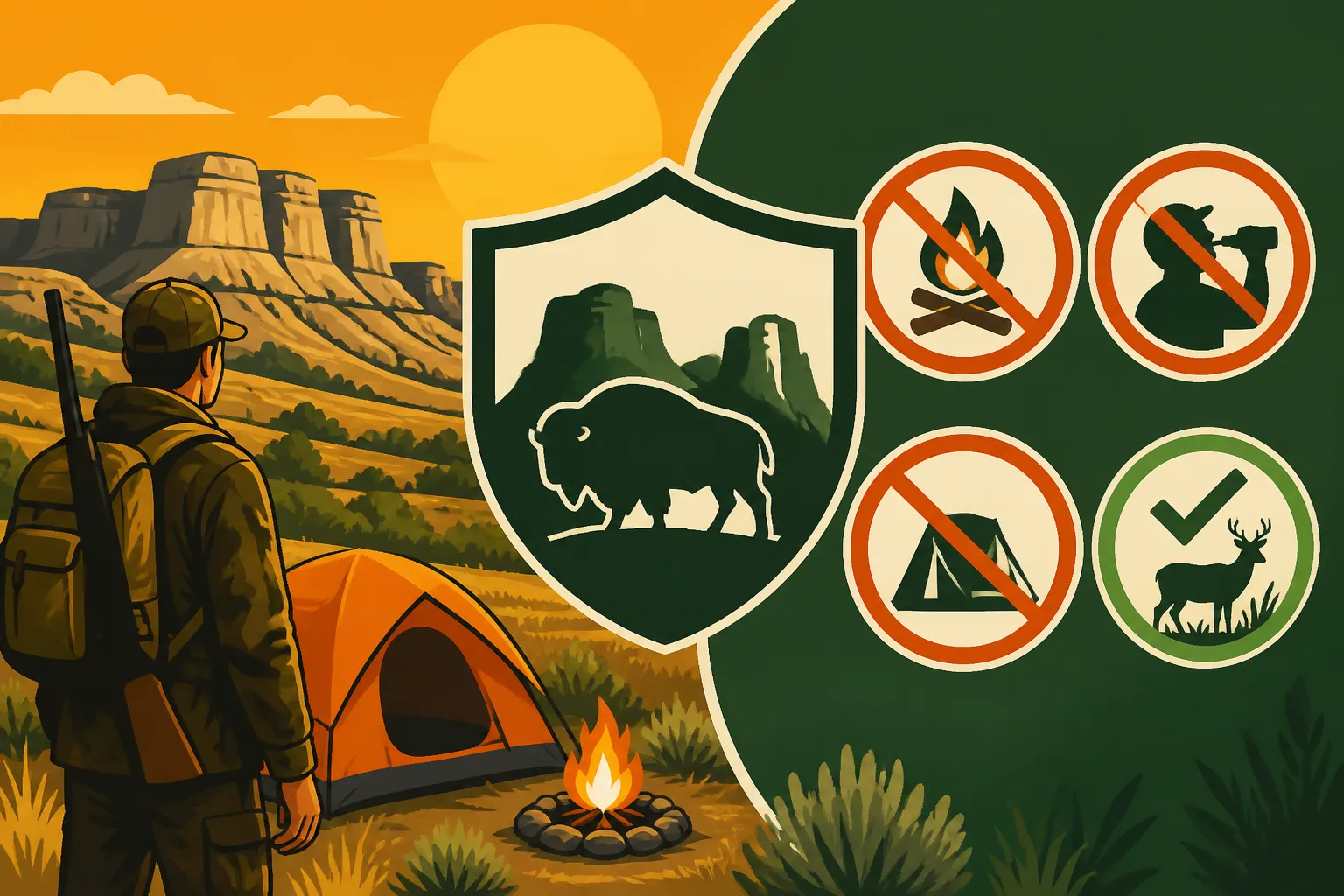
A campfire under a starry prairie sky is a classic part of the hunting experience, but fire danger is a very real concern on Buffalo Gap. Conditions can change rapidly, and dry grass is highly flammable. Always, always check for current fire restrictions before you even think about lighting a match. These restrictions can range from partial bans (no open flames, but gas stoves are okay) to full bans (no fires of any kind, including charcoal). Ignoring these can lead to serious legal penalties and devastating wildfires.
If fires are permitted, use existing fire rings if possible, or build a small one in a safe, cleared area. Make sure it's completely out, cold to the touch, before you leave it unattended or go to bed. Packing in your own firewood is often the best practice, as collecting downed wood can sometimes be prohibited or simply isn't available in sufficient quantities on the prairie. Carrying a small, portable propane fire pit can be a fantastic alternative to a traditional wood fire, offering warmth and ambiance without the same level of fire risk. This is especially true during the crisp, dry autumn days when many hunting seasons are open.
Vehicle Use and Access
Buffalo Gap National Grassland has a network of designated roads and two-tracks, and understanding where you can drive and park is crucial. Most of these areas operate under a "Travel Management Rule," meaning vehicle use is restricted to designated routes shown on a Motor Vehicle Use Map (MVUM). Dispersed camping typically allows you to drive a short distance (e.g., 30-50 feet) off a designated route to find a campsite, but this exact distance can vary, so consult the local Ranger District for precise rules.
Driving off-road beyond these allowances is usually prohibited and can lead to resource damage, erosion, and fines. It's not just about protecting the land, it's about not getting yourself hopelessly stuck in prairie mud after a rainstorm, which is a very real hazard out here. Getting Stuck on a Prairie Two-Track can quickly turn a fun hunt into a miserable ordeal. Use your mapping apps like onX Hunt to ensure you're on a legal route, and park your vehicle responsibly, not blocking any existing trails or gates.
Minimizing Your Impact and Ensuring Safety
Responsible camping on Buffalo Gap means leaving the land better than you found it and taking precautions to keep yourself and your hunting party safe in a wild environment. The prairie can be beautiful but unforgiving.
Leave No Trace Principles in Action
"Pack it in, pack it out" is the golden rule. Every piece of trash, every shell casing, every scrap of food packaging needs to leave with you. This includes organic waste like orange peels or apple cores; while biodegradable, they can take a long time to break down, attract wildlife, and are unsightly. Dig catholes for human waste at least 200 feet from water sources, camps, and trails, and bury it properly.
Here’s a quick overview of key Leave No Trace principles:
| Principle | Application on Buffalo Gap National Grassland |
|---|---|
| Plan Ahead & Prepare | Check weather, fire restrictions, carry maps (like GoHunt), pack sufficient water, and Leaving a Trip Plan Before a Hunt. |
| Travel & Camp on Durable Surfaces | Stick to existing roads/two-tracks; camp on bare ground, not delicate vegetation; drive short distances off-road only if permitted. |
| Dispose of Waste Properly | Pack out all trash; bury human waste in catholes 6-8 inches deep, 200 ft from water/camp; pack out toilet paper. |
| Leave What You Find | Do not disturb archaeological sites, historical artifacts, or natural features. |
| Minimize Campfire Impacts | Use existing rings, keep fires small, check restrictions, ensure fires are dead out. |
| Respect Wildlife | Observe from a distance, never feed animals, store food securely, avoid sensitive areas. |
| Be Considerate of Other Visitors | Keep noise down, allow others to experience solitude, respect privacy of other camps. |
Following these principles ensures that the incredible hunting opportunities on Buffalo Gap remain for future generations.
Water, Food Storage, and Wildlife Encounters
Water is precious on the prairie. There are very few reliable sources of potable water on Buffalo Gap, especially during hunting season, so you must pack in all the water you'll need for drinking, cooking, and basic hygiene. Don't rely on stock ponds or creeks for drinking water without proper filtration and purification.
Food storage is also critical. Bears are not common in most of Buffalo Gap, but coyotes, raccoons, and other scavengers are plentiful. Store all food, cooking gear, and scented items in sealed containers inside your vehicle or a hard-sided cooler to prevent attracting unwanted visitors. When field dressing game, move off from your camp to do it, and dispose of offal well away from your campsite to avoid attracting predators or scavengers to your immediate area. Being prepared with a First Aid Kit for a Prairie Hunt is also non-negotiable, as help can be a long way off.
Safety and Communication in Remote Areas
Cell phone service on Buffalo Gap, particularly in some of the deeper draws and more remote stretches, can be spotty at best. Don't count on being able to make an emergency call. Consider carrying a satellite messenger or a satellite phone for emergencies, especially if you're venturing far from main roads. Make sure someone back home knows your itinerary, including where you plan to camp and when you expect to return. This is absolutely critical for your safety. Cell Coverage in West River Country is something you cannot take for granted.
Always be aware of your surroundings, especially during hunting season. Other hunters will be in the area, often moving in low light conditions. Wear blaze orange even when not actively hunting if you’re moving around your camp during legal shooting hours, especially if your camp is visible from areas where people might be hunting. Having a good understanding of South Dakota Hunter Safety Requirements goes beyond just gun handling; it includes common sense safety in the field.
Finding and Interpreting Camping Rules and Resources
The rules for camping, especially dispersed camping, can sometimes feel like a moving target. What's allowed one year or in one section might be different the next. The best way to stay informed is to go straight to the source.
Official Resources and Maps
The primary authority for Buffalo Gap National Grassland is the U.S. Forest Service. Specifically, you’ll want to contact the local Ranger District that manages the section of Buffalo Gap you plan to visit. A quick online search for "Nebraska National Forests and Grasslands" will lead you to their official website, which covers Buffalo Gap. Their site will have specific information on fire restrictions, road closures, and dispersed camping guidelines.
Most importantly, you'll want to get your hands on a Motor Vehicle Use Map (MVUM). These free maps are the definitive guide for where you can legally drive and, by extension, where you can reasonably access dispersed camping spots. They are often available as free downloads from the Forest Service website, or you can pick up a paper copy at a Ranger District office. Supplementing these with digital mapping tools like onX Hunt is highly recommended. These apps overlay public land boundaries, roads, and private land on detailed satellite imagery, making it incredibly easy to see where you can legally camp and hunt.
Understanding Temporary Orders and Local Notices
Sometimes, beyond the general rules, there are temporary orders or special notices that impact camping. These could be due to extreme fire danger, specific wildlife management concerns, or even large-scale events. For example, during unusually dry years, the entire grassland might be under a complete fire ban. Or, certain areas might be temporarily closed for range improvements or habitat restoration projects.
Always check the Forest Service website for "Alerts & Notices" before your trip, and it's a good idea to call the local Ranger District office directly for the most up-to-date information. A quick phone call can save you a lot of hassle and potential fines. Rangers are usually very helpful and are happy to clarify any ambiguities regarding Camping Limits on South Dakota Public Land or other rules that might not be immediately clear from online maps alone. Don't assume that because you camped somewhere last year, the rules haven't changed. The prairie is dynamic, and so are its management needs.
Leveraging Mapping Apps for Informed Decisions
Tools like onX Hunt and GoHunt are incredibly powerful for planning your Buffalo Gap camping and hunting trip. They don't just show roads and boundaries; they often include layers for public land ownership, walk-in areas, and even historical satellite imagery that can help you scout potential camp spots from home. You can mark potential camping areas, check elevations, and see how close you are to water sources or primary hunting cover.
Using these apps allows you to make informed decisions about where to set up your camp, ensuring you're not on private land, in a restricted area, or too close to a sensitive resource. You can even use them to check for specific features like small clumps of trees or draws that might offer a little shelter from the relentless Layering for South Dakota Wind. By combining official Forest Service information with the detailed insights from these mapping platforms, you can feel confident and prepared for your Buffalo Gap adventure.
Disclaimer
This article is for general informational purposes only and does not constitute professional advice. Laws, prices and regulations vary by location and change over time. Consult a qualified professional for guidance on your specific situation.