Waterfowl Hunting the South Dakota Prairie
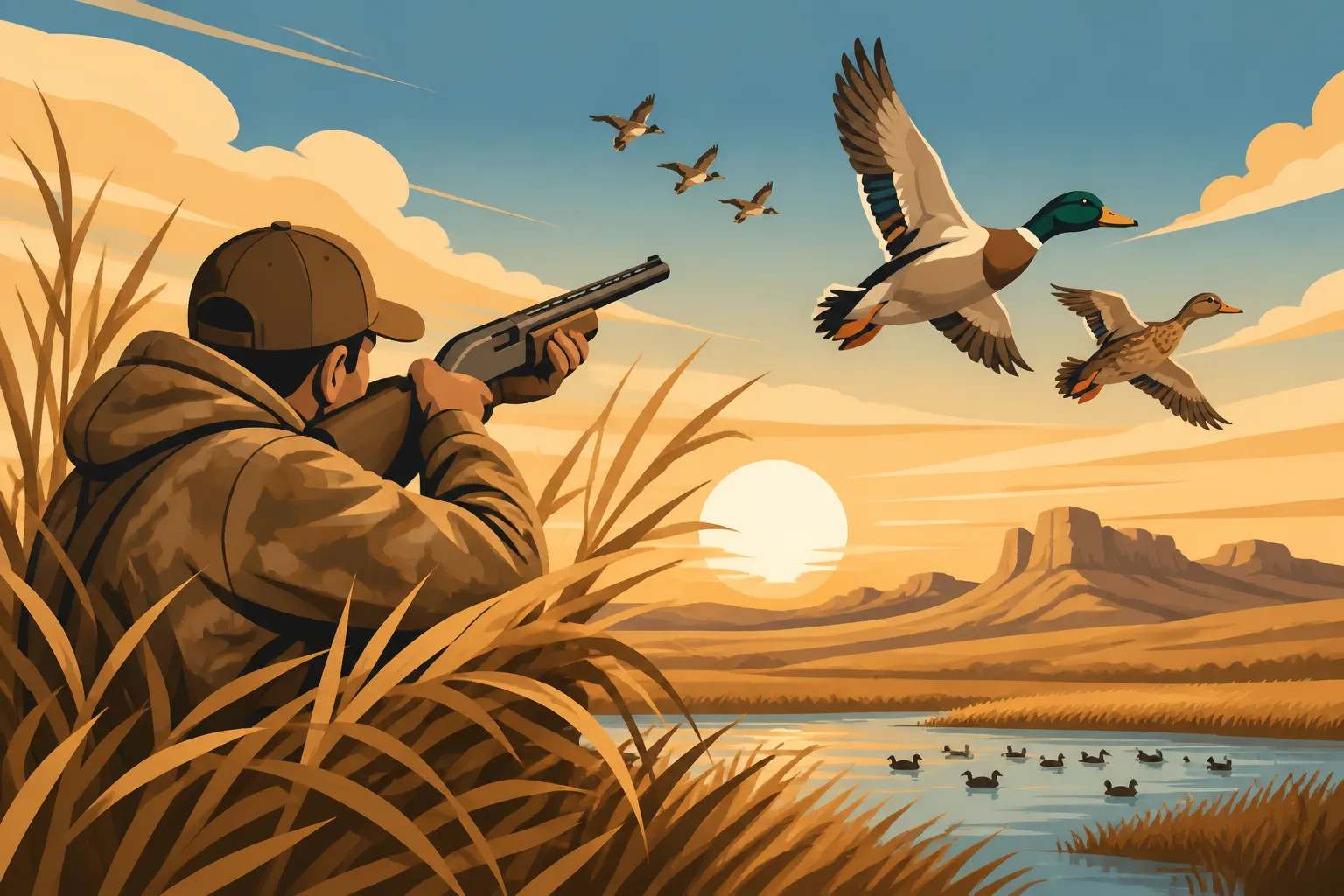
The crisp autumn air, the distant chatter of geese, and the silhouette of ducks cupping their wings against a vast prairie sky—it’s a scene many waterfowlers dream of, but often find challenging to realize in crowded hunting grounds. South Dakota, however, presents a truly unique and expansive opportunity for those willing to venture into its legendary prairie pothole region. This comprehensive guide is designed to equip you with the knowledge and strategies needed to successfully pursue waterfowl across the wide-open spaces of South Dakota, transforming your dreams into unforgettable hunts.
The Allure of South Dakota Waterfowl Hunting
South Dakota isn't just known for its pheasants; it's a waterfowl mecca, a cornerstone of the Central Flyway, and a critical breeding ground. Hunters from all over the country converge here for good reason, drawn by the sheer numbers of birds and the diverse hunting opportunities. The state offers everything from intimate pothole hunts to large-scale field operations for geese, making it a truly versatile destination for any waterfowl enthusiast.
Why the Prairie Pothole Region is a Duck Factory
Imagine a landscape dotted with countless shallow wetlands, each one a potential haven for ducks. That's the Prairie Pothole Region, often dubbed North America's "duck factory," and South Dakota sits right in the heart of it. This unique geological feature, a legacy of retreating glaciers, creates an unparalleled environment for breeding waterfowl. These potholes, ranging from small depressions to larger marshes, are incredibly rich in aquatic invertebrates and emergent vegetation, providing the perfect nutrition for hens to lay eggs and for ducklings to grow quickly. When you're out there, you’ll see firsthand how these seemingly endless wetlands draw in and hold a staggering number of birds. The sheer volume of nesting habitat is why South Dakota consistently leads the pack in terms of duck production, making it an incredible place to experience the thrill of a wild duck hunt. Beyond just the numbers, these diverse habitats also mean a greater variety of species, from the ubiquitous mallards to various teal, pintails, and gadwalls. Understanding South Dakota's Duck Production on Prairie Potholes is key to appreciating why this region is so special.
Central Flyway Migration Magnets
As autumn progresses, South Dakota's role shifts from a breeding ground to a critical staging area and migration corridor. The state lies squarely within the Central Flyway, one of four major avian highways stretching from the Canadian Arctic to the Gulf of Mexico. This means that not only do you have locally hatched birds, but also a constant influx of migrants pouring in from the north as the breeding grounds freeze up. These migrating birds, often less wary than local populations, offer incredible hunting opportunities. They are constantly searching for food and safe resting areas, and South Dakota's bountiful corn and bean fields, coupled with its countless potholes and larger reservoirs, provide exactly what they need. The big Missouri River reservoirs, like Lake Oahe and Lake Sharpe, become crucial sanctuaries and feeding hubs, especially for diving ducks and larger concentrations of geese. Knowing that you're hunting birds that have traveled thousands of miles, fresh from Canada, adds an extra layer of excitement and challenge to every hunt.
Essential Gear for Prairie Waterfowlers
Success in South Dakota waterfowl hunting isn't just about finding the birds; it's about being prepared for the unpredictable prairie environment. The right gear can make or break your hunt, ensuring comfort, effectiveness, and safety in conditions that can range from mild and sunny to bitterly cold and windy, often within the same day.
Decoy Spreads for Potholes and Fields
Decoys are your primary tool for convincing wary waterfowl to commit to your spread. On the South Dakota prairie, you'll encounter a variety of hunting scenarios, each demanding a slightly different approach. For small potholes, less is often more. A dozen or two mallard and pintail decoys, arranged in a loose J-hook or U-shape, often does the trick, leaving a landing zone directly in front of your blind. You want to mimic a natural flock, not a rigid formation. Consider adding a few motion decoys, like spinning wing models or jerk cords, to simulate life on calm days. For larger water, or when dealing with skittish birds, you might need to scale up, deploying three to four dozen or more, perhaps mixing in some divers if the situation calls for it.
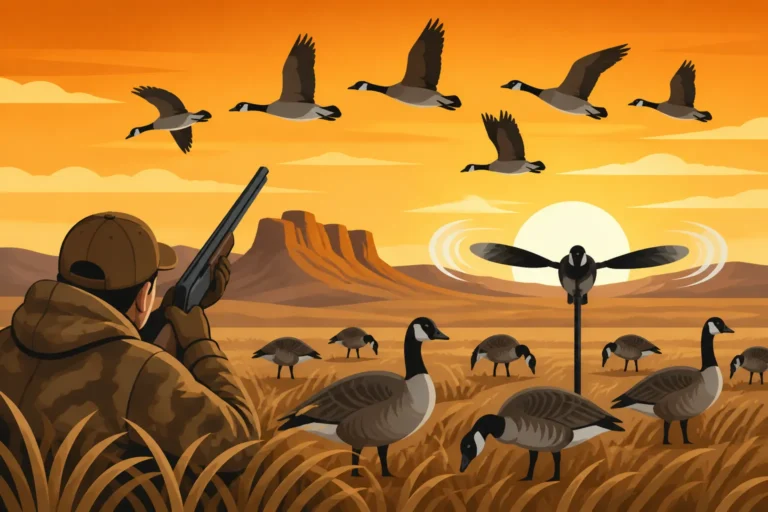
Field hunting geese, especially Canada geese, demands a completely different strategy. Here, you're looking at much larger spreads, often 50 to 100+ full-body or shell decoys. Layout blinds are paramount in these situations, and your decoys need to reflect a natural feeding flock. Spread them out, mimicking small family groups or paired birds, with a few "sentries" standing guard. The landing zone should be a clear, open area in the middle of your spread, allowing birds to approach comfortably. When chasing Field Hunting Geese in South Dakota Cut Corn, understanding how geese interact with stubble and food sources is critical for effective decoy placement. For late-season snow geese, spreads can be truly massive, sometimes numbering in the hundreds or even thousands of white rags or silhouettes, designed to attract vast migrating flocks.
Concealment: Layout Blinds and Natural Cover
The prairie offers little in the way of natural cover, making effective concealment paramount. This is where a good layout blind becomes your best friend, especially for field hunting. Modern layout blinds, like those from Avery Outdoors or Final Approach, are designed to be low-profile and comfortable, allowing you to hide effectively in stubble fields. The key is to "brush in" your blind aggressively. Don't just set it out; gather corn stalks, milo stubble, or whatever local vegetation is present and cover every inch of your blind. Break up straight lines, fill in shadows, and make it look like a natural part of the field.
When hunting potholes, your concealment strategy might vary. Sometimes, a natural cattail stand or a brushy shoreline will provide adequate cover. Other times, you'll need to use a portable marsh blind, a natural grass blind, or even a simple camouflage netting drape. The most important rule is to position yourself so you're not silhouetted against the sky. Always be aware of the sun's position and how it might reveal your blind. Hunters who master Layout Blinds on South Dakota Stubble understand that attention to detail in brushing in can be the difference between birds flaring and birds committing.
Shotguns, Ammunition, and Choke Choices
Choosing the right shotgun and ammunition is critical for consistent success on the prairie. A 12-gauge shotgun is the standard for waterfowl, offering versatility in shot size and payload. Many hunters prefer a semi-automatic for its fast follow-up shots, but pump actions are also very popular due to their reliability. What's more important than the action type is ensuring your gun fits you well and that you're comfortable shooting it.
For ammunition, non-toxic shot is legally required for all waterfowl hunting. Steel shot is the most common and economical choice, but bismuth and tungsten-based alternatives offer superior density and performance, albeit at a higher cost. For ducks, especially over decoys, 3-inch shells with #2 or #4 steel shot are often a good choice, providing a dense pattern and sufficient knock-down power. For geese, particularly larger Canada geese, stepping up to 3-inch or 3.5-inch shells with BB or BBB steel shot is often recommended for the increased range and energy. Always match your choke to your hunting scenario. An improved cylinder or light modified choke is excellent for decoying birds where shots are close, providing a wide, forgiving pattern. If you anticipate longer shots, perhaps on pass-shooting ducks or high-flying geese, a modified or even a full choke might be appropriate, but always test your patterns at various ranges to know your gun's limitations.
Scouting and Finding Birds on the Prairie
Ask any successful waterfowler in South Dakota, and they'll tell you that scouting is as important, if not more important, than the hunt itself. Birds move constantly, feed in different fields, and use different water bodies based on weather, pressure, and food availability. Being able to locate where they want to be is the first step to putting them in your spread.
Reading the Landscape for Waterfowl Hotspots
The South Dakota prairie might look uniform at first glance, but it's full of subtle clues if you know how to read them. For ducks, focus on the "pothole chain" concept. Often, birds will use a series of potholes, moving between them for feeding, loafing, and roosting. Look for wetlands with good emergent vegetation, sheltered areas from the wind, and proximity to grain fields. The presence of tracks, droppings, or even just shed feathers can tell you a lot about recent bird activity. Larger bodies of water, like those managed as Waterfowl Production Areas (WPAs), can be excellent, but smaller, overlooked potholes often hold the most unpressured birds.
For geese, the landscape tells a different story. Geese are often tied to major food sources: cut corn, winter wheat, or soybean fields. Look for large, dark patches in fields, indicating where geese have been feeding. These "pockmarked" areas are a dead giveaway. Also, pay attention to flight lines. Geese typically follow predictable routes between their roosting water and their feeding fields. Identifying these travel corridors during your scouting drives can help you narrow down potential hunting locations.
E-Scouting and Physical Reconnaissance
In today's digital age, effective scouting starts long before you even leave your couch. Tools like GoHunt and the South Dakota Public Hunting Atlas are invaluable for identifying potential hotspots. Satellite imagery allows you to pinpoint potholes, sloughs, and grain fields. You can mark potential access points, identify areas with good cover, and even estimate walking distances to reduce wasted time in the field. Look for public hunting lands, such as Waterfowl Production Areas (WPAs) and Game Production Areas (GPAs), which are clearly marked on these mapping applications.
Once you have a few promising locations marked, it's time for boots-on-the-ground reconnaissance. This involves driving the gravel roads before dawn or late in the evening, carefully observing where birds are flying, landing, and feeding. Bring a good pair of binoculars or a spotting scope. Never scout from inside a potential hunting field; always observe from a distance to avoid spooking birds. Pay attention to the wind direction, as this will heavily influence how birds approach your spread. Remember that birds can quickly abandon an area if they feel pressured, so stealth in scouting is crucial. Understanding how to use these tools for E-Scouting Walk-In Areas Before the Season can give you a significant advantage.
Understanding Waterfowl Behavior and Roosting Patterns
Waterfowl are creatures of habit, and understanding their daily routines is key to predicting their movements. Most ducks and geese will fly from their roosting water to a feeding area shortly after legal shooting light. They'll feed for a few hours, then often fly to a loafing area—another water body where they can rest, preen, and digest their food. In the late afternoon, they'll often make another feeding trip before returning to their roost for the night.
Weather plays a huge role in these patterns. Cold fronts, strong winds, and snow can push birds south and make them more aggressive feeders. Calm, warm days might see birds holding tight to large water, only making short, late-morning feeding forays. When you find a good feeding field, try to locate the nearby roosting water. Conversely, if you find a large concentration of birds on a roost, observe where they fly to feed. This knowledge allows you to intercept them at various points in their daily cycle, increasing your chances of success.
Hunting Different Waterfowl Species in South Dakota
South Dakota's diverse habitats support a wide array of waterfowl species, each with its own characteristics and preferred environments. Understanding these differences is crucial for tailoring your hunting approach and maximizing your success.
Mallards and Pothole Ducks
Mallards are the undisputed kings of the prairie potholes, known for their distinctive green heads and loud quacks. They, along with pintails, gadwalls, wigeon, and various teal species, are frequently targeted by hunters across South Dakota's numerous small wetlands. These birds thrive in the shallow, food-rich potholes, feeding on aquatic vegetation, seeds, and invertebrates. When hunting these "puddle ducks," look for smaller, secluded potholes with good emergent cover, like cattails or bulrushes, that offer shelter from the wind and predators.
The ideal setup for puddle ducks often involves a modest decoy spread—perhaps a dozen to two dozen mixed mallard and pintail decoys, with a few active motion decoys. Place your spread to create a natural landing zone into the wind, directly in front of your blind. Calling can be incredibly effective for mallards, with a series of greeting calls, feed calls, and contented quacks. For other puddle ducks, simple quacks and whistles can work. The magic of pothole hunting lies in its intimate nature; you're often eye-level with the birds as they commit, offering thrilling, close-range shooting opportunities. Knowing when to target these birds means staying abreast of South Dakota Duck Seasons and Zones.
Field Hunting Geese: Canadas and Snows
Chasing geese in South Dakota's vast grain fields is a quintessential prairie waterfowl experience. Canada geese are abundant, typically feeding in cut corn or bean fields, often in large family groups. Snow geese, especially during the spring conservation order, can appear in truly mind-boggling numbers, turning entire fields white. Field hunting for geese requires a different scale of operation compared to pothole duck hunting.
For Canada geese, scouting is paramount. You need to identify the exact field they've been using and where they prefer to land. A large spread of realistic full-body or shell decoys is essential, often 50 to 100 or more, scattered across the field to mimic a natural feeding flock. Layout blinds are a must for concealment, brushed in meticulously with local stubble. Calling for Canadas involves a mix of greeting calls, clucks, and honks to draw their attention and encourage them to drop. For snow geese, the strategy is even more demanding, often involving hundreds, if not thousands, of decoys (shells, silhouettes, or rags) and electronic calls (during the conservation order) to entice their massive flocks. It's a high-reward, high-effort hunt that offers some of the most spectacular waterfowl hunting imaginable. For those pursuing them during regular season, careful attention must be paid to South Dakota Early Canada Goose Season Tactics.
Diving Ducks on Bigger Waters
While puddle ducks dominate the potholes, South Dakota's larger reservoirs and rivers, particularly the mighty Missouri River system, are magnets for diving ducks. Species like canvasbacks, redheads, bluebills (scaup), ring-necked ducks, and goldeneyes frequent these deeper, more open waters, feeding on aquatic vegetation, mollusks, and fish. Hunting divers presents its own unique set of challenges. These birds are fast, often fly lower to the water, and can be incredibly wary.
Your decoy spreads for divers need to reflect their nature. Divers often raft up in large groups, so a spread of 2-5 dozen diver decoys, strung out in a long line or a large blob offshore, is effective. Many hunters also incorporate a few mallard decoys on the edge to add a touch of realism. Blind choices can range from boat blinds anchored offshore, natural shoreline cover, or even simple ground blinds well hidden. Calling for divers is generally less intense than for puddle ducks; a simple "growl" or a few short whistles might work, but often, the visual appeal of the spread is more important. Safety is paramount on big water hunts; always be aware of wind conditions and boat traffic. Knowing how to predict conditions and mastering Reading Wind on a Big Water Set can significantly impact your success and safety.
Mastering Decoy Spreads and Calling Techniques
Decoy spreads and calling are the artistry of waterfowl hunting. They're about creating an illusion, speaking the language of the birds, and ultimately, convincing them that your spot is the safest and most inviting place to land. While gear is important, the thoughtful deployment of your decoys and the nuanced use of your calls are what truly draw birds into range.
Effective Spreads for Ducks
Creating an effective duck decoy spread on the South Dakota prairie often involves more art than science, adapting to the specific conditions of the day. For puddle ducks in a small to medium-sized pothole, a classic J-hook or U-shape spread is a perennial favorite. The hook or "top" of the J is positioned upwind, with the long tail extending downwind. The open part of the "J" or "U" creates a natural landing zone, directly in front of your concealed position. This setup mimics ducks swimming into the wind to land.
Varying the types of decoys is also crucial. A mix of mallards, pintails, and gadwalls, perhaps with a few teal, adds realism. Don't be afraid to experiment with small "sub-spreads" or clusters of decoys slightly away from the main body, representing smaller family groups. Motion decoys, like spinning wing models or jerk-string setups, are incredibly effective, especially on calm days when natural water movement is minimal. The goal is to make your spread look alive and inviting, not like a static collection of plastic. Always ensure your decoys are placed so the birds will land facing into the wind for a natural approach, giving you the best shot.
Goose Spreads for Fields
Field hunting geese on the prairie demands a larger, more realistic spread designed to appeal to their strong flocking instincts and wariness. Whether you're targeting Canada geese or pursuing snows during the spring conservation order, the principles revolve around scale and realism. For Canada geese, you'll want a minimum of 3-5 dozen full-body or shell decoys. Larger numbers, up to 10 dozen or more, are often more effective, especially in heavily hunted areas.
The most common field spread is the "blob" or "U-shape," with your layout blinds positioned at the open end of the "U." Scatter decoys naturally, avoiding perfect rows or patterns. Group them in twos, threes, and fours, mimicking feeding pairs and small family units. Place some decoys with their heads up, acting as "sentries," and others with heads down, appearing to feed. For snow geese, the scale is vastly increased, often employing hundreds or even thousands of white rags, silhouettes, or full bodies. These massive spreads are designed to mimic the colossal flocks that migrate through. A common tactic for snows is a central "kill hole" in the middle of a dense spread, where the hunters are hidden. Regardless of species, always ensure your blinds are meticulously brushed in and your decoys are arranged to give incoming birds a clear, unobstructed path to your landing zone, directly over your hiding spot.
Calling Strategies for South Dakota Waterfowl
Calling is the art of communicating with waterfowl, drawing them closer, and ultimately, sealing the deal. For ducks, especially mallards, a range of calls can be effective. Start with a greeting call—a series of 5-7 distinct quacks—to get their attention. Once they acknowledge, transition to a contented "chuckle" or "feed call," mimicking birds happily feeding on the water. If they seem hesitant, a comeback call (a louder, more insistent series of quacks) can sometimes turn them around. Know when to call and, perhaps more importantly, when to be silent. Over-calling can spook wary birds. If they're locked in and coming, put the call down and get ready to shoot.
For Canada geese, a deeper, more resonant set of calls is required. Start with a deep honk to get distant birds' attention. As they approach, use a series of clucks and moans, mimicking a feeding flock. A "spit note" or "double cluck" can be particularly effective at close range. Like ducks, know when to stop calling; if they're committed, let the decoys do the work. For snow geese, during the regular season, simple high-pitched yelps can work, but during the spring conservation order, electronic calls are legal and incredibly effective for drawing in the massive flocks. Mastering your calling technique takes practice, but the rewards are birds cupping their wings, dropping into your spread.
Practical Hunting Scenarios and Tactics
South Dakota offers a diverse landscape for waterfowl, leading to a variety of effective hunting scenarios. From small, intimate potholes to vast open fields, understanding the tactics best suited for each environment is key to consistently filling your strap.
Decoying Ducks on a South Dakota Prairie Pothole
Hunting ducks on a prairie pothole is, for many, the quintessential South Dakota waterfowl experience. It's often an intimate affair, providing thrilling close-range action. Once you've scouted and located a hot pothole holding birds, the real work begins. Your first step is setting up your decoy spread. As mentioned earlier, a modest spread of 1-2 dozen decoys, mostly mallards and pintails, is usually sufficient. Arrange them in a loose "J" or "U" shape, with the open end of the letter facing your blind and pointed into the wind. This creates a natural landing zone where ducks will want to touch down. Remember that ducks always land into the wind, so position your blind with the wind at your back, or slightly quartering.
Concealment is critical in a pothole. Often, you can utilize existing cattails, bulrushes, or even a grassy bank. If natural cover is sparse, a portable marsh blind or well-camouflaged layout blind can be tucked into the vegetation. Pay attention to your skyline; ensure you don't stand out against the horizon. Once set, call sparingly as birds approach. A greeting call to get their attention, followed by contented quacks or feed calls, is usually enough. Let the ducks commit fully to the decoys before you call the shot. These types of hunts, particularly those targeting Decoying Ducks on a South Dakota Prairie Pothole, are often some of the most memorable.
Field Hunting Geese in South Dakota Cut Corn
Field hunting geese, especially Canada geese, is a big game of chess on a grand scale. It requires extensive scouting, heavy gear, and meticulous setup, but the reward of a flock of honkers descending into your spread is unmatched. After successfully locating a feeding field, the next challenge is getting access. Always secure permission from the landowner; never trespass. Once permission is granted, your focus shifts to your setup.
You'll need a large spread of goose decoys—50 to 100+ full-body or shell decoys are common. Arrange them loosely, mimicking natural feeding and loafing patterns. Create distinct family groups, leaving plenty of open space as a landing zone for incoming birds. Your layout blinds must be perfectly brushed in with local stubble, whether it's corn stalks, bean stubble, or milo. Any visible edges or unnatural shapes will flare birds. Position your blinds in the "kill hole," the prime landing zone, ensuring you have a clear shot as they commit. Calling for geese should be confident and varied, starting with loud honks to grab distant attention, then transitioning to clucks and moans as they work closer. Watch their body language—their necks will stretch, and their wing beats will slow as they commit. It’s an exhilarating experience when Field Hunting Geese in South Dakota Cut Corn.
Jump Shooting South Dakota Stock Dams
For those who enjoy a more active, spontaneous hunt, jump shooting stock dams in South Dakota can be incredibly productive, especially earlier in the season or on days when birds aren't working decoys well. Stock dams are small ponds built to water livestock, and they dot the West River landscape, often holding surprising numbers of ducks, particularly mallards and teal. This tactic requires stealth and a good pair of walking boots.
The strategy involves approaching the stock dam quietly, using natural terrain features like rolling hills, coulees, or thick brush to conceal your approach. Always try to approach with the wind at your back, as ducks will typically flush into the wind. Walk slowly and deliberately, scanning ahead. When you're within shooting range (often 20-40 yards), burst over the bank or around the cover, ready to shoulder your shotgun as the ducks flush. You'll often get quick, challenging shots as birds explode off the water. This is where quick reflexes and good gun mounting come into play. It's an excellent way to cover a lot of ground, explore new areas, and find birds that might be avoiding larger, more pressured waters. Remember, these are often private lands, so landowner permission is crucial. This active style of hunting is a fantastic way to experience Jump Shooting South Dakota Stock Dams.
Navigating Regulations and Public Access
Hunting in South Dakota, like any state, comes with its own set of rules and regulations. Understanding these, as well as knowing where you can legally hunt, is paramount for a successful and ethical waterfowl season. The prairie state offers ample public access, but knowing how to find and utilize it is key.
Understanding South Dakota Waterfowl Seasons and Zones
South Dakota's waterfowl seasons are carefully structured to align with migration patterns and protect breeding populations. The state is typically divided into different zones (e.g., Low Plains, High Plains) for ducks, each with its own specific opening and closing dates and bag limits. Goose seasons also have distinct dates, often with an early season for Canada geese, a regular season for various species, and the popular spring Snow Goose Conservation Order. It's crucial to consult the current year's South Dakota Game, Fish and Parks (GFP) Hunting and Trapping Handbook before planning your hunt. This handbook is your bible for season dates, legal shooting hours, daily bag limits, and possession limits. For example, South Dakota Duck Bag Limits will specify how many mallards, pintails, or other species you can harvest daily.
In addition to state regulations, remember that federal regulations also apply to migratory birds. This includes requirements for a federal duck stamp (for hunters 16 and older) and Harvest Information Program (HIP) registration. Always ensure your shotgun is plugged to hold no more than three shells (one in the chamber, two in the magazine). Ignorance of the law is never an excuse, so take the time to read the regulations thoroughly.
Public Hunting Lands: WPAs and GPAs
South Dakota is incredibly hunter-friendly when it comes to public access, offering millions of acres open for hunting. For waterfowl hunters, two types of public land are particularly important: Waterfowl Production Areas (WPAs) and Game Production Areas (GPAs).
- Waterfowl Production Areas (WPAs): These are federally managed lands, primarily found in the eastern half of the state, specifically acquired and managed to benefit waterfowl. They consist of diverse wetland and grassland habitats, making them prime locations for ducks and often local geese. WPAs are generally open to public hunting, but specific rules may apply, so always check signage or the Waterfowl Production Areas by County to confirm. They are often smaller parcels, but collectively represent vast amounts of quality waterfowl habitat.
- Game Production Areas (GPAs): These are state-owned lands managed by South Dakota GFP, and they can be found throughout the state. GPAs are managed for a variety of wildlife, including waterfowl. Like WPAs, they often contain excellent wetland and upland cover. Both WPAs and GPAs are typically walk-in only, meaning no motorized vehicles are allowed beyond designated parking areas. The key to successfully hunting these areas is to use the South Dakota Public Hunting Atlas, available online or as a mobile app, which clearly delineates all public lands and walk-in areas. Using tools like GoHunt can further enhance your ability to scout these areas.
Respecting Private Land and Road Hunting Laws
While South Dakota boasts impressive public access, a significant portion of its prime hunting land is privately owned. Respecting private property is not just a legal obligation; it's a fundamental ethical principle that ensures the future of hunting in the state. Always assume land is private unless clearly marked as public. If you wish to hunt private land, you must obtain permission from the landowner. This often means knocking on doors, introducing yourself, and asking politely. Building relationships with landowners can unlock incredible hunting opportunities. Always leave gates as you found them, don't litter, and report any observed trespassers to the landowner.
South Dakota has specific laws regarding road hunting. Generally, it is illegal to shoot from or across a public highway, and specific rules apply to shooting from private roads or rights-of-way. Always keep safety in mind and never shoot towards farmsteads or livestock. Additionally, retrieving wounded game from private property without permission is considered trespassing. If a bird falls on private land, you must secure permission before entering to retrieve it. Understanding and adhering to these rules not only keeps you legal but also fosters positive relationships between hunters and landowners, which is vital for maintaining access in the long run.
Field Care, Game Processing, and Culinary Delights
The hunt doesn't truly end when the last bird is retrieved. Proper field care and processing are essential to ensure your hard-earned waterfowl make it to the table as delicious, high-quality meat. Neglecting these steps can lead to spoiled game and a less-than-ideal culinary experience.
Quick Field Dressing for Quality Meat
Waterfowl meat, particularly ducks, is lean and can spoil quickly, especially in warmer early-season temperatures. The key to preserving its quality is rapid cooling. As soon as you retrieve a bird, the first step should be to field dress it. This involves removing the entrails, which helps the body cool down faster and eliminates the source of bacteria. Simply make a small incision at the vent and carefully remove the internal organs. Some hunters also choose to remove the crop if it's full of corn or other grains.
After field dressing, wipe out the body cavity with a clean cloth or paper towel to remove any blood. If you have access to ice or a cooler, place the birds directly on ice. If not, hang them in a cool, shaded, and airy location to allow air circulation. Avoid piling birds in a warm truck bed, as this will trap heat and accelerate spoilage. Paying close attention to Keeping Birds Cool in a Warm Truck is vital for meat quality.
Transporting Game Legally and Safely
Transporting your harvested waterfowl legally and safely is just as important as the hunt itself. South Dakota regulations, like federal rules, require that at least one fully feathered wing remain attached to each duck or goose until it reaches its final destination (your home or a processing facility). This allows game wardens to identify the species and determine legal bag limits. Removing all feathers or just the breasts in the field is usually prohibited for this reason.
When transporting, keep your birds cool. A large cooler filled with ice is your best friend, especially if you have a long drive home. Layer birds with ice, or place them in game bags within the cooler to prevent them from sitting directly in melted water. Make sure your cooler is well-drained. If flying, plan for how you will get your birds home; many airlines have specific rules for transporting game meat, often requiring it to be frozen solid and packed in an approved cooler.
Making the Most of Your Harvest
Waterfowl meat, when properly cared for, is incredibly versatile and delicious. Don't let anyone tell you it's "gamey." Any perceived gamey flavor is often a result of improper field care or cooking. Breasting out your ducks and geese is a common practice, yielding boneless meat that's easy to cook. However, many hunters also choose to pluck whole birds, especially for larger species like Canada geese, to utilize the legs and thighs which are full of flavor and great for slow cooking.
Duck breasts are fantastic pan-seared to a medium-rare, retaining their rich, dark flavor. They can also be grilled, roasted, or even cured into duck "prosciutto." Goose breasts can be treated similarly or used for ground meat, sausages, or jerky. The legs and thighs, particularly from geese, are excellent when slow-cooked, braised, or confited. Experiment with different recipes; there's a world of culinary possibilities beyond just frying. Utilize online resources or cookbooks specifically for wild game to inspire your cooking. Every bird harvested is a gift, and respecting that gift by preparing it well is the final, most satisfying part of the waterfowl hunting experience.
Disclaimer
The information provided in this guide is for general informational purposes only and does not constitute legal advice. Hunting regulations, seasons, and licensing requirements can change. It is the sole responsibility of the hunter to review and comply with all current federal, state, and local hunting laws and regulations before engaging in any hunting activities. Always prioritize safety and ethical hunting practices.