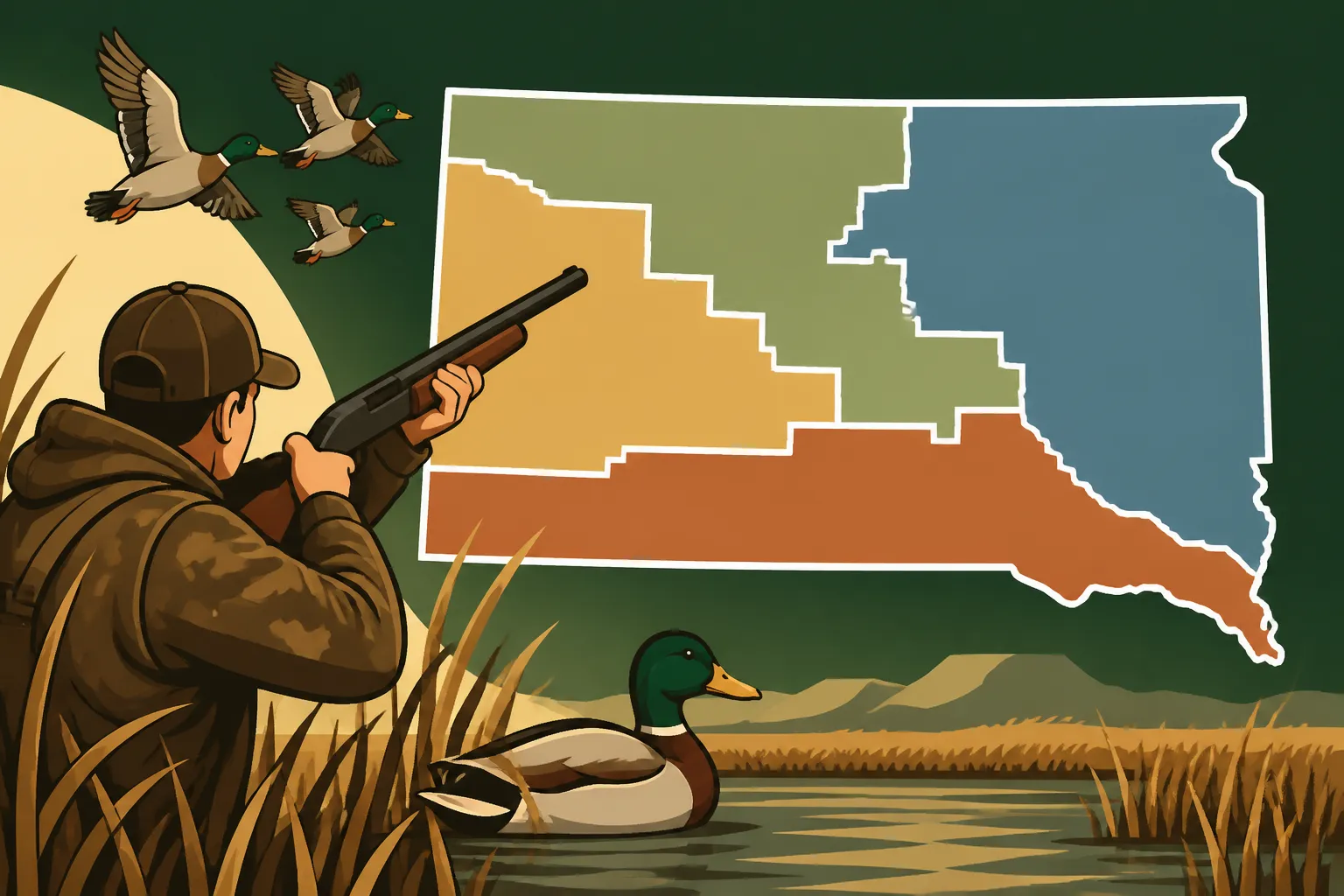
South Dakota Duck Season Zones
It’s easy to feel lost in a maze of regulations when you're planning a duck hunt, especially with different season dates and bag limits depending on where you drop your decoys. Many hunters, particularly those new to the state or traveling from afar, find themselves scratching their heads trying to decipher which rules apply to their chosen hunting grounds. This comprehensive guide aims to demystify South Dakota's duck season zones, helping you understand where to hunt, when to hunt, and what to expect so you can focus on the birds.
Understanding South Dakota's Duck Hunting Zones
South Dakota is a waterfowl hunter's paradise, situated squarely in the heart of the Central Flyway. But with such an abundance of habitat and migrating birds, the state has had to implement a zoning system to effectively manage populations and provide equitable hunting opportunities across diverse landscapes. These zones aren't just lines on a map; they represent distinct ecological regions with varying migration patterns, breeding populations, and hunting pressures, all of which influence season dates and regulations.
The Importance of Zone Designations for Hunters
Imagine planning a meticulously scouted hunt, only to realize the season for your specific area hasn't opened yet, or worse, has already closed. That's the headache zone designations prevent. The South Dakota Game, Fish and Parks (GFP) divides the state into several waterfowl zones specifically for ducks, and these divisions directly impact when you can legally hunt. Each zone has unique opening and closing dates for the duck season, sometimes even different daily bag and possession limits for certain species. For instance, the timing of the mallard migration might be entirely different in the western part of the state compared to the eastern prairie pothole region, necessitating distinct season structures. Understanding these zones is not just about compliance; it's about maximizing your time afield when the birds are most likely to be present and active. It's about recognizing that the dynamics of Waterfowl Hunting the South Dakota Prairie can vary wildly from one corner of the state to another.
Ignoring these zones can lead to severe penalties, from hefty fines to license revocation. Hunters are expected to know the exact boundaries and regulations for their intended hunting location before setting foot in the field. This also applies to species like geese, though their zones may differ slightly from ducks, so always double-check. The zones are designed to allow flexibility in managing different waterfowl populations that move through or reside in specific areas, ensuring sustainable harvests while still offering ample opportunity for hunters.
Historical Context of Zone Creation
The concept of duck hunting zones in South Dakota didn't just appear overnight; it's a carefully considered system developed over decades of biological research, hunter input, and adaptive management. Historically, the entire state might have fallen under one set of dates, leading to situations where hunters in one region felt their season was either too early or too late for the peak migration in their area. As waterfowl science advanced and more data became available on migration corridors, breeding grounds, and wintering habits, wildlife managers realized that a one-size-fits-all approach was inefficient and potentially detrimental to local bird populations or hunter satisfaction.
The Missouri River, for example, acts as a significant migration corridor and wintering area, attracting large numbers of waterfowl long after other prairie potholes might have frozen solid. Recognizing this unique habitat and its distinct hunting opportunities led to the creation of a specific Missouri River Zone with season dates tailored to its environment. Similarly, the western High Plains region has different habitat characteristics and weather patterns than the eastern Low Plains, leading to varied migration timing and, consequently, different season dates. These zones are a testament to the South Dakota GFP's commitment to scientific wildlife management and adapting to the dynamic nature of waterfowl migrations. They regularly review these zones and dates, often taking public comments into consideration, to fine-tune the regulations for the benefit of both the birds and the hunters.
Detailed Breakdown of South Dakota's Duck Zones
South Dakota's duck hunting landscape is strategically divided into five primary zones, each with its own set of rules and, most importantly, distinct season dates. These zones carve the state into manageable regions, reflecting varied ecological conditions and migration timings. Understanding these specific boundaries is crucial for planning any waterfowl venture in the state.
The High Plains Zone
The High Plains Zone generally encompasses the western portion of South Dakota. Think of the vast, open rangelands, scattered stock dams, and the western breaks that eventually lead into the Black Hills region. This zone is typically characterized by drier conditions than the eastern prairie, with fewer permanent wetlands but crucial smaller water bodies that act as magnets for migrating ducks.
The western counties, like Harding, Perkins, Meade, and parts of Ziebach and Corson, fall squarely into this zone. The High Plains Zone often sees an earlier freeze-up than the Missouri River or some eastern areas, influencing the timing of its duck season. Hunters in this region might target mallards and pintails early in the season, often finding them on smaller ponds and rivers before the hard cold sets in. It’s a landscape that favors mobile hunters, often glassing from afar and making quick moves to intercept birds. For detailed mapping, resources like GoHunt often include overlays that clearly delineate these zone boundaries, making it easier to confirm your location. When you're Hunting South Dakota Walk-In Areas in this part of the state, confirming the zone is your first step.
The Low Plains Zones: North, Middle, and South
The Low Plains region covers the eastern and central parts of South Dakota, a landscape dominated by the iconic prairie pothole region—a haven for breeding and migrating waterfowl. This area is further subdivided into three smaller zones to account for nuanced differences in migration patterns and hunting pressure.
Low Plains North Zone: This zone blankets the northeastern corner of the state, including counties like Roberts, Day, Marshall, Brown, and Spink. This is classic prairie pothole country, brimming with wetlands that serve as critical breeding grounds for ducks and major staging areas during migration. The season here is often structured to coincide with the main push of ducks down the flyway, including teal, widgeon, and gadwall in the early part, transitioning to mallards and divers as the weather cools. Hunters here might find themselves decoying ducks on a South Dakota prairie pothole, dealing with large concentrations of birds.
Low Plains Middle Zone: Moving south, this zone covers central-eastern South Dakota, including counties such as Beadle, Clark, Codington, Hamlin, Kingsbury, Miner, Sanborn, and parts of Davison. Similar to the North Zone, it's rich in wetlands, but its slightly more southerly position can sometimes mean a later freeze-up and a prolonged period of open water. The season dates reflect these differences, aiming to provide optimal hunting during key migration periods. The challenges of Reading Wind on a Big Water Set become especially pronounced in this zone.
Low Plains South Zone: This is the southeasternmost duck zone, covering counties like Minnehaha, Lincoln, Turner, Clay, and Union. Its proximity to the Missouri River and warmer southern temperatures means it often holds ducks later into the season. The dynamics here can be complex, as some areas of this zone are also influenced by the Missouri River Zone regulations. Understanding the precise lines is critical, as seasons might literally change across a single county road.
The Missouri River Zone
The Missouri River Zone is a distinct and often linear zone that follows the path of the Missouri River reservoirs: Lake Oahe, Lake Sharpe, Lake Francis Case, and Lewis and Clark Lake. This zone is unique because it often cuts through or overrides parts of the Low Plains South and sometimes even the High Plains Zone in the far western stretches of Lake Oahe.
The Missouri River acts as a massive thermal refuge and a consistent source of open water, even when smaller potholes and marshes are completely frozen. This attracts huge numbers of diving ducks like canvasbacks, redheads, and scaup, as well as significant concentrations of mallards, particularly later in the season. The season dates for the Missouri River Zone are typically set to capitalize on this late-season influx of birds. Hunters here might be focused on Diver Ducks on South Dakota Reservoirs or large rafts of mallards utilizing the big water and adjacent river bottom habitat. It's a critical zone for late-season hunting and requires careful attention to its specific, often elongated boundaries that follow the high water mark or specific land features along the river.
| South Dakota Duck Zone | General Location | Key Characteristics | Typical Season Timing | Species Focus (General) |
|---|---|---|---|---|
| High Plains Zone | Western South Dakota (W. of US Hwy 83 & N. of I-90) | Drier, more stock dams, earlier freeze | Early/Mid-Fall | Mallards, Pintails, Widgeon |
| Low Plains North Zone | Northeastern South Dakota | Dense prairie potholes, major breeding/staging area | Mid-Fall | Teal, Gadwall, Widgeon, Early Mallards |
| Low Plains Middle Zone | Central-East South Dakota | Prairie potholes, slightly prolonged open water | Mid-Late Fall | Mixed dabblers, increasing divers |
| Low Plains South Zone | Southeastern South Dakota | Potholes, river influence, later freeze | Late Fall/Early Winter | Mixed dabblers, later mallards |
| Missouri River Zone | Along Missouri River Reservoirs (Lake Oahe, Sharpe, etc.) | Large open water, thermal refuge, late freeze | Late Fall/Early Winter | Divers (Canvasback, Redhead), Late Mallards, Geese |
Note: Specific zone boundaries and season dates are subject to annual changes by the South Dakota GFP and Federal frameworks. Always consult the current year's regulations.
Navigating Season Dates and Bag Limits within Zones
Understanding South Dakota's duck hunting zones is only half the battle; knowing how these zones dictate your exact hunting dates and the number of birds you can harvest is equally critical. These regulations are designed to provide sustainable hunting opportunities while accounting for the biological needs of waterfowl across different regions.
How Zone-Specific Dates Affect Your Hunt
Each of South Dakota's five duck zones has its own unique set of opening and closing dates. This staggered approach is not arbitrary; it's a strategic decision based on long-term data regarding migration patterns, local duck production, and expected weather conditions. For example, the High Plains Zone, being further west and generally experiencing colder temperatures earlier, might have a season that opens and closes sooner than the Missouri River Zone, which can remain open well into December or even early January due to its large, often ice-free water bodies.
This means a dedicated duck hunter might, theoretically, be able to extend their season by shifting their hunting location from one zone to another. You could start in the Low Plains North Zone during the early migration for teal and wood ducks, then transition to the Low Plains South or Missouri River Zone as the season progresses and colder weather pushes the Mallard Numbers on the Missouri River down from the north. However, this strategy requires meticulous planning and a deep understanding of each zone's specific dates. Always verify the current year's exact dates with the South Dakota GFP hunting handbook, as they can shift slightly from year to year based on federal frameworks and state biological recommendations. Using a reliable mapping application like GoHunt can help you visualize these zone lines and corresponding dates directly on your hunting map.
Understanding Daily and Possession Limits by Zone
Beyond season dates, South Dakota Duck Bag Limits can also be influenced by the specific zone you're hunting in, though often the state maintains consistent statewide limits for most species. However, special regulations for certain species, like pintails or canvasbacks, might have different daily or possession limits compared to mallards or gadwalls. It's also important to remember that federal regulations often dictate the overall framework for duck bag limits, with states like South Dakota then setting their specific rules within those federal guidelines.
The daily bag limit refers to the maximum number of birds you can legally harvest in one day, while the possession limit is the maximum number of lawfully taken birds you can have in your possession at any given time, including those at your home or in cold storage. For example, if the daily limit for mallards is 6 (with specific hen restrictions), and the possession limit is 18, you could theoretically hunt three consecutive days and accumulate 18 mallards, provided you didn't exceed the daily limit each day. These limits are crucial for managing populations, especially for species that might be experiencing lower numbers or are particularly vulnerable. Always consult the official GFP regulations to understand the nuances, such as restrictions on hen mallards or specific limits on certain diving duck species.
The Role of the Federal Duck Stamp and HIP Registration
Regardless of which South Dakota duck zone you plan to hunt, two federal requirements are absolutely non-negotiable for all waterfowl hunters aged 16 and older: the Federal Migratory Bird Hunting and Conservation Stamp (often just called the "Federal Duck Stamp") and Harvest Information Program (HIP) registration.
The Federal Duck Stamp is not only a license requirement but a powerful conservation tool. Ninety-eight cents of every dollar spent on duck stamps goes directly to conserve vital wetland habitats and acquire new land for the National Wildlife Refuge System. These refuges and protected wetlands are crucial for Duck Production on South Dakota Prairie Potholes and provide vital resting and feeding grounds for migratory birds across the country. You must sign your duck stamp across the face to validate it before hunting.
HIP registration is equally important, though it doesn't cost anything. It's a federal program that requires all migratory bird hunters (including ducks, geese, doves, and snipes) to register annually with their state wildlife agency. By answering a few simple questions about your previous year's hunting success, you contribute to crucial data collection used by wildlife biologists to estimate harvest numbers and make informed decisions about future hunting seasons and bag limits. It's often integrated into the process of purchasing your state hunting license, so make sure you complete it. Failing to complete South Dakota HIP Registration can result in a fine, even if you have all other necessary licenses.
Planning Your Hunt Based on Zone Information
Once you've wrapped your head around South Dakota's duck zones, the real fun begins: planning your actual hunt. This involves not just knowing the dates, but understanding how to use mapping resources and even how to manage hunting near those invisible zone lines.
Using Resources to Pinpoint Zone Boundaries
Modern technology has made it significantly easier to pinpoint exactly where zone boundaries lie. Gone are the days of relying solely on vague map descriptions or asking a local at the gas station. Today, a wealth of digital tools is at your fingertips.
The South Dakota Game, Fish and Parks (GFP) website is your primary official source. They publish detailed maps of all waterfowl zones, often in printable PDF format, and sometimes with interactive features. These maps are updated annually, so always check for the current year's regulations.
Beyond the GFP, numerous private mapping applications have become indispensable for hunters. Platforms like GoHunt, onX Hunt, and BaseMap offer detailed satellite imagery combined with property ownership information and, crucially for our discussion, overlaid hunting zone boundaries. You can download maps for offline use, mark potential hunting spots, and even track your location in real-time to ensure you stay within the correct zone. Imagine you're hunting a South Dakota Waterfowl Production Area that straddles a zone line; these apps can show you precisely which side you're on, preventing accidental violations.
When reviewing these resources, pay close attention to the specific descriptions of the boundaries. Are they defined by major highways, county roads, rivers, or property lines? Some zones, like the Missouri River Zone, might be defined by the ordinary high water mark, which can fluctuate. Double-checking these details can save you a lot of grief and ensure your hunt is fully compliant.
Strategies for Hunting Near Zone Edges
Hunting near a zone edge can be both a blessing and a curse. On one hand, it might offer extended hunting opportunities if one zone is open longer than an adjacent one. On the other hand, it requires extreme vigilance to avoid accidentally crossing into a closed zone or misinterpreting the regulations.
Consider a scenario where the Low Plains South Zone is open, but the adjacent Low Plains Middle Zone has just closed for ducks. If you're hunting a large wetland complex that spans both zones, you must ensure your decoys, your blind, and your shooting are strictly confined to the open zone. This often means being extra conservative and giving significant buffer room to the closed zone boundary. Using your GPS and mapping app to create a geofence or set alarms when approaching a boundary can be a lifesaver.
Some hunters specifically target these zone edges, hoping that birds pushed from a closed zone might seek refuge in an open one. This strategy can be effective, but it requires a deep understanding of local bird behavior and legal boundaries. Remember, ignorance of the law is not an excuse. Always err on the side of caution. If there's any doubt about your exact location relative to a zone line, move to an area where there is no ambiguity. After all, the goal is a safe, legal, and enjoyable hunt, not a brush with law enforcement. It's also wise to understand that other regulations, such as those for Layout Blinds on South Dakota Stubble, still apply regardless of the zone you're in.
Disclaimer
Please remember that hunting regulations, including season dates and zone boundaries, can change annually. The information provided in this article is for general guidance only and should not be considered legal advice. Always consult the most current South Dakota Game, Fish and Parks (GFP) hunting handbook and federal regulations before planning or undertaking any hunting activity. It is the hunter's responsibility to know and follow all applicable laws.