Scoring a Pronghorn Buck
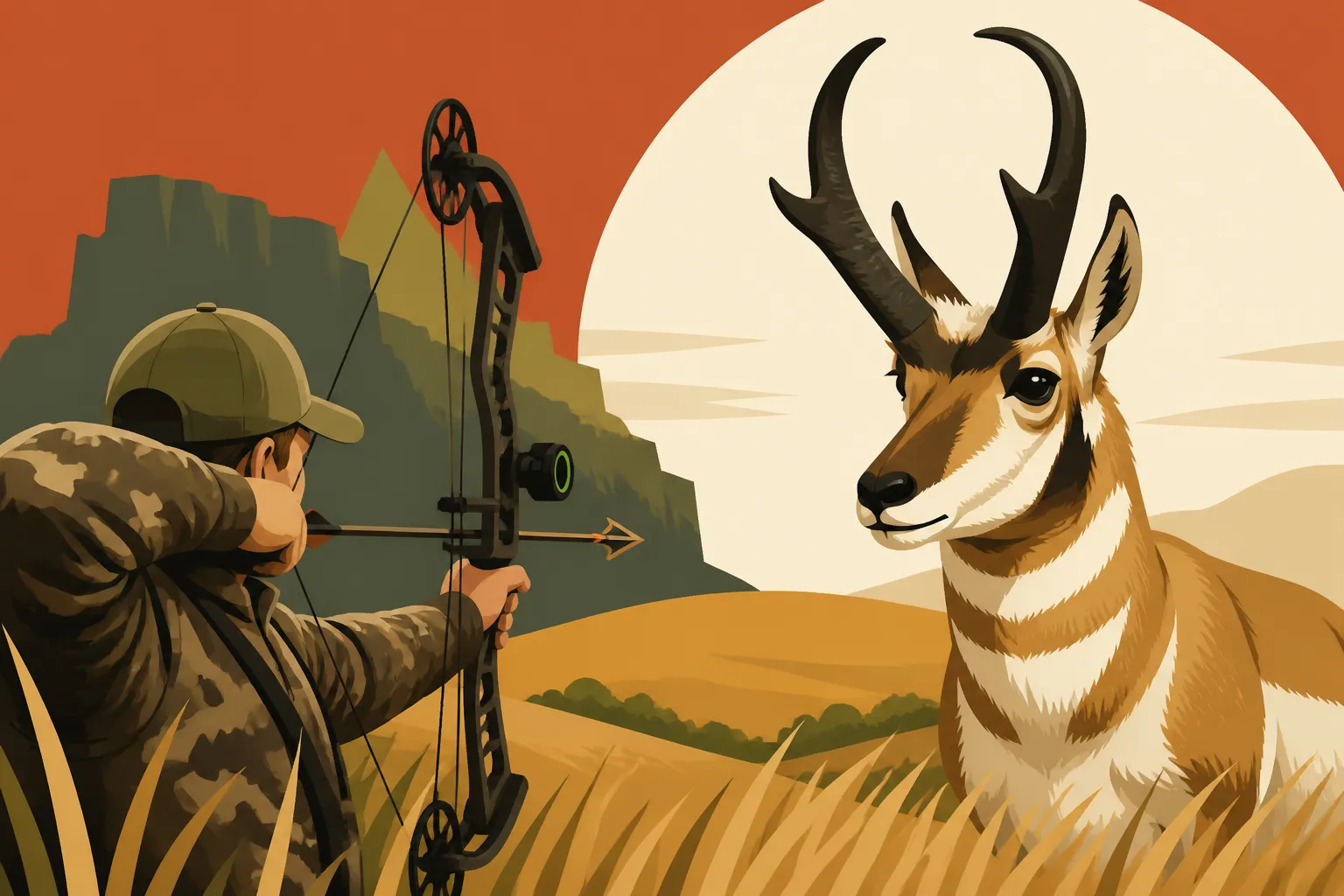
That heart-stopping moment when a big pronghorn buck steps out onto the vast South Dakota prairie is something every hunter dreams of. But then the clock starts ticking – you've got precious seconds to size him up, make a decision, and execute a shot. It's a challenging situation, and one of the biggest frustrations is trying to accurately gauge a buck's trophy potential through your binoculars, especially when every feature seems to blend into the next. This guide is here to walk you through the specifics of how to score a pronghorn buck, breaking down the often-mystifying process into understandable components, so you can make confident decisions when it counts.
The Unique Anatomy of a Pronghorn Horn and How It Relates to Scoring
Unlike deer or elk that grow solid antlers and shed them annually, pronghorn grow unique, true horns with a bony core covered by a keratinous sheath. This outer sheath is what's measured, and it's shed annually, usually after the breeding season. Understanding these distinct features is absolutely crucial for proper scoring. You can't just apply deer-scoring principles directly to a pronghorn and expect accurate results. Their horns are a marvel of evolution, perfectly suited for the open plains, and they require a specific approach when you're trying to put a number on them.
Key Components: Horn Length, Prongs, and Bases
When we talk about scoring a pronghorn, we're focusing on a few critical anatomical points. First, there's the horn length. This isn't just a straight line from base to tip; it's measured along the outer curve of the horn, from the lowest point of the horn base to the tip. Imagine tracing the curve with a flexible tape measure – that’s the path you’re taking. A long, sweeping horn with a good, sharp tip is naturally going to add significant points here.
Then we have the prongs. These are the forward-projecting points on each horn, typically located about halfway up. The length of the prong is measured from its tip, along its upper edge, down to the outer curve of the main horn. This is often where hunters get confused, trying to measure the "inside" of the prong or just eyeballing it. A robust, well-defined prong with good length is a major scoring attribute. Sometimes, you'll see bucks with smaller, less distinct prongs, which can really hurt their overall score, even if their main horn length is impressive. Finally, the bases refer to the circumference of the horn at its widest point above the skull but below the prong. These are girth measurements and are vital for mass. The thicker the base, the more points it contributes, and this is often a good indicator of a mature buck's overall horn development. Many experienced hunters will tell you that a buck with thick bases tends to carry that mass throughout the horn, making it a valuable field-judging cue.
Understanding Mass Measurements: The Quartering System for Circumferences
Mass is a significant component of a pronghorn's score, and it’s measured through circumferences. The Boone and Crockett scoring system, which is the most widely recognized for trophy animals, uses a "quartering" system for these circumference measurements. After measuring the circumference at the base of the horn, you then take three additional circumference measurements at approximately equidistant points between the base measurement and the tip of the horn, as you follow the outer curve.
This can be a bit tricky because the horn often tapers quite dramatically. You'll measure the circumference at the base, then find the halfway point between the base and the prong for the first mass measurement. Then, another measurement halfway between the prong and the tip, and finally, a third circumference between the last measurement and the tip. These four measurements per horn, combined with the length measurements, really add up. A buck with consistent mass all the way to the tip, even past the prong, is a truly special animal. It’s not just about how long the horns are, but how much material is actually there.
Deciphering the Boone and Crockett Scoring System for Pronghorn
The Boone and Crockett Club's scoring system provides a standardized, objective way to compare trophy animals. For pronghorn, it meticulously accounts for every measurable aspect of the horn, emphasizing both length and mass. If you're serious about identifying a trophy-class buck, you need to understand the nuances of this system, not just the raw numbers. It’s what separates the good from the truly exceptional, and what puts a buck in the record books.
Main Measurements: Length of Horn, Length of Prong, and Circumferences
Let's break down the main scoring categories for a pronghorn buck using the Boone and Crockett method. First, and often the most visually impressive, is the length of the horn. As mentioned, this is measured along the outer curve from the bottom edge of the base to the tip. This measurement typically ranges from 12 inches for a young buck to well over 16 inches for a trophy. A buck with 15-inch horns or better is certainly something to admire on the South Dakota prairie.
Next, you've got the length of the prong. This is measured from the tip of the prong along its top edge to the outer curve of the main horn. Prongs can vary wildly in length, but anything over 5 inches is considered very good, and exceptional bucks might have prongs pushing 7 or 8 inches. The position of the prong also matters; ideally, it should be about halfway up the main horn. Lastly, we revisit those circumference measurements. There are four per horn: the basal circumference (C-1), and then three additional circumferences taken at equal intervals along the length of the horn, typically referred to as C-2, C-3, and C-4. These measurements are crucial for capturing the overall mass and bulk of the horn, which many hunters find harder to estimate in the field.
Symmetry and Deductions in Pronghorn Scoring
One aspect of Boone and Crockett scoring that often surprises new hunters is the emphasis on symmetry. While many big game species are scored for gross (total) inches and then deductions are applied for differences between sides, pronghorn scoring is a bit different. Essentially, the system rewards symmetry. Each of the measurements (horn length, prong length, and the four circumferences) is taken for both the left and right horns. Then, the smaller measurement for each category is subtracted from the larger measurement, and these differences are totaled as deductions. The final score is the sum of all measurements from both horns, minus these deductions.
So, for example, if one horn is 16 inches long and the other is 15.5 inches, you'd have a 0.5-inch deduction for horn length. The goal, for a high B&C score, is to find a buck with horns that are as identical as possible in all dimensions. This means that a buck with massive but asymmetrical horns might not score as high as a slightly smaller but perfectly matched buck. It really puts a premium on balanced horn growth, which can be particularly challenging for these animals given their rapid horn development. This is something to keep in mind when you're looking at Boone and Crockett Minimums for Pronghorn – it's not just about raw size, but also about that crucial balance.
Practical Field Judging Techniques for South Dakota Pronghorn
Field judging a pronghorn buck is an art form honed over many seasons, and it’s especially vital in South Dakota where opportunities can be fleeting. You're trying to translate those B&C measurements into quick, visual estimates while the buck might be moving or at a considerable distance. It’s challenging, but with practice, you can get pretty good at it. Many hunters use tools like the GoHunt app which offers satellite imagery and mapping, to potentially scout areas where larger-horned bucks have been sighted in previous years, giving them a head start before even seeing an animal.
The "Ear Rule" and Other Visual Cues
One of the most widely used methods for field judging pronghorn is the "ear rule." A mature pronghorn buck's ears are typically about 5 to 6 inches long. This provides a handy, consistent reference point.
- Horn Length: If a buck's horn length appears to be roughly three times the length of its ear, you're likely looking at a buck with horns in the 15- to 18-inch range – a solid trophy. Horns that barely clear the ear might be 12-13 inches, while horns that look four times the ear length are truly exceptional.
- Prong Length: The prong is a huge factor. Ideally, a good prong will appear at least as long as the buck's ear. If the prong extends significantly past the ear's length, you’re looking at a buck with impressive prongs, likely 6-7 inches or more. Also, pay attention to where the prong is located – it should be about halfway up the horn for optimum scoring.
- Overall Shape: Look for horns that sweep back, then forward, forming a pleasing curve. The tip should curl inward slightly, almost like a hook. The "curl" of the horn adds to the overall aesthetic and often indicates good length. A blocky, straight horn often won't carry the length or mass of a well-curved one. Using a good set of binoculars or a spotting scope is non-negotiable for this. Remember to refer to Judging a Pronghorn Buck in the Field for more visual examples and tips.
Estimating Mass and Lengths
Estimating mass is arguably the hardest part of field judging, as it’s all about girth. Again, the ear can serve as a reference.
- Basal Circumference: Look at the base of the horn. Does it look as thick as the buck's eye, or even its ear at the base? A horn base that appears as thick as the buck's eye might be around 6-7 inches in circumference. If it looks thicker than the eye, you're likely in trophy territory. The thicker the base, the more points it will contribute.
- Carrying Mass: Does the horn carry that thickness all the way up, past the prong, or does it taper off rapidly? Bucks that hold their mass well, meaning the horn doesn't get pencil-thin too quickly after the base, are the ones that score well. Look for that consistent girth.
- Prong Location: Ideally, the prong should emerge at or above the midpoint of the horn’s length. A low-set prong means less horn above it to contribute to length and mass, even if the prong itself is long. Conversely, a high-set prong might indicate less material for that crucial prong measurement.
- Symmetry Check: Mentally divide the buck's head down the middle. Do the horns appear to be mirror images? Are the prongs at similar heights? Are the curves consistent? Significant differences mean deductions, so a slightly smaller but more symmetrical buck might outscore a larger, lopsided one.
The Importance of the Antelope's Prongs
We've touched on prongs a few times, but it's worth dedicating a moment specifically to them because they are uniquely important for pronghorn scoring. The prong is often the defining characteristic of a good buck and can easily make or break a trophy score. A buck might have great length, but if its prongs are short, blunted, or oddly shaped, it will seriously impact its B&C score. Conversely, a buck with slightly shorter main horns but exceptionally long and well-defined prongs can still reach impressive scores.
When you're glassing, really focus on those prongs. Do they project forward sharply? Are they thick at the base and taper to a point? Is their length substantial, perhaps exceeding the length of the ear? Also, consider the angle at which they protrude. A prong that sticks straight out rather than having a nice upward sweep might not measure as long. Always look for a healthy, robust, and well-developed prong. It’s a key indicator of a trophy animal that will impress on the scoring sheet.
Avoiding Common Scoring Mistakes and Maximizing Your Chances
Field judging pronghorn is tricky, and everyone makes mistakes, especially when that adrenaline kicks in. But there are definitely ways to improve your accuracy and increase your chances of taking a buck you'll be proud of, one that really scores well. It often comes down to patience, practice, and understanding the nuances of how these incredible animals grow their horns.
Don't Rush It: Patience and Good Angles are Key
The biggest mistake hunters make is rushing the field judgment. You spot a buck, get excited, and quickly decide he's "the one" without a thorough evaluation. This leads to ground shrinkage more often than not. When you see a buck, especially if you're Spot-and-Stalk Antelope Hunting in South Dakota, take your time. Get settled. Pull out your best optics, whether it's a 10x binocular or a 60x spotting scope. Watch the buck move. Look at him from different angles. What might look like a huge buck from the front could look much smaller from the side, or vice-versa, depending on horn flare and curvature.
Try to observe him standing still, ideally broadside. This gives you the best perspective for assessing horn length against his body and for judging symmetry. If he's bedded, you might need to wait for him to stand. Patience might mean passing on a decent buck in the hopes of a better one, or simply waiting for a more ethical shot. Remember, the prairie is vast, but opportunities can be few. Sometimes, waiting an extra five or ten minutes for a better look can mean the difference between a lifetime memory and a "should have waited" regret. Utilizing scouting tools like those found on GoHunt to understand a buck's typical movements and patterns can also help you get into a position for a better, unhurried look.
Practicing Your Eye: How Repeated Exposure Sharpens Skills
There's no substitute for practice when it comes to field judging. The more pronghorn bucks you look at through your optics, the better your eye will become. Before your hunt, spend time looking at photos and videos of scored pronghorn. Try to guess their measurements, then look up their actual scores. This mental exercise is incredibly valuable. When you're in the field, even if you're not planning to shoot a particular buck, take the time to evaluate it as if you were going to. Gauge its horn length against its ears, estimate prong length, and try to visualize those circumference measurements.
Another great practice is to carry a small measuring tape in your pack. If you or a hunting partner harvest a buck, take the time to score it fully according to B&C rules. This hands-on experience will solidify your understanding of how each measurement contributes to the total and will make you much more confident in future field judgments. This constant exposure and active engagement with the scoring process will undeniably sharpen your skills.
Understanding South Dakota's Specifics: Horn Growth and Population
South Dakota's pronghorn population is generally strong, especially in the western part of the state. However, factors like winter severity and available forage can influence horn growth from year to year. A particularly harsh winter or prolonged drought might result in bucks with slightly smaller or less massive horns. On the flip side, mild winters and abundant moisture can lead to exceptional horn development. It's always a good idea to pay attention to current year conditions and population reports from the South Dakota Game, Fish and Parks.
While the fundamental scoring principles remain constant, understanding the local context can help you adjust your expectations and field judging. For example, some units might consistently produce bigger bucks due to superior genetics or habitat. Familiarizing yourself with these regional nuances, perhaps by reviewing harvest data or talking to local biologists, can give you an edge. The more you know about the specific conditions that influence Pronghorn Horn Growth and Shedding in South Dakota, the better equipped you'll be to evaluate a buck's true potential.
| Measurement Category | Description | Typical Range (Mature Buck) | Trophy Class (B&C) |
|---|---|---|---|
| Length of Horn | Outer curve from base to tip | 12 – 15 inches | 15 – 18+ inches |
| Length of Prong | Tip of prong along top edge to main horn | 4 – 6 inches | 6 – 8+ inches |
| Basal Circumference | Widest point of horn above skull, below prong | 6 – 7 inches | 7 – 8+ inches |
| Quarterly Circumferences | Three additional circumference measurements at equal intervals along horn (C-2, C-3, C-4) | 4 – 6 inches (tapering) | Consistency is key |
| Total Score | Sum of all measurements (both horns) minus symmetry deductions | 60 – 75 points | 80+ points |
This table provides a general guideline. Remember, the Boone and Crockett entry minimum for pronghorn is typically 82 gross points for an Awards book animal, and 80 for an all-time record book animal. These are high bars, emphasizing consistent mass and impressive length, coupled with good symmetry. It's a testament to the exceptional quality of a truly world-class pronghorn.
Disclaimer
This article is for general informational purposes only and does not constitute professional advice. Laws, prices and regulations vary by location and change over time. Consult a qualified professional for guidance on your specific situation.