Boone and Crockett Minimums for Pronghorn
One of the most thrilling aspects of hunting pronghorn in South Dakota is the sheer speed and wildness of these incredible animals. Many hunters dream of not just harvesting a pronghorn, but bringing home an animal that truly stands out, perhaps even one that earns a place in the record books. This guide will walk you through what it takes for a pronghorn to meet the stringent Boone and Crockett Club minimums, helping you understand the scoring system and what to look for when you're out on the prairie.
Understanding the Boone and Crockett Club's Mission
Before we dive into the nitty-gritty of horn measurements, it’s really important to grasp what the Boone and Crockett Club is all about. It’s not just a collection of big antlers and horns; it’s a conservation organization with a rich history, established by Theodore Roosevelt way back in 1887. Their primary goal is to promote fair chase hunting and the conservation of wildlife and habitat. When you see a "Boone and Crockett animal," it signifies much more than just size; it represents a healthy population, exceptional genetics, and ethical hunting practices. It’s a testament to sound wildlife management and the ongoing efforts of hunters and conservationists.
Why Records Matter to Conservation
You might wonder how a list of big game records actually helps wildlife. It might seem like just a bragging right, but it's far from it. The data collected by the Boone and Crockett Club over generations is invaluable for wildlife biologists and managers. By tracking where and when large animals are harvested, and analyzing their physical characteristics, patterns emerge. For instance, a decline in average antler or horn size in a particular region might signal habitat degradation, nutritional deficiencies, or overharvesting of mature animals. Conversely, consistent production of record-book animals indicates a robust ecosystem and effective management strategies. This information helps agencies like South Dakota Game, Fish and Parks make informed decisions about season lengths, tag allocations, and habitat improvement projects. It's a critical feedback loop for the health of our wild places.
The Philosophy Behind Fair Chase
The concept of fair chase is absolutely fundamental to the Boone and Crockett Club and, frankly, to ethical hunting itself. It means pursuing a wild animal in its native habitat without an unfair advantage. This isn't just a gentleman's agreement; it's a deeply held principle that honors the animal and the hunting tradition. For pronghorn, this means no shooting from a vehicle, no using aircraft to spot and then land to pursue, and no hunting inside a high-fence enclosure. It's about pitting your skills, knowledge, and patience against the animal's natural instincts and senses. If you're pursuing a pronghorn on the vast plains of South Dakota, crawling through draws, reading the wind, and making a challenging stalk, you're living the spirit of fair chase. It’s about the quality of the experience and the respect for the game, not just the size of the trophy.
Decoding Pronghorn Scoring: Key Measurements and the Minimums
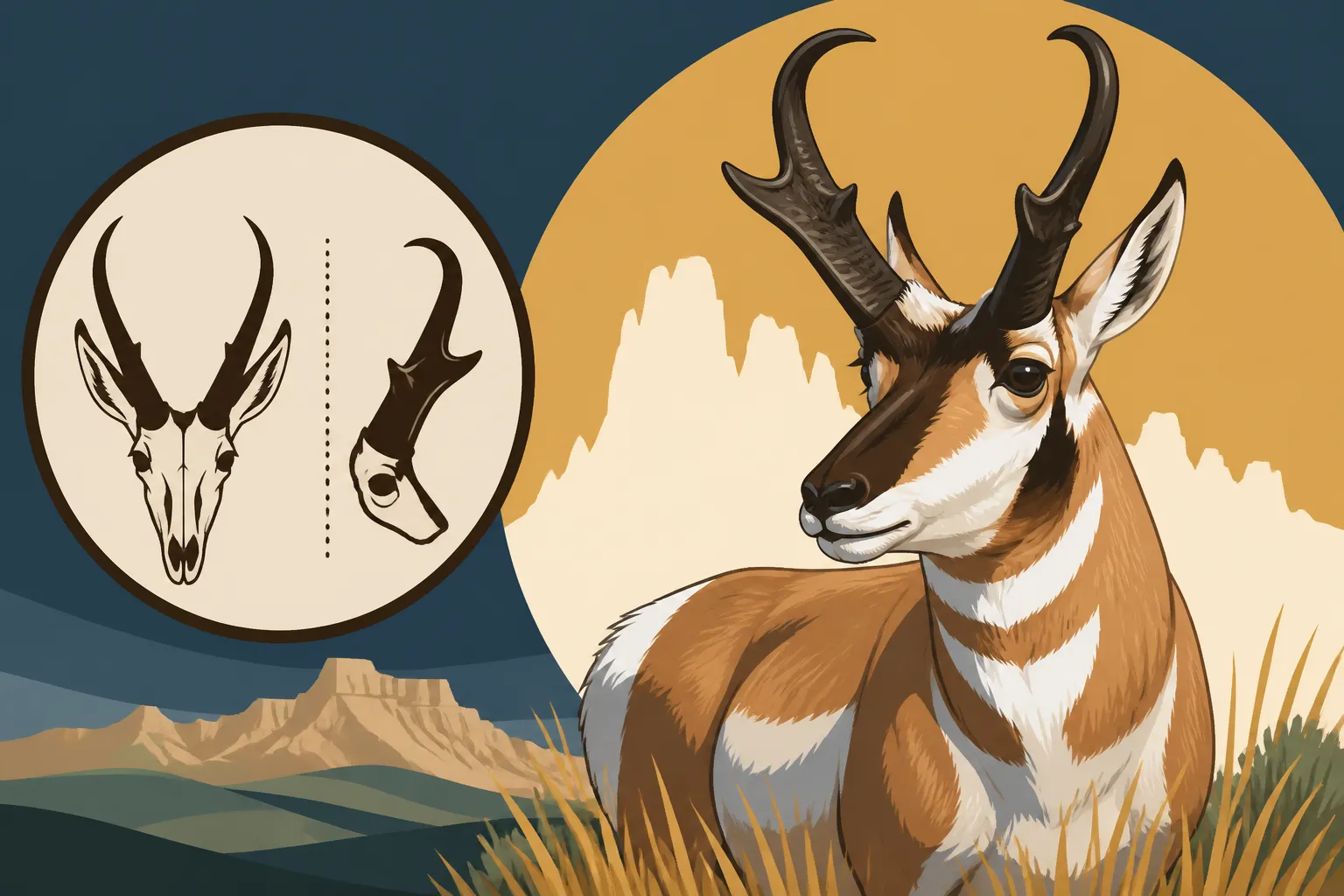
Alright, let's get into the specifics you're probably eager to know: what makes a pronghorn truly measure up for Boone and Crockett? Pronghorn horns are unique. They are not antlers, as they have a bony core but shed their keratinous sheath annually, much like antlers shed entirely. This unique structure requires a specific scoring method that accounts for length, circumference, and the distinctive prongs. This is where attention to detail really matters in the field, as judging a pronghorn buck quickly can be notoriously difficult. You often only get a few seconds to assess them before they bolt, or before they disappear into a dip in the prairie.
The Specifics of a Typical Pronghorn Score
The Boone and Crockett scoring system for typical pronghorn is quite precise. It measures five main elements for each horn, then combines them for a total gross score, from which deductions are made for asymmetry. Here’s a breakdown of what measurers look for:
- Length of Horn: This is the measurement along the outside curve from the base of the horn to the tip. It's crucial for the overall score, and those long, elegant curves really add up.
- Length of Prong: Measured from the tip of the prong to the front edge of the horn, following the outer curve of the prong. The placement and length of the prong are incredibly important and often determine if a buck crosses the threshold.
- Circumferences: Four circumference measurements are taken on each horn.
- First Circumference: Taken at the base of the horn.
- Second Circumference: Taken at a specific point above the first, typically at the narrowest point between the base and the prong.
- Third Circumference: Taken at the narrowest point between the prong and the tip.
- Fourth Circumference: Taken halfway between the third circumference and the tip.
These measurements account for the mass and density of the horns, which contribute significantly to the score.
The total score is derived by adding the length of each horn, the length of each prong, and the four circumference measurements for each horn. Then, deductions are made for any differences between corresponding measurements on the left and right horns. This gives you the net typical score. For a typical pronghorn to be entered into the Boone and Crockett Awards Book, it must meet a minimum score of 82 points. For All-Time Records, the minimum is 82 points. You might think this sounds low compared to deer, but given the delicate structure of pronghorn horns, 82 points is truly an exceptional animal.
Untypical Pronghorn Categories and What Makes Them Unique
While most hunters aim for a "typical" buck, sometimes you encounter a pronghorn with unique horn growth that just doesn't fit the symmetrical ideal. These are called "untypical" pronghorn. The Boone and Crockett Club recognizes these unique animals in their own category. What makes a pronghorn untypical? It could be extra points, abnormal growth, or unusual palmation that deviates significantly from the typical shape. Instead of penalizing these unique characteristics, the untypical scoring system actually rewards them.
For untypical pronghorn, all the typical measurements are still taken, but any abnormal points or lengths are added to the gross score without deduction for asymmetry. This means a buck with a small extra kicker or an unusual curl might not score well as a typical, but could shine as an untypical. The minimum score for an untypical pronghorn to be entered into the Boone and Crockett Awards Book is 78 points. For All-Time Records, it's also 78 points. It's less common to see untypical pronghorn make the books, simply because their unique characteristics often don't add enough mass and length to overcome the typical scoring structure, but when they do, they are truly magnificent and unique trophies.
Official Measurement Process and Who Can Score Your Trophy
So, you've harvested a beautiful South Dakota buck and you suspect it might be a contender. What’s next? You can’t just pull out a tape measure and submit your own numbers. The process for official scoring is quite rigorous to maintain the integrity of the records.
First, there's a mandatory drying period. For pronghorn, the horns must dry for at least 60 days after the animal is harvested before they can be officially measured. This allows for any shrinkage that might occur, ensuring a stable and accurate measurement. During this time, keep the skull plate in a cool, dry place.
Once the drying period is complete, you'll need to find an official Boone and Crockett measurer. These individuals are certified and highly trained in the precise scoring methods. They're typically volunteers who are passionate about fair chase and conservation. You can often find a list of official measurers on the Boone and Crockett Club's website, or sometimes through your state wildlife agency. When the measurer evaluates your trophy, they will meticulously go through each step, double-checking every measurement. It's a fascinating process to witness, and often, they can offer insights into the animal's age and health. The official score sheet will then be filled out, and if it meets the minimum, it can be submitted for consideration.
Beyond the Tape Measure: The Hunt for a Record Pronghorn
Hunting a record-book pronghorn in South Dakota isn't just about luck; it's a blend of good planning, perseverance, and a deep understanding of the animal and its habitat. South Dakota offers some incredible opportunities, but you need to know where to look and what strategies to employ. Trying to judge Judging a Pronghorn Buck in the Field from hundreds of yards away, often with heat shimmering across the prairie, is a real skill in itself.
Where to Find Boone and Crockett Caliber Pronghorn in South Dakota
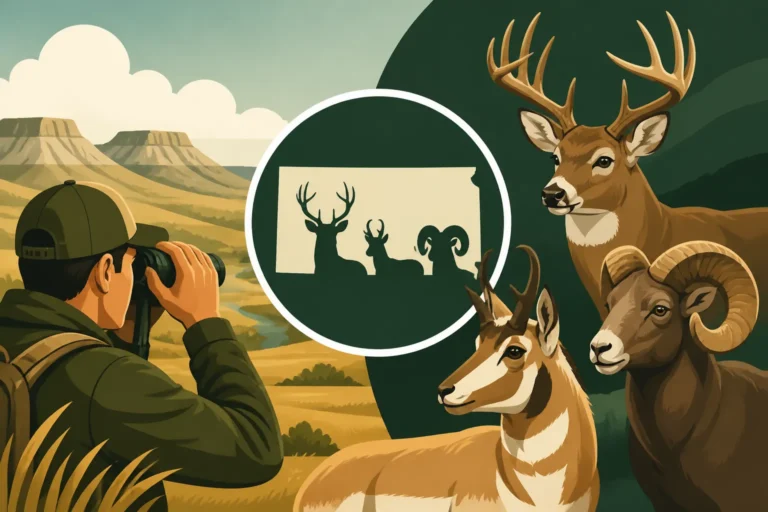
South Dakota, particularly the West River region, is renowned for its healthy pronghorn populations. While big bucks can pop up anywhere, certain areas consistently produce larger animals due to better genetics, abundant forage, and less hunting pressure on mature bucks. The expansive grasslands and sagebrush flats of counties like Harding, Perkins, and Butte, especially bordering the National Grasslands, are often hotbeds for trophy potential. These areas provide the necessary space for pronghorn to thrive, with diverse vegetation offering both food and cover.
Look for areas with good water sources, as pronghorn, despite their desert adaptations, still need regular access to water, especially during dry spells. Decoying Antelope Over Water can be a highly effective tactic in these situations. Also, focus on units that might require a few more preference points in the draw system; these often have lower tag allocations, which can allow bucks to mature, leading to larger horn growth. Research past harvest reports from South Dakota Game, Fish and Parks to identify trends in specific units. Tools like GoHunt can be invaluable for analyzing draw odds and unit statistics, giving you an edge in planning your application strategy.
Patience and Preparation for a Trophy Hunt
Hunting a trophy pronghorn requires a different mindset than, say, a pheasant hunt. It’s often a game of extreme patience and meticulous preparation. Pronghorn have incredible eyesight—it's said to be comparable to an 8x binocular—and they live in open country, which makes getting close a significant challenge.
Successful trophy hunters often spend days, sometimes even weeks, prior to the season scouting. This isn't just about finding bucks; it's about understanding their routines, their travel corridors, and their preferred bedding and feeding areas. Glassing from afar with high-quality optics is paramount. You need to be able to sit for hours, scanning the horizon, until you spot that one exceptional buck. When you do locate a promising animal, the stalk itself will demand incredible discipline. Using every fold in the terrain, every patch of sagebrush, and every culvert to stay hidden is critical. Using Draws to Hide a Stalk is an art form when it comes to pronghorn. Wind direction is also crucial, as their sense of smell, while not as renowned as their eyesight, is still very keen. Be prepared for long shots, as often, even the best stalk might only get you within a few hundred yards of these wary animals. Practice shooting from prone positions and at extended ranges. Your gear, from your optics to your rifle, needs to be top-notch and something you are intimately familiar with.
Your Journey Towards the Record Books: Resources and Next Steps
The pursuit of a record-book pronghorn is a challenging but incredibly rewarding endeavor. It tests your skills, your patience, and your dedication to the hunt. Whether you achieve the minimums or not, the experience of pursuing such an iconic animal across the South Dakota prairie is a trophy in itself. But if you do connect with that exceptional buck, knowing the next steps is important.
Getting Your Pronghorn Scored
Once your pronghorn's horns have completed the 60-day drying period, the next step is to arrange for an official measurement. As mentioned, the Boone and Crockett Club website is your best resource for locating a certified measurer in your area. Reach out to them, explain what you have, and schedule an appointment. It's helpful to have your hunting license and tag information readily available, as the measurer will need to verify the legality of the harvest. Be prepared to share details about your hunt, as these stories are often part of the rich tapestry of conservation. If your buck makes the minimums, the measurer will submit the score sheet to the Boone and Crockett Club for official entry into their records. This is a moment of pride, acknowledging both your hunting prowess and the healthy state of South Dakota's wildlife.
How GoHunt Can Aid Your Trophy Quest
In today's age of information, there are fantastic tools available to help serious trophy hunters plan their adventures. One such resource is GoHunt. This platform provides an incredible wealth of data that can be instrumental in researching hunting units, understanding draw odds, and identifying areas with a history of producing trophy-class animals. Imagine being able to sift through years of harvest statistics, public land maps, and expert analyses, all from the comfort of your home. GoHunt helps you make highly informed decisions about where to apply for tags, especially for sought-after species like pronghorn where specific unit knowledge can make all the difference. Their mapping tools, for instance, can overlay public and private land, walk-in areas, and terrain features, allowing you to e-scout potential trophy hotspots before you even set foot on the prairie. It’s like having a seasoned local guide available 24/7.
Here's a quick look at the Boone and Crockett minimums:
| Category | Awards Minimum (Net Score) | All-Time Minimum (Net Score) |
|---|---|---|
| Typical American Pronghorn | 82 | 82 |
| Untypical American Pronghorn | 78 | 78 |
Remember, these are net scores after deductions for asymmetry in typical categories. The gross score will always be higher. Focusing on these criteria will help you better understand the nuances of what makes a truly exceptional pronghorn and will hopefully inspire your next South Dakota hunt. Spot-and-Stalk Antelope Hunting in South Dakota is a thrilling challenge, and chasing a B&C buck only adds to that excitement. For more details on the draw process, you might find South Dakota Antelope Season and Draw helpful. If you’re just getting into big game hunting, Rifle Setup for South Dakota Open Country is a good starting point. Understanding Shot Placement on a Pronghorn is also critical for ethical harvesting. Don't forget to review Field Dressing an Antelope Fast to ensure your meat quality, and for those who like to combine hunts, Predator Hunting Across South Dakota offers another opportunity.
Disclaimer
This article is for general informational purposes only and does not constitute professional advice. Laws, prices and regulations vary by location and change over time. Consult a qualified professional for guidance on your specific situation.