Walking and Blocking South Dakota Cattail Sloughs
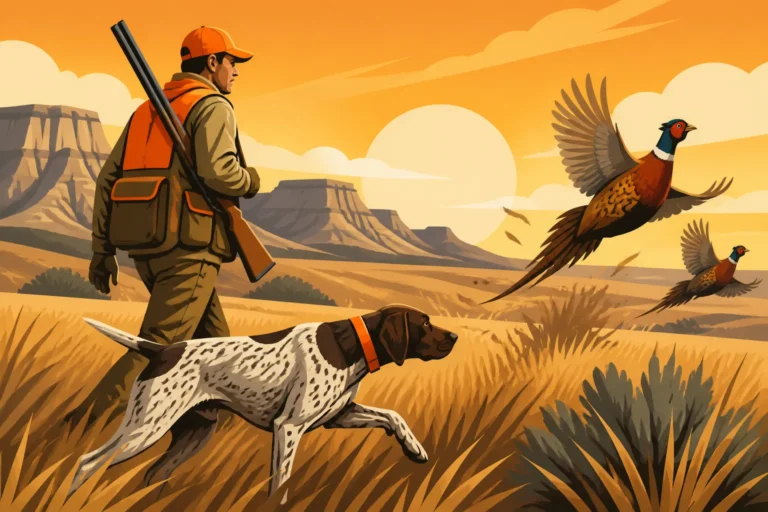
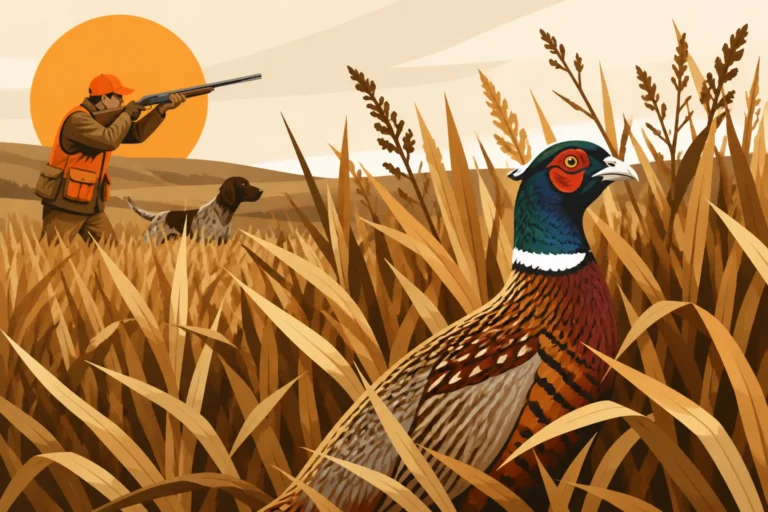
Few things are as frustrating for a pheasant hunter as watching roosters melt into an impenetrable cattail slough, knowing they're there but feeling powerless to get them out. That dense, tangled cover might as well be a castle wall, and those wily birds are the kings within. But with the right strategy, teamwork, and a healthy dose of grit, you can turn those frustrating sloughs into exciting flushes. This guide is all about mastering the art of walking and blocking South Dakota cattail sloughs, turning an often-overlooked challenge into one of the most rewarding pheasant hunting experiences you can have.
Understanding the Cattail Fortress
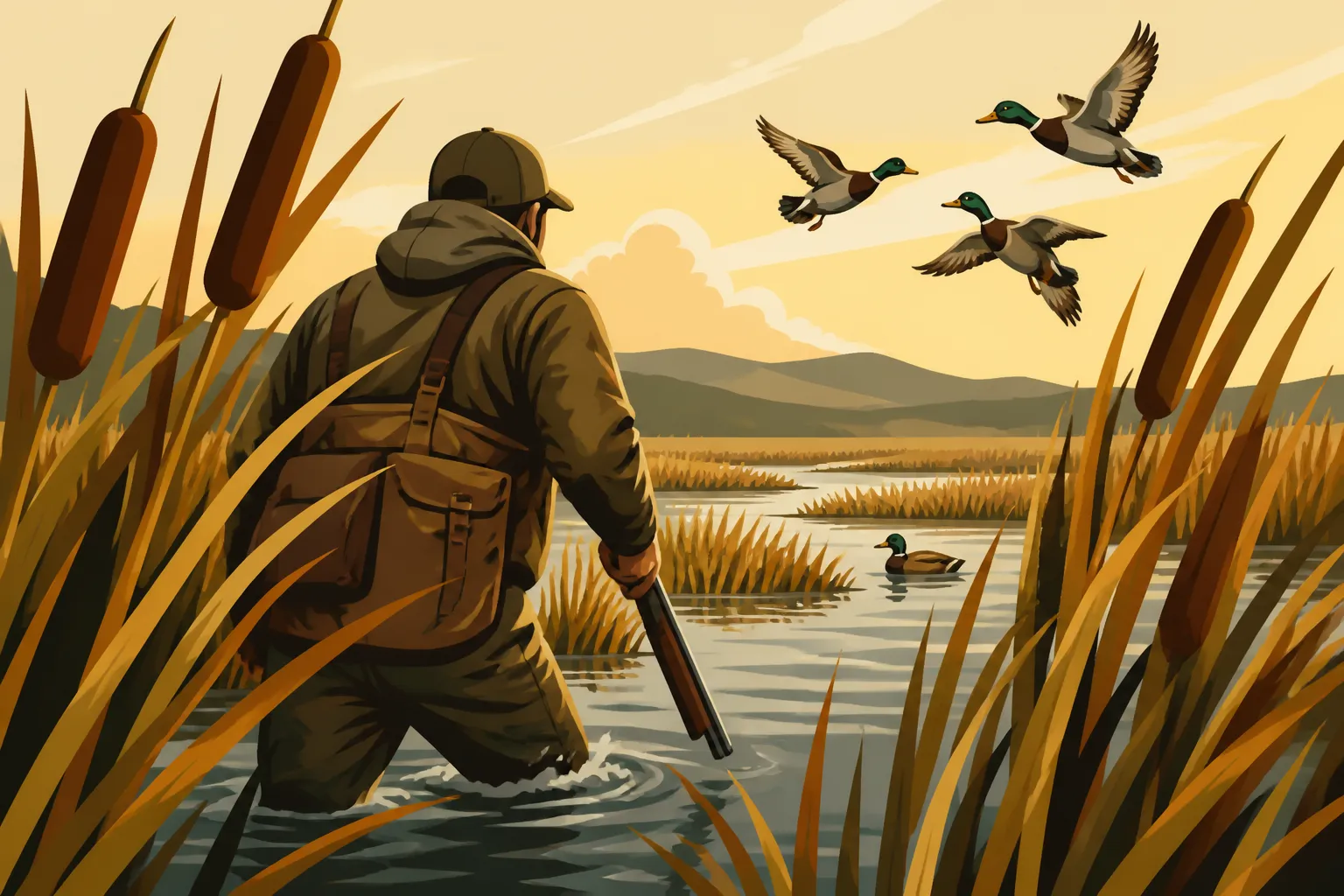
Cattail sloughs are a defining feature of the South Dakota landscape, especially across the East River country, providing crucial habitat for pheasants. However, what makes them great cover also makes them incredibly challenging to hunt effectively.
Why Roosters Love Cattail Sloughs
Imagine a pheasant's ideal hideout: thick, interwoven stems offering complete visual obstruction, a canopy that sheds snow and rain, and a network of tunnels and trails at ground level for easy escape. That's a cattail slough in a nutshell. Roosters, particularly those wise old birds who've survived a season or two, know these places are their sanctuary. They offer phenomenal thermal protection from bitter winter winds and provide crucial escape cover from avian and mammalian predators alike.
Beyond just shelter, cattail sloughs often hold an abundance of food sources, from seeds and remnants of nearby agricultural fields blown in, to the myriad insects that call these wetlands home. The proximity to water is another huge draw, especially in drier years. When you combine perfect cover, food, and water, you’ve created a rooster paradise. It's no wonder that pheasants, when pressured, will often run straight for the nearest, thickest cattail slough they can find, confident in their ability to outwit hunters within its dense embrace.
Reading a Slough Before the Push
Before you even think about stepping foot into a cattail slough, a little reconnaissance goes a long way. This isn't just about spotting birds; it's about understanding the terrain, identifying potential escape routes, and planning your attack. Start by looking for the slough’s natural entry and exit points. Are there thinner sections of cattails? Are there openings where water might be shallow, or where the vegetation transitions to taller grass or a fence line? These are often the same paths pheasants use.
Consider the wind direction. Pheasants prefer to flush into the wind, as it aids their takeoff and flight. Knowing this can help you position blockers more effectively. If the wind is blowing down the length of a long slough, birds pushed from one end will likely try to fly into the wind, creating predictable flight paths for blockers at the far end.
The size and shape of the slough are also critical. Is it a small, isolated pocket? A long, narrow strip running parallel to a field? Or a sprawling, irregular marsh? Each shape demands a different strategy. You can use tools like the GoHunt app to get an aerial view, noting the density of the cover, water features, and surrounding fields. This perspective is invaluable for spotting hidden pockets or identifying where the cattails might thin out, offering easier access or potential escape routes. You might also see tracks or droppings around the edges, especially near trails leading into and out of the dense cover, confirming recent pheasant activity. A quick e-scouting session, especially when considering Reading Aerial Imagery for Cattail Cover, can save you a lot of time and effort in the field.
Assembling Your Team and Setting the Strategy
Successfully hunting cattail sloughs is almost always a team sport. Trying to go it alone usually results in birds flushing wild or sneaking out the back. Effective teamwork is about assigning roles, positioning correctly, and maintaining communication.
Determining the Ideal Number of Walkers and Blockers
The size and shape of the slough will dictate your team composition. For a small, isolated patch of cattails, two or three walkers and one or two blockers might be sufficient. The goal is to cover the entire patch without leaving gaps. However, for a massive, sprawling slough that might stretch for a quarter-mile, you'll need a much larger team – perhaps four to six walkers spread out, and two to four blockers positioned strategically at the far end and along the sides.
A common mistake is having too few blockers. Birds, especially strong runners, will often make a break for it long before they’re at the end of the slough, slipping out the sides unnoticed. The risk is also high that birds will flush too far ahead of the walkers, giving blockers too little time to react, or worse, they’ll run straight out the back unseen. On the other hand, too many blockers can inadvertently push birds back into the walkers, leading to chaotic and unsafe shooting situations. The sweet spot is enough personnel to cover escape routes without causing excessive pressure or confusion. It's a fine balance, and thinking about "How Many Blockers a Field Needs" is a conversation every hunting party should have before hitting the field.
Communicating and Positioning Your Blockers
Clear communication is paramount. Before the walk begins, everyone needs to know their role, their position, and the general plan. Handheld radios are incredibly useful for maintaining contact, especially in dense cover where visual contact is limited. Blockers need to understand the pace of the walkers, and walkers need to know if blockers are in position.
Blocker placement is perhaps the most critical component. For a long, linear slough, blockers should generally be positioned at the downwind end, slightly fanned out to cover as much of the potential exit as possible. If the slough has distinct "points" or bends, place blockers there. These are natural escape funnels for pheasants. Sometimes, if a slough runs adjacent to a road or another piece of cover, you might need a "side blocker" to prevent birds from sneaking out.
Remember the "no-man's-land" rule: blockers should be positioned far enough ahead of the walkers that any flushing birds will have cleared the line of walkers before they present a shot to the blockers. This is a crucial safety measure. Blockers aren't there to push birds, but to wait patiently. Their job is to be still, silent, and ready, anticipating where birds will try to break cover. They need to become part of the landscape, camouflaged and motionless, ready to intercept the pheasants driven their way.
The Art of the Walk: Pushing the Cover
While the blockers wait, the walkers are the engine of the operation, systematically moving through the cover to push birds toward the waiting guns. This is where patience and persistence pay off.
Optimal Walking Speed and Formation
In a cattail slough, speed is your enemy. A slow, deliberate, and consistent pace is absolutely crucial. If you walk too fast, birds will simply run ahead of you, often slipping out the sides or making it to the end before the blockers are ready. Think less like a charge and more like a slow, relentless tide. Each step should be methodical, giving birds enough time to feel the pressure but not so much time that they can outrun you.
A good rule of thumb is to walk at a pace where you could comfortably carry on a conversation with the person next to you. As for formation, a line is generally best, with walkers spaced roughly 10-20 yards apart, depending on the density of the cover and the number of available walkers. In truly impenetrable cattails, you might need to be even closer, sometimes just a few yards apart, to ensure no rooster gets past you. Maintaining this spacing is key; avoid bunching up, as this leaves gaps that pheasants will exploit. Some hunters prefer to "zigzag" through the cover, which can be effective in breaking up direct lines of travel and making birds more likely to flush. We've talked extensively about "Walking Speed That Holds Roosters" and even "Zigzagging a Grass Strip for Birds" in previous discussions, and those principles apply equally, if not more so, in dense sloughs.
Dog Work Within the Walkers
Dogs are invaluable in cattail sloughs, but their role needs to be managed carefully. For this kind of thick cover, a good flushing dog, like a Labrador Retriever or a Springer Spaniel, can be incredibly effective. Their drive and ability to crash through cover will push birds that would otherwise sit tight. Pointing dogs can also work, but they need to be disciplined enough to stay close and honor points in incredibly dense vegetation, which can be a challenge. We've delved into "Flushing Dogs in Heavy Cattails" and how different breeds excel in these conditions.
The key with dogs in sloughs is to keep them working within the line of walkers, or just slightly ahead. You don't want them ranging too far, as they'll either push birds out prematurely or get lost in the thick stuff. Constant communication with your dog, whether through voice commands or whistle, is essential.
Safety for your canine companions is also paramount. Cattails are tough on paws, so dog boots might be a consideration. More importantly, dogs can overheat quickly in dense cover, even on cooler days, due to the strenuous work. Always carry plenty of water for your dogs and offer it frequently. Inspect them regularly for burrs and cuts. On an early opener, when temperatures can still be quite warm, it's crucial to know about "Keeping a Dog Cool on an Early Opener" to prevent heat exhaustion. Remember, a dog’s well-being is always more important than a pheasant.
The Blocker's Critical Role
While the walkers endure the physical grind, the blockers play an equally crucial, albeit different, part in the success of a slough hunt. Their contribution is one of stealth, patience, and precise timing.
Staying Concealed and Patient
A blocker's primary job is to be as invisible as possible. This means finding natural concealment – a clump of taller grass, the edge of a small brush pile, or even a slight depression in the ground – and becoming completely still. Minimize all movement. Avoid fidgeting, talking, or checking your phone. Any sudden movement or silhouette against the skyline can cause a wily rooster to flare early, flying out of range or sneaking back into the slough.
Patience is a virtue for blockers. You might be standing there for 10, 20, or even 30 minutes, hearing the distant sounds of the walkers and dogs, but seeing nothing. It can feel like you're not doing much, but your presence is creating the pressure point that forces birds to eventually take flight. Mentally prepare for the wait. Scan your assigned zone constantly, anticipating where birds might emerge. Focus on areas of slightly thinner cover, or places where the cattails meet an open field, as these are often the points of egress. Understanding your shooting lanes is also vital; you need to know exactly where you can safely take a shot without endangering fellow hunters.
When and How to Engage Flushing Birds
When a rooster finally flushes, the adrenaline rush is real, but maintaining composure is key. The most important rule for blockers is safety: never shoot toward the line of walkers. Always ensure the bird has cleared the line of hunters before mounting your shotgun and taking a shot. This often means waiting an extra second or two, letting the bird gain some altitude and distance. We've emphasized "Muzzle Discipline With Blockers Ahead" for a reason, as safe gun handling is paramount when people are in a line.
Identify your safe shooting lanes beforehand. If a bird flushes high and fast, flying directly over the walkers, it's likely not a safe shot for you. Wait for birds that break out to the sides or fly high and away from the line. Anticipate their flight path; pheasants typically flush strong and climb quickly, often turning to fly into the wind. Lead your shot appropriately, and remember that even at the end of a long push, these birds will be at full speed, looking to escape. Ethical shooting distances apply here; resist the urge to take excessively long shots that only risk wounding a bird. A clean, decisive shot within your comfort zone is always the best approach.
Specific Slough Scenarios and Adaptations
Not all cattail sloughs are created equal. Their varying sizes, shapes, and surrounding terrain demand adaptable strategies to maximize your success.
Long, Linear Sloughs
These are perhaps the most common and often the most challenging. A long, narrow band of cattails running for hundreds of yards, perhaps bordering a cornfield or drainage ditch, offers ample room for pheasants to run. The primary challenge here is preventing birds from running the entire length and flushing out the very end, or worse, slipping out unseen along the sides.
For these sloughs, you might need a dynamic blocking strategy. Instead of one static line of blockers at the very end, consider "leapfrog" blocking. This involves having one or two blockers move ahead quietly and set up at a strategic midpoint, while the main line of walkers pushes birds toward them. Once the birds are pushed past this first blocking point, these blockers can then move quickly (but quietly) further down the slough to establish a new blocking line, while the original blockers advance with the walkers or stay put. This continuous pressure prevents birds from getting comfortable and running the entire length. It's a more complex strategy, requiring excellent communication, but incredibly effective for holding birds within shootable range. Another option, especially if the slough isn't excessively long, is to simply have a very wide fan of blockers at the far end, anticipating that birds will break out at various points.
Isolated Pockets and Small Sloughs
The beauty of small, isolated cattail pockets is that they often hold surprising numbers of pheasants, especially later in the season when larger cover is picked over. These are perfect for quick, aggressive pushes with a smaller team, or even just two or three hunters and a good dog. The "Best Way to Push a Cattail Slough" often involves surrounding these smaller areas quickly.
For a true isolated pocket, a "circle-up" tactic can work well. Have your hunters slowly surround the pocket, tightening the circle, and then simultaneously begin to push inward. The surprise factor can be high here, as birds have nowhere to run and are forced to flush. Ensure everyone knows their safe shooting zones before the push begins, as birds can flush in any direction. For slightly larger, but still confined, sloughs, a simple line of walkers can push it from one end to the other, with one or two blockers positioned at the opposite end and perhaps a "flanker" on each side if the cover allows for easy side escapes. The key is to cover all potential escape routes with fewer people due to the smaller area.
Safety, Ethics, and Post-Hunt Considerations
Hunting cattail sloughs can be exhilarating, but it also presents unique safety challenges due to the dense cover and often limited visibility. Adhering to strict safety protocols is non-negotiable.
Essential Safety Protocols
First and foremost, blaze orange is not optional in a cattail slough. Every hunter, including blockers, should wear ample blaze orange, ensuring they are highly visible to everyone in the party. This is a life-saving measure. Before starting, everyone must understand their assigned shooting lanes and angles. For walkers, this typically means shooting only at birds that flush away from the line of hunters. For blockers, as mentioned, this means waiting for birds to clear the walkers.
Maintaining muzzle control at all times is paramount. In thick cover, it's easy to lose track of where your gun is pointing. Always keep the muzzle pointed in a safe direction, typically skyward or at the ground, and only shoulder your gun when a bird presents a safe shot. Communicate constantly. Use radios or pre-arranged hand signals if visual contact is lost. Call out "Hunter Left!" or "Dog Right!" to alert others to movement. When a bird is shot, immediately call out "Bird Down!" and point to its fall zone. This helps prevent multiple shots at the same bird and aids in recovery. Our article on "Muzzle Discipline With Blockers Ahead" goes into further detail on how to ensure safety in these high-intensity situations.
Retrieving Downed Birds in Thick Cover
One of the biggest challenges in a cattail slough hunt isn't shooting the bird, but finding it afterward. A pheasant hitting the thick, tangled mat of cattails can disappear as if it fell into a black hole. This is where a good retrieving dog truly shines. Mark the fall zone precisely, noting a specific cattail clump, tree, or other landmark. If you don't have a dog, organize a systematic grid search with all available hunters. Don't just wander aimlessly; define an area and meticulously work your way through it.
It's astonishing how close you can be to a downed bird and not see it. Be persistent. If you've got a dog, trust its nose. Even if it seems to be searching in the "wrong" direction, let it work. Sometimes birds will glide after being hit, or move a short distance into even thicker cover. Do not give up too soon; a lost bird is a wasted resource. Once retrieved, ensure the bird is immediately tagged according to South Dakota regulations, and handle it carefully to start the cooling process, especially in warmer weather.
Respecting the Resource and Landowners
Hunting in South Dakota, whether on public land or private, is a privilege. Always leave the area cleaner than you found it. Pick up spent shells, trash, and any other debris. The landowners who enroll in programs like the Walk-In Area program are offering a tremendous opportunity, and respecting their property is essential. Drive only on designated trails and roads, close all gates, and avoid damaging crops or fences.
Managing your expectations and respecting bag limits is also part of ethical hunting. Don't over-harvest, and don't push birds excessively if they're clearly not wanting to cooperate. The goal is a quality experience, not just a full vest. Acknowledging the efforts of the South Dakota Game, Fish and Parks and the landowners who make these hunts possible helps ensure these opportunities continue for future generations.
Gear and Preparation for Slough Hunting
The unique environment of a cattail slough demands specific gear choices to keep you comfortable, safe, and effective throughout your hunt. Don't underestimate the physical demands and the abuse your gear will take.
Clothing and Footwear for Wet, Thick Cover
When you're slogging through chest-high cattails, often with standing water or saturated ground, waterproof gear is your best friend. Start with a solid pair of waterproof, insulated boots. These aren't just for keeping your feet dry; they need to offer excellent ankle support for navigating uneven terrain and be durable enough to withstand constant friction from tough cattail stems. Boots designed for "Boots for Walking Cattails All Day" will be heavy-duty and provide the necessary protection. Waders are often a great choice for walkers, especially early in the season or if you anticipate deep water. Choose durable, breathable waders that won't restrict movement.
For clothing, think layers. South Dakota weather can change dramatically, and the physical exertion of pushing a slough can lead to overheating, even on cold days. Start with moisture-wicking base layers, add insulating mid-layers like fleece, and top it all off with a rugged, waterproof, and windproof outer shell. Your outer layer needs to be tough; cattails will tear through less durable fabric in no time. Ensure your outerwear has ample blaze orange. Consider durable briar-proof chaps or pants over your waders or trousers, as they will protect against thorns and sharp cattail stalks. Pay close attention to "Layering for South Dakota Wind" even if you're in a slough, as a sudden gust can cut through wet clothes quickly.
Essential Tools and Accessories
Beyond your shotgun and ammunition, several items are crucial for a successful and safe slough hunt. A GPS device or a mapping app like onX Hunt or GoHunt is indispensable. Cattail sloughs can be disorienting, and it's easy to lose your bearings. These apps allow you to mark your starting point, track your progress, and see property lines or boundaries – especially important when hunting South Dakota Walk-In Areas. The ability to share locations with your hunting partners can be a lifesaver if someone gets turned around or to pinpoint a downed bird.
Two-way radios are essential for communication between walkers and blockers, especially if the slough is long or winding. Waterproof versions are highly recommended. Always carry plenty of water, for both yourself and your dogs. The exertion of pushing through dense cover is dehydrating, even on cool days. A small first aid kit is also a wise addition, packed with essentials for cuts, scrapes, and any minor injuries that can occur when navigating rough terrain. Shells appropriate for pheasants, typically 12 or 20 gauge with 4, 5, or 6 shot, are needed, of course. Don't forget durable gloves to protect your hands from burrs, thorns, and cold. A good knife for field dressing and a game bag for carrying birds comfortably round out the essentials.
Disclaimer
The information provided in this guide is for general informational purposes only and does not constitute professional advice. Hunting regulations and conditions can change rapidly. Always consult the latest South Dakota Game, Fish and Parks regulations and local laws before engaging in any hunting activity. Safety should always be your top priority.