Prairie Dogs and Black-Footed Ferrets
It's easy for us as hunters and outdoor enthusiasts to focus on the game animals we pursue, sometimes overlooking the smaller, yet incredibly vital, players in South Dakota's intricate prairie ecosystems. While many might view prairie dogs as simple varmints or targets for a fun afternoon, their existence is deeply tied to the survival of one of North America's most endangered mammals: the black-footed ferret. Understanding this delicate balance, and how these two species interact, is crucial for anyone venturing into our beautiful West River country. This guide will walk you through the fascinating lives of both prairie dogs and black-footed ferrets, their interconnected fate, and what you, as a responsible outdoors person, need to know.
Prairie Dogs: The Keystone Species of the Prairie
When you think of the West River plains, you often picture vast grasslands, sagebrush, and perhaps a mule deer or pronghorn. But scattered across these landscapes, you'll find bustling communities of black-tailed prairie dogs, our most common species in South Dakota. These aren't just cute little rodents; they are, in fact, a keystone species, meaning their presence fundamentally shapes the environment around them. Their colonies, often referred to as "towns," are hubs of activity that create a unique habitat benefiting a huge array of other wildlife.
Life in a Prairie Dog Town
A prairie dog town is an engineering marvel. These social rodents live in complex burrow systems that can extend deep underground, providing shelter from predators and extreme weather. Each colony is made up of coteries—smaller family groups that share a territory within the larger town. You'll see them constantly digging, maintaining their burrows, and clipping vegetation, which actually creates a shorter, more palatable grass structure that attracts grazers like bison and cattle. This constant clipping prevents dense, tall grasses from taking over, fostering biodiversity at a micro-level. Their extensive burrowing also aerates the soil, improves water infiltration, and brings subsoil nutrients to the surface, creating richer pockets of forage. When you're scouting for mule deer or pronghorn in areas like the Buffalo Gap National Grassland Hunting, you'll often find these larger game animals grazing near prairie dog towns, drawn to the fresh, nutritious growth.
Beyond modifying the landscape, prairie dogs serve as a vital food source for a host of predators. Badgers dig them out, coyotes stalk the edges of their towns, and various raptors, like ferruginous hawks and golden eagles, swoop down from above. Even smaller creatures like burrowing owls and rattlesnakes often take up residence in abandoned prairie dog burrows. So, while you might be out hunting coyotes and see a prairie dog town, remember it’s not just a target-rich environment, but a thriving ecosystem in itself. It’s truly a living, breathing part of what makes our prairie special. For more about this ecosystem's predators, check out Predator Hunting Across South Dakota.
Hunting Prairie Dogs: Opportunities and Ethics
Prairie dog hunting is a popular activity in South Dakota, particularly in the West River region on both private and public lands, including designated areas within the National Grasslands. It offers a unique challenge for long-range shooters and can be a fantastic way to hone marksmanship skills and enjoy the open country. Many hunters appreciate the volume of shooting opportunities and the chance to get out in the field during the off-season for larger game. It can also be a valuable tool for landowners looking to manage prairie dog populations that might impact grazing lands.
However, when hunting prairie dogs, it's crucial to be aware of the context, especially regarding the black-footed ferret. While you are unlikely to encounter a ferret during a typical prairie dog hunt, their continued survival depends entirely on healthy prairie dog populations. Therefore, responsible hunting practices are paramount. This includes respecting land boundaries, minimizing disturbance to the overall ecosystem, and being vigilant for any unusual sightings. Tools like GoHunt can be invaluable here, helping you understand land ownership and navigate public access points responsibly, ensuring you're always aware of where you are and what regulations apply. This is especially true on areas like the Fort Pierre National Grassland Hunting. Always be mindful of your backdrop and ensure a safe shooting environment. Rifle Setup for South Dakota Open Country can offer more tips on preparing your gear for these types of hunts.
Black-Footed Ferrets: A Critically Endangered Predator
Now, let's talk about the black-footed ferret, a creature so rare it was once thought to be extinct. Its story is one of dramatic decline and a remarkable effort to bring it back from the brink. The fate of the ferret is inextricably linked to the prairie dog, making it a critical example of species interdependence.
A History of Near Extinction and Reintroduction
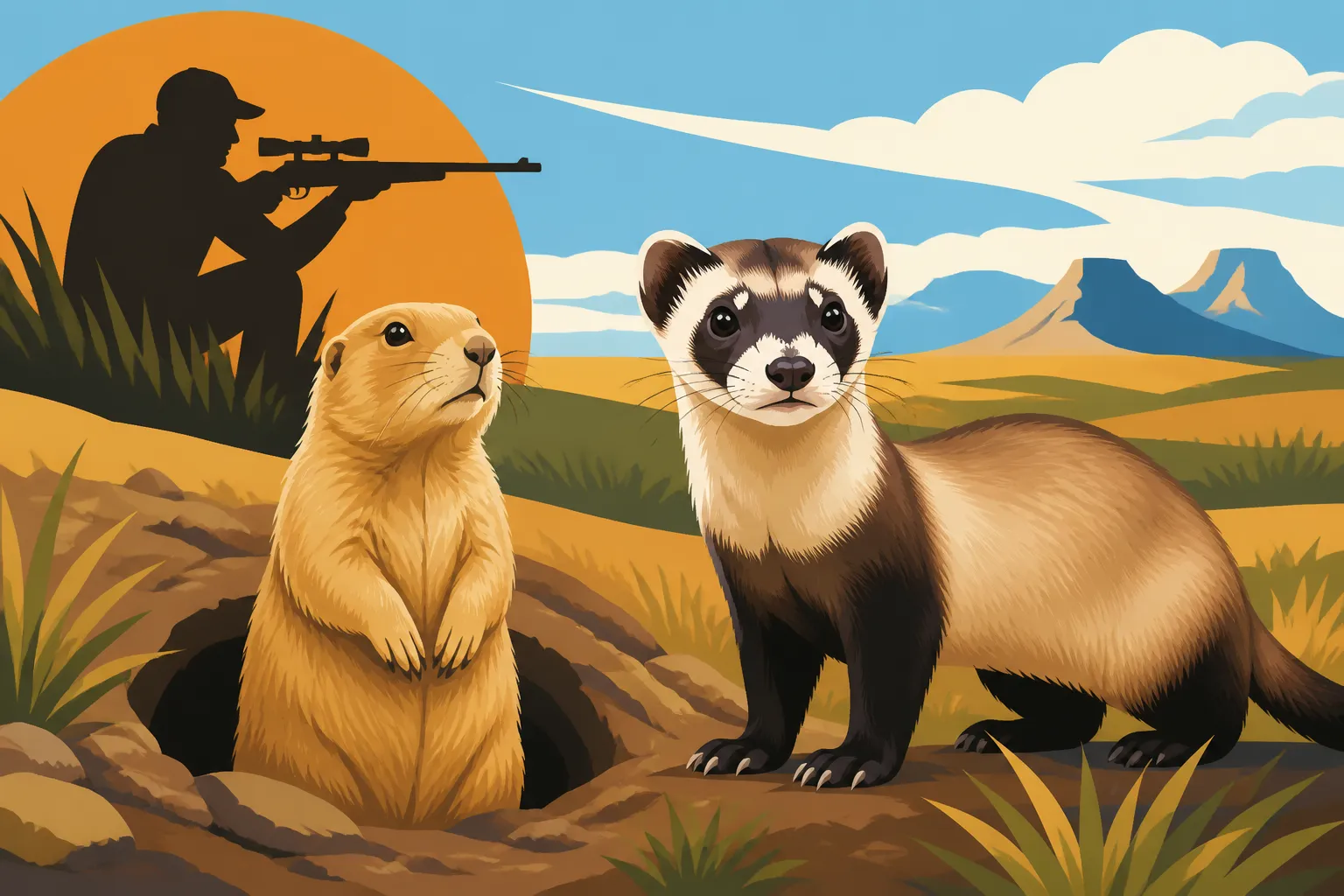
The black-footed ferret is a medium-sized weasel, sleek and elusive, with distinctive black "socks," a black mask across its eyes, and a black-tipped tail. Historically, these nocturnal predators ranged across the vast North American prairies, wherever dense prairie dog towns flourished. Their diet consists almost entirely of prairie dogs, making them specialized hunters. However, with widespread prairie dog eradication efforts in the 20th century, coupled with habitat loss and diseases like sylvatic plague, the ferret population plummeted. By the 1970s, they were presumed extinct.
Then, in 1981, a small, isolated population was discovered in Meeteetse, Wyoming – an incredible stroke of luck. These few remaining individuals became the foundation for an intensive captive breeding program. Since then, ferrets have been reintroduced to several sites across their historic range, including a significant effort right here in South Dakota. Specifically, the Conata Basin in the Buffalo Gap National Grassland, near Wall, South Dakota, has been a key reintroduction site, demonstrating the critical importance of these public lands for conservation. These reintroduction programs are ongoing, faced with constant challenges, but offer a glimmer of hope for this iconic prairie predator. Hunting opportunities on National Grasslands Hunting in South Dakota extend to being mindful of these precious species.
The Ferret's Dependence on Prairie Dogs
It's impossible to talk about black-footed ferrets without talking about prairie dogs. Ferrets live in prairie dog burrows, use them for shelter, raising their young, and, most importantly, as their primary hunting ground. A single ferret needs hundreds of prairie dogs a year to survive. Without healthy, expansive prairie dog colonies, the black-footed ferret simply cannot exist. This makes the conservation of prairie dog towns vital, even for those who might not typically consider them a priority species.
The challenges are immense. Diseases like sylvatic plague, carried by fleas, can decimate prairie dog colonies, and by extension, ferret populations, in a matter of weeks. Conservationists work tirelessly to dust burrows with insecticide to control fleas and even vaccinate prairie dogs and ferrets where possible. This intricate web of life means that what affects one species profoundly impacts the other. Understanding this connection underscores why discussions about prairie dogs inevitably lead to broader conservation themes.
Conservation Efforts and Hunter Awareness
The conservation of both prairie dogs and black-footed ferrets is a complex, multi-faceted endeavor that involves federal agencies, state wildlife departments, private landowners, and the public. As hunters and outdoor enthusiasts, we have a role to play in these efforts.
Challenges in Ferret Recovery
The road to black-footed ferret recovery is long and arduous. Habitat fragmentation—the breaking up of large, continuous prairie dog towns into smaller, isolated ones—makes it harder for ferrets to find food and disperse. Disease, particularly sylvatic plague, remains a constant threat, requiring ongoing monitoring and management. Additionally, maintaining genetic diversity within the small ferret population is a continuous challenge for the breeding programs.
South Dakota's contribution through sites like Conata Basin is invaluable. Efforts there involve not only releasing ferrets but also active management of prairie dog populations to ensure a stable food source and minimize disease outbreaks. This often includes carefully planned prairie dog translocation and plague mitigation strategies. While you might use a tool like GoHunt to scout deer in these areas, remember to also observe and appreciate the intricate conservation work happening on the ground. Hunters can indirectly support these efforts by supporting conservation organizations and agencies that fund such programs. For more information on wildlife health, you can look into South Dakota Wildlife Disease Monitoring. If you're using resources like GoHunt for E-Scouting Walk-In Areas Before the Season, be sure to also familiarize yourself with the sensitive habitats in those areas.
What Hunters Need to Know
For hunters traversing South Dakota's prairies, especially in West River country, being aware of the black-footed ferret's presence is vital. While encountering a ferret is rare due to their nocturnal habits and low numbers, it's not impossible, especially if you're out at dusk or dawn near a prairie dog town.
It is absolutely critical that if you believe you've spotted a black-footed ferret, you do not disturb it. Observe from a distance, and if possible, note the location and report your sighting to the South Dakota Game, Fish and Parks (GFP) immediately. This information is invaluable for monitoring their populations and distribution. Taking photographs from a distance can be helpful for verification. Accidental disturbance or harm to a black-footed ferret, a federally protected endangered species, carries serious penalties. Knowing the difference between common prairie predators and a ferret is key. If you ever need to Report a Sick Animal in South Dakota, this vigilance extends to rare species like the ferret.
Distinguishing Prairie Dogs and Ferrets
Given their shared habitat and the importance of responsible action, knowing how to tell a prairie dog from a black-footed ferret, and a ferret from other prairie critters, is incredibly useful.
Identification: Ferret vs. Prairie Dog
This one is fairly straightforward. Prairie dogs are stout, tan-colored rodents, typically 12-16 inches long, with short tails and small ears. They are diurnal, meaning they are active during the day. Their most defining characteristic is their "barking" alarm call, which they use to warn the colony of predators.
Black-footed ferrets, on the other hand, are sleek, long-bodied carnivores, about 20-24 inches long (including their tail). They have soft, yellowish-buff fur, a black-tipped tail, black feet, and that distinctive black mask across their eyes. They are nocturnal and much more secretive. They are also much more slender and agile than a prairie dog.
| Feature | Black-tailed Prairie Dog | Black-footed Ferret |
|---|---|---|
| Type | Rodent | Mustelid (Weasel Family) |
| Diet | Herbivore (Grasses, seeds, roots) | Carnivore (Almost exclusively prairie dogs) |
| Activity | Diurnal (Daytime) | Nocturnal (Nighttime) |
| Size (Body Length) | 12-16 inches | 20-24 inches (including tail) |
| Coloration | Tan, light brown, white belly | Yellowish-buff, black feet, mask, tail tip |
| Distinguishing Markings | Short, black-tipped tail | Distinct black "mask" across eyes |
| Conservation Status | Stable, though populations fluctuate | Critically Endangered (Wild & Captive) |
| Primary Habitat | Open grasslands, prairies | Prairie dog towns |
Ferret vs. Other Weasels and Predators
The black-footed ferret is a member of the weasel family, and there are other mustelids found in South Dakota, such as long-tailed weasels and mink. While these share a similar long, slender body shape, ferrets are significantly larger than a long-tailed weasel (which is closer to the size of a squirrel). Mink are typically darker brown and often found near water, whereas ferrets are strictly prairie animals.
Coyotes and badgers are also common predators in prairie dog towns. Coyotes are obviously much larger canids, while badgers are stout, powerful diggers with distinctive black and white facial markings. The ferret's unique black mask, combined with its overall size and color, should help you differentiate it from these other animals. If you're out doing some Calling Coyotes on South Dakota Grassland and spot something unusual, take a moment to really look at it before assuming what it is. The rarity of a ferret sighting makes every confirmed observation incredibly valuable for conservationists. Whether you're hunting on South Dakota Game Production Areas or sprawling grasslands, remaining informed is key to being a responsible outdoors enthusiast.
Disclaimer
This article is for general informational purposes only and does not constitute professional advice. Laws, prices and regulations vary by location and change over time. Consult a qualified professional for guidance on your specific situation.