Mountain Lion Sightings East River
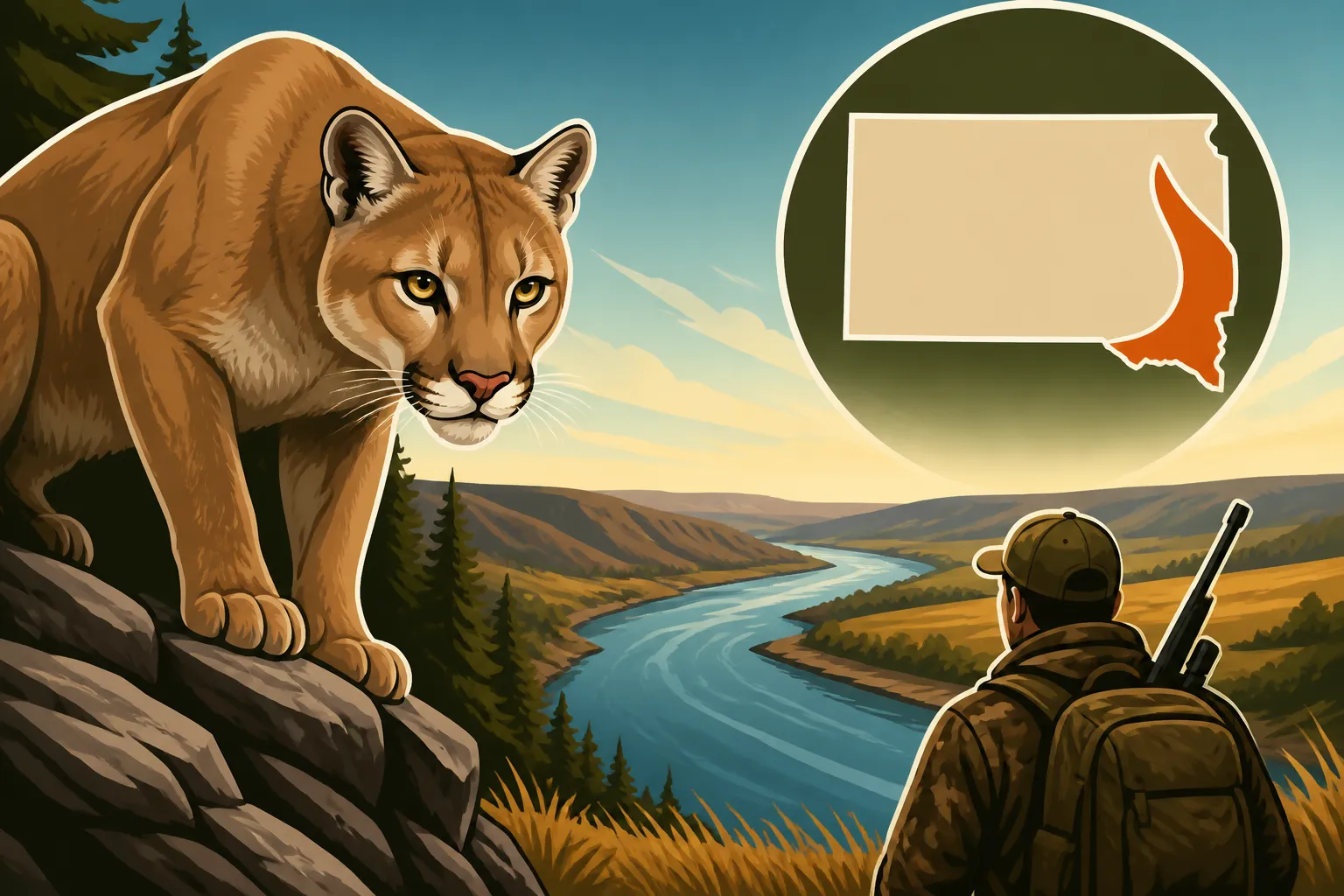
It can be quite startling to hear whispers, or even firsthand accounts, of a mountain lion sighting east of the Missouri River in South Dakota. For many of us, the idea of these elusive predators is firmly rooted in the rugged Black Hills, so seeing or hearing about one on the prairie can definitely make you pause and wonder what's really going on. This guide is here to unravel the mystery behind these rare appearances, exploring why they happen, what they mean, and what you should know if you're out enjoying our East River country.
The Historical Range of Mountain Lions in South Dakota
To really understand why an East River mountain lion sighting is such a noteworthy event, we first need to appreciate where these incredible animals traditionally call home in South Dakota. Their presence isn't new to the state, but their distribution has always been quite specific.
West River Stronghold and Eastern Dispersal
For generations, the Black Hills have been the undisputed stronghold for mountain lions in South Dakota. This region offers everything a cougar needs to thrive: vast expanses of rugged, forested terrain, ample cover, and a consistent prey base of deer, elk, and other wildlife. It's a perfect sanctuary where they can hunt, breed, and raise their young largely undisturbed.
However, like any healthy predator population, young mountain lions, especially males, eventually need to strike out on their own to establish their own territories. This natural phenomenon is called dispersal. These young, ambitious cats can cover incredible distances, sometimes hundreds of miles, following river corridors or searching for suitable new areas. They are driven by an innate need to find space and resources, which often means leaving their natal territory where older, dominant males might see them as competition. This instinctual drive is why you might hear about them showing up in unexpected places.
Why East River Was Traditionally Not Home
Historically, the landscape east of the Missouri River simply hasn't provided the kind of habitat that mountain lions require for a stable, reproducing population. While the prairie is beautiful and full of its own wildlife, it lacks the large, contiguous forested areas and the dramatic, broken terrain that offers consistent, secure cover for these apex predators. Think about the thick pine forests and rocky canyons of the Black Hills versus the rolling grasslands and agricultural fields of the East River. It's a stark contrast in terms of suitable lion habitat.
The prey base, while certainly present with healthy populations of White-Tailed Deer Across South Dakota, has generally been more dispersed across an open landscape compared to the concentrations found in the Black Hills. Furthermore, human population density, even in rural areas, tends to be higher east of the river, with more roads, farms, and overall human activity. This combination of less ideal habitat, a more spread-out prey base, and increased human presence has historically made the East River an unlikely permanent home for mountain lions.
Understanding East River Mountain Lion Sightings
So, if East River isn't traditional lion country, what's really going on when we hear about these sightings? It mostly boils down to those dispersing animals we just discussed, making their way into unfamiliar territory.
Evidence of Transitory Animals
When a mountain lion is spotted east of the Missouri, it's almost always a transient animal, typically a young male on a long journey. Confirmation of these animals usually comes from a few key sources: clear tracks found in snow or mud, definitive scat analysis, or increasingly, trail camera photos. Occasionally, someone might get a fleeting visual of the animal itself, often darting across a field or disappearing into a shelterbelt.
It’s crucial to understand that these sightings represent individual animals passing through, not an established, breeding population. They are often just looking for a way to get somewhere else, or perhaps are simply lost in their ambitious travels. Modern technology, especially widespread trail camera use and the rapid sharing of information on social media, has certainly made us more aware of these otherwise rare and fleeting events. Even so, the sheer number of documented unique individuals remains very low.
The Journey Across the Missouri River
One of the biggest questions that often comes up is how these animals manage to cross the mighty Missouri River. It's a significant natural barrier, no doubt, but not an impossible one for a determined cougar. In the depths of winter, when temperatures plummet and ice forms thick and solid, the river can literally become a bridge, allowing animals to walk across from west to east.
During warmer months, mountain lions are perfectly capable swimmers. While they might not choose to swim the widest parts of the main channel, they could easily cross narrower sections or islands. They might also utilize culverts or bridges where available, though this is less documented. The Missouri River corridor, with its often dense timber and broken terrain, actually serves as a natural travel route, albeit a challenging one, for these dispersing animals. If you're hunting in areas like Missouri River Hunting Access in South Dakota, you might be inadvertently walking paths that a transient lion could use.
Misidentification Versus Confirmed Presence
It's a fact that many reported mountain lion sightings turn out to be something else entirely. Our eyes can play tricks on us, especially in low light or when we get a quick glimpse of an animal. Large domestic cats, particularly those with a lanky build, can sometimes be mistaken for a distant cougar. Coyotes, especially big ones, or even bobcats, which are much more common east of the river, are also frequent culprits for misidentification. A deer could be running, and the movement might be interpreted as a stalking cat.
This is why wildlife agencies place such a high value on clear, unambiguous evidence. A blurry photo in the dark isn't enough; they need distinct tracks, clear photographs or video, or physical evidence like scat or hair to definitively confirm a mountain lion's presence. When you hear about a "confirmed" sighting, it means experts have examined the evidence and verified it. This distinction is vital for accurate data collection and understanding wildlife populations, and you can always consult resources like the South Dakota Hunting Handbook Release for official information on wildlife.
What Does an East River Mountain Lion Do?
Once a mountain lion finds itself east of the Missouri River, its behavior adapts to the unfamiliar landscape. It's not going to behave the same way it would in the Black Hills, largely because its survival needs are met differently.
Survival in a Less Ideal Landscape
For a dispersing mountain lion in East River country, survival becomes a game of adapting to less-than-ideal circumstances. Their primary food source will still be deer, particularly Whitetail Range Along South Dakota Rivers where there's more cover, but they might also opportunistically hunt smaller prey like raccoons, coyotes, or even large birds if they're desperate. The challenge is finding consistent concentrations of these animals in an open landscape.
Cover is another huge factor. East of the river, extensive forest blocks are rare. Instead, lions must utilize what's available: dense river bottom timber, large shelterbelts on farmsteads, or expansive cattail sloughs like those hunters pursue pheasants in. These areas offer temporary refuge and concealment, allowing them to rest, hide, and ambush prey. However, these patches of cover are often isolated, forcing the lion to move through open ground, making them more vulnerable and less likely to settle permanently. This transient lifestyle means they are always on the move, always searching for the next patch of security.
Potential Interactions with Humans and Livestock
Despite the fascination, it's extremely rare for an East River mountain lion to have any significant interaction with humans or livestock. These animals are incredibly shy and reclusive by nature. Their instinct is to avoid people at all costs, and they are masters of stealth. You are far more likely to see a South Dakota Coyote Population or even a Bobcat Range and Harvest in South Dakota than you are to encounter a mountain lion.
However, for rural residents, especially those with small livestock or pets, a transient predator of any kind can be a concern. It’s always good practice to secure your livestock, keep pets indoors at night, and be generally aware of your surroundings, no matter what wildlife might be in the area. If you do happen to encounter a mountain lion, the advice is consistent: do not run (as this can trigger a chase instinct), make yourself appear as large as possible, make noise, and back away slowly. It's a situation you hope never happens, but being prepared mentally is always wise. Hunters often use tools like GoHunt to visualize terrain and cover, and this kind of situational awareness, even for general hunting safety, can extend to understanding potential wildlife movements.
Hunter Awareness in East River Country
For the average pheasant or deer hunter in East River South Dakota, the presence of a mountain lion is a statistical anomaly, not a regular concern. You’re simply not going to stumble upon them with any regularity. However, being an informed outdoors person means being aware of all the wildlife around you. Learning to read animal tracks and signs, especially when conditions are right like after a fresh snow, can be fascinating. You might be able to tell the difference between a coyote, a bobcat, and the very distinct print of a mountain lion. This kind of knowledge, similar to Reading Snow for Deer and Predator Sign, deepens your connection to the landscape.
While a mountain lion shouldn't impact your hunting plans, it's a good reminder that our wild places are truly wild, and anything can be out there. Maintaining safe gun handling practices, being aware of your hunting partners, and generally respecting the environment are paramount, regardless of what elusive animals might be passing through.
Management and Future of East River Lions
Given the rarity of these sightings, what is the official stance and future outlook for mountain lions east of the Missouri River? It's largely a story of natural dispersal and habitat limitations.
South Dakota's Approach to Dispersing Animals
South Dakota's wildlife management primarily focuses on its established mountain lion population within the Black Hills. For those rare animals that venture east of the Missouri, there isn't a specific management plan in place for an "East River population" because, quite simply, there isn't one. The state generally allows these dispersing animals to exist in an area as long as they don't pose a public safety threat or cause significant livestock depredation. If a lion does become a problem, then wildlife officials would intervene to capture or lethally remove it, just as they would with any dangerous wild animal.
The current approach acknowledges the natural behavior of dispersal without attempting to establish or manage a new population in an area not naturally suited for them. The focus remains on sustainable management of the core population in their historic Black Hills habitat, which you can learn more about in resources detailing Mountain Lions in the Black Hills.
Habitat Limitations and Long-Term Viability
The biggest factor dictating the future of mountain lions east of the Missouri is habitat. The prairie environment, even with its rich agricultural lands and scattered pockets of timber, simply does not offer the extensive, rugged cover, isolation, and consistent high-density prey necessary to support a viable, reproducing mountain lion population long-term. While an individual lion can survive for a time by being resourceful and adapting, establishing a den, raising cubs, and finding a mate in such a fragmented landscape is incredibly difficult.
Wildlife biologists often refer to these less suitable areas as "population sinks." Dispersing animals may enter them, but they rarely contribute to a thriving population. They are often lost due to starvation, conflicts with other predators, or run-ins with humans. While the Missouri River corridor might offer a travel route, it doesn't offer a permanent home for a species that demands vast, uninterrupted wild spaces.
Reporting Sightings and Contributing to Data
Even though East River mountain lions are transient, reporting credible sightings is incredibly valuable to wildlife management. If you encounter tracks, scat, or manage to capture a clear photo or video, contacting the South Dakota Game, Fish and Parks (GFP) is the best course of action. This isn't about setting up a hunt, as per South Dakota's policies, but about helping biologists understand dispersal patterns, travel routes, and the frequency of these rare events.
Using a mapping tool like GoHunt can also aid in recording the exact location and time of a sighting, which is critical for accurate data. This information helps paint a more complete picture of wildlife movements across the state. Accurate reporting is a key component of South Dakota Wildlife Disease Monitoring and general animal health assessments, even for transient species. Your contribution helps inform wildlife professionals and helps them understand the bigger picture of our wild landscape.
| Characteristic | Mountain Lion (Adult) | Coyote (Adult) | Bobcat (Adult) | Large Domestic Cat |
|---|---|---|---|---|
| Size/Weight | Large (100-200+ lbs) | Medium (20-50 lbs) | Small (15-30 lbs) | Small (10-20 lbs) |
| Tail | Long, thick, muscular; 2-3 ft long; black tip | Bushy, medium length (12-16 in); often held low | Short, "bobbed" (4-7 in) | Varies, usually thin/medium length |
| Head Shape | Relatively small, rounded, no ear tufts | Dog-like, pointed muzzle, erect ears | Small, rounded, often ear tufts | Varies, typically rounder than coyote |
| Color | Tan, tawny, grayish-brown | Gray, reddish-brown, buff | Mottled, spotted, striped; reddish-brown, gray | Varies widely |
| Tracks | Rounded, typically no claw marks visible, large heel pad with 3 lobes | More oval, claw marks usually visible, smaller heel pad with 2 lobes | Smaller, rounded, no claw marks, small heel pad | Smaller, distinct claw marks often visible |
| Sound | Rarely heard; growls, hisses, chirps, sometimes a "scream" | Howls, yips, barks | Rarely vocal; growls, snarls, hisses | Meows, purrs, hisses |
Disclaimer
This article is for general informational purposes only and does not constitute professional advice. Laws, prices and regulations vary by location and change over time. Consult a qualified professional for guidance on your specific situation.