Landowner Tags Through an Outfitter
If you've spent any time dreaming of a South Dakota big game hunt, you've probably also spent time staring at draw odds and feeling that familiar knot of anxiety. Getting a coveted tag for deer, antelope, or especially elk in South Dakota can be a serious challenge, especially for non-residents. This guide is all about one particular avenue that many hunters explore to bypass some of that draw uncertainty: securing a tag through a landowner-affiliated outfitter. It's not always straightforward, but it can be a game-changer for getting into the field.
Navigating South Dakota's Big Game Draw: The Landowner Preference Advantage
For many hunters, the South Dakota big game draw feels like playing the lottery, often with long odds and the heartbreak of another rejection letter. It's a common frustration, especially when you've been building South Dakota Preference Points Explained for years and still haven't punched your ticket. But there are mechanisms within the system designed to benefit those who own land in the state, and understanding these can open up new possibilities.
The Challenges of Drawing a Tag in South Dakota
Let's be honest, getting a tag for species like mule deer or antelope in the highly sought-after West River units can be incredibly tough if you're a non-resident, or even a resident without many points for certain units. The draw system itself can be complex, involving preference points, bonus points, and sometimes a bit of sheer luck. You apply, you wait, and often, you're left planning for next year's application cycle. This cycle of hope and disappointment is why many hunters start looking for alternatives, especially when they have limited time off or want to guarantee a hunt for a special occasion. Nobody wants to commit to travel and vacation time only to find they didn't draw a tag.
It's not just about getting any tag, either. Often, hunters are hoping for a tag in a specific unit known for quality animals or particular habitat. Public land access, while generous in South Dakota, can also see significant pressure, meaning that drawing a tag for a prime public land unit can be even harder. This constant push-pull between desire and availability is precisely where alternative routes like landowner tags become so appealing.
Understanding South Dakota's Landowner Preference System
South Dakota's Game, Fish and Parks (GFP) recognizes the important role private landowners play in habitat and wildlife management. To encourage their participation and provide them with hunting opportunities on their own land, the state has a landowner preference system for many big game draws. This isn't a simple "landowner tag" that's just handed out willy-nilly; rather, it's a preference that improves the odds of drawing a specific tag if you own or operate qualifying agricultural land.
Generally, this preference is tied to specific acreage requirements and the landowner actively participating in agricultural production. For instance, an "owner-operator" actively farming or ranching a certain amount of land in a unit might receive a significantly higher chance of drawing a deer tag for that unit. There are also specific "landowner" categories for others who own property. These tags are still part of the draw, but the odds are dramatically improved for those who qualify. These are often restricted to the property owned or contiguous property, meaning the tag isn't for just anywhere in the state but tied to a particular area. It’s a way of ensuring that those who provide the land and habitat have a better chance to enjoy the fruits of their efforts. You can learn more about how this works by looking into Landowner Preference in South Dakota Draws.
How Outfitters Leverage Landowner Preference for Hunters
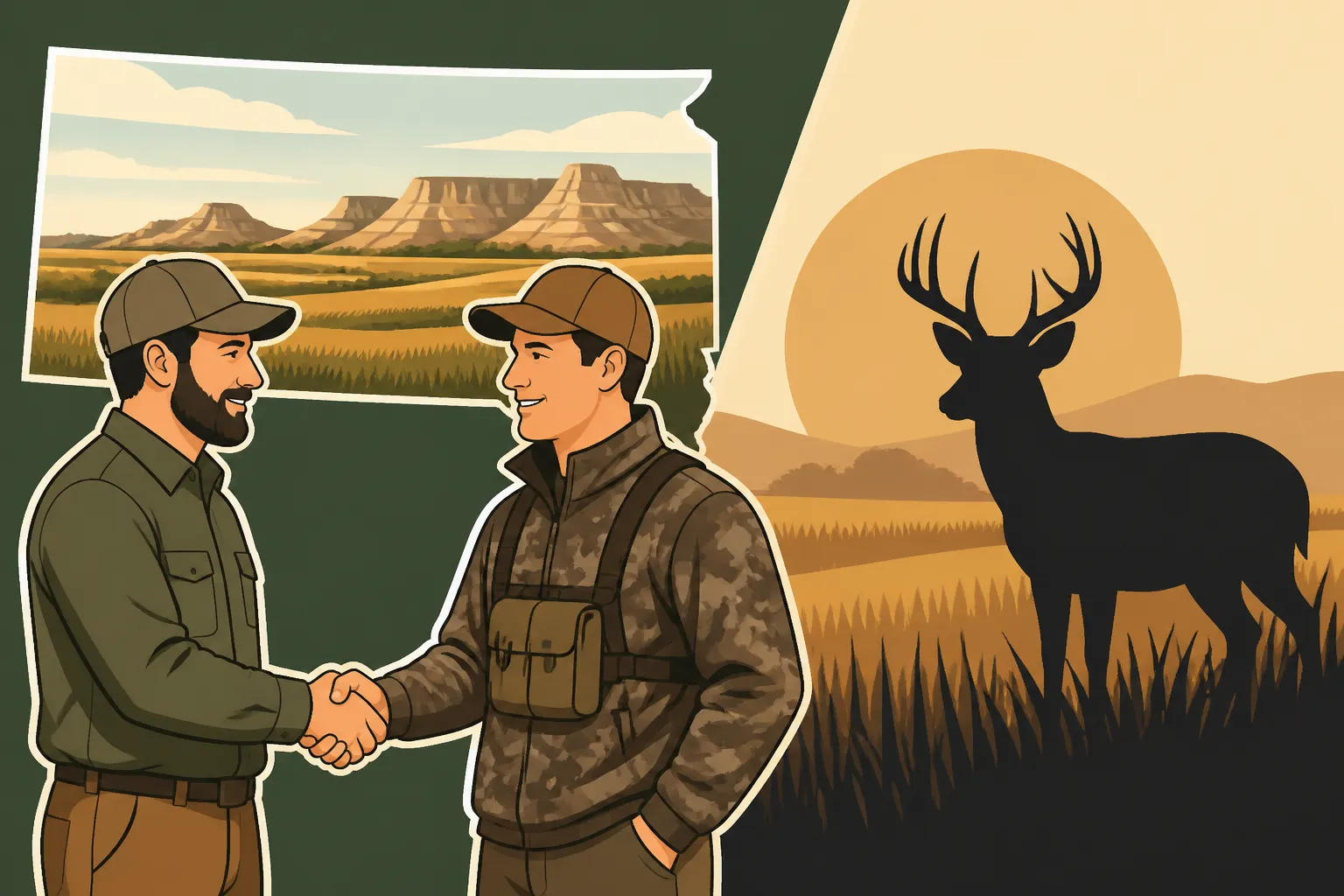
This is where outfitters step in to bridge the gap between hunters seeking guaranteed access and landowners who hold these valuable preferences. An outfitter doesn't just "have" a stack of landowner tags to sell; instead, they build relationships and structures that allow them to facilitate hunts that include a landowner-preference-derived tag.
The Outfitter's Role in Securing Access
Outfitters in South Dakota operate by a variety of models. Many have extensive land lease agreements with private landowners across prime hunting areas. These leases give the outfitter exclusive hunting rights to that land. Crucially, the landowners associated with these leased properties often qualify for the landowner preference in the big game draws. By working with multiple landowners, an outfitter can secure a number of tags through these preference systems, which then become part of their hunting packages.
Think of it this way: the outfitter has done the legwork of securing agreements with landowners, often years in advance, ensuring that a certain number of landowner-preference tags will be applied for and, with high probability, drawn for those properties. This takes the burden off the individual hunter of finding a landowner, building that relationship, and understanding the specific draw rules. It's a comprehensive service that provides not just the hunting land, but the mechanism to obtain the tag itself. This is often the most reliable way for a non-resident to gain access to prime West River country for species like mule deer or pronghorn.
What "Landowner Tags Through an Outfitter" Really Means
When an outfitter talks about offering "landowner tags," they are typically referring to a hunt package where the cost includes a tag that has been secured through a landowner's preference. This is crucial to understand: you're not generally buying just a tag directly from the outfitter. Instead, you're buying a fully guided or semi-guided hunt on private land, and part of that service is the outfitter ensuring a legal tag is available to you for that specific hunt.
The outfitter will often handle the application process for the landowner to draw the tag, or they will ensure that a qualifying landowner has drawn the tag and that it is allocated for the hunt package you purchase. It's a seamless process for the hunter, where your payment covers the guide services, access to the private land, accommodation, meals (often), and the assurance that a valid tag will be awaiting you for your hunt. This dramatically simplifies the planning for hunters who might otherwise spend years trying to draw a tag themselves. It’s a way for outfitters to provide a higher level of certainty and a more exclusive experience, often on land that would otherwise be inaccessible. For detailed information on what typically goes into these packages, check out What a South Dakota Hunt Price Includes.
Benefits and Critical Considerations of Booking a Landowner Tag Hunt
Booking a hunt that includes a landowner-preference tag through an outfitter comes with distinct advantages, but it also requires careful consideration and due diligence to ensure a positive experience.
The Perks of a Guaranteed Tag and Private Land Access
The most obvious and compelling benefit is the significant increase in your chances of going hunting. Instead of relying on low draw odds, an outfitter offering hunts with landowner tags can essentially guarantee you a tag for a specific species in a particular unit. This certainty allows you to plan your trip, book flights, and take time off work without the looming question of whether you'll even get to hunt. For many, especially non-residents, this peace of mind is invaluable.
Beyond the guaranteed tag, these hunts provide access to prime private land. South Dakota has vast amounts of private land, much of which boasts incredible wildlife habitat. When you hunt with an outfitter who has secured these landowner-preference tags, you're often gaining access to properties that are carefully managed, lightly hunted, and hold quality animals. This can translate into a higher success rate, a better chance at a trophy animal, and a more enjoyable, less crowded hunting experience compared to heavily pressured public grounds. Imagine chasing pheasants in a pristine cattail slough or spotting a trophy mule deer in untouched sagebrush country; that's the kind of access these packages can provide. Hunting Food Plots and Corn Edges and Working South Dakota Shelterbelts for Roosters are tactics often employed on such managed private lands.
Essential Due Diligence Before You Book
While the benefits are clear, it's absolutely crucial to do your homework before committing to any outfitter offering landowner tag hunts. This is a significant investment, and you want to ensure you're getting exactly what you're paying for. First and foremost, verify the legitimacy of the outfitter and their claims regarding landowner tags. Ask specific questions about how the tags are acquired: Is it through the owner-operator preference? General landowner preference? Ensure the tags are fully legal and valid for the species and unit you intend to hunt. Checking a South Dakota Outfitter's Reputation is not just a good idea, it's essential.
You should also meticulously review the hunt contract. This is where all the details should be ironed out. What happens if, in a rare scenario, the landowner's tag doesn't draw? Is your deposit refundable or transferable? What exactly is included in the price—guide service, meals, lodging, transportation during the hunt, field dressing, caping? Understand any trophy fees that might apply. Don't be shy about asking for references from past clients, particularly those who have booked similar landowner-tag hunts. Platforms like BookYourHunt or GoHunt can be great resources for researching outfitters and reading reviews, but always follow up with direct conversations and reference checks. Beware of Red Flags When Booking in South Dakota such as vague contracts, pushy sales tactics, or an unwillingness to answer detailed questions about tag acquisition. For general details on these agreements, explore Outfitter Contracts and Deposits in South Dakota.
Making Your Decision: Outfitter-Facilitated Landowner Tags vs. DIY Draw
Deciding whether to pursue a landowner tag hunt through an outfitter or to stick with the traditional public draw involves weighing several factors, primarily cost, convenience, and control.
Comparing Costs and Commitments
There’s no getting around it: booking a guided hunt that includes an outfitter-facilitated landowner tag is almost always going to be significantly more expensive than applying for a tag yourself through the public draw. The cost covers not only the guide's expertise, the logistics, and often lodging and meals, but also the value of the guaranteed private land access and the work the outfitter puts into securing those landowner ties. For a non-resident, a public draw tag might only cost the application fee, preference point fee, and the tag fee itself if drawn, plus travel and DIY expenses. An outfitter package, however, bundles much of that, eliminating uncertainty but increasing the upfront price considerably.
Consider your budget and what you prioritize. If maximizing your chances of hunting a specific species in a specific year, on private ground, with professional guidance, is paramount, then the higher cost might be justified. If you're on a tighter budget and enjoy the challenge of scouting public land and playing the draw odds, then the DIY route might be more appealing. It's a trade-off between guaranteed experience and financial outlay.
| Feature | Outfitter-Facilitated Landowner Tag Hunt | Traditional Public Draw (DIY) |
|---|---|---|
| Tag Certainty | High (often guaranteed) | Low (depends on draw odds) |
| Access to Land | Prime private land | Public land (WIA, GPA, National Grasslands) |
| Cost | Significantly higher (all-inclusive) | Lower (tag fees, travel, DIY) |
| Guidance | Professional guide services included | Self-guided, relies on personal skill |
| Scouting/Planning | Handled by outfitter | Extensive personal research/scouting |
| Physical Demands | Varies by outfitter, often tailored | Can be demanding, self-reliance needed |
| Competition/Pressure | Generally lower, controlled | Can be high on popular public land |
| Time Investment | Less upfront planning, more hunting time | More upfront planning, less hunting time |
Finding Reputable Outfitters and Asking the Right Questions
Once you've decided an outfitter-facilitated landowner tag hunt is for you, the next step is finding the right outfitter. Start your search early, especially for popular seasons or species. Look for outfitters with a long-standing history and strong positive reviews. As mentioned, platforms like BookYourHunt or even forums on GoHunt can offer starting points, but always dig deeper.
When you connect with potential outfitters, have a list of specific questions ready. Don't just ask about price and dates. Inquire about the specific unit, the type of land they hunt (e.g., West River Hunting Country in South Dakota), the number of hunters they take per week, and their success rates over the past few years, which should always be presented realistically. Ask about Guide-to-Hunter Ratios on Bird Hunts or big game hunts. How do they handle unexpected weather, or if an animal is wounded? What are the typical shot distances? Be clear about your physical capabilities and expectations for the hunt. A good outfitter will be transparent and happy to answer all your questions, providing you with all the information you need to make an informed decision. Don't forget to ask for references, and actually call them! For a deeper dive into vetting an outfitter, consult Questions to Ask a South Dakota Outfitter.
Disclaimer
This article is for general informational purposes only and does not constitute professional advice. Laws, prices and regulations vary by location and change over time. Consult a qualified professional for guidance on your specific situation.