Treestand Access Along a River
South Dakota river bottom treestand access strategies help hunters silently navigate dense cover and changing water levels.

South Dakota river bottom treestand access strategies help hunters silently navigate dense cover and changing water levels.

Strategic grunt calls help hunters stop moving bucks covering miles during the fall rut to create clear shot opportunities.

South Dakota deer rattling volume strategies explain sound travel, wind effects, and visual concealment across open prairie terrain.

South Dakota deer movement shifts in late October as bucks leave bachelor groups, create fresh rubs, and check active scrapes.
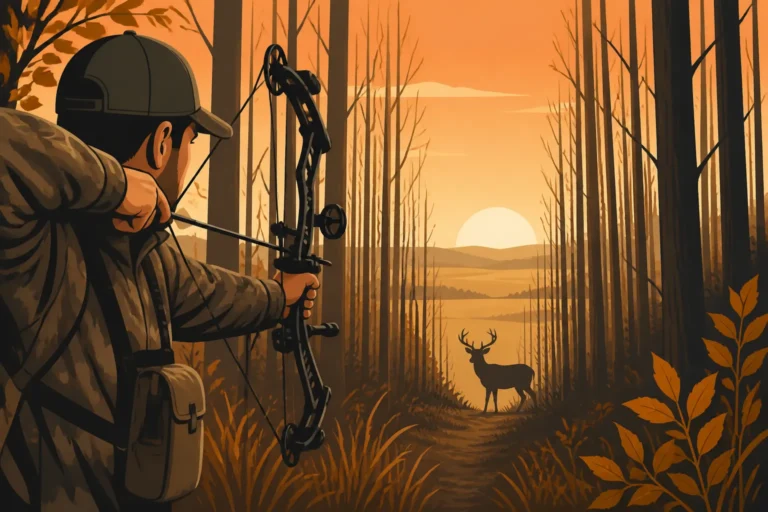
Deer hunting in narrow timber strips creates challenges from swirling winds, limited cover, and unpredictable deer movement speeds.

Whitetail deer hunting strategies for South Dakota Missouri River timber explain habitat characteristics, water levels, and key travel corridors.

South Dakota prairie wind patterns and thermal currents reveal how mule deer and pronghorn detect human scent during a stalk.

Judging a mule deer buck at distance involves assessing main beams, mass, and environmental factors like heat shimmer and terrain.

South Dakota mule deer hunting tactics explain how to leverage prairie terrain features, subtle elevation changes, and wind direction to close distance.

South Dakota mule deer hunters learn how to spot bedded bucks hiding in sagebrush using 10x or 12x binoculars and a tripod.