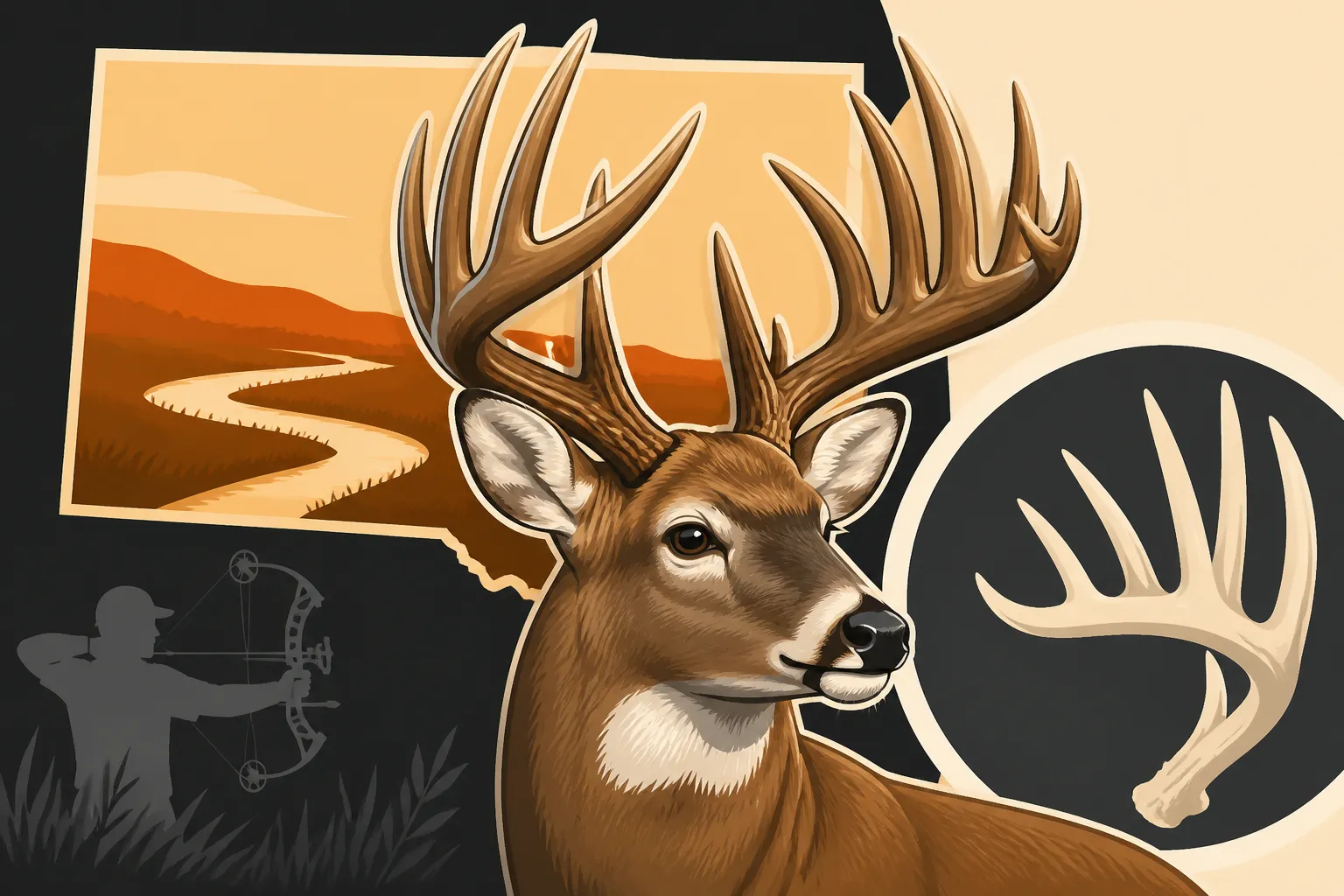
Antler Size on West River Bucks
For many hunters, especially those of us who dream of chasing big mule deer across the rugged landscapes of western South Dakota, the size and character of a buck's antlers are a constant fascination. It's not just about Boone and Crockett scores, but about understanding what goes into growing those impressive racks, how age, nutrition, and environment play a role, and most importantly, how to evaluate them when that moment of truth arrives. This guide will walk you through the intricate world of antler development in West River bucks, helping you understand the factors that shape them and offering practical tips for field judging.
The Foundation of Antler Growth in West River Bucks
Antlers are truly remarkable structures, growing annually from pedicles on a buck's skull. They’re a direct reflection of a buck's overall health, its genetic potential, and the richness of its environment. When you're glassing those vast West River breaks, every impressive rack you spot tells a story of survival and successful foraging. Understanding this foundation is key to appreciating why some bucks carry giant headgear while others, even in the same general area, might have a more modest display.
Genetics: The Blueprint for Bone
Just like humans inherit traits from their parents, mule deer bucks inherit genetic predispositions for antler growth. Some bucks are simply born with the genes to grow larger, more symmetrical, or unique antlers. You might observe a consistent antler characteristic – perhaps a particular point formation or exceptional mass – in a specific drainage or family group over several years. This isn't just coincidence; it’s often a clear indicator of genetic influence. While we as hunters can't directly manipulate a wild buck's genetics, recognizing these patterns can give you clues about the potential of a local herd. It’s why some areas consistently produce bucks with heavy bases or extra points, making those regions highly sought after by hunters.
Think of it like this: a buck has a genetic blueprint for what its antlers could be. But whether it reaches that full potential depends on a host of other factors. If a buck has superior genetics for antler growth but lives in a harsh environment with poor nutrition, it might never express those genetics fully. Conversely, an average buck in a prime environment might still grow a respectable rack, but it likely won't ever hit the top-tier size of its genetically superior counterparts.
Nutrition: Fueling the Rack
If genetics provide the blueprint, then nutrition is the building material. Antlers are one of the fastest growing tissues in the animal kingdom, requiring an immense amount of energy, protein, and minerals—especially calcium and phosphorus. The quality and abundance of forage a West River buck has access to throughout the year, but particularly during spring and summer when antlers are actively growing, is absolutely paramount. Lush green-up after winter, healthy forbs, and browse provide the critical nutrients needed for rapid antler development.
In the semi-arid West River country, this often means relying on available water sources and the resulting vegetation. During a drought year, when forage is sparse and nutrient-poor, you’ll often see a noticeable drop in antler quality across the board. Bucks might grow shorter beams, fewer points, or have less mass than they would in a wet year with abundant feed. Conversely, years with ample rainfall and good growing conditions can lead to bucks sporting impressive, heavy racks. This direct link between food and antler growth is why Antler Growth and Prairie Nutrition is such a critical topic for hunters to understand. Access to specific minerals in the soil can also play a subtle role, contributing to stronger, denser bone structure.
Age: The Foundation of Growth
While genetics and nutrition are crucial, age is perhaps the most significant single factor influencing antler size in West River bucks. A young buck, say a 1.5 or 2.5-year-old, is still putting most of its energy into body growth and survival. Its antlers will generally be smaller, thinner, and less complex. As a buck matures, typically peaking in antler development between 4.5 and 7.5 years old, its body growth slows, allowing more energy to be diverted to antler production. This is when you start seeing those truly impressive racks with greater mass, longer beams, and more points.
Beyond this peak, a very old buck (8.5 years and up) may actually start to show a decline in antler quality, often referred to as "going downhill." This is usually due to declining health, worn teeth, or injuries that divert resources away from antler growth. Understanding this age progression is vital when assessing a buck in the field and making ethical harvesting decisions. It also helps manage expectations; finding a truly mature buck with a fully expressed rack often means you're looking for an older animal that has successfully navigated many hunting seasons and harsh winters.
Age Classes and Antler Potential
Understanding how antler development progresses through a buck's life cycle is absolutely crucial for any hunter hoping to consistently target mature animals. It's not always about the biggest rack you see, but often about the most mature buck in a given area. The vast, open country of West River South Dakota, home to many of our prized mule deer, makes judging age and antler potential both challenging and rewarding.
Young Bucks: Growth vs. Survival
Young bucks, generally in the 1.5 to 2.5-year-old range, are still in their physical prime for growth. Their bodies are rapidly developing, and a significant portion of their energy and nutrients are allocated to reaching full physical size and strength. Antlers during these early years will reflect this. A 1.5-year-old buck (often called a yearling) might have small spikes or short forked antlers. At 2.5 years old, you'll see more development, perhaps a small 4×4 frame, but the beams will likely be thin, and the overall mass will be lacking.
These bucks are primarily focused on survival, learning the ropes of their environment, and staying out of trouble. While they might occasionally show promising genetics with early impressive growth, they are far from reaching their full antler potential. Harvesting a buck in this age class, while perfectly legal, means removing an animal before it has had the chance to mature and truly express its genetic blueprint for antlers. It's a common dilemma for hunters, especially on a shorter hunt, but understanding that patience is rewarded in terms of antler size is key to quality deer management.
Mature Bucks: Peak Antler Development
The sweet spot for antler growth in West River mule deer typically falls between 4.5 and 7.5 years of age. At this stage, a buck has reached its physiological maturity. Its body has largely stopped growing, meaning more resources can be poured directly into antler production. This is when you'll see significant increases in beam length, mass (the circumference of the antlers), and the development of additional points or character. A 4.5-year-old buck might carry a solid 4×4 or even a 5×5 frame with good mass, while a 5.5 or 6.5-year-old buck might hit its peak, developing heavy, wide racks with impressive length and deep forks.
These mature bucks are the trophies many hunters dream of. They've learned how to evade predators, navigate hunting pressure, and find the best forage. They are often smarter, more wary, and harder to find, presenting a greater challenge. Locating and successfully stalking a buck in this age class in the open country of South Dakota’s West River is a true accomplishment. When you're scouting, paying attention to Mule Deer Buck Age Structure in a specific unit can offer insights into the potential for encountering these older, larger-racked animals.
Post-Prime Bucks: Declining Returns
Just like athletes, bucks eventually pass their physical prime. For mule deer, this typically occurs around 8.5 years of age or older. While some individual bucks might maintain impressive racks into old age, many will show signs of decline. This can manifest as reduced mass, shorter beams, fewer points, or a less symmetrical rack. The brow tines might shorten, or points might become blunter. This "going downhill" phase is often due to cumulative effects of harsh winters, tooth wear that impacts feeding efficiency, past injuries, or simply the natural aging process.
An old buck might have a body that looks worn and thinner, especially in the neck and shoulders compared to its younger, more robust self. While their antlers might not be as aesthetically perfect as a prime buck's, harvesting an old buck is still a significant achievement. It represents an animal that has beaten the odds for many years. It's important to note that this decline isn't always uniform; some bucks hold onto their size better than others. Learning to recognize the subtle cues of an older, post-prime buck adds another layer of skill to field judging.
Environmental Impacts on Antler Development
Beyond genetics and age, the environment plays a starring role in the annual drama of antler growth for West River bucks. The vast, often unforgiving, landscapes of western South Dakota present unique challenges and opportunities for mule deer, directly influencing the size and quality of their headgear. A hunter who pays attention to these environmental factors gains a deeper understanding of the local herd and their potential.
Drought and Forage Quality
The West River country, by its very nature, can be prone to drought. Periods of insufficient rainfall have a profound and immediate impact on the quality and quantity of available forage. When the prairie grasses and forbs don't get enough moisture, they become less nutritious, or simply don't grow at all. This directly affects the bucks during the critical antler-growing months of spring and summer. With less protein, energy, and minerals available, bucks simply can't allocate as much to antler development.
In a severe drought year, you might observe that even mature bucks carry noticeably smaller or weaker antlers than they did in prior, wetter years. Beam length might be compromised, mass could be reduced, and abnormal points or clubby antlers might become more common as the buck's body struggles to direct resources. This environmental stress isn't just a short-term issue; prolonged drought can impact the overall health of the herd, affecting future fawn crops and the long-term potential for larger antlers. Keeping an eye on rainfall patterns and forage reports can give you an edge in predicting the antler quality of the upcoming season. Hunters planning a trip might check resources like GoHunt for unit-specific information, which sometimes includes notes on environmental conditions that affect deer health and antler growth.
Winter Severity and Stress
While spring and summer are crucial for growth, the preceding winter sets the stage. A harsh West River winter, characterized by deep snow, prolonged cold, and limited access to food, can be incredibly stressful for mule deer. Bucks enter the antler-growing season depleted, having used much of their stored fat reserves just to survive. If a buck spends all winter fighting to stay alive, its body will prioritize basic survival functions over growing a large rack.
Severe winters can lead to what's known as "winter kill," particularly among fawns and older or weaker deer. Even those that survive may emerge in poor physical condition, which will inevitably impact their antler development that year. Antler growth requires a huge energy investment, and if a buck is playing catch-up on body condition, its antlers will suffer. This is why you often hear experienced hunters talking about how the severity of the past winter will affect the upcoming hunting season's antler quality. Understanding how Winter Severity and South Dakota Pheasant Survival (and deer survival) are linked to environmental factors helps us appreciate these delicate balances in nature.
Disease and Injury Considerations
Unfortunately, nature isn't always kind, and disease and injury can also significantly impact antler growth. Chronic Wasting Disease (CWD), while a long-term threat to herd health, can sometimes cause abnormal antler growth in infected deer, though this is not a universal symptom. EHD (Epizootic Hemorrhagic Disease) outbreaks, particularly in warmer, drier years when deer congregate near limited water sources, can decimate local deer populations. Bucks that survive an EHD bout might be severely weakened, leading to stunted or deformed antlers in subsequent years as their bodies recover.
Physical injuries can also play a role. A broken leg or a serious infection, for instance, will divert a buck's metabolic energy towards healing, taking away from antler growth. It's not uncommon to see a buck with a visibly smaller or malformed antler on one side if it sustained an injury to the opposite side of its body (contralateral effect), or directly to the pedicle itself. While these factors are less predictable than broad environmental conditions, they contribute to the variability in antler size you observe in the field.
Evaluating Antler Size in the Field
Alright, this is where the rubber meets the road! Spotting a buck in the vast expanse of West River country is one thing, but quickly and accurately evaluating its antler size and potential, especially when your heart is pounding, is an entirely different skill set. It takes practice, a keen eye, and a solid understanding of what to look for.
Judging Width and Spread
When that buck steps out, one of the first things your eye will probably go to is its overall width. For mule deer, "spread" generally refers to the widest point of the antlers, usually measured outside the main beams. A truly wide buck can look incredibly impressive, especially against the open prairie. However, width alone doesn't tell the whole story. A buck with a wide spread but thin beams or short tines might not be as "big" as a buck with a slightly narrower spread but exceptional mass and length.
In field judging, try to use the buck's ears as a reference point. The typical ear-to-ear spread on a relaxed mule deer is roughly 20-22 inches. So, if a buck's antlers extend significantly beyond its ears, it's a good indicator of a wider-than-average rack. But be careful; a buck with its ears laid back or alert can make its antlers appear wider or narrower than they truly are. It's a quick, albeit rough, estimate. Remember, the goal isn't just a wide buck; it's a buck with overall impressive antler size, so don't let width be your only criteria.
Assessing Beam Length and Mass
Beam length and mass are often considered the true indicators of a mule deer's antler quality and age. The main beams are the primary supports from which all other points grow, and their length contributes significantly to the overall score. Long, sweeping main beams that extend forward and then back are a hallmark of a mature mule deer. Mass refers to the circumference of the main beams, typically measured at various points along the antler. Heavy, thick beams suggest a healthy, mature buck with good genetics and nutrition.
When you're glassing, try to visually compare the beam length to other parts of the buck's body. Do the beams extend well past its nose when its head is up? Do they appear thick and robust from the base all the way through the forks? Bucks with exceptional mass often have dark, gnarly bases, a clear sign of maturity and nutrient intake. It can be surprisingly difficult to judge mass from a distance, especially in varying light conditions. Many hunters rely on comparing the beam's thickness to the diameter of the buck's eye or muzzle to get a rough estimate. This is where patience and good optics, like those you might research on sites or apps that use data from GoHunt, come into play – giving you those precious extra seconds and clarity to make a good judgment.
Counting Points and Overall Symmetry
While spread, length, and mass are crucial, the number and configuration of points, along with the overall symmetry of the rack, contribute to the buck's aesthetic appeal and often its score. A typical mature mule deer will be a 4×4 (four points on each side, excluding the brow tine), characterized by deep, well-defined forks. Bucks with extra "cheaters" or "kickers" (non-typical points) can add character and score, but a clean, symmetrical 4×4 with great mass and length is often what many hunters truly aspire to.
Judging points can be tricky, especially if the buck is moving or standing in cover. Take your time and count each point carefully. Look for balance: are both sides of the rack similar in configuration, or is one side significantly different? While perfect symmetry is rare in nature, a balanced, well-matched rack is highly desirable. Abnormal points, while sometimes reducing a "typical" score, can make a buck incredibly unique and appealing. Ultimately, evaluating antler size in the field is a combination of objective measurement (spread, length, mass) and subjective appreciation for the unique character of each individual buck. Tools and strategies for things like Judging a Mule Deer Buck at Distance or Spotting Bedded Bucks in Sage are essential for successful evaluation in the field.
| Antler Characteristic | Young Buck (1.5-2.5 yrs) | Mid-Age Buck (3.5 yrs) | Mature Buck (4.5-7.5 yrs) | Old Buck (8.5+ yrs) |
|---|---|---|---|---|
| Overall Size | Small, thin | Medium, developing | Large, heavy, wide | Variable, often declining |
| Beam Length | Short, often straight | Moderate | Long, sweeping | Shorter, blunter |
| Mass (Circumference) | Lacking | Moderate | Excellent, robust | Decreased, sometimes bumpy |
| Forks/Points | Spikes, small forks | Developing forks, 3×3/4×4 | Deep, well-defined 4×4/5×5 | Can be shorter, irregular |
| Symmetry | Generally symmetrical | Often symmetrical | Highly variable, often good | Can become asymmetrical |
| Body Size | Slender, lean | Filling out, muscular | Large, robust, thick neck | Can appear thinner, worn |
Disclaimer
This article is for general informational purposes only and does not constitute professional advice. Laws, prices and regulations vary by location and change over time. Consult a qualified professional for guidance on your specific situation.