South Dakota Elk in the Black Hills and Prairie
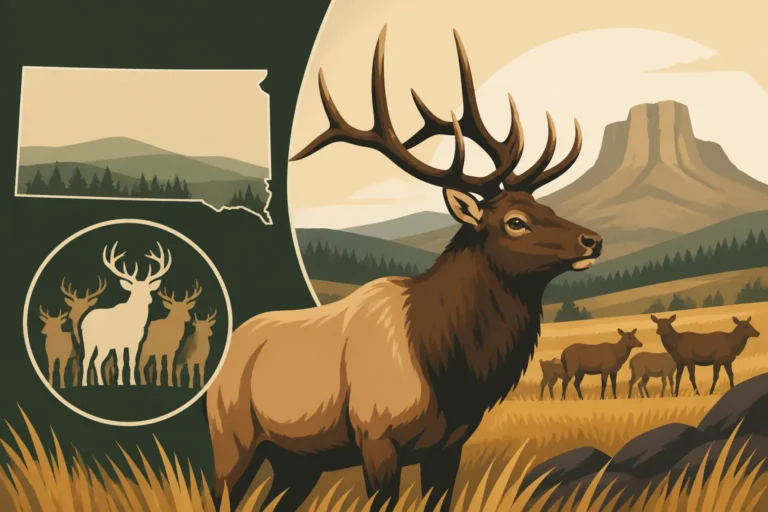
Hunting elk in South Dakota isn't your typical Western big game adventure, and that's precisely what makes it so uniquely challenging and rewarding. For many, the idea of elk on the prairie might seem completely out of place, yet the state offers legitimate, albeit hard-won, opportunities in both the rugged Black Hills and the vast, open plains. This guide aims to demystify South Dakota elk, providing an in-depth look at where these majestic animals roam, how to approach the hunt, and what it truly takes to punch an elk tag in the Mount Rushmore State.
The Allure of South Dakota Elk Hunting
Many hunters dream of chasing elk in the vast wilderness of the Rockies, but South Dakota offers a surprisingly robust, albeit elusive, opportunity closer to home for many. It's not a secret that drawing an elk tag here is tough, making success even sweeter. The landscapes are diverse, from the timbered draws of the Black Hills to the endless, rolling grasslands of the prairie, each presenting its own unique set of challenges and rewards.
A Unique Midwestern Opportunity
For those who might not have the time or resources to travel deep into the Western states, South Dakota provides an incredibly valuable, if limited, chance to pursue elk. It's a true test of a hunter's skills, especially considering the relatively small populations compared to traditional elk states. You won't find the sheer numbers of elk here that you might in Colorado or Montana, and that's part of the mystique. It means every encounter feels like a monumental achievement, a testament to persistence and careful planning.
The hunting pressure, while present, often feels different. In some areas, particularly the Black Hills, it's about navigating dense timber and finding those pockets where elk feel safe. On the prairie, it’s about covering immense distances and using the subtle contours of the land to your advantage. This dichotomy creates a truly singular experience, far removed from the more familiar pheasant fields that South Dakota is renowned for.
Black Hills Versus Prairie: Two Distinct Hunts
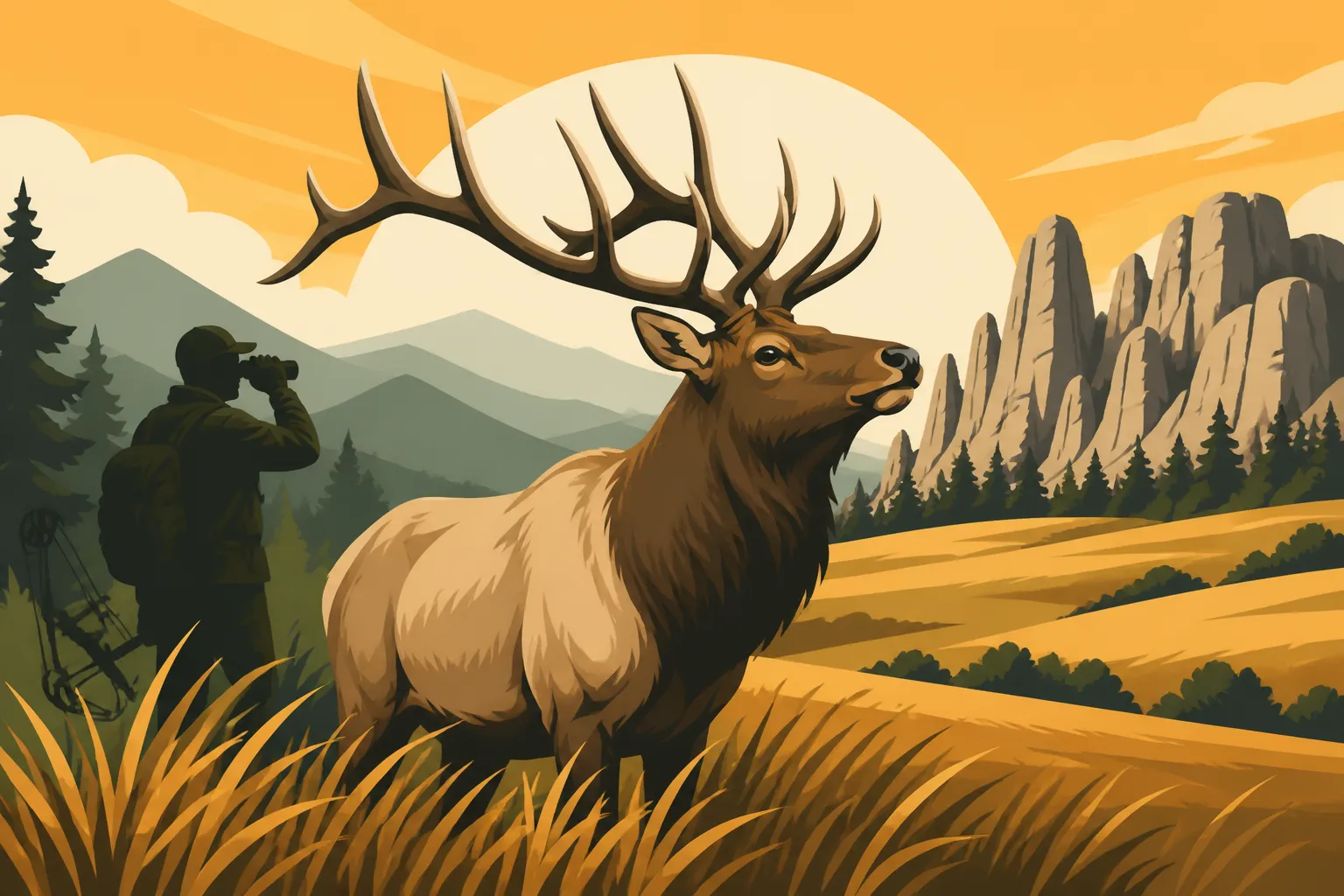
When you talk about elk hunting in South Dakota, you're really talking about two very different experiences. The Black Hills, with its dense ponderosa pine forests, steep canyons, and rocky outcrops, provides classic timber elk hunting. It’s a physical hunt, often requiring significant elevation changes, stealthy movement, and the ability to locate animals in thick cover. Hunters often rely on calling and tracking here, much like their Western counterparts.
Conversely, the prairie elk hunt is an entirely different beast. Picture vast expanses of grassland, broken by coulees, creek bottoms, and sparse shelterbelts. Here, the challenge lies in spotting animals from a distance, judging terrain, and executing long stalks across open ground where cover is minimal. It's a game of patience, optics, and precise shooting, demanding a very different skill set than what you'd employ in the timber. Understanding these fundamental differences is the first step in preparing for a South Dakota elk hunt.
Understanding South Dakota's Elk Herds
Knowing where and why elk exist in South Dakota is crucial for any hunter hoping to draw a tag. These animals are a testament to successful conservation efforts and their ability to adapt to diverse habitats. While the Black Hills are their traditional stronghold, prairie herds are steadily making a comeback in certain regions, adding another layer of complexity and opportunity for hunters.
Black Hills Elk Population Dynamics
The Black Hills is the heart of South Dakota's elk country, boasting the largest and most established herds. These elk have a rich history, being reintroduced in the early 20th century after being extirpated. Today, the Black Hills elk population is managed carefully by South Dakota Game, Fish and Parks (GFP) to balance herd health, landowner tolerance, and hunting opportunities. The success of the Black Hills herd is a conservation triumph, providing a sustainable population that supports limited hunting.
The number of elk here fluctuates based on various factors, including calf recruitment, winter severity, and habitat availability. GFP conducts regular aerial surveys and monitors harvest data to ensure the population remains healthy and within management objectives. This constant oversight is what allows for the draw system to function, providing a controlled number of tags each year for hunters hoping to pursue these animals in their native forest habitat. You can find more details about Black Hills Elk Herd History by exploring related resources.
Prairie Elk Herds: A Growing Presence
While less numerous and certainly less famous, South Dakota's prairie elk herds represent a fascinating and growing aspect of the state's wildlife. These herds are often found in river breaks, extensive ranchlands, and areas with large tracts of private land mixed with some public access. They are more nomadic and spread out, often forming smaller, isolated groups compared to their Black Hills cousins. The challenges of managing and hunting these animals are unique due to the vast private land holdings and the lack of traditional elk habitat.
Prairie elk are often a result of natural expansion from neighboring states or smaller, localized reintroductions. Their survival depends on access to adequate forage, water, and cover, which can be found in the rugged breaks of the Cheyenne or Grand River systems. Hunting these animals is often an incredible feat, requiring extensive scouting and sometimes permission from multiple landowners, if pursuing them on private ground. Their presence offers a glimpse into what the prairie once held and a challenging pursuit for modern hunters.
Custer State Park Elk and Their Influence
Custer State Park, nestled within the Black Hills, plays a significant role in the overall health and population dynamics of South Dakota's elk. While hunting within the park itself is highly restricted, often limited to very specific, lottery-style special hunts, the park acts as a de facto sanctuary. The elk within Custer State Park enjoy relative protection and thrive, often spilling out into the surrounding national forest and private lands where hunting is permitted.
These park elk contribute significantly to the genetic diversity and overall vigor of the regional population. They provide a core breeding group that helps replenish numbers in adjacent hunting units. Understanding the influence of Custer State Park on Custer State Park Elk and Bison dynamics can give hunters valuable insight into elk movement patterns, especially along the park boundaries, where elk might transition between protected and open hunting areas. While you can't typically hunt in the park, its robust population is a benefit to surrounding units, making areas bordering the park potentially more productive.
The Black Hills Elk Experience
Hunting the Black Hills for elk is a quintessential timber hunting experience, demanding physical fitness, keen woodsmanship, and a good understanding of elk behavior in dense cover. It's a stark contrast to the open prairie, requiring different strategies and a mental shift from long-range glassing to up-close tracking and calling.
Navigating Ponderosa Pine Forests
The Black Hills are characterized by rolling mountains covered primarily in ponderosa pine. This dense timber, interspersed with aspen groves, oak brush, and scattered meadows, provides excellent cover for elk. However, it also presents a significant challenge for hunters. Visibility can be limited, making spotting elk difficult beyond a short distance. Success often comes down to slow, deliberate movement, paying close attention to wind direction, and looking for subtle signs like tracks, droppings, and fresh rubs.
Hunters here often find themselves working through thick stands, listening for elk vocalizations, or trying to intercept animals moving between feeding and bedding areas. It's a physically demanding hunt, with steep climbs and descents, requiring sturdy boots and a good understanding of terrain. Mastering Black Hills Elk Hunting Tactics involves patience and the ability to interpret the forest's subtle cues. A good GPS or mapping app like onX is indispensable here, not only for navigation but also for identifying public land boundaries within the patchwork of private holdings.
Hunting Steep Black Hills Ridges
The Black Hills, despite not being "mountains" in the traditional Rockies sense, still offer plenty of steep terrain that elk utilize to their advantage. Ridges and deep canyons provide escape routes, bedding areas, and thermal cover. Elk often bed on leeward slopes or just below a ridge top, where they can watch their backtrail and smell anything approaching from below. Hunting these areas requires strategic planning to approach from an advantageous position, often involving steep ascents or descents.
Understanding the thermals – how air currents move up and down slopes throughout the day – is critical when hunting ridges. Morning thermals rise, while evening thermals fall, carrying your scent accordingly. Timing your movements to coincide with favorable wind and thermal conditions can be the difference between a close encounter and busting a herd. Hunters tackling this terrain will find great value in resources like Hunting Elk on Steep Black Hills Ridges, which delve into the nuances of these challenging environments.
Key Public Access Areas in the Black Hills
While a significant portion of the Black Hills is private, there are extensive tracts of public land, primarily within the Black Hills National Forest, that offer excellent elk hunting opportunities. These areas are accessible to licensed hunters and provide the backbone of the region's public elk hunting. Researching specific units and their public land percentages is vital. GoHunt's mapping tools, for instance, can be incredibly helpful in identifying public land parcels, national forest boundaries, and potential access points.
Beyond the National Forest, some Game Production Areas (GPAs) or smaller parcels of Bureau of Land Management (BLM) land might also offer limited elk access, though these are typically smaller and might see more pressure. It's crucial to obtain a detailed map, digital or physical, that clearly delineates public and private boundaries. Many hunters find success by identifying areas of the national forest that are harder to access, requiring longer hikes or more difficult terrain, as these often hold less pressured animals. Always verify land status before venturing out, as trespassing can quickly ruin a hunt and your reputation.
Pursuing Prairie Elk on the Plains
The idea of hunting elk on the open prairie might sound contradictory, but it's a very real and incredibly challenging pursuit in South Dakota. This isn't about calling through timber; it's a vast, open country game of cat and mouse, where spotting scopes and patience are paramount.
The Challenges of Open Country Hunting
Hunting prairie elk is a stark contrast to the Black Hills. The primary challenge is the lack of cover. Elk are incredibly wary animals, and in open country, they can spot you from miles away, making a close approach extremely difficult. The terrain, while not mountainous, often consists of rolling hills, deep coulees, and river breaks that can hide animals or make stalks incredibly complicated. Wind is another constant factor on the prairie, influencing everything from scent dispersion to bullet trajectory.
Furthermore, prairie elk herds are generally smaller and more scattered than their Black Hills counterparts. They often inhabit large private ranches, making access a significant hurdle. Even on public tracts, finding them can feel like searching for a needle in a haystack. This type of hunting demands exceptional patience, meticulous glassing, and a willingness to cover vast distances on foot or with a vehicle to locate animals before ever thinking about a stalk.
Scouting and Locating Prairie Herds
Successful prairie elk hunting hinges on extensive scouting, often before the season even opens. Since these herds are less concentrated, you need to put in serious windshield time and boot leather to find their preferred haunts. Look for areas with a good combination of forage, water, and rugged topography that provides some cover, such as deep coulees or river bottoms. Digital mapping tools, like those offered by GoHunt, can be invaluable for identifying these features and analyzing potential travel corridors or bedding areas from home. This e-scouting can save you countless hours in the field.
During scouting trips, focus on glassing from high points at first light and last light, scanning large areas with powerful binoculars and spotting scopes. Pay attention to water sources during dry periods, as elk will concentrate around them. Talk to landowners in the area, if possible, as they are often the best source of information on local elk movements. Remember, elk here might only show themselves for brief periods, so diligence in observation is key. Related resources like Scouting a South Dakota Unit From Home can provide more insights into effective pre-season preparation.
Stalking Tactics for Wary Prairie Elk
Once you've located a prairie elk, the real challenge begins: the stalk. With minimal cover, closing the distance on these sharp-eyed animals requires extreme caution and a deep understanding of terrain. You'll need to use every available fold in the land, every small depression, and any sparse vegetation to conceal your approach. This often means crawling, taking circuitous routes, and moving excruciatingly slowly, sometimes taking hours to cover what looks like a short distance on a map.
Wind direction is absolutely critical. A slight shift can betray your position instantly. Always plan your stalk to keep the wind in your favor. Furthermore, be prepared for long shots. Prairie elk rarely allow a close approach, so a rifle setup capable of accurate shots at extended ranges is essential. Practicing shots from prone or with shooting sticks is a must. Knowing Rifle Setup for South Dakota Open Country will be crucial. Patience, adaptability, and the ability to read subtle changes in terrain are your best assets when pursuing these highly intelligent and cautious animals.
Draw Odds and Application Strategies for South Dakota Elk
Drawing an elk tag in South Dakota is a significant hurdle, especially for non-residents. The state utilizes a complex draw system, and understanding its intricacies is absolutely essential if you hope to one day pursue a Black Hills or prairie bull. It's a game of patience, strategy, and sometimes, a little luck.
Deciphering the South Dakota Elk Draw
South Dakota's big game draw system for elk is unique, incorporating both a preference point system and a bonus point system, but applied differently depending on your residency. For residents, it's primarily a lottery, with successful applicants losing their points. For non-residents, it leans more heavily on a bonus point system where points essentially multiply your chances in the draw without guaranteeing a tag. This system means that while accumulating points increases your odds, it doesn't assure a tag, even with many years of applying.
The draw is unit-specific, meaning you apply for a particular unit and hunt type (e.g., Black Hills Archery Bull, Prairie Any Elk). Some units are significantly harder to draw than others, often correlating with higher elk populations or better access. It's crucial to study the draw odds from previous years, which GFP publishes, to understand which units are more realistic targets given your point status. Familiarizing yourself with South Dakota Big Game Draws and How to Apply is the first step in this complex process.
Maximizing Your Chances: Preference Points and Unit Choices
To maximize your chances, consistent application for preference or bonus points is key. For nonresidents, purchasing a point even if you don't plan to hunt that year keeps you in the game and increases your future odds. Points are unit-specific in effect, as they are part of your application history for specific draw types. The longer you apply, the more entries you accrue in the lottery-like system for non-residents.
Choosing the right unit is another critical strategy. Research past draw odds to identify units that might be slightly easier to draw but still offer good hunting. This might mean applying for an antlerless tag, a muzzleloader season, or a less popular unit. While everyone dreams of a Black Hills bull tag, sometimes a prairie unit or an antlerless tag might be the foot in the door you need. Resources like South Dakota Elk Draw and Units can help you delve into the specifics of each area's draw history and potential. Tools like GoHunt's Insider platform are invaluable for this kind of research, providing detailed draw odds and unit analysis to help you make informed decisions.
Nonresident Considerations and the Draw System
Nonresidents face significantly tougher odds for South Dakota elk tags compared to residents. This is common across many states, and South Dakota reserves a large percentage of its tags for residents. However, nonresident tags are available, just in limited numbers. This makes accumulating points even more critical for out-of-state hunters. It can take many years, sometimes a decade or more, to draw a coveted bull tag in the most popular Black Hills units.
Nonresidents must also be aware of the specific application periods and requirements, which can differ from resident applications. Pay close attention to deadlines and ensure all your paperwork is in order. While the wait can be long, the reward of a South Dakota elk tag for a nonresident is truly a testament to patience and perseverance. The unique experience of hunting elk in this state makes the long application journey worthwhile for those committed to the pursuit. More information on South Dakota Preference Points Explained can guide you through the process of building your odds over time.
Here's a quick comparison of the two main elk hunting experiences in South Dakota:
| Feature | Black Hills Elk Hunting | Prairie Elk Hunting |
|---|---|---|
| Terrain | Dense ponderosa pine forests, steep ridges, canyons, meadows | Vast open grasslands, rolling hills, deep coulees, river breaks, sparse shelterbelts |
| Hunting Style | Spot and stalk, calling, tracking in timber, physical | Spot and stalk, long-range glassing, extensive walking/driving, ultra-stealthy stalks |
| Visibility | Limited, often <100 yards, requires close-quarter woodsmanship | Excellent, can spot elk from miles away, but difficult to approach unseen |
| Cover | Abundant natural forest cover | Minimal, rely on terrain features (folds, draws) |
| Primary Challenge | Locating elk in thick timber, navigating steep terrain, close-range execution | Spotting distant elk, executing long stalks with minimal cover, long-range shooting |
| Access | Black Hills National Forest, some private | Primarily private land, some National Grasslands and WIAs |
| Typical Shot Distance | 50-250 yards, often faster reactions | 200-500+ yards, often deliberate, prone shots |
| Physical Demands | High, steep climbing, hiking | High, extensive walking/driving, stealthy crawling |
| Required Gear | Good boots, GPS, binoculars, game calls | High-power optics (spotting scope), rangefinder, shooting sticks, binoculars, GPS |
Essential Gear and Tactics for Success
Whether you're after a Black Hills timber bull or a prairie phantom, having the right gear and knowing how to use it is non-negotiable for a South Dakota elk hunt. The diverse environments demand versatility, but some core principles remain true for both.
Rifle and Optics for Long-Range Shots
Given the potential for long shots, especially on the prairie, your rifle setup needs to be capable of consistent accuracy at extended ranges. A flat-shooting cartridge like a .270 Win, 7mm Rem Mag, .300 Win Mag, or even a 6.5 Creedmoor (with appropriate bullet choice) is a popular choice. The rifle itself should be accurate and you should be intimately familiar with its capabilities, particularly bullet drop at various distances. Practicing from field positions, such as prone or with shooting sticks, is crucial, as you rarely get a bench rest in the field.
High-quality optics are arguably even more important than the rifle itself. A good set of 10x binoculars is indispensable for glassing, and a high-power spotting scope (20-60x) is vital for identifying prairie elk and assessing their size from afar. Your riflescope should be clear, reliable, and capable of precise adjustments. Many experienced hunters use scopes with ballistic reticles or turrets that allow for quick, accurate elevation changes, especially for those challenging Reading Wind at Four Hundred Yards scenarios that are common in open country.
Calling Elk in Black Hills Timber
In the dense timber of the Black Hills, calling can be a highly effective tactic, especially during the rut. Elk are vocal animals, and mastering various calls can help you locate, attract, and even stop a bull in his tracks. Cow calls, bugles, and even calf calls all have their place. Learning to read the responses of elk and understanding when to be aggressive versus subtle is an art form that takes practice.
Often, a combination of calling and strategic positioning works best. One hunter might call to locate or attract an elk, while another positions themselves for a shot. Decoy setups, while less common for elk than deer, can also occasionally be effective in drawing a bull into range. Be prepared for close encounters when calling, and always have your shooting lanes clear. For more in-depth knowledge on this, check out Calling Elk in Black Hills Timber.
Field Care and Game Recovery in Rugged Terrain
Regardless of whether you harvest an elk in the Black Hills or on the prairie, proper field care and game recovery are paramount. Elk are large animals, and getting one out of rugged terrain can be an immense physical challenge. In warm early-season conditions, rapid cooling of the meat is critical to prevent spoilage. This means gutting the animal quickly, skinning, and quartering it for transport, sometimes right where it falls.
Having a good game bag system and a robust packing frame is essential. You'll likely be making multiple trips, especially if you're hunting solo or with a small group. Always mark the location of your animal with GPS and carry plenty of water and emergency supplies for the physical exertion of packing meat. If you harvest an animal in a deep coulee or far from a road, consider using your GPS to help plot the most accessible route out. The principles for Getting a Deer Out of a South Dakota Coulee apply equally to elk, just on a much larger scale.
Planning Your South Dakota Elk Hunt
A successful South Dakota elk hunt is less about luck and more about meticulous planning. From understanding season dates to leveraging modern technology, every detail counts when pursuing these magnificent animals.
When to Hunt: Season Dates and Elk Behavior
South Dakota's elk seasons typically run from late summer into early winter, offering different experiences depending on the timing. Archery seasons often coincide with the early rut, providing opportunities for calling in bulls. Early firearms seasons, usually in September or October, can still find elk in bachelor groups or beginning to rut. Later seasons move into the colder months, when elk might be more concentrated in wintering areas or seeking thermal cover.
Understanding South Dakota Elk Season Dates is critical for planning your application and your hunt. Early season hunts can be hot, demanding extra attention to meat care and hydration. Late-season hunts bring the challenges of snow and extreme cold, requiring specialized clothing and gear for staying warm. Each period offers unique advantages and disadvantages, and aligning your hunt with expected elk behavior for that specific time can greatly increase your chances.
Understanding Regulations and Legal Requirements
South Dakota has specific regulations for elk hunting that all hunters must adhere to. This includes licensing requirements, blaze orange rules, legal shooting hours, and carcass transport restrictions, particularly concerning Chronic Wasting Disease (CWD). Always obtain and thoroughly read the current year's South Dakota Hunting and Trapping Handbook, available from GFP, well before your hunt. Ignorance of the law is no excuse, and violations can result in hefty fines and loss of hunting privileges.
For non-residents, ensure you have purchased the correct South Dakota Nonresident Hunting Licence Cost and any required stamps (like the habitat stamp) in addition to your elk tag. Pay special attention to unit boundaries, as these can be complex, especially in areas where public and private lands intermingle. A clear understanding of all legal requirements will ensure your hunt is not only successful but also ethical and compliant.
Utilizing Technology for Scouting
In today's hunting world, technology can be a game-changer, especially for scouting. Digital mapping applications, such as onX Hunt or GoHunt, are incredibly valuable tools for any South Dakota elk hunter. These apps provide detailed topographic maps, aerial imagery, and critical land ownership data, allowing you to identify public vs. private ground, locate potential access points, and pinpoint key habitat features like water sources, dense cover, and travel corridors.
Beyond mapping, weather apps, satellite communication devices (especially in remote areas with no cell service), and even trail cameras (where legal and ethical) can aid in your preparation and execution. While technology shouldn't replace boots on the ground, it can significantly enhance your ability to E-Scouting Walk-In Areas Before the Season and overall efficiency, allowing you to maximize your limited hunting time in the field. Embrace these tools, but always double-check information with physical observation where possible.
Disclaimer
Please be aware that hunting regulations, season dates, and license requirements in South Dakota can change frequently. Always consult the most current South Dakota Game, Fish and Parks (GFP) hunting regulations and official publications before planning and undertaking any hunting activity. This content is for informational purposes only and should not be considered legal advice or a substitute for official GFP guidelines.