Glassing From a Vehicle Legally
The open expanses of South Dakota's prairies and badlands are an absolute magnet for big game hunters, offering incredible opportunities for deer and antelope. However, the sheer scale of the landscape often leaves folks wondering how they can effectively scout and locate animals without running afoul of the law, especially when it comes to observing from the comfort and convenience of their vehicle. This guide is here to untangle the nuances of legally glassing from a vehicle, giving you the clarity and confidence to use this valuable scouting method without any unwanted surprises.
Understanding South Dakota's Road Hunting Regulations
Navigating the rules around hunting and even just observing from a vehicle in South Dakota can feel like walking a tightrope. On one hand, you're encouraged to respect private property; on the other, public roads are often the only access point to vast stretches of land, both public and private. The key distinction lies in understanding what constitutes "hunting" from a vehicle versus simply using it as a mobile observation platform.
South Dakota's regulations are primarily concerned with preventing unsafe practices, protecting private property, and ensuring fair chase. Simply put, you cannot use your vehicle as a hunting blind from which to shoot, nor can you pursue game with a vehicle. But observing from it, under the right circumstances, is generally permissible. It's the "right circumstances" that we need to dive into deeply, because this is where many hunters get tripped up, often unintentionally.
Defining the "Road Right-of-Way" in South Dakota
This is where the rubber meets the road, literally. In South Dakota, the "road right-of-way" typically extends beyond the paved or graveled surface. It usually includes the ditch and a portion of the field edge or fence line adjacent to the road. The exact width can vary, but generally, it's considered to be 33 feet from the centerline on each side for most rural section line roads, though some highways and county roads might have a wider easement. This specific strip of land, while publicly owned, has rules that differ from other public hunting lands like Game Production Areas or Walk-In Areas.
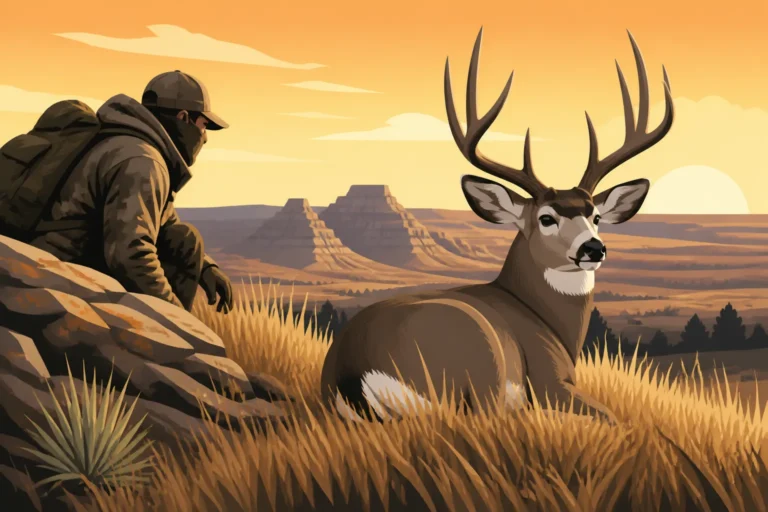
The important thing to remember is that while you are on the right-of-way, you are considered to be on public ground. This means you usually won't be trespassing if you're standing in the ditch next to a public road, even if the fence line marks the beginning of private property. However, it’s a huge misconception to think you can simply walk into an adjacent private field if you spot something from the road. That’s a direct trespass. Many seasoned hunters use tools like onX Layers for South Dakota Land Status or other GPS mapping apps, including GoHunt, to clearly delineate public road rights-of-way from private property lines. These apps provide a visual overlay that shows land ownership, helping you avoid accidentally stepping onto private ground when you pull over to glass a distant coulee for deer. Knowing exactly where the right-of-way ends and private land begins is paramount, especially when glassing those expansive West River breaks where a trophy mule deer might be bedded.
When a Vehicle is Considered a "Hunting Aid"
The moment your vehicle transitions from a mere mode of transport and observation platform to an active "hunting aid," you've entered a legal grey area that often leads to violations. A hunting aid, in this context, implies using the vehicle to gain an unfair advantage or to engage in active pursuit of game.
Think of it this way: if you're driving along, spot an antelope in a field, and then immediately stop, hop out, and try to take a shot from the shoulder of the road or the ditch, that's likely considered hunting from the right-of-way, which is illegal. The vehicle became integral to the act of hunting itself, whether for spotting, pursuing, or attempting to shoot. Similarly, if you spot a deer from your truck, then drive off-road onto private property (without permission, of course) or even onto public land where vehicle travel is restricted to chase it down, your vehicle has become an illegal hunting aid.
The legal spirit is that hunting should be done on foot, with fair chase, and with respect for property lines. Your vehicle is for transport and observation, not for stalking, blocking, or shooting. This distinction is often subtle but critical. When you pull over to glass, make sure your intent is purely observation. If you then decide to pursue an animal, you must exit your vehicle, ensure you are on legal hunting ground, and conduct your stalk entirely on foot. This is particularly important when pursuing game like antelope, where a quick stalk across open prairie is tempting, but the moment your vehicle assists in any way beyond initial spotting, you risk a citation.
Ethical and Effective Glassing Techniques from a Vehicle
Just because something is legal doesn't always make it ethical, nor does it make it effective. Good glassing from a vehicle involves a blend of smart strategy, respect for others, and a deep understanding of what you're trying to achieve. It’s not just about stopping and looking; it’s about how you stop and how you look.
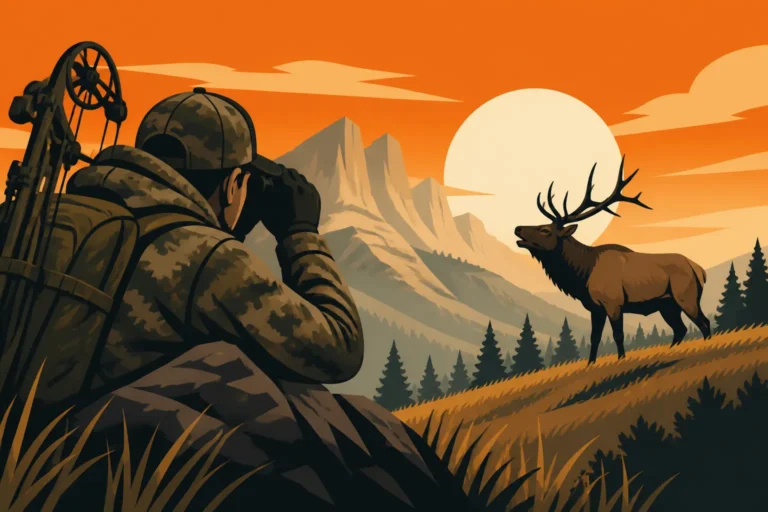
Many hunters fail to grasp the power of proper glassing, often just glancing with bare eyes. But a quality pair of binoculars or a spotting scope can turn a seemingly barren landscape into a teeming wildlife panorama. It allows you to cover vast amounts of ground efficiently, identify potential game patterns, and assess animal quality without burning boot leather unnecessarily. This is especially true when you're targeting elusive creatures like Black Hills elk or trying to determine if a distant whitetail is worth a closer look.
Safety First: Positioning Your Vehicle
When you're out there, captivated by the horizon, it's easy to forget you're often on an active road. Safety should always be your number one concern. Pulling completely off the roadway, onto the shoulder or into a designated pull-off, is non-negotiable. Don't leave any part of your vehicle protruding into the lane of travel, especially on gravel roads where dust can obscure vision for other drivers.
Consider the line of sight for oncoming traffic. If you're on a blind curve or over a hill, find a safer spot. Use your hazard lights if you feel it's necessary, particularly if you're parked for an extended period or in low light conditions. Not only does this protect you and your vehicle, but it also minimizes interference with local traffic, which is crucial for maintaining good relationships with rural residents and landowners. Locals are often the first to notice hunters who are respectful versus those who are careless. When you find a promising spot to glass, think about not just what you can see, but what others can see of you. A polite wave to a passing farmer goes a long, long way.
Maximizing Your View: Optics and Terrain
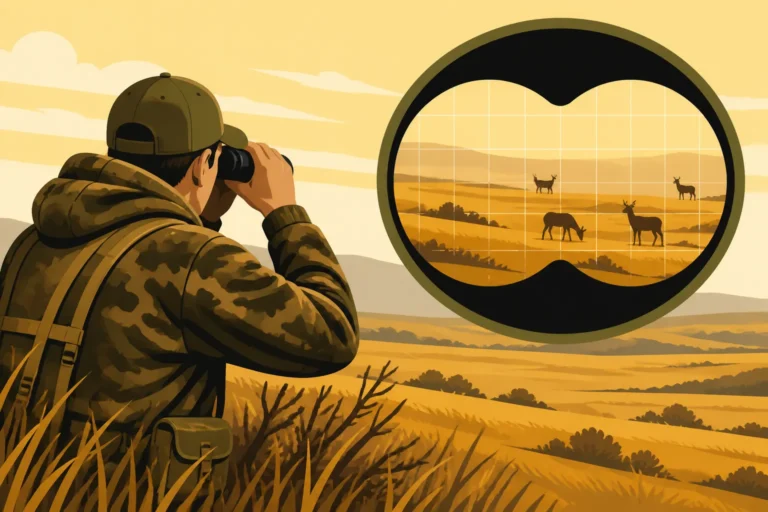
Effective glassing isn't about speed; it's about methodical scanning. Set up your optics – whether it's 10×42 binoculars, 12×50 binos, or a spotting scope on a tripod. For long-distance viewing on the open prairie, a spotting scope is invaluable for really discerning antler points on a distant mule deer or checking horn length on a pronghorn. When trying to judge a Pronghorn Buck in the Field, those extra magnifications are absolutely critical.
Start by systematically breaking down the landscape into grids, scanning slowly from left to right, then dropping down a little and scanning right to left, like Glassing Grids on Open Breaks. Pay close attention to changes in terrain, cover, and color. That subtle patch of brown or grey that seems out of place might just be an ear, a rump, or a leg of a bedded animal. Look into the shadows, behind rises, and along the edges of tree lines or cattail sloughs. Animals often prefer to bed where they have a view, or where they feel concealed. Even when you are Reading Prairie Coulees for Mule Deer, those small folds in the landscape can hide a surprising number of animals.
Take breaks, let your eyes rest, and then resume. Sometimes, a fresh look can reveal what you missed initially. Use your vehicle as a stable platform; resting your binos on the window frame can help reduce shake and improve clarity, though a tripod is always best for a spotting scope. The goal is to absorb as much information as possible about the area: game trails, water sources, bedding areas, and food plots. All of this helps you formulate a solid hunting plan for when you hit the ground.
Navigating Different Land Types and Their Rules
South Dakota offers a fantastic mosaic of public and private lands, and the rules around glassing from a vehicle can subtly shift depending on what type of land you're looking at and what type of road you're on. Being aware of these distinctions is crucial to avoid unintended trespass or violations.
Most of the time, you'll be glassing from county roads or state highways, which are generally public rights-of-way. However, the land immediately adjacent to these roads can be anything from private farmland to public Game Production Areas or even federal land like the National Grasslands. Your mapping app, like GoHunt or onX, will be your best friend here, providing instant land ownership data, ensuring you know exactly where you stand, literally and legally.
Public Roads Adjacent to Private Land
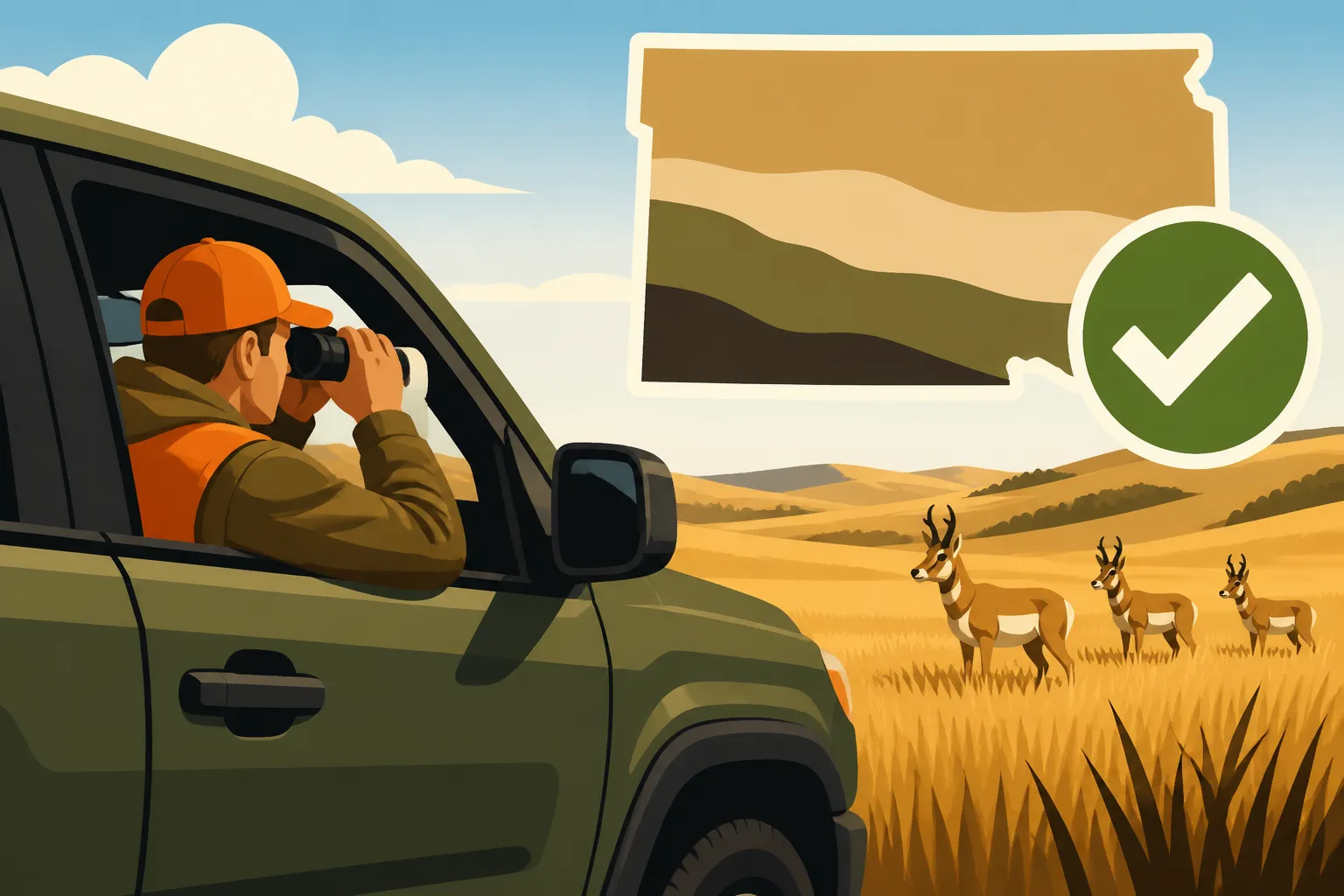
This is the most common scenario for vehicle glassing in South Dakota. You're on a public road, which includes its ditch and right-of-way, and you're looking into privately owned fields or pastures. As long as your vehicle remains on the public right-of-way and you are not trespassing on private property, simply observing game is legal. You are not "road hunting" if you are merely glassing from the public right-of-way.
The critical point, which bears repeating, is that you cannot take a shot from the public road right-of-way at an animal on private land without permission. And even with permission, shooting from the public right-of-way is generally prohibited. The law aims to prevent bullets from traveling across public spaces, potentially endangering others or hitting property. This means if you spot a magnificent buck on private land, your next step, assuming you have permission, is to park your vehicle safely, retrieve your rifle, and then walk into the private land to conduct your hunt, ensuring you're well away from the road before taking any shots. This is a fundamental aspect of South Dakota Trespass Law and Posted Land. You should always strive to speak with landowners for permission to hunt their ground. A lot of incredible opportunities arise from simply knocking on a door and respectfully asking.
What About Walk-In Areas and GFP Lands?
South Dakota boasts an incredible amount of public hunting access through programs like the Walk-In Area (WIA) program and dedicated Game Production Areas (GPAs). These lands are open to public hunting, but the rules about vehicle access and glassing often differ from private lands.
On most Walk-In Areas, vehicles are restricted to established public roads. You cannot drive onto the WIA property itself unless a specific access road is clearly marked and open. This means you would treat a WIA boundary the same way you would a private property line: you can glass into it from a public road, but you must then park your vehicle and walk onto the WIA to hunt. This is the essence of Hunting South Dakota Walk-In Areas. The Walk-In Area program specifically designates lands for "foot traffic only," meaning your vehicle's role is purely for transport to the boundary.
Game Production Areas, managed directly by South Dakota Game, Fish and Parks (GFP), are similar. While they are public land, vehicle access is often restricted to main perimeter roads or designated parking areas. Many GPAs have interior roads that are gated or designated "no public vehicle access." So, again, you'd glass from the public road or designated parking area, then proceed on foot. It’s always a good idea to consult the South Dakota Public Hunting Atlas, available online and through apps like GoHunt, which clearly shows WIA and GPA boundaries, vehicle access points, and any specific regulations for that parcel. This tool is invaluable for planning your approach and understanding where you can legally park and access the property.
Common Misconceptions and Legal Pitfalls
Even with the best intentions, it's easy to fall into traps that can lead to violations. The subtleties of South Dakota's hunting laws, especially regarding vehicles and firearms, require careful attention. Many folks think "it's just a quick look," but that quick look can turn problematic if you're not fully aware of the letter of the law.
The "Closed Container" Rule and Loaded Firearms
This is one of the most frequently misunderstood regulations. In South Dakota, it is illegal to carry a loaded firearm in any vehicle while hunting. A firearm is considered loaded if there's a cartridge in the chamber or in the magazine when the magazine is in the firearm. This applies to rifles, shotguns, and even handguns (unless you have a valid concealed carry permit and are not actively hunting with the handgun). The only exception is for peace officers or those specifically permitted by law.
So, if you're glassing from your truck, admiring a distant antelope, and you have your rifle with a loaded magazine in the gun on your seat next to you, you're breaking the law. Even if the chamber is empty, if that loaded magazine is clicked into place, it's a no-go. The safest practice is to ensure your firearm is unloaded (no magazine in the gun, no round in the chamber) and preferably cased or broken down while in your vehicle. This separates the act of transportation and observation from the act of hunting. Once you're out of the vehicle and ready to hunt, then you can load your firearm. This rule is in place for public safety, preventing accidental discharges and making it unequivocally clear that vehicles are not for shooting from.
Here's a quick summary table to help clarify:
| Activity | Location | Legality | Notes |
|---|---|---|---|
| Glassing (observing only) | From public road right-of-way | Legal | Ensure vehicle is fully off the road. No loaded firearms in vehicle. Use apps like GoHunt to confirm public right-of-way. |
| Shooting at game | From public road right-of-way | Illegal | Applies to any game. Violates road hunting laws and safety. |
| Driving off-road to pursue game | On public or private land | Illegal | Using a vehicle to pursue is strictly forbidden. Park and proceed on foot. |
| Possessing loaded firearm | In any vehicle while hunting | Illegal | Magazine in gun = loaded. Chamber empty or full. Unload and un-magazine while traveling. |
| Retrieving downed game | Off-road with vehicle (unarmed) | Potentially Legal (with permission) | If game is down, you may use a vehicle for retrieval on private land with landowner permission, but you must not be hunting at that time. Ensure firearm is unloaded and cased. |
| Walking onto private land | From public road right-of-way | Illegal (without permission) | This is trespass. Always secure explicit permission from landowners. |
Reporting Suspicious Activity
Part of being a responsible hunter and conservationist is knowing when and how to report suspicious activity. If you observe someone clearly violating road hunting laws – for instance, shooting from a vehicle, pursuing game with a truck, or repeatedly driving onto private land without permission – it's important to report it to the proper authorities. The South Dakota Game, Fish and Parks (GFP) has a TIPs line (Turn In Poachers) that you can call.
Many times, these violations happen because individuals are either ignorant of the law or simply disregard it, giving all hunters a bad name. By reporting, you're not just enforcing the law; you're protecting the resource and the reputation of ethical hunters. Be prepared to provide as much detail as possible: vehicle description (make, model, color, license plate number), location, time, and a description of the activity. While it can be frustrating to see others break the rules, taking the time to report it is a tangible way to contribute to wildlife enforcement efforts and ensure that future generations can enjoy the same hunting opportunities. Remember, we're all stewards of this incredible landscape and its wildlife.
Disclaimer
The information provided in this guide is for general informational purposes only and does not constitute legal advice. Hunting regulations can change, and interpretations may vary. It is your responsibility to consult the most current South Dakota Game, Fish and Parks regulations and, if necessary, seek legal counsel to ensure full compliance with all applicable laws before engaging in any hunting activities.