Reading Wind on a Big Water Set
There’s nothing quite as frustrating as waking up before dawn, hauling all your gear onto a vast South Dakota lake or reservoir, setting what you think is a perfect spread, only to have the wind shift or intensify, leaving your decoys looking unnatural and the birds flaring. When you're waterfowling on truly big water, the wind isn't just a factor; it's the conductor of the entire orchestra, dictating everything from your decoy spread's realism to the birds' flight paths and, critically, your safety. This guide will walk you through how to become a master at reading the wind, transforming it from a frustrating wildcard into your most valuable ally for successful big water duck and goose hunts.
Understanding Wind's Impact on Big Water Hunting
Hunting big water in South Dakota, whether it’s a sprawling reservoir like Lake Oahe or a massive natural lake, presents unique challenges compared to a cozy prairie pothole. The sheer scale amplifies every environmental factor, especially the wind. It's not just about a gentle breeze; it can be a sustained gale that turns a calm morning into a white-knuckle ride.
The Decoy Dance and Realism
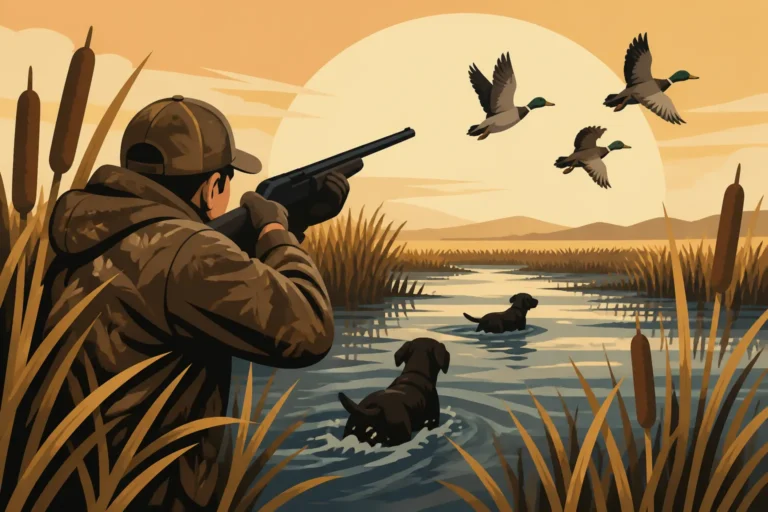
On small water, a light ripple might be enough to give your decoys life. But on big water, without the right wind, your spread can look utterly lifeless, a static collection of plastic that screams "fake!" The wind provides natural movement, making your decoys bob, weave, and even turn, mimicking a real flock of feeding or resting birds. When the wind is blowing consistently, it creates a "current" in the water that pushes your decoys, making them swing and dance in a way that is incredibly appealing to circling waterfowl. This motion is often the critical difference between birds giving your spread a wide berth and committing to the pocket you've painstakingly created.
Moreover, wind direction plays a massive role in how birds perceive your spread. Decoys should always be set up to face into the wind, just like real ducks and geese do when resting or feeding. This subtle detail, if missed, can be a dead giveaway to wary birds. If your decoys are facing every which way, or worse, consistently facing downwind, incoming ducks will quickly sense something is off.
Bird Flight Paths and Approach
Ducks and geese are master aviators, and they use the wind to their absolute advantage. Just like an airplane, they prefer to take off and land into the wind. This gives them more lift at lower airspeeds, making their approach more controlled and their landing softer. When you're hunting big water, understanding this instinct is paramount. If you set your decoys without considering the wind, you'll find birds attempting to land far outside your comfortable shooting range or, more commonly, simply flaring high overhead because your landing zone isn't aligned with their natural approach.
The wind also influences how birds travel across the landscape. On a particularly blustery day, waterfowl might hug shorelines or follow draws and low-lying terrain to minimize exposure to strong winds, even on big water. They might alter their normal migration routes or feeding patterns to find more sheltered areas, which means your perfectly planned open-water spread might be missed entirely if the birds are flying a different, more protected line. Always observe not just how individual birds approach your spread, but also the general flow of traffic in relation to the prevailing wind.
Boat Control and Blind Stability
Beyond the birds and decoys, wind on big water introduces significant practical challenges for the hunter. A strong wind can make simply getting to your desired spot an arduous, and sometimes dangerous, task. Trying to navigate a boat in choppy waves, especially when loaded with decoys and gear, requires constant vigilance and often a lot more horsepower than you'd expect. Once you reach your spot, anchoring securely becomes paramount. If your anchors aren't set correctly or are insufficient for the conditions, your boat blind can drag, swinging your carefully placed spread out of position and potentially putting you in an unsafe situation.
Imagine trying to maintain your position on Lake Francis Case on a day with 20 mph winds. Your boat becomes a kite, and your blind a sail. Not only does this make shooting accurately incredibly difficult due to the boat rocking, but it also creates unnatural motion in the spread. If you're using a layout boat or a diver boat blind, stability is everything for concealment and comfort. A constantly shifting blind will expose you, ruining any chance of decoying birds close. Therefore, knowing the wind, and preparing for its potential ferocity, is as much about safety and comfort as it is about hunting success.
Key Principles of Reading Wind for Waterfowl
Reading the wind isn't just about sticking a wet finger in the air; it's a combination of observation, technology, and foresight. On South Dakota's expansive waters, this skill is honed over many seasons, but there are fundamental principles that can accelerate your learning curve.
Visual Cues on the Water and Land
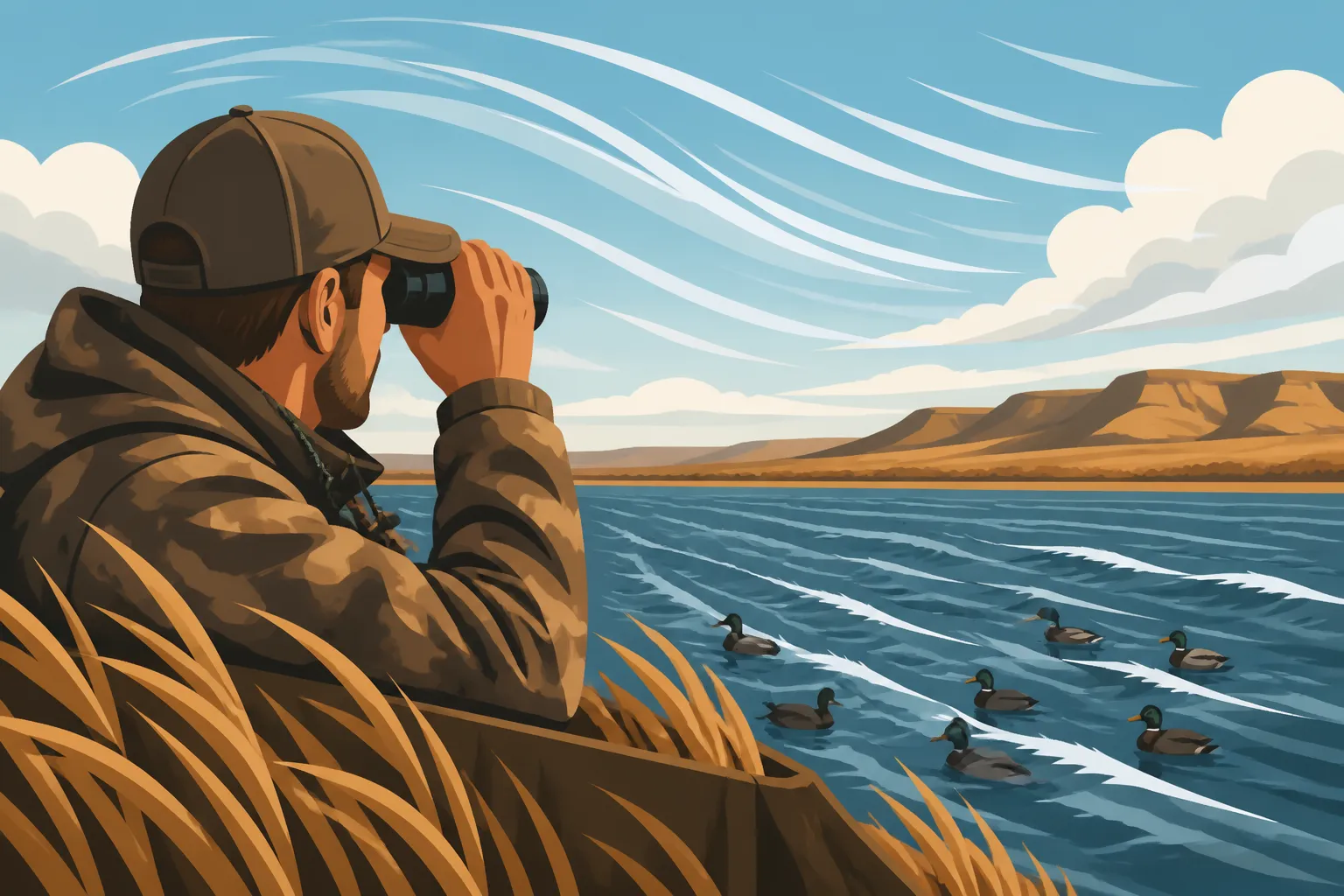
The most immediate indicators of wind direction and intensity are right in front of you. On the water, observe the direction of the ripples and waves. Even a slight breeze will create a visible texture on the surface, and larger waves clearly show the wind's direction. Look at how your own boat drifts (before anchoring, of course) or how unweighted decoys float. If you're hunting near a shoreline, observe the movement of any cattails or tall grass. These natural flags are invaluable, especially at first light when it's still too dark to see the broader landscape. A strong wind will lay vegetation flat, while a lighter breeze will cause it to sway gently.
Don't forget about smoke from distant chimneys, flags on shore, or even the tops of distant trees. These long-range indicators can give you a better sense of the overall wind pattern, which might be different from the localized eddy currents right around your boat, particularly if you're hunting near a point or structure. For instance, sometimes a wind will wrap around a major point on the Missouri River, creating localized swirling currents that don't reflect the main wind direction impacting incoming birds. Always try to get a holistic view of the wind's influence.
Using Technology and Tools
While old-school observation is crucial, modern technology offers powerful tools to enhance your wind-reading abilities. Before you even leave the house, checking detailed weather forecasts is non-negotiable. Look for hourly wind speed and direction, and pay close attention to predicted shifts throughout your hunt. Many apps provide hyper-local forecasts, allowing you to pinpoint conditions specific to your hunting area on Lake Oahe or other large bodies of water. For serious hunters, apps like GoHunt offer advanced mapping capabilities that can integrate weather overlays, allowing you to visualize how wind might affect different access points or potential decoy locations before you ever launch your boat.
Once on the water, a small wind meter (anemometer) can confirm wind speed, helping you decide if it's safe to run certain decoy spreads or if conditions are too rough. However, the simplest and most effective tool for confirming real-time wind direction at your spread is a small wind sock or flag attached to a decoy or a short pole on your boat blind. This provides a constant visual confirmation that your decoys are facing correctly and that your landing zone is truly into the wind. When considering your gear, having reliable options for your Rifle Setup for South Dakota Open Country is important, but for waterfowl, the right tools for managing wind are paramount.
Anticipating Wind Shifts
One of the trickiest aspects of wind on big water is its tendency to shift, especially with changing weather fronts. A beautiful, calm morning can quickly turn into a raging afternoon, or a north wind can swing to the west in a matter of hours. This is where truly understanding weather patterns and having a plan B (or C) comes into play. If a cold front is pushing through, expect winds to build and often shift from a southerly to a northerly direction. Warm fronts might bring lighter, variable winds. Pay attention to barometer readings; a rapidly falling barometer often indicates strengthening winds and approaching storms.
When planning your hunt, use your weather apps to look at the forecast not just for the next few hours, but for the entire day. If a significant shift is predicted, you have a few options: choose a more sheltered location that works for multiple wind directions, or be prepared to relocate your boat and reset your spread. This might mean having extra anchor lines, a flexible decoy spread design, and a willingness to adapt on the fly. Don't be caught off guard; anticipate the shift and plan for it.
Strategic Decoy Setups Based on Wind
Once you’ve mastered reading the wind, the next step is to use that knowledge to your advantage by setting up your decoy spread strategically. This is where art meets science, transforming a random collection of fakes into an irresistible invitation.
Optimal Landing Zones
The cardinal rule of decoying is to create a "pocket" or "hole" in your spread where birds feel comfortable landing. This pocket must be directly into the wind from your blind, and within easy shooting range. Ducks and geese want to land head-on into the wind, so your spread should guide them to this precise spot. Think of your decoy spread as an arrow, with the tip pointing into the wind, and the space between the fletching being your landing zone.
One common and effective setup for big water is a "J" or "U" shape. The long arm of the "J" or one side of the "U" extends downwind, providing a visible lead-in for incoming birds. The curve of the "J" or the bottom of the "U" creates the pocket, directly upwind of your boat or blind. This allows birds to swing wide, see the full extent of your spread, and then commit to landing right in front of you, wings cupped, facing into the wind. For more traditional techniques, you might compare this to Decoy Spreads on a Prairie Pothole, but the scale and dynamics on big water require even more precision.
Spreading the Flock for Visibility
On big water, visibility is key. Your spread needs to be large enough and spread out enough to be seen from a distance by birds flying high or wide. However, "spreading out" doesn't mean "randomly scattering." The wind still dictates the natural appearance. Use the wind to create lifelike movement. Long lines of decoys extending downwind, or multiple small family groups, can look incredibly realistic as they drift and bob in the waves.
Consider using a mix of decoy types and sizes. Large goose floaters or magnum duck decoys can add mass and visibility, especially on rougher water where smaller decoys might disappear in the troughs of waves. Diver ducks, like scaup or canvasbacks, tend to congregate in denser, more clumped groups, while mallards and pintails might spread out more. Match your spread's density and pattern to the species you're targeting and the conditions. The wind helps carry the "call" of your spread visually, drawing birds' attention from afar. If you are specifically Hunting the Missouri River for Divers, understanding their unique behavior in wind is even more crucial.
Adjusting for Different Wind Directions
Rarely does the wind stay perfectly consistent throughout a hunt. Being able to adapt your spread quickly is a hallmark of an experienced waterfowler.
- Headwinds: When the wind is blowing directly at your blind, birds will approach from behind you and land directly in front. This is often the ideal scenario. Your spread should guide them in a straight line, creating a clear landing zone upwind.
- Tailwinds: This is perhaps the trickiest. Birds generally won't want to land with the wind at their back. If you are stuck with a tailwind, your best bet is often to create a very wide "J" or "U" spread, hoping to make birds swing far out and then turn back into the wind to land. You might need to place your blind further downwind of the main body of decoys, forcing birds to land past the main group, closer to you. This is where having plenty of decoy line and anchors pays off.
- Crosswinds: These are common and can be highly effective. Birds will typically approach from one side, turn into the wind just off your spread, and then land in the pocket. Your spread should extend out on the crosswind side, funneling them towards your landing zone. A common error is setting the pocket too far to the side, causing birds to land out of range. The key is to create the "bend" in your J or U spread precisely where you want them to finish their approach.
No matter the direction, always maintain the principle that the birds need to land into the wind. Your job is to make that approach as natural and inviting as possible. This might mean quickly adjusting anchor lines, shifting a few long-line spreads, or even moving your boat slightly to re-align your shooting lane with the wind-dictated landing zone.
Safety Considerations and Wind on Big Water
While hunting success is certainly important, safety should always be your number one priority, especially when dealing with the unpredictable nature of wind on South Dakota's large bodies of water. A seemingly minor breeze can quickly escalate into dangerous conditions.
Boating Safety and High Winds
Before launching on any large reservoir or lake, always check the marine forecast in addition to general weather. Look for small craft advisories, gale warnings, or even severe thunderstorm watches. Even if you have a large, capable boat, high winds combined with large waves can be incredibly dangerous. Big water means big waves, which can swamp smaller boats, knock people overboard, or cause equipment failure. Always ensure your boat is in excellent working order, your engine is reliable, and you have all required safety gear: life jackets for everyone, a whistle or air horn, navigation lights, and a reliable communication device.
Never overload your boat, especially when planning to carry a large decoy spread. Distribute weight evenly to maintain stability. If conditions worsen unexpectedly, don't hesitate to pull your spread and head for shore. A missed hunt is always better than a tragic accident. Remember that getting back to the boat ramp in heavy seas can be far more challenging than the initial trip out.
Anchoring and Mooring in Strong Currents
On big water, particularly on the Missouri River reservoirs, strong winds can combine with significant currents to put immense strain on your anchoring system. You can’t just drop a single mushroom anchor and expect to stay put. For boat blinds, you'll often need multiple heavy anchors (e.g., Danforth or grapple anchors) deployed strategically. Consider a two-point or even four-point anchoring system to prevent your boat from swinging uncontrollably. A bow and stern anchor, for example, will hold your boat much more securely, allowing you to maintain your position relative to your decoy spread.
It’s not just your boat that needs secure anchoring. On days with strong winds, your decoy lines can get tangled, and individual decoys can drag or flip. Using heavier keel weights or adding extra anchors to long lines can help maintain the integrity of your spread. Investing in quality, strong rope and robust hardware for your anchoring system is not an expense; it's an investment in your safety and success. Always visually check your anchors once deployed to ensure they are set firmly.
Hypothermia and Exposure Risks
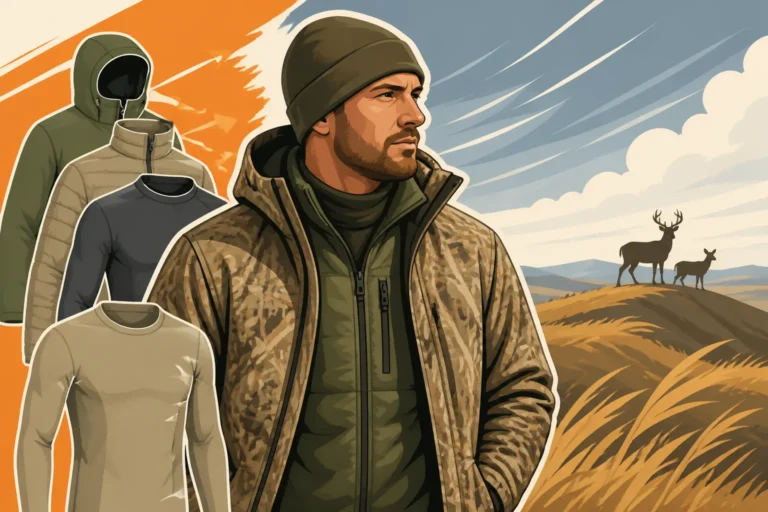
Wind chill on open water can be brutal, even on days when the air temperature seems relatively mild. The combination of wind and cold water spray can rapidly lower your body temperature, leading to hypothermia. This is a very real danger for waterfowl hunters. Proper layering is critical. Wear waterproof and windproof outer layers to protect against the elements. Synthetic base layers and insulating mid-layers will help retain body heat. It's often much colder on the water than it feels on land, so always dress for conditions colder than the forecast suggests.
Beyond clothing, have emergency supplies on hand. A dry bag with extra layers, a thermos of hot coffee or soup, and high-energy snacks can be lifesavers. If you have to abandon your boat, the cold water itself is a critical threat. Always wear a life jacket, even when you don't think you need it; it can literally save your life by keeping you afloat and providing a small amount of insulation if you end up in the water. Understanding Layering for South Dakota Wind is paramount to staying warm and safe. Be mindful of the dangers of Hypothermia Risk on Open Prairie — the same principles apply, but are magnified, on open water.
| Wind Speed (MPH) | Water Conditions | Decoy Spread Impact | Safety Considerations (Boat & Hunter) |
|---|---|---|---|
| 0-5 | Calm to light ripple | Minimal movement, requires motion decoys for realism. | Generally safe, easy navigation. |
| 6-15 | Moderate chop, small waves | Good natural movement, ideal for most spreads. | Manageable, but stay alert for changes. |
| 16-25 | Whitecaps, noticeable waves | Excellent movement, but decoys can tangle/flip. Heavy anchors advised. | Choppy navigation, wet ride. Secure gear, wear life jacket. |
| 26-35 | Large waves, rough water | Decoys can disappear in troughs, very prone to tangling/drifting. | Dangerous boating conditions. Consider staying home or seeking sheltered areas. |
| 35+ | Severe, breaking waves | Nearly impossible to maintain a realistic spread. | Extremely hazardous. Absolutely do not go on big water. |
Ultimately, success and safety on South Dakota's big waters hinge on your ability to not just acknowledge the wind, but to anticipate, interpret, and work with it. By mastering these principles, you'll find yourself not only more effective in calling in those wary birds but also enjoying a safer and more confident hunting experience, no matter what the prairie wind throws your way. Always check local regulations regarding Missouri River Reservoir Shoreline Hunting or any other specific area you plan to hunt to ensure you are legally prepared.
Disclaimer
Please note: Hunting involves inherent risks. This guide provides general information and best practices. Always prioritize safety, adhere to all local, state, and federal hunting regulations, and be prepared for rapidly changing weather conditions. Consult with local authorities for specific regulations and safety recommendations.