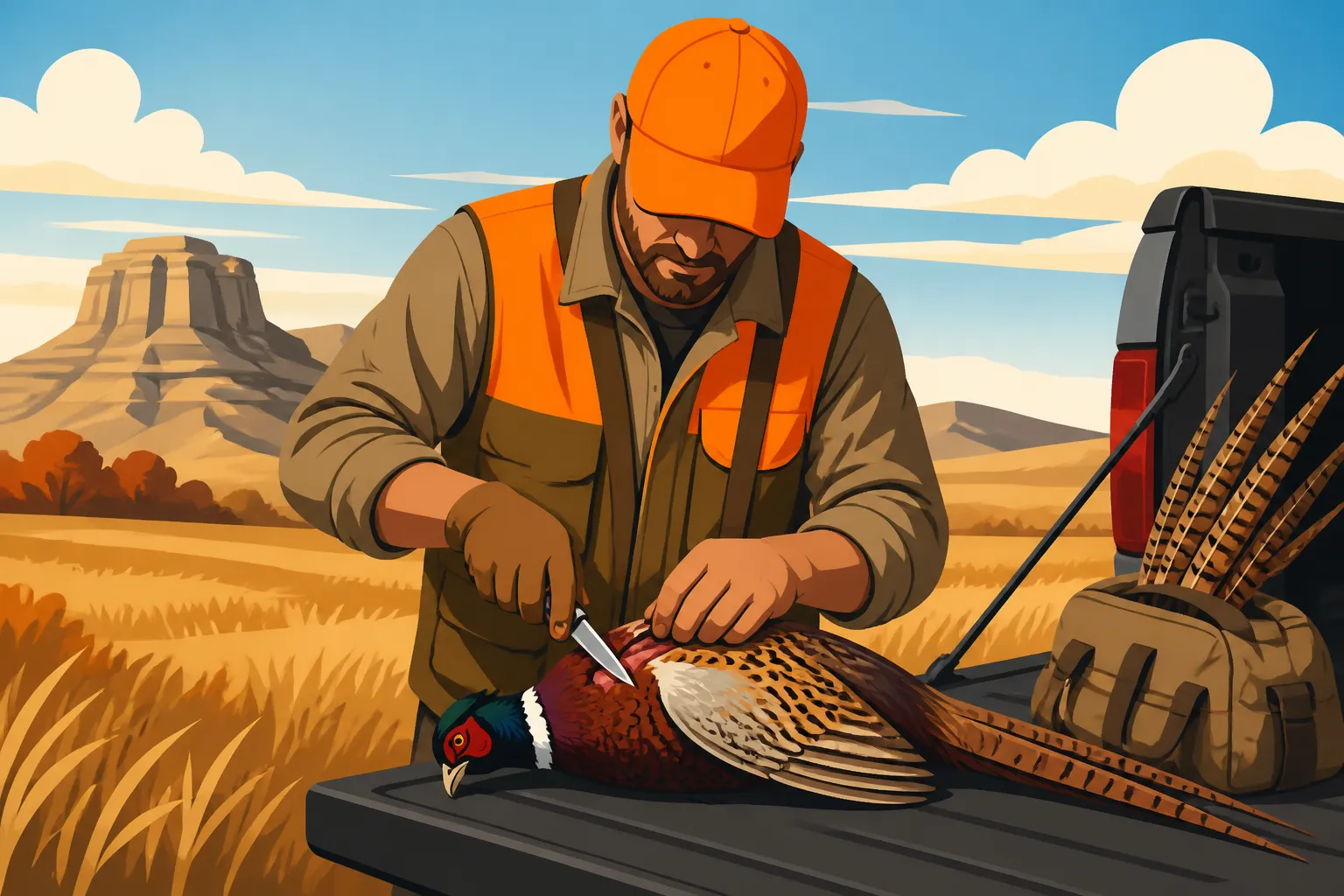
Cleaning Pheasants in the Field
You’ve just worked hard, your dog made an incredible retrieve, and now you’re standing over a beautiful South Dakota rooster. The adrenaline is still pumping, but then the practical questions hit: Now what? Do you just toss it in the game vest, or is there a better way to ensure that prime pheasant meat makes it to your dinner table in the best possible condition? Cleaning pheasants in the field is a skill every hunter should master, transforming a potential chore into a crucial step for meat quality and hassle-free transport. This guide will walk you through the why and how of field cleaning, ensuring your hard-earned birds are treated right from the moment they hit the ground.
Why Field Cleaning Your Pheasants is a Game Changer
Let's be honest, after a long walk through a South Dakota cattail slough or a CRP field, the last thing many hunters want to do is more work. It's tempting to just tuck that rooster into the game bag and keep moving. However, ignoring the initial field cleaning step can significantly compromise the quality of your pheasant meat, making all that effort less rewarding in the long run. There are several compelling reasons why taking a few extra minutes in the field pays dividends.
Beating the Heat and Preserving Quality
South Dakota's pheasant opener can sometimes be surprisingly warm, even in late October. Those internal organs, particularly in larger birds like pheasants, retain a lot of body heat. When a bird is simply tossed into a game bag or cooler without being gutted, that heat becomes trapped. This warm, moist environment is a breeding ground for bacteria, leading to rapid meat degradation and that "gamey" flavor that many folks mistakenly attribute to wild birds themselves. It's the same principle we discuss when talking about Why Antelope Meat Gets a Bad Name – improper cooling quickly ruins otherwise delicious wild game.
By quickly removing the entrails, you allow the body cavity to cool down much faster. This crucial step immediately halts bacterial growth and significantly extends the freshness of the meat. Imagine harvesting a pheasant in a sunny field near Chamberlain on a 60-degree day. If left uncleaned, that bird will start to spoil within hours. A quick gutting, however, gives you precious extra time, ensuring the meat remains pristine until you can get it properly refrigerated or frozen. It’s an investment in flavor and food safety that takes mere moments but makes a world of difference.
Reducing Weight and Making Transport Easier
Let's face it, a limit of three pheasants, especially big, mature roosters, can add a surprising amount of weight to your vest, particularly if you're deep into a massive Walk-In Area (WIA) or a remote corner of a Game Production Area. Each bird carries its full complement of internal organs, often a crop full of corn or other grains, and sometimes even mud or dirt clinging to its feathers. All of this adds unnecessary bulk.
By field cleaning, you immediately shed a significant portion of that weight. Removing the guts, and often the head, feet, and even the main body feathers if you're just taking the breast, can lighten your load considerably. This is a practical benefit that becomes incredibly apparent after a strenuous push through heavy cover, or if you're following our advice for Walking and Blocking South Dakota Cattail Sloughs where every ounce counts. Just like quartering a deer to make it easier to pack out of a tough spot, akin to Getting a Deer Out of a South Dakota Coulee, field cleaning your pheasants makes the trek back to the truck far less arduous. It's about working smarter, not harder, especially when you've got a South Dakota Pheasant Daily Bag Limit to carry.
Cleaner Coolers and Less Mess Back at Camp
Think about the alternative: stuffing an uncleaned pheasant into a plastic bag, then into your cooler, perhaps with other birds, and then driving for hours. The inevitable result is often a leaky bag, blood, and gut matter mixing with ice water, creating a sticky, unsanitary mess in your cooler. This not only contaminates any other food or drinks you might have but also makes for a truly unpleasant cleanup job once you get back to your lodging or home.
Field cleaning eliminates this problem almost entirely. By removing the entrails at the source, you leave the mess where it belongs – in the field, properly disposed of to return to nature. The cleaned bird, whether breasted out or gutted whole, is far less likely to leak or contaminate its surroundings. This means your cooler stays clean, your other items remain untainted, and your post-hunt cleanup is drastically simplified. Instead of scrubbing out a bloody cooler, you can focus on processing your birds further or relaxing after a successful hunt. It’s a small courtesy to yourself and anyone sharing your cooler or vehicle.
Two Primary Methods for Field Cleaning Pheasants
When it comes to field cleaning, hunters typically employ one of two main techniques, each with its own advantages and ideal scenarios. Your choice often depends on how much meat you want to keep, the prevailing weather conditions, and how quickly you need to process the bird. Both methods are effective for preserving meat quality, but they offer different levels of convenience and final product.
The "Breast Out" Method: Quick and Easy
This method is arguably the most popular for pheasant hunters who prioritize speed, ease, and minimal mess. It involves removing only the breast meat, leaving the rest of the carcass behind in the field. This is particularly useful on warmer days, for long walks, or when you simply prefer the prime breast meat for cooking.
Here's a step-by-step guide:
- Position the Bird: Lay the pheasant on its back. If you have a clean surface like a tailgate or a sturdy log, great. Otherwise, a patch of clean grass works just fine.
- Locate the Keel Bone: Feel for the prominent breastbone (keel bone) that runs down the center of the bird's chest.
- Make the Initial Cut: With a sharp knife (a small, pointy blade works best), make a shallow incision through the skin along one side of the keel bone, from where the breast begins near the neck down to where it ends. Do not cut deep initially; just through the skin.
- Peel Back the Skin: Using your fingers, carefully peel the skin away from the breast meat on one side of your cut. You'll notice the skin is quite tough and sometimes adheres firmly to the meat.
- Separate the Breast Meat: Once the skin is peeled back, angle your knife blade against the keel bone. Make a firm cut downward, following the contour of the bone. As you cut, gently pull the meat away from the bone with your free hand. Continue cutting along the rib cage, keeping the blade close to the bone, until the entire breast half separates. Repeat on the other side.
- Remove Any Remaining Feathers or Shot: Once both breast halves are removed, inspect them for any stray feathers, bits of skin, or lead shot. Wipe clean with a paper towel if necessary.
Pros of the "Breast Out" Method:
- Speed: It's incredibly fast once you get the hang of it, often taking less than a minute per bird.
- Lightweight: You only carry the dense breast meat, significantly reducing the weight in your vest or cooler.
- Cleanliness: Minimal mess, as the bulk of the guts and feathers are left in the field.
- Cooling: Breast meat cools rapidly, ideal for warm hunting days.
Cons of the "Breast Out" Method:
- Wasted Meat: You lose the legs, thighs, and wings, which, while not as meaty as the breast, are still perfectly good for certain recipes like pheasant stew or stock.
- Less Versatile: You're limited to breast-only recipes.
This method is fantastic if you're processing many birds quickly or if you're on a multi-day hunt and primarily focused on getting the best cuts to the table with minimal fuss. It's often the preferred choice when considering Breasting Versus Plucking Birds for efficiency.
The "Gut and Go" Method: Whole Bird Preservation
For hunters who want to utilize every edible part of the pheasant, or for those who plan on having a bird mounted by a taxidermist, the "gut and go" method is the way to go. This involves removing the internal organs while keeping the bird intact, feathers and all.
Here's how to properly gut a pheasant in the field:
- Position the Bird: Lay the pheasant on its back. This allows for easier access to the abdominal cavity.
- Locate the Vent: Identify the bird's vent (anus) at the base of the tail.
- Make an Incision: Using a sharp, small knife, make a shallow cut through the skin from the vent up towards the keel bone, for about 2-3 inches. Be very careful not to cut deeply into the intestines, as this can release unpleasant contents and contaminate the meat. Just pierce the skin and the thin muscle layer.
- Insert Fingers and Open Cavity: Carefully insert two fingers into the incision. Spread them apart slightly to widen the opening. You might need to make a slightly larger cut with your knife to give yourself enough room, but always err on the side of caution to avoid rupturing organs.
- Reach In and Remove Organs: Reach into the cavity and sweep your fingers around to detach the internal organs. Pull the entire mass of guts – intestines, liver, heart, gizzard, lungs – out in one go if possible. The gizzard and liver are often considered edible, so you might want to separate and save them. The lungs are often attached high up in the rib cage and may require a bit more effort to scrape out.
- Sever the Windpipe/Esophagus: Reach up into the chest cavity towards the neck and find the windpipe and esophagus. Sever these as high up as you can to ensure all internal connections are broken.
- Clean the Cavity: Once the organs are removed, inspect the cavity for any remaining bits. If you have water available, you can quickly rinse it out, but often a good wipe with a paper towel or a handful of clean grass is sufficient to remove blood and debris. Ensure all parts of the crop are also removed from the neck area.
Pros of the "Gut and Go" Method:
- Maximum Meat Yield: You retain the legs, thighs, and wings, offering more meat for cooking.
- Taxidermy Friendly: Essential if you plan to get a trophy rooster mounted, as the skin and feathers remain intact.
- Traditional Approach: Some hunters simply prefer to process whole birds.
Cons of the "Gut and Go" Method:
- More Messy: This method involves more blood and visceral material, requiring a bit more care with cleanup.
- Heavier Transport: You still carry the full weight of the bones, feathers, and head.
- Slower Cooling: The bird, with its full feather coat, will cool slower than a breasted-out bird. You'll need to get it into a cooler quickly, especially if you want to protect the skin and feathers.
Regardless of your chosen method, ensuring you properly dispose of the remains in the field, scattering them widely to be consumed by scavengers, is a crucial part of ethical hunting practice in South Dakota.
| Feature | "Breast Out" Method | "Gut and Go" Method |
|---|---|---|
| Speed | Very fast (1-2 minutes per bird) | Moderate (3-5 minutes per bird) |
| Meat Yield | Breasts only (approx. 50% of edible meat) | Whole bird (breasts, legs, thighs, wings) |
| Weight | Significantly reduced | Reduced (guts removed, but feathers/bones remain) |
| Cleanliness | Minimal mess, contained in the field | More potential for mess, but still field-contained |
| Cooling Rate | Very fast, ideal for warm weather | Slower, due to feathers and full carcass |
| Taxidermy | Not suitable | Ideal for full body mounts |
| Cooking Versatility | Limited to breast-centric recipes | Wide range of recipes for all parts |
| Effort | Low physical effort | Moderate physical effort |
| Ideal For | Warm days, long walks, high bird volume, quick meals | Cooler weather, trophy birds, full utilization of meat |
Essential Gear and Best Practices for Field Cleaning
Having the right tools and knowing a few key best practices can make the difference between a quick, clean field dressing job and a frustrating, messy ordeal. Being prepared means you can efficiently process your birds and maintain the highest standards of hygiene and meat preservation. This is as important as having the right Rifle Setup for South Dakota Open Country for big game, just on a smaller scale.
Tools of the Trade
You don't need a massive kit to field clean pheasants, but a few essential items will make the process much smoother:
- Sharp Knife: This is non-negotiable. A small, fixed-blade knife with a blade around 3-4 inches is ideal. Something like a Havalon Piranta or a Gerber Vital can be excellent, as they are incredibly sharp and easy to control. A dull knife is not only inefficient but also dangerous. Always use extreme caution. If you're using a multi-tool, make sure its blade is sharp. I've seen guides carry basic but reliable fixed blades that can handle everything from pheasants to emergency tasks. GoHunt's Gear Shop often features compact and effective field dressing knives that would be perfect for this kind of work, designed for quick, clean cuts.
- Disposable Gloves: A pair of latex or nitrile gloves protects your hands from blood and potential bacteria, making cleanup much easier. Keep a few pairs in your vest or truck.
- Game Bags or Zip-Top Bags: Once cleaned, the meat needs to be protected. Breathable game bags allow for air circulation, which helps with cooling, especially for whole birds. For breasted-out meat, heavy-duty zip-top bags work well. Avoid thin plastic grocery bags, as they can easily tear and are not food-safe for raw meat.
- Paper Towels or Clean Cloth: Useful for wiping blades, hands, and the bird's cavity clean.
- Water Bottle: A small bottle of water is invaluable for rinsing hands or a knife blade, especially if you're out in the field for a while.
- Tagging Supplies: Don't forget your hunting license and tags. South Dakota requires birds to be tagged or identifiable, especially when transporting them.
Before you even step into the field for South Dakota Pheasant Hunting Tactics for the Opener, make sure these items are readily accessible in your vest or pack. A well-stocked First Aid Kit for a Prairie Hunt is also wise, just in case of any accidental nicks or cuts.
Hygiene and Meat Care in the Field
Maintaining cleanliness is paramount to prevent bacterial contamination and ensure delicious table fare.
- Clean Hands and Tools: Always start with clean hands and a clean knife. If you don't have gloves, wash your hands with soap and water (if available) or use hand sanitizer before and after handling birds.
- Avoid Contamination: Try to keep the meat from touching dirt, mud, or uncleaned feathers as much as possible. If a piece of meat does get dirty, trim off the affected part.
- Cooling is Key: After cleaning, the absolute most important step is rapid cooling. If you're breasting birds out, place the breasts in game bags and then directly into a cooler with ice. For whole birds, try to get them into a cooler as quickly as possible. Ensure air can circulate around the birds, which means not packing them tightly. If it’s a warm day, consider immediately putting them on ice. This advice aligns with the general principles for Field Dressing in Warm October Weather for big game.
- Blood Drainage: For whole birds, allowing the cavity to drain thoroughly after gutting is beneficial. You can prop the bird up by its legs for a minute or two to let any remaining blood drain out.
- Wipe Cavity Clean: Use paper towels to wipe the cavity of a gutted bird clean of any blood or debris. Do not rinse with water unless you can completely dry the cavity afterwards, as moisture can promote bacterial growth if not properly dried.
Legal Considerations and Ethical Disposal
Responsible hunting extends beyond the harvest to how you handle the remains in the field. South Dakota has regulations to ensure ethical and respectful practices.
- Carcass Disposal: Generally, in South Dakota, it is legal to dispose of game carcasses by scattering them widely in the field where the animal was taken, allowing them to decompose naturally or be consumed by scavengers. Avoid piling carcasses in one spot or leaving them in highly visible areas. Never dispose of carcasses near roads, trails, or waterways, or on private land without explicit permission.
- Tagging Requirements: South Dakota requires you to retain a fully feathered wing or the head of a pheasant for identification purposes while transporting. This allows game wardens to identify the species and determine if the bird is a rooster. Make sure you understand and comply with these rules. Once at your residence or processor, this requirement often relaxes, but always confirm the current regulations as they can change. This falls under the broader rules of Tagging and Transporting Birds Legally.
- Leave No Trace: Always strive to leave the field as you found it, or even better. Pack out all your trash, including gloves, paper towels, and any plastic bags. Ethical hunters are stewards of the land, and leaving a clean field is a sign of respect for both the environment and other users.
Common Challenges and Troubleshooting
Even with the best intentions and preparation, field cleaning can sometimes present unexpected hurdles. Knowing how to troubleshoot these common challenges will ensure you can still process your birds effectively, no matter what the prairie throws your way.
Dealing with Difficult Birds or Shot Damage
Sometimes, a pheasant won't be perfectly pristine when you retrieve it. Maybe it took a bit too much shot, or perhaps it fell in a less-than-ideal spot.
- Extensive Shot Damage: If a bird has taken a lot of shot, especially to the breast, your primary goal is to salvage as much clean meat as possible. Don't be afraid to trim away heavily damaged or blood-shot areas. This might mean the breast-out method becomes a necessity, even if you initially planned to keep the whole bird. Cut around the damaged sections, focusing on the untainted muscle. For heavily damaged legs or thighs, it might be best to discard them. The goal is wholesome, edible meat, not just any meat.
- Impact Injuries: A bird that hits the ground hard, or is caught by a dog in a rough retrieve, might have internal bruising or even ruptured organs. If an intestine is ruptured and contaminates the body cavity with waste, act quickly. Remove all internal organs and then thoroughly wipe out the cavity with paper towels. A light rinse with water and immediate drying, if possible, can help, but aggressive rinsing without drying can make things worse. Trim any meat that has come into direct contact with fecal matter.
- Mud or Debris: If a bird falls into mud or water, or is heavily soiled, focus on cleaning the exterior before you start cutting. Wipe off as much mud and debris as you can with paper towels or clean grass. This prevents external contaminants from entering the meat when you make your cuts. Remember, a good pair of Boots for Walking Cattails All Day can keep you cleaner, but the birds don't always have that luxury!
Field Cleaning in Adverse Conditions
South Dakota weather can be unpredictable. You might start your hunt in a pleasant autumn breeze and end it in a biting wind or unexpected rain.
- Cold or Windy Weather: In cold conditions, cooling isn't as much of an issue, but working with cold hands can be difficult. Wear thin, sensitive gloves (like surgical gloves) inside your regular hunting gloves if possible, or use hand warmers. The wind can also blow feathers and debris around, making it challenging to keep your work area clean. Try to find a sheltered spot, perhaps behind your vehicle or a thick stand of cover.
- Wet Weather: Cleaning birds in the rain or after a heavy dew can be messy. The feathers stick, and everything gets slick. If possible, find a spot under a tree or your vehicle's tailgate for some cover. Be extra diligent about wiping the bird's cavity dry if you're gutting it, as excess moisture can promote bacterial growth during transport. If you must rinse with water, ensure you have plenty of paper towels to dry the cavity as much as possible afterward.
- Lack of Tools: What if you forgot your knife or gloves? Improvise. A sharp rock can sometimes work in an absolute pinch, though it's not ideal. If you're with a hunting buddy, ask to borrow their knife. For gloves, thoroughly wash your hands with hand sanitizer or soap and water (if available) before and after, or use a plastic bag as a makeshift glove. The most important thing is to get the bird gutted quickly, even if it's not the cleanest job.
Transporting and Storing Field-Cleaned Birds
Once you've done the work in the field, proper transport and temporary storage are crucial for getting that pheasant from the prairie to your plate.
- Cooler Management: Always use a well-insulated cooler with plenty of ice. For breasted-out birds, place the meat directly on ice, ensuring it's not submerged in meltwater. For whole, gutted birds, it's often best to place them in game bags or a heavy-duty zip-top bag first, then surround them with ice. This keeps the feathers from getting wet and facilitates easier cleanup later. If you're on a multi-day trip, draining the meltwater and replenishing ice regularly is critical for Keeping Birds Cool in a Warm Truck or camp.
- Game Bags for Airflow: Even if using a cooler, breathable game bags for whole birds help protect the skin and feathers while allowing for some air circulation. This prevents the "swampy" feeling that can occur when birds are sealed in non-breathable plastic for too long.
- Temporary Storage: If you're staying at a lodge or motel, get your birds into refrigeration as soon as possible. Many lodges have dedicated bird cleaning stations and commercial refrigerators for hunters. If not, your cooler with ice is your best bet until you can get home or to a processor. Do not leave birds in a warm vehicle overnight.
- Processing at Home: Once home, you'll need to decide on final processing. Will you pluck the whole bird, or proceed with further butchering? Remember to consult guides on Breasting Versus Plucking Birds for the next steps. Whether you choose to pluck the skin for a crispy roast or simply cut the meat off the bone for various recipes, the effort you put into field cleaning will ensure a higher quality starting product.
Disclaimer
The information provided in this guide is for general informational purposes only and does not constitute legal advice. Hunting regulations, including those pertaining to field dressing, tagging, and transport, are subject to change. It is the responsibility of every hunter to familiarize themselves with and adhere to all current South Dakota Game, Fish and Parks regulations before and during their hunt. Always prioritize safety, ethics, and responsible land stewardship.