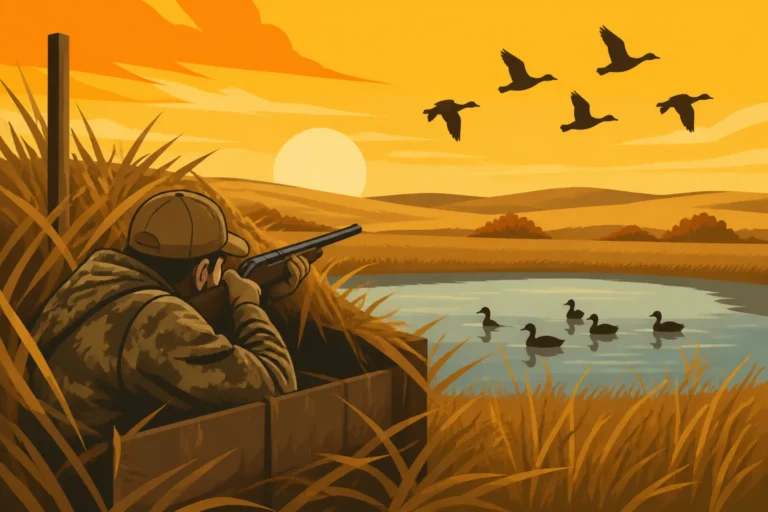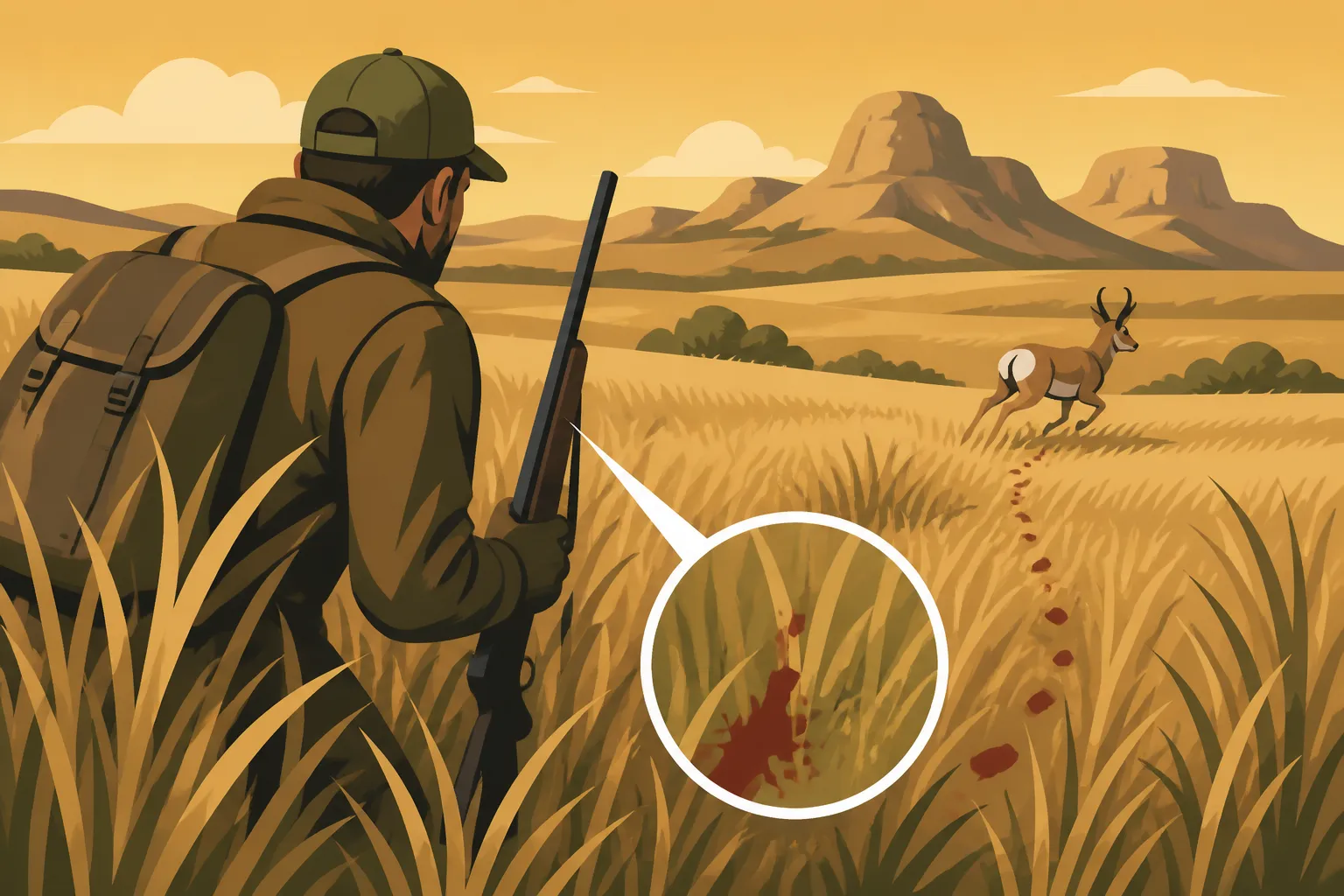
Following Up a Marginal Shot in Grass
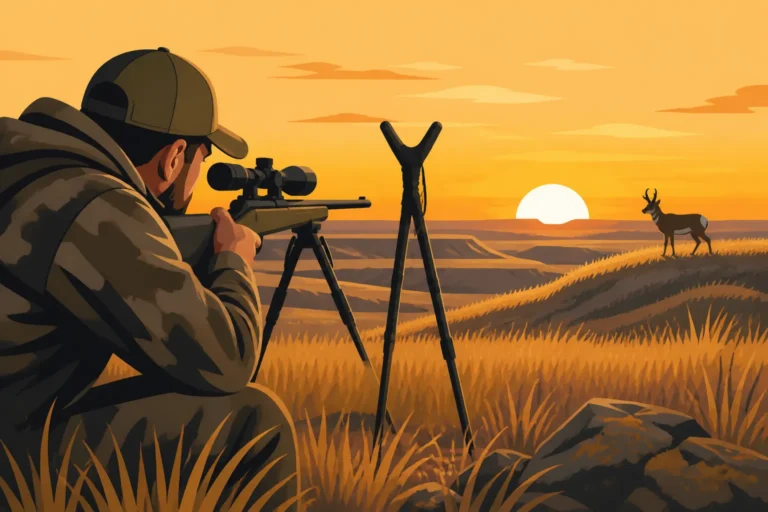
Nothing sours a hunt faster than a shot you know wasn't perfect, especially when that deer or antelope vanishes into tall South Dakota prairie grass or thick cattail sloughs. The gut-wrenching feeling of uncertainty, the self-doubt, and the sheer vastness of the landscape can make finding that animal feel like an impossible task. This guide is all about giving you the practical steps and mental fortitude needed to meticulously follow up a marginal shot, maximizing your chances of recovery even in the most challenging conditions our prairie state can throw at you.
The Critical Pause: Immediate Actions After a Questionable Shot
The first few minutes after a shot that doesn't feel quite right are absolutely crucial, but often filled with a potent mix of adrenaline, regret, and uncertainty. It's so easy to jump up and immediately rush to where you last saw the animal, but that's precisely the wrong move. Giving in to that impulse can push a marginally hit animal further, making recovery significantly harder. The key here is patience and discipline.
Marking the Spot and Observing the Escape
As soon as you pull the trigger on a shot that felt off, your very first action, even before lowering your rifle or shotgun, should be to memorize and mark the exact spot where the animal was standing when hit, and the precise direction it fled. Pick out a specific tree, a rock, a fence post, or even a distinct clump of grass in the background. Don't just pick a general area; focus on a landmark you can walk directly to. Then, immediately choose a second, highly visible landmark in the direction the animal ran. This gives you a clear line of flight to begin your search.
If you have a partner, assign one person to focus solely on the animal's reaction and escape route, while the other marks the shot location. Pay attention to any sounds – a crash, a stumble, or the absence of sound, which can sometimes be more telling. Even if you only get a fleeting glimpse, note how the animal carried its head, whether it bucked, stumbled, or simply ran off at an easy pace. These small details can offer vital clues later. Tools like the onX Layers for South Dakota Land Status on a phone can be incredibly helpful here, allowing you to drop a precise pin on the last known spot and the direction of travel, creating a digital breadcrumb trail before you even move.
The Indispensable Waiting Game
This is arguably the hardest part of dealing with a marginal shot: doing absolutely nothing. If you suspect a gut shot, a liver hit, or even a shoulder hit that didn't immediately drop the animal, rushing in is a recipe for disaster. A wounded animal, given time and peace, will often bed down nearby. If pressured, it will continue to run, sometimes for miles, making tracking a nightmare or even impossible.
How long you wait depends on your best guess of the hit location, which we'll cover in the next section. For anything less than a solid lung or heart shot, a wait of at least two to four hours is often recommended. For a suspected gut shot, you might need to wait six to ten hours, or even overnight if conditions allow and temperatures are cool enough to prevent spoilage. I know, it feels like an eternity when your heart is pounding, but this patience is what separates successful recoveries from lost game. Use this time to calm down, rehydrate, and re-evaluate the situation with a clearer head. You can also use this period to review your equipment, ensure your First Aid Kit for a Prairie Hunt is ready, and prepare for a potentially long, arduous track.
Interpreting the Signs: Understanding What a Marginal Hit Means
Once the initial adrenaline subsides and you've waited the appropriate time, it's time to become a detective. Understanding what a marginal hit truly entails and what signs to look for is paramount. Every clue, no matter how small, adds to the puzzle.
Decoding Body Language and Initial Blood Sign
The way an animal reacts to the shot can tell you a lot. A deer that kicks its hind legs high often indicates a leg or muscle hit. A tucked tail and humped back, running off slowly, could point to a gut shot. A deer that runs with its head down, or weaves erratically, might have a jaw or neck injury. An antelope that takes off at full speed but doesn't show the characteristic "death run" sprint of a solid hit could have a marginal lung or paunch hit.
When you approach the shot site, look for blood, hair, bone fragments, or even stomach contents.
- Blood color and consistency:
- Bright red, frothy blood with bubbles usually indicates a lung hit – a good sign!
- Dark red blood, often with a grayish or brownish tinge, and possibly mixed with digested food or stomach contents, points to a gut shot. This requires a much longer wait.
- Dark red blood that is thick and doesn't clot quickly can signify a muscle hit.
- Thin, watery blood might suggest a flesh wound.
- Hair: Short, dark hair usually comes from the back or upper leg. Long, coarse hair is common from the brisket or belly. White hair, especially if plentiful, might indicate a low chest or brisket hit. The angle of the cut on the hair can also tell you the shot angle.
- Bone fragments: If you find small, white bone shards, it likely means a hit to a leg or rib. Larger fragments indicate a heavier bone hit, potentially causing more trauma but also possibly leading to the animal moving further if not vital.
Gathering all these initial clues at the point of impact is critical before you start to track. Take photos if it helps you remember details, and plot these points on your GoHunt app or other mapping software. This initial assessment, even if disheartening, provides the framework for your entire recovery effort.
Common Marginal Hit Scenarios and Expected Outcomes
Let's face it, not every shot is perfect. Understanding the likely outcomes of different marginal hits can guide your tracking strategy and help manage expectations.
| Hit Location | Blood Sign | Animal Reaction | Recommended Wait Time | Recovery Probability |
|---|---|---|---|---|
| Gut/Paunch | Dark, brownish, often with stomach contents | Humped back, slow walk, tucked tail, might bed quickly | 6-12+ hours, often overnight | Moderate to High |
| Liver | Dark, thick, sometimes gelatinous | Staggering, hunched, may bed quickly | 4-8 hours | High |
| Leg/Muscle | Bright to dark red, consistent, often high up | Limping, sometimes favoring a limb, can travel far | 2-4 hours | High (if persistent) |
| Spine (non-kill) | Bright red, often sprays | Immediately drops then may recover and run | Immediately approach | Variable |
| Brisket/Front Leg | Light blood, sometimes frothy if lungs nicked | Stumbling, can travel far, often survives | 2-4 hours | Low to Moderate |
A liver shot is often fatal, but it takes time. The animal will bleed out internally but can travel a fair distance initially. A gut shot is also usually fatal, but it’s a slow death, and the animal must be left undisturbed for many hours. Rushing a gut-shot animal guarantees a much longer, more difficult track. A leg or muscle hit might not be fatal but can cripple the animal. In these cases, consistent tracking is necessary to either dispatch the animal or confirm it will recover naturally. Knowing what to expect allows you to set realistic expectations and tracking protocols. This information can also inform your decisions if you consider calling in a specialized dog handler, as some dogs are better suited for specific types of trails.
Systematic Tracking in South Dakota's Diverse Cover
South Dakota's landscape is a beautiful beast when it comes to tracking. From the rolling prairie grasslands west of the Missouri River to the dense cattail sloughs and shelterbelts of the east, each environment presents unique challenges. The key to successful recovery in such varied terrain is a systematic approach and unwavering persistence.
Starting the Trail: Nose to the Ground
Begin your track at the precise point of impact you marked earlier. Look for the first drops of blood, disturbed vegetation, or tracks. It's often helpful to have multiple people spaced a few yards apart, slowly walking forward in a line. This way, one person can focus on the ground directly in front of them, while others can scan for blood spatter on higher grass blades or broken branches. As you find each piece of sign, mark it with flagging tape or a piece of toilet paper – anything visible that doesn't damage the environment. This helps you confirm the animal's direction and easily backtrack if you lose the trail.
Remember that blood trails in prairie grass can be incredibly sparse. Wind and rain can quickly erase ground sign, and even a mortally wounded animal might not bleed heavily externally. You'll need to look for broken blades of grass, overturned leaves, scuff marks, or even disturbed spiderwebs. Every ten to fifteen yards, pause and scan ahead for the next sign. Don't push too fast. This isn't a race; it's a meticulous investigation. A good tip is to get down on your hands and knees at times, looking at the ground from the animal's perspective, which can often reveal subtle clues missed from standing height.
Grid Searches and Identifying Hiding Spots
When the blood trail inevitably peters out or disappears into thick cover, it's time for a systematic search. The most effective method is a grid search. Start by establishing a central point where you last saw sign. Then, slowly expand your search in ever-widening circles or squares, walking in parallel lines. For example, you might walk a straight line 50 yards out, turn 90 degrees, walk 20 yards, turn 90 degrees, walk 100 yards, and so on. This methodical approach ensures you cover the ground thoroughly.
In South Dakota, certain types of cover are prime hiding spots for wounded game.
- Cattail sloughs: These dense, often wet areas, are practically impenetrable. A wounded deer or antelope will often seek the thickest cover available, and a cattail slough offers perfect concealment and thermal regulation. If the trail leads to a slough, you'll need to approach with extreme caution, often requiring multiple people to safely push through. For more on navigating this challenging terrain, check out our guide on Pushing a Cattail Slough With Blockers.
- Shelterbelts: These tree rows provide both cover and bedding. Wounded animals might sneak into the thickest part of a shelterbelt, especially if it offers a clear view of any approaching threats while keeping them hidden. Our advice on Working South Dakota Shelterbelts for Roosters, while about birds, offers relevant tactics for methodically moving through these linear patches of cover.
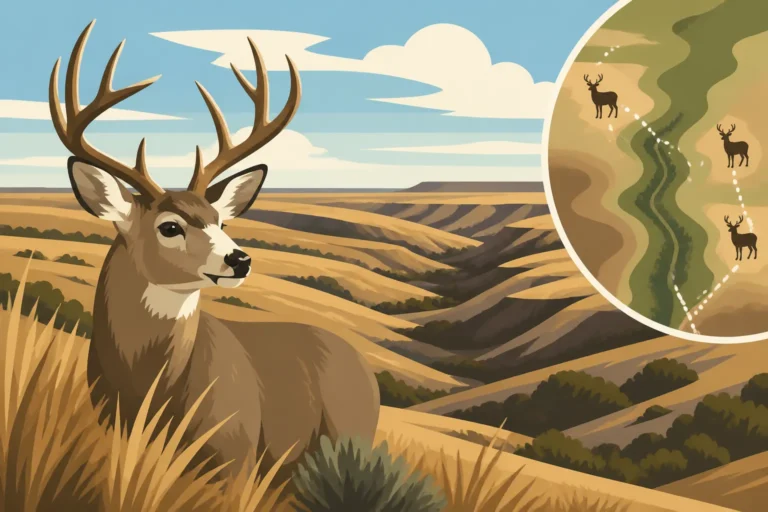
- Prairie coulees: The undulating terrain of West River South Dakota often features numerous coulees and draws. A wounded animal might drop into one of these depressions for concealment. Systematically walking the edges and bottom of these coulees, keeping wind in mind, can be effective. Consider how Reading Prairie Coulees for Mule Deer, even for actively hunting, applies to finding a wounded animal.
- Tall CRP grass: Some of the most frustrating ground to track on, tall Conservation Reserve Program (CRP) grass fields can swallow up even a large deer. This is where a grid search is non-negotiable. You might need to cover every square yard.
Always keep the wind in your favor. If you're tracking an animal that is still alive, approaching from downwind can give you the advantage of surprise, allowing you to get another shot if needed. Remember that a wounded animal, especially a deer or antelope, is still a wild animal and can be unpredictable or even dangerous if cornered.
Beyond the Initial Search: Perseverance and When to Seek Help
Despite your best efforts, sometimes the trail goes cold, or the cover is simply too vast or thick for your small party. This is where perseverance truly comes into play, but also the wisdom to know when to bring in reinforcements or specialized tools. Giving up too soon is a disservice to the animal and yourself.
Utilizing Technology and Expanding the Search
Modern technology can be an invaluable ally in game recovery. Your GoHunt app, for example, isn't just for scouting. As you track, keep dropping pins: "Last blood," "Hair found," "Lost trail here." This visual record helps you understand the animal's travel pattern and focus your re-starts. You can also use it to mark the areas you've already thoroughly searched, preventing redundant efforts. If you have a friend who can stay on a higher vantage point, they might be able to guide you using the map on their phone, like a command center, especially in rolling prairie country.
Sometimes, after a thorough ground search, it's worth taking a break, re-evaluating your strategy, and then expanding your search perimeter significantly. Wounded animals can do incredible things. Don't assume it's still in the immediate vicinity if all signs have vanished. Think about logical escape routes: water sources, the thickest cover nearby, or a fence line it might follow. This also means understanding property lines. Utilizing onX Layers for South Dakota Land Status is crucial to ensure you're not inadvertently trespassing while following a trail.
When to Call for Reinforcements or a Tracking Dog
There's no shame in admitting you need help. In fact, it's often the most ethical choice. If you've exhausted your efforts, the conditions are getting challenging (like approaching darkness or a shift in weather), or you suspect a particularly difficult track (such as a gut shot in a vast CRP field), it's time to call in the cavalry.
- More Hunters: Extra sets of eyes can make all the difference. More people can help establish a more effective grid search pattern or systematically push through dense cover like a large stand of Missouri River timber, as discussed in our guide on Hunting Whitetails in South Dakota's Missouri River Timber. Just ensure everyone understands the search pattern and communicates clearly.
- Tracking Dogs: A well-trained tracking dog, often a Deutsch Drahthaar, Bavarian Mountain Hound, or a bloodhound, can be a game-changer. These dogs are specifically bred and trained to follow blood trails, even those that are hours old or virtually invisible to the human eye. South Dakota has an active community of certified tracking dog handlers. Do a quick search for "South Dakota deer tracking dogs" or "game recovery services" and you'll likely find someone who can help. Make this call sooner rather than later; fresher trails are always easier for dogs to follow.
- Ethical Considerations: If you recover an animal, even after a long, difficult track, the meat is often still salvageable, provided you field dress it quickly. Our guide on Field Dressing in Warm October Weather provides excellent advice for preserving meat quality, especially important after a prolonged search. If, after all efforts, the animal is not found, take solace in knowing you did everything in your power. It's a tough pill to swallow, but it's part of hunting. Learn from the experience, practice your Shot Placement on a Quartering Pronghorn or deer, and strive for that clean, ethical kill next time.
Disclaimer
Hunting involves inherent risks, and conditions in South Dakota can be unpredictable. Always prioritize safety, follow all state hunting regulations, and ensure you have proper training and equipment. The information provided in this guide is for educational purposes only and should not replace professional advice or official regulations.