Antelope Decoy Setups Over Water
Hunting antelope in South Dakota can be an incredibly rewarding experience, but let's be honest, these creatures are notoriously difficult to get close to. Their legendary eyesight, combined with wide-open prairie country, makes a traditional spot-and-stalk approach feel like trying to sneak up on a security camera. This guide will help you master the art of using antelope decoys near water sources, turning their vital need for hydration into your strategic advantage for a successful hunt.
Understanding Antelope Behavior Around Water
Antelope are built for speed and survival on the open plains, and their dependence on water is a critical vulnerability that hunters can exploit. If you understand their routines and preferences, you're already halfway to success.
Why Water Sources Are Critical in Arid Landscapes
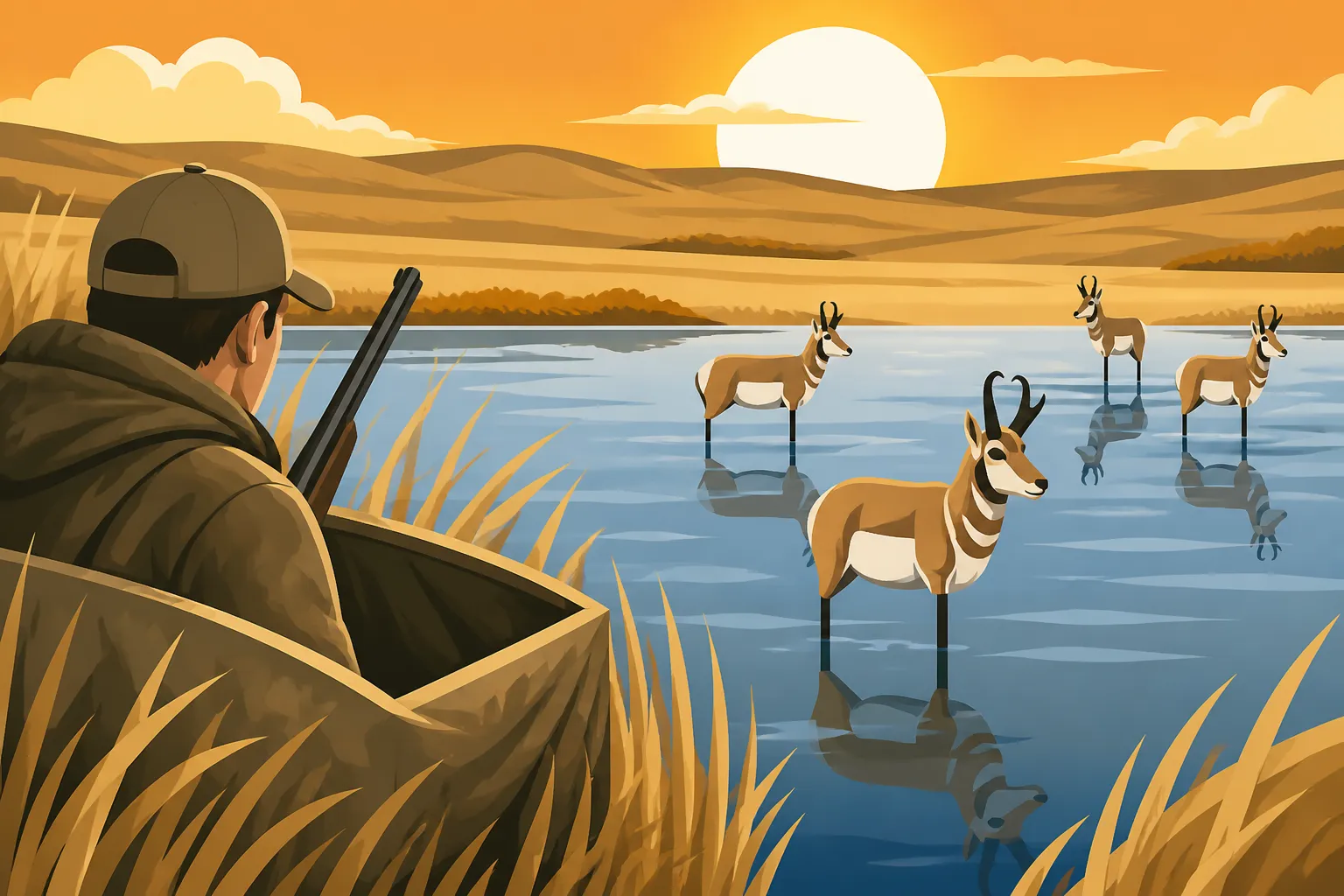
Imagine a scorching South Dakota August or early September day on the West River breaks, where the sun beats down relentlessly and the air shimmers with heat. Antelope, with their high metabolism and constant activity, need water, and they need it often. Unlike deer that might browse on succulent plants for some moisture, pronghorn are primarily grazers and require a regular drink. This makes waterholes, stock ponds, and even temporary puddles after a rain an absolute magnet for them. They simply have to drink, often daily, especially during the hotter parts of the early season.
This critical need means that while a vast prairie might seem overwhelming, water sources become natural choke points, concentrating antelope movement to predictable locations. If you’re scouting, look for well-used trails leading to and from these water points. These aren't just casual visits; these are vital trips for their survival. Knowing this gives you a profound advantage, transforming the challenge of their incredible senses into a manageable, predictable pattern.
Peak Activity Times at Waterholes
While antelope need water, they don't just randomly appear at any time. Their visits are influenced by several factors: temperature, daylight, and hunting pressure. On extremely hot days, especially during the early season, antelope might visit water multiple times, often in the late morning, midday, and late afternoon. As the temperatures cool off slightly, or if there's significant human activity, they might shift their primary visits to the first few hours after sunrise or the last few hours before sunset.
It's also worth noting that unpressured antelope tend to be more relaxed. On public lands or areas with higher hunting pressure, they might become more nocturnal or stick to cover (if any is available) around water sources during daylight hours. However, their biological need still dictates they must drink. Patience is key. Sometimes, the midday lull, when other hunters are back at camp for lunch, is precisely when a thirsty buck will sneak in for a drink. Early morning and late evening will generally offer the highest activity, but don't discount the middle of the day during a heatwave. This is where understanding local patterns becomes crucial, often best gleaned through trail camera use or careful long-range glassing from a hidden vantage point.
Reading the Landscape for Prime Waterholes
Not all water sources are created equal. Some are magnets, others are rarely visited. To find the best ones, you need to think like an antelope and like a seasoned hunter. Look for isolated ponds or stock tanks that are relatively exposed but offer good visibility for an approaching antelope to scan for danger. Water sources that are consistently filled, perhaps fed by a spring or well, are often better than intermittent ones. You can use tools like GoHunt's mapping features to identify potential water sources across vast public land, but nothing beats boots on the ground or good optics for confirming activity.
When scouting, look for fresh tracks, droppings, and signs of rubbed horns on nearby shrubs. Pay attention to "signposts" where antelope might pause before approaching the water, or bedding areas where they might rest nearby after drinking. A good waterhole will often have multiple trails leading to it, worn smooth by generations of thirsty animals. In dry years, identifying those critical, reliable water sources becomes even more important, as highlighted in discussions about Finding Water in Dry West River Country. These are the spots where antelope will concentrate, and where your decoy strategy has the highest chance of success.
Choosing and Preparing Your Antelope Decoy
The decoy is your silent partner, and its effectiveness hinges on realism and smart preparation. It's not just about throwing a plastic antelope out there; it's about making it believable.
Decoy Types and Their Effectiveness
Decoys come in a variety of styles, each with its own advantages and disadvantages.
- Full-body 3D decoys: These are the most realistic but also the bulkiest and heaviest. They offer a lifelike appearance from all angles, which can be crucial for wary antelope. Brands like Montana Decoy offer highly portable 2D and 3D options that fold flat, making them much easier to pack across the prairie.
- Silhouette 2D decoys: Lightweight and easy to carry, these are highly effective when viewed head-on or from the side. However, their flat profile can be a dead giveaway if an antelope circles and gets a look at the edge. They are usually more affordable.
- Buck versus Doe decoys: A buck decoy can challenge a dominant buck, drawing him in aggressively. A doe decoy might attract curious bucks looking for a mate, or does looking for companionship. Sometimes, a pair—one buck and one doe—can create a very natural-looking scenario. A standing buck decoy is often the most aggressive and challenging, drawing in other bucks to confront the "intruder" on their turf or near their water source.
Consider the time of year. During the rut (late September through October), a buck decoy can be very effective, challenging a territorial buck. Early season, a doe decoy or a younger buck might be more universally appealing, simply acting as a "social" draw. Always prioritize a decoy that is lightweight enough to carry comfortably over long distances across the prairie without adding significant bulk, especially when you might be Hunting South Dakota Walk-In Areas far from your vehicle.
Scent Control and Decoy Placement for Success
Even though the primary draw of a decoy is visual, scent control is still paramount. Antelope have an excellent sense of smell, and any unnatural odor can ruin your setup, especially if they circle downwind. Always handle your decoy with clean gloves and store it in a scent-free bag or container. Avoid smoking or strong perfumes on hunting clothes and equipment.
Placement is a game-changer. You want the decoy to be visible but also positioned to draw the antelope into a favorable shooting lane.
- Distance from water: Place the decoy close enough to the water to appear as if it's either just finished drinking, is about to drink, or is guarding the water, but not so close that it interferes with the antelope's approach to the actual water. A distance of 20-40 yards from the blind, positioned between the blind and the likely antelope approach, is often ideal.
- Wind direction: Always set up with the wind in your favor, blowing from the antelope's expected approach towards your blind. This helps carry your scent away from them. The decoy itself should be positioned so that an approaching antelope, as it tries to get downwind of the decoy (which they often do to scent-check), doesn't also get downwind of you. If you're wondering about Wind Direction on a Prairie Stalk, the same principles apply here; you always want the wind in your face or quartering.
- Angle of approach: Position the decoy so that when an antelope approaches and ideally stops to assess it, you get a broadside or slightly quartering-away shot. Avoid directly facing your decoy towards the most likely approach, as this can result in head-on shots, which are difficult and less ethical. A slight quartering angle can be inviting and natural.
Setting Up Your Blind and Decoy for the Approach
The best decoy is useless without a well-hidden blind. Whether you're using a pop-up ground blind or natural cover, concealment is crucial.
- Blind placement: Position your blind downwind of the water source and decoy, ideally against a backdrop that breaks up your outline, like a small rise, a few scattered yucca plants, or a low shelterbelt. Ensure you have clear shooting lanes to the decoy and the water. This also relates to strategies for Blind Hunting a Prairie Waterhole where stealth is key.
- Decoy line of sight: The decoy should be clearly visible from typical antelope travel routes leading to the water. Consider placing it at the edge of the water or just a few yards away, appearing as if it’s casually visiting. A good tactic is to place the decoy where an antelope will see it, but not immediately know it's not real.
- Height and presentation: If using a 2D decoy, make sure it’s standing upright and not leaning. The more natural it looks, the better. Some hunters even add a slight wobble to their decoys with a spring system to simulate movement in the wind, adding another layer of realism.
Remember, the goal is to create a scene that looks utterly natural and inviting to an antelope in need of water, while keeping yourself perfectly concealed and positioned for the shot.
Executing the Decoy Setup Over Water
Once your blind is set and your decoy is in place, the waiting game begins. This is where patience, observation, and quick decision-making come into play.
Anticipating the Antelope's Approach and Reaction
Antelope don't typically march straight to a decoy. Their default reaction to anything new or another antelope is caution, then curiosity, or sometimes aggression.
- Distant observation: Often, an antelope will spot the decoy from a considerable distance. It might stop, stare, and then often begin a wide circle, trying to get downwind to scent-check the "intruder" or fellow drinker. This circling behavior is your cue to remain absolutely still. They use their phenomenal eyesight to analyze the situation, and any movement on your part will blow the jig.
- Cautious approach: If the antelope commits, it might trot closer, often pausing multiple times to assess the decoy. A buck might lower its head, posture, or even begin to stomp its foot, showing aggression. A doe might simply walk in, curious.
- Direct charge or challenge: Less common, but exhilarating, is when a dominant buck might actually charge the decoy, seeing it as a direct challenge to its territory or access to resources. This usually happens during the rut. If this occurs, be ready for a very quick shot opportunity as the animal comes in hot.
Your role is to remain unseen and unmoving, observing their body language carefully. Understand that they are assessing a "rival" or another animal at their water source, and this can evoke a range of responses from wary curiosity to outright confrontation. Being aware of How Close You Can Stalk a Pronghorn can also give you a better sense of their personal space and when they might feel pressured.
Shot Opportunities and Ethical Considerations
When an antelope approaches, the adrenaline will surge. It's crucial to stay calm and wait for the best possible shot.
- Broadside is best: Ideally, you want the antelope to turn broadside or slightly quartering away from your blind, offering a clear shot at the vitals. Resist the urge to shoot a head-on animal, as the target area is much smaller and there's a higher risk of wounding.
- Range and stability: Know your effective shooting range and stick to it. If you’ve practiced Practicing Prone Shots on the Prairie, this setup should feel natural. With a decoy, antelope might stop and stand for a few moments, giving you time to settle your crosshairs. Use shooting sticks or a bipod from your blind to ensure maximum stability. If you're shooting long distances, understanding Reading Wind at Four Hundred Yards becomes critical.
- Patience for the perfect moment: Sometimes an antelope will offer a quick opportunity, sometimes it will stand there for what feels like an eternity. Use that time to breathe, settle your nerves, and confirm your shot placement. If an antelope is still circling, waiting for it to commit and settle down will increase your chances of a clean kill. The discussion on Shot Placement on a Quartering Pronghorn is highly relevant here, ensuring you understand where to aim for a quick, humane harvest.
Troubleshooting Common Decoy Setup Mistakes
Even the best plans can go awry. Knowing common pitfalls can help you avoid them or react effectively.
- Wrong wind: If the wind shifts unexpectedly and blows your scent towards the approaching antelope, they will likely bolt. There's not much you can do in the moment except hope they don't immediately associate your scent with the decoy. This is why having multiple blind locations for different wind directions, or using a very mobile setup, can be beneficial.
- Poor concealment: If the antelope spots movement in your blind or sees your outline, the hunt is over. Be meticulous with your setup. Use brush, netting, and keep a low profile.
- Decoy too far or too close: If the decoy is too far out, the antelope might lose interest or circle too wide for a shot. Too close, and a charging buck might get to it before you can shoot, or they might feel too pressured to approach naturally. Experiment with distances in scouting.
- Lack of realism: A decoy that looks unnatural (too shiny, blown over, poor pose) can also spook game. Ensure it's set up correctly and looks as natural as possible.
- Antelope simply won't commit: Sometimes, despite everything, antelope are just too wary. This might be due to heavy pressure, or perhaps they've seen a decoy before. Don't take it personally. Pack up quietly and try another waterhole or another tactic. Persistence is a hunter's greatest tool.
Advanced Tactics and Considerations
To truly master decoy setups over water, consider these additional layers of strategy.
Combining Decoys with Calling
While decoying over water primarily relies on visual appeal, adding a vocal element can sometimes sweeten the pot, particularly during the rut. Antelope calls, such as a challenge grunt or a doe bleat, can grab the attention of a buck that might be hesitating or circling too wide. If you use a call, use it sparingly and subtly. A soft bleat might pique curiosity, while an aggressive grunt could draw a buck closer to challenge the "other" antelope at the waterhole.
However, be careful not to overdo it. Antelope are naturally wary, and too much calling can sometimes make them suspicious, especially if they can't quite pinpoint the source or if it sounds unnatural. Use calling as a supplement, not a primary tactic, when decoying over water. The visual aspect of the decoy at the waterhole is usually enough to entice them.
The Role of E-Scouting and Scouting on the Ground
Modern hunting has been revolutionized by technology. E-scouting with tools like GoHunt or OnX Hunt is indispensable for finding promising water sources and understanding terrain. You can identify stock ponds, natural depressions that might hold water, and even patterns of cover that funnel antelope towards specific drink spots. This is particularly valuable when you're considering Scouting a South Dakota Unit From Home.
However, e-scouting is only the first step. Ground scouting is crucial to confirm what the maps show. Are those water sources actually holding water? Is there fresh antelope sign? Are there existing trails? Is there adequate cover for your blind? How is the prevailing wind? Walk the area, look for tracks, droppings, and observe from a distance. The more time you spend scouting, the better your chances of selecting the perfect waterhole for your decoy setup. Understanding the South Dakota Pronghorn Population Estimate can help you prioritize areas with higher concentrations of animals to scout.
Post-Shot Strategy and Retrieval
Once you've taken your shot, the work isn't over. Antelope are tough animals, and they can cover ground quickly even when mortally hit.
- Observe the reaction: Pay close attention to how the antelope reacts to the shot. A mule kick, a sudden bolt, or a slow walk all provide clues about shot placement.
- Wait and assess: Unless you see the animal drop within sight, it's wise to wait for 20-30 minutes for a gut shot, or 10-15 minutes for a well-placed lung/heart shot, especially if you’re unsure of the exact hit. This allows the animal to lay down and expire, rather than being pushed further by your immediate pursuit. This applies to following up any shot, as detailed in Following Up a Marginal Shot in Grass.
- Blood trailing: Start your blood trail systematically. Mark the last spot you saw the animal and the spot where it was standing when you shot. Look for blood, broken branches, or disturbed ground. If you're on open prairie, it can be incredibly difficult to find a downed animal, so take your time.
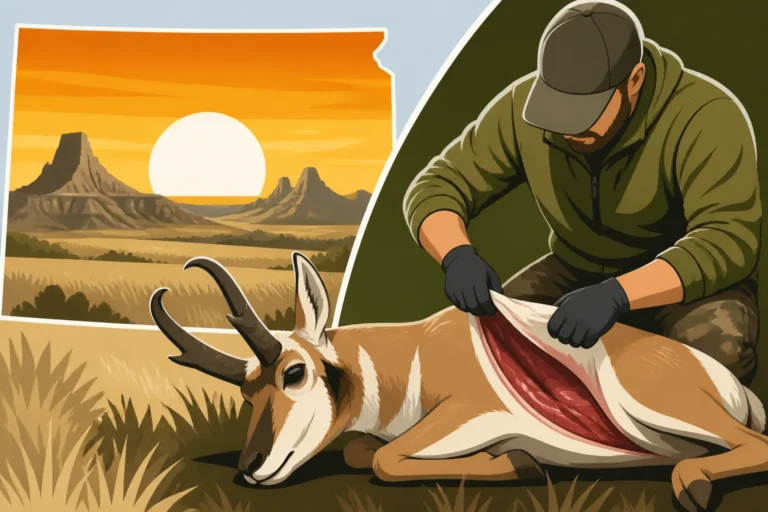
- Field dressing and cooling: Once you find your antelope, field dress it immediately. The arid South Dakota climate can be surprisingly warm, even in early fall, and antelope meat can spoil quickly if not cooled. Get the guts out, allow the body cavity to cool, and consider bringing game bags and ice if temperatures are high. Fast processing will prevent the strong "gamey" taste that sometimes gives antelope meat a bad name, as discussed in Why Antelope Meat Gets a Bad Name. If you need tips on efficient processing, consult Field Dressing an Antelope Fast.
These crucial steps after the shot ensure you recover your game and honor the animal with proper care, maximizing the deliciousness of your hard-earned harvest.
Decoy Type Comparison
To give you a quick overview of the decoy options we discussed, here's a handy comparison table:
| Decoy Type | Pros | Cons | Ideal Scenario |
|---|---|---|---|
| Full-Body 3D | Most realistic, looks good from all angles | Bulky, heavy, more expensive | When maximum realism is paramount, less mobile hunts |
| Silhouette 2D | Lightweight, portable, affordable | Flat profile from certain angles | Mobile hunts, when packing light is essential |
| Buck Decoy | Aggressive posture can draw in rival bucks | Can intimidate smaller bucks, less universal | Primarily during the antelope rut |
| Doe Decoy | Less intimidating, attracts bucks and does | Less aggressive draw for dominant bucks | Early season, general curiosity, or paired with a buck |
| Paired Decoys | Highly natural, can enhance realism | More expensive, two items to carry | Creating a natural social scene at a waterhole |
Disclaimer
Hunting is an inherently dangerous activity. Always prioritize safety, follow all local and state regulations, and obtain proper licenses and permits before venturing into the field. This guide provides information for educational purposes only and should not replace professional instruction or personal experience.