Rattling Volume in Open Country
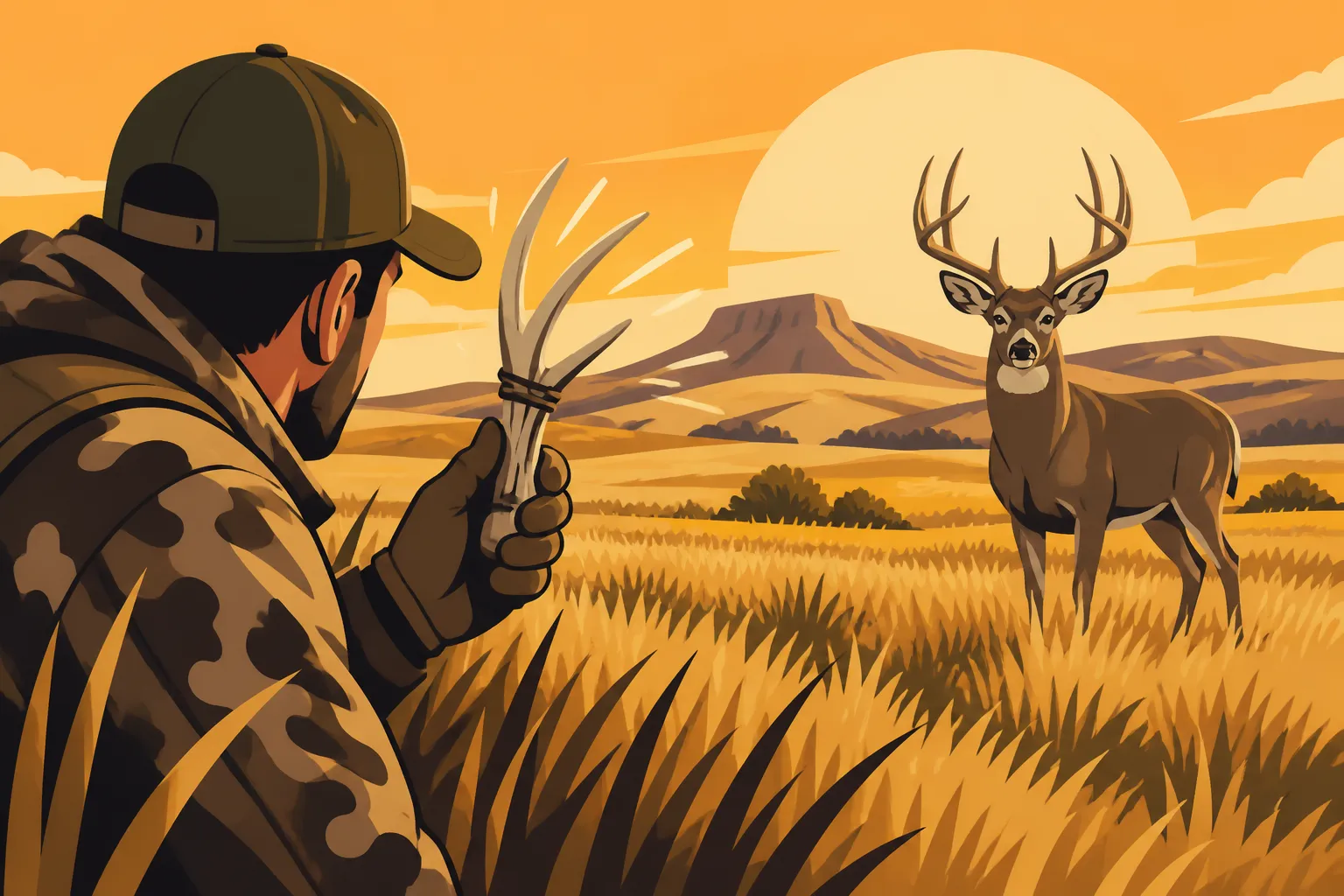
Rattling for deer in the vast, open expanses of South Dakota, whether you're navigating the rolling West River breaks or the more subtle undulations of the East River prairie, can feel like you're shouting into a void. Unlike the dense, sound-trapping timber where every clash echoes and bounces, open country presents unique and often frustrating challenges for gauging just how much volume to put into your rattling sequences. This guide is here to help you truly master the art of projecting your calls effectively without overdoing it or inadvertently sending that trophy buck running for the next county.
The Unique Acoustic Challenges of Open Country
Let's be honest, the prairie isn't built like a concert hall. Sound behaves very differently out here, and understanding those nuances is your first step to becoming a more effective rattler in South Dakota.
Sound Travel and Absorption on the Prairie
One of the biggest misconceptions about rattling in open country is that sound just "disappears." While it's true that you don't get the same echoing effect you'd find in a thick woodlot, sound actually travels further in open, unobstructed environments. The problem isn't necessarily sound dissipation, but rather perception and absorption.
Think about it: in a timber stand, every tree, every brush pile, every undulation in the ground serves as a baffle, bouncing sound waves around and making it seem louder and more omnipresent. Out on the prairie, that direct line of sight means sound travels a long way, but it also means there are fewer things to amplify it or make it seem like it's coming from everywhere. A light breeze, even one you barely feel, can carry your sound away from your target or simply diffuse it so much that it sounds distant and unconvincing to a buck even a few hundred yards away. Tall prairie grasses, sagebrush, and even the dry soil itself can absorb some of that sound, robbing it of its sharp, metallic clashing quality.
This is why, sometimes, you can rattle fairly aggressively and still feel like nothing is happening. It's not that the sound isn't traveling; it's that it might not be carrying the intensity or directionality you intend. The wind, in particular, is an absolute game-changer. A stiff northwest wind can turn your most enthusiastic rattling sequence into a faint whisper for a deer standing just south of you. You've got to learn to listen to the wind not just for scent, but for how it's going to carry your sound.
The Visual Dominance of Wide-Open Spaces
Another critical difference from hunting in timber is that on the prairie, bucks often see you long before they hear you, or at least they can get a visual long before they commit. This is a huge frustration for many hunters. You set up a perfect rattling sequence, you hear a twig snap, and then you catch a glimpse of an antler tip receding over a ridge. What happened? He likely spotted some slight movement, or your silhouette, and decided to investigate from a safe distance, often circling downwind to catch your scent before committing to the sound.
This visual dominance means that even when you're rattling, you need to be thinking about concealment. Rattling from the bottom of a coulee, behind a substantial clump of sagebrush, or nestled into the edge of a shelterbelt is crucial. It's not enough to just make noise; you have to disappear while you're making it. Bucks on the prairie are wired to use their eyes first, then their ears, and finally their nose. You need to respect that instinct. If you're rattling from a prone position, ensure your head isn't silhouetted against the sky. If you're standing, make sure you're broken up by terrain or vegetation. This constant awareness of your profile is just as important as the volume of your rattling when deer are already on high alert, which they usually are in open country.
Deciphering the Ideal Rattling Volume for South Dakota's Plains
So, how loud should you rattle? It's not a one-size-fits-all answer. The "ideal" volume is a dynamic target that changes with every hunting situation.
Factors Influencing How Loud You Rattle
When you're out on the prairie, you need to be constantly assessing a few key factors to dial in your rattling volume. Forget about a preset "loud" or "soft" approach; it's all about adaptation.
- Wind Speed and Direction: This is paramount. If you have a strong, steady breeze, you'll need to increase your volume significantly to ensure the sound carries effectively. However, you also need to consider the direction. If the wind is blowing directly at your target buck, he'll hear you, but he'll also likely smell you if he approaches. Ideally, you want the wind to carry your sound past the buck, enticing him to circle downwind to get a better read on the "fight." This strategy is often employed by hunters in wide-open areas. If you're trying to call a buck that's several hundred yards away across open ground, a light clash might not even reach him, necessitating a louder, more sustained sequence. Conversely, if a buck is already within 100 yards and approaching, a softer, more subtle sparring sound might be all that's needed to seal the deal.
- Terrain Features: South Dakota isn't entirely flat. We have coulees, draws, river bottoms, and shelterbelts. These features act as natural sound corridors or blockers. Rattling in a deep coulee, for example, might allow you to get away with less volume because the sound is channeled. On a wide-open, flat plateau, you'll need more power to cover the distance. Using a tool like GoHunt's detailed satellite maps can help you identify these terrain features before you even step foot in the field, allowing you to plan your rattling locations and anticipate how sound will carry.
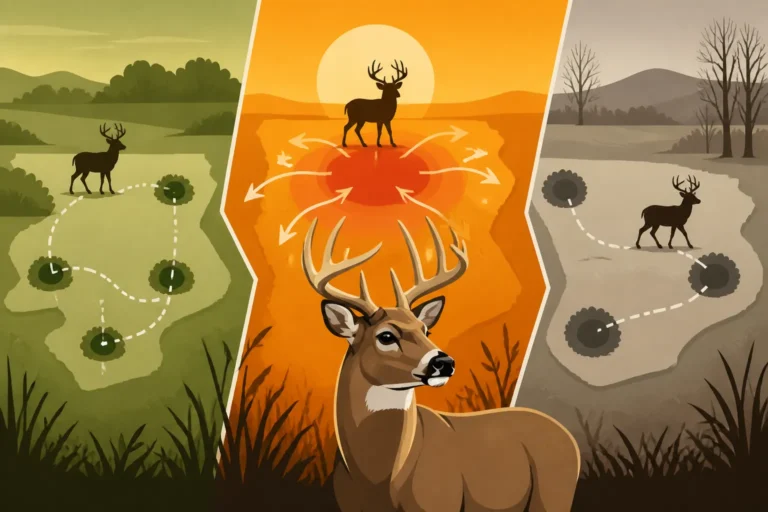
- Time of Day/Rut Phase: During the peak of the rut, bucks are more aggressive, more tolerant of loud clashes, and more willing to investigate. A full-blown, aggressive rattling sequence might be just the ticket. Earlier in the pre-rut, or later when bucks are recovering, a softer, more inquisitive sparring sound might be more appropriate. Early mornings and late evenings are generally when deer are most active and receptive, and therefore when rattling tends to be most effective.
- Hunter Pressure: This is a big one. On highly pressured public land, or areas with a lot of hunting activity, bucks become extremely wary. They've heard it all before, and loud, unnatural sounds will often send them running. In these situations, you need to be much more subtle. Think light tickling of antlers, short bursts of sparring, and extended pauses. You're trying to pique curiosity, not trigger alarm bells. This is especially true on busy Hunting South Dakota Walk-In Areas after the opening weekend.
The Concept of "Subtle Aggression"
This might sound like a contradiction, but it's really the core principle of effective rattling in open country. It's not about constantly smashing antlers together at max volume. Instead, it's about mimicking the ebb and flow of a real fight – which rarely involves non-stop, ear-splitting clashes.
A real buck fight has moments of intense, aggressive crashing, but also periods of pushing, shoving, and subtle antler tickling, followed by brief pauses where both bucks might be sizing each other up or catching their breath. Your rattling sequence should reflect this.
Start with lighter sparring, almost a gentle tickling of the antlers, as if two smaller bucks are testing each other. Then, gradually increase the intensity, bringing in more aggressive clashing, scraping the antlers on the ground, and even a little light foot stomping to simulate the thrashing of brush. Build to a crescendo of aggressive clashing, then slowly taper it back down to light sparring and quiet pauses. The goal is to make it sound real, not just loud.
The "aggression" comes from the conviction and realism in your sequence, not necessarily the sheer decibel level. Sometimes, a short, sharp, intense clash followed by immediate silence is far more effective than a prolonged, monotonous racket. The "subtle" part is knowing when to hold back, when to let the natural sound of the prairie carry your call, and when to create just enough sound to pique curiosity without raising suspicion.
Practical Rattling Techniques for South Dakota's Open Expanses
Once you understand the 'why,' it's time to dive into the 'how.' Effective rattling in open country is a combination of sound, setup, and strategy.
Employing a Varying Cadence and Intensity
One of the biggest mistakes I see hunters make when rattling is a lack of variation. They crash the antlers together at the same pace and volume for the entire sequence. Real fights aren't like that. They have a rhythm, a story.
Start your sequence with a few soft clashes, almost like two bucks gently testing each other. Imagine them circling, noses to the ground, before truly engaging. Then, escalate. Bring in louder, more aggressive crashes. Dig the tips of your antlers into the dirt, scrape them against each other, and add some thrashing of nearby vegetation (if available) to simulate a real struggle. This is where you really project, letting that sound carry across the prairie. Don't be afraid to put some real power into it, especially if you're trying to reach out across hundreds of yards with a strong crosswind.
After a minute or so of intense clashing, bring it back down. Go back to softer sparring, then perhaps a few soft grunts. A single, well-placed grunt call can often be the trigger that brings a curious buck in, especially if he's heard the fight dying down. Don't forget that Grunt Calls on Cruising Bucks can add incredible realism and urgency to your rattling sequence. Follow this up with several minutes of complete silence, but stay absolutely motionless and ready. Many times, a buck will approach cautiously after the "fight" appears to have ended.
A good rule of thumb for a sequence in open country might be:
- Light Sparring (30-60 seconds): Gentle tickling, light clashes.
- Aggressive Clashing (60-90 seconds): Hard crashes, thrashing, scraping. This is your high-volume period.
- Waning Sparring & Grunts (30-60 seconds): Return to softer sounds, add 1-3 grunt calls.
- Silence (5-10 minutes): Absolutely no movement, scan all directions.
- Repeat: If nothing responds, consider another sequence or moving to a new location.
Strategic Setup and Concealment
Your rattling sounds are only as good as your setup. In open country, where deer can see for miles, your location is paramount.
- Use Terrain to Your Advantage: Seek out natural draws, coulees, and depressions. These not only offer concealment but can also help channel your sound. A low ridge or the lip of a plateau can also work, allowing you to project your sound over an area while remaining hidden. I’ve found great success rattling from the bottom of a prairie coulee, where the sound seems to echo and get concentrated, drawing deer in who are using those same natural travel corridors. If you're looking for these spots, reading up on Reading Prairie Coulees for Mule Deer can give you an edge.
- Concealment is King: Always rattle from behind cover. This might be a substantial patch of tall prairie grass, a dense sagebrush clump, or the edge of a small shelterbelt. Never silhouette yourself on a ridge. Rattle from a seated or kneeling position if possible to break up your human outline. If you have a hunting partner, one person can rattle while the other watches for approaching deer, ready to signal the rattler to stop if a buck is spotted. When you're trying to close the distance on a buck, you should always be thinking about Using Terrain to Close on a Mule Deer as part of your overall strategy.
- Mind Your Background: Even if you're hiding in tall grass, a light-colored shirt against a dark background, or vice-versa, can give you away. Pay attention to what's behind you. Earth tones and camouflage are your friends.
Tools of the Trade: Antlers vs. Synthetics
What you rattle with can also influence your volume control and realism.
- Real Antlers: Many purists swear by real deer antlers for their authentic sound. They can produce a wide range of sounds, from light tickling to aggressive crashes, and the bone-on-bone sound is hard to replicate. However, they can be bulky and noisy to carry, and it's harder to control the volume precisely for softer sequences. If you choose real antlers, try to find sheds from similar-sized bucks to mimic the sound of a fight between two animals.
- Rattling Bags/Synthetic Products: These are often more compact, quieter to carry, and offer better volume control. Many modern rattling bags, like those from RattleBag or Buck Commander, do a surprisingly good job of mimicking the sound of antlers. They excel at softer, more subtle sparring sounds. However, some synthetic products can sound a bit "tinny" or lack the deep, resonant clack of real bone for those truly aggressive sequences. They might not project as far in very windy conditions, requiring you to work them harder. Ultimately, the best tool is the one you practice with and feel most confident in. For open country, a product that allows you to easily switch between subtle and aggressive sounds, perhaps a combination of a rattling bag for soft calls and a small pair of real antlers for the heavy stuff, could be ideal.
| Rattling Tool Type | Pros | Cons | Ideal For | Volume Control | Portability |
|---|---|---|---|---|---|
| Real Antlers | Authentic sound, deep resonance, aggressive clashes. | Bulky, noisy to carry, less precise subtle volume. | Aggressive, long-range calls in moderate wind. | Moderate to High | Low |
| Rattling Bags | Compact, quiet to carry, good subtle sounds. | Can sound less authentic on aggressive clashes, less projection. | Subtle sparring, close-range, low wind. | Low to Moderate | High |
| Synthetic Antlers | Durable, some good sound replication, less bulky than real. | Can lack full realism of bone, variable quality. | Versatile for varying conditions, good compromise. | Moderate to High | Moderate |
Reading the Prairie's Response and Adjusting Your Strategy
Rattling isn't just about making noise; it's about observation and adaptation. What happens after you rattle is just as important as the rattling itself.
Interpreting Buck Behavior After Rattling
Once your rattling sequence is done and you've settled into absolute stillness, that's when the real hunt begins. Bucks will rarely come charging in like a bull in a china shop, especially in open country. They are cautious, wary, and often test the wind.
- The Circling Buck: This is a classic open-country response. A buck hears your call, but instead of walking directly towards you, he'll often circle downwind, trying to catch a whiff of the "fighters." This is why your scent control and setup are so critical. If you see a buck circling, don't move a muscle. Let him come to you, or at least come into a position where you can get a clean shot when he pauses. Knowing How Buck Movement Changes Through the Rut can help you predict these behaviors.
- The Cautious Approach: Some bucks will approach slowly, stopping frequently, assessing the situation. They might pause behind a small rise or in a patch of tall grass, trying to pinpoint the source of the sound. Patience is key here. Don't re-rattle unless he starts to turn away or gets out of sight. A soft grunt might entice him to take a few more steps.
- The Cruising Buck: Often, especially during the rut, you'll see a buck just cruising, covering ground looking for does. Your rattle might just be enough to divert his path or bring him in for a look. These bucks are often less committed, so be ready to shoot quickly if he offers a window. If you've been doing some early season scouting, you might have already found some Spotting Bedded Bucks in Sage and know their typical travel patterns, which helps anticipate their approach.
- No Response: Sometimes, despite your best efforts, nothing shows up. Don't get discouraged. This could be due to factors like wind, deer density, or the buck just not being in the mood. Don't assume your technique was bad; it might just be the conditions.
The Wind Factor and Downwind Advantage
As mentioned, deer almost always circle downwind when investigating a sound or scent. This is hardwired into their survival instincts. You absolutely must factor this into your setup.
Position yourself so that if a buck circles downwind, he'll either walk directly into your shooting lane or will be forced to expose himself to get your scent. This usually means setting up with the wind quartering to your back or side, so your scent cone drifts away from where you expect the buck to approach from. However, when rattling, you also need the wind to carry your sound to the buck. This creates a challenging but solvable puzzle.
A good strategy is to set up where the wind will carry your sound effectively, but also where you have good shooting lanes and visibility downwind of your position. If you use an app like GoHunt, you can check real-time wind conditions and overlay them on your map to predict exactly where a buck might try to get your scent. This kind of detailed planning, understanding Wind Direction on a Prairie Stalk, can turn a frustrating situation into a successful hunt.
When to Pack It Up and Try Again
Knowing when to call it quits on a rattling setup is just as important as knowing how to rattle. If you've run through a couple of sequences over a 30-45 minute period and haven't seen any activity, it's likely time to move. Persistent rattling in a barren spot simply wastes time and might educate any unseen deer in the area.
Reassess the conditions. Has the wind shifted dramatically? Is it getting too warm? Are there other hunters in the area? Move to a new location, ideally one that offers different terrain, fresh cover, and a new wind advantage. Sometimes, just changing your angle of approach by a few hundred yards can make all the difference. Remember, the prairie is vast, and there's always another coulee, another section line, or another shelterbelt to explore. Don't be afraid to cover ground to find those new pockets of deer, especially if you're on public land and want to get away from the crowds. This strategy works well, whether you are trying to find a good spot for South Dakota Pheasant Hunting Tactics for the Opener or chasing whitetails.
Consider the time of day, too. If you've rattled hard through the late morning and early afternoon, deer activity often slows down. That might be a good time to move into a bedding area for a still-hunt or to scout new ground. When you're ready to try a new location, consider checking out some different South Dakota Walk-In Areas Explained or Game Production Areas. The key is to be adaptable and persistent.
Disclaimer
Always check the latest South Dakota Game, Fish and Parks regulations for any updates on hunting seasons, legal methods, and licensing requirements before heading into the field. This guide provides general information and recommendations, but regulations can change.