Using Terrain to Close on a Mule Deer
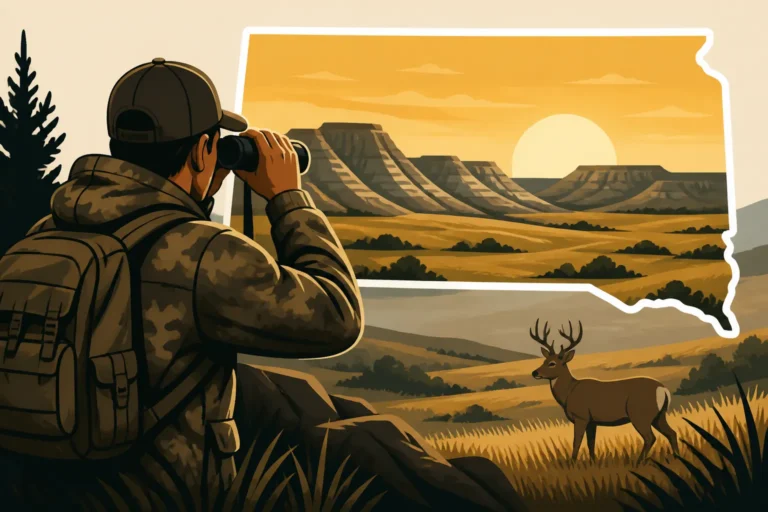
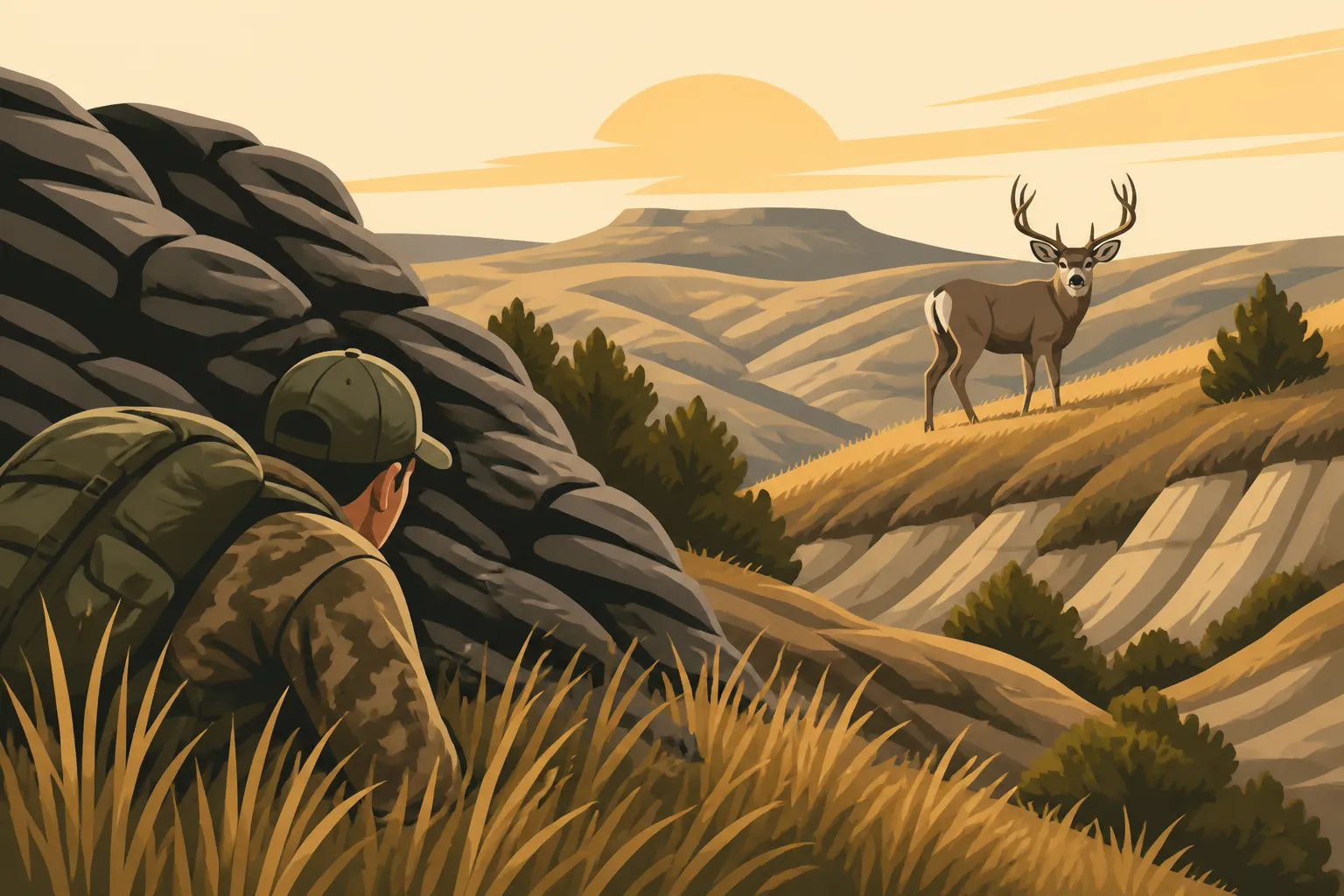
Anyone who has spent time chasing mule deer across the vast, open landscapes of South Dakota's West River country knows the immense challenge. It often feels like the deer can see you coming from miles away, making a successful approach seem impossible. This guide is all about equipping you with the knowledge and tactics to leverage the subtle contours and features of the prairie to close the distance on those sharp-eyed bucks, turning impossible stalks into successful hunts.
The Frustrating Reality of Spot-and-Stalk in Open Country
Let's be honest, hunting mule deer in South Dakota's wide-open spaces can be incredibly humbling. You spend hours glassing, finally spot a buck, and then the real work begins. Many hunters find themselves utterly frustrated as they attempt to close the distance, only to have the deer vanish like a ghost. This isn't just bad luck; it's often a direct result of underestimating the deer's senses and overestimating the available cover.
Why Mule Deer are So Hard to Stalk
Mule deer, particularly the mature bucks, are masters of their environment. They thrive in broken country where their incredible eyesight, sharp hearing, and keen sense of smell are their primary defenses. Unlike whitetails that rely heavily on dense cover, mule deer often prefer to be out in the open, using elevation and broken terrain to their advantage. They'll bed down in a spot that offers a commanding view of their surroundings, making any approach feel like you're walking into a spotlight. The subtle changes in elevation, the sparse sagebrush, or even a small rise can be enough cover for a mule deer to feel secure, while for a hunter, it feels completely exposed. You might think a long-distance approach through a shallow draw is perfect, only to realize the buck was watching you the entire time from a barely perceptible high point. Their ability to remain still and blend into the drab prairie can be uncanny, leading many hunters to misjudge their exact location or even lose sight of them altogether.
The Wind is Always a Factor
On the prairie, the wind isn't just a nuisance; it's a critical, often unforgiving, element of the hunt. A constant companion, the wind dictates everything from how deer move to how they bed, and most importantly, how you can approach them. Ignore it, and you're virtually guaranteeing a busted stalk. Mule deer, like all cervids, rely heavily on their sense of smell to detect danger. The moment your scent drifts into their zone, the game is over. What makes it particularly tricky in South Dakota is the highly unpredictable nature of prairie winds. A light breeze can suddenly gust, swirl, and change direction with frustrating frequency, especially around coulees and draws. You might start a stalk with a perfect crosswind or headwind, only to have it shift 180 degrees halfway through, putting you directly in the deer's nose. Mastering how to use the wind, or at least how to mitigate its risks, is paramount. You need to be constantly monitoring it, not just with a wind checker, but by observing grass movement, dust, and even wisps of your own breath. Understanding the nuances of Wind Direction on a Prairie Stalk is an advanced skill that comes with experience but is absolutely vital for consistent success.
Deciphering the Landscape for a Successful Stalk
The key to successfully hunting mule deer in South Dakota's expansive terrain lies in learning to "read" the landscape. It's about seeing the subtle dips, rises, and patches of vegetation not as obstacles, but as your allies. Every undulation in the ground, every clump of sage, every eroded gully offers a potential pathway or hiding spot that can get you closer to your quarry. This approach means slowing down, observing, and planning your moves well in advance. Tools like GoHunt Maps can be invaluable here, allowing you to e-scout and identify potential stalking routes before you even step foot on the prairie, using satellite imagery to find those hidden veins of cover.
Reading Coulees and Draws
South Dakota's West River country is famous for its intricate network of coulees and draws, carved by millennia of water and wind. These natural depressions are the lifeblood of a successful mule deer stalk. They provide essential visual concealment that is often scarce elsewhere on the open prairie. When you spot a deer, your immediate goal should be to identify the closest, deepest, and most continuous coulee or draw that can take you in the direction of the animal, or at least to a point where you can gain a better vantage.
However, not all coulees are created equal. Some are shallow and offer minimal cover, while others are deep, winding canyons. You'll need to learn how to identify the ones that provide adequate concealment from the deer's line of sight. This often means walking a little further or taking a less direct route to utilize the best cover. As you move, stay low and use the banks and turns of the draw to keep your silhouette broken. It's a game of hide-and-seek, always keeping a portion of the bank between you and the deer.
The beauty of Reading Prairie Coulees for Mule Deer also lies in their ability to sometimes mask your scent. The swirling air currents within these depressions can carry your scent in unpredictable ways, but often, if you stay deep within the draw, it will keep your scent pooled low, below the deer's nose, or at least break it up enough to buy you precious seconds. Always remember, though, that as you pop your head up to check the deer's position, you expose yourself to both sight and wind. Be quick, deliberate, and have a plan for what you'll do next.
Utilizing Sagebrush and Grassland Features
Beyond the pronounced coulees, the seemingly flat or gently rolling prairie still offers crucial cover in the form of smaller, less obvious terrain features and vegetation. Think of every patch of dense sagebrush, every taller clump of native grass, every subtle swell or depression in the ground as a potential stepping stone in your stalk.
These features might not offer full concealment for an upright human, but they are perfect for low-crawl approaches or for breaking up your outline. When stalking in more open areas, you'll want to move from one clump of cover to the next, pausing, observing, and then planning your next short move. If you're on a slight rise or a flat, expansive piece of ground, a patch of dense sagebrush might be just enough to get you to your belly for a final approach. This is where Spotting Bedded Bucks in Sage comes in handy, as often the deer will choose such cover for their midday rest.
The key is to minimize your profile. If you can't be completely hidden, make yourself as small and as nondescript as possible. A low crouch or a slow crawl might be necessary for hundreds of yards. It's exhausting, but it's often the only way to beat a mule deer's eyes. Remember, a deer is primarily looking for movement and the outline of a predator. By moving slowly and using every available bit of cover to break your shape, you can often go unnoticed for longer than you think. This painstaking process is what separates the successful stalkers from those who constantly spook deer.
The Art of the Ridge-Line Creep
Many mule deer in South Dakota's West River region favor high ground, not just for bedding but for feeding and traveling. This means you'll often encounter them near ridge lines or on the tops of buttes and rolling hills. Approaching these areas requires a specialized tactic known as the "ridge-line creep."
The principle is simple: use the crest of a ridge or hill as your primary cover. Instead of walking directly on the sky-line, which would instantly expose you, you move just below the crest on the lee side (the side away from the deer). This keeps you completely out of sight. The challenge comes when you need to check the deer's position or the distance. You can't just stand up.
Instead, you slowly, carefully, crawl to the crest, inching your head up just enough to peek over. Use a hat brim or a low bush to further break up the outline of your head. Get your bearings, confirm the deer's location, and then slowly retreat below the crest. Repeat this process as you advance. This is where patience truly shines. A good pair of binoculars, like those from a brand like GoHunt Gear, become indispensable for minimal exposure during these peeks. The more information you can gather with the least amount of exposure, the better.
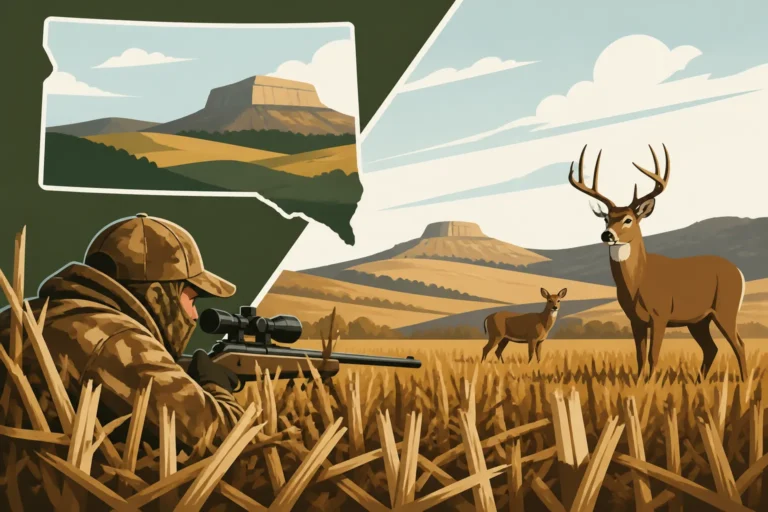
This method is particularly effective for getting within shooting range, but it requires extreme discipline. A quick, careless movement over the ridge, and you'll often be met with a white flag bounding away. It's also important to consider the angle of the sun; try to keep it at your back or to the side of the deer, making it harder for them to see your movements. This is also where knowing your rifle's capabilities for a quick prone shot after a reveal becomes crucial, especially if a buck decides to move. Check out Practicing Prone Shots on the Prairie to hone this vital skill.
Executing Your Stalk: Movement and Patience
Spotting a mule deer is only half the battle; the real test lies in the execution of the stalk itself. It’s a dance between calculated movement and absolute stillness, demanding a profound understanding of both the terrain and the deer’s behavior. Many hunters make the mistake of rushing or becoming impatient, undoing hours of careful glassing and planning.
Slow and Steady Wins the Race
This isn't just a cliché; it's the golden rule of mule deer stalking. Once you've identified your route and initiated the stalk, every movement must be deliberate, measured, and quiet. Think like a predator, moving at a pace that is far slower than you might instinctively want. The open nature of South Dakota means that even slight movements are easily detected by a deer's sharp eyesight.
When you're moving, pick your steps carefully. Avoid snapping twigs or dislodging rocks. If you need to cross an exposed area, do it slowly, hugging the ground as much as possible. If the deer raises its head or stares in your direction, freeze immediately. Remain absolutely motionless until its attention is diverted, which might mean holding a difficult position for several minutes. Don't resume moving until the deer is calm, ideally looking away or feeding. This is where a lot of hunters fail – they don't wait long enough or they try to move while the deer is still alert.
Remember that mule deer in regions like the Mule Deer Range in West River South Dakota are often wary due to hunting pressure. They've seen it all. Even a subtle shift in the wind that carries a whisper of your scent can put them on edge. Patience also extends to waiting out a bedded buck. Sometimes the best move is no move at all, just patiently observing until the deer stands up to stretch or feed, which might present a better shot opportunity or allow for a final approach when its attention is less focused. This deliberate pace minimizes your visual footprint and reduces noise, making it far more likely you'll get within range undetected.
Adapting to Changes in Wind and Deer Behavior
The prairie is a dynamic environment, and a successful stalk often hinges on your ability to adapt. The wind, as we discussed, can be a fickle beast. What started as a perfect crosswind can quickly become a quartering tailwind, blowing your scent directly to the deer. You must be constantly monitoring the wind's direction and strength. If it shifts unfavorably, you have two choices: either abandon the stalk and try another day, or attempt to adjust your route to regain the advantage. This might mean making a long, wide detour to get back into a good position, adding significant time and effort to your approach. There's no shame in backing out and trying again, especially if it means preserving the opportunity for another day.
Deer behavior is equally unpredictable. A bedded buck might suddenly stand and start feeding, or it might decide to move to a new bedding area. Mule Deer Fawn Recruitment in Dry Years can influence how deer move in relation to water and forage, so being aware of these patterns helps. If the deer moves, you must react quickly but calmly. Can you intercept it? Is there new cover available? Sometimes, a moving deer presents a better, albeit more challenging, opportunity if you can anticipate its path. Other times, it means starting the stalk all over again from a new point, which is why having an app like GoHunt on your phone with topo maps and wind overlays is so helpful for real-time adjustments. Never get locked into your initial plan if conditions change. Be fluid, be flexible, and be ready to adapt on the fly.
Knowing When to Call it Quits or When to Wait
Part of being a skilled stalker is knowing when to push forward and when to back off. It's an internal struggle many hunters face: the desire to keep going versus the realistic assessment of the situation. If the wind is consistently against you, if the terrain offers absolutely no viable cover, or if the deer is simply too alert and showing signs of being aware of your presence, sometimes the best move is to call off the stalk. Pushing a bad hand almost always results in spooking the deer and ruining the opportunity completely.
This doesn't mean giving up on the hunt. It might mean waiting for hours until the deer moves on its own, until the light changes, or until the wind shifts. It could mean retreating, repositioning, and attempting a new approach from a completely different direction the next morning. Sometimes, getting a better look at where the Where West River Mule Deer Live specifically bed or feed can help you plan a more successful stalk on a subsequent day. Mule deer often use the same bedding areas or travel corridors, so even a failed stalk can provide valuable scouting information for future attempts. Learning this discipline saves you from needlessly educating a wise old buck and allows you to hunt smarter, not just harder.
Gear and Preparation for Terrain-Driven Hunts
While understanding terrain and deer behavior is paramount, having the right tools and being physically prepared for the demands of a South Dakota mule deer hunt can make or break your success. The West River landscape is vast and can be unforgiving, so your gear needs to be up to the task.
Optics Are Your Best Friend
On the South Dakota prairie, good optics are not a luxury; they are an absolute necessity. You will spend far more time looking through glass than you will looking through your rifle scope. High-quality binoculars (10×42 or 12×50 are popular choices) are essential for spotting deer at long distances and then dissecting the terrain for potential stalking routes. A spotting scope (20-60x or 15-45x) is equally vital for really scrutinizing a buck, judging its size, and most importantly, confirming if it's bedded and exactly where its eyes are pointing. This detailed information is critical for planning your approach, especially when using tactics like Glassing Grids on Open Breaks.
When you're trying to figure out if that distant mound of dirt has a set of antlers sticking out, or if that dark patch of sage is just a shadow or a bedded buck, having clear, bright glass makes all the difference. Brands like Vortex, Swarovski, and Leupold offer excellent options that can withstand the harsh prairie conditions. Remember, you can't stalk what you can't see, and you can't plan a good stalk if you don't know exactly what the deer is doing and where it's looking. Taking your time with your optics to really break down the landscape, especially the nuances of your intended approach, will save you countless wasted steps and blown stalks.
Footwear and Clothing Considerations
The physical demands of stalking mule deer in South Dakota should not be underestimated. You'll be covering miles on foot, often over uneven, rocky, or prickly terrain. Your footwear is arguably the most critical piece of clothing you'll wear. Invest in comfortable, supportive, and durable hiking boots that are well broken in. Look for boots with good ankle support to prevent twists and ample cushioning for long days afield. Waterproofing is also a huge plus, as you never know when you might encounter dew-soaked grass or a surprise rain shower. Nobody wants wet feet miles from the truck.
Clothing layers are also crucial. The weather on the prairie can change drastically throughout the day, from chilly mornings to warm afternoons, often accompanied by a relentless wind. A good base layer, insulating mid-layers (fleece or puffy jacket), and a windproof/waterproof outer shell are standard. Avoid noisy fabrics that can rustle and alert deer, and choose colors that blend naturally with the sage and dry grasses – muted browns, greens, and grays are ideal. Consider pants that are tough enough to stand up to thorns and prickly pear cactus. Don't forget a good hat for sun protection and a pair of durable gloves. When you're crawling on your hands and knees, good gloves can save your palms from countless thorns and sharp rocks.
| Terrain Feature | Stalking Advantage | Key Considerations |
|---|---|---|
| Coulees & Draws | Provides excellent visual concealment | Swirling winds, potential dead ends, noise control |
| Ridge Lines | Offers a "skyline" for concealed approach | Must stay below crest, slow peeking, wind exposure |
| Sagebrush Flats | Breaks up outline, offers low-crawl cover | Limited full concealment, slow movement, prickly |
| Rolling Hills / Swells | Allows for movement behind terrain breaks | Requires precise pathfinding, potential exposure on crests |
| Dry Stream Beds | Natural travel corridors, good sound dampening | Can be exposed if shallow, potential for loose footing |
Finally, your weapon choice is another important consideration. For the open spaces of South Dakota, you'll want a rifle capable of accurate shots at extended ranges. Many hunters choose calibers like .270 Win, 6.5 Creedmoor, 7mm Rem Mag, or .300 Win Mag for their flat trajectories and energy. Consult our guide on Rifle Choice for West River Mule Deer for more in-depth advice. Don't forget your rangefinder, bipod or shooting sticks, and a pack that can comfortably carry your essentials and, hopefully, meat once you've successfully used the terrain to get close. And once the deed is done, you'll want to think about Getting a Deer Out of a South Dakota Coulee – often a bigger challenge than the stalk itself!
Disclaimer
Please note that hunting regulations, seasons, and access can change. Always consult the most current South Dakota Game, Fish and Parks regulations and land ownership maps before planning any hunt. This guide is for informational purposes only and does not supersede official state regulations.