Field Hunting Geese in South Dakota Cut Corn
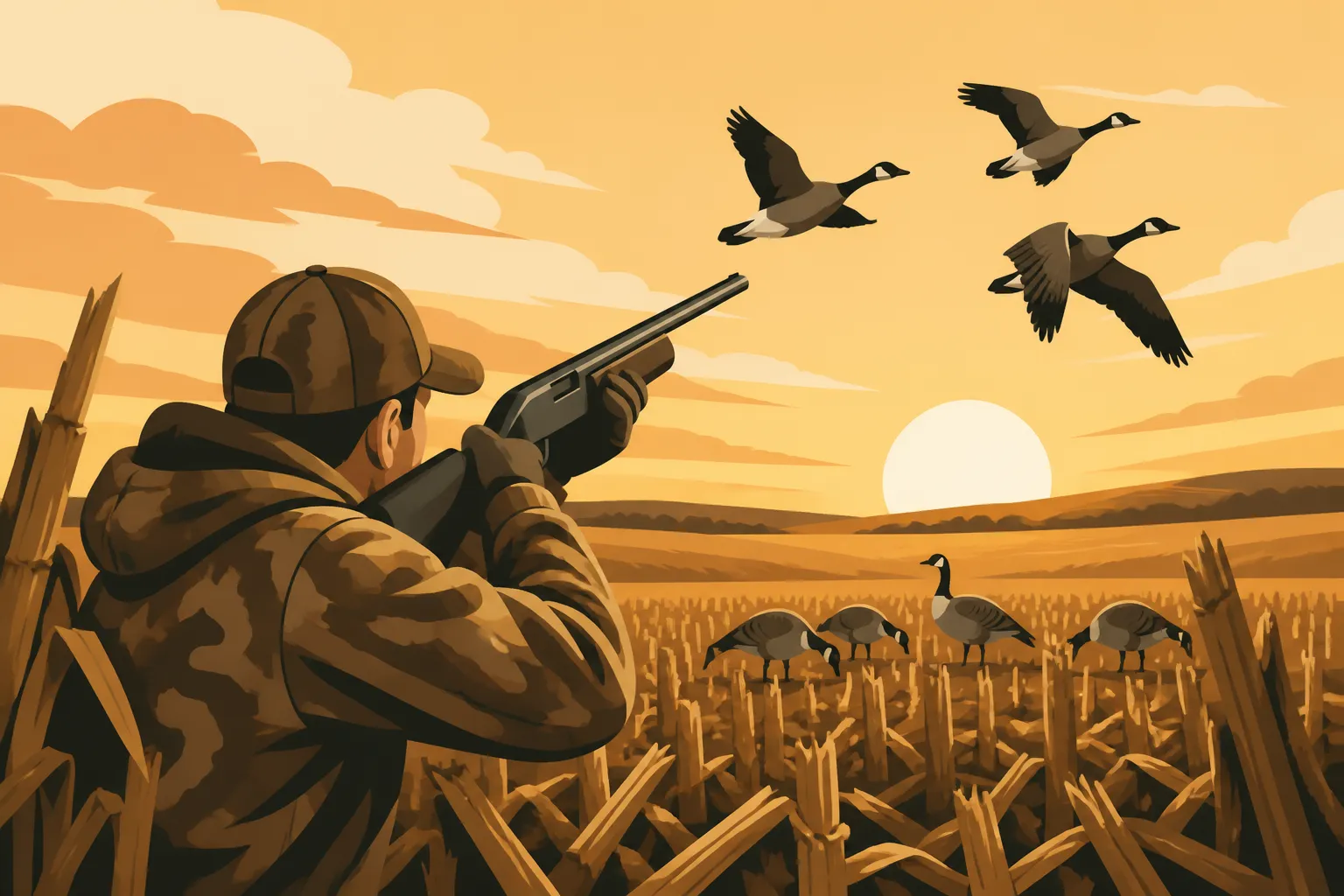
There's nothing quite like the sight of a massive flock of Canada geese cupping their wings, preparing to land right in your decoy spread, but let's be honest, getting them to commit to a cut cornfield in South Dakota can feel like trying to convince a teenager to clean their room. Geese are notoriously wary, their eyesight is incredible, and they’ve seen every trick in the book. If you’ve ever felt the sting of a giant flock circling high, giving your spread the cold shoulder before disappearing over the horizon, you know the frustration. This guide is here to walk you through the nuances of field hunting geese in South Dakota’s cut corn, helping you understand their patterns, refine your setup, and ultimately, put more birds in the bag.
Understanding Goose Behavior in Cut Corn
Hunting geese effectively in South Dakota's cut cornfields starts with a deep understanding of their daily routines and how they interact with these vital food sources. It's not just about finding where they ate yesterday; it's about predicting where they want to eat today, and why.
Daily Feeding Cycles and Roosting Patterns
Geese, particularly Canada geese, are creatures of habit. They typically follow a predictable daily cycle centered around their roosting and feeding grounds. Most mornings, you'll find them leaving their overnight roost—often a large body of water like one of the Missouri River reservoirs such as Lake Oahe, a Waterfowl Production Area, or even a large prairie pothole—right around legal shooting light, heading straight for a preferred feeding field. This first flight of the day is often the most committed. They're hungry, and they're looking for that fresh energy source.
After an intense morning feed, they'll usually return to the roost to rest, drink, and digest. Then, depending on weather and pressure, they might make an afternoon flight back to the same field, or another one, for a second feeding session before heading back to the roost for the night. This mid-day lull can be a prime time for a nap in your blind, but don't count out a late push of birds if conditions are right. Understanding these patterns is critical. If you know where they're roosting, you have a better chance of intercepting them on their way to or from the meal ticket. You'll often see them flying predictable routes, almost like a commuter highway in the sky, from these roosts to active feeding fields.
Why Cut Corn is So Attractive to Geese
Cut cornfields are an absolute magnet for geese in South Dakota for several compelling reasons. First and foremost, they offer an incredible abundance of high-energy food. Harvesters, no matter how efficient, inevitably leave behind a percentage of kernels on the ground. For geese, these leftover kernels are like tiny golden nuggets, packed with the carbohydrates they need to fuel their long migrations and survive the cold prairie winters. This isn't just a snack; it's a critical dietary staple.
Beyond the sheer food quantity, cut cornfields provide an open, expansive environment that geese feel safe in. They have excellent visibility, allowing them to spot predators or approaching hunters from a long distance. This sense of security is paramount. When they choose a field, they're not just picking a dinner spot; they're picking a safe haven where they can feed without constant threat. The stubble itself, while not offering concealment for the geese, often blends well with their natural coloring, and the relatively short height of the stalks allows for easy walking and foraging compared to taller, denser cover. It's a perfect combination of an all-you-can-eat buffet and a wide-open lookout, making it a prime target for any goose hunter worth their salt.
Scouting for Successful Goose Fields
Effective scouting isn't just important for big game; it's absolutely paramount for field hunting geese. You can have the best gear and calling skills in the world, but if you're not where the birds want to be, you're just practicing.
E-Scouting and Mapping Tools
Before you ever set foot on the prairie, your scouting really begins behind a screen. E-scouting, using tools like the GoHunt app or similar mapping software, has revolutionized how we find birds. I can't stress enough how much time and gas this saves. You can pore over satellite imagery, identifying potential cut cornfields, especially those adjacent to known roosting water or traditional flight paths. Look for patterns in the fields—are there certain areas where birds seem to congregate? You might spot white speckles on the ground that indicate heavy use. Pay attention to how fields connect to each other and to water sources.
Beyond just finding cornfields, mapping software allows you to identify public access points like Walk-In Areas or Game Production Areas, helping you determine how you might legally access a promising spot. You can mark potential parking locations, identify property boundaries to avoid trespassing, and even pre-plan your approach routes to the blind. This initial digital reconnaissance gives you a massive head start, narrowing down vast stretches of South Dakota farmland into manageable areas for on-the-ground investigation. Understanding the terrain and land ownership before you go ensures you're efficient and legal. For instance, knowing when South Dakota Walk-In Areas Get Crowded can help you choose less-pressured spots.
On-the-Ground Reconnaissance
Once you've done your homework with e-scouting, it's time to hit the road. There's simply no substitute for getting eyes on the ground. This involves a lot of driving around, carefully glassing fields with good binoculars or a spotting scope. The ideal time for this is typically late afternoon or early morning when geese are actively feeding. You’re not just looking for birds, you're looking for evidence of birds.
Fresh droppings are your best friend. A field littered with fresh goose poop and feathers is a clear indicator of recent, heavy use. Pay attention to the size and color of the droppings to get a sense of how many birds and what species (Canadas, snows, blues) are using the field. You'll also want to look for tracks in muddy areas, or disturbed corn stubble where birds have been aggressively foraging. Don't be afraid to drive loops around blocks of fields, observing flight patterns. Where are the birds coming from? Where are they going? How are they reacting to pressure from other hunters or agricultural work? Identifying these hot fields is crucial, but remember, geese can move on a dime. A field that's hot today might be cold tomorrow if it's pressured too hard or weather patterns shift. This is where local knowledge and consistent scouting really pay off.
Field Entry and Exit Planning
A often-overlooked aspect of scouting, but one that can make or break your hunt, is planning your entry and exit from the field. Geese are incredibly sensitive to disturbance, especially during pre-dawn setup or post-hunt breakdown. A careless approach can send birds scattering before you even get your decoys out. When scouting, identify potential entry points that offer the most concealment. Are there tree lines, draws, or elevated ground you can use to approach undetected? Can you park your vehicle out of sight from potential flyways?
Think about the wind direction for the next day's hunt and how that will affect your approach. You want to walk into the wind when setting up, as sound carries less and your scent is blown away from the field. Consider using the dark of pre-dawn to your advantage, but always know your route. The last thing you want is to get lost or stumble around loudly in the pitch black. Likewise, after the hunt, plan how you'll retrieve your gear and birds without alerting any late-morning birds or scaring off birds that might return for an afternoon feed. A good entry/exit plan minimizes your footprint and maximizes your chances of an undisturbed hunt, even if the birds are only using the field for a short window.
Decoy Strategies for Cut Corn
Decoys are your visual appeal, your silent salesmen trying to convince wary geese that your spread is the place to be. But it's not just about having a bunch of decoys; it's about how you use them.
Types of Decoys and Their Purpose
When you're field hunting geese in cut corn, you've got a few main types of decoys, each with its own pros and cons. Understanding these can make a huge difference in your spread's realism and effectiveness.
- Full-Body Decoys: These are the gold standard. They're three-dimensional, incredibly realistic, and from a goose's perspective, they look like real birds standing in the field. They cast shadows, move slightly in the wind (especially those with motion bases), and simply exude confidence. Their main downside? They're bulky, heavy, and expensive. Setting out a large spread of full bodies is a workout, but the realism often justifies the effort. Brands like Avian-X and Tanglefree make some excellent ones.
- Shell Decoys: These are the upper half of a full body, designed to look like a goose lying down or feeding with its head down. They're lighter, stackable, and generally more affordable than full bodies. They add bulk and numbers to your spread without the full investment or effort. They work great for filling out the "body" of your flock, especially in the middle of a spread.
- Silhouette Decoys: Simple, flat, two-dimensional decoys that are easy to carry and deploy in large numbers. While they don't have the 3D realism, they create a strong visual impact from a distance, especially in low light or fog. They excel at giving the impression of a massive flock. Many hunters use them as "confidence decoys" on the edges or upwind of their main spread to draw attention.
- Motion Decoys: Flapping wing decoys (like the MOJO brand) or rotating head decoys add crucial realism. Movement catches a goose's eye like nothing else. A spinner can sometimes be too much, looking unnatural if not used sparingly, but subtle head motion or a flapping-wing decoy on the upwind side of your spread can be deadly. Combine different types to create a dynamic, lifelike scene.
Effective Spread Formations and Placement
The way you arrange your decoys is just as important as the decoys themselves. Geese are intelligent and observe flocks closely before committing. Your spread needs to look natural, inviting, and safe.
- The Landing Zone: This is the most critical element. Geese want a clear, open space to land without feeling crowded. Create a large, U, V, or J-shaped hole in your spread, always positioned downwind of your blinds. Geese almost always land into the wind, so this open zone should be directly in front of your blinds, allowing them to glide right into range.
- Family Groups: Geese don't just spread out randomly. They move in family units or small groups. Place your decoys in clusters of 3-7 birds, rather than evenly spacing them. This creates a more natural appearance and makes the spread look active and feeding. Mix head positions—some looking up as if on guard, some feeding, some preening.
- Upwind and Downwind: Place your densest concentrations of decoys upwind of your blinds and around the landing zone. As birds approach, they'll see the main body of the flock first, drawing them towards your intended landing strip. Some hunters like to put a few "sentinel" decoys further upwind as early attractors.
- Spacing and Density: In cut corn, you often need a larger spread than you might imagine to truly stand out. While some hunters use 100+ decoys, even 2-3 dozen well-placed full bodies can be effective. Don't be afraid to spread them out a bit. Real geese don't huddle like penguins unless it's extremely cold. Give your spread some breathing room to make it look relaxed and natural. Consider bringing a flag, as waving a goose flag can emulate the motion of landing birds, drawing their eyes from a distance.
Here’s a quick overview of decoy types:
| Decoy Type | Realism | Portability | Cost | Best Use Case |
|---|---|---|---|---|
| Full Body | High | Low | High | Core of the spread, close to blinds |
| Shell | Medium | Medium | Mid | Adding numbers, mid-spread filler |
| Silhouette | Low | High | Low | Long-distance attraction, large numbers |
| Motion | High | Low-Medium | High | Crucial for realism, selective placement |
Remember, a spread that looks welcoming and natural is far more important than just sheer numbers. The goal is to replicate a relaxed, confident flock of geese feeding in safety.
Blind Concealment is Key
Geese have eyesight that rivals a fighter pilot's, and they've been pressured heavily across South Dakota's landscape. If you're not hidden, you're not hunting. Your blind setup can literally be the difference between birds cupping their wings and a long, slow circle that ends with them flying off.
Layout Blinds and Natural Cover
For cut cornfield hunting, layout blinds are the undisputed champions. These low-profile blinds allow you to lie flat on your back, becoming virtually invisible in the stubble. But merely owning a layout blind isn't enough; it's how you brush it in that counts. The goal is to make your blind disappear completely into the surrounding field.
When you're setting up, take the time to gather natural vegetation from the immediate area. This means cut corn stalks, stubble, dirt clods, and any other detritus found in the field. Tuck this material into the stubble straps of your layout blind until it no longer looks like a foreign object. Pay particular attention to the edges and any shiny parts. The best layout blind in the world, like those from Avery or Rogers, will stick out like a sore thumb if it's not meticulously camouflaged. Ensure your blinds are facing into the expected flight path, and position them downwind of your decoy spread to give geese the illusion of a safe landing zone without seeing you.
Sometimes, natural cover is your best friend. Maybe there's a slight rise in the field, a brushy fence line, or even a pivot irrigation track that offers a subtle depression. Use these features to your advantage to break up your outline. The idea is to become one with the landscape. Remember that geese are looking for anything out of place. A shadow that's too dark, a glare, or a straight line in a natural environment is a red flag. When you're finished brushing in, walk 50-100 yards away and look back at your setup from a goose's perspective. If you can see the blind, so can they. This attention to detail is non-negotiable for consistent success. You might even find some insights from Layout Blinds on South Dakota Stubble on techniques for better concealment.
Blending into the Field Environment
Beyond just brushing in your blinds, think about the overall visual impact of your hunting party and equipment. Everything needs to blend in. This includes your vehicle if it's not parked out of sight. A brightly colored ATV or truck parked openly can ruin a hunt. Make sure all your gear bags, buckets, and anything else visible from above is camouflaged or covered.
More importantly, you need to blend in. This means wearing appropriate camouflage, but it goes deeper than just a pattern. Your face and hands are often the first things a goose will spot because they're reflective and move. Invest in a good face mask, paint, or a balaclava. Wear dark gloves, even on warmer days. Minimize movement. Geese have an incredible ability to detect even the slightest twitch of a head or the glint of an eye. When birds are working, stay perfectly still until the moment of truth.
Even your dog needs to be considered. If you have a retriever, ensure they are well-trained to remain still and hidden until sent. Some hunters use dog blinds or keep their canine companions tucked under their layout blinds. The goal is to present an absolutely seamless, natural looking field where nothing is amiss. That includes not just what's in the field, but what's around it. If you're looking for areas with good natural concealment, Scouting South Dakota Public Ground Before the Season can provide useful strategies for identifying ideal spots before the season even begins.
Calling Techniques for Field Geese
Calling geese is more than just making noise; it's a conversation. It's about building trust, communicating confidence, and ultimately, convincing wary birds that your field is the safest and best place for them to be.
Basic Goose Calls and When to Use Them
There are several fundamental goose calls every field hunter should master, and knowing when to deploy each is key to effective communication.
- The Honk: This is the loudest, most basic call, often used to get the attention of distant geese. It's like shouting "Hey!" across a crowded room. A single, sharp honk can make a high-flying flock turn their heads. As they get closer, a series of softer, more contented honks can reassure them.
- The Cluck: A short, sharp, often quieter burst of air, like "tuk" or "hut." Clucks are used by feeding geese to communicate contentment and signal that the feeding is good. When birds are close and working, consistent clucking creates a realistic feeding chatter. It’s a confidence call.
- The Moan/Groan: A longer, drawn-out, low-pitched sound often associated with geese feeding aggressively or fighting over a good food source. This can add a layer of realism to your feeding chatter, implying a plentiful meal.
- The Greeting Call/Comeback Call: This is a sequence of honks and clucks, often a series of 2-3 shorter honks followed by rapid clucking. It's used to "talk" to birds that are approaching or, more importantly, to call back birds that are starting to drift away. It's your way of saying, "Don't leave, come on over here!" This call is crucial when birds are circling or seem hesitant.
- Excited Chatter: A mixture of clucks, moans, and soft honks, mimicking a flock of geese actively and happily feeding. This is usually employed when birds are directly overhead or committed, reinforcing their decision to land.
Remember, the goal isn't to blast loud calls constantly. It's about reading the birds and responding appropriately. Less is often more. If birds are heading straight for you, a few soft clucks and moans might be all you need to keep them coming. If they're hesitant, a good comeback call might seal the deal.
Reading Geese and Adjusting Your Calling
The most important aspect of calling isn't your proficiency with a call, but your ability to read the birds and adjust your calling accordingly. Geese will tell you exactly what they want (or don't want) through their body language and flight patterns.
- Distant Birds: Start with loud honks to get their attention. If they turn their heads or start flying towards you, scale back the volume slightly.
- Approaching Birds (High): As they approach, maintain steady, confident calling – a mix of honks and clucks. If they're high and circling, they're evaluating. Continue to reassure them with relaxed, contented chatter.
- Committed Birds (Lowering Altitude): When they start to drop altitude, scale back your calling volume significantly. You want to sound like a contented, feeding flock, not an alarm. Often, soft clucks and moans are all that's needed.
- Wary Birds (Circling Wide, Not Dropping): This is where you might need to get more aggressive with comeback calls or greeting calls. If they're flagging their wings, looking elsewhere, or starting to drift, try to re-engage them. Sometimes, going silent can also work, mimicking a natural flock that's already settled.
- Birds Flaring: If birds suddenly flare and gain altitude, it means they've seen something or are spooked. Stop calling immediately. Don't chase them with your call. Let them go, re-evaluate your concealment, and be ready for the next flock.
Always watch the lead goose; it's often the decision-maker for the flock. If you're hunting with multiple callers, practice together to create a realistic "chorus" rather than sounding like individual, competing calls. Varying calls and having a designated leader for the calling can make a spread sound incredibly authentic. Mastering the art of reading geese and adjusting your calling takes practice, but it's an incredibly rewarding skill that can dramatically increase your success in the South Dakota cornfields.
Gear Essentials for Cut Corn Goose Hunting
Beyond the decoys and the calls, having the right gear can make your day afield in South Dakota's cut cornfields much more comfortable, safe, and productive. The prairie weather can be notoriously fickle, and being prepared is paramount.
Shotguns and Ammunition
When it comes to shotguns for goose hunting in cut corn, reliability and firepower are key. Most hunters opt for a 12-gauge shotgun, though some prefer a 10-gauge for its heavier payload. A semi-automatic is often favored for its quick follow-up shots, especially when multiple birds come in. Pump-action shotguns are also highly effective and reliable. The most important thing is that you are comfortable and proficient with your chosen firearm. Practicing Prone Shots on the Prairie is excellent preparation for field hunting.
For ammunition, non-toxic shot is legally required for all waterfowl hunting in South Dakota. Steel shot is the most common and economical choice. When selecting your shot size, larger sizes like BB, BBB, or T are preferred for geese due to their robust size and dense feathering. Velocity is also important; higher velocities can improve pattern density and penetration. Carry a variety of loads if you're unsure, and always pattern your shotgun with your chosen ammunition before the season. A tightly patterned shotgun with heavy loads is critical for clean kills and reducing cripples, especially when taking longer shots. You'll want to review your Rifle Setup for South Dakota Open Country if you're also pursuing big game, but for geese, a reliable scattergun with heavy, non-toxic loads is the only way to go.
Apparel and Comfort
South Dakota weather can throw anything at you, often within the same day. Layering is your best friend when hunting geese in cut corn. Start with a moisture-wicking base layer, add insulating layers (fleece or down are great), and top it off with a waterproof and windproof outer shell. Even on sunny days, the wind whipping across the open cornfields can be brutal. Consider how you'll be lying in a layout blind – padding can be a lifesaver.
Beyond warmth, concealment is critical for your apparel. Choose camouflage patterns that match the drab browns and tans of cut cornfields and prairie stubble. Don't forget a good quality face mask and gloves that offer both warmth and concealment. Eye protection and hearing protection are also non-negotiable for safety. For your feet, waterproof, insulated boots are a must. You might be walking through muddy fields, dew-soaked stubble, or even a bit of early morning snow. Keeping your feet dry and warm will dramatically increase your comfort and endurance throughout the hunt. Layering for South Dakota Wind is a skill you'll quickly master out in those fields.
Essential Accessories
Beyond the basics, a few accessories can make your field goose hunt smoother and more enjoyable.
- Shell Bag or Vest: Keep your ammunition easily accessible and organized.
- Game Straps: For carrying out birds from the field to your vehicle.
- GPS/Mapping Device (like GoHunt): Even with e-scouting, an in-field GPS can help you navigate in the dark, mark your blind locations, and ensure you stay on legal ground.
- Headlamp: Absolutely essential for pre-dawn setup and post-hunt cleanup. Choose one with a red-light setting to preserve your night vision.
- Thermos with Hot Beverages: A hot coffee, tea, or cocoa can be a huge morale booster on a cold morning.
- Snacks: Fuel your body, especially if you're out for an extended period.
- First-Aid Kit: Always a good idea to have one on hand for minor scrapes or emergencies.
- Dog Gear: If you're bringing a retriever, don't forget their vest, a lead, a dog blind or mat, and plenty of water. Keeping a Dog Cool on an Early Opener or dealing with Dog Water and Burrs on the Prairie are realities for hunters with canine partners.
- Goose Flags: These are simple, handheld flags that mimic the flapping wings of landing geese. They can be incredibly effective at grabbing the attention of distant birds and coaxing them into range. A little flag motion can go a long way in adding realism to your spread.
Having all these items packed and ready to go will ensure you're prepared for whatever the South Dakota prairie throws at you, allowing you to focus on the hunt itself.
Dealing with Hunting Pressure and Weather
South Dakota's reputation as a hunting mecca means that you're rarely alone, especially in prime goose country. Coupled with the state's famously unpredictable weather, dealing with pressure and conditions is a constant balancing act.
Adapting to Crowded Fields and Wary Birds
It's a common frustration: you've scouted a hot field, only to show up on opening morning and see other hunters already setting up or, worse, birds flaring from a field across the road. South Dakota fields, especially easily accessible ones or those near known roosts, can see significant hunting pressure. When birds are pressured, they become incredibly wary, often flaring at extreme distances, ignoring calls, or simply flying higher.
To combat this, you need to be adaptable and think outside the box.
- Go Deeper: While others are setting up right next to the road, consider walking or carting your gear further into a large field, away from easy access. Often, birds will avoid the immediate edges where they've been shot at previously.
- Hunt Midday: Many hunters pack up after the initial morning flight. However, a lot of geese will make an afternoon feeding flight, especially on colder days. These birds can be less pressured than the morning flocks.
- Hunt Different Fields: Don't get stuck on one particular spot. If your primary field is getting hammered, have a backup plan. This is where diligent scouting of multiple locations pays off.
- Focus on Concealment: When birds are wary, your concealment must be absolutely perfect. Any shine, unnatural shape, or movement will send them packing.
- Scale Back Calling: Sometimes, when birds are incredibly pressured, less calling is more. A soft, contented chatter can be more effective than aggressive, loud calling that they've likely heard (and ignored) countless times.
- Decoy Numbers: Instead of trying to out-number other spreads, focus on realism and the quality of your spread. A smaller, incredibly realistic spread with good motion can sometimes outperform a massive, poorly deployed one. Learn about Hunting Pressure Patterns on Walk-In Areas to better understand how to mitigate its effects.
Hunting in Challenging Weather Conditions
South Dakota weather can range from calm, sunny days to blustery blizzards and everything in between. Each condition presents its own challenges and opportunities.
- Windy Conditions: Wind is often your friend for goose hunting. It forces birds to fly lower and slower, making them easier to decoy and shoot. It also helps your decoys move naturally, adding realism. Set your blinds with the wind at your back, and your landing zone directly in front, so geese are landing into the wind towards you. The main challenge is staying warm and keeping your gear from blowing away.
- Cold Temperatures: Extreme cold pushes birds to feed more aggressively, as they need more energy to stay warm. This can lead to excellent hunting. Layer up, bring hand warmers, and consider insulated layout blinds. The downside is frozen fingers and stiff gear.
- Snow and Blizzards: A fresh blanket of snow can be magical for goose hunting. White camouflage is a must, and birds often stand out beautifully against the white backdrop. Snow also drives birds to feed, clearing patches for easy foraging. However, heavy snow or blizzards can make travel treacherous and visibility poor. Safety must be your top priority.
- Fog and Low Visibility: Fog can be a double-edged sword. It can bring birds down lower and make them less wary, but it can also make spotting flocks difficult and create dangerous shooting conditions. Be extremely cautious, know exactly where your hunting partners are, and maintain strict zones of fire.
- Warm, Sunny Days: These can be the toughest. Birds might feed less aggressively and be even warier due to clear visibility. Focus on small, ultra-realistic spreads, minimal calling, and absolute perfect concealment. Sometimes, on these days, an afternoon hunt might be more productive if birds are resting after an early morning feed.
Ultimately, successful field hunting geese in South Dakota's cut corn is about vigilance, adaptability, and respecting the quarry. It's a challenging but incredibly rewarding pursuit that demands patience, keen observation, and the right strategic approach.
Disclaimer
Hunting is an inherently dangerous activity. Always prioritize safety, follow all local, state, and federal hunting regulations, and ensure you have the appropriate licenses and permits. The information provided in this article is for educational purposes only and should not be taken as a substitute for professional guidance or personal judgment. Be aware of your surroundings, respect private property, and practice ethical hunting at all times.