Reading Prairie Coulees for Mule Deer
Hunting mule deer in the vast, rolling prairies of South Dakota can feel like searching for a needle in a haystack, especially when you're trying to navigate the endless network of coulees that crisscross the landscape. It's a truly unique challenge, far different from hunting timber or mountains, and it often leaves hunters scratching their heads about where these elusive bucks disappear to. This guide will unravel the mysteries of prairie coulees, helping you understand how mule deer use them, how to effectively locate animals, and the best tactics for a successful hunt in this incredible, wide-open country.
The Unique World of Prairie Coulees
South Dakota's West River country is defined by its sweeping grasslands, but tucked within these expanses are countless coulees – natural drainages, often dry, that snake across the land. These aren't just ditches; they are complex micro-habitats that offer vital resources and protection for mule deer, especially the mature bucks that seem to vanish into thin air. Understanding the intricate dynamics of these coulees is your first step to unlocking their secrets.
What Exactly is a Coulee?
Many hunters unfamiliar with the prairie might picture a coulee as a simple cut in the earth, but they are far more nuanced. A coulee is essentially a deep gully or ravine, often with steep sides, carved by erosion over millennia. They can range from shallow, gradual depressions barely noticeable from a distance to deep, winding canyons with sheer walls and dense brush. What makes them so critical for mule deer is their ability to provide shelter from the relentless prairie winds, shade from the intense summer sun, and concealment from predators, including human hunters. These features become even more pronounced in the dryer western parts of the state, where distinct coulee systems often provide the only substantial cover for miles around.
Coulee Ecosystems and Deer Habitat
Within these cuts, the environment changes dramatically. The slopes and bottoms of coulees often collect more moisture, leading to a richer variety of vegetation than the surrounding uplands. You might find stands of thorny buffaloberry, western snowberry, chokecherry, or even small cottonwood trees, along with various grasses and forbs that offer both browse and bedding cover. This vegetation provides crucial food sources for deer, particularly during the harsh winter months when other forage might be buried under snow. Mule deer utilize these areas to feed, especially at dawn and dusk, before retreating into the denser cover or deeper cuts to bed down during the day. The varied topography also creates thermal pockets, allowing deer to escape extreme temperatures, whether it’s the scorching heat of July or the brutal cold fronts of November. This makes learning to interpret these unique micro-climates key to finding game.
Decoding Mule Deer Behavior in Coulees
Mule deer are masters of using the terrain to their advantage, and in prairie coulees, this behavior is amplified. They are not just hiding; they are actively choosing locations based on wind, sun, security, and forage. Learning to think like a mule deer in these environments will dramatically increase your success rate.
Bedding Areas and Security Cover
Mule deer, especially mature bucks, are constantly seeking security. In coulees, this means finding spots that offer both concealment and an escape route. They often bed on the leeward side of ridges or points within a coulee, where they can watch their backtrail and the prevailing wind carries scent from anything approaching from downwind. Look for areas with dense, tangled brush or tall grasses, particularly on slopes with a good vantage point. A common strategy for a smart buck is to bed just below the rim of a coulee, allowing him to quickly disappear over the top if threatened, while also giving him a clear view of the country below. They will often choose a bed with multiple escape paths, either up and over the ridge, or deeper into the coulee's labyrinthine twists. Identifying these prime bedding areas often comes down to understanding how wind interacts with the contours of the land.
Travel Corridors and Water Sources
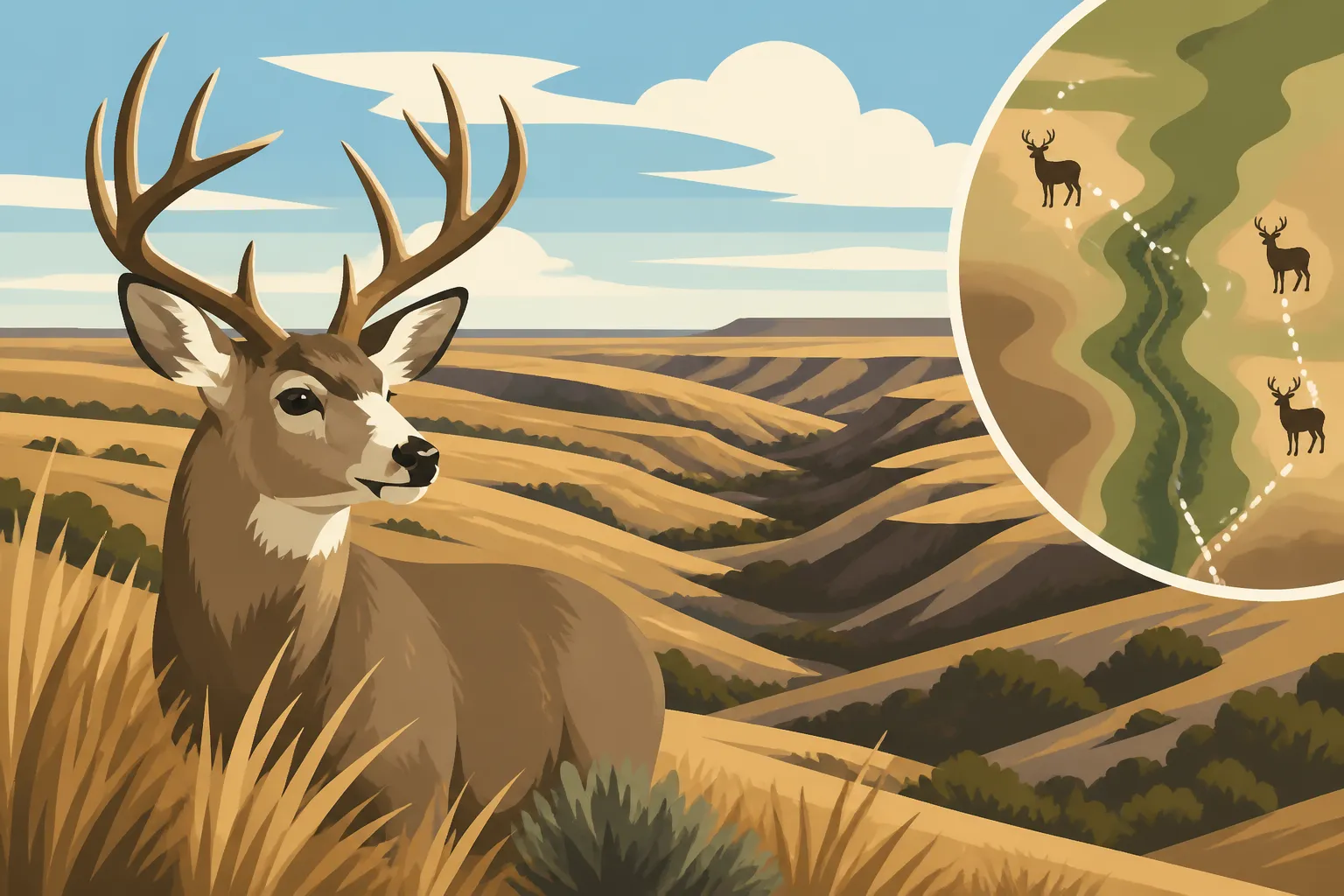
Coulees naturally serve as travel corridors, allowing deer to move significant distances undetected. They connect larger blocks of habitat, provide access to water, and offer shelter while moving between feeding and bedding areas. When e-scouting with tools like GoHunt, look for coulees that branch out like fingers, leading to agricultural fields, stock dams, or other known water sources. These connections are superhighways for deer. Water, even in dry country, is a magnet. Stock dams, small springs, or even temporary puddles after a rain event will draw deer, and the coulees leading to them will see increased traffic. Pay close attention to the confluence of multiple coulees, as these bottlenecks can be high-traffic intersections. Observing well-worn game trails along the bottom or sides of a coulee is a clear indicator of frequent deer movement.
Reading Sign and Tracking
Finding fresh sign is paramount. It's not just about seeing a set of tracks, though those are certainly helpful. Look for freshly nipped browse on shrubs, especially chokecherry or sagebrush, and recent rub lines on small trees or even larger sage plants. Droppings are another key indicator; fresh, shiny pellets tell you deer are currently using the area. As you walk a coulee, scan the dirt and sand for tracks, paying attention to their size and freshness. Larger, wider tracks with dewclaws showing often indicate a mature buck. Don't be afraid to slow down and really study the ground. Sometimes, the only sign might be a faint trail through grass that's slightly pushed down, or a few hairs snagged on a barbed wire fence crossing a coulee. Understanding how to interpret these subtle cues is crucial when hunting deer in South Dakota.
Effective Glassing Strategies for Coulees
In the vastness of the South Dakota prairie, your optics are your best friend. Mule deer blend in incredibly well with the muted tones of the landscape, and the broken topography of coulees offers endless places for them to hide. Mastering your glassing technique is often the difference between success and going home empty-handed.
High Points and Grid Searches
The absolute best way to glass coulees is from a high vantage point. This is where a good scouting map, perhaps on an app like GoHunt, becomes invaluable for identifying those critical knobs and ridges overlooking prime coulee systems. Get up there before first light, settle in, and let your binoculars or spotting scope do the walking. Instead of aimlessly scanning, employ a methodical grid search. Start at the closest part of the coulee and slowly work your way horizontally across, then drop down a little and repeat. Pay special attention to shaded areas, the bottoms of draws, and any patches of dense cover. Remember, deer are designed to disappear; you're not looking for a whole deer, but rather a horizontal line, an antler tip, an ear, or an odd patch of color that doesn't quite fit the natural surroundings. This systematic approach is often highlighted in articles like Glassing South Dakota Breaks at First Light.
Patience and Low Light Conditions
Patience is not just a virtue; it's a necessity when glassing coulees. You might spend hours staring at what seems like empty landscape only for a deer to materialize out of nowhere. Mule deer are most active during low light periods – dawn and dusk. This is when they move from their bedding areas to feed, making them more visible. Get into your glassing spot well before legal shooting light and stay until after the sun has completely set. The changing light can reveal deer that were invisible minutes before, as shadows shift and light plays off their coats. Cloudy days or light rain can extend these periods of activity, offering more opportunities. Always take your time and let your eyes adjust to the light, scanning slowly and deliberately.
Spotting Bedded Deer
Finding a bedded mule deer in a coulee is the ultimate challenge. They choose their beds with incredible care, often in places that offer excellent concealment. When glassing, look for anything that breaks the natural pattern of the landscape. A patch of dark hide against lighter grass, the curve of an antler, or a distinct shadow that doesn't seem natural. Sometimes, you'll only see a small part of the deer, like a set of ears twitching, or the flick of a tail. Pay close attention to areas below the rim, on shaded slopes, or in dense brush pockets. If you find one deer, keep looking; where there's one, there are often more, especially if you're hunting during the rut. A good pair of 10x binoculars and a 15-45x spotting scope are indispensable tools for this kind of detailed observation.
Stalking and Approaching Deer in Open Coulee Terrain
Once you've spotted a buck in a coulee, the real challenge begins: closing the distance for a shot. The open nature of the prairie means cover is scarce, and every move you make can feel exposed. This is where careful planning and an understanding of the terrain become critical.
Using Terrain for Concealment
The undulating nature of coulees is your biggest asset for a successful stalk. Instead of walking directly towards the deer, plan your approach to stay in the bottom of draws, behind ridges, or within the deep cuts of the coulee itself. Use the natural folds and contours of the land to remain out of sight. This often means taking a circuitous route, sometimes adding significant distance to your stalk, but it's essential for success. Always move slowly and deliberately, constantly checking your position against the deer's last known location. Before you crest any rise, slowly peek over the top, using binoculars to ensure the deer hasn't moved or isn't looking your way. An article like Using Terrain to Close on a Mule Deer delves deeper into these specific tactics.
Wind Direction and Scent Control
Wind is king on the prairie, and it dictates everything about your stalk. Mule deer have an incredible sense of smell, and even a slight shift in wind can give you away. Always approach with the wind in your favor, either directly in your face or quartering into it. Never stalk with the wind at your back, as your scent will carry directly to the deer. Pay close attention to any thermals or swirling winds that might be present, especially in deep coulees where air currents can be unpredictable. A small wind checker or even a pinch of dirt tossed into the air can help you gauge subtle shifts. Wearing clean hunting clothes and using scent-reducing sprays can help, but nothing beats a favorable wind. This careful consideration of wind is echoed in Wind Direction on a Prairie Stalk.
Patience and Shot Placement
Once you've closed the distance, the final steps are the most critical. Take your time. Find a stable shooting position, whether it's prone, kneeling, or using shooting sticks. Mule deer in coulees might offer fleeting opportunities, so be ready to capitalize quickly. Ensure you have a clear shot, free of obstructions like tall grass or brush. Practice shooting from various field positions before your hunt, especially prone shots, which are common on the open prairie. When you get that shot, aim for vital areas to ensure a quick, ethical kill. The vastness of the prairie means tracking a wounded deer can be incredibly difficult, as they can travel significant distances, often deeper into difficult terrain.
Here's a quick comparison of key coulee features and how mule deer typically utilize them:
| Coulee Feature | Mule Deer Use | Ideal Time to Hunt/Glass | Key Signs to Look For |
|---|---|---|---|
| Deep, Steep-Sided Cuts | Primary bedding areas, escape cover, thermal regulation. Bucks prefer security in these areas. | Mid-morning to late afternoon | Bedded deer, fresh tracks, rubs, dense cover. |
| Shallow, Rolling Draws | Travel corridors, feeding areas during low light. Can hide moving deer surprisingly well. | Dawn, dusk, overcast days | Well-worn trails, fresh droppings, nipped browse. |
| Confluence Points | High-traffic intersections, bottlenecks where multiple travel routes meet. | All day, but especially during feeding times | Heavy tracks, active trails, concentrated droppings. |
| Points/Ridges within Coulee | Elevated bedding with good vantage, often on leeward side of prevailing wind. | Mid-morning to late afternoon | Bedded deer, subtle depressions, strategic glassing vantage. |
| Dense Brush Pockets | Extreme security cover, especially for mature bucks. Can hold deer for long periods. | Any time, but often require close inspection during still-hunting | Game trails leading into brush, deer bedded deep inside. |
| Water Sources (Stock Dams) | Critical attractant, deer will move along coulees to access. | Early morning, late evening | Tracks around water, fresh droppings nearby, trails leading out. |
Seasonal Considerations for Coulee Hunting
Mule deer behavior in South Dakota's prairie coulees isn't static; it shifts dramatically with the seasons, influenced by weather patterns, forage availability, and the biological imperatives of the deer themselves. Adjusting your strategy to these seasonal changes is crucial for consistent success.
Early Season Tactics (September-October)
In the early archery season, or during the rifle opener in October, the prairie can still be quite warm, and vegetation is often at its densest. Mule deer will be focused on finding shade, water, and available browse. During these months, bucks are still often in bachelor groups, though they might be starting to break up. Your best bet is to focus on coulees with reliable water sources, like stock ponds or springs, and those with ample shade from mature trees or thick brush. Deer will often bed down early in the morning and not move again until late afternoon, making midday glassing challenging. This is when long-range glassing from high points, patiently scanning every shaded nook and cranny, really pays off. Consider hunting the bottoms of coulees near water during the early morning and late evening, or targeting well-defined travel corridors at these times. For other early season methods, check out South Dakota Pheasant Hunting Tactics for the Opener, which shares similar principles of early morning/late evening activity.
The Rut (November)
November is primetime for mule deer in South Dakota. The rut sees bucks actively cruising coulees and their fringes, searching for does. Their typical patterns become more unpredictable, as their focus shifts from food and security to breeding. During the rut, you can often find bucks moving at all times of the day, though dawn and dusk remain peak activity periods. Focus your efforts on coulees where you've seen does in the past, or coulees that connect to larger agricultural fields where does might be feeding. Look for fresh rubs and scrapes that indicate a buck's presence. Bucks will often "push" does through coulee systems, making them visible for longer periods. This is an exciting time to hunt, as deer are less cautious and more willing to expose themselves. If you’re looking to capitalize on this increased movement, tactics like Rattling and Grunting During the South Dakota Rut might even bring a buck closer if he thinks there’s competition.
Late Season Challenges (December)
As winter sets in, and especially if there's significant snow cover, late-season mule deer hunting in coulees presents a different set of challenges and opportunities. Deer will gravitate towards the deepest, most protected coulees that offer the best thermal cover from brutal winds and heavy snow. South-facing slopes, which catch more sunlight, become prime bedding areas. Food sources may be limited, so coulees with standing browse like sagebrush, buffaloberry, or residual crops in adjacent fields become critical. Deer will conserve energy, often moving less and bedding tighter. This means you might need to be more aggressive with your still-hunting, walking deeper into coulees, or targeting travel routes between specific wintering grounds and food sources. Snow can actually be your friend, as it reveals fresh tracks and makes deer stand out against the white landscape. For dealing with extreme cold, consider tactics discussed in Late-Season Hunting in South Dakota Snow.
Gear and Tools for Coulee Mule Deer Success
Success in the challenging prairie coulee environment relies heavily on having the right gear. It’s not just about your rifle; it’s about your footwear, optics, and navigation tools. Being prepared for the vast, rugged, and often isolated nature of West River hunting is non-negotiable.
Essential Optics and Navigation
As mentioned, high-quality optics are paramount. A good pair of 10x binoculars is a necessity for all-day glassing, and a spotting scope (15-45x or 20-60x) on a sturdy tripod is indispensable for picking apart distant coulees and identifying specific deer. Rangefinders are also critical, as distances on the prairie can be incredibly deceptive. You'll often be taking shots at longer ranges than you might in timber, so knowing the precise distance is key.
For navigation, a GPS unit or a reliable hunting app on your smartphone, like GoHunt, is absolutely essential. These apps allow you to mark potential coulees from home, identify public land boundaries, track your route, and mark where you last saw a deer. Cellular service can be spotty in remote areas, so make sure your maps are downloaded for offline use. Understanding public land boundaries, especially on large tracts like the Buffalo Gap National Grassland or Grand River National Grassland, is critical. The South Dakota Public Hunting Atlas is a fantastic resource, and digital maps from brands like GoHunt integrate this data, allowing you to seamlessly navigate the complex checkerboard of private and public land.
Proper Footwear and Clothing
You will be doing a lot of walking, often over uneven ground, through thick grass, and up and down steep coulee slopes. Comfortable, supportive, and waterproof hiking boots are non-negotiable. Break them in well before your hunt to avoid blisters. Look for boots with good ankle support to prevent twists and turns on rocky or loose terrain.
Layering is key for clothing. South Dakota weather can be highly unpredictable, with dramatic temperature swings throughout the day. Start with a moisture-wicking base layer, add insulating mid-layers, and top it off with a waterproof and windproof outer shell. Blaze orange is often required for rifle seasons, so check current regulations. Don't forget a wide-brimmed hat for sun protection and a warm beanie for cold mornings, along with sturdy gloves. Being comfortable will allow you to stay out longer and focus on the hunt, not the elements. The topics of Boots for Walking Cattails All Day or Layering for South Dakota Wind share valuable insights on proper attire for rough terrain and unpredictable weather.
Field Dressing and Retrieval Tools
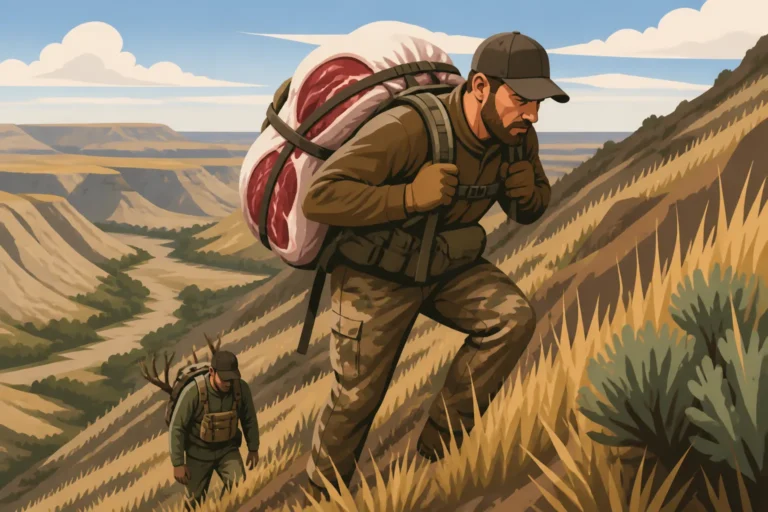
Once you've harvested a mule deer, the work isn't over. Field dressing quickly is crucial, especially in warmer early-season weather. Carry a sharp knife, game bags to protect the meat from dirt and flies, and a small saw or bone cutters if you plan to quarter the animal in the field. A sturdy frame pack can be a lifesaver for packing out meat, especially if you're deep in a coulee system. Remember, a mule deer buck can be a heavy animal, and getting it out of a deep coulee is tough work. For guidance on getting your harvest out efficiently, consider reading Getting a Deer Out of a South Dakota Coulee. A basic first-aid kit is also a wise addition to your pack for any minor mishaps that might occur miles from the truck.
Disclaimer
Hunting is an inherently risky activity. Always prioritize safety, adhere to all local, state, and federal hunting regulations, and be aware of your surroundings. The information provided in this guide is for informational purposes only and should not replace proper hunter education or professional guidance. Always respect private property and obtain permission before accessing private land.