Landlocked Public Land in South Dakota
It's incredibly frustrating to spend hours poring over maps, pinpointing what looks like prime public hunting ground in South Dakota, only to discover it's completely surrounded by private land with no legal way to reach it. That feeling of finding a hidden gem, only to have the door slammed shut by invisible property lines, is something every dedicated hunter has experienced. This guide is dedicated to untangling the complexities of landlocked public land in South Dakota, offering practical strategies to identify these areas and, crucially, understand how to gain legal access.
Understanding South Dakota's Landlocked Public Land Challenge
The phrase "landlocked public land" can sound like an oxymoron at first. How can something be "public" if you can't get to it? Yet, it's a very real and common scenario across South Dakota's vast landscapes, posing a significant hurdle for hunters diligently seeking new grounds. It's not about the land itself being off-limits, but the access points to it being non-existent from public roads or adjacent public parcels.
What "Landlocked" Truly Means for Hunters
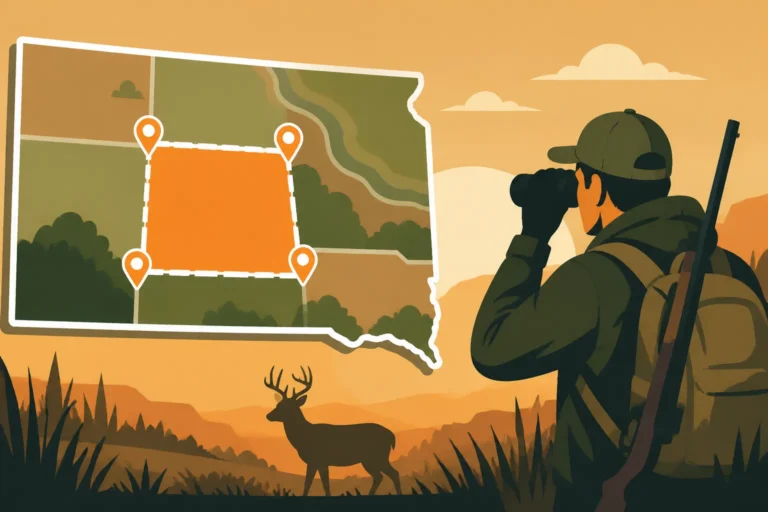
At its core, landlocked public land refers to tracts of state or federal property, like School and State Trust Lands, certain Game Production Areas, or even segments of National Grasslands, that do not directly border a public road, river, or other established public access point. Imagine finding a perfect 40-acre square of public ground on your map, marked in green or blue, with excellent habitat potential. You zoom in, excited, only to see that every single boundary line is directly adjacent to private land, typically marked in yellow or orange. There’s no gravel road, no section line that opens into it, and no adjoining Game Production Area providing a buffer.
From a hunter's perspective, this means that even though the land is technically "ours" as part of the public domain, reaching it requires traversing private property. And that, unequivocally, means you need explicit permission from the surrounding landowner. Without that permission, any attempt to cross their property, even if it's just a few yards, is considered trespassing, with all the legal ramifications that entail. It's a critical distinction to grasp: public ownership doesn't automatically guarantee public access.
Consider a scenario where you've identified a promising Waterfowl Production Area (WPA) on the Using the South Dakota Public Hunting Atlas. You see prime cattails and a slough that screams ducks or pheasants. But when you get there, the only way in involves crossing a quarter-mile of cultivated cornfield owned by the neighbor, or perhaps a pasture with cattle. While the WPA itself is open to hunting, getting your boots on that ground becomes the ultimate challenge. This is the essence of landlocked public land, and it requires a different approach than simply pulling off a county road onto easily accessible public acreage.
Why Landlocking Occurs in South Dakota
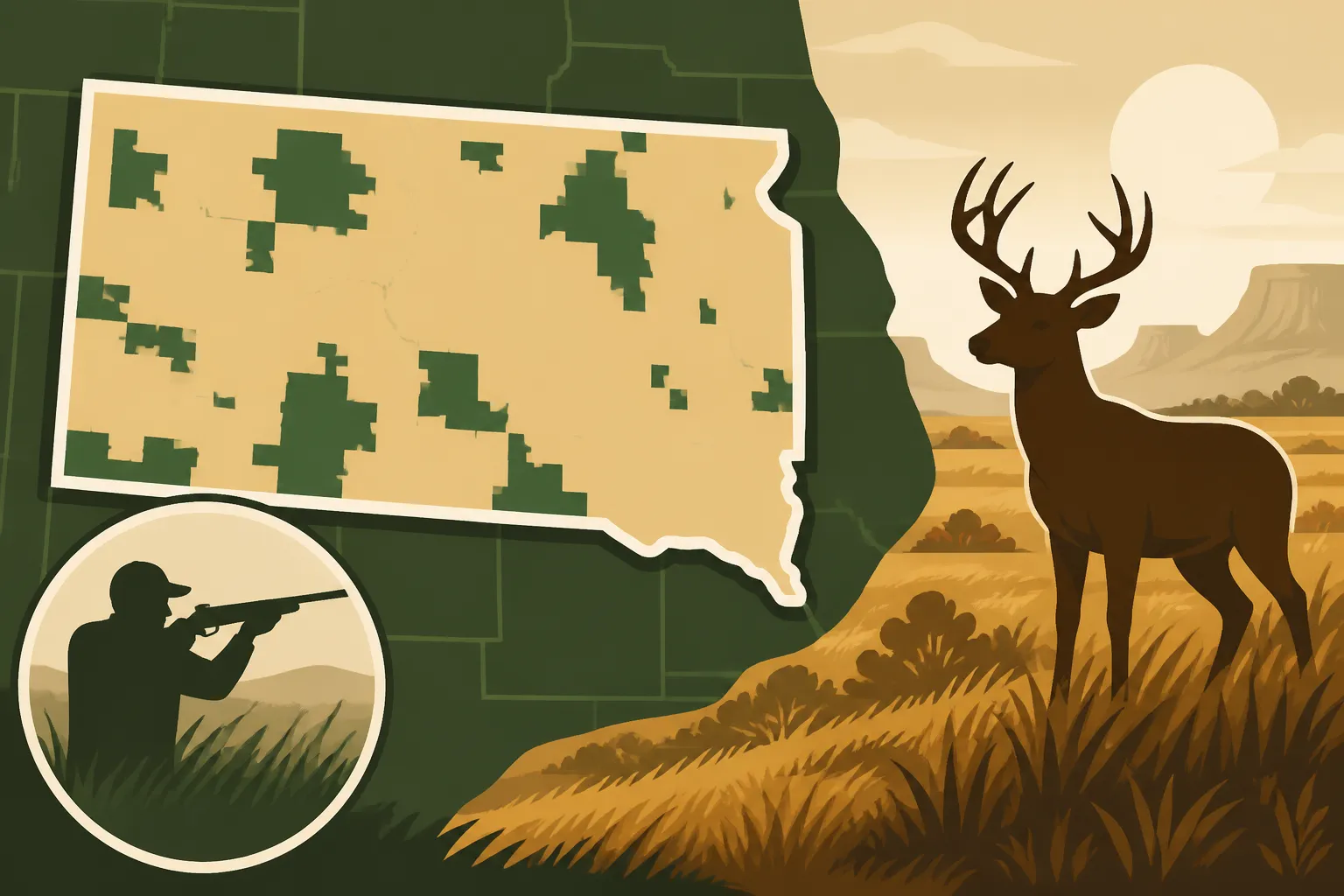
The reasons behind landlocked public land in South Dakota are deeply rooted in the state's history, land distribution, and agricultural heritage. When the state was settled, and land was surveyed and allocated, it often created a "checkerboard" pattern of ownership, particularly with School and State Trust Lands. These lands were designated to generate revenue for schools and other public institutions, and they were often interspersed within private holdings, rather than consolidated into large, contiguous blocks.
Furthermore, many of South Dakota's roads and public access easements follow specific section lines or traditional routes. If a block of public land wasn't directly adjacent to one of these established corridors, it simply became isolated. Over time, as private land changed hands or was divided, the patchwork became even more intricate, sometimes severing existing informal access routes. This fragmentation is a major reason why Finding Legal Access in South Dakota can feel like such a puzzle.
While programs like Walk-In Areas (WIA) have been incredibly successful in opening up millions of acres of private land for public hunting, their primary purpose is to provide new access to private land, not necessarily to connect landlocked public parcels. While a WIA might occasionally provide a fortunate conduit, it’s not their core function to resolve these existing public land access issues. Understanding this historical and geographical context helps hunters grasp that landlocked situations aren't arbitrary, but rather a product of how the landscape and its ownership were carved out over generations.
Strategies for Identifying and Researching Landlocked Parcels
Facing landlocked public land can feel like a dead end, but with the right tools and a bit of detective work, you can often identify these hidden gems and lay the groundwork for potential access. It requires a blend of modern technology and old-school legwork, but the rewards of discovering an unpressured hunting spot can be immense.
Leveraging Digital Mapping Tools
In today's hunting world, digital mapping applications are absolutely indispensable, and they become the hunter's best friend when trying to unravel landlocked situations. Gone are the days of guessing based on paper maps; now, you have detailed ownership information at your fingertips.
The most critical tool for this task is a robust hunting app like onX Hunt. These applications, often with subscription services, provide crucial overlays that show land ownership boundaries, differentiating public land (typically in shades of green or blue) from private land (often yellow or orange), and even distinguishing between various types of public land like federal, state, or tribal. When you zoom in on a promising area, onX Hunt immediately reveals the surrounding property lines. You can identify a public parcel, perhaps a small Game Production Area or a block of School Trust Land Hunting Access, and instantly see if it's completely engulfed by private property. It’s a visual confirmation of exactly where access is cut off.
The process is fairly straightforward:
- Open your chosen mapping app, such as onX Hunt.
- Navigate to your area of interest in South Dakota.
- Ensure your private/public land layers are activated.
- Scan for blocks of public land that are entirely bordered by private land, with no public road, waterway, or adjacent public parcel touching its boundaries.
- Once identified, you can often click on the private parcels surrounding it to see the landowner's name, which is the first step in requesting permission.
Another excellent platform, GoHunt, offers similar mapping capabilities, allowing you to cross-reference information and get a broader perspective on land status. Using these digital tools allows you to quickly filter out areas with obvious access issues, saving you valuable time and fuel. This digital reconnaissance, including utilizing onX Layers for South Dakota Land Status, is the initial, non-negotiable step in researching any potentially landlocked public ground.
Deep-Dive Research: Plat Books and Government Resources
While digital maps are fantastic for initial identification, sometimes you need to go a bit deeper, especially when landowner contact information isn't readily available or you want to confirm details. This is where traditional resources like plat books and county government offices come into play.
Plat books are essentially detailed maps of a county, showing every parcel of land, its dimensions, and crucially, the name of the owner for each private parcel. These books are typically updated periodically and can be purchased from county extension offices, GIS departments, or sometimes online. They serve as an invaluable backup to digital maps, especially if you need to physically locate a property boundary or confirm ownership for an older, less digitally mapped parcel. For a landlocked public area, finding the name and mailing address of the adjacent landowner is paramount, and plat books often provide that direct link.
Beyond plat books, the county assessor's office or Register of Deeds office is a treasure trove of information. These governmental bodies maintain records of all property ownership, tax information, and property transfers. While they won't necessarily help you find access, they can definitively confirm who owns the private land surrounding your target public parcel. A polite visit or phone call to these offices can yield the crucial contact details you need to reach out to a landowner. They can also help clarify nuances in Reading a South Dakota Unit Boundary that might not be immediately clear on a map. Remember, the goal here is not to find a loophole, but to respectfully gather the necessary information to open a dialogue with the private landowner.
Gaining Legal Access to Landlocked Public Ground
Identifying a landlocked public parcel is only the first step. The real challenge, and where many hunters get stumped, is figuring out how to legally set foot on that ground. There are very few definitive answers, but a combination of strategic outreach, understanding existing programs, and being acutely aware of legal boundaries can pave the way.
The Art of Asking for Permission
For most landlocked public land in South Dakota, asking for and receiving explicit permission from the adjacent private landowner is the primary, and often only, legal pathway to access. This isn't a guaranteed method, and it requires patience, respect, and good interpersonal skills. Think of it as building a relationship, not just making a demand.
Here's a detailed approach to Asking a South Dakota Landowner for Permission:
- Do Your Homework: Before you even think about approaching a landowner, know exactly which public parcel you want to access and who owns the private land surrounding it. Use your mapping apps like onX Hunt and GoHunt, and cross-reference with plat books or county records to confirm ownership and gather contact details.
- Timing is Everything: Avoid peak farming seasons, meal times, or evenings when families are typically busy. Early afternoon on a weekday, or a quiet Saturday morning, can often be a good window. Never just show up unannounced at odd hours.
- Appearance and Demeanor: Dress respectfully, leave your hunting gear (and certainly your firearm) in your vehicle. Approach with a friendly, humble, and polite attitude. Remember, you are asking for a favor, not asserting a right.
- Clear Communication: Introduce yourself, explain why you're there (you're interested in accessing a specific public parcel for hunting), and clearly state that you understand it requires crossing their private property. Be specific about what you want to hunt (e.g., "I'm hoping to chase some pheasants in the WPA behind your north section").
- Offer Something in Return: While not always expected, it's a good gesture. Offer to help with chores, check fences, close gates, or even share some of your processed game. A genuine offer of assistance can go a long way in establishing goodwill. A simple "I'd be happy to check your fences when I'm walking through, or give you a hand with anything you need if I'm out there" can make a difference.
- Respect Their Answer: If they say no, thank them for their time and move on gracefully. Do not argue, plead, or complain. Their land, their rules. One negative interaction can sour opportunities for all hunters in the future.
Imagine identifying a gorgeous, isolated patch of Bureau of Land Management (BLM) ground on your onX Hunt app, perfect for a late-season deer hunt. You research the adjacent landowner, a farmer named Mr. Johnson. Instead of an email, you drive out, find him working in his yard, and approach. "Good afternoon, Mr. Johnson. My name is [Your Name], and I hope I'm not bothering you. I'm a hunter, and I noticed that BLM ground behind your west pasture. I was hoping to ask if there might ever be an opportunity to cross a corner of your land to access it. I'd be very respectful, stick to your field edge, and would be happy to check for fence breaks or even help stack some hay if you ever need a hand." This respectful, clear, and humble approach drastically increases your chances of gaining access compared to a curt or demanding inquiry.
| Do's of Asking for Permission | Don'ts of Asking for Permission |
|---|---|
| Be polite and respectful. | Be demanding or entitled. |
| Explain exactly what you want to do. | Be vague or evasive. |
| Offer to help or show gratitude. | Expect free access without appreciation. |
| Visit at a reasonable, non-busy time. | Show up during meal times or late at night. |
| Leave your hunting gear in the vehicle. | Bring your rifle or muddy boots to their door. |
| Accept "no" gracefully and thank them. | Argue, complain, or badmouth them if denied. |
| Confirm boundaries and stay on agreed-upon path. | Wander off the agreed-upon route or explore. |
Exploring Existing Access Programs and Easements
While asking for permission is the most direct route, it's also worth understanding if any broader programs or historical easements might unknowingly provide a lifeline to landlocked public lands.
South Dakota has fantastic public access programs, notably the Walk-In Area (WIA) program, which opens up millions of acres of private land for public hunting. While WIAs are primarily focused on incentivizing landowners to open their private land, sometimes a WIA parcel is strategically placed to create a corridor or bridge to an otherwise landlocked public piece. For example, a WIA might run along a section line that then opens up into a large block of South Dakota Game Production Areas. It's not common for WIAs to specifically target landlocked public land, but it's always worth checking the detailed maps for overlaps or connecting pieces. Reviewing South Dakota Walk-In Areas Explained and How South Dakota Walk-In Areas Work can provide context.
Beyond WIAs, sometimes old plats or property records might indicate an unrecorded or historic easement that was once used for access. These are exceptionally rare for hunting purposes and typically require extensive legal research to verify their validity and whether they still apply. Generally, unless an easement is clearly marked and legally established for public access (which is uncommon for hunting), assume you still need explicit landowner permission. Relying on an undocumented "old trail" can quickly lead to trespassing issues.
Corner Crossing and Road Right-of-Way Nuances
The topic of corner crossing is a contentious and legally complex one in several western states, including South Dakota. This refers to the act of stepping from one piece of public land to another at a property corner where four sections meet, avoiding touching private ground. In South Dakota, the legal precedent around Corner Crossing Rules in South Dakota is still evolving and has been challenged in court. For hunters, the takeaway is clear: do not assume you have a right to corner cross. It is not a universally accepted form of legal access, and attempting it could lead to accusations of civil or even criminal trespass, regardless of your intentions. Always err on the side of caution and explicit permission when private property is involved.
Similarly, while South Dakota has laws regarding hunting from road rights-of-way, these pertain to shooting from the public road or ditch, not across private land to reach a landlocked public parcel. You can often hunt pheasants in road ditches adjacent to certain fields, provided you are aware of South Dakota Road Hunting Laws and distance requirements from buildings or livestock. However, this legal right-of-way does not extend inward to grant access across private ground to a separate, landlocked public parcel. Understanding these nuances is crucial for staying on the right side of the law and maintaining a positive image for the hunting community.
Ethical Considerations and Best Practices
Navigating the world of landlocked public land is as much about ethics and responsible conduct as it is about mapping and legalities. Every action you take, whether successful or not, impacts not just your own future hunting opportunities but also the perception of hunters as a whole. Being a good steward and ambassador is paramount.
Building Relationships and Maintaining Access
The most powerful tool you have when seeking access to landlocked public land is your reputation and your ability to build respectful relationships with landowners. If a landowner grants you permission, even for a limited time or specific area, you are now an ambassador for every other hunter who might seek access in the future.
Here are some ways to foster and maintain these invaluable relationships:
- Follow Through on Promises: If you said you'd check a fence, do it. If you offered to share game, make good on that promise. Actions speak louder than words, especially in rural communities where trust is earned, not given.
- Leave No Trace (and then some): Pack out all your trash, and if you see any trash that isn't yours, pick that up too. Leave gates exactly as you found them (open if open, closed if closed). Do not damage crops, fences, or other property.
- Express Continued Gratitude: A simple thank-you note or a small gift at the end of the season can go a long way. This shows you appreciate their generosity and aren't just taking advantage. Imagine the difference between a hunter who never checks in again versus one who drops off a small fruit basket during the holidays.
- Communicate Clearly: If your plans change, or if you need to access the property for scouting, always communicate with the landowner first. Don't assume anything.
- The Ripple Effect: One negative experience with a hunter can lead a landowner to close their doors to everyone. Conversely, a positive experience can open doors for years to come, not just for you but potentially for friends or other respectful hunters they might encounter. This proactive approach to land stewardship is vital for the future of hunting in South Dakota.
Respecting Private Property and Laws
While the lure of untouched public ground can be strong, the consequences of disrespecting private property laws are severe and far-reaching. Trespassing is not just a minor infraction; it can result in significant fines, loss of hunting privileges, confiscation of gear, and even criminal charges. More importantly, it erodes the trust between landowners and hunters, making it harder for everyone to gain access in the future.
Always ensure you have clear, explicit permission before stepping onto private land, even if it's just a sliver of ground to reach that landlocked public parcel. This means understanding and adhering to South Dakota Trespass Law and Posted Land, which clearly defines what constitutes posted land and what your obligations are. Use your digital mapping tools like onX Hunt to constantly verify your location and the property boundaries. A boundary line that looks like a straight shot on a paper map might have a subtle jog on the ground, and accidentally stepping onto private property, even for a moment, can create serious issues. When in doubt, don't go. The integrity of your hunting experience, and the future of access for all, depends on your adherence to these fundamental principles.
Disclaimer
This article is for general informational purposes only and does not constitute professional advice. Laws, prices and regulations vary by location and change over time. Consult a qualified professional for guidance on your specific situation.