School and State Trust Land in South Dakota
For many hunters in South Dakota, the thought of public land often conjures images of Game Production Areas or the vast National Grasslands. But there's another, often misunderstood, category of land that can offer fantastic hunting opportunities: School and State Trust Lands. Navigating these areas, understanding their unique rules, and knowing how to find them can be a challenge, leaving many hunters feeling frustrated and sticking to more familiar ground. This comprehensive guide aims to demystify South Dakota's School and State Trust Lands, helping you unlock their potential for your next hunt.
What Exactly Are South Dakota's School and State Trust Lands?
When we talk about School and State Trust Lands in South Dakota, we're discussing parcels of ground with a very specific purpose and history, distinct from other public lands you might encounter. These aren't simply "public" in the same way a state park or a national forest is. Instead, they are lands held in trust by the state, primarily to generate revenue for specific public institutions, most notably public education. Understanding this core function is key to appreciating why their rules and management can differ.
The Historical Roots of Trust Lands
The story of South Dakota's School and State Trust Lands begins long before statehood. When South Dakota became a state in 1889, the federal government granted millions of acres of land to the new state. This wasn't a gift without strings; it was a trust, specifically designated for the support of public schools and other essential public institutions like universities and charitable organizations. The idea was that the state would manage these lands wisely, generating income from them through various means—agriculture, mineral leases, timber, and sometimes, recreational use—to ensure a perpetual funding source for these vital services. It’s a legacy that continues to shape land use and access policies today.
How These Lands Fund Education
The primary objective of these trust lands is financial gain for the beneficiaries, with education being the biggest recipient. Every lease, sale, or permitted activity on these lands contributes to a trust fund. For example, a rancher might lease acres for grazing cattle, a company might lease mineral rights, or a farmer might lease land for crop production. The income generated from these activities flows into the Permanent School Fund, which then disperses earnings to schools across the state. While hunting is often permitted, it's typically a secondary consideration to the revenue-generating activities. This distinction is crucial because it means that access might be affected by agricultural operations, fences, gates, or other activities designed to maximize financial return, rather than purely recreational use.
Diverse Land Uses Beyond Hunting
It's easy for a hunter to look at a map and see a green or yellow block labeled "School and Public Lands" and assume it's prime hunting territory. However, these lands are incredibly diverse in their usage. You might find active crop fields, extensive cattle grazing operations, commercial timber harvesting, oil and gas exploration, or even mineral mining. Some parcels are urban or suburban developments. This means that while the land is technically public, its primary use might not lend itself well to hunting, or access might be restricted due to ongoing commercial operations. It's not uncommon to find a parcel surrounded by private farmland, actively being grazed, with limited cover for game. Hunters must be prepared to see a variety of working landscapes and understand that their recreational pursuit fits into a broader, revenue-driven management scheme.
Decoding the Rules for Hunting on Trust Lands
Hunting on South Dakota's School and State Trust Lands comes with its own set of rules and nuances that differ from other public access programs. It’s not a free-for-all, and understanding the specific regulations is paramount to avoiding citations, respecting landowners, and ensuring a safe, ethical hunt. The state's general hunting regulations apply, but there are additional layers of permissions and restrictions tied directly to the trust land designation.
General Regulations for Public Access
For the most part, if a parcel of School and State Trust Land isn't leased for private agricultural or commercial use that explicitly excludes public access, it's generally open for public hunting. This is a huge benefit, as it adds a significant amount of acreage to South Dakota's public hunting portfolio. Hunters are expected to follow all state hunting seasons, bag limits, and licensing requirements just as they would on any other piece of public or private land. The South Dakota Department of Game, Fish and Parks (GFP) hunting handbooks are your best friend here. Always remember to wear your blaze orange if required for the season and species you're pursuing, maintain safe shooting distances from roads and occupied dwellings, and be acutely aware of your surroundings, especially if other activities like cattle grazing are present. Navigating these general use areas requires careful planning and a good map, which we'll discuss in more detail later.
Specific Restrictions and Prohibited Activities
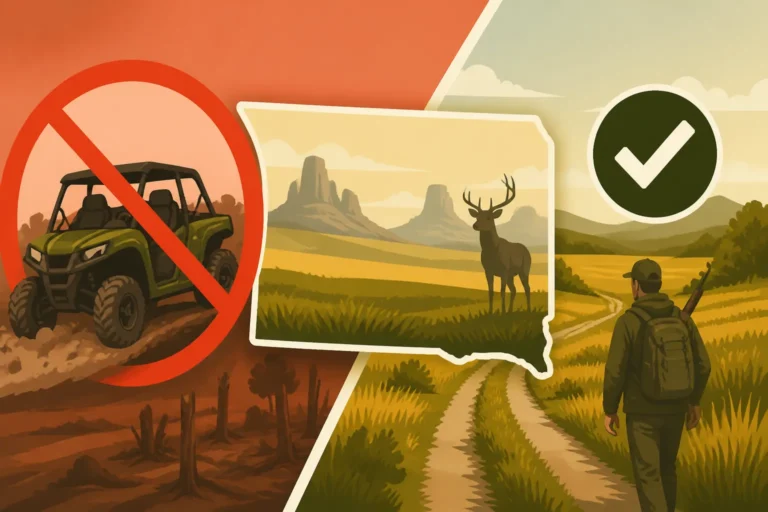
While generally open, there are specific limitations on School and State Trust Lands. Vehicle access, for instance, is often restricted to established roads or trails, and sometimes only foot traffic is allowed, similar to many Walk-In Areas. It's vital to check the specific parcel you intend to hunt. Firing weapons near livestock or active farm equipment is obviously prohibited, and leaving gates open or damaging fences can lead to serious legal trouble and jeopardizes future public access. Unlike some private leases that allow permanent structures, putting up treestands or ground blinds for extended periods might be restricted, or they might need to be clearly marked and removed after your hunt. You absolutely cannot build permanent blinds or engage in any activity that modifies the land without explicit permission. These lands are primarily managed for income, and any activity that interferes with that or causes damage will not be tolerated.
Understanding Leasehold Agreements
Here’s where it gets particularly interesting, and often confusing for hunters. A significant portion of School and State Trust Lands is leased out to private individuals or entities, typically for grazing or agriculture. The critical detail for hunters is whether these lease agreements include provisions for public hunting access. In South Dakota, many grazing leases do allow public hunting, but the hunter is still obligated to respect the lessee’s agricultural operations. This means if a field is actively being harvested, or if cattle are present, you might need to hunt elsewhere or at a different time, even if access is technically permitted. Some leases, however, are "private" and explicitly close the land to public hunting. It is crucial to identify which is which. South Dakota Landowner Permission Basics is a good resource to help understand the relationship between public access and private leaseholders. Always double-check current maps and signage to understand the specific rules for the parcel you're interested in, as these can change year to year.
Mastering Navigation and Boundary Identification
Successfully hunting School and State Trust Lands hinges on your ability to confidently identify them and navigate their boundaries. These parcels can be small, irregularly shaped, and often nestled amongst vast tracts of private land, making clear identification a non-negotiable skill. Without precise location knowledge, you risk trespassing, which can swiftly ruin a hunt and damage landowner relationships.
The Indispensable Role of Digital Mapping
In today's hunting world, digital mapping applications are an absolute game-changer, especially for fragmented public lands like these. Tools like onX Hunt are invaluable. These apps allow you to see property boundaries, landownership (public vs. private), and even specific lease information right on your phone or GPS device. When planning a hunt on School and State Trust Land, you can overlay layers that show you roads, topography, aerial imagery, and critical details about the parcel's status. For example, some onX Hunt layers specifically indicate whether a School and State Trust Land parcel is open for general public access or if it's part of a different program. This allows you to scout from home, identify potential access points, and avoid accidentally stepping onto private property. Always download your maps for offline use, especially in West River country where cell service can be spotty. E-Scouting Walk-In Areas Before the Season also applies here, as the principles of digital scouting are similar.
Recognizing Physical Boundaries and Markers
While digital maps are fantastic, they are no substitute for on-the-ground confirmation. School and State Trust Lands are often marked with specific signage, typically yellow and black, that says "School and Public Lands." However, these signs can be sparse, weathered, or even missing. Therefore, understanding the physical landscape in relation to your map is critical. Look for fence lines, changes in vegetation, waterways, or distinct topographical features that align with the boundaries you see on your digital map. Pay close attention to corners, where multiple property lines meet, as these can be particularly confusing. If you're ever in doubt about a boundary, err on the side of caution and assume it's private. A few extra steps to confirm your location are always better than an uncomfortable conversation with an angry landowner or a game warden.
Navigating Access Points and Rights-of-Way
One of the biggest hurdles with School and State Trust Lands can be simply getting to them. Many parcels are landlocked, surrounded entirely by private property with no public road access. Your digital map will show you the property boundary, but it won't necessarily tell you how to get there legally. Always look for established county roads, section line easements, or designated public access points. In South Dakota, while section lines theoretically offer access, the legality of using them if they aren't developed roads can be a gray area and varies by local interpretation and specific circumstances. It’s crucial to understand Corner Crossing Rules in South Dakota and other access nuances. If a parcel is genuinely landlocked with no public access, then, unfortunately, it's not huntable without landowner permission to cross private ground. Don't assume that because it's public land, you automatically have a right to cross private property to reach it.
Strategic Hunting Approaches for Trust Lands
Hunting School and State Trust Lands requires a slightly different mindset than tackling vast, contiguous blocks of National Grassland or well-known Game Production Areas. These parcels often present unique challenges, but with the right strategy, they can be incredibly rewarding, offering opportunities for a variety of game species. The key is to adapt your approach to their typically smaller, more fragmented nature and the potential for mixed-use activities.
Scouting for Untouched Pockets of Game
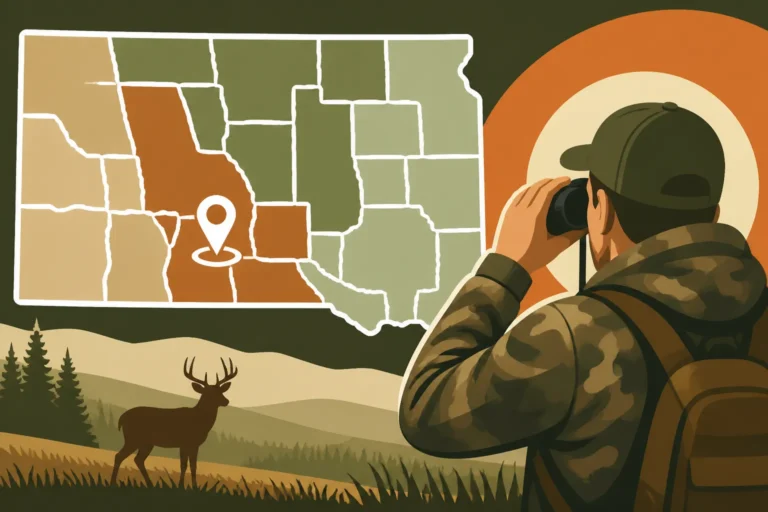
Because School and State Trust Lands can be small and sometimes overlooked by hunters who prefer larger, more advertised public areas, they often hold pockets of undisturbed game. This is especially true for pheasants, deer, and even coyotes. When scouting, use your digital mapping tools (like onX Hunt) to identify these parcels. Look for areas with good cover – think cattail sloughs, dense shelterbelts, thick draws, or undisturbed grasslands – especially if they are surrounded by active agricultural fields. Game animals use these smaller public tracts as bedding areas, escape cover, and travel corridors between private food sources. Timing is everything here; scouting before the season, perhaps when crops are still standing, can reveal hidden gems. Reading Aerial Imagery for Cattail Cover can show you these prime spots from your computer.
Species-Specific Tactics and Timing
Your hunting tactics will, of course, depend on your target species. For pheasants, these smaller parcels might be excellent for a single-person hunt with a good dog, or a small group of two or three hunters working a corner or a narrow strip of cover. Look for the edges where cover meets crop fields, or small cattail sloughs that might only take 20 minutes to push. Working Food Plots at Midday might not be as relevant here, as these areas are less likely to have managed food plots. Deer hunters can find success by identifying these lands as bedding sanctuaries or travel routes. Set up quietly on edges near thick cover or pinch points, especially during the rut when bucks are cruising. For antelope, some trust lands might offer crucial water sources or isolated pockets of sagebrush cover. Spot-and-Stalk Antelope on Open Prairie tactics can certainly apply, but you'll need to be extra mindful of boundaries on smaller parcels. Predators like coyotes also frequent these areas, utilizing them as travel routes and ambush points, especially if small game is abundant.
Managing Pressure and Respecting Other Users
One of the biggest challenges on any public land, including School and State Trust Lands, is hunting pressure. Since many of these parcels are smaller, even a couple of other hunting groups can make an area feel crowded. If you arrive at a parcel and see other hunters or vehicles, consider moving on to another spot. Having a backup plan (or three!) is always a good idea. Furthermore, remember that these lands often have agricultural leases. You might encounter livestock, farm equipment, or even the lessee themselves. Be respectful, yield the right-of-way, and always close gates behind you. Any negative interaction can jeopardize future access for all hunters. Pheasant Hunting Etiquette on Public Ground applies universally and is especially important on these shared-use lands.
Trust Lands in the Greater South Dakota Public Land Landscape
South Dakota offers a fantastic array of public hunting opportunities, from sprawling National Grasslands to meticulously managed Game Production Areas and the popular Walk-In Areas. School and State Trust Lands fit into this diverse mosaic, but they have distinct characteristics that differentiate them from these other, perhaps more commonly discussed, public access options. Understanding these differences is crucial for any hunter aiming to maximize their time afield in the Coyote State.
Key Differences from Walk-In Areas and GPAs
Walk-In Areas (WIAs) and Game Production Areas (GPAs) are often the first places hunters think of when planning a public land hunt in South Dakota. WIAs are privately owned lands leased by the state, typically for short durations, to provide public access for hunting. They are generally well-marked with large yellow signs and have specific rules for foot traffic only. GPAs, on the other hand, are lands purchased and managed by the GFP specifically for wildlife habitat and public recreation. They usually have permanent infrastructure, better habitat development, and clearer access points. School and State Trust Lands sit somewhere in between. They are owned by the state, like GPAs, but their primary purpose isn't always wildlife management; it's revenue generation. This means their habitat can be more variable, often being actively grazed or farmed. While some trust lands may overlap with WIA programs for enhanced access, many stand alone. How South Dakota Walk-In Areas Work delves into that specific program, highlighting its differences.
Distinguishing Them from National Grasslands
South Dakota's National Grasslands, such as the Buffalo Gap and Fort Pierre National Grasslands, represent immense, contiguous blocks of public land, often spanning hundreds of thousands of acres. These are managed by the U.S. Forest Service primarily for multiple uses, including grazing, recreation, and wildlife. Their sheer scale means hunters can often find solitude and vast areas to roam. School and State Trust Lands, in contrast, are typically smaller, more fragmented parcels scattered throughout the state. While National Grasslands are federal, trust lands are state-owned and managed. The hunting experience is vastly different: one offers an expansive wilderness feel, the other often requires meticulous navigation between private fields to access smaller, isolated pockets. Hunting Buffalo Gap for Mule Deer describes the experience on those large federal lands, which is a world away from hunting a 40-acre school section.
Maximizing Your Access Strategy
To truly maximize your hunting opportunities in South Dakota, it's wise to view School and State Trust Lands as complementary to other public access options. Think of them as potential "satellite" spots around larger, more popular areas, or as overlooked oases in heavily private regions. A smart strategy involves using your mapping application, perhaps even GoHunt's detailed maps, to identify clusters of trust lands, WIAs, and GPAs within a reasonable driving distance. By having a diverse portfolio of public land types scouted, you can adapt to hunting pressure, changing weather conditions, or unexpected closures. If the main WIA is crowded on opening weekend, you might find success slipping into a smaller, less conspicuous School and State Trust Land parcel nearby. They offer flexibility and often surprise opportunities for the hunter willing to do their homework. Finding Legal Access in South Dakota emphasizes the importance of understanding all types of public ground.
Tips for Respectful and Responsible Use
Hunting on School and State Trust Lands is a privilege, not an inherent right that supersedes all other land uses. These parcels are managed for the benefit of the state’s education system and often involve active agricultural or commercial operations. As hunters, it’s our responsibility to ensure we leave these lands better than we found them, minimize our impact, and foster positive relationships with leaseholders and managers. Responsible behavior directly contributes to the continuation of public hunting access on these valuable properties.
Minimizing Your Impact
Every time you step onto School and State Trust Land, consider your footprint. This means packing out everything you pack in, including spent shell casings, trash, and any other litter. Avoid damaging fences or gates; if a gate is closed, leave it closed; if it's open, leave it open. Drive only on designated roads or trails, never creating new ruts or driving through fields, especially when wet. Off-road vehicle use is generally prohibited. Be mindful of livestock; give them a wide berth and never harass or disturb them. If you’re gutting an animal, do so in a discreet location away from roads and water sources. The goal is to make it seem like you were never there, ensuring the land remains productive for its primary purpose and accessible for future hunters.
Adhering to Ethical Hunting Practices
Ethical hunting goes beyond legal compliance; it's about respecting the game, the land, and other users. This includes knowing your effective range and only taking shots you are confident in, ensuring a quick and humane harvest. Follow up on every shot, no matter how confident you are in your hit, to recover game promptly. Proper Field Dressing in Warm October Weather is critical to salvaging your meat. Never block access points or park in a way that obstructs traffic or farm equipment. If you encounter other hunters, be courteous and give them plenty of space. These lands are for everyone, and a little respect goes a long way in ensuring a positive experience for all. Ethical behavior is the best advertisement for maintaining public hunting access.
Reporting Violations
Unfortunately, not everyone adheres to the rules. If you witness illegal activities on School and State Trust Lands – such as trespassing, poaching, littering, or property damage – it's important to report it. Contact the South Dakota Department of Game, Fish and Parks or local law enforcement. Providing details like vehicle descriptions, license plate numbers, and specific locations can be incredibly helpful. Reporting ensures that those who disregard the rules are held accountable, which protects the resource and preserves legitimate public access for responsible hunters. Remember, you are an ambassador for the hunting community every time you step afield.
| Feature / Land Type | School and State Trust Land | Walk-In Area (WIA) | Game Production Area (GPA) | National Grassland (NG) |
|---|---|---|---|---|
| Ownership | State of South Dakota | Private land, leased by state | State of South Dakota (GFP) | Federal (U.S. Forest Service) |
| Primary Purpose | Revenue for public education/institutions | Public hunting access (seasonal) | Wildlife habitat & public recreation | Multi-use (grazing, recreation, timber) |
| Typical Size | Varies (often fragmented, 40-640 acres) | Varies (often contiguous, larger blocks) | Varies (often contiguous, dedicated areas) | Very large, contiguous blocks |
| Vehicle Access | Often limited to existing roads/trails | Foot traffic only | Established roads/parking, some foot traffic | Established roads, some dispersed driving |
| Signage | Yellow "School and Public Lands" | Yellow "Walk-In Area" signs | Green "Game Production Area" signs | National Forest/Grassland signs |
| Habitat Management | Primarily agricultural/commercial uses | Dependent on private landowner | Managed for wildlife by GFP | Managed for multiple uses, including wildlife |
| Leasing to Public | Common for agriculture/grazing | N/A (state leases from landowner) | N/A (managed by GFP) | Grazing leases common |
| Hunting Pressure | Can be lower due to complex access | Can be high, especially early season | Can be high | Variable, often lower on remote parcels |
Disclaimer
This article is for general informational purposes only and does not constitute professional advice. Laws, prices and regulations vary by location and change over time. Consult a qualified professional for guidance on your specific situation.