Bobcat Range and Harvest in South Dakota
Many hunters dream of pursuing bigger game like deer and elk, but there's a unique thrill to hunting predators, especially the elusive bobcat, right here in South Dakota. However, figuring out where these stealthy felines roam and the precise regulations for harvesting them can feel like navigating a maze. This comprehensive guide is designed to cut through that confusion, giving you the solid information you need to understand bobcat presence and successfully plan your hunt across our diverse landscapes.
Understanding the Elusive Bobcat in South Dakota
Bobcats are truly magnificent creatures, embodying the wild spirit of South Dakota. While they might not be as overtly common as coyotes, their presence is definitely felt in many parts of the state. Knowing where they prefer to live and how their numbers are tracked is your first step toward a successful hunt.
Where Bobcats Call Home: Range and Habitat
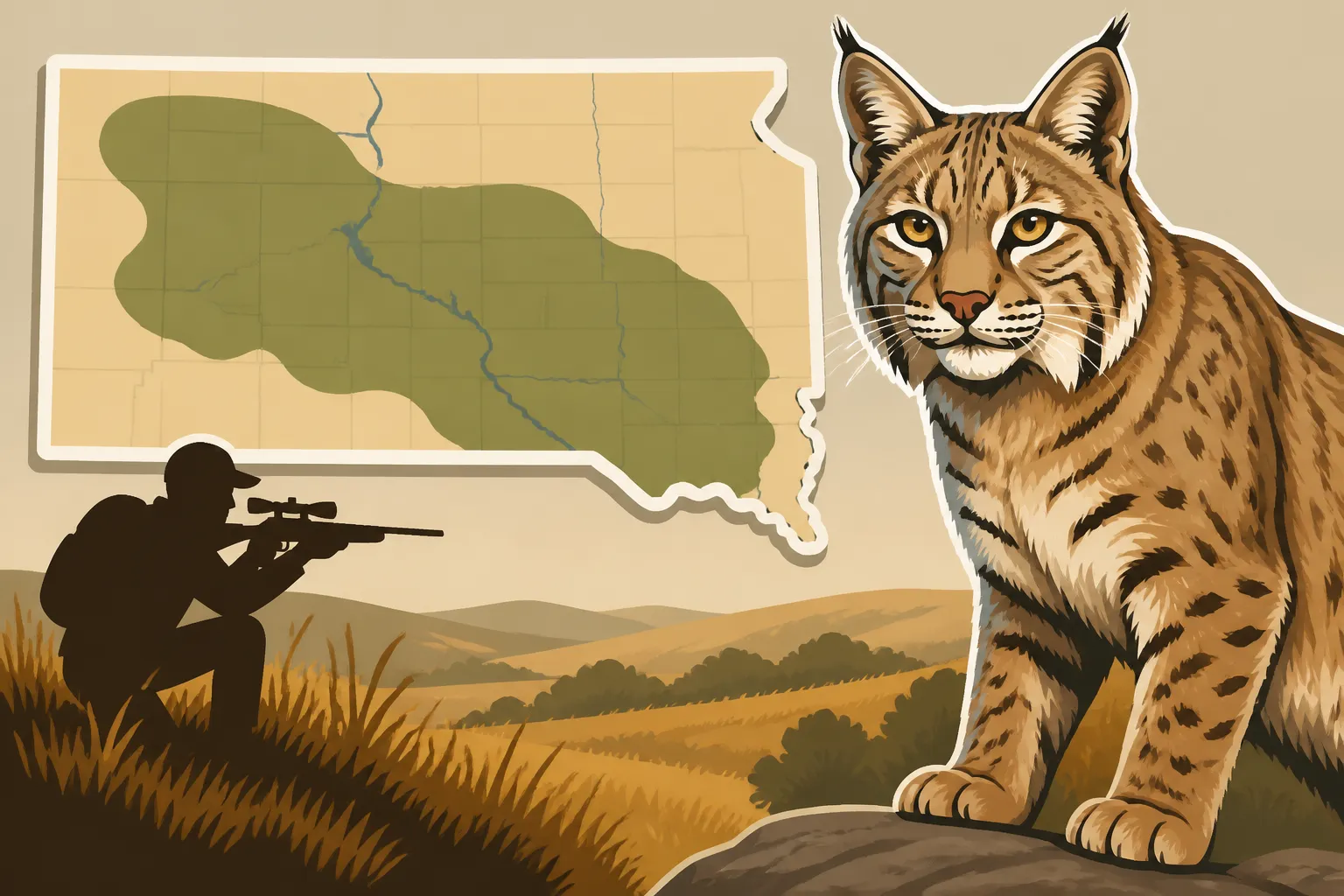
Bobcats in South Dakota tend to gravitate towards areas that offer a good mix of cover, food, and water. You'll primarily find them concentrated in the western half of the state, particularly within the Black Hills and the more rugged West River breaks. These areas provide the dense timber, rocky outcroppings, and cedar thickets that bobcats love for denning, stalking prey, and evading detection. It's not uncommon to find them extending their range into the river drainages of the Missouri River, where the timbered bottoms provide excellent cover. They're adaptable, though, and can surprise you by showing up in some of the more brushy draws and shelterbelts even in parts of the East River prairie. They are true masters of stealth, often preferring to stick to areas with thicker vegetation rather than wide-open spaces.
Their habitat choices are deeply tied to their prey base. They primarily hunt rabbits, hares, and small rodents, but they'll also take birds, young deer, or even domestic livestock if the opportunity arises. This means you're more likely to find them where these prey animals are abundant. Look for areas where dense cover meets more open foraging grounds, especially those with reliable water sources nearby. Think about those rugged coulees, deep draws, and brushy canyons that provide both concealment and a buffet of small game.
Understanding these preferences helps you narrow down your scouting efforts significantly. Instead of just walking aimlessly, you can focus on mapping out the specific habitat features that bobcats rely on. Programs like GoHunt can be invaluable for identifying these prime locations, allowing you to layer aerial imagery with topographical maps to pinpoint ideal ambush points or denning sites before you even step foot in the field.
Current Population Status and Monitoring Efforts
While bobcat populations might fluctuate, South Dakota generally maintains a healthy, stable population, especially in their core ranges. Unlike some other game animals, getting a precise count on bobcats can be incredibly challenging due to their elusive nature and nocturnal habits. They aren't prone to congregating in large groups, and their camouflaged coats make them incredibly difficult to spot.
State wildlife agencies rely on a combination of harvest data, furbearer surveys, and incidental sightings to monitor bobcat numbers and distribution. Trapper harvest reports provide critical insights into population trends and geographical distribution. When trappers consistently report good numbers in certain areas, it's a strong indicator of a robust local population. Similarly, predator call surveys, although often aimed at coyotes, can sometimes pick up bobcat responses, offering a glimpse into their presence.
It's also worth noting that factors like severe winters, particularly those with deep snow, can impact bobcat survival by making prey harder to find. Conversely, mild winters and abundant prey can lead to strong recruitment. Overall, wildlife managers aim for sustainable harvest levels, ensuring that hunting and trapping opportunities continue without negatively impacting the long-term health of the bobcat population. This careful balance ensures that future generations of hunters and trappers will have the chance to pursue these fascinating predators.
South Dakota's Bobcat Hunting and Trapping Regulations
Diving into bobcat hunting requires more than just knowing where they live; you absolutely need to understand the legal framework. South Dakota has specific rules that ensure sustainable harvest and ethical practices. Don't assume anything; always double-check the current regulations before heading out.
Essential Licenses and Permitting
To hunt or trap bobcats in South Dakota, you'll first need a valid hunting license. For residents, this typically means a resident hunting license, often coupled with a furbearer license if you plan on trapping. Nonresidents have a different set of requirements and costs. Generally, nonresidents will need a nonresident furbearer license to pursue bobcats. It's critical to note that these licenses usually come with specific start and end dates, so make sure yours is current for the season you intend to hunt or trap.
Beyond the general license, there might be specific tags or reporting requirements once you've harvested a bobcat. Always check if a special CITES tag is required and how soon you need to report your harvest to the state game and fish department. Proper tagging and reporting are not just formalities; they are crucial for wildlife management, helping biologists track harvest numbers and maintain healthy populations. Overlooking these steps can lead to serious penalties, so make it a habit to review the most current regulations available from the South Dakota Game, Fish and Parks website or in the annual hunting handbooks. This also applies to other predators, so if you're planning a trip for Predator Hunting Across South Dakota, ensure all your permits are in order.
Key Season Dates and Harvest Limits
Bobcat hunting and trapping seasons in South Dakota are carefully set to align with population dynamics and furbearer prime times. Typically, these seasons begin later in the fall and extend through the winter months when bobcat pelts are in their best condition and snow cover can aid in tracking. Specific opening and closing dates can vary year to year, so you absolutely must consult the official South Dakota Game, Fish and Parks regulations for the current season. These dates are usually published well in advance, giving you ample time to plan your trips.
Beyond the season dates, there are usually daily and seasonal harvest limits. This means there's a maximum number of bobcats you can take per day and per entire season. These limits are in place to prevent overharvest and ensure a sustainable population for future generations. For example, a common regulation might be a limit of one bobcat per hunter per season. Exceeding these limits is a serious offense, so keep accurate records of your harvests. It's not about how many you can get; it's about respecting the resource and hunting ethically within the established guidelines.
| Method | Season Start (Typical) | Season End (Typical) | Daily Limit | Season Limit | Notes |
|---|---|---|---|---|---|
| Hunting | Late Nov/Early Dec | Mid-Feb | 1 | 1 | Check specific zone regulations |
| Trapping | Late Nov/Early Dec | Mid-Feb | 1 | 1 | Check specific zone regulations |
Note: These dates and limits are illustrative. Always verify current regulations with South Dakota Game, Fish and Parks.
Legal Methods for Pursuit
South Dakota allows both hunting and trapping for bobcats, but each comes with its own set of rules and permitted equipment. For hunters, calling is a primary method, often employing electronic calls that mimic rabbit distress or various bird sounds. Shotguns, rifles, and archery equipment are generally permitted, but there might be restrictions on caliber or arrow type, especially when hunting close to populated areas. For example, it's wise to understand Rifle Setup for South Dakota Open Country even if hunting bobcats, as long-range shots can sometimes be necessary.
When it comes to trapping, the regulations are much more stringent. There are often rules regarding trap types (e.g., foot-hold traps, snare wires), trap size limitations, setback distances from roads or dwellings, and requirements for checking traps within specific timeframes. Snaring, for instance, often has collar or break-away requirements to prevent accidental capture of non-target species like deer. If you're planning on setting Fox and Bobcat Sets in South Dakota, you'll need to know these details inside and out to remain compliant and ethical. Always be mindful of non-target species and take measures to release them unharmed if accidentally caught. Being a responsible predator hunter means understanding and adhering to all these details.
Strategic Approaches for Successful Bobcat Harvest
Bobcats are not easily fooled. Their keen senses and natural wariness make them a challenging, yet rewarding, target. Success often hinges on a combination of thorough scouting, understanding bobcat behavior, and executing your chosen method with precision.
Scouting and Identifying Prime Territory
Before you even think about setting a trap or blowing a call, you need to know where bobcats are likely to be. This starts with extensive scouting, both from your couch and in the field. Begin by poring over topographical maps and aerial photos using tools like GoHunt. Look for areas that fit their preferred habitat: dense, thorny cover, rock piles, cedar thickets, and deep draws. Pay close attention to pinch points, drainages, and areas where different cover types merge – these are natural travel corridors. Identify potential den sites, which are often in rocky crevices, hollow logs, or dense brush.
Once on the ground, look for direct sign. Bobcat tracks are rounded, usually without claw marks showing unless they're sprinting, and tend to be smaller than a coyote's. Look for scat, which often contains hair and bone fragments of small prey. Scratch posts, especially on logs or trees, can also indicate their presence. Another good indicator is an abundance of their preferred prey – rabbits, hares, and grouse. If you find an area teeming with cottontails and good cover, bobcats are likely not far behind. Focus your scouting efforts on public lands, such as national grasslands or Game Production Areas, where you have legal access. Don't forget that if you're planning a winter hunt, Reading Snow for Deer and Predator Sign can reveal a wealth of information about bobcat movements.
Mastering Calling Techniques
Calling is arguably the most popular hunting method for bobcats, and it can be incredibly effective when done correctly. Bobcats are predators, and they respond well to sounds that indicate an easy meal or a territorial intrusion. The most common and successful calls mimic the distress of small prey, such as a dying rabbit or a wounded bird. Electronic calls are highly recommended as they allow for realistic, repetitive sounds and can be placed away from your position, drawing the bobcat's attention away from you.
When setting up for a call, consider the wind direction carefully; you want it blowing from the target area towards you, but not directly into your face, which could carry your scent to an approaching cat. Set up with a good backdrop to break up your silhouette and give yourself clear shooting lanes. Start with soft, intermittent calls, gradually increasing the volume and intensity. Be patient – bobcats can take a long time to commit, often circling downwind to get a whiff of the source before exposing themselves. Sometimes they'll hang up in the thick cover, only presenting a fleeting shot opportunity. Mix in some territorial squalls or even soft fawn bleats if you know whitetails are present, as bobcats will sometimes prey on young deer. Understanding how to use Coyote Calling on Open Grassland can also cross over, as many of the principles of predator calling are universal.
Effective Trapping Setups
Trapping bobcats is an art and a science, requiring a deep understanding of their movements and an acute attention to detail. Foothold traps are commonly used, but snares can also be effective in certain situations, provided you adhere strictly to South Dakota's specific regulations regarding their use and design. The key to a successful trap set is naturalness and concealment. Bobcats are incredibly wary, and anything that looks out of place will often be avoided.
Effective sets usually involve some form of "dirt hole" or "cubby" set, designed to appeal to their curiosity or hunger. A dirt hole set mimics a caching site, with a carefully placed trap near a baited hole containing something irresistible like tainted meat, bobcat gland lure, or a strong curiosity lure. Cubby sets, on the other hand, are often built into natural features like rock piles or hollow logs, leading the bobcat into a confined space where the trap is concealed. Location is paramount for these sets; place them along natural travel routes, at pinch points, or near confirmed bobcat sign. Remember, bobcats are primarily nocturnal, so checking your traps regularly, as dictated by law, is essential for humane capture and pelting quality. For specific guidance on Fox and Bobcat Sets in South Dakota, trappers often share detailed diagrams and tips in online forums and local conventions.
Maximizing Your Bobcat Hunting Success and Experience
Hunting bobcats isn't just about the harvest; it's about the entire experience – the challenge, the learning, and the appreciation for these incredible animals. To truly make the most of it, you need to prepare properly, act ethically, and know how to handle your quarry after the shot.
Gear Essentials for Predator Hunters
Preparing for a bobcat hunt means having the right gear. Because these animals are so secretive and often come in silently, camouflage is absolutely paramount. Think full head-to-toe concealment, including face paint or a mask. Given that prime bobcat season often falls in the colder months, layering clothing is essential to stay warm and comfortable during long waits, especially if you're planning on Winter Predator Hunting on Snow. Good quality binoculars are invaluable for spotting a bobcat as it approaches, particularly if it hangs up at a distance before committing to the call. A rangefinder is also critical for precise shot placement once you do have a cat in your sights.
For firearms, a shotgun with appropriate shot size (like lead BBs or similar) can be devastating at close range over decoys or calls. For longer shots, a flat-shooting rifle in a varmint caliber (like a .223 or .22-250) is an excellent choice, allowing for accuracy at ranges where a bobcat might hesitate. Always ensure your chosen firearm is sighted in and you're comfortable shooting it from various positions. Don't forget a comfortable seat, a reliable headlamp for early mornings or late evenings, and a good first aid kit, especially if you're venturing far into remote areas. These small details can make a huge difference in your overall comfort and success.
Ethical Hunting Practices and Field Care
Ethical hunting is non-negotiable. This means knowing your limits and only taking shots that offer a high probability of a clean kill. Avoid rushing shots, especially when a bobcat is moving or obscured by cover. If you make a marginal shot, make every effort to track and recover the animal. Bobcats can be tough, and even a well-hit cat can travel a surprising distance, so slow, methodical trailing is key. Respect the animal and the privilege of hunting it.
Once harvested, proper field care is crucial, especially if you intend to preserve the pelt. In colder temperatures, you have a little more leeway, but in warmer conditions, you need to cool the animal down quickly. This typically involves skinning the bobcat as soon as possible after harvest. Start with a clean evisceration if you're going to keep the meat, but the primary focus for a furbearer is the pelt. Keep it clean and free of dirt or blood. Carrying a small game bag or a large plastic garbage bag can help protect the pelt during transport back to your vehicle or camp. This careful attention ensures the highest quality pelt for taxidermy or sale.
Post-Harvest Handling and Preservation
After the hunt, the work isn't quite over, especially if you want to make the most of your bobcat. For those interested in taxidermy, the quality of your field skinning and initial preservation is paramount. If you're not experienced, it's often best to get the animal to a professional taxidermist as quickly as possible, especially if you want a full body mount. If you plan to cape it yourself for a rug or shoulder mount, research proper skinning techniques or consult with a taxidermist beforehand. The critical thing is to keep the pelt cool and prevent hair slippage.
For trappers and hunters looking to sell the fur, meticulous skinning, fleshing, and stretching are required. The process involves removing all fat and muscle tissue from the hide, then stretching it on a proper board to dry. Different fur buyers will have specific standards, so understanding these can maximize the value of your pelt. Some hunters also choose to process the meat. While bobcat meat isn't typically sought after like venison, it is edible, often described as having a mild, slightly gamey flavor. If you choose to consume the meat, ensure it's handled hygienically, cooked thoroughly, and cooled quickly, similar to how you would treat Antelope Meat and How to Treat It to ensure good flavor and safety.
Disclaimer
This article is for general informational purposes only and does not constitute professional advice. Laws, prices and regulations vary by location and change over time. Consult a qualified professional for guidance on your specific situation.