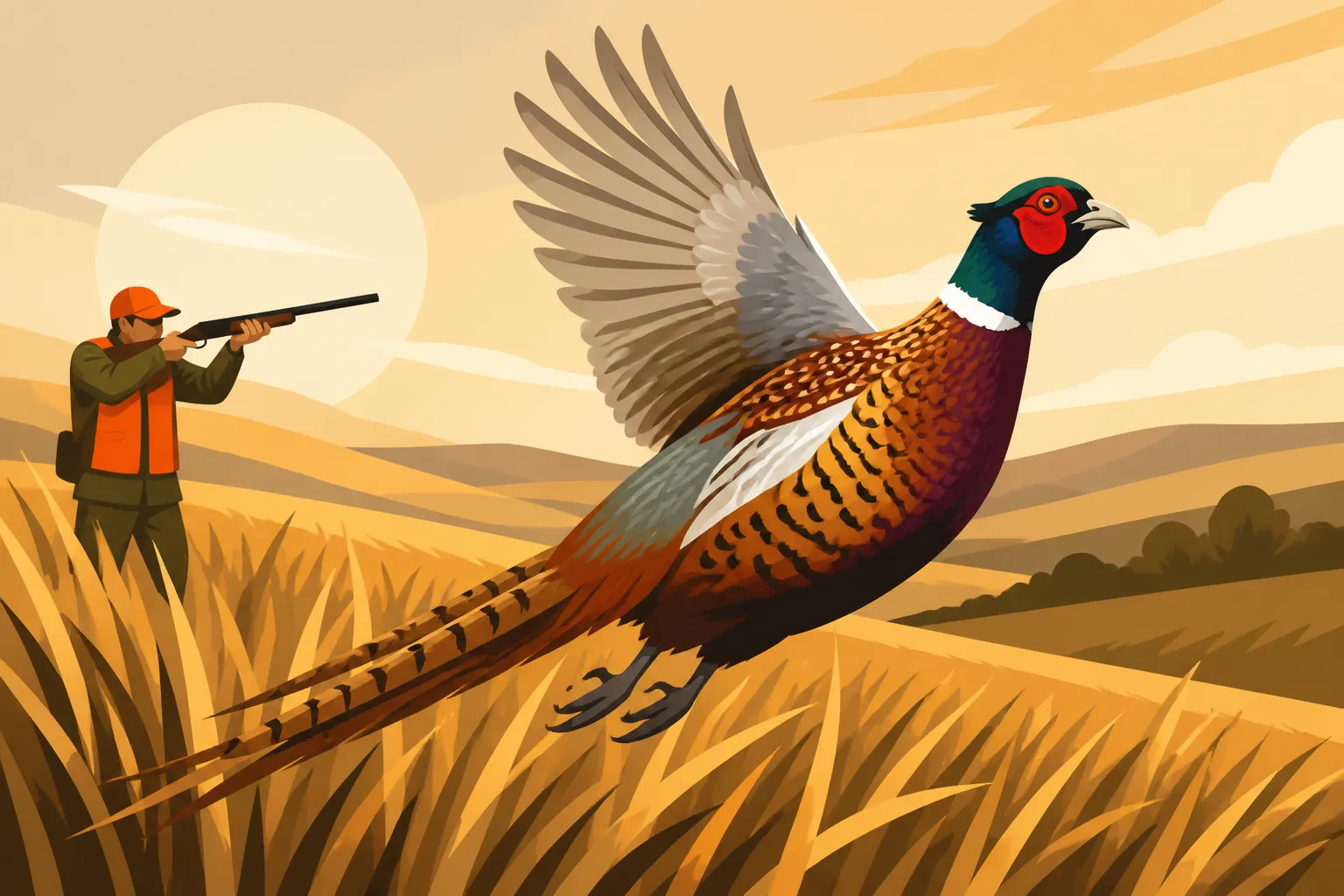
When Pheasants Were Introduced to South Dakota
It's a question many of us have pondered while watching a kaleidoscope of pheasants flush from a CRP field: how did these magnificent birds, now so emblematic of our state, actually get here? It feels like they've always been part of the South Dakota landscape, a cornerstone of our hunting heritage. But their arrival was a deliberate act, a fascinating story of ambition, adaptation, and the foresight of early conservationists. This guide will take you on that journey, exploring the origins of South Dakota's ring-necked pheasant population and how they became the wild success story we cherish today.
The Long Journey: From Asia to the American Prairies
Imagine trying to introduce a new species to an entirely foreign landscape, hoping it will not only survive but thrive. That was the challenge facing those who dreamed of pheasants populating the vast expanses of the American West. It wasn't a simple task, and the path to becoming "The Pheasant Capital of the World" was paved with careful planning and a little bit of luck.
Why the Ringneck Pheasant? A Perfect Match for South Dakota
The ring-necked pheasant ( Phasianus colchicus) is native to Asia, specifically a wide range stretching from the Black and Caspian Seas eastward through central Asia to China, Korea, and Japan. When folks back in the late 19th and early 20th centuries started looking for a game bird to introduce to America, the ringneck quickly rose to the top of the list, and for very good reason. These birds are incredibly hardy and adaptable, capable of surviving harsh winters and taking advantage of varied food sources. In their native lands, they'd learned to scratch out a living in agricultural areas, along river bottoms, and in dense grasslands – sounds a lot like South Dakota, doesn't it?
Our prairie environment, with its mix of cultivated fields, natural grasslands, and diverse cover, proved to be an almost perfect match. The pheasant's diet is incredibly flexible, encompassing everything from waste grain left in stubble fields to various seeds, berries, and a good helping of insects during the warmer months. This omnivorous diet meant they weren't too picky and could find sustenance even when conditions were tough. Plus, their impressive reproductive rate and ability to conceal nests in dense cover gave them a significant advantage. It was a perfect biological fit, almost as if nature had designed them specifically for the rolling fields and sloughs of the Dakotas.
Early Attempts at Introduction and Lessons Learned
The idea of bringing pheasants to North America wasn't exclusive to South Dakota, of course. There were scattered, often unsuccessful, attempts to introduce them in various states as early as the late 1700s. The first truly successful introductions are often credited to Oregon in 1881, where Chinese pheasants (a specific subspecies) were released and quickly established a wild population. These early successes, and many failures, provided invaluable lessons. It wasn't enough to just release birds; you needed to release enough of them, in suitable habitat, and protect them from over-harvest or other pressures until they could establish a self-sustaining breeding population.
The process involved quite a bit of trial and error. Some birds simply didn't take to the new environment, perhaps due to different climate stresses, lack of appropriate food, or overwhelming predator populations. Early conservationists learned that quality habitat, with plenty of nesting cover, escape cover, and winter thermal protection, was paramount. Simply dumping birds into a field and hoping for the best was a recipe for disappointment. These initial challenges helped refine the strategies that would eventually lead to the massive success seen here in South Dakota.
South Dakota's Groundbreaking Efforts: A Historical Timeline
While other states dabbled, South Dakota truly embraced the pheasant. It wasn't just a casual experiment; it became a concerted effort driven by a growing appreciation for the bird's potential to transform the state's outdoor landscape. The initial results were so promising that it sparked a widespread passion for pheasant propagation.
The First Official Stockings and Their Impact
The common wisdom and historical accounts point to the period just after the turn of the 20th century as the crucial time for pheasants in South Dakota. While some birds might have been released earlier by private individuals or clubs, the first truly significant and successful state-sponsored stocking efforts began in the early 1900s. Records suggest that a substantial number of pheasants, often referred to as "Chinese pheasants," were imported from countries like China and England and released.
A standout location for these early successes was Spink County, situated in the East River region of South Dakota. These foundational releases, particularly those around the town of Redfield, saw the birds not just survive, but reproduce with vigor. Imagine the excitement among local sportsmen and game officials as they saw broods of wild chicks appearing. This wasn't just a few birds sticking around; this was a burgeoning, self-sustaining population establishing a foothold. The initial success in areas like Spink County acted as a blueprint, proving that the ringneck pheasant could indeed flourish in South Dakota's rich agricultural landscape. Local residents, many of them farmers and ranchers, played a critical role, often protecting these new arrivals and reporting sightings, fueling the enthusiasm that would soon sweep the entire state.
Propagation and Expansion: From Initial Releases to a Thriving Population
Following these early successes, the state systematically expanded its pheasant propagation programs. Game farms were established to breed and raise pheasants for release, supplementing the natural reproduction of wild birds. The goal was to saturate suitable areas with enough breeding stock to ensure robust populations. But the real magic happened as these initial pockets of pheasants began to naturally expand their range. They followed river corridors, fencelines, and the edges of cultivation, slowly but surely spreading across the state.
The burgeoning agricultural landscape of South Dakota, with its abundant corn, soybean, and small grain fields, provided an almost limitless larder for the pheasants. Combine that with the natural grassland cover, the sloughs, and the tree claims, and you had a perfect storm of prime habitat. The pheasant population exploded, becoming so numerous that by the 1920s and 30s, hunting seasons were implemented, and the state quickly gained a reputation for unparalleled pheasant hunting. This remarkable growth is a key part of the story of South Dakota Pheasant Population History. It wasn't long before South Dakota was firmly cemented as a premier destination for pheasant hunters, a reputation that continues to this day. This period of rapid expansion laid the groundwork for Why South Dakota Is the Pheasant Capital.
The Unintended Consequences and Management Challenges
While the introduction of pheasants was undeniably a massive success for hunters and the state's economy, it also brought unforeseen challenges and underscored the dynamic relationship between wildlife, habitat, and human activity. Maintaining healthy pheasant populations requires constant vigilance and adaptation.
Habitat Changes and Their Influence on Pheasant Numbers
The very agricultural practices that initially helped pheasants thrive have also, at times, created challenges. Modern farming trends, such as larger fields, monoculture planting, and the reduction of fence rows and odd corners, can limit the diverse cover pheasants need for nesting, brooding, and winter survival. Think about the subtle shifts: a field that once had a buffer strip of grass might now be tilled right up to the road. These incremental changes, multiplied across vast acreages, can significantly impact bird numbers.
Programs like the Conservation Reserve Program (CRP) have been absolutely vital in mitigating some of these impacts. By incentivizing farmers to take marginal cropland out of production and plant it with grasses and other cover, CRP provides critical nesting and wintering habitat. When CRP acres are abundant, pheasant populations generally flourish. Conversely, when CRP Loss and South Dakota Bird Numbers occurs due to policy changes or economic shifts, we often see a corresponding dip in bird numbers. The challenge for hunters is often finding these remaining pockets of habitat, especially on public land. Tools like those found on GoHunt can be incredibly helpful for analyzing satellite imagery and identifying potential pheasant habitat, showing you where those vital chunks of cover still exist amidst the working landscapes. This detailed scouting allows hunters to be more efficient and respectful of private land boundaries, focusing their efforts where birds are most likely to be.
Management Strategies and the Future of Pheasant Hunting
Managing such a widespread and economically important game bird requires a multi-faceted approach. State wildlife agencies continually monitor pheasant populations, adjusting hunting regulations like bag limits and season dates to ensure sustainable harvest and healthy breeding stock. Factors like Winter Severity and South Dakota Pheasant Survival and Spring Rain and Pheasant Nesting Success play huge roles in year-to-year population fluctuations, and wildlife managers must consider these natural cycles.
The long-term future of pheasant hunting in South Dakota relies on ongoing conservation efforts. This includes not just large-scale programs like CRP, but also smaller, localized habitat improvement projects, often carried out by local conservation groups and landowners. Maintaining a balance between agricultural production and wildlife habitat is an ongoing dance, one that requires collaboration and foresight. While the traditional brood surveys that once estimated pheasant numbers are no longer conducted in the same way, the state still employs various methods to assess bird health and population trends. Knowing What Replaced the Pheasant Estimate and How GFP Counts Big Game can give hunters a better understanding of how these decisions are made.
For us, the hunters, our role is crucial. We support conservation through license sales and by advocating for sound land management practices. We adapt our hunting strategies, understanding that late-season birds might be found in Late-Season Birds in Thick Cover, or that certain areas like Best South Dakota Counties for Pheasants consistently offer good opportunities. The ring-necked pheasant has truly become an integral part of South Dakota's identity, both economically and culturally, and its legacy is a testament to successful introduction and ongoing stewardship.
Key Factors for Pheasant Success
| Factor | Description | Impact on Pheasant Populations |
|---|---|---|
| Nesting Cover | Dense, undisturbed grass cover (e.g., CRP fields, native prairie) for hens to lay eggs and raise broods. | Critical for reproductive success; lack leads to lower chick recruitment. |
| Winter Cover | Tall, dense vegetation like cattail sloughs, shelterbelts, or heavy brush to protect from blizzards. | Essential for survival during harsh winters; prevents mortality. |
| Food Sources | Abundant waste grain (corn, wheat, soybeans), weed seeds, and insects. | Provides energy for survival, growth, and reproduction. |
| Predator Control | Balanced predator populations (fox, coyote, raptors) to prevent excessive predation on nests and birds. | Helps maintain optimal survival rates for eggs, chicks, and adult birds. |
| Mild Weather | Moderate temperatures, especially during nesting season; light snow cover in winter. | Favorable for nesting success and reduces winter stress. |
Disclaimer
This article is for general informational purposes only and does not constitute professional advice. Laws, prices and regulations vary by location and change over time. Consult a qualified professional for guidance on your specific situation.