Angostura and Southern Black Hills Ground
Hunting in South Dakota offers such incredible diversity, but it can be a real head-scratcher trying to pinpoint those hidden gems, especially when you're looking beyond the typical pheasant fields. Many hunters get overwhelmed by the sheer size of the state and the mix of private and public ground. This comprehensive guide will walk you through the unique opportunities and challenges of finding hunting ground around Angostura Reservoir and the southern Black Hills, giving you the practical insights you need to plan a successful trip to these distinctive areas.
Understanding the Angostura Area for Hunters
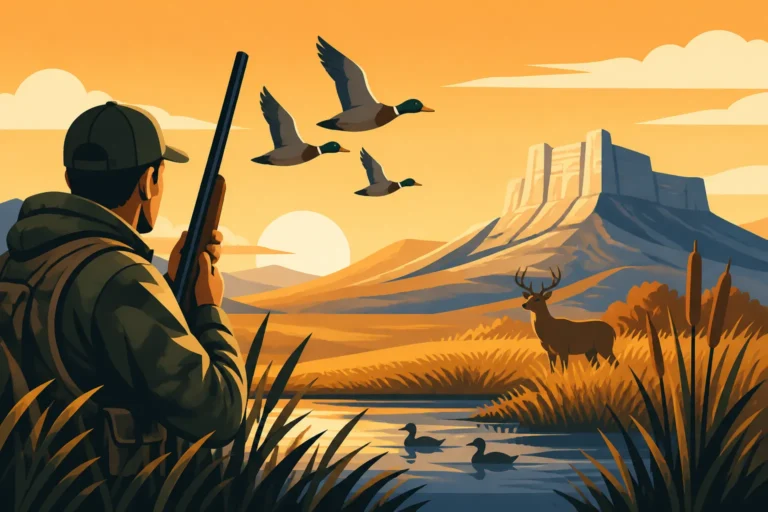
When folks hear "South Dakota hunting," their minds often jump straight to pheasants, but the Angostura area, nestled in the southwestern part of the state near Hot Springs, presents a totally different flavor of outdoor pursuit. This isn't your classic cattail slough country; it's a fascinating mix of large reservoir, diverse riparian habitat, and surrounding open prairie that offers some unique opportunities, but also its own set of challenges. It’s a place that demands a bit of homework before you arrive.
Unique Characteristics of Angostura Reservoir and Surrounding Lands
Angostura Reservoir is a significant body of water in a relatively dry landscape, which immediately makes it an oasis for wildlife. The reservoir itself is managed by the Bureau of Reclamation, with significant portions of the shoreline and surrounding lands managed by South Dakota Game, Fish and Parks (GFP) as the Angostura State Recreation Area and Sheps Canyon Recreation Area. This means you have a patchwork of public access around the water. The habitat ranges from cottonwood groves along the reservoir’s edges to mixed-grass prairie and sagebrush uplands farther out. This diversity attracts a variety of game species that you might not typically associate with South Dakota's eastern half.
One of the biggest draws here is waterfowl. Ducks and geese utilize the reservoir during migration, and while it might not be the pothole heaven of the eastern prairies, it can offer good shooting, especially early in the season or during migration peaks. Beyond waterfowl, the brushy draws and cottonwood stands provide cover for both mule deer and whitetails. Don't be surprised to see a mix of both species here, especially in the transition zones where the prairie meets the timbered river breaks leading into the reservoir. There are also opportunities for upland birds like sharp-tailed grouse and Hungarian partridge in the surrounding grasslands, though they can be scattered and require a good bit of walking. Plus, predator hunting can be quite good here, with coyotes always on the prowl in the more open country.
Primary Game Species and Access Points Around Angostura
Angostura offers a genuine mixed-bag potential if you’re willing to adapt your hunting style. For waterfowl, hunters typically set up along accessible shorelines or in bays, often using decoys. Scouting is key here to find where birds are loafing or feeding. Access can be tricky, as some areas are developed for recreation (boating, camping), so understanding the boundaries of the recreation area and adjacent public hunting lands is critical.
Deer hunters will find the most success targeting the brushy draws and timbered pockets along the Cheyene River arm of the reservoir and in the various fingers and coulees that feed into the main body of water. These areas offer cover and browse. You’ll often find yourself still-hunting or setting up small drives, especially if hunting with a group. Getting away from the more developed areas by foot or boat can significantly increase your chances of finding undisturbed deer. Public hunting access is marked, and using a reliable mapping app like onX Hunt can be invaluable for identifying exactly where you can legally hunt and where private or restricted recreation areas begin. This is crucial for avoiding trespass and making the most of your time. You'll want to review South Dakota Deer Licence Types by Region to ensure you're applying for the correct tag if deer are your primary target.
Hunting Opportunities Near Angostura Reservoir
| Game Species | Typical Habitat | Hunting Style | Access Challenges |
|---|---|---|---|
| Waterfowl | Reservoir shoreline, shallow bays, river arms | Decoy spreads, jump shooting | Recreational boat traffic, identifying legal shooting zones |
| Mule Deer/Whitetail | Cottonwood groves, brushy coulees, riparian thickets | Still-hunting, small drives, stand hunting | Patchwork of public/private, rough terrain in draws |
| Sharp-tailed Grouse | Mixed-grass prairie, sagebrush uplands | Walking extensive areas, flushing birds | Scattered populations, large areas to cover |
| Coyotes | Open prairie, draws, edges of timber | Calling, spot-and-stalk | Visibility over large distances, wind direction |
The state recreation areas around Angostura are generally well-marked with signs indicating hunting access or restrictions. Pay close attention to these signs, especially during the peak fall season when many people are recreating there.
Hunting Opportunities in the Southern Black Hills
Just a stone's throw from Angostura, the southern Black Hills offer a dramatically different hunting experience. Here, you transition from prairie and reservoir country into mountains, ponderosa pine forests, and steep canyons. This is big country that demands different skills and preparation, but it rewards those willing to put in the effort with a truly memorable hunt for a variety of big game and forest-dwelling upland birds.
Black Hills National Forest: A Hunter's Playground
The Black Hills National Forest comprises a significant portion of the southern Black Hills, providing vast tracts of public land, a welcome sight for any hunter tired of chasing permission slips. This forest offers opportunities for species like deer, elk, turkey, and ruffed grouse. The terrain is characterized by steep ridges, deep draws, and dense stands of ponderosa pine, interspersed with aspen groves and open parks. This varied landscape creates diverse habitats for different game animals.
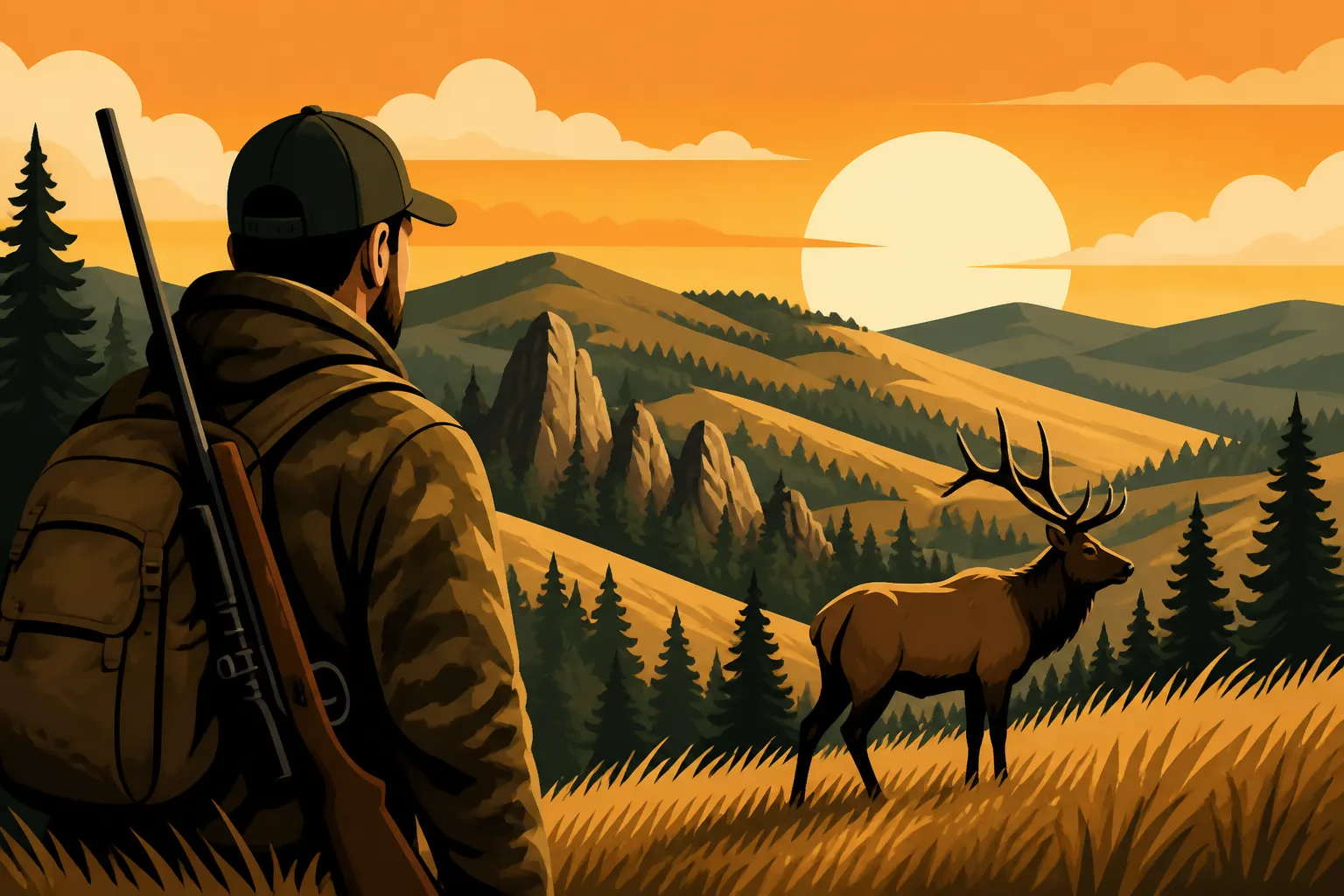
For deer, you'll find a mix of whitetails and mule deer, often in the same areas. Whitetails tend to stick to the thicker timber and riparian corridors along creeks, while mule deer are often found on the more open, south-facing slopes and in the scattered sagebrush pockets. The Black Hills is also one of the few places in South Dakota where you can pursue elk, though securing a tag can be challenging and often requires accumulating preference points over several years. Hunting elk here is an experience unto itself, demanding serious physical conditioning and a deep understanding of their movements in timbered terrain. If elk are on your radar, I highly recommend researching Black Hills Elk Hunting Tactics and applying for a Black Hills unit.
Turkey hunting, particularly for Merriam's turkeys, is also popular in the Black Hills, both in the spring and fall seasons. These birds are stunning and provide a thrilling hunt in the beautiful pine forests. Ruffed grouse can be found in the aspen and mixed timber stands, especially near water sources, offering a fast-paced hunt for those willing to bust through thick cover.
Accessing Forest Roads and Remote Areas
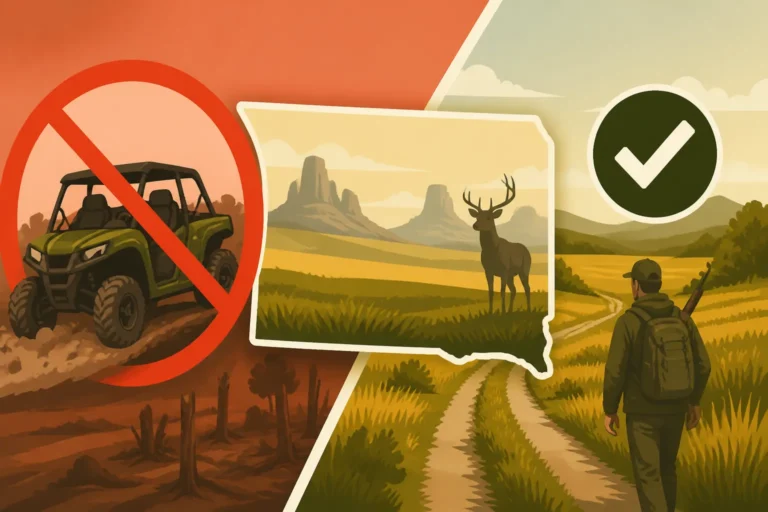
Accessing the Black Hills National Forest primarily involves a network of forest service roads. Many of these roads are well-maintained, providing good access to trailheads and interior sections of the forest. However, it's critical to pay attention to Motor Vehicle Use Maps (MVUMs), which clearly delineate which roads are open to motorized vehicles, which are seasonal, and which are closed to protect wildlife or sensitive habitats. Ignoring these can lead to fines or environmental damage. A mapping app like onX Hunt is incredibly useful for overlaying these MVUMs onto satellite imagery, helping you understand your legal access points in real-time.
For those seeking solitude and less pressured game, getting away from the main roads is key. This means lacing up your boots and heading into the backcountry. Remote areas often require significant hiking, sometimes several miles, but the reward can be undisturbed game. Look for areas with a good mix of cover, water, and forage. Features like benches, saddles, and hidden pockets within the steep terrain are often overlooked by less ambitious hunters. Always let someone know your plans when venturing into remote Black Hills terrain, as cell service can be spotty, and the weather can change rapidly. Don't forget a First Aid Kit for a Prairie Hunt as these environments can be unforgiving.
Navigating Public and Private Land in These Diverse Areas
One of the biggest headaches for any hunter in South Dakota is deciphering the mosaic of public and private land. This is particularly true in the transition zones between prairie and forest, or around large water bodies like Angostura. Understanding how to legally access and navigate these areas is paramount to a successful and ethical hunt.
Identifying Land Boundaries and Easements
The first, and arguably most important, step in hunting the Angostura and Southern Black Hills areas is knowing exactly where you are and whose land you're on. South Dakota has a mix of federal lands (National Forest, National Grasslands, Corps of Engineers lands), state lands (Game Production Areas, State Recreation Areas, School and Public Lands), and vast amounts of private property. Each type of land comes with its own rules and regulations regarding hunting access.
For example, around Angostura, you'll find parts of the State Recreation Area that are open to hunting, but others that are clearly marked as no-hunting zones due to high recreational use. Similarly, in the Black Hills, while the National Forest is largely public, there are private inholdings and parcels adjacent to the forest boundary that are off-limits without permission. This is where modern technology becomes an indispensable tool. Tools like onX Hunt are truly game-changers here. With its detailed parcel data, you can see property lines, landowner names, and public land boundaries overlaid on a map directly on your phone or GPS device. This allows you to hunt confidently, knowing you’re not trespassing. You can even filter by land type to focus your scouting efforts on public access. This kind of mapping is essential, especially when you're glassing from a distance and trying to decide on a stalk, or when moving through areas with unclear fence lines. You'll also find the Using the South Dakota Public Hunting Atlas resource invaluable for initial planning.
Understanding South Dakota's Trespass Laws
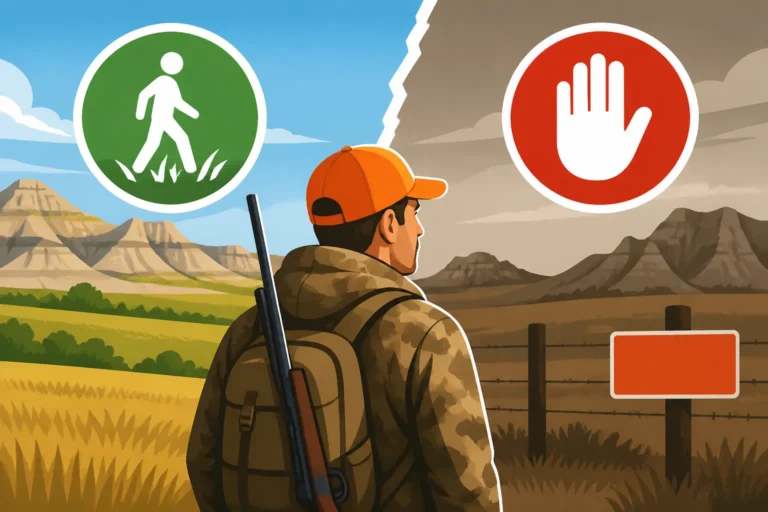
South Dakota has specific trespass laws that hunters must be aware of. Generally, land is considered "posted" if it has signs, purple paint on fence posts or trees, or if it's cultivated. However, even if land isn't explicitly posted, it's still private property, and hunting on it without permission is illegal. While some states have "implied permission" laws, South Dakota does not. Always assume private land requires explicit permission from the landowner.
This is where the idea of "corner crossing" also comes into play, particularly relevant in the West River and National Grasslands areas that might border the Black Hills region. Corner crossing, the act of stepping from one piece of public land to another at a property corner without touching private land, has been a contentious issue. While the courts have provided some clarity, the safest approach is always to ensure you have clear legal access to public land, whether it's through established roads, easements, or with landowner permission. For areas like the Black Hills, legal public access via forest roads or clearly marked trails is generally straightforward, but knowing your unit boundaries and access points is still critical. For deeper insights into access, check out South Dakota Trespass Law and Posted Land.
Practical Tips for Hunting These Areas
Hunting in the Angostura and Southern Black Hills regions requires specific preparation and tactics distinct from other parts of South Dakota. From dealing with the terrain to managing your gear, a few smart strategies can make all the difference.
Scouting and Physical Preparation
Scouting is paramount in these diverse landscapes. For Angostura, spend time before the season driving the accessible roads, identifying potential waterfowl landing zones, and glassing brushy draws for deer. Pay attention to water levels and how they might affect bird movement or deer access to certain areas. Look for pinch points, cover, and fresh sign. For deer, understanding where they bed, feed, and water is crucial.
In the Black Hills, pre-season scouting is even more demanding but equally rewarding. This involves getting out on foot, hiking the ridges, and exploring the draws. Look for elk sign—rubs, wallows, fresh tracks, and scat. For deer, identify south-facing slopes that get early sun, providing warmth and better forage. Glassing from high points at first light and last light can reveal movement patterns. Utilizing satellite imagery on onX Hunt or similar tools can help you identify potential travel corridors, bedding areas, and feeding grounds even before you hit the trail. Also, consider the elevation changes; a five-mile hike in the Black Hills is far more strenuous than five miles on the prairie. Physical fitness is not just about comfort; it's about safety and your ability to effectively hunt these areas. You'll be glad for any conditioning you do beforehand, especially if you're pursuing elk or packing out a deer from a steep canyon. I've found that early season scouting can tell you a lot about Which Coulees Hold Bucks in Dry Years in the Black Hills fringe areas.
Essential Gear and Safety Considerations
The gear you bring should reflect the varied conditions of these regions.
For Angostura:
- Optics: Good binoculars are essential for spotting waterfowl on the open water or deer in distant draws. A spotting scope can be helpful for identifying birds at long range.
- Waterproof Gear: Whether you're in a layout blind by the reservoir or busting through dew-laden grass, waterproof boots and outerwear are non-negotiable.
- Waders/Chest Waders: If you plan on setting up waterfowl decoys, you'll likely need to get into the water.
- Mapping Device: A reliable GPS or mapping app is crucial for navigating the public/private patchwork.
- Layered Clothing: Temperatures can swing dramatically from early morning to midday, so dress in layers.
For the Southern Black Hills:
- Durable Hiking Boots: Forget your casual hunting boots; you need sturdy, ankle-supporting, waterproof boots that can handle steep, rocky, and often muddy terrain.
- Layered Clothing System: This is critical for managing temperature as you climb, descend, and stop to glass. Think moisture-wicking base layers, insulating mid-layers, and a waterproof/windproof outer shell.
- Backpack: A comfortable, adequately sized pack is essential for carrying water, food, extra layers, first-aid kit, and eventually, meat if you're successful.
- Optics: High-quality binoculars are a must for glassing timbered slopes for deer and elk.
- GPS/Mapping App: Again, vital for navigation in dense timber and steep terrain, where landmarks can be confusing.
- Bear Spray: While not common, mountain lions and bears are present in the Black Hills. It's always wise to carry bear spray and know how to use it.
- Headlamp: Even if you plan to be out during daylight, a headlamp is a must for early morning starts or unexpected late returns.
Safety is paramount. Always tell someone where you are going and when you expect to return. Be aware of weather forecasts, as conditions can change quickly, especially in the mountains. Carry enough water, navigation tools, and a first-aid kit. Hunting pressure can vary, so wear plenty of blaze orange when required, and always be aware of other hunters, especially during big game seasons. For Black Hills specific advice, you might find Black Hills Forest Motor Vehicle Use Maps useful for planning vehicle access.
| Feature | Angostura Hunting Ground | Southern Black Hills Hunting Ground |
|---|---|---|
| Primary Game | Waterfowl, Whitetail/Mule Deer, Sharp-tailed Grouse, Coyotes | Whitetail/Mule Deer, Elk, Merriam's Turkey, Ruffed Grouse, Coyotes |
| Typical Terrain | Large reservoir, cottonwood river breaks, mixed-grass prairie, sagebrush | Ponderosa pine forests, steep ridges, deep draws, some aspen/open parks |
| Access Type | State Recreation Area, Bureau of Reclamation lands, some private | Black Hills National Forest (vast public), private inholdings |
| Hunting Pressure | Can be high near popular recreational areas for waterfowl; moderate for deer in remote pockets | Variable; high near roads for deer, lower for elk in deep backcountry |
| Physical Demands | Moderate walking, some wading for waterfowl | High, steep climbs, long hikes, good conditioning required |
| Key Challenges | Identifying legal access around recreation zones, scattered upland birds | Navigating dense timber, steep terrain, challenging elk draws |
No matter which area you choose to focus on, both Angostura and the Southern Black Hills offer incredible hunting experiences that diverge from South Dakota's more famous pheasant opportunities. With careful planning, diligent scouting, and the right gear, you'll be well on your way to a memorable hunt in these rugged and beautiful parts of the state.
Disclaimer
This article is for general informational purposes only and does not constitute professional advice. Laws, prices and regulations vary by location and change over time. Consult a qualified professional for guidance on your specific situation.