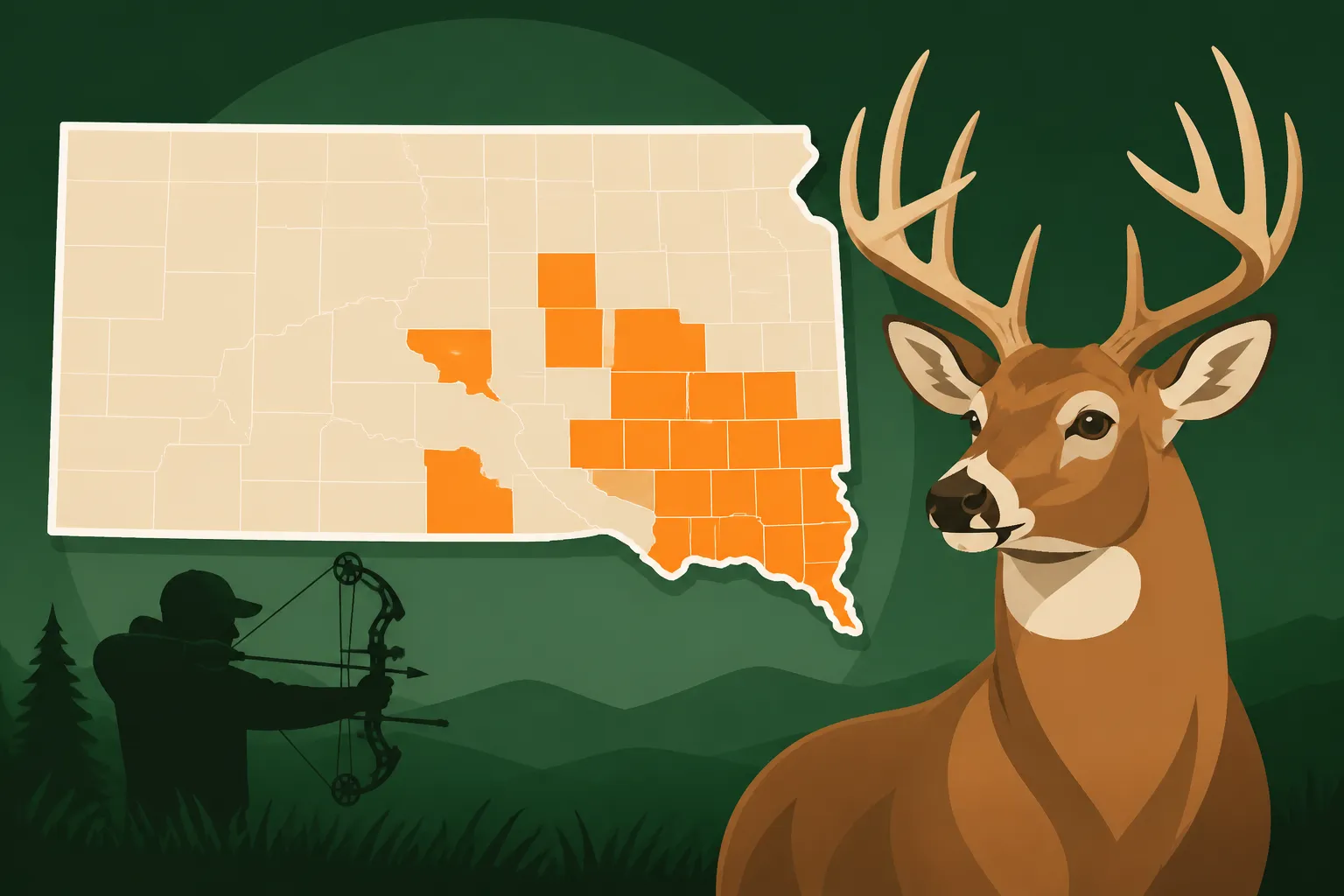
Where CWD Has Been Found in South Dakota
It's a scary topic, isn't it? That feeling of uncertainty about the health of the deer in your favorite hunting spots can really cast a shadow over the season. As hunters, we want to know that the animals we pursue are healthy, and understanding the landscape of Chronic Wasting Disease (CWD) is a crucial part of that. This guide isn't here to scare you, but to arm you with the facts about where CWD has been identified in South Dakota, so you can make informed decisions for your hunts and help protect our valuable wildlife resources.
The Uneasy Spread: Where CWD Has Taken Root in South Dakota
Chronic Wasting Disease is one of those issues that keeps wildlife managers and hunters alike up at night. It's a progressive, fatal neurological disease that affects cervids – deer, elk, and moose – and while it doesn't currently pose a known risk to humans, its impact on game populations is a serious concern. For South Dakota hunters, understanding its presence isn't just about regulations; it's about being informed stewards of the land and the animals we cherish.
Ground Zero: The Black Hills and Western Expansion
When we talk about CWD in South Dakota, the conversation almost always starts in the Black Hills. This region was indeed the initial epicenter of the disease's detection within our state, with the first confirmed cases dating back to the late 1990s. Specifically, Custer State Park and the surrounding areas within the Black Hills National Forest were where CWD first became established. The rugged, timbered terrain and the contained nature of some populations likely played a role in its initial spread and detection.
Over time, CWD has unfortunately become endemic in the Black Hills region. This means it's considered established within the local deer and elk populations, circulating at varying prevalence rates. Hunters pursuing deer and elk in counties like Custer, Fall River, Meade, and Pennington within the Black Hills should be aware that CWD is present in these areas. It's not a matter of "if" it's there, but "how much" and "where," making continuous surveillance vital. The disease can be particularly concerning for those who cherish the opportunity for Black Hills Elk Hunting Tactics or chasing big mule deer in the hills. The challenges of managing a disease like CWD in a vast, wild area like the Black Hills are immense, but the South Dakota Game, Fish and Parks (GFP) works tirelessly with hunters to monitor its progression.
Eastward Creep: Isolated Cases and Surveillance Zones
While the Black Hills remains the primary area of concern for CWD in South Dakota, the unfortunate reality is that the disease isn't confined to the western mountains. Over the years, isolated cases have been detected in other parts of the state, particularly in various West River counties outside the Black Hills proper, and occasionally, even east of the Missouri River. These detections are often a result of targeted surveillance, hunter-submitted samples from visibly sick animals, or roadkill testing.
These isolated cases don't necessarily mean CWD is endemic in these new areas yet, but they trigger increased vigilance and often lead to the designation of CWD Surveillance Units. These units are special areas where the GFP focuses intensive sampling efforts to determine the extent of the disease's presence. Hunters in these zones might face mandatory testing requirements for harvested deer or elk, or at least be strongly encouraged to submit samples. The goal is to detect and understand any potential spread early. For instance, a mule deer harvested outside the Black Hills, but still in West River Hunting Country in South Dakota, might trigger concern if it tests positive, leading to more concentrated efforts in that specific region. This kind of careful monitoring helps inform decisions on topics like the overall South Dakota Mule Deer Population and South Dakota Whitetail Population health.
South Dakota's Defense: Monitoring and Regulatory Measures
The state of South Dakota, primarily through its GFP department, has a robust and evolving strategy for monitoring and managing CWD. It's a never-ending battle, but one that relies heavily on both scientific expertise and the invaluable cooperation of hunters.
The Eyes on the Ground: Surveillance and Testing Efforts
One of the most critical aspects of CWD management is surveillance. This means actively looking for the disease to understand its distribution and prevalence. The GFP conducts routine testing throughout the state, focusing particularly on known CWD-positive areas and any newly identified surveillance units. This surveillance takes several forms:
- Hunter-Submitted Samples: Hunters are often the first line of defense. In designated CWD surveillance units, hunters may be required or strongly encouraged to submit lymph node samples from their harvested deer or elk. There are typically convenient drop-off locations, like freezer barrels or GFP offices, where hunters can leave samples. These samples are then sent to a diagnostic lab for analysis. Many hunters are eager to participate in programs like South Dakota CWD Testing for Hunters because they care deeply about the health of the herd.
- Roadkill and Targeted Surveillance: GFP staff also collect samples from road-killed cervids, especially in areas where CWD is known or suspected. They might also conduct targeted surveillance on animals that appear sick or exhibit CWD-like symptoms.
- Voluntary Testing: Even outside of mandatory units, many hunters choose to have their animals tested, particularly if they have concerns or are hunting near a known CWD area. This voluntary participation is crucial for gathering broader data.
The data collected from these surveillance efforts helps the GFP create updated CWD distribution maps and informs their management decisions, including setting regulations and hunting unit boundaries. Keeping tabs on the Black Hills Elk Herd History is also part of this ongoing effort, as elk are susceptible to the disease.
Carcass Movement Restrictions and Safe Handling
To prevent the spread of CWD to new areas, South Dakota has implemented strict regulations regarding the transportation of cervid carcasses, particularly from CWD-positive or surveillance units. These rules are designed to prevent hunters from inadvertently moving high-risk parts of an animal – like the brain, spinal cord, or lymph nodes – into an unaffected area. Imagine the frustration of harvesting a beautiful buck only to realize you can't transport it whole across the state line; these rules are exactly why.
Generally, only "low-risk" parts of a harvested cervid are allowed to be transported out of CWD-positive units. These typically include:
- Deboned meat
- Clean skull plates (antlers attached) with all brain tissue removed
- Capes with no attached spinal column or skull tissue
- Hides with no head attached
- Finished taxidermy products
This means that if you hunt in a CWD-positive area, you'll need to field dress and process your animal accordingly. This might involve quartering the animal and carefully separating high-risk tissues at the kill site or at a local processor. These Carcass Transport Rules for CWD are vital, and knowing them beforehand saves a lot of hassle and ensures you're hunting legally and responsibly. Proper disposal of high-risk materials, often in approved landfills, is also a critical part of these regulations.
Navigating Your Hunt: What CWD Means for South Dakota Hunters
Understanding where CWD has been found is the first step. The next is knowing how to apply that knowledge to your hunting plans and practices. CWD doesn't have to stop you from hunting, but it does require a heightened level of awareness and responsibility.
Informed Decisions: Choosing Your Hunting Ground
For many, the first question CWD raises is, "Should I still hunt in these areas?" The answer, for most, is yes, but with an emphasis on being informed and cautious. The South Dakota GFP provides maps and detailed information annually, highlighting CWD-positive units, surveillance units, and any specific regulations tied to them. Before you even apply for a tag or head out to the field, it's paramount to consult these resources.
Using digital tools like those found on GoHunt can be incredibly helpful for researching specific hunting units, cross-referencing CWD data with unit boundaries, and understanding local regulations. This allows you to assess the risk and make a personal choice about where you feel most comfortable hunting. Some hunters might choose to avoid known CWD hotspots entirely, while others might focus on units with lower reported prevalence rates. Still others, understanding the disease, might simply commit to rigorous testing and processing practices. Remember, making an informed choice is key, and this means looking up the Chronic Wasting Disease in South Dakota information every year, as the situation can evolve.
Prioritizing Hunter Safety and Ethical Practices
Beyond legal requirements, CWD demands a commitment to ethical hunting practices and personal safety. If you decide to hunt in an area where CWD is present, or even if you're just being extra cautious, there are several steps you can take:
- Test Your Animal: If you harvest a deer or elk, especially in a CWD management or surveillance unit, submit a sample for testing. Waiting for results before consuming the meat is a wise precaution. The state will notify you of the results, providing peace of mind or guiding your next steps if the animal tests positive.
- Field Dress Carefully: Always wear gloves when field dressing an animal, regardless of CWD status. Minimize contact with the brain, spinal cord, and lymph nodes (found in the neck and around major joints). These are the parts that contain the highest concentration of prions, the infectious agents of CWD. If you’re quick and efficient, like when learning how to properly perform Field Dressing an Antelope Fast, the same principles apply to deer and elk to minimize exposure.
- Handle Carcasses Responsibly: Follow all carcass transport regulations. If you're processing at home, dispose of high-risk parts in a landfill or by deep burial. Never leave these parts where other cervids or scavengers can access them.
- Report Sick Animals: If you see any deer or elk exhibiting symptoms of CWD (emaciation, lethargy, drooling, unusual behavior), do not harvest it. Instead, report the sighting to the South Dakota GFP immediately. This helps wildlife managers track potential new cases.
- Stay Updated on Regulations: South Dakota Harvest Reporting Rules and CWD regulations can change from season to season. Make it a habit to check the latest rules before every hunt.
CWD is a challenging issue, and it's natural to feel frustrated or concerned. However, by staying informed and adopting responsible hunting practices, we can all contribute to managing this disease and ensuring that South Dakota remains a premier hunting destination for generations to come.
| Hunter Responsibility | Action Steps | Why It Matters |
|---|---|---|
| Stay Informed | Check GFP CWD maps and regulations annually, especially for your chosen hunting unit. | Regulations can change, and CWD zones are updated as new cases are confirmed. |
| Test Your Harvest | Submit samples from deer or elk harvested in CWD surveillance units or if the animal appeared ill. Utilize GFP drop-off sites. | Helps monitor the disease's spread and provides peace of mind about the meat you consume. |
| Carcass Management | Understand and follow rules for transporting carcasses out of CWD-positive areas. Only transport "low-risk" parts. | Prevents the spread of the disease to new areas. |
| Proper Disposal | Dispose of high-risk carcass parts (brain, spinal cord, lymph nodes) in approved landfills or by burying them deeply on site. | Reduces environmental contamination and transmission risk. |
| Field Hygiene | Wear gloves when field dressing. Minimize contact with brain and spinal tissues. Clean tools thoroughly. | Protects yourself and prevents potential cross-contamination. |
| Report Sick Animals | If you see a deer or elk exhibiting CWD symptoms (emaciation, drooling, lethargy), report it to South Dakota GFP. | Early detection helps management efforts and can prevent further spread. |
Disclaimer
This article is for general informational purposes only and does not constitute professional advice. Laws, prices and regulations vary by location and change over time. Consult a qualified professional for guidance on your specific situation.