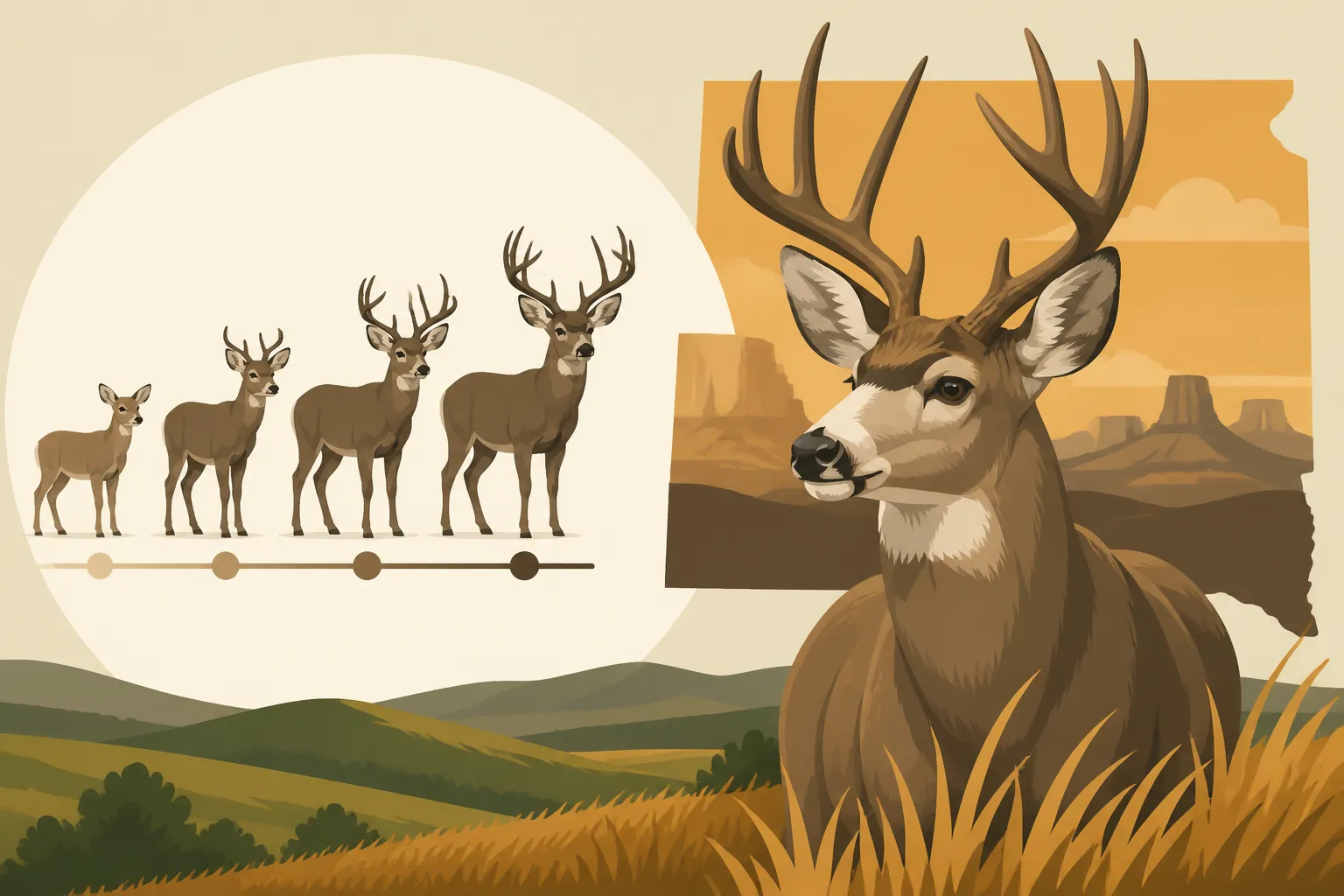
Mule Deer Buck Age Structure
One of the most engaging, and often frustrating, aspects of hunting mule deer in South Dakota's vast West River country is trying to accurately judge a buck's age in the field. It’s not just about antler size, but a complex interplay of environmental factors, genetics, and hunting pressure that shapes the age structure of the herds. This guide will help you understand these dynamics and equip you with practical knowledge to better assess a buck's maturity for a more informed hunting experience.
Understanding What Shapes South Dakota's Mule Deer Buck Age Structure
The age distribution of bucks you encounter in South Dakota isn't random; it's a reflection of the land, the weather, and how the species is managed. Truly understanding the factors at play can give you a deeper appreciation for the animals and help temper expectations when you're out scouting or hunting.
Environmental Influences: Drought, Winter, and Nutrition
South Dakota's West River landscape, while ruggedly beautiful, can be incredibly harsh. This environment plays a massive role in how many deer survive to older age classes. For example, severe winters, with heavy snow and prolonged cold, can decimate deer populations, especially fawns and older, weaker animals. You might remember similar impacts on the South Dakota Pronghorn Population Estimate during particularly rough years, and mule deer face those same challenges. A couple of brutal winters back-to-back can create a noticeable "gap" in the age structure, meaning fewer bucks from those specific birth years will ever reach maturity.
Beyond winter, the quality and quantity of forage are critical. Dry years, which aren't uncommon on the prairie, mean less nutritious feed. This directly impacts antler development and body condition. A young buck might have fantastic genetics, but if he's struggling to find enough food, his antlers will reflect that, potentially making him look younger than he actually is. Conversely, an older buck in a year with abundant, high-quality forage might put on an impressive rack, temporarily masking signs of his declining prime. Keeping an eye on rainfall patterns and general range conditions can offer clues about what to expect from the deer's health and antler potential. Understanding how these factors influence Mule Deer Fawn Recruitment in Dry Years is crucial for anticipating future buck availability.
Hunting Pressure and Management Strategies
The pressure from hunters also significantly influences the age structure of mule deer bucks. If a unit experiences heavy hunting pressure, especially if hunters are quick to pull the trigger on any legal buck, it can result in a younger overall age structure. Many bucks simply won't have the chance to reach their full potential. This is often a frustration for hunters hoping to find those truly mature, heavy-antlered animals. It's a balance: we all want to harvest a deer, but consistent pressure on younger bucks can deplete the population of future trophies.
South Dakota Game, Fish and Parks (GFP) implements various management strategies to try and foster a healthier age structure, such as specific unit allocations and limited tag numbers. These measures are designed to protect younger bucks and allow more of them to survive into older age classes. For example, some units might have very limited non-resident tags, or specific weapon restrictions that can indirectly influence pressure. While South Dakota doesn't typically employ antler point restrictions like some other states, the limited nature of certain draws encourages hunters to be more selective, knowing their tag is a precious commodity. Tools like GoHunt can be invaluable here, helping you research specific unit harvest data and draw odds, giving you a better sense of the potential for encountering mature bucks. This data, while not directly showing age structure, can indicate the intensity of hunting pressure and indirectly hint at the available age classes.
Key Characteristics for Estimating Mule Deer Buck Age in the Field
When you finally spot a mule deer buck across a vast prairie coulee or cresting a West River break, the excitement is palpable. But then comes the critical decision: is it the buck you're looking for? Learning to read the subtle (and sometimes not-so-subtle) clues about a buck's age is an art developed over many hours of observation.
Antler Size and Configuration: More Than Just Points
It's a common misconception that the biggest antlers always belong to the oldest buck. While true that a buck's antlers generally increase in size and mass up to a certain point, usually peaking between 4.5 and 6.5 years of age, there's more to it than just raw inches. A 3.5-year-old buck with excellent genetics and abundant nutrition can certainly sport an impressive rack that might fool you into thinking he's older. Conversely, an old, past-his-prime buck might have a wider spread but lack the mass or tine length he once had.
When judging antlers, look beyond just the number of points. Pay attention to basal mass – the thickness of the antlers right above the burr. Mature bucks typically have heavy, thick bases. The length of the tines (forks) and the overall width of the spread are also important. Mule deer are known for their characteristic forked antlers, and while a young buck might show simple forks, a truly mature animal often exhibits deep, well-developed forks that create a more "tree-like" or complex appearance. Sometimes, older bucks can start to "go backward," showing less impressive antlers as their body dedicates more resources to survival rather than growth. This phenomenon is closely tied to Antler Growth and Prairie Nutrition, and it's why looking at the whole animal is always better than just focusing on the rack.
Body Characteristics: The "Tractor-Tire" Neck and Sagging Belly
While antlers can certainly be deceiving, a buck's body characteristics are often a more reliable indicator of age, especially for bucks 3.5 years and older. Think about a football player versus an older, retired strongman – the younger one is lean and athletic, while the older one carries more bulk.
A young buck (1.5-2.5 years old) will typically have a lean, athletic build with a thin neck that blends almost seamlessly into its shoulders. Its legs will appear long in proportion to its body, giving it a gangly look. As a buck matures to 3.5 years, his body will start to fill out, and his neck will thicken, especially as the rut approaches. At 4.5 years and beyond, you'll start to see that classic "tractor-tire" neck, particularly during the pre-rut and rut. This neck will be noticeably thicker than his head and chest, giving him a powerful, dominant appearance. His chest will be deep and broad, and his belly might start to sag slightly, giving him a more barrel-chested, stocky look. His legs will appear shorter in relation to his now heavier, more substantial body. An older buck might also have a more pronounced brisket that hangs lower than a younger deer. These physical cues are often the clearest way to discern a true elder of the herd from a younger, genetically gifted buck.
Practical Strategies for Targeting Mature Mule Deer
Spotting a mule deer on the expansive South Dakota prairie is one thing; assessing its age and making an ethical decision about taking a shot is another. It requires a blend of skill, patience, and often, the right tools.
Patience, Observation, and Utilizing Tools
The vastness of West River South Dakota means you're often glassing animals at long distances. This makes patient observation absolutely paramount. Don't rush your judgment. Use high-quality binoculars and a spotting scope – they are your best friends out here. Set up in a good vantage point, like those ideal for Glassing South Dakota Breaks at First Light, and thoroughly examine every aspect of the buck. Watch him stand, walk, feed, and interact with other deer. Does he move with a slow, deliberate confidence, or does he seem jumpy and nervous like a younger deer? Does he appear dominant among other bucks?
Modern hunting tools can also be a game-changer. Digital mapping applications, often referred to as "e-scouting" tools, can help you identify potential bedding areas, travel corridors, and even historical harvest data for specific units. GoHunt is one such platform that provides invaluable resources, from drawing odds to detailed unit information, helping you understand where older-age-class bucks might be more prevalent. While these tools won't age a buck for you, they empower you to be in the right place, at the right time, with more confidence, increasing your chances of seeing the bucks you're looking for.
Understanding Buck Behavior and Habitat Use by Age Class
Mature mule deer bucks are survivors. They've made it through several hunting seasons, harsh winters, and dry summers, and they've learned a thing or two about staying alive. This often means they become more reclusive, opting for thicker, more secure cover and utilizing the terrain to their advantage. You might find them in the deepest parts of Which Coulees Hold Bucks in Dry Years, tucked into draws with heavy sagebrush, or just over the crest of a ridge where they can watch their backtrail.
Younger bucks, on the other hand, tend to be more curious and less cautious. They might be seen feeding more openly, especially during daylight hours, or pushing their luck a bit more with human proximity. Understanding these behavioral differences can inform your hunting strategy. If you're targeting a mature buck, you'll need to employ more stealthy tactics, such as effectively Stalking a Bedded Mule Deer Buck or carefully Using Terrain to Close on a Mule Deer. This means being acutely aware of wind direction, practicing slow, deliberate movements, and being prepared for longer stalks. The oldest bucks are rarely easy to find or approach, but the challenge is precisely what makes harvesting one so rewarding.
Mule Deer Buck Age Characteristics
Here's a quick reference table to help you distinguish age classes in the field:
| Characteristic | 1.5 – 2.5 Years Old (Young) | 3.5 – 4.5 Years Old (Middle-Aged) | 5.5+ Years Old (Mature) |
|---|---|---|---|
| Antler Mass | Thin bases, often spindly | Good mass, solid bases, tines developing | Heavy, thick bases, deep forks, impressive mass |
| Antler Spread | Often narrow, inside ears | Widening, possibly outside ears | Wide, often extends well beyond ears |
| Body Build | Lean, long-legged, athletic, gangly | Filling out, muscular, proportionate | Barrel-chested, deep brisket, "tractor-tire" neck |
| Neck Thickness | Thin, blends into shoulders | Thickening, noticeable during rut | Very thick, often thicker than head and chest |
| Belly/Brisket | Tight, tucked up | Full, slight sag possible | Sagging, "potbelly" look, deep brisket |
| Overall Demeanor | Nervous, quick movements, less wary | Confident but still cautious | Deliberate, calm, highly wary, dominant presence |
| Head Appearance | Appears large relative to body | More balanced with body | Appears small relative to massive body |
Ultimately, becoming proficient at judging a mule deer buck's age in South Dakota's challenging environment takes time, patience, and a lot of practice behind the glass. It’s a skill that will not only enhance your success but deepen your understanding and appreciation for these magnificent animals. Embrace the learning curve, enjoy the vast prairie, and the rewards will follow.
Disclaimer
This article is for general informational purposes only and does not constitute professional advice. Laws, prices and regulations vary by location and change over time. Consult a qualified professional for guidance on your specific situation.