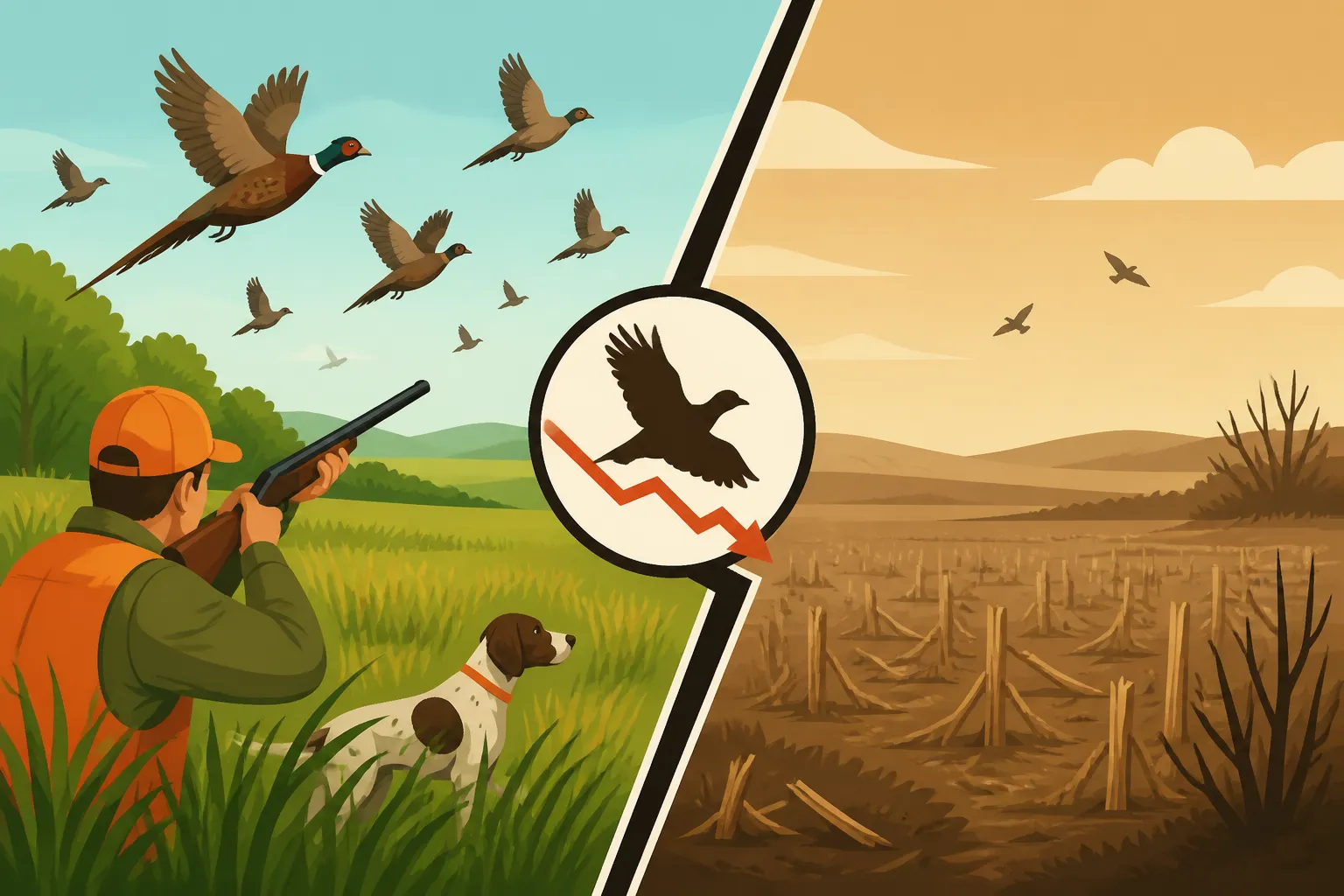
CRP Loss and South Dakota Bird Numbers
For hunters who have spent years chasing ringnecks across the expansive fields of South Dakota, there’s a persistent worry that lingers with every season: the loss of critical habitat, particularly the decline in Conservation Reserve Program (CRP) acres. This isn't just an abstract concern; it directly impacts where the birds live, how many survive, and ultimately, our hunting success. This guide will delve into the intricate relationship between CRP land and South Dakota's pheasant populations, helping you understand why these fields are so vital and what the trends mean for the future of hunting in the state.
What is CRP and Why It Matters for South Dakota Pheasants
The Conservation Reserve Program, or CRP, isn't just a fancy government acronym; it's a cornerstone of pheasant habitat in South Dakota. At its heart, CRP is a voluntary program through which agricultural landowners receive annual rental payments in exchange for taking environmentally sensitive land out of agricultural production and planting it with species that improve environmental quality. Think of it as farmers being paid to not farm certain parcels, instead letting them grow into native grasses, legumes, and wildflowers.
The Lifeblood of Nesting and Brooding Cover
For pheasants, CRP isn't just "nice to have"; it's truly the lifeblood of their existence. These large tracts of undisturbed, dense cover provide ideal nesting sites in the spring, protecting hens and their clutches from predators and harsh weather. Imagine a hen trying to raise a brood in a freshly tilled field or a short-cropped pasture; it's a losing battle. CRP offers the tall, robust vegetation that camouflages nests and provides security.
Once chicks hatch, these same fields become critical brooding cover. The diverse plant life attracts insects, which are a vital protein source for growing pheasants. The taller grasses also offer shade during hot summer days and protection from aerial predators like hawks and owls. Without sufficient, high-quality CRP, hens are forced to nest in less secure areas, leading to higher nest predation and lower chick survival, directly impacting the overall pheasant numbers we see come fall.
Winter Roosting and Thermal Protection
Beyond nesting, CRP offers essential winter cover, which is arguably just as critical for survival, especially in a state known for its brutal winters. When blizzards rage and temperatures plummet, pheasants need dense, tall cover to roost in and find shelter from the wind and snow. Fields of switchgrass, tall wheatgrass, or native prairie grasses that remain standing through winter act as natural insulation, trapping heat and providing protection from biting winds.
Consider a harsh South Dakota winter where temperatures drop to -20 degrees Fahrenheit with driving snow. Birds exposed in short stubble or open fields will quickly perish from hypothermia. CRP provides pockets of refuge where pheasants can hunker down and survive, even when snow accumulation is significant. These areas are often adjacent to food sources, allowing birds to feed and then retreat to safety, making them crucial for Winter Severity and South Dakota Pheasant Survival. This interconnectedness of food and thermal cover is vital for birds to make it through until spring.
The History of CRP and Its Impact on South Dakota Bird Numbers
To truly understand the current situation, we need to look back at the history of CRP in South Dakota. The program saw its genesis in the mid-1980s, primarily as a soil conservation effort, aiming to reduce soil erosion on highly erodible cropland. What quickly became apparent, however, was its profound, positive side effect on wildlife populations, especially pheasants.
Peak CRP Acres and Exploding Pheasant Populations
South Dakota embraced CRP with open arms, and for a good reason. As farmers enrolled millions of acres of marginal cropland into the program, the prairie landscape began to transform. Grasslands reappeared, offering unparalleled habitat. During the late 1990s and early 2000s, when CRP enrollment was at its peak, South Dakota boasted an incredible amount of dedicated habitat. It's no coincidence that this period also coincided with some of the most phenomenal pheasant hunting the state, and perhaps the world, has ever seen.
Hunters often recall those glory days when birds seemed to be everywhere. The correlation wasn't accidental; it was a direct result of abundant, high-quality nesting, brooding, and wintering cover that CRP provided. It allowed pheasant populations to thrive, buffering them against natural fluctuations and providing consistent recruitment of new birds. This era directly speaks to Why South Dakota Grows So Many Pheasants. The sheer volume of safe havens created by CRP allowed pheasants to truly maximize their reproductive potential.
The Gradual Decline: Expiring Contracts and Shifting Economics
Unfortunately, the economic landscape changes, and so do federal farm policies. As CRP contracts began to expire, many landowners faced a tough decision: re-enroll their land into CRP for a potentially lower rental payment or bring it back into agricultural production, especially with fluctuating commodity prices. When corn and soybean prices were high, the incentive to farm every available acre often outweighed the CRP payments.
This led to a gradual, but significant, decline in CRP acres across South Dakota. Millions of acres of vital grassland habitat slowly reverted to row crops. This shift was not sudden, but rather a creeping erosion of habitat that began to noticeably impact pheasant numbers over time. The loss of these stable, perennial covers meant fewer places for hens to nest, fewer insects for chicks, and fewer safe havens during winter. This historical context is crucial for understanding current population dynamics and why public interest remains high in topics like South Dakota Pheasant Population History.
Understanding Recent CRP Trends and Their Effects on Pheasant Populations
The narrative of CRP loss is ongoing, and recent years have brought both challenges and some glimmers of hope. Understanding these contemporary trends is vital for any hunter looking to accurately assess the current state of South Dakota's pheasant numbers.
The Impact of Fluctuating Enrollments
While the overall trend has been a decline from peak levels, CRP enrollment isn't a static number. It fluctuates year to year based on federal funding, signup periods, and farmer interest. There have been efforts to increase enrollment again, recognizing the environmental and wildlife benefits, but these often struggle against the economic pressures of farming. High commodity prices mean less land goes into CRP; lower prices can incentivize more enrollment. It's a constant balancing act.
When enrollment periods happen, certain counties or regions might see an uptick in CRP, offering localized benefits. However, widespread, significant gains across the state are harder to achieve. Many of the newly enrolled acres might also be smaller, less contiguous parcels, which, while beneficial, don't always provide the same scale of habitat as the large blocks of CRP from decades past. Hunters often study resources like CRP Acres and South Dakota Bird Numbers to track these changes, understanding that even small shifts can have a cumulative effect.
The Visible Consequences in Bird Counts
The direct consequence of CRP loss is undeniably visible in South Dakota's pheasant population estimates. While the state no longer conducts its historic brood count in the same manner, observations from hunters, guides, and biologists consistently link habitat availability to bird numbers. Years following significant CRP declines tend to show challenging hunting conditions, while areas that retain more diverse and ample cover often fare better.
Consider the role of Spring Rain and Pheasant Nesting Success and how it interacts with habitat. Even a perfect spring for nesting can't compensate for a lack of places to nest. If CRP is gone, hens are forced into ditches, road rights-of-way, or marginal cover, where nests are more vulnerable to predation, haying operations, or flooding. The fewer acres of secure nesting cover, the lower the overall production, regardless of favorable weather. It’s a foundational problem that impacts every other factor in pheasant survival.
Here's a simplified look at the general correlation between CRP acreage and pheasant populations, reflecting the broad trends we've observed over time:
| CRP Acreage Trend | Primary Pheasant Habitat Result | General Pheasant Population Response | Hunting Conditions |
|---|---|---|---|
| High & Stable | Abundant, secure nesting & winter cover | Robust, resilient populations | Excellent, consistent |
| Declining | Reduced nesting & winter cover, fragmentation | Moderate to challenging, localized declines | Variable, often tougher |
| Low & Fragmented | Scarce, vulnerable habitat | Struggling, highly weather-dependent | Difficult, unpredictable |
| Increasing (localized) | Improved cover in specific areas | Localized improvements, slow overall growth | Spotty, targeted success |
Note: This table illustrates general trends and correlations, not specific data points.
Mitigating CRP Loss: Other Habitat Initiatives and Hunter Action
While CRP loss is a significant challenge, it's not the only story. South Dakota, along with various conservation groups and individual landowners, is actively working on other habitat initiatives. Hunters, too, have a crucial role to play in advocating for and supporting these efforts.
Alternative Habitat Programs and Private Landowner Efforts
Recognizing the need for more habitat beyond traditional CRP, South Dakota has seen the development of various state-led and privately funded programs. These include initiatives like the Game Production Area (GPA) program, which are lands owned and managed by the state for wildlife habitat and public hunting access. There are also private land incentive programs that encourage landowners to implement wildlife-friendly practices, even if they aren't full CRP enrollments.
For instance, some programs focus on specific practices such as planting food plots, establishing native grass buffers along waterways, or restoring wetlands. These efforts, though often smaller in scale than massive CRP enrollments, collectively contribute to the habitat mosaic that pheasants and other wildlife need. When you’re planning a hunt, mapping tools like GoHunt can be invaluable for identifying these various types of habitat, helping you pinpoint potential bird holding areas, especially when combined with knowledge of Working Food Plots at Midday.
The Role of Hunter Advocacy and Conservation Groups
Hunters are often the loudest and most passionate advocates for wildlife habitat. By joining and supporting conservation organizations like Pheasants Forever or Delta Waterfowl, hunters contribute directly to habitat restoration and creation efforts across the state. These groups work with landowners to establish new habitat, often leveraging state and federal funds, and educate the public on the importance of conservation.
Moreover, hunter dollars spent on licenses and stamps directly fund many of the state's habitat and wildlife management programs. Understanding how those funds are used, and advocating for policies that prioritize habitat, is a powerful way to make a difference. Tools like GoHunt can even help visualize land types, assisting hunters in understanding the landscape and targeting areas that might need more attention from conservation groups. Every voice adds to the chorus, helping decision-makers understand the critical link between land management and huntable bird populations. For those interested in Habitat Work and Food Plots on a Lease, supporting these organizations can provide resources and guidance.
Scouting and Adapting to Changing Landscapes
Ultimately, as the landscape continues to evolve, successful hunters must also adapt. This means more diligent scouting, a deeper understanding of pheasant behavior in fragmented landscapes, and an appreciation for smaller, often overlooked pockets of cover. Public lands, especially Walk-In Areas and Game Production Areas, become even more critical when private habitat declines.
Using the South Dakota Public Hunting Atlas and digital mapping tools like GoHunt allows hunters to identify remaining habitat, understand property boundaries, and plan hunts effectively. Learning to read aerial imagery to spot hidden cattail sloughs, shelterbelts, and unharvested cover becomes an essential skill. While the loss of CRP can be disheartening, it also challenges hunters to become more knowledgeable and resourceful, ensuring they can still find success on the prairie. This adaptable approach is key to understanding Late-Season South Dakota Pheasants in Heavy Cover or even just locating birds on opening day.
Disclaimer
This article is for general informational purposes only and does not constitute professional advice. Laws, prices and regulations vary by location and change over time. Consult a qualified professional for guidance on your specific situation.