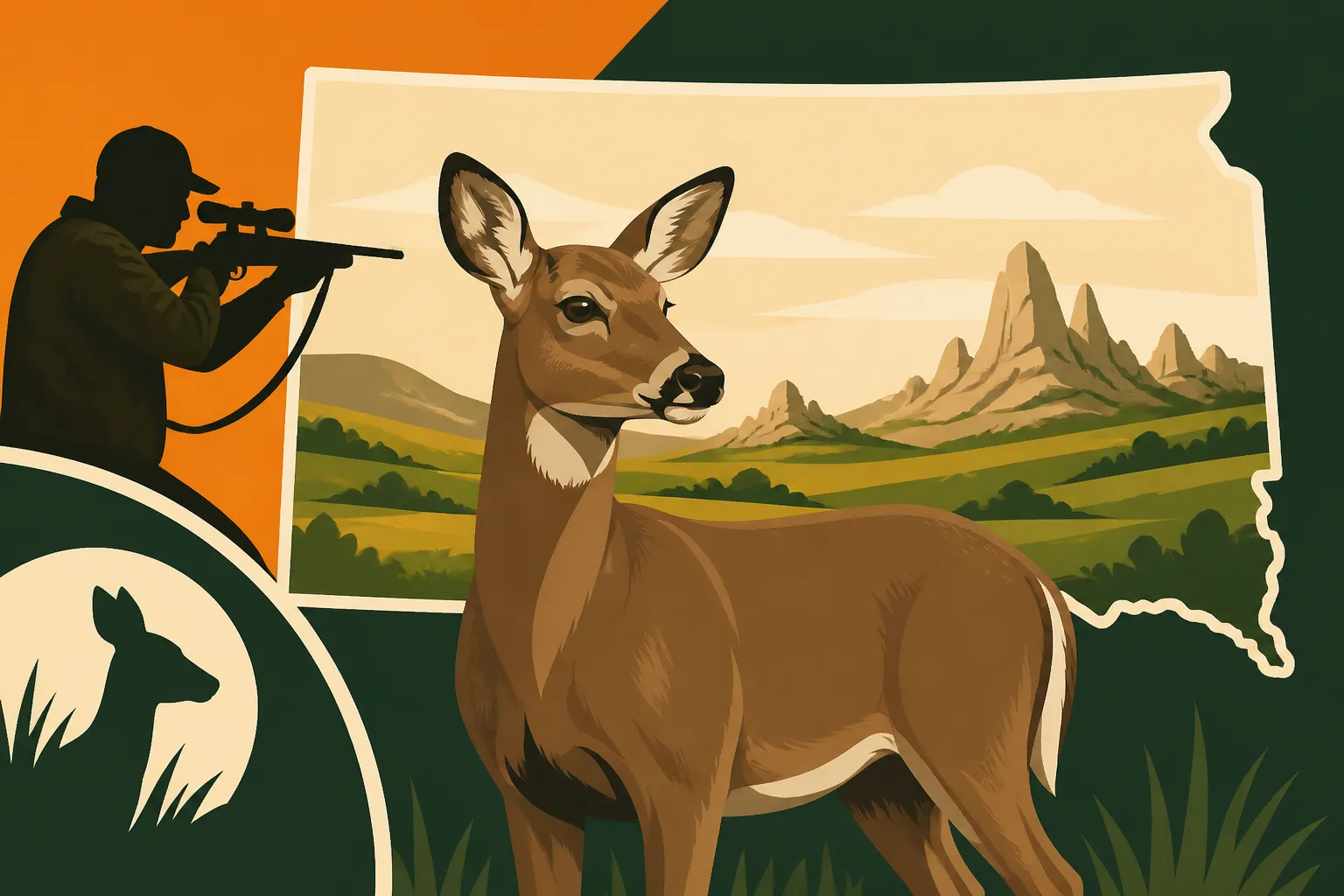
South Dakota Antlerless Deer Tags
Securing a deer tag in South Dakota can sometimes feel like trying to catch smoke, especially when you're aiming for a specific type of harvest. Many hunters find themselves focused solely on the elusive antlered buck, overlooking the vital role and unique opportunities that South Dakota antlerless deer tags provide. This comprehensive guide is designed to demystify these tags, showing you why they're essential for deer management and how to successfully navigate the application and hunting process.
Understanding South Dakota's Antlerless Deer Tags
When you hear "antlerless deer tag," it might conjure images of hunters solely targeting small animals, but there's a much deeper strategy at play, both for wildlife management and for increasing hunter opportunity. Understanding what these tags represent and why they're so crucial is the first step in broadening your hunting horizons in the Coyote State.
What Exactly is an Antlerless Tag?
At its core, an antlerless deer tag allows you to harvest a deer that does not possess antlers, or, in some very specific regulations, antlers shorter than a certain length (often 3 inches). Practically speaking, this means you’ll be targeting does (female deer) and fawns (young deer of either sex). While some states might have specific rules around "button bucks" (young male fawns with undeveloped antlers that are often legally considered antlerless), in South Dakota, the focus is predominantly on female deer for population control purposes.
These tags are a deliberate tool used by wildlife agencies, like the South Dakota Game, Fish and Parks (GFP), to manage deer populations effectively. Unlike "any deer" tags, which allow for the harvest of any legal deer, or "antlered only" tags, which focus exclusively on males meeting specific criteria, antlerless tags serve a very distinct biological function. They are specifically designed to help maintain healthy deer herds by controlling population growth and balancing the sex ratio. This approach ensures a sustainable deer population for future generations of hunters and keeps deer numbers in check relative to available habitat.
Why Antlerless Tags are Crucial for Deer Management
The importance of antlerless tags cannot be overstated when it comes to sound deer management. Deer populations, especially white-tailed deer, have an incredible reproductive capacity. Without some form of control, their numbers can quickly explode, leading to a host of problems. This is particularly true in agricultural regions, such as much of East River South Dakota, where abundant food sources allow deer to thrive.
Excessive deer populations can lead to over-browsing of natural vegetation, which degrades habitat for deer themselves and other wildlife species. It can also exacerbate crop damage for farmers, leading to significant economic losses. Furthermore, dense deer herds are more susceptible to disease outbreaks, like epizootic hemorrhagic disease (EHD) or chronic wasting disease (CWD), which can decimate populations. By managing the female segment of the herd, antlerless tags help to prevent these issues. Removing does directly reduces the number of fawns born each spring, thereby stabilizing or even reducing the overall population. This practice also helps maintain a healthier buck-to-doe ratio, which can lead to a more competitive and natural rut, potentially resulting in healthier, larger-antlered bucks for hunters pursuing South Dakota Whitetail Hunting in River Bottoms. It’s a crucial tool for ensuring the long-term health and vitality of South Dakota's deer resources.
Navigating the Application Process for Antlerless Tags
Applying for any deer tag in South Dakota can be confusing, but understanding the nuances of antlerless tags – especially for non-residents – requires careful attention to deadlines and draw strategies. The system is designed to prioritize residents, but opportunities exist for everyone if you know how to play your cards right.
Resident vs. Non-Resident Opportunities
South Dakota operates a tiered system when it comes to big game licenses, heavily favoring its residents, and deer tags are no exception. For residents, antlerless deer tags are generally more plentiful and easier to acquire. Many units will have a good number of either-sex or antlerless-only tags available, sometimes even as over-the-counter options or easier draws. Residents often have access to "second choice" options for antlerless tags if they don't draw their first choice, or can participate in leftover sales with a higher chance of success. This reflects the state's commitment to providing its citizens with ample hunting opportunities and managing local deer populations.
For non-residents, securing a deer tag, particularly an antlered tag, can be a significant challenge, often requiring years of accumulating South Dakota Preference Points Explained. However, antlerless tags can sometimes offer a foot in the door. While initial non-resident drawings for antlerless tags in popular units can still be competitive, some units might have more accessible antlerless opportunities, especially as a second choice or in the leftover tag sales. It's not uncommon for non-residents to initially focus on drawing an antlerless tag to simply get some hunting time in the state, learn the landscape, and contribute to herd management. Planning and research are key, and using resources like GoHunt can provide invaluable data on draw odds and unit breakdowns for both resident and non-resident applications, helping you pinpoint the units where antlerless tags might be more attainable.
Application Deadlines and Draw Strategies
The South Dakota deer application period is a critical window you absolutely cannot miss. Generally, the primary application deadline for deer licenses, including most antlerless options, falls in mid-June. Missing this deadline means missing out on the primary draw entirely, pushing you into the much more competitive leftover sales. It's vital to mark these dates on your calendar and double-check them with the current South Dakota Game, Fish and Parks regulations each year. For non-residents especially, applying on time for a chance at a tag, even an antlerless one, is paramount.
When it comes to strategy, understanding how South Dakota’s draw system works is crucial for any deer hunter. If you’re a resident, you might be able to apply for an antlered tag as your first choice and an antlerless tag in the same or an adjacent unit as your second choice. This increases your chances of getting a deer tag. For non-residents, depending on the unit and the specific license type, accumulating preference points might be the primary strategy for antlered tags, but for antlerless tags, you might find better success by applying for specific units known for higher quotas or waiting for the leftover sales that occur later in the summer. These leftover sales often include antlerless-only tags in units where the GFP is still looking to meet harvest objectives. Websites like GoHunt are excellent for tracking application deadlines, draw results, and current unit-by-unit tag availability, giving you a statistical edge in your application process for South Dakota Big Game Draws and How to Apply. Analyzing past draw odds can guide you in choosing units where your chances of drawing an antlerless tag are highest, especially if your goal is to simply put venison in the freezer.
Regions and Units for Antlerless Deer
South Dakota's deer habitat varies dramatically from east to west, and so does the availability and strategy for hunting antlerless deer. Knowing these regional distinctions is vital for making informed application choices and planning successful hunts.
East River vs. West River Differences
South Dakota is roughly divided by the Missouri River into two distinct hunting regions: East River and West River. These two areas couldn't be more different when it comes to deer populations and habitat, which directly impacts antlerless tag opportunities.
East River South Dakota is characterized by rich agricultural land – vast fields of corn, soybeans, and alfalfa – interspersed with shelterbelts, small woodlots, and numerous prairie potholes. This environment is prime habitat for white-tailed deer, which thrive on the abundant food sources and dense cover. As a result, deer populations in many East River units are typically higher, and antlerless tags are much more readily available. The GFP often issues a significant number of antlerless tags in these areas to mitigate crop damage and manage healthy herd numbers. Hunters focusing on East River units will generally find better odds for drawing antlerless tags, often for whitetails, which tend to congregate in larger groups. These areas are excellent for hunters looking for a high-opportunity hunt, especially when trying to fill the freezer. Many hunters choose to focus on Hunting Food Plots and Corn Edges in this region, as does and fawns will frequent these areas.
West River South Dakota, on the other hand, is defined by its vast open prairie, rugged breaks, and scattered pockets of timber. While whitetails still inhabit river bottoms and creek drainages, this region is more commonly associated with mule deer. Deer densities are generally lower than East River, and the habitat is more expansive and less forgiving. Consequently, antlerless tags for West River units tend to be fewer and often more competitive to draw, especially for mule deer. The management objectives in West River often lean towards maintaining a sustainable population in more sensitive habitats, meaning fewer tags are issued overall. If you're hoping for an antlerless tag in West River, your best bet might be units with specific whitetail antlerless offerings along the Missouri River breaks or in more timbered areas.
| Feature | East River Antlerless Tags | West River Antlerless Tags |
|---|---|---|
| Primary Species | White-tailed Deer (dominant) | White-tailed Deer (river bottoms), Mule Deer (breaks/prairie) |
| Habitat Type | Agricultural fields, shelterbelts, woodlots, prairie potholes | Open prairie, rugged breaks, timbered river bottoms |
| Population Density | Generally higher, especially for whitetails | Generally lower, especially for mule deer |
| Tag Availability | More plentiful, often easier to draw | Fewer tags, often more competitive |
| Management Focus | Population control, crop damage mitigation, herd health | Sustainable population in varied, often more sensitive, habitats |
| Typical Terrain | Flatter, more agricultural | Rolling hills, badlands, open plains |
| Hunter Opportunity | Higher chance of success for venison | Lower chance, often part of a more challenging hunt |
Specific Unit Considerations and Success Rates
Each hunting unit in South Dakota has its own unique characteristics, regulations, and tag quotas, which is crucial to consider when applying for antlerless deer tags. South Dakota GFP publishes detailed information on South Dakota Deer Licence Types by Region and specific units, including past draw odds, harvest reports, and available public access. It’s not enough to simply apply for "any" antlerless tag; doing your homework on specific units can dramatically increase your success rate.
Some units, particularly in East River, might be designated "antlerless only" or have a high proportion of antlerless tags, reflecting a management goal to reduce herd numbers in that localized area. These are often excellent choices for hunters primarily seeking venison. When researching units, pay close attention to the number of private vs. public land acres. While securing private land permission is often the easiest route for antlerless hunting in prime agricultural zones, South Dakota also boasts an extensive network of public access, including Game Production Areas (GPAs) and the popular South Dakota Walk-In Areas Explained. Utilizing the South Dakota Public Hunting Atlas is an absolute must. This tool allows you to scout potential hunting spots from home, identifying public parcels, food sources, and travel corridors where deer, especially does and fawns, might frequent.
Success rates for antlerless tags tend to be higher than for antlered tags because deer are generally less wary than mature bucks. Also, deer often travel in family groups, so when you locate one doe or fawn, there are likely others nearby. Consider areas with dense cover next to agricultural fields, such as thick shelterbelts or cattail sloughs, as these are common bedding and feeding areas. Applying for antlerless tags in units with high whitetail populations and good public access offers a solid strategy for a rewarding hunt, even if it's not for a trophy buck.
Hunting Antlerless Deer: Tactics and Ethical Considerations
Successfully hunting antlerless deer involves thoughtful tactics and, as always, a strong commitment to ethical hunting practices and proper game care. While the pressure to find a trophy might be off, the responsibility to make a clean harvest and respect the animal remains paramount.
Effective Hunting Tactics for Does and Fawns
When you’re specifically targeting does and fawns, your hunting tactics can shift slightly compared to pursuing a mature buck. Antlerless deer, particularly does, are often found in family groups, and their movements are primarily dictated by food, water, and cover. This makes scouting and understanding deer patterns even more critical.
Focus your efforts on areas where deer feed heavily. This means looking at alfalfa fields, corn stubble (especially after harvest), bean fields, and food plots. Deer will often move from dense bedding cover to these food sources in the mornings and evenings. Glassing agricultural field edges at first light or last light can reveal where groups of does and fawns are entering and exiting. When hunting these areas, consider setting up a ground blind or a treestand overlooking a primary travel corridor or a pinch point between bedding and feeding areas. Ground blinds can be particularly effective in open prairie environments, allowing you to conceal yourself near a heavily used trail or a water source, especially if you've done your e-scouting using tools that allow for E-Scouting Walk-In Areas Before the Season.
Still hunting, which involves slowly moving through cover, pausing frequently to glass and listen, can also be very productive. Target shelterbelts, creek bottoms, and the edges of cattail sloughs in East River, or the draws and timber pockets in West River where deer seek refuge. Often, locating one doe will lead you to her fawns or other does nearby. Remember that does can be incredibly wary, especially if they have fawns, so quiet movement and scent control are still essential components of a successful hunt. The goal isn't just to see a deer, but to get a clean, ethical shot opportunity.
Ethical Considerations and Game Care
Ethical hunting is non-negotiable, regardless of whether you're pursuing a trophy buck or an antlerless deer. For does and fawns, making a clean, humane kill is paramount. Always strive for a precise shot placement, ideally a broadside shot to the vital organs (heart/lungs). Avoid taking risky shots, especially if the deer is moving rapidly, or if visibility is poor. If hunting fawns, ensure you have a clear shot at a single animal to avoid accidentally wounding another deer in the group.
The quality of venison largely depends on how quickly and effectively the animal is field dressed. Since antlerless deer tags are often valid earlier in the season, you might find yourself hunting in warmer October weather. This makes prompt field dressing crucial to prevent spoilage. Get the deer gutted as soon as possible after the shot to allow the carcass to cool down internally. Carry a good knife, gloves, and perhaps a small tarp or game bags to keep the meat clean. For larger does, consider quartering the animal in the field if you're far from your vehicle, which also helps in rapid cooling. Proper Field Dressing in Warm October Weather is key to ensuring that the delicious venison from your antlerless deer makes it to your dinner table in prime condition. Many hunters actually prefer the meat from younger does and fawns, as it's often more tender and milder in flavor than that of older bucks. By respecting the animal through ethical hunting and meticulous game care, you honor the hunt and provide high-quality, organic protein for your family.
Disclaimer
The information provided in this guide is for general informational purposes only and is not intended as legal advice. Hunting regulations, seasons, and application deadlines in South Dakota are subject to change annually. Always consult the official South Dakota Game, Fish and Parks website and current hunting regulations handbook before applying for licenses or heading afield.