Custer State Park Deer Licence Rules
Trying to navigate the specific rules for hunting in unique areas like Custer State Park can feel like deciphering a secret code, especially when you're used to more generalized regulations. It's a common frustration for hunters who dream of pursuing deer in such an iconic South Dakota location, only to find the information scattered and confusing. This guide aims to unravel those complexities, providing a clear, in-depth look at the Custer State Park deer licence rules so you can confidently plan your next hunt, or at least understand what you're up against in the draw.
The Unique Nature of Custer State Park Deer Hunting
Custer State Park isn't just another patch of public land in South Dakota; it's a meticulously managed wildlife haven that balances conservation, tourism, and limited hunting opportunities. Unlike the vast, open expanses of the prairies, or even the broader Black Hills National Forest, hunting within the park's boundaries is a distinct experience with its own set of challenges and privileges. The sheer beauty of the landscape, coupled with the opportunity to hunt quality deer amidst buffalo and bighorns, makes it a highly coveted draw for many.
Why Custer State Park Requires Special Rules
From its very beginnings, Custer State Park has been a place of careful management. Established in 1919, its primary goal has always been the preservation and enjoyment of its natural resources, including its abundant wildlife. The deer herds within the park, primarily whitetails and some mule deer, are managed to maintain a healthy population size that doesn't overgraze its delicate ecosystem, while also providing unique recreational opportunities. This means that hunting is used as a management tool, rather than solely a recreational pursuit, leading to highly controlled and limited access. The park's status as a major tourist destination also necessitates these special rules, ensuring hunter safety and minimizing conflict with non-hunting visitors who come to enjoy the scenic drives and abundant wildlife viewing.
General Deer Hunting in the Black Hills Versus Custer State Park
It's crucial to understand that "Black Hills deer hunting" is a broad term. Most deer hunting in the Black Hills occurs on the extensive Black Hills National Forest, where regulations are largely consistent with statewide rules, though specific unit boundaries and licence types apply. However, Custer State Park operates under its own distinct set of licence rules, seasons, and application processes, separate from the general Black Hills units. For instance, while you might find a variety of "any deer" or "antlerless deer" tags available in the wider Black Hills, Custer State Park licences are almost exclusively highly specific, often buck-only, and extremely limited. The terrain itself might be similar – steep ridges, timber, and open parks – but the regulatory framework is entirely different. When researching, always double-check if the information pertains to the general Black Hills or the park itself. You can find more information about the broader region's opportunities in our guide to Black Hills and Custer State Park Deer.
Understanding the Custer State Park Deer Draw
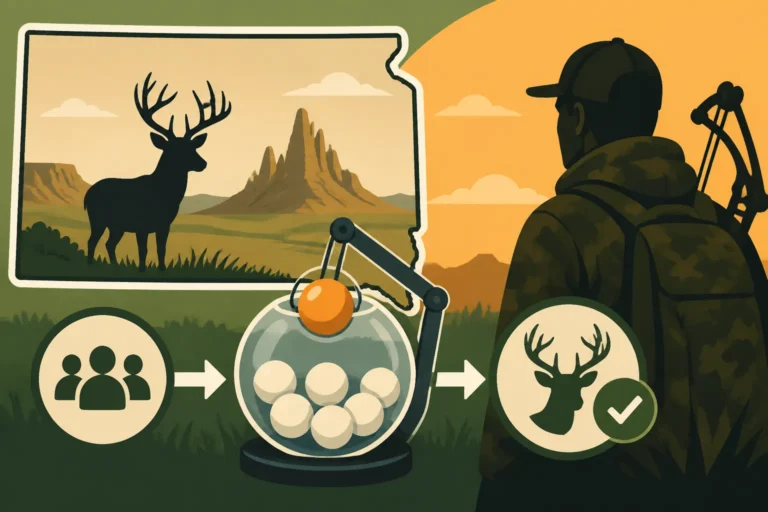
Getting a Custer State Park deer licence isn't as simple as walking into a local sporting goods store. It's a highly competitive draw, designed to manage hunter numbers and maintain herd health within the park's specific boundaries. For many, applying is an annual tradition, a testament to the allure of this unique hunting experience. But knowing how to apply and what you're applying for is half the battle.
Available Licence Types and Eligibility
The South Dakota Game, Fish and Parks (GFP) department typically offers very limited deer licences for Custer State Park. These are almost always for a specific weapon type (e.g., archery or firearm) and a specific deer type (e.g., "Any Deer" which often means a buck, or occasionally "Antlerless Deer"). Non-residents face extremely steep odds, with very few, if any, non-resident Custer State Park deer licences allocated in any given year. For those lucky enough to draw, the tag often specifies a very narrow season window. It's not uncommon for licences to be buck-only, reflecting the management goal of selectively harvesting animals while allowing the herd to maintain a strong breeding population. Always refer to the most current GFP Hunting Handbook for the exact offerings, as these can change year to year based on deer population surveys and management objectives.
Application Process and Deadlines
Applying for a Custer State Park deer licence follows the general South Dakota big game draw system, but with its own unique unit code and deadlines. Generally, big game applications, including those for special hunts like Custer State Park, open in late spring or early summer, with deadlines typically in late July or early August. You'll apply online through the South Dakota GFP website.
Here's a simplified breakdown of the process:
- Check the Handbook: Before anything else, download and thoroughly read the current year's South Dakota Hunting Handbook. This is your bible for all things regulations, including Custer State Park specifics.
- Understand Licence Options: Identify the Custer State Park unit code and the specific deer licence types offered. Pay close attention to weapon restrictions (archery, rifle), deer sex (any deer, antlerless), and season dates.
- Apply Online: Head to the South Dakota GFP website and navigate to the licence application portal. You'll need an account.
- Preference Points: South Dakota uses a hybrid preference and bonus point system for many draws. While Custer State Park tags are distinct, understanding how preference points generally work in South Dakota can be beneficial for other hunts. For more on this, check out our guide on South Dakota Preference Points Explained.
- Submit Application: Carefully review all your choices before submitting. Make sure the Custer State Park unit code is correct.
Many experienced big game hunters utilize resources like GoHunt, which compiles draw odds and application statistics, making it easier to gauge your chances and strategize your applications. While Custer State Park odds are always tough, tools like GoHunt can help you stay informed about trends and deadlines.
Preference Points and Draw Odds for Custer State Park
Drawing a Custer State Park deer tag is widely considered one of the toughest draws in South Dakota, rivaling even some of the rare elk tags. Unlike general deer units where accumulating preference points over several years significantly increases your chances, the Custer State Park draw often feels like a lottery, especially for non-residents. The number of tags is so minimal, and demand is so high, that even applicants with a substantial number of preference points might go years without drawing.
For example, in a given year, there might only be a handful of firearm "Any Deer" tags available for Custer State Park, making the odds infinitesimally small. It’s a classic low-odds, high-reward scenario. While preference points do technically factor into the general South Dakota draw system, their impact on Custer State Park licences is often overshadowed by the sheer volume of applicants for so few tags. Don't be discouraged, but be realistic. GoHunt's detailed draw data often highlights just how challenging these specific tags are to acquire, offering transparency into past draw results that can manage expectations. It's often a testament to perseverance and a dash of luck. For a deeper dive into the broader big game application process, take a look at South Dakota Big Game Draws and How to Apply.
Rules and Regulations for Custer State Park Deer Hunters
Congratulations, you drew a Custer State Park deer tag! Now the real work begins. Understanding and adhering to the specific rules and regulations within the park is paramount, not only for a successful hunt but also for respecting the park's unique environment and its diverse visitors. This isn't your average public land hunt, and ignorance of the rules is no excuse.
Permitted Weapons and Season Dates
The Custer State Park deer licence will explicitly state the permitted weapon type (archery or firearm) and the precise dates you are allowed to hunt.
- Archery Season: If you draw an archery tag, your season will typically be in the earlier fall, offering a quieter, more solitary experience before the general firearm seasons begin. Remember, broadhead restrictions and minimum draw weights still apply as per statewide regulations.
- Firearm Season: Firearm seasons in Custer State Park are usually quite short and specific, often just a few days or a week in late October or early November. The allowed firearms will be specified on your licence and in the hunting handbook – generally, centerfire rifles meeting minimum caliber requirements are standard, but always verify. Muzzleloaders might also have specific limited seasons.
It is absolutely crucial to hunt only within the dates and with the weapon specified on your licence. Deviating from these can result in severe penalties, including fines and loss of hunting privileges.
Access, Boundaries, and Hunter Conduct
Hunting in Custer State Park means navigating a busy environment that is home to more than just wildlife. It's a popular destination for tourists, hikers, and scenic drivers, especially in the fall.
- Boundaries: The park's boundaries are clearly defined, and it's your responsibility to know them. Utilize GPS mapping apps like onX or GoHunt with public land layers, or consult official park maps. Trespassing, even accidentally, is a serious offense. You must stay within the legal hunting areas.
- Access: Vehicle access might be restricted to certain roads or areas, especially during specific times of the year or to protect sensitive habitats. Always check with park authorities or the GFP for any current restrictions. Many areas will be foot-access only, requiring hunters to be prepared for extensive walking. Knowing Black Hills Forest Roads and Access can provide some contextual understanding, but Custer State Park itself will have its own specific rules.
- Hunter Conduct: Because of the park's multi-use nature, hunter conduct is under a microscope.
- Visibility: Blaze orange requirements are strictly enforced during firearm seasons.
- Respect for Others: Be mindful of other park users. Avoid drawing attention or causing alarm. This means no excessive yelling, loud calls, or visible processing of game near visitor areas.
- Road Hunting: Road hunting laws in South Dakota are strict, and even more so within a state park. Do not shoot from or across any public roadway.
- Camping: Check specific rules for camping within the park during hunting season, as it may be restricted to designated campgrounds or prohibited in hunting zones.
Post-Harvest Requirements and Check-Ins
Harvesting a deer in Custer State Park carries additional responsibilities beyond standard statewide tagging.
- Tagging: Immediately after harvesting your deer, you must securely attach your licence tag to the animal, as per South Dakota regulations.
- Mandatory Check-In: Custer State Park often requires successful deer hunters to check in their harvested animal at a designated park office or GFP station within a specific timeframe. This is critical for wildlife management, allowing biologists to collect data on herd health, age, and sex ratios. Failing to check in your animal can result in penalties.
- Carcass Transport: Be aware of any special rules regarding the transport of deer carcasses, especially concerning Chronic Wasting Disease (CWD) management zones. While Custer State Park is not currently a CWD hot zone, rules can change. For general deer tagging and transport rules, refer to South Dakota Deer Tagging Requirements.
- Field Dressing: While you can field dress your deer in the field, be considerate of location and cleanliness, especially in areas with potential public visibility. Learn how to perform Field Dressing in Warm October Weather if your hunt falls early in the season to preserve the meat.
Strategies for a Successful Custer State Park Hunt
If you're among the fortunate few to draw a Custer State Park deer licence, the real adventure begins. Success in this unique environment requires not just hunting skill, but also a deep understanding of the park itself. It's a challenging hunt, but incredibly rewarding.
Scouting and Preparation within Park Limits
Pre-season scouting is always important, but it's absolutely critical for Custer State Park. However, be mindful that the park is a public area year-round, and some scouting activities might be restricted or require permits during certain times.
- E-Scouting: Begin your scouting from home. Use tools like Google Earth, onX maps, or GoHunt's detailed satellite imagery to identify potential bedding areas, feeding zones, water sources, and travel corridors. Look for areas with dense cover, steep drainages, and north-facing slopes where deer might seek refuge. Our guide on Scouting a South Dakota Unit From Home can offer general tips applicable to any unit, including the park.
- On-the-Ground Scouting (Respectfully): If possible, visit the park outside of hunting season. Walk potential areas, looking for deer sign (tracks, rubs, droppings). Pay attention to prevailing wind patterns and identify ambush points. Remember, you're a visitor first and a hunter second, so be discreet and respectful of other park users. Be aware that deer patterns can shift with hunting pressure once the season begins.
- Understand Deer Behavior: Deer in Custer State Park are accustomed to human presence, but they are still wild animals. They will often hold tight in cover or use thick timber and steep terrain to evade hunters. Understanding how buck movement changes throughout the rut, or where deer sit at midday, can be crucial.
- Terrain Challenges: The Black Hills terrain within the park is rugged. Be prepared for steep climbs and descents. Knowing how to efficiently navigate and get a deer out of a coulee or thick timber is vital. Our article on Getting a Deer Out of a South Dakota Coulee might offer useful insights.
Gear Considerations for Custer State Park Terrain
The Black Hills environment demands specific gear to ensure comfort, safety, and success. Don't skimp on quality, as your gear will be put to the test.
- Optics: Good quality binoculars (10×42 or 10×50) are essential for glassing the timbered hillsides and open parks. A spotting scope might also be useful for identifying deer at long distances without disturbing them.
- Footwear: Sturdy, waterproof hiking boots with good ankle support are a must. You will be covering many miles over uneven, often steep, terrain. Break them in well before your hunt.
- Layered Clothing: South Dakota weather in the fall can be highly unpredictable. Be prepared for everything from warm, sunny days to cold, windy conditions, and even snow. Layering is key, allowing you to adapt to changing temperatures throughout the day.
- Backpack: A comfortable daypack is necessary to carry water, snacks, extra layers, first-aid supplies, and field dressing tools. If you plan to quarter a deer in the field, ensure your pack can handle the weight or that you have a frame pack.
- First-Aid and Emergency Gear: Always carry a well-stocked first-aid kit, a headlamp, fire-starting materials, and a way to communicate (cell service can be spotty, so a satellite messenger might be wise). Being self-sufficient is paramount when hunting in rugged country.
- Navigation: A reliable GPS unit or a smartphone with offline mapping capabilities (like onX or GoHunt) is non-negotiable for staying on track and knowing property lines.
Here's a quick comparison of general Black Hills deer hunting versus Custer State Park hunts:
| Feature | General Black Hills Deer Hunting | Custer State Park Deer Hunting |
|---|---|---|
| Licence Availability | More plentiful, wider variety of tags | Extremely limited, highly competitive draw |
| Application Process | Standard statewide draw for specific units | Special draw for specific park units |
| Draw Odds (Non-Res) | Low to Moderate, depending on unit/tag | Very Low, often single-digit percentages |
| Season Dates | Broader ranges, multiple weapon options | Very specific, often short, designated periods |
| Access | Vast public land (National Forest), more flexibility | Designated areas, often foot-access only, strict boundaries |
| Hunting Pressure | Variable, can be high in accessible areas | High number of applicants, but limited hunters in park |
| Mandatory Check-In | Typically not required for general units | Often required for harvested deer |
| Human Interaction | Lower likelihood of encountering non-hunters | Higher potential for encountering park visitors |
| Licence Cost | Standard South Dakota deer licence fees | Standard South Dakota deer licence fees, if drawn |
| Scouting | General e-scouting, on-the-ground scouting | Meticulous e-scouting, careful on-ground scouting |
This table illustrates why drawing a Custer State Park licence is such a unique opportunity and why preparation needs to be so specialized.
Disclaimer
The information provided in this guide is for general informational purposes only and does not constitute legal advice. Hunting regulations, application deadlines, and season dates are subject to change. Always consult the official South Dakota Game, Fish and Parks (GFP) website and the current year's hunting handbook for the most accurate and up-to-date information before planning any hunting trip. It is the hunter's responsibility to know and obey all applicable laws and regulations.