Coyote Calling on Open Grassland
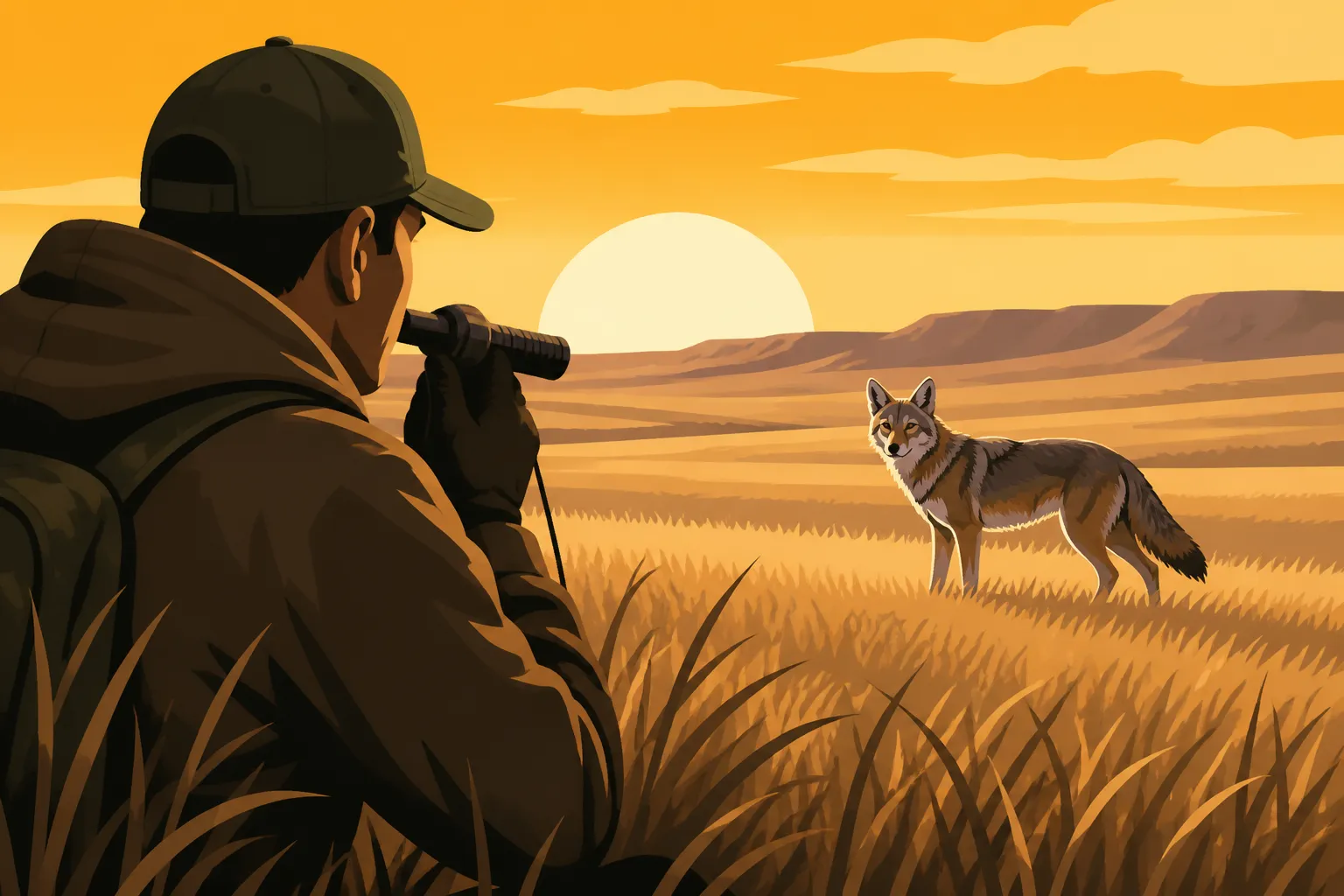
Calling coyotes on the vast, open grasslands of South Dakota presents a unique set of challenges compared to hunting them in timbered country. These prairie ghosts are incredibly sharp, their senses honed by endless horizons and constant exposure, making traditional calling tactics often fall flat. This guide will delve deep into the nuances of enticing wary coyotes in wide-open spaces, helping you refine your approach and fill more tags on the sprawling South Dakota prairie.
Understanding the Open Grassland Challenge for Coyotes
Hunting coyotes in South Dakota's open grassland isn't just about blowing a call; it's a chess match against one of the smartest predators out there. The environment itself amplifies their senses and makes your mistakes glaringly obvious. If you've ever felt like the coyotes saw you coming a mile away, you're not wrong – they very well might have!
The Wary Nature of Prairie Coyotes
Prairie coyotes are a different breed entirely. Unlike their woodland counterparts, which might be a bit more accustomed to human activity or have denser cover to hide their approach, open-country coyotes live in a world where visibility is king. They rely heavily on their eyesight, constantly scanning for both prey and danger across miles of rolling hills and waving grass. This means they are inherently more skittish and prone to hanging up at extreme distances. You simply can't expect them to charge into your lap like a bobcat in dense timber. They've seen it all, from combines to ranchers, and they know what doesn't belong. This constant pressure makes them exceptionally good at detecting anything out of the ordinary, and they often react with extreme caution, often circling downwind to catch your scent long before they commit to a close-range shot.
Topography and Cover Limitations
The expansive nature of South Dakota's grasslands, while beautiful, is a double-edged sword for the predator caller. On one hand, you can often see for miles, which sounds great for spotting incoming coyotes. On the other hand, they can see you for miles too. This lack of consistent, dense cover makes hiding your approach and your setup a constant battle. Little rises, subtle draws, and even small patches of sagebrush or taller grass become critical elements in your strategy. Finding an approach that keeps you out of sight until you're ready to set up can be maddeningly difficult. You'll often find yourself crawling on your belly or using the very subtle contours of the land to break up your silhouette. It's a game of inches when it comes to concealment, and ignoring these subtle topographical features is a surefire way to get busted before you even start calling.
Wind, Sound, and Scent Considerations
In open country, the wind isn't just a factor; it's the factor. It dictates everything from your approach to your setup and even the type of calls you use. Coyotes, like all canids, rely heavily on their sense of smell. They will almost always try to get downwind of the sound source to scent-check whatever is making the noise. This means you need to position yourself so that any coyote attempting to circle downwind will present a shot opportunity before they pick up your scent. A common frustration is having a coyote hang up just out of range, then slowly work its way around until it gets your wind, and then, poof, it's gone. For more insights on how to manage these critical elements, check out our guide on Reading Wind at Four Hundred Yards.
Furthermore, sound travels differently on the prairie. There are no trees to absorb or distort it, so your calls can carry for incredible distances. This means you need to be mindful of your volume and the type of sound. Too loud or too continuous, and you might alert coyotes far beyond your comfortable shooting range, giving them ample time to size up the situation and either commit warily or simply fade away. Conversely, too soft, and they might not hear you at all. It's a delicate balance, and constant attention to the wind's direction and strength is paramount.
Essential Gear and Call Selection for Open Country
Success on the prairie often comes down to preparation and having the right tools for the job. You can't just show up with a cheap mouth call and expect consistent results on these wily predators. Investing in quality gear, especially your calling equipment and optics, will pay dividends.
Choosing the Right Electronic Calls and Sounds
For open-country coyotes, an electronic call is almost mandatory. The ability to project sound at various volumes, change sounds instantly, and have the sound source separated from your position is a game-changer. Brands like Foxpro, ICOtec, and Lucky Duck offer excellent options. Look for models with a remote that has good range – you'll often want to place the caller 50-100 yards upwind of your position to draw the coyote's attention away from you. This also allows the coyote to focus on the sound, giving you precious seconds to get into position.
When it comes to sounds, variety is key. Don't just stick to a basic rabbit distress. Prairie coyotes hear rabbit distress calls all the time, and they can become call-shy. Experiment with different prey species, like cottontail, jackrabbit, or even fawn distress. A lot of hunters find success with bird distress calls, especially magpie or crow distress, which can pique a coyote's curiosity. Pup distress or coyote howls can also be highly effective, especially when trying to elicit a territorial response. A good tip is to start with a soft, pleading sound, then increase volume and intensity if there's no immediate response. Many experienced callers find that mixing in some "challenge" or "territorial" sounds, like a female invitation howl followed by a male challenge, can really trigger a response from dominant coyotes. Remember, you're trying to create a realistic scenario that makes the coyote believe there's an easy meal or a rival in their territory.
Manual Calls for Specific Scenarios
While electronic calls are invaluable, never underestimate the power of a good manual call. Sometimes, an electronic call can sound too "perfect" or unnatural. A mouth call, whether a distress squeak, a lip-squeak, or a hand-cupped howl, can add realism and authenticity that electronic calls sometimes lack. They're also fantastic for close-range adjustments or when a coyote hangs up just outside of range. A subtle lip squeak can sometimes be all it takes to get a hung-up coyote to take those last few steps. Learning to mimic a wounded rabbit or a dying bird with a mouth call is an art form, but one that can greatly enhance your success.
Many hunters carry a small open-reed call that can mimic various distress sounds with subtle inflection changes. These are particularly useful for those moments when you see a coyote moving off and need to re-engage it with a quick, convincing sound. They also serve as a crucial backup if your electronic call's battery dies or the remote malfunctions—something that always seems to happen at the worst possible moment. For advice on carrying all your essentials, consider strategies from our Layering for South Dakota Wind article, as keeping warm and mobile with gear is crucial.
Optics and Rifle Setup for Long Shots
The vastness of the South Dakota prairie means you'll often be taking longer shots than you might anticipate. Top-tier optics are non-negotiable. A good pair of binoculars (10×42 or 12×50) to scan the horizon and pick up subtle movements is essential. Your rifle scope needs to be clear, bright, and capable of precise adjustments for those extended ranges. Variable power scopes with a range from 3-9x to 4-16x are popular, offering versatility for both closer and farther engagements.
When it comes to rifle choice, many hunters opt for flat-shooting cartridges like the .22-250 Remington, .204 Ruger, .223 Remington, or even 6mm Creedmoor. These calibers offer excellent velocity and minimal bullet drop out to several hundred yards, which is crucial when coyotes might be hanging up at 300-400 yards. Don't forget a quality rangefinder and a set of shooting sticks or a bipod. Practicing prone shots on the prairie is paramount, as you rarely have a perfect bench rest. To sharpen your long-range skills, be sure to check out our detailed guide on Practicing Prone Shots on the Prairie. Understanding your ballistic data and being able to make quick, accurate corrections for wind and distance is what separates successful open-country callers from those who constantly miss. Tools like the ballistic calculators available through GoHunt can be incredibly useful for mapping out your specific rifle's trajectory and holdovers.
Strategic Setups and Calling Sequences
You've got the gear, now you need to put it to work. The right setup and calling sequence are critical for converting a distant coyote into a successful shot opportunity. It’s all about creating an irresistible illusion.
Positioning for Optimal Visibility and Wind Advantage
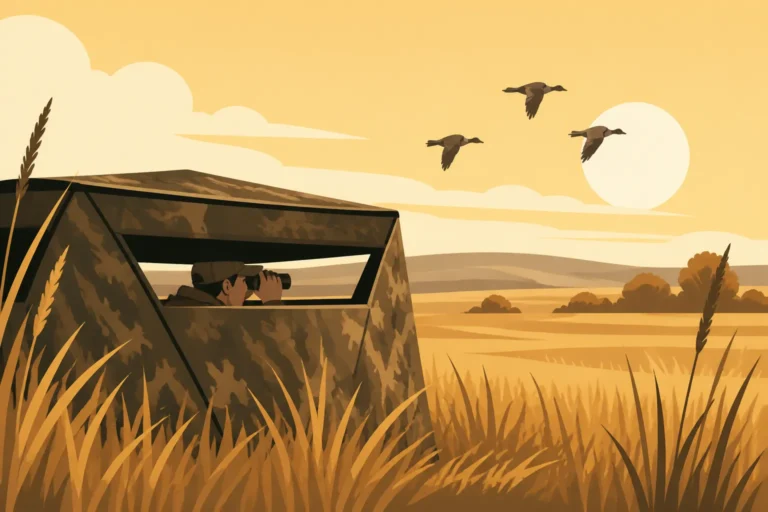
Before you even think about calling, consider your position. On open grassland, your concealment is primarily dictated by the terrain. Look for a slight rise that offers a commanding view of the surrounding country, but one that also breaks up your silhouette. A low ditch, a sparse cluster of sagebrush, or even the subtle fold in the ground can be enough. Remember, you want to be able to see them coming, but you don't want them to see you until it's too late.
Always, and I mean always, consider the wind. You want the wind blowing from the coyote towards you, or at least across you, at a 90-degree angle. This forces the coyote to approach from upwind, giving you a shot opportunity before it can catch your scent. Place your electronic caller 50-75 yards upwind of your position, perhaps with a decoy nearby. This draws the coyote's focus away from your hidden position. If a coyote circles downwind, it should still be in your shooting lane as it attempts to get your scent. For comprehensive advice on navigating public hunting areas, review resources like the South Dakota Public Hunting Atlas to scout potential setup locations.
Table: Open Grassland Coyote Calling Setup Essentials
| Element | Purpose | Key Considerations |
|---|---|---|
| Wind Direction | Prevents coyote from scenting you downwind. | Always have wind blowing from your back or across, never into your face. |
| Concealment | Breaks up your silhouette and hides movement. | Use subtle rises, draws, tall grass, or sparse brush. Ground blinds can help. |
| Caller Placement | Distracts coyote's focus from your position. | 50-100 yards upwind of your position; use a remote. |
| Decoy Use | Provides a visual focal point for the coyote. | Place near caller, ensure visibility. Moving decoys are highly effective. |
| Shooting Lanes | Clear lines of sight for shots as coyotes approach. | Anticipate common approach paths, clear obstructions. Prone is often best. |
| Backdrop | Prevents silhouetting against the sky. | Position yourself against a dark background or higher ground if possible. |
Decoy Placement and Its Role
In open grassland, a visual decoy can be just as important as your audio call. A moving decoy, like a simple rabbit or bird topper on a spinning pole, gives the coyote something tangible to focus on. It makes the illusion of a distressed animal much more convincing. Place the decoy right next to your electronic caller, roughly 50-75 yards upwind from your shooting position. This combination serves to draw the coyote's attention away from you, fixating them on the decoy and sound source.
When a coyote locks onto the decoy, they often become less aware of their surroundings, offering you precious moments to adjust your aim and take a steady shot. Just make sure the decoy is visible and can stand up to the prairie wind. Some hunters even incorporate a second, stationary decoy a bit further out to give the impression of a small group of animals. When exploring new areas, tools like GoHunt's mapping features can help you identify subtle terrain changes perfect for both concealing yourself and strategically placing your decoys.
Effective Calling Cadences and Sound Choices
Calling on the prairie often benefits from a more patient approach. Start with a relatively soft, curious sound for about 30 seconds to a minute. Then go silent for a few minutes, scanning constantly. If nothing appears, increase the volume and intensity of your distress sound. A good strategy is to use longer calling sequences (1-2 minutes) followed by longer periods of silence (3-5 minutes), especially if you're not getting an immediate response. Coyotes can be slow to commit in open country.
Experiment with different sounds. While rabbit distress is a staple, don't be afraid to try bird distress, mouse squeaks, or even some coyote vocalizations. Sometimes, a series of pup distress calls followed by a subtle female invitation howl can trigger a very aggressive response from a dominant alpha female. When you see a coyote coming, resist the urge to keep calling constantly. A few short, sharp calls to stop them for a shot are often all you need once they're committed. The goal is to make them believe the meal is easy, or the intruder is vulnerable. Our guide on Coyote Calling on Open Grassland discusses this in more detail.
Adapting to Conditions and Maximizing Success
The prairie is a dynamic environment, and successful coyote hunters are those who can adapt on the fly. No two hunts are ever exactly alike, and conditions can change rapidly.
Reading Coyote Behavior and Adjusting Tactics
Observation is paramount. When a coyote responds to your call, pay close attention to its body language. Is it trotting confidently, or is it stopping frequently, scanning nervously? Is it circling wide, trying to catch your wind, or is it coming directly in? This information should guide your next move. If a coyote is circling wide, you might need to adjust your position slightly, or try a softer call to draw it in without spooking it. If it hangs up at a distance, a quick lip squeak or even a subtle shift in the distress call might convince it to take those last few steps.
Sometimes, a coyote will come in, stop at 400 yards, and then just lie down, watching the decoy. This is a common frustrating scenario. A lot of hunters give up here, but it’s an opportunity. Try switching to a more aggressive sound, like a challenge howl, or even a different distress. Sometimes, simply waiting it out, remaining perfectly still for 10-15 minutes, can make the coyote think the "threat" or "meal" is no longer moving, compelling it to investigate further. It's a game of patience and psychological warfare. You might even consider a bold move, like moving your electronic caller to a new position, hoping the coyote tracks the sound. For specific rules on hunting predators, consult the South Dakota Predator Hunting Licence Rules.
Seasonal Adjustments for Grassland Calling
Coyote behavior changes significantly throughout the year, and your calling tactics need to evolve with the seasons.
- Fall (Early Season): After pups have dispersed, coyotes are often looking for easy meals. Distress calls work well, especially young animal distress. Pack animals are common, and you might call in multiple coyotes.
- Winter (Mid-Season): This is often the prime time for calling. Coyotes are pairing up for breeding, and food is scarcer. Territorial calls like howls and barks, combined with distress, can be incredibly effective. Lone females can be drawn in by male howls, and vice-versa. During this time, they are also easier to spot against the snow. For specific techniques, review our article on Winter Predator Hunting on Snow.
- Spring (Late Season): With denning season approaching, pup distress calls can be gold. Parents are fiercely protective and often respond aggressively to any perceived threat to their young. Howls can also work well to locate and challenge territorial pairs.
Always be mindful of what the coyotes are likely focused on during a particular season. If it's breeding season, territorial challenges are more potent. If pups are new, pup distress is stronger. If it’s frigid winter, any easy meal sound is golden.
Common Mistakes and How to Avoid Them
Even seasoned callers make mistakes, but recognizing them is the first step to improvement.
- Improper Wind Management: The number one mistake. Always know the wind direction and set up accordingly. Never let a coyote get directly downwind of you.
- Lack of Concealment: Silhouetting yourself against the skyline or moving too much. Be still, blend in, and use natural terrain to your advantage. E-scouting tools like GoHunt and checking onX Layers for South Dakota Land Status can help you find optimal spots.
- Over-Calling: Blasting calls too loudly or too continuously. Start soft, be patient, and let the sounds carry. Less is often more.
- Giving Up Too Soon: Prairie coyotes can take their sweet time. Wait at least 15-20 minutes, sometimes longer, on a stand before moving.
- Lack of Scouting: Not understanding the terrain, coyote travel corridors, or areas with recent sign. Spend time scouting, even if it's just from the road (legally, of course). Looking for recent tracks, scat, or even kills can give you a huge advantage. Understanding the general South Dakota Coyote Population in an area can also inform your strategy.
- Underestimating Wary Coyotes: Assuming they're dumb. They're not. They're smart, and they learn quickly. Change up your sounds, your setups, and your locations.
- Ignoring Logistics: Getting stuck on muddy roads or losing cell service. The prairie can be unforgiving, so be prepared with proper tires, a shovel, and a way to communicate. You might find our guide on Getting Stuck on a Prairie Two-Track useful for preparing for those sticky situations.
By understanding the unique challenges of open grassland, preparing with the right gear, executing strategic setups, and continually adapting, you'll dramatically increase your success rate in calling these wily South Dakota coyotes.
Disclaimer
Hunting is an inherently dangerous activity. Always prioritize safety, understand and adhere to all local, state, and federal hunting regulations, and ensure you have proper training and licensure. The advice provided in this article is for informational purposes only and should not replace professional instruction or local game law consultation.