Reading Wind at Four Hundred Yards
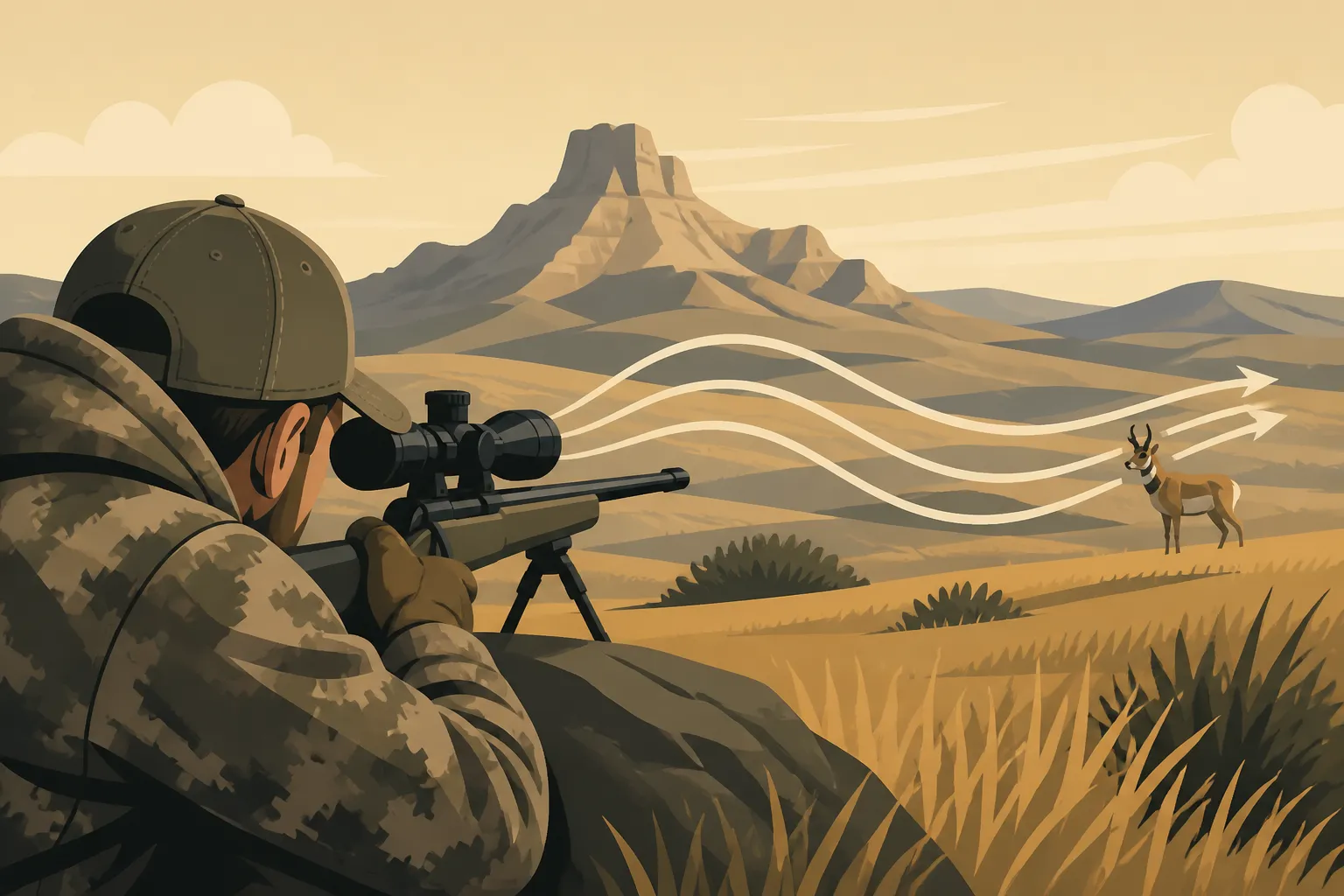
There are few things more frustrating for a South Dakota hunter than finally getting that big mule deer buck or antelope pronghorn in your scope at a distance, only to watch your perfectly aimed shot sail wide because you misjudged the invisible force of the wind. The vast, open prairies and rolling hills of South Dakota are notorious for their unpredictable winds, turning a seemingly straightforward 400-yard shot into a complex calculation. This guide is here to unravel the mysteries of reading wind at these longer distances, helping you make more ethical and successful shots when it matters most.
Understanding Wind on the South Dakota Prairie
When you’re staring down hundreds of yards across open ground, the wind isn't just a single, consistent force. It's a living, breathing entity with moods and currents that can change dramatically from one moment to the next, and even over the trajectory of your bullet. Understanding its nuances is the first step to mastering long-range shooting in the elements South Dakota throws at you.
How Terrain Affects Wind Flow
On the open prairie, even subtle changes in elevation, vegetation, or human-made structures can drastically alter wind patterns. Imagine a broad, flat expanse. The wind might seem consistent there, but as soon as it hits a shelterbelt, a low coulee, or even a stand of taller prairie grass, things change. Wind acts like water; it flows around and over obstacles. When it flows over something, it can create updrafts, downdrafts, and turbulent eddies on the leeward side. When it flows through a narrow opening, like a draw or a gap in a treeline, it can accelerate, creating a "venturi effect" that makes the wind speed much higher in that localized spot.
Think about hunting one of those West River coulees for mule deer. The wind might be a gentle breeze on the high ground, but as it funnels down into the draw where your target stands, it could easily double in speed. Conversely, the bottom of a deep coulee might be completely calm, while the wind howls overhead. Always observe the wind's behavior not just where you are, but between you and the target, and even past the target. This layered understanding is critical.
Wind Direction and Speed Indicators
The wind itself is invisible, but its effects are everywhere if you know how to look. Visual cues are your best friend. Small branches, tall grass, dust, mirage, and even the direction a cow's tail is flicking can all tell a story. For closer range, a wind checker powder bottle is invaluable, but at 400 yards, you need to rely on what the environment is showing you. Look for flags on distant farmsteads, the movement of tree lines on distant hills, or the way smoke rises from a distant chimney.
It’s not just about which way the wind is blowing, but how fast. A light ripple on a distant slough might indicate a 5 mph breeze, while whitecaps could mean 15-20 mph or more. Understanding Reading Snow for Deer and Predator Sign can also give you clues if there's any light snowfall, as you might see snow being scoured off rises or drifting in specific patterns. Even the angle a hunter's blaze orange vest is flapping at a distance can give you a clue to wind strength.
Practical Wind Reading Techniques for Long Shots
Successfully hitting a target at 400 yards in South Dakota's variable winds isn't about guesswork; it's about systematic observation and precise measurement. There are several techniques that, when used in combination, give you the most accurate picture of the wind's true influence on your bullet.
Using Mirage to Gauge Wind
Mirage is that wavy distortion you see rising from the ground on a warm day, and it's an incredibly powerful tool for wind reading at long distances. You'll need good quality optics and a stable shooting position, ideally with a spotting scope or a high-powered rifle scope. The mirage flows with the wind, much like water in a stream.
- Direction: If the mirage is flowing steadily from right to left, the wind is coming from the right. If it's boiling straight up, it means there's little to no crosswind.
- Speed: The faster the mirage "boils" or "streams," the stronger the wind. Slow, gentle waves indicate lighter winds. If the mirage appears to be leaning or moving at a sharp angle across your field of view, you're looking at a significant crosswind.
- Layers: Sometimes, you'll see different layers of mirage moving in different directions or at different speeds, especially when the wind is swirling or inconsistent. This is a critical indicator that your bullet will likely encounter multiple wind vectors along its path. In these complex scenarios, you often have to make a best guess or wait for more stable conditions.
Practice Glassing South Dakota Breaks at First Light and use that time to observe mirage patterns, even if you’re not shooting. This builds your mental library of how mirage relates to actual wind conditions.
Observing Natural Wind Flags
Every natural element between you and your target is a potential wind flag. Don't just look at the grass right next to you, look at it at 100 yards, 200 yards, and right by your target.
- Grass and Leaves: Pay attention to how grass blades bend and sway. A slight rustle is minimal wind; grass bending significantly or lying flat indicates stronger winds. Leaves on distant trees can also give clues, but remember that trees are much taller than your bullet's flight path, so they might be in a different wind layer.
- Dust and Dirt: A dry prairie day can be your best friend for wind reading. Watch for dust devils or even just small puffs of dust being kicked up by the wind or an animal moving. These show not just direction but also localized speed.
- Animals: Even animals can be indicators. Watch how antelope or deer react to the wind. Are their fur or manes being ruffled? Are they bedding in a sheltered spot? This gives you a general sense of the conditions. When you're trying to Spot-and-Stalk Antelope on Open Prairie, paying attention to how they face the wind (usually into it for scenting predators) can also tell you about general direction.
Using Technology for Wind Measurement
While natural indicators are crucial, modern technology can provide an invaluable layer of precision. Devices like Kestrel meters offer real-time wind speed and direction, often integrating with ballistic solvers.
- Handheld Anemometers (Kestrel): These devices measure actual wind speed. While you can't measure the wind exactly at 400 yards with a handheld device, measuring it at your position, and then walking out to 100 or 200 yards (if possible and ethical before a shot), gives you data points to average and extrapolate. Some advanced models can even tell you the headwind/tailwind component and crosswind component based on your target direction.
- Ballistic Solvers: Many modern rangefinders, like some models from Sig Sauer or Leupold, have built-in ballistic solvers that can take wind input and calculate hold-offs or adjustments for your specific rifle and ammunition. Others, like the GoHunt app or other dedicated ballistic apps, can be paired with a Kestrel meter via Bluetooth to give you incredibly precise solutions. You input your rifle's data, bullet type, muzzle velocity, and current atmospheric conditions (which some Kestrels also measure), then add the wind speed and direction, and the app will tell you exactly how many clicks to adjust your scope or where to hold. This kind of integration takes much of the guesswork out of the equation. Always double-check your data inputs, though!
Compensating for Wind Drift on Long Shots
Once you've read the wind, the next step is to translate that information into a precise adjustment that will put your bullet on target. This is where your knowledge of your rifle, bullet, and ballistic data comes into play.
Understanding Bullet Drift
Every bullet, once it leaves the barrel, is immediately subject to the forces of gravity and wind. The longer the bullet is in the air, the more gravity pulls it down and the more wind pushes it sideways. At 400 yards, even a light 5 mph crosswind can push a typical hunting bullet several inches off course, and a 10-15 mph wind can easily move it by a foot or more. That's the difference between a clean kill and a frustrating miss or, worse, a wounded animal.
The amount a bullet drifts is influenced by:
- Bullet Ballistic Coefficient (BC): Bullets with higher BCs are more aerodynamic and resist wind drift better.
- Bullet Velocity: Faster bullets spend less time in the air, thus experiencing less wind drift.
- Wind Speed: Obvious, but worth reiterating—stronger winds push bullets more.
- Wind Direction: A direct crosswind (90 degrees to your shooting line) has the maximum effect. A headwind or tailwind primarily affects bullet drop and velocity, but also subtly impacts stability.
- Time of Flight: The longer the flight, the more drift. This is why 400-yard shots are so much trickier than 100-yard shots.
For example, a common hunting cartridge like a .308 Winchester shooting a 168-grain bullet at 2600 fps might drift around 14-16 inches at 400 yards in a 10 mph full value crosswind. A faster, higher BC bullet from a 6.5 Creedmoor might drift 8-10 inches in the same conditions. Knowing these numbers for your specific load is non-negotiable. Many hunters use the GoHunt app for their detailed ballistic calculators, which can provide precise drift data for various wind conditions, allowing you to focus more on the hunt itself, whether you're trying to figure out Judging a Mule Deer Buck at Distance or simply enjoying the outdoors.
Windage Adjustments: Dialing vs. Holding Off
Once you have your wind reading, you have two primary ways to compensate:
- Dialing Your Scope: This involves physically adjusting your scope's windage turret (the one on the side) by a certain number of clicks. If your scope has 1/4 MOA (Minute of Angle) clicks, each click moves your point of impact about 1 inch at 400 yards (or 1/4 inch at 100 yards). If your ballistic app or chart tells you to adjust 10 inches for wind, you'd dial 10 clicks (10 inches / 1 MOA per 400 yards = 10 clicks if your scope is true MOA). This method is generally considered more precise for long-range shooting, as it puts your reticle exactly where the bullet will impact.
- Holding Off (Kentucky Windage): This means using your reticle (if it has hash marks or a Christmas tree pattern, like a TMR or Horus reticle) to aim into the wind. If the wind is coming from the left, you'd hold your reticle a certain distance to the left of the target, allowing the wind to push the bullet back into the center. This is faster than dialing, which can be critical when game is moving or conditions are changing rapidly, but it's often less precise, as you're estimating the hold based on your reticle. For effective use, you need to know what each hash mark on your reticle represents at that specific distance.
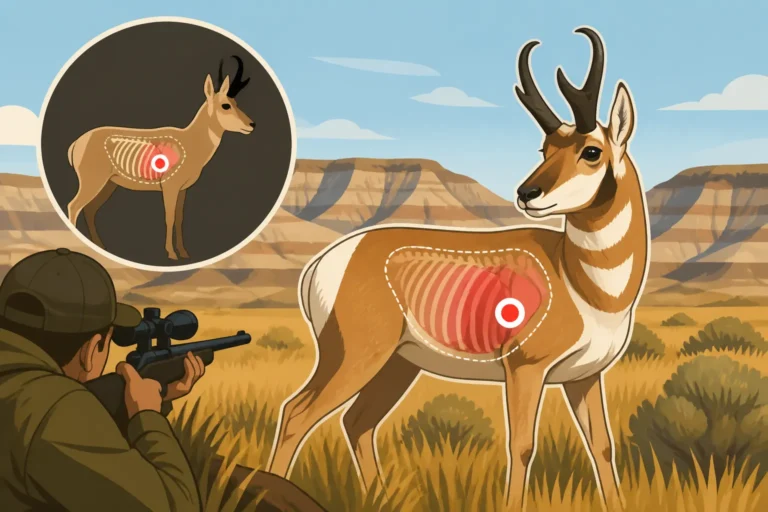
A hybrid approach is often best for hunting. Dial for elevation (bullet drop) and hold off for wind. This offers a good balance of speed and precision in the field, especially when you need to make a quick decision about Shot Placement on a Pronghorn before it disappears over a rise.
Here's a simplified example of wind drift for a generic hunting rifle (e.g., .30-06, 180gr at 2700 fps) at 400 yards, assuming a full value (90-degree) crosswind:
| Wind Speed (MPH) | Approximate Drift (Inches) at 400 Yards | Equivalent MOA Adjustment |
|---|---|---|
| 5 | 7-9 | 1.75 – 2.25 |
| 10 | 14-18 | 3.5 – 4.5 |
| 15 | 21-27 | 5.25 – 6.75 |
| 20 | 28-36 | 7 – 9 |
Note: These are approximations. Actual drift depends heavily on specific bullet characteristics, muzzle velocity, and atmospheric conditions. Always confirm with your ballistic data.
Gear and Practice for Long-Range Wind Shooting
Conquering the wind at 400 yards isn't just about knowledge; it's about having the right tools and, more importantly, countless hours of practice. The open expanses of South Dakota demand proficiency, and you don't want your first real test to be on a trophy animal.
Essential Equipment for Wind Management
Having reliable gear can make all the difference when those prairie winds start to whip.
- Quality Optics: This cannot be stressed enough. A clear, bright scope with reliable, repeatable turrets is paramount. If you're going to dial, your turrets must track accurately. If you're holding off, a reticle with useful hash marks or a Christmas tree design is key. A good spotting scope is also a massive advantage for observing mirage and spotting impacts.
- Rangefinder with Ballistic Capabilities: As mentioned, many modern rangefinders can measure distance and angle, and some even integrate wind speed or have basic ballistic solvers. Brands like Vortex, Leupold, and Sig Sauer offer excellent options. Pair these with a reliable app like what GoHunt provides, and you're well on your way. Remember to also get good at Rangefinding Across Open Ground accurately.
- Handheld Anemometer (Kestrel): A dedicated wind meter is critical for accurate measurements. Don't cheap out here; a reliable Kestrel with temperature and barometric pressure sensors will give you the most complete data for your ballistic calculations.
- Rifle and Ammunition: Your rifle needs to be accurate enough for the task, meaning it can consistently shoot sub-MOA (Minute of Angle) groups. More importantly, you need to know your rifle's actual muzzle velocity with your specific ammunition, not just what's on the box. Chronograph your loads. Consistent, high-BC ammunition is also key.
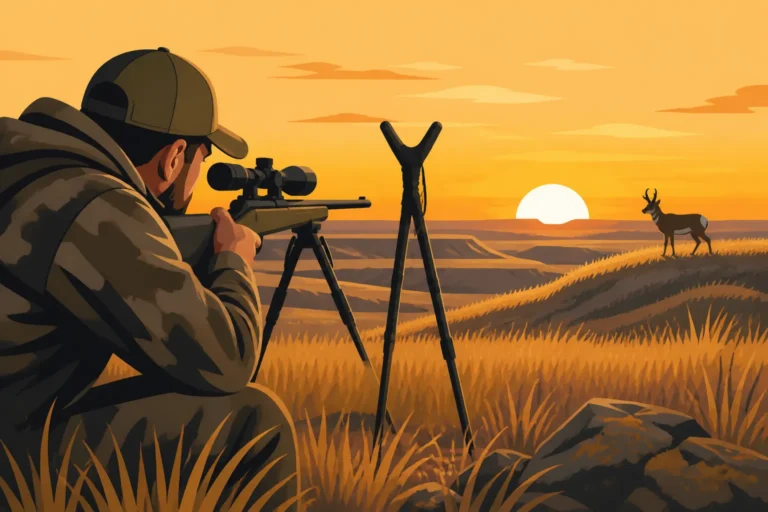
Beyond specific wind gear, remember that shooting long distances requires a stable platform. A good bipod, a solid rear bag, or even a tripod system for standing or kneeling shots will reduce human error and allow you to focus purely on reading the wind and making the shot. Also, think about your personal comfort and concealment, especially when utilizing Using Draws to Hide a Stalk or waiting patiently.
Practice Drills for Wind Proficiency
Knowledge is nothing without application. You have to practice in the wind to get good at shooting in the wind. Sunny, calm range days are fun, but they don't prepare you for the real world.
- Shoot in Varied Wind Conditions: Make it a point to go to the range when it's windy. Don't just pack up and go home. That's precisely when you need to be out there. Start at 200 yards, then move to 300, and then 400 yards.
- Mirage Reading Practice: Dedicate portions of your range time to simply observing mirage through your scope or spotting scope without firing. Try to estimate wind speed and direction, then confirm with your Kestrel. Compare your estimates to impacts downrange.
- Call Your Shots: After each shot, before looking at the target, try to predict where your bullet impacted based on your wind call and what you felt the gun do. This helps build a mental database of cause and effect.
- Practice Both Dialing and Holding Off: Get proficient with both methods. There will be times when dialing is best, and times when a quick hold-off is necessary. Don't be a one-trick pony.
- Scenario-Based Training: Simulate hunting scenarios. Set up a target at 400 yards, walk a quarter-mile, then get into position, range the target, read the wind, and take your shot within a reasonable timeframe, just like you would in the field. This also ties into building your confidence after you've worked on your Practicing Prone Shots on the Prairie to ensure a stable shooting position in field conditions.
- Record Everything: Keep a detailed logbook. Note wind speed, direction, temperature, humidity, your scope settings, your hold-offs, and the actual point of impact. This data is invaluable for understanding your rifle and building your intuition for wind. It's also great for reviewing how your Rifle Calibers for South Dakota Antelope or deer perform in different conditions.
Ultimately, mastering wind reading at 400 yards in South Dakota means integrating observation, technology, and extensive practice. The prairie wind is a formidable opponent, but with diligent preparation and a systematic approach, you can confidently make those challenging long-range shots.
Disclaimer
The information provided in this guide is for educational and informational purposes only and is not a substitute for professional instruction or adherence to all applicable hunting laws and regulations. Always prioritize safety, ethical hunting practices, and respect for wildlife and private property. Ensure you have the proper licenses and understand all local, state, and federal hunting laws before heading into the field.