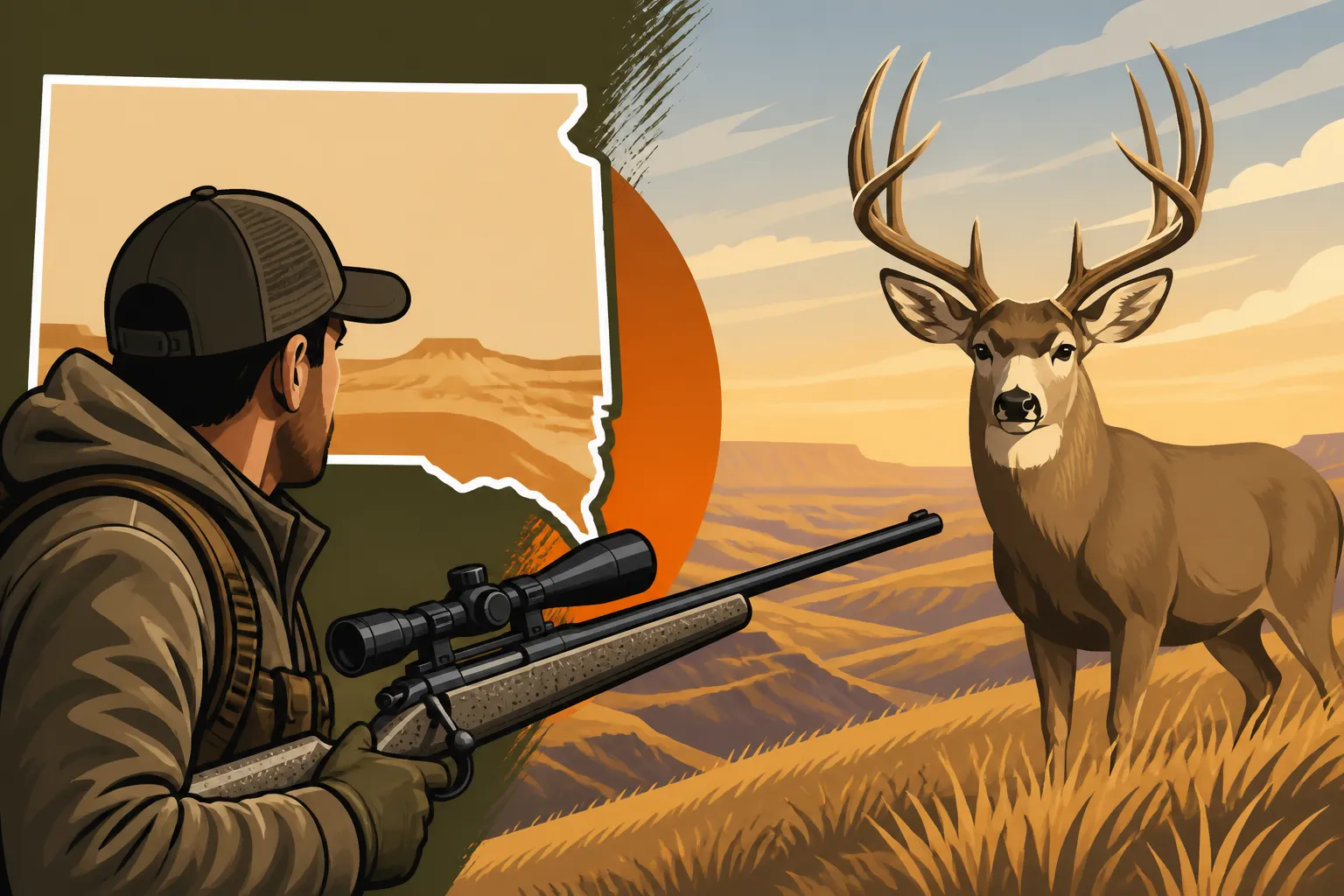
Rifle Choice for West River Mule Deer
Choosing the right rifle for West River mule deer isn't just about picking something off the shelf; it's about matching your gear to the unique challenges of that vast, open landscape. Many hunters feel overwhelmed by the sheer number of calibers and rifle configurations out there, wondering what truly makes a difference when a buck might be spotted across a coulee at 300 yards or more. This guide will walk you through the practical considerations, from ballistic performance to rifle features, ensuring you step into the South Dakota prairie with confidence.
Understanding West River Mule Deer Terrain and Shots
The rugged, expansive territory west of the Missouri River in South Dakota presents a distinct set of challenges and opportunities for mule deer hunters. It’s a far cry from the dense timber hunting often found elsewhere. Knowing what to expect from this terrain is the first step in selecting a rifle that will perform when it counts.
The Vastness of West River Country
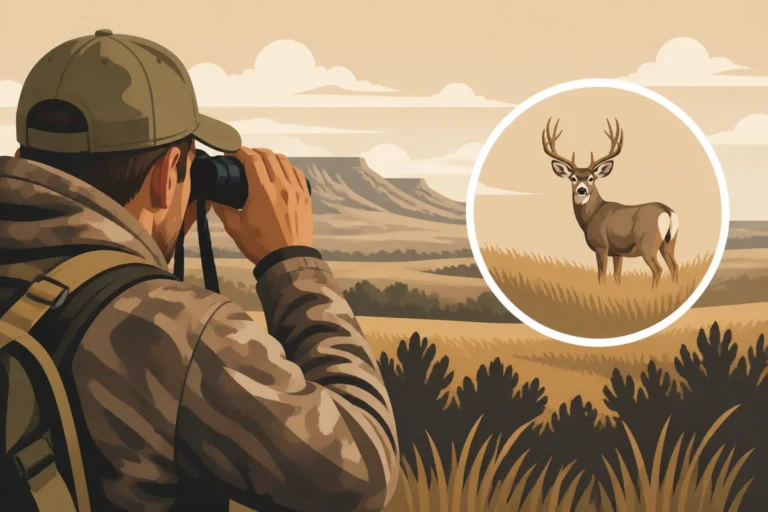
Imagine endless rolling hills, deep coulees, scattered sagebrush, and sparse pockets of cedar trees — this is the canvas of West River mule deer hunting. It’s a land where visibility stretches for miles, where you spend hours glassing distant ridges and draws. This isn't a place for short-range brush guns. The terrain demands a rifle capable of accuracy and energy retention over significant distances. As you're Glassing South Dakota Breaks at First Light, you'll quickly realize that a buck could appear almost anywhere, often much further than you'd prefer. The open nature of the country means that closing the distance on a savvy mule deer often involves long stalks and strategic use of what little cover exists, but sometimes, a shot must be taken at range.
Typical Shot Distances
While every hunter dreams of a close-range encounter, the reality of hunting West River mule deer often involves shots extending beyond 200 yards. It’s not uncommon for opportunities to arise at 300, 400, or even further, depending on the specific hunting scenario and your comfort level. You might spot a bedded buck on an opposing hillside, and despite your best efforts at Stalking a Bedded Mule Deer Buck using whatever draws and terrain features are available, the final approach might still leave a considerable gap. This isn't to say every shot will be a long one, but your rifle and your skill set need to be prepared for it. Ignoring the possibility of extended ranges could mean the difference between filling your tag and watching a trophy walk away.
Weather Considerations
South Dakota weather is famously unpredictable and can drastically impact ballistics. The West River region is no stranger to strong, gusting winds that can push a bullet far off target, especially at longer distances. A calm morning can turn into a blustery afternoon in a matter of hours. This means your rifle choice needs to be paired with a cartridge that has a good ballistic coefficient, allowing it to resist wind drift as much as possible. Furthermore, extreme cold or heat can affect powder burn rates and muzzle velocity, though these effects are generally less pronounced than wind. You need to be prepared for anything from warm October days to frigid November winds, which can certainly influence how your rifle performs and how comfortably you can take a shot.
Caliber Considerations for Mule Deer
When it comes to putting down a West River mule deer cleanly and efficiently, the caliber of your rifle is paramount. It's not just about raw power, but a balance of trajectory, energy delivery, and manageable recoil that allows for accurate shot placement.
Recommended Calibers and Their Ballistics
For the open country of West River, you’re looking for a cartridge that shoots relatively flat and retains enough energy to dispatch a mule deer humanely. Here are some tried-and-true favorites, along with some modern contenders:
- 270 Winchester: A classic for a reason. The .270 Win offers a great balance of flat trajectory, moderate recoil, and sufficient energy for deer-sized game out to considerable ranges. It's a fantastic all-around deer cartridge, especially with 130-150 grain bullets. It performs well in varied conditions, making it a reliable choice for the prairie.
- 30-06 Springfield: Another American legend. The .30-06 is incredibly versatile, capable of handling bullet weights from 150 to 180 grains, making it suitable for everything from deer to elk. While it has a slightly more pronounced rainbow trajectory than some magnum cartridges, its energy at range is undeniable, and recoil is still manageable for most shooters.
- 7mm Remington Magnum: When you start thinking about shots out to 400 yards and beyond, the 7mm Rem Mag truly shines. It launches high ballistic coefficient (BC) bullets at impressive velocities, resulting in a flat trajectory and excellent energy retention. Recoil is certainly more noticeable than the .270 or .30-06, but it’s often considered worth it for the added reach and knockdown power.
- 300 Winchester Magnum: This is a powerful cartridge, offering substantial energy and a flat trajectory. It’s an excellent choice if you anticipate very long shots or if you might be pursuing larger game like elk in the Black Hills as well. However, the recoil is significant, and mastering accurate shooting with a .300 Win Mag requires dedication and practice.
- 6.5 Creedmoor: This relative newcomer has taken the shooting world by storm, and for good reason. It offers superb accuracy, a flat trajectory, and excellent wind-bucking capabilities, all with very mild recoil. While some might argue it's on the lighter side for mule deer, with good bullet selection (140-150 grain), it's perfectly capable out to ethical hunting distances. Its low recoil makes it a joy to shoot, which translates to better accuracy for many hunters.
Here's a quick comparison of these popular calibers for typical West River distances, assuming a 200-yard zero and common hunting loads:
| Caliber | Typical Bullet Weight (gr) | Muzzle Velocity (fps) | Drop at 300 Yards (inches) | Energy at 300 Yards (ft-lbs) | Relative Recoil |
|---|---|---|---|---|---|
| .270 Winchester | 130 | 3060 | -6.5 | 2000 | Moderate |
| .30-06 Springfield | 165 | 2900 | -7.5 | 2200 | Moderate |
| 6.5 Creedmoor | 143 | 2700 | -8.0 | 1600 | Mild |
| 7mm Remington Magnum | 160 | 3000 | -6.0 | 2500 | Heavy |
| .300 Winchester Magnum | 180 | 3000 | -6.8 | 2800 | Very Heavy |
Note: Ballistics are approximate and vary based on specific load, barrel length, and environmental conditions.
Bullet Selection Matters
Beyond the caliber, the specific bullet you choose is incredibly important. For mule deer, you want a bullet designed for controlled expansion and good weight retention. This ensures deep penetration and maximum energy transfer, leading to a quick, ethical kill. Cheap, rapidly expanding bullets designed for varmints won't cut it on a mature mule deer buck.
Look for bullets like Nosler AccuBond, Hornady InterLock or ELD-X, Barnes TSX, or Swift A-Frame. These are constructed to hold together, penetrate bone and hide, and expand reliably without fragmenting excessively. Using a high-quality bullet will maximize the effectiveness of your chosen cartridge. Even with careful consideration of Rifle Calibers for South Dakota Antelope, the right bullet makes all the difference for any big game.
Recoil Management
While it might seem tough to admit, excessive recoil can absolutely diminish your accuracy. If you're flinching or anticipating the shot, even the most powerful magnum won't perform as intended. Be realistic about what you can comfortably shoot. A less powerful cartridge that you can shoot accurately is always superior to a magnum that makes you dread pulling the trigger.
Consider adding a muzzle brake or opting for a rifle with a heavier barrel profile or a good recoil pad if you choose a more potent cartridge. Remember, you'll be Practicing Prone Shots on the Prairie and shooting from various field positions, and consistent, recoil-free practice is vital for success.
Rifle Features Beyond Caliber
The cartridge might be the heart of your hunting system, but the rifle itself, along with its accessories, forms the body. These features play a critical role in your success and comfort during a West River mule deer hunt.
Weight and Portability
Hunting West River isn't usually about sitting in a blind. It's about covering ground, often miles of it, on foot. You'll be walking coulees, climbing ridges, and maneuvering through sagebrush. Your rifle needs to be a companion, not a burden. A heavy rifle, while potentially more stable for bench shooting, becomes a significant drag after a few hours of hiking.
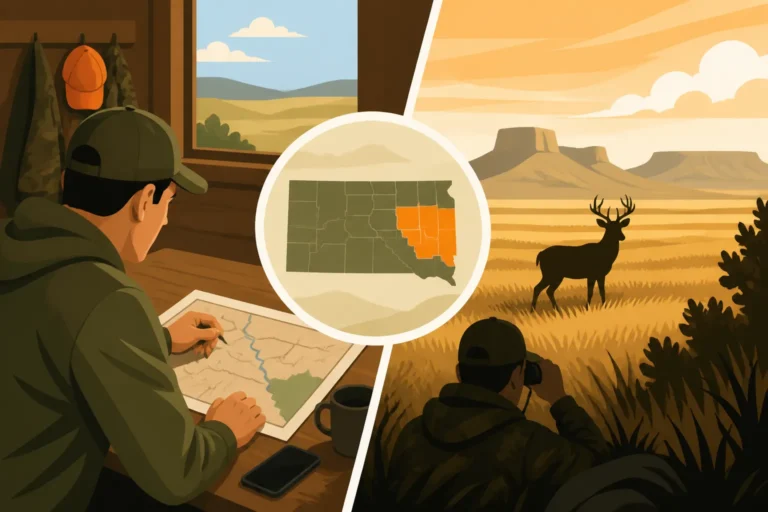
Most hunters find a rifle in the 7-8 pound range (unscoped) to be a good balance. Lighter rifles (under 7 pounds) are fantastic for carrying, but they can be harder to hold steady in the field and tend to amplify recoil. Synthetic stocks are often preferred over traditional wood for their lighter weight, durability, and resistance to warping in varying weather conditions. When scouting different hunting spots, perhaps using tools like GoHunt to analyze aerial imagery of various Hunting South Dakota Walk-In Areas, consider how much hiking will be involved and how a heavier rifle might impact your ability to cover ground effectively.
Optics are Key
If there's one area not to skimp on, it's your scope. High-quality optics are absolutely essential for West River mule deer hunting. You'll be doing a lot of Glassing South Dakota Breaks at First Light, spotting animals at extreme distances, and then needing to place a precise shot when the opportunity arises.
Look for a scope with excellent light transmission for those crucial dawn and dusk hours, clear glass for precise target identification, and reliable, repeatable adjustments for dialing in long-range shots. A magnification range of 3-9x, 3-10x, or even 4-16x is generally suitable. Don't forget a good rangefinder; knowing the exact distance to your target is non-negotiable for ethical long-range shooting. When you're Rangefinding Across Open Ground, having a quick and accurate read is critical for dialing your scope or holding over correctly. Brands like Leupold, Vortex, Sig Sauer, and Swarovski offer excellent options across various price points.
Stock and Action Types
Most West River mule deer hunters opt for a bolt-action rifle, and for good reason. They are renowned for their accuracy, reliability, and robust construction. The simplicity of a bolt action makes it less prone to mechanical issues in harsh environments.
- Stock Material: As mentioned, synthetic stocks (polymer, fiberglass, carbon fiber) are very popular. They are lighter, weatherproof, and generally more durable than wood. Wood stocks are beautiful and classic, but they can be heavier and are more susceptible to swelling or warping with changes in humidity and temperature, potentially affecting accuracy.
- Action Type: Bolt actions dominate the mule deer scene. Lever actions, while popular for whitetail in brushy areas, typically aren't designed for the precision and long-range capabilities needed on the prairie. Semi-automatics can be effective, but their legality and practical accuracy for extreme long-range shots should be checked based on specific regulations and models.
Practice and Preparation for the Hunt
No matter how perfect your rifle choice is, it's only as good as the shooter behind it. The vast, challenging nature of West River mule deer hunting demands thorough preparation and unwavering confidence in your equipment and abilities.
Range Time is Non-Negotiable
You simply cannot show up to West River, fire a few shots at 100 yards, and expect to be ready for a 400-yard shot at a mule deer. Consistent, diligent practice at realistic distances is crucial. This means shooting from various field positions – prone, kneeling, and from improvised rests – not just from a bench. Pay particular attention to Practicing Prone Shots on the Prairie, as this is a common and stable position you'll find yourself in.
Practice in different weather conditions if possible, especially wind. Learn how your bullet drifts in a crosswind at different ranges. Many hunters use ballistic calculators or apps, which can be incredibly helpful, but only if you've validated their data with real-world shooting. Remember that South Dakota can throw some serious wind your way, and understanding Reading Wind at Four Hundred Yards can make or break a long shot.
Understanding Your Rifle's Limitations
Every rifle, cartridge, and shooter combination has an effective range. This isn't just about the bullet's ability to reach a target; it's about your ability to consistently place that bullet precisely where it needs to go for an ethical kill. For many, this might be 300 yards; for others, with extensive practice and a capable rifle, it might extend to 500 or even further.
Be honest with yourself about your capabilities. A wounded animal is a terrible outcome for everyone involved, especially the animal. Knowing your maximum ethical range under real-world hunting conditions is a sign of a responsible hunter. Don't let buck fever push you beyond what you know you can reliably do. Tools like those found on GoHunt can help you understand the terrain you'll be hunting, allowing you to mentally prepare for potential shot scenarios and gauge your readiness.
Field Ethics and Shot Placement
Ultimately, the goal is a clean, ethical harvest. For mule deer, this means aiming for the vitals (heart/lungs). This area provides the largest margin of error and the highest probability of a quick kill. Understanding deer anatomy is critical, and practicing on targets that accurately depict vital zones can be very beneficial.
Even when you make a perfect shot, sometimes deer don't drop on the spot. Be prepared for tracking. Knowing how to Blood Trailing Through Prairie Cover is a vital skill. Also, be mindful of the rules regarding retrieving game from private land, as a wounded deer might cross property lines. Respect for the animal, the land, and other hunters should always guide your decisions in the field. After all the effort you put into scouting Which Coulees Hold Bucks in Dry Years and practicing your shots, ensuring an ethical harvest is the ultimate objective.
Disclaimer
Always check the latest South Dakota Game, Fish and Parks regulations before any hunting activity, as rules and seasons can change. This guide provides general information and recommendations for educational purposes only.