Ground Blinds in Open Prairie
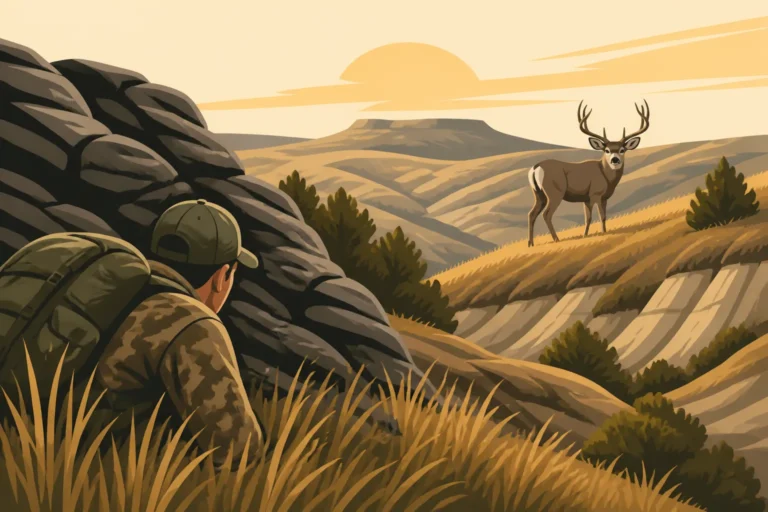
Hunting in South Dakota's vast, open prairie can feel like trying to hide in a bathtub. The sheer scale of the landscape, often devoid of significant timber or deep, broken terrain, makes concealment incredibly challenging. Whether you're chasing the lightning-fast pronghorn, a wary mule deer buck, or even setting up for predators, finding effective cover is a constant struggle. This guide will walk you through the ins and outs of using ground blinds effectively in these expansive environments, transforming a seemingly impossible task into a strategic advantage.
Why Ground Blinds Are Essential on the Open Prairie
When you think of South Dakota hunting, especially out west of the Missouri River, images of rolling grasslands, endless sagebrush flats, and distant breaks often come to mind. It's beautiful, but it’s also brutally unforgiving for hunters trying to get close to game. Unlike the timbered river bottoms of the east or the dense Black Hills, the prairie offers very little natural cover to break up your silhouette. Animals out here, particularly pronghorn antelope and mule deer, are highly attuned to their surroundings. They live and thrive by their exceptional eyesight, spotting anything out of place from incredible distances.
The traditional spot-and-stalk method, while incredibly exciting and effective in certain situations, often hits a wall on the open prairie. You might spot a magnificent buck or a trophy antelope from miles away, make your plan, and start your carefully calculated approach, only to have your cover blown by an unseen set of eyes, a subtle shift in wind, or a tiny rise you thought was enough. It's a frustrating dance, one many of us know all too well. This is precisely where a well-deployed ground blind becomes a game-changer. It offers a stationary, concealed position that allows you to be where the animals want to be – near water, along travel corridors, or in feeding areas – without constantly battling the terrain for cover. Think of it as bringing your own little piece of the Black Hills forest to the wide-open prairie, giving you an advantage where one seems impossible.
Key Considerations for Ground Blind Placement and Setup
Successfully hunting from a ground blind on the open prairie isn't just about throwing it up anywhere; it's a careful blend of strategy, scouting, and respect for the environment. The placement of your blind is arguably more critical than the blind itself.
Scouting and Animal Movement
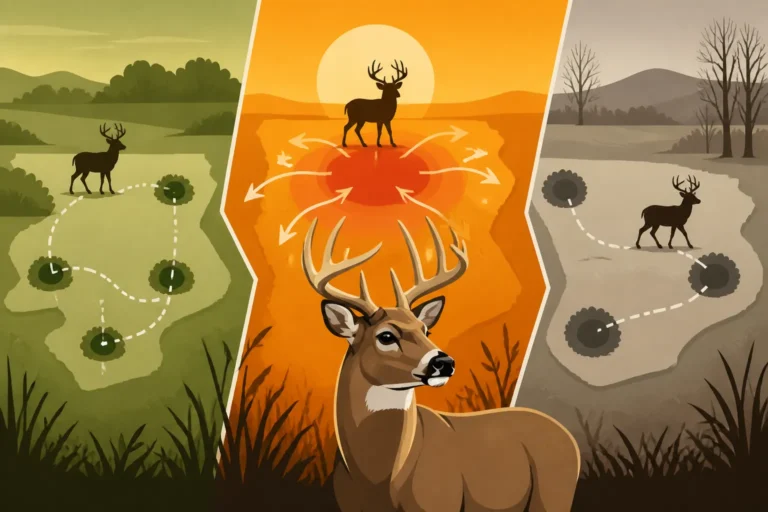
Before you even think about unpacking your blind, you absolutely need to understand the movements of the animals you're pursuing. This isn't just about seeing a buck once; it's about identifying patterns. Are the antelope regularly hitting a specific waterhole in the mornings, especially when it's hot and dry? You can find a lot of success targeting specific water sources, and knowing how to find them, especially Finding Water in Dry West River Country, is invaluable. Are the mule deer using a particular coulee or a line of low-lying brush to travel between feeding and bedding areas? Are coyotes using a certain ridge to survey for prey?
Observing these patterns, either firsthand or through diligent e-scouting with tools like those offered by GoHunt, will guide your placement. Look for pinch points, natural funnels, or areas where different types of cover converge, even if that cover is just a slight depression or a sparse stand of sage. Pay close attention to subtle terrain features that might not seem like much to the human eye but serve as key landmarks or travel routes for wildlife. Consider using a mapping application like GoHunt to mark potential travel routes, water sources, and any existing sparse cover. These digital scouting efforts can save you countless hours of walking and dramatically increase your chances of finding the perfect spot.
Wind Direction and Scent Control
This cannot be stressed enough: wind direction is paramount. On the prairie, where scent can travel for miles unimpeded, failing to account for the wind will lead to nothing but frustration. Always position your blind so that the prevailing wind carries your scent away from where you expect game to approach. For instance, if you anticipate deer coming from the west to feed, and the wind is consistently out of the north, you'll want your blind positioned to the south of their travel route.
South Dakota's prairie winds can be notoriously fickle, however. They often shift throughout the day, especially as temperatures change. Have a backup plan or, if possible, select a location that offers some flexibility for different wind directions, allowing you to quickly adjust or even move to a second blind location if conditions change drastically. I always pack a small bottle of wind-checker powder; it's a simple tool that can make all the difference, especially when you're trying to figure out subtle thermals rising or falling in a draw.
Blending into the Natural Backdrop
A shiny new pop-up blind sticks out like a sore thumb on the open prairie, especially to animals with eyesight like a pronghorn. The key is to make your blind disappear into the landscape. Utilize any existing features for a backdrop: a lone cedar tree, a small cluster of brush, an old fence line, a rocky outcropping, or even the edge of a slight rise or coulee. The goal isn't just to hide you, but to hide the blind itself.
Ideally, set up your blind several days, or even weeks, before you plan to hunt if the situation allows. This gives animals time to acclimate to its presence and see it as just another harmless part of their environment. If a quick setup is necessary, focus intensely on brushing it in. Gather local grasses, sagebrush, cattails, or any other natural vegetation and tuck it into the blind's loops or weave it around the edges. Break up its distinct rectangular or square shape as much as possible. A lot of hunters use mapping tools to scout for these subtle terrain features long before the season. Reading Prairie Coulees for Mule Deer for example, is a fantastic way to understand how animals use the terrain, which can directly inform your blind placement.
| Blind Type | Portability | Concealment | Setup Time | Durability | Best Use Case |
|---|---|---|---|---|---|
| Pop-Up | High | Moderate | Fast | Moderate | Mobile hunting, quick setups, varying locations. |
| Panel Blind | Medium | High | Moderate | High | Semi-permanent sets, custom shapes, brushing in. |
| Natural | N/A | High | Variable | High | Long-term ambushes, ultimate concealment, no cost. |
Entry and Exit Routes
This is often an overlooked aspect of ground blind hunting. You've found the perfect spot, tucked your blind into the landscape, and waited patiently. But how do you get in and out of it without spooking everything in a half-mile radius? Your entry and exit routes need to be carefully planned. Use existing terrain features, such as draws, small hills, or even the back side of a larger bluff, to shield your approach and departure.
Walk softly and slowly, especially during the crucial first and last hours of light. If you're setting up for an evening hunt, try to approach while animals are still bedded or far off. For morning hunts, approach in the pre-dawn darkness, using the cover of night. It's an important part of the puzzle, because even the best-placed blind is useless if you constantly blow out animals just by showing up. This meticulous planning is similar to how you’d plan a Treestand Access Along a River but adapted for the unique challenges of wide-open country.
Types of Ground Blinds and Camouflage for Prairie Hunting
The world of ground blinds has expanded dramatically, offering a range of options to suit different hunting styles, budgets, and the specific demands of the open prairie. Choosing the right blind and ensuring its camouflage is spot-on can make a huge difference.
Pop-Up Blinds: The Hunter's Workhorse
Pop-up blinds are probably the most common type you'll see. Brands like Barronett Blinds, Ameristep, and Primos offer excellent options that are designed for quick deployment and portability. They typically fold down into a compact circle or rectangle, making them relatively easy to carry into the field. Their speed of setup is a huge advantage when you're trying to capitalize on a fresh sign or when scouting reveals a hot spot that needs immediate attention.
However, on the open prairie, their distinct shape can be a drawback. Even with a good camouflage pattern, a dark, boxy pop-up blind can stand out. This is where brushing in becomes critical. Don't rely solely on the factory camo pattern; actively enhance it with local vegetation. Look for models with plenty of brushing loops or exterior webbing that allows you to easily attach grasses, sage, or small branches. Choose patterns that mimic dry grasses, dirt, or scrub, rather than deep forest patterns. A good option might be a blind with a prairie or brush pattern that features lighter tones and browns, blending in with the sun-baked summer and fall foliage of South Dakota.
Panel Blinds: Modular Concealment
Panel blinds, like those made by Redneck Blinds or Shadow Hunter, are less common for portable prairie hunting but offer superior long-term concealment and customization. These are typically more rigid, often made of plastic or fiberglass panels, and are much heavier. While not ideal for packing miles into a remote location, they are fantastic for semi-permanent setups on private land or easily accessible public spots where you know you'll be returning.
The advantage of panel blinds is their ability to be incredibly well-brushed in and their durability against the elements. You can often shape them to better fit existing terrain features. Imagine setting up a few panels in a semi-circle around a small clump of cedars or a brush pile, then completely integrating them with local materials. They can also offer more weather protection, a welcome feature during the brutal cold or unexpected rain showers common on the South Dakota prairie.
Natural Blinds: The Ultimate in Low-Cost Concealment
Sometimes, the best blind isn't a manufactured one at all. A carefully constructed natural blind can be the most effective and least intrusive option. This involves using existing terrain features—a deep cut bank, a cluster of thorny buffaloberry bushes, an old abandoned hay bale, or a small drainage—and enhancing it with additional natural materials found on site.
The beauty of a natural blind is that it perfectly matches the environment. There's no foreign material, no odd shapes for animals to acclimate to. You might only need to create a small screen of branches and grasses to break up your outline, or simply sit in a slight depression with tall grass in front of you. This approach demands excellent understanding of the terrain, like knowing how to identify and use Using Draws to Hide a Stalk for maximum effect. It also requires the most discipline in terms of movement, as you won't have the full enclosure of a pop-up. However, the feeling of successfully drawing an animal into range from a truly invisible setup is incredibly rewarding.
Hunting Strategies from a Ground Blind on the Prairie
Once your blind is perfectly positioned and camouflaged, the real work—and the real fun—begins. Hunting from a ground blind on the open prairie requires a different mindset than other hunting methods.
Patience, Stillness, and Mental Fortitude
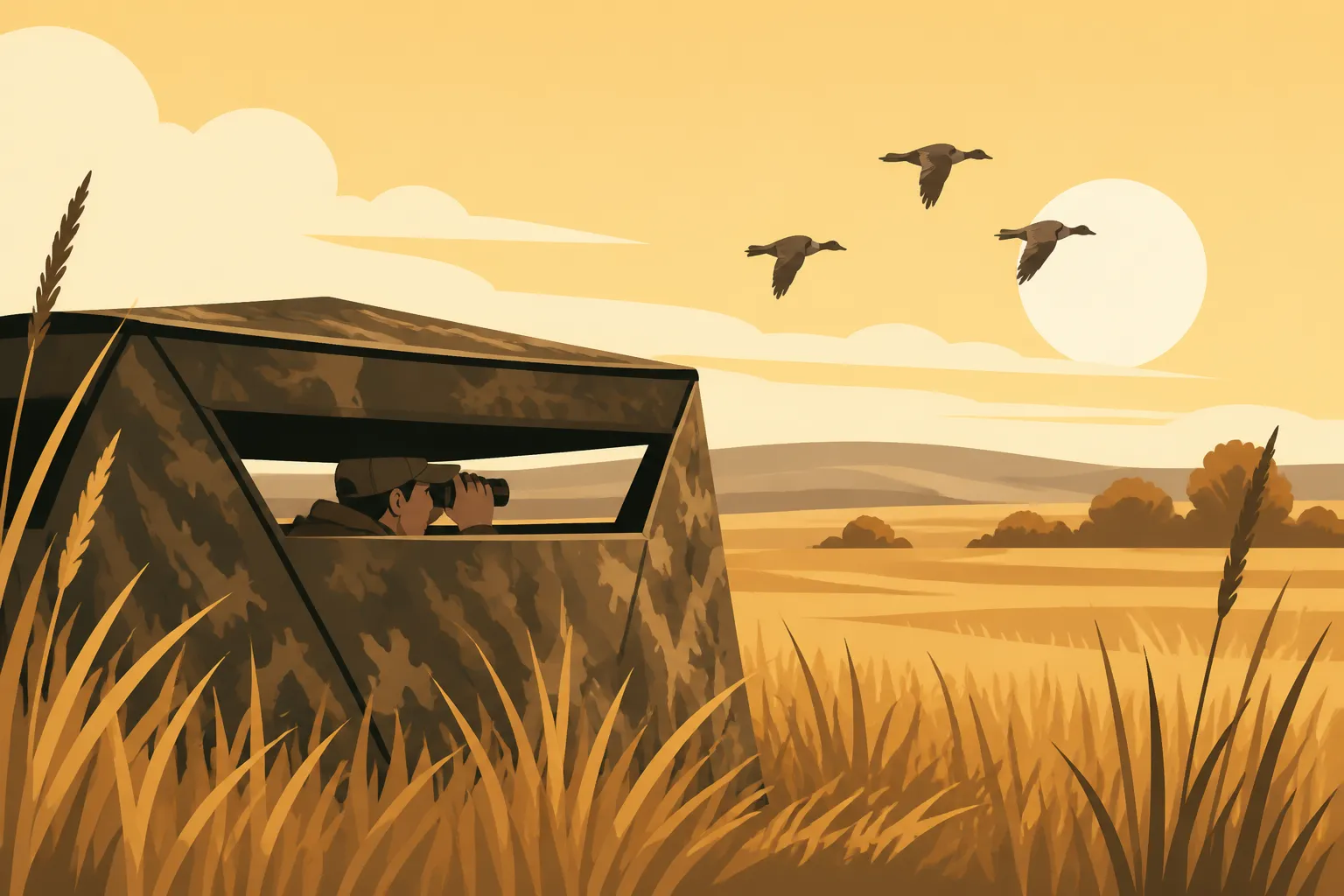
Out on the prairie, distances are vast, and animals can appear and disappear as if by magic. Hunting from a blind often means long stretches of seemingly uneventful waiting. This is where patience is your most valuable virtue. Minimize movement inside the blind. Even subtle shifts can catch the eye of a distant deer or antelope. Keep your face and hands covered with camouflage. Avoid looking directly out windows; instead, scan the horizon and use binoculars to identify game.
When you spot something, resist the urge to immediately raise your rifle or bow. Observe their behavior. Are they feeding, traveling, or just milling around? Let them work their way closer naturally. This is especially true for pronghorn, which might trot along at what seems like breakneck speed, only to slow and browse just within range. For extended waits, having comfortable seating and snacks that don't make noise are key. GoHunt's articles often stress the importance of scouting beforehand, which can help shorten unproductive waits by ensuring you're in a high-activity area.
Maximizing Shot Opportunities
Even in a blind, you need to think about your shot. Clear shooting lanes are essential. Trim any branches or tall grass that might deflect an arrow or bullet. Practice shooting from a seated or kneeling position, as that's how you'll typically be set up in a ground blind. If you're using a rifle, a good set of shooting sticks or a bipod integrated with your blind setup will provide a steady rest for those longer prairie shots. This is a critical skill, and Practicing Prone Shots on the Prairie can directly translate to more stable shots from a blind.
Always be aware of the range and angle of your shot. On flat ground, it's easy to misjudge distance, especially early in the morning or late in the evening. A rangefinder is an absolute must-have. Understanding how wind affects bullet trajectory, particularly when Reading Wind at Four Hundred Yards, is also crucial for ethical, accurate shots from a stationary position.
Integrating Decoys and Calls
Ground blinds create an excellent platform for employing decoys and calls. A full-body antelope buck decoy positioned 50-100 yards out from your blind can be incredibly effective, especially during the rut. It draws in curious bucks and provides a focal point, distracting their attention from your blind. This is a tactic I've had great success with, particularly when Decoying Antelope Over Water in areas where they're concentrated.
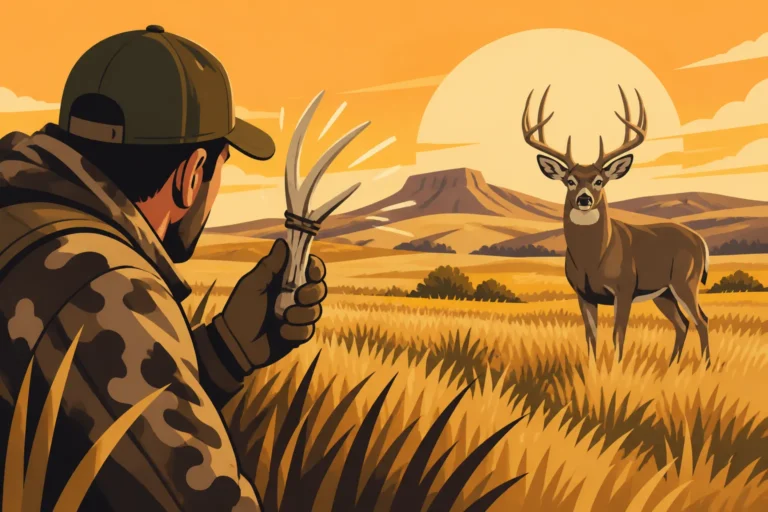
For mule deer, a doe decoy or a simple silhouette can sometimes pique a buck's curiosity, particularly if combined with soft grunt calls or rattling during the rut. When predator hunting, setting out a rabbit or bird decoy and using electronic calls can bring coyotes and foxes right into your lap, offering clear shots from the concealed comfort of your blind. You can check out more tips on Coyote Calling on Open Grassland to further enhance your predator hunting strategy from a blind.
Weather Management
South Dakota weather can change on a dime. One minute it's warm and sunny, the next a cold front rolls in, bringing wind, rain, or even snow. Your ground blind can offer some protection, but it's not a fortress. Layering your clothing is key to staying comfortable and focused. Start with a moisture-wicking base layer, add insulating layers, and top it with a waterproof/windproof outer shell. Knowing how to adapt your clothing for Layering for South Dakota Wind will make those long hours in the blind much more bearable.
Always bring plenty of water, regardless of the temperature. A thermos of hot coffee or soup can be a lifesaver on a chilly morning, while a cooler with ice is essential for keeping drinks cold during a warm midday sit. If you're going to be out for an extended period, especially on Hunting South Dakota Walk-In Areas, pack enough supplies to last the entire time, including extra batteries for electronics and a reliable light source.
Using ground blinds in South Dakota's open prairie is a highly effective way to hunt, but it's a method that rewards preparation, patience, and attention to detail. By understanding animal behavior, meticulous blind placement, effective camouflage, and integrating smart hunting strategies, you can turn the vast, seemingly empty prairie into your personal hunting advantage.
Disclaimer
Please ensure you are aware of and adhere to all current South Dakota Game, Fish and Parks regulations and licensing requirements. Hunting laws can change, so always consult the latest official sources before planning your hunt. Safety is paramount; always handle firearms responsibly and be aware of your surroundings and shooting lanes.