Treestand Access Along a River
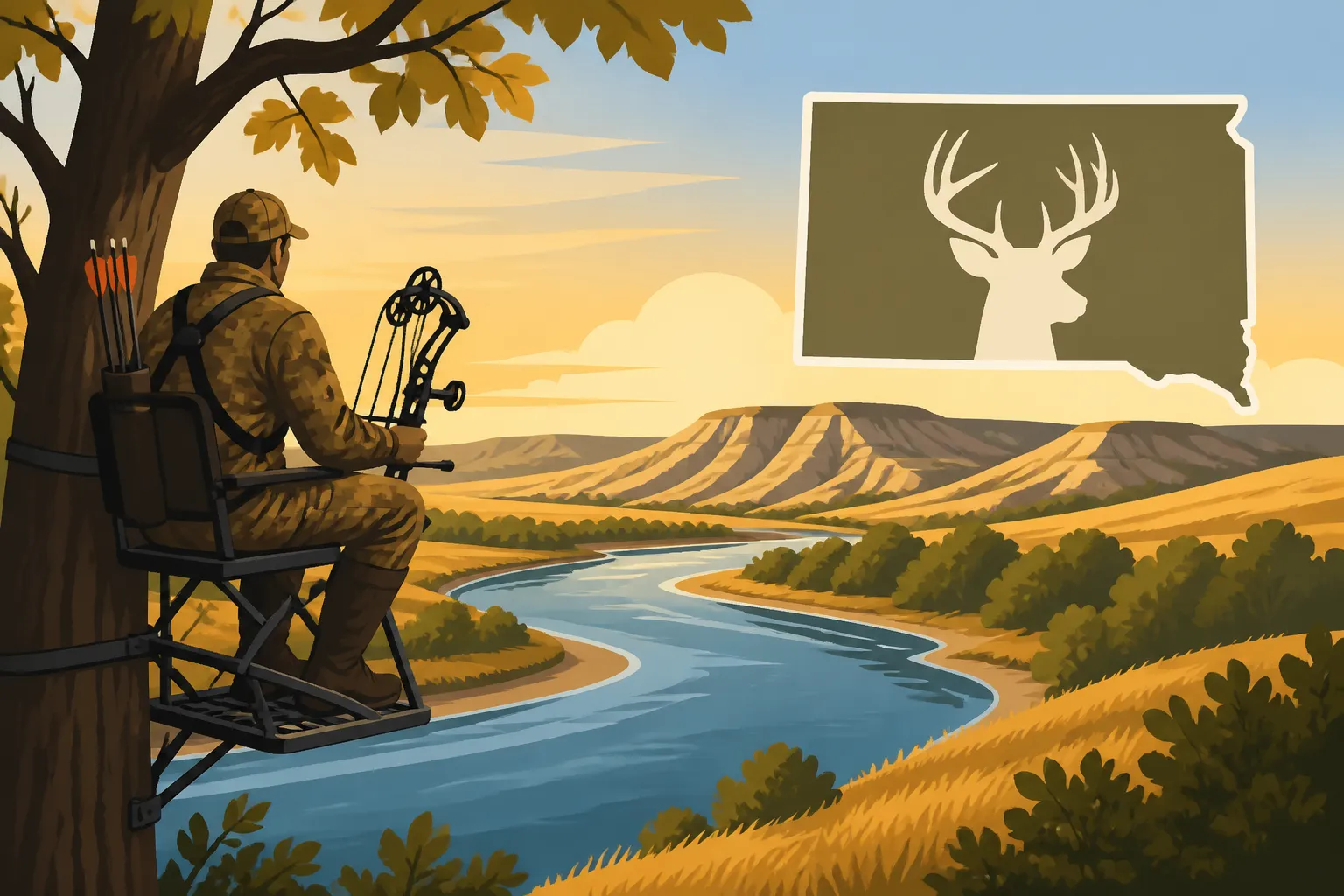
Getting into your treestand along a bustling South Dakota river system without blowing out every deer in the county can feel like trying to sneak a bull elephant through a china shop. The challenges of dense cover, changing water levels, and the ever-present threat of exposing your presence make successful access a true art form. This guide is dedicated to breaking down those frustrations and providing actionable strategies for silent, effective treestand access in South Dakota's often overlooked river bottom country.
Understanding the Challenges of River Bottom Access
River bottoms in South Dakota are truly unique ecosystems. They're often ribbons of lush, dense cover cutting through open prairie, acting as natural highways and sanctuaries for whitetail deer, especially along major waterways like the Missouri River and its tributaries. But what makes them so attractive to deer also makes them incredibly challenging for hunters to navigate without leaving a huge footprint.
The Dynamic Nature of River Environments
One of the biggest headaches when hunting river bottoms is their constantly shifting nature. A small creek that was a mere trickle in August can become a raging torrent after a heavy fall rain, making your planned crossing point suddenly impassable. The Missouri River, with its dams and managed flow, still sees significant fluctuations, affecting sandbars, mud flats, and the accessibility of prime timber. This unpredictability means your scouting efforts from a month ago might be completely invalidated on hunt day. We're not just talking about water levels either; seasonal flooding can create new channels, wash away old ones, and deposit thick piles of driftwood and debris, completely altering the landscape. What might have been an open path one year could be a choked tangle of downed trees the next, forcing you to constantly adapt your approach.
Navigating Dense Undergrowth and Water Obstacles
River bottoms are often choked with incredibly thick vegetation. We're talking about willow thickets so dense you can barely push through, cottonwood stands with a jungle-like understory, and in many areas, towering cattails that can swallow you whole. This thick cover, while great for deer, is a nightmare for silent movement. Every branch snap, every rustle of dry leaves, every splash in a muddy slough is amplified, sending out a clear signal to every wary whitetail within earshot. Combine this with the inevitable water obstacles – shallow oxbow lakes, muddy backwaters, and hidden ditches – and you've got a recipe for noisy, scent-dispersing travel. Many hunters make the mistake of simply plowing through the easiest path, not realizing they're essentially ringing a dinner bell for every deer in the area, announcing their arrival long before they even reach their stand.
Strategic Planning for River Treestand Access
The key to successful river bottom hunting, especially when it comes to treestand access, lies in meticulous planning long before you ever step foot in the woods. This isn't a game of showing up and hoping for the best; it requires dedicated effort and smart use of available tools.
E-Scouting and Topographical Maps
Before you even think about putting boots on the ground, fire up your favorite mapping application. Tools like GoHunt are invaluable for understanding the lay of the land from afar. Look for key features:
- Elevation Changes: River bottoms aren't always flat. Subtle rises and depressions can offer natural travel corridors or hidden pathways that keep you out of sight.
- Vegetation Types: Differentiate between open fields, timber blocks, brushy draws, and thick sloughs. Identify the densest cover, which can provide excellent concealment for your entry and exit.
- Water Bodies: Pinpoint the main river channel, oxbows, sloughs, and any smaller creeks. Note potential crossing points, or areas you absolutely need to avoid due to deep water or heavy current.
- Field Edges and Funnels: Deer often use the edges of agricultural fields adjacent to river timber. Look for narrow strips of cover, fence lines, or pinch points where deer are naturally funneled.
- Public vs. Private Land: Use your mapping software to identify property lines. While much of South Dakota's river timber is private, there are often public access points or Game Production Areas. Knowing exactly where you stand is crucial. I often spend hours scouting a South Dakota unit from home, marking potential stand locations and access routes on GoHunt, long before I ever drive out there. This lets me refine my plan to take advantage of nuances like how far pheasants fly when pushed or where whitetails in Missouri River timber are likely to concentrate.
On-the-Ground Reconnaissance and Cover Paths
E-scouting gets you in the ballpark, but nothing beats actual physical scouting. This is where you confirm your theories and find the subtle details that digital maps can't reveal.
- Walk the Edges: Instead of crashing straight into the core timber, walk the periphery first. Look for natural depressions, drainage ditches, old fence rows, or even faint deer trails that run parallel to your desired stand location. These can offer surprisingly good concealment.
- Identify "Dead" Zones: Look for areas of very sparse deer sign or even ground that's just too open for deer to feel comfortable. Sometimes, the best access route is one that skirts these areas, knowing deer aren't likely to be there.
- Test Crossing Points: If your plan involves crossing water, test it out. Is it shallow enough? Is the bottom firm, or is it deep, sucking mud? Can you cross without making excessive noise or leaving a heavy scent trail? For smaller creeks, consider where you might wade or step over. For larger sloughs, note any fallen logs or natural bridges.
- Wind Direction Practice: Always consider the prevailing wind. Even when scouting, pay attention to how the wind moves through the river bottom. What might look like a great access path could become a scent bomb if the wind swirls in a particular way. For instance, when stalking a bedded mule deer buck, understanding wind direction on a prairie stalk is paramount. This applies equally to a whitetail in a river bottom.
Implementing Effective Access Routes
Once you've done your homework, it's time to put the plan into action. This is where the rubber meets the road, and your ability to be a silent, stealthy hunter truly comes into play.
Utilizing Natural Cover and Terrain Features
River bottoms are full of natural cover, and your job is to become part of it. Think like a predator:
- Crease the Edges: Instead of walking through the middle of open timber, stick to the thickest edges. This could be the fringe of a cattail slough, the edge of a dense willow thicket, or even the line where different types of timber meet. These "seams" in the habitat often provide the best visual and acoustic cover.
- Follow the Water's Edge (Carefully): The very edge of the river or a large slough often has denser vegetation right at the bank. The sound of flowing water can also mask your footsteps. However, be extremely mindful of soft, muddy banks that can trap you or create loud "sucking" noises. Also, be aware of how your scent might travel over water.
- Use Elevation to Your Advantage: Even subtle changes in elevation, like walking along the base of a small bluff or ridge, can keep you out of sight. Deer might be looking down from a ridge into the bottom, or up from the bottom to the ridge. Staying just below the crest of a rise can keep you concealed.
- Think About the Sun: In the morning, walking with the sun at your back can silhouette you against the rising light, making you very visible. In the evening, walking into the setting sun can blind you to potential hazards or deer. Plan your routes to take advantage of the sun for concealment and visibility, not against it.
- River Access: For areas along the larger rivers like the Missouri, sometimes the most silent and least intrusive way to access a remote treestand is by boat. This allows you to approach from the water, often leaving less scent on land and bypassing dense shoreline cover. Just be mindful of local regulations and other boat traffic. If you're looking for Missouri River hunting access in South Dakota, a small jon boat or canoe can be a game-changer for reaching secluded spots.
Minimizing Your Scent Footprint
Deer in South Dakota's river bottoms are incredibly sensitive to human scent. Any lingering odor can ruin your hunt before it even begins.
- Scent Control Regiment: This isn't just about showering with scent-free soap. It's about washing all your hunting clothes in scent-free detergent, storing them in airtight bags, and dressing in the field if possible. Your boots are major culprits for leaving scent trails, so spray them down with a good scent-eliminating spray.
- Wind Awareness is Paramount: Always, always, always play the wind. Your access route should put the wind in your face or quartering to you, carrying your scent away from where you expect deer to be. This means having multiple access routes planned for different wind directions. I know it's a pain, but a longer, wind-advantageous route is always better than a shorter, scent-blowing one. Over time, you’ll learn to read wind at four hundred yards, and apply that same diligence to your immediate surroundings.
- Avoid Contaminating Key Areas: If you have a specific funnel or scrape line you want to hunt, avoid walking through it or near it during your access. Deer will quickly pick up on that human intrusion. Circle wide, even if it means a longer walk.
- Utilize Water: If you have to cross a small creek or slough, doing so can sometimes help wash away some of your ground scent, especially if the current is moving. However, be cautious; a large splash or stirring up a lot of mud can be counterproductive.
- Time Your Entry: Deer are often most active at dawn and dusk. Plan to get to your stand well before first light, while deer are still moving from night feeding to bedding areas. For an evening hunt, get in during the middle of the day when deer are usually bedded and less likely to be moving around. This minimizes the chance of bumping into them during your walk in. Remember those ten a.m. start times and bird behaviour? The same principle applies here, but for deer – they're often bedded and less prone to reacting to subtle disturbance mid-morning.
Setting Up Your Treestand for Optimal River Bottom Hunting
Once you've mastered the art of getting in silently, the stand itself needs to be set up for success and safety. River bottom hunting often means different considerations than a typical timber hunt.
Choosing the Right Tree and Stand Location
The tree you pick and its exact location can make or break your hunt in the river bottom.
- Hardwoods are King: Look for sturdy hardwoods like cottonwoods, oaks (if present), or elm that can support your stand safely. Avoid softwoods or dead trees.
- Cover, Cover, Cover: You want a tree that offers natural breaks in your silhouette, not one that stands out like a flagpole. Look for trees with dense branches, vines, or neighboring trees that provide visual obstruction. Remember, treestand setups on narrow river timber need even more careful consideration for concealment.
- Strategic Elevation: While getting high might seem like the best option for scent control, in dense river bottoms, you might only need to be 15-20 feet up to see over the undergrowth and get above a deer's line of sight. Too high, and you lose critical shooting lanes in thick cover.
- Backdrop and Sun: Always consider your backdrop. A tree with a solid canopy or other timber behind you helps break up your outline against the sky. Also, consider the sun's position. You don't want to be staring directly into it at prime shooting light, and you don't want the sun to backlight you, making you glow like a beacon.
- Multiple Shooting Lanes: Once in the tree, trim just enough shooting lanes to give you clear shots at common deer travel routes. Don't over-trim and open up your position. Focus on lanes leading to pinch points, creek crossings, or trail intersections you identified during scouting.
Safety and Essential Gear for River Hunting
Hunting in river bottoms presents unique safety challenges. Don't overlook them.
- Full-Body Harness: This is non-negotiable. Always be tethered to the tree from the moment your feet leave the ground until they touch it again. Falls are the leading cause of treestand hunting injuries.
- Water Safety: If your access involves water, carry a dry bag for essentials like your phone, extra clothes, and first aid kit. Consider a PFD (personal flotation device) if crossing significant water bodies, especially in cold weather.
- Communication: Cell service can be spotty in some remote river bottoms. Always tell someone exactly where you're going and when you expect to be back. A satellite messenger device like an inReach is a wise investment for truly remote areas.
- Waders/Waterproof Boots: Invest in good quality, comfortable waders or knee-high rubber boots. You're going to encounter mud and water, and staying dry will make your hunt much more enjoyable and safer in cold conditions.
- Gear Management: Keep your gear minimal and secure. Anything that can rattle, clang, or make noise needs to be silenced. Use pack systems that allow for easy, silent access to calls, rangefinders, and your bow or rifle.
Successful treestand access along South Dakota's river systems is a learned skill that combines rigorous planning, stealthy execution, and a deep respect for the dynamic environment. By focusing on smart e-scouting with tools like GoHunt, thorough on-the-ground reconnaissance, disciplined scent control, and prioritizing safety, you'll dramatically increase your chances of getting that wary river bottom whitetail in range.
| Access Strategy | Pros | Cons | Best Use Case |
|---|---|---|---|
| Land-Based (Thick Cover) | Excellent visual and auditory concealment; less specialized gear required. | Very noisy if not executed perfectly; high risk of leaving scent; physically demanding. | Areas with continuous, dense cover; short distances; light wind; when approaching a treestand. |
| Land-Based (Open/Sparse) | Potentially faster if movement is precise; less physical exertion. | High visibility to deer; very difficult to hide sound and scent; requires significant distances or specific terrain features. | Long-range stalks to approach primary cover; using topographical features like draws/creases (e.g., getting a deer out of a South Dakota coulee). |
| Water-Based (Boat/Canoe) | Minimal ground scent left; can be very silent; access to otherwise inaccessible spots. | Requires specialized equipment; dependent on water levels; potential for cold/wet conditions; limited on smaller creeks. | Large rivers (Missouri, James); remote timber blocks with river frontage; during early archery season. |
| Water-Based (Wading Creeks) | Can mask scent and sound in flowing water; often direct route. | Can be cold, wet, and slippery; risk of deep spots or strong currents; potentially very noisy if bottoms are muddy or rocky. | Crossing small to medium creeks; moving along shallow river edges in warmer weather. |
| Utilizing Roads/Trails | Easiest and fastest physical travel; least physically demanding. | Highest risk of human scent and sound; often well-traveled by others; rarely takes you directly to a stand. | Accessing public ground parking; approaching the start of your stealthy route; avoiding blow-out areas. |
Disclaimer
The information provided in this article is for general guidance and educational purposes only. Hunting regulations, seasons, and access rules in South Dakota can change frequently. Always consult the latest South Dakota Game, Fish and Parks (GFP) regulations handbook, maps, and local ordinances before engaging in any hunting activities. Safety should always be your top priority.