Getting a Deer Out of a South Dakota Coulee
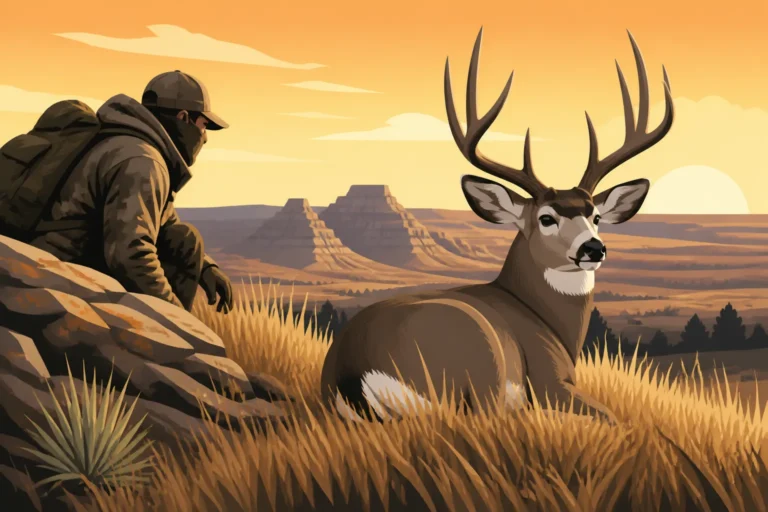
You've just dropped a beautiful buck, the kind of deer you've been dreaming about all season. There's only one catch – it's piled up at the bottom of a nasty South Dakota coulee, miles from the nearest road, and suddenly the celebration shifts to a heavy dose of dread. Getting a deer out of a coulee can feel like an impossible task, turning a moment of triumph into an epic struggle against gravity, terrain, and sheer exhaustion. This guide is here to walk you through the real-world strategies and tools to make that deer recovery less of a nightmare and more of a manageable, albeit still challenging, victory.
Assessing the Situation and Initial Steps
Before you even think about putting your hands on that deer, take a deep breath and give the situation a thorough once-over. Rushing in can lead to injury, wasted effort, or even worse, a lost deer. This critical assessment phase will dictate your entire approach.
Evaluating the Coulee Terrain
South Dakota coulees are notorious. They're not just gentle depressions; they can be steep, rocky, muddy, and choked with thick brush like buckbrush, wild rose, and thorny buffaloberry. Some are dry as a bone, others have a muddy seep or even a small creek running through them, especially after a rain or during spring runoff. When your deer drops into one, you need to quickly size up the path out. Are there sheer, unscalable banks, or are there more gradual slopes you can leverage? Is the bottom a quagmire of mud that will suck your boots off, or is it firm ground? Are there downed trees or thickets that will snag a deer, or can you find a relatively clear path?
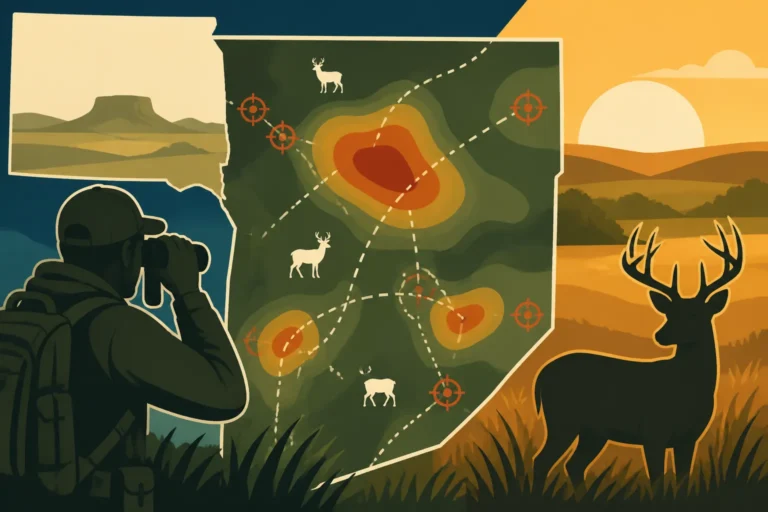
Think about the easiest line of resistance. Sometimes, the direct route up the steepest bank seems shortest, but it might be the hardest. A slightly longer path that follows a contour, a less steep side, or a game trail could save you hours of grueling labor and prevent injury. If you were reading prairie coulees for mule deer earlier in the day, you'd have a better sense of these features already. Be honest with yourself about the terrain's difficulty and don't underestimate the physical toll it will take. This is where a good mapping app like the one offered by GoHunt can be incredibly useful, allowing you to quickly check topo lines and identify potential egress routes before you even start moving.
Estimating Deer Weight and Condition
The size and species of your deer make a massive difference in extraction difficulty. A mature West River mule deer buck can easily weigh 200-250 pounds or more, especially before field dressing. A smaller whitetail doe might only be 100-120 pounds. That's a significant difference when you're dragging uphill. Also, consider the deer's condition. A freshly killed deer is limber and easier to manipulate into a sled or cart, or to drag by its antlers or legs. However, as rigor mortis sets in, the animal will stiffen, becoming much harder to bend or position. This stiffness usually begins within a few hours, depending on ambient temperature, and can make sliding it over obstacles or around tight turns incredibly frustrating. Knowing the approximate weight and predicting how quickly rigor mortis will set in helps you decide if you need to act fast or if you have a bit more time for planning.
Immediate Field Dressing Considerations
For virtually any deer retrieval from a difficult location, field dressing the animal is a non-negotiable first step. This isn't just about reducing weight, though that's a huge benefit – you'll typically remove 20-30% of the animal's total body weight. More importantly, it allows the carcass to cool down rapidly, which is crucial for meat quality, especially in warmer early season conditions. If you're dealing with field dressing in warm October weather, getting those guts out quickly is paramount to prevent spoilage.
When you're at the bottom of a coulee, you have a decision to make: do you leave the gut pile where it lies, or do you try to move it away from your extraction path? In many cases, especially if you're not planning on repeated visits to that exact spot, leaving the gut pile in the coulee is practical. Just be aware that it might attract scavengers, so if you're leaving the area for a long period or returning, keep that in mind. The primary goal here is to make the deer lighter and to initiate cooling, giving you the best chance to preserve that valuable meat.
Tools and Gear for Deer Extraction
You wouldn't go to battle without your armor, and extracting a deer from a South Dakota coulee is certainly a battle. Having the right tools, or knowing how to improvise them, can literally be the difference between getting your deer out cleanly and abandoning it, or worse, injuring yourself trying.
Essential Personal Gear
Beyond your rifle and ammo, a few basic items are absolute must-haves for any prairie hunt that might involve a recovery. First, a sharp, sturdy knife for field dressing is paramount. Bring a backup if you can, or at least a sharpener. Next, a good length of rope – 15-20 feet of strong, synthetic rope is invaluable. It can be used for dragging, securing a sled, or even as a safety line on steep banks. Strong gloves are also critical. The last thing you want is a blister or cut halfway through a brutal drag. Puncture-resistant gloves are even better if you’re dealing with thorny brush or sharp rocks.
Hydration is often overlooked. You're going to sweat, a lot. Carry more water than you think you need. A good headlamp, even if you plan to be out before dark, is a lifesaver if your recovery takes longer than expected – and it often does. Remember that layering for South Dakota wind is important for the hunt itself, but when you're physically exerting yourself, you'll want layers you can shed to avoid overheating. Finally, never go into the backcountry without a basic first aid kit for a prairie hunt. A twisted ankle, a deep cut, or even just some severe chafing can ruin your day and put you in a dangerous situation.
Specialized Retrieval Aids
While a simple rope will get the job done in many cases, there are tools specifically designed to make deer extraction easier. Game carts, with their two large wheels, are fantastic for long hauls over relatively flat or gently rolling terrain. However, they become cumbersome or even useless in steep, rocky coulees or thick brush. The wheels can get caught, or the cart can tip, making more work than it saves.
Deer sleds or heavy-duty tarps are often a better choice for coulees. These low-profile devices reduce friction significantly, allowing you to slide the deer over uneven ground, through brush, or across mud with much less effort than direct dragging. They can be rolled up and carried fairly easily. Brands like Pelican make rugged sleds, or even a heavy-duty contractor's tarp can work in a pinch. They excel when you're trying to drag a deer up a steep draw, distributing the weight and making the pull smoother.
Personal or team deer drag harnesses are another excellent option. These harnesses distribute the pulling force to your shoulders, hips, or both, saving your hands and arms from the immense strain of a rope. For solo efforts, a harness that goes around your waist and shoulders frees up your hands for balance and navigating obstacles. For team efforts, a multi-person harness can connect several hunters, allowing you to combine your strength efficiently. When planning your hunt, especially if you're e-scouting with tools like GoHunt to identify potential hunting grounds and access points, consider the terrain and pack the appropriate retrieval aid.
Makeshift Solutions and Improvisation
Sometimes, despite your best planning, you find yourself without the ideal gear. This is where your ingenuity comes into play. A sturdy tree branch can be used as a lever to help slide a deer over a fallen log or out of a particularly deep rut. If you don't have a sled, a heavy jacket or a discarded feed sack can serve as a makeshift friction reducer for short distances, though they won't hold up like a proper sled.
If you’re hunting with a partner, two strong sticks or even sturdy trekking poles can be placed under the deer, with each person lifting an end like a stretcher. Just be mindful of the deer's weight and the strength of your makeshift poles. In extreme cases, where dragging is simply impossible due to the terrain or the deer's size, you might have to consider breaking down the deer. This means quartering a deer in a coulee or even boning it out, packing the meat in game bags, and making multiple trips. It’s not ideal, as it takes more time and exposes the meat to the elements longer, but it's often the only way to salvage your harvest from truly inaccessible spots.
Extraction Methods for Different Scenarios
Getting a deer out of a South Dakota coulee isn't a one-size-fits-all problem. The best method depends on the number of hunters, the deer's size, and the specific challenges of the terrain. Adaptability is key.
Solo Dragging Techniques
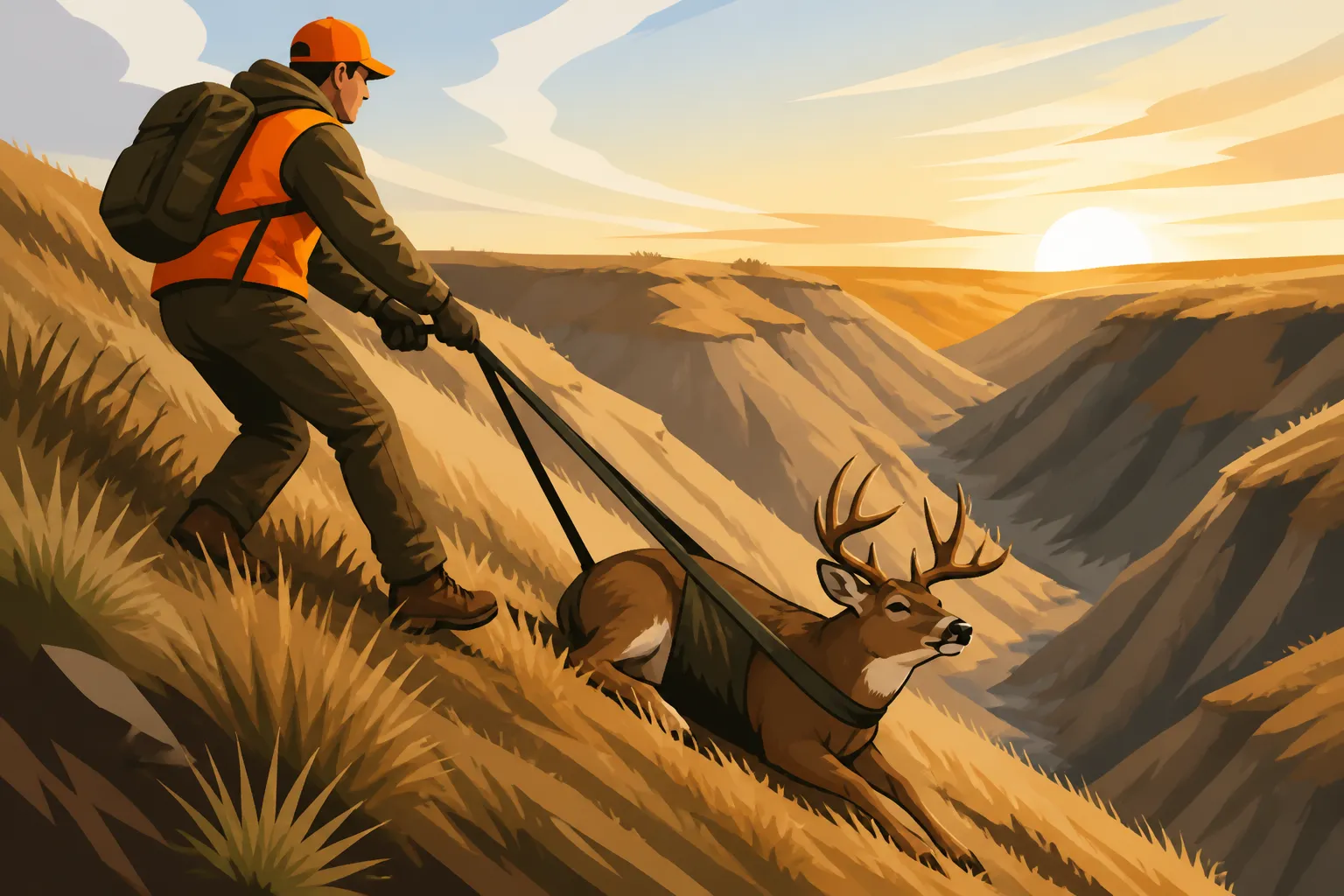
Let's face it, many of us hunt alone or find ourselves separated from our hunting partners when the shot rings out. Dragging a deer solo out of a coulee is arguably one of the most physically demanding tasks a hunter can undertake. The key to success, and avoiding injury, is proper technique. First, use a good drag rope or, ideally, a drag harness that distributes the weight across your shoulders and core. This frees your hands for balance and to push off obstacles.
When dragging uphill, don't try to pull the deer in one continuous motion. Instead, use a series of short, powerful pulls, moving the deer only a few feet at a time. Then, stop, adjust your footing, and pull again. Think of it as a low-impact deadlift, repeatedly. Utilize any natural breaks in the terrain for resting points. If the coulee has a series of short, steep pitches, pull the deer up one pitch, then rest before tackling the next. Always face uphill, walking backward, or if the slope is less steep, walk forward with the rope over your shoulder. If you're walking backward, be extremely careful about foot placement to avoid tripping. Use your body weight and legs, not just your back, to generate pulling power. Gravity is your friend on the way down, but your absolute enemy on the way up.
Team Effort Strategies
If you're lucky enough to have a hunting partner or two, the task becomes significantly more manageable. With multiple people, you can employ more effective strategies and distribute the workload. The classic approach is one or two people at the head of the deer, pulling with ropes or harnesses, while another person or two push from the hindquarters, steering the deer around obstacles. Communication is vital here. Call out "pull," "stop," "left," "right" to ensure everyone is working in sync.
For very steep sections, a "leapfrog" method can work. One person secures the rope to a sturdy tree or rock further up the slope, while others lift and push the deer up to that point. This provides a temporary anchor and allows for short, intense bursts of effort. If the coulee bottom is particularly muddy or covered in thick brush, a sled becomes invaluable, allowing multiple people to pull it more easily than dragging the deer directly. Imagine trying to pull a wet rug through mud versus sliding a plastic sled – the difference in friction is monumental.
Leveraging Natural Terrain and Vehicles
Sometimes, the coulee itself can offer solutions. If there’s a game trail or a less-steep side draw that connects to a more open area, utilize it. Look for natural ramps or contours that reduce the grade you have to climb. Often, coulees meander, and what looks like a dead end might eventually open up to a more gradual rise if you follow it. Before committing to a direction, take a few minutes to walk a short distance up and down the coulee to scout the path of least resistance.
While the appeal of a vehicle is strong, bringing an ATV, UTV, or even a truck directly into a steep, muddy, or brush-choked coulee is often a recipe for disaster. Getting a vehicle stuck in a remote coulee is far worse than just dragging a deer out by hand. However, if the coulee opens up onto flat prairie or a gravel road, or if you can access a relatively flat, firm bottom from a more open approach, a vehicle can be a game-changer. Use your GoHunt app or other mapping software to identify potential access roads or two-tracks that might get you closer. Remember, South Dakota's private land rules mean you can't just drive anywhere, so confirm your access before attempting it. If you do use a vehicle, proceed with extreme caution, especially if there's any moisture, as conditions can change rapidly. Always scout the path on foot first to ensure it's safe for your vehicle.
| Method/Tool | Pros | Cons | Best Scenario |
|---|---|---|---|
| Drag Rope (Solo) | Simple, always available, lightweight | Extremely physically demanding, tough on hands | Short, moderate drag on relatively clear terrain, smaller deer |
| Drag Harness (Solo) | Better ergonomics, saves hands | Still very strenuous, can be bulky to carry | Similar to rope, but less strain on upper body |
| Deer Sled/Tarp | Reduces friction significantly, protects hide | Can be bulky to carry, can catch on obstacles in thick brush | Smoother ground, snow, muddy bottoms, or when dragging through short grass |
| Game Cart | Easiest for long distances over firm ground | Impractical in steep, rocky, or muddy coulees, wide turning radius | Gentle slopes, established trails, open fields |
| Quartering (Backpack) | Reduces weight for carrying, preserves meat quality | Takes more time, requires skill, multiple trips likely | Very steep, rugged terrain, long distances, or when solo and exhausted |
| ATV/UTV | Fastest, easiest for long distances | Limited access, risk of getting stuck, requires existing trails | Open prairie, accessible two-tracks, not deep or steep coulees |
Practical Considerations for Coulee Recovery
Deer recovery isn't just about muscle and gear; it's also about smart planning and anticipating challenges that the South Dakota landscape throws at you.
Weather and Time of Day
The weather and time of day dramatically influence the difficulty of a coulee recovery. A beautiful, crisp fall morning can quickly turn into a grueling afternoon under a hot sun, especially with the intense physical exertion of dragging a deer. Overheating and dehydration become real risks. Conversely, a cold, windy day can cause the deer's body to stiffen up faster, making it harder to handle. If snow is on the ground, a sled becomes much more efficient, but fresh, deep snow can also make walking and pulling exhausting.
If you down a deer late in the day, the fading light adds another layer of complexity. Trying to navigate a steep, brush-choked coulee in the dark, even with a headlamp, is inherently more dangerous and slower. Your chances of tripping, losing your footing, or simply getting turned around increase exponentially. If you find yourself in this situation, sometimes the best call is to field dress the deer, mark its location with GPS, and return with fresh legs and daylight the next morning, provided temperatures are cool enough to prevent spoilage. Always be prepared for your retrieval to take longer than you expect, and plan accordingly for changes in conditions.
Managing Fatigue and Physical Exertion
Dragging a deer out of a coulee is a full-body workout. Expect to be exhausted. Pushing your body past its limits, especially when you’re tired, can lead to mistakes, injuries, or even dangerous health complications. Know your physical limits and don't be afraid to take frequent breaks. Drink plenty of water and eat a snack to keep your energy levels up. It's a marathon, not a sprint. Trying to muscle through when your body is screaming at you is a recipe for a pulled muscle, a tweaked back, or a trip and fall.
If you're hunting with a partner, rotate positions. The person on the drag rope can switch with the person pushing, or you can alternate who takes the lead. This distributes the strain and gives different muscle groups a chance to recover. Remember, a successful hunt isn't just about the shot; it's about getting that meat home safely. Pushing yourself too hard and getting hurt jeopardizes not only your well-being but also your harvest.
Wildlife Encounters and Property Lines
South Dakota prairies are home to a variety of wildlife, some of which might be interested in your downed deer. Coyotes are abundant and opportunistic. While they rarely pose a direct threat to a human, they can quickly find a gut pile or an unattended carcass. If you're leaving a deer overnight, consider covering it with branches or a tarp and marking it well. Mountain lions are present in the Black Hills and some prairie areas, though encounters are rare. Always be aware of your surroundings, especially if you hear unusual sounds or see tracks near your kill.
Another crucial consideration is property lines. South Dakota is a patchwork of public and private land. While you can hunt in South Dakota Walk-In Areas and National Grasslands, the coulees often span multiple ownerships. It’s absolutely essential to know exactly where you are and where the property lines lie. Tools like GoHunt or the South Dakota GFP Public Hunting Atlas are indispensable for this. If your deer crosses onto private land where you don't have permission, you need to contact the landowner immediately to request permission to retrieve your game. Retrieving game without permission is trespassing, which can lead to legal trouble and give hunters a bad name. Before you leave home, make sure you understand South Dakota trespass law and posted land.
Post-Extraction Care and Transport
The moment you finally pull that deer out of the coulee and onto firm, accessible ground is a huge relief. But the work isn't quite done. Proper care of the meat and legal transport are the final, crucial steps.
Quartering the Deer in the Field
There will be times when dragging a whole deer, even with a team, is simply not feasible due to extreme terrain or distance. In these situations, quartering a deer in a coulee is your best, and often only, option. This involves breaking the deer down into its four primary muscle groups (shoulders and hams), often removing the backstraps and tenderloins as well. These sections are then placed into game bags for transport.
While it's more time-consuming, quartering drastically reduces the weight and bulk of each piece, allowing you to carry the meat out in a sturdy hunting backpack. This can make a multi-mile, steep ascent much more manageable than attempting to drag a full carcass. If you're going to use this method, ensure you have multiple game bags, a very sharp knife (or two), and know the process beforehand. This method is particularly effective for packing meat up a steep draw where dragging is a non-starter.
Cooling and Protecting the Meat
Once the deer is out of the coulee and field dressed, getting the meat cooled quickly and keeping it clean is paramount. If temperatures are warm, this is even more critical. Hang the deer (if possible) to allow air circulation, or lay it out on a clean tarp, propping open the body cavity with a stick. Wipe away any excess blood or dirt from the meat surfaces. This is all part of getting meat cooled in warm weather to ensure the best possible table fare.
Protect the meat from dirt, flies, and other contaminants. Game bags are excellent for this, allowing air circulation while keeping pests away. If you're headed straight home, get the carcass into a cooler with ice, or straight to a processor. If there's a delay, ensure the meat is kept in a shaded, well-ventilated area. The goal is to drop the internal temperature rapidly to inhibit bacterial growth.
Legal Transport and Tagging
Before you even think about driving off, ensure your deer is properly tagged according to South Dakota Game, Fish and Parks (GFP) regulations. The tag typically needs to be securely attached to the carcass, visible, and filled out completely and accurately. Incorrect tagging can lead to fines and confiscated game. Review the current hunting handbook for specific South Dakota deer tagging requirements.
When transporting, ensure the deer is kept clean and cool. If it's in the bed of a truck, cover it with a tarp to keep dust off and deter curious onlookers. If using coolers, make sure they are well-insulated and packed with plenty of ice. Once you get home, the process of processing the meat continues, whether you're doing it yourself or taking it to a professional. Properly handling the meat from the field to the freezer, including coolers and the drive home, is the final, essential step in honoring your harvest.
Disclaimer
The information provided in this guide is for general informational purposes only and is not intended as legal or safety advice. Hunting regulations, landowner access laws, and safety protocols can change. Always consult the most current South Dakota Game, Fish and Parks regulations and practice safe hunting techniques. Be aware of your physical limitations and the risks associated with backcountry hunting and game retrieval.