Rifle Setup for South Dakota Open Country
Hunting in the vast, wide-open spaces of South Dakota can be an incredibly rewarding experience, but it also presents unique challenges. You might be facing long-range shots on wary game, unpredictable winds, and the need for absolute precision when that hard-earned opportunity finally presents itself. Setting up your rifle effectively for these conditions isn't just about picking a gun; it's about creating a system that instills confidence and maximizes your ethical shooting capabilities, and this guide will walk you through building that reliable setup.
Understanding South Dakota's Open Country Hunting Demands
South Dakota's landscape is as beautiful as it is demanding, especially when it comes to hunting big game. Unlike dense forests, the rolling prairie and subtle breaks offer little cover, often necessitating longer shots than hunters from other regions might be accustomed to. It’s crucial to understand these foundational elements before you even start thinking about specific gear.
The Landscape and Its Challenges
Imagine standing on a slight rise, scanning miles of prairie that stretch to the horizon, dotted with draws, coulees, and perhaps a distant shelterbelt. This is quintessential West River South Dakota, the prime habitat for species like mule deer and pronghorn antelope. The lack of significant topography means that stalking often involves crawling or utilizing subtle terrain features, which can be exhausting. When you finally get into position, your target might still be hundreds of yards away. This isn't your typical whitetail hunt where 100-yard shots are the norm; here, 200, 300, or even 400-plus yards can be a very real possibility. The expansive views are breathtaking, but they also mean that any movement you make is easily spotted, and closing the distance can be a real game of cat and mouse. You might be perfectly set up for a shot at a great distance, only for the animal to take a few steps and offer an even longer one, emphasizing the need for a rifle system that can consistently perform beyond common ranges.
Common Game Species and Their Habits
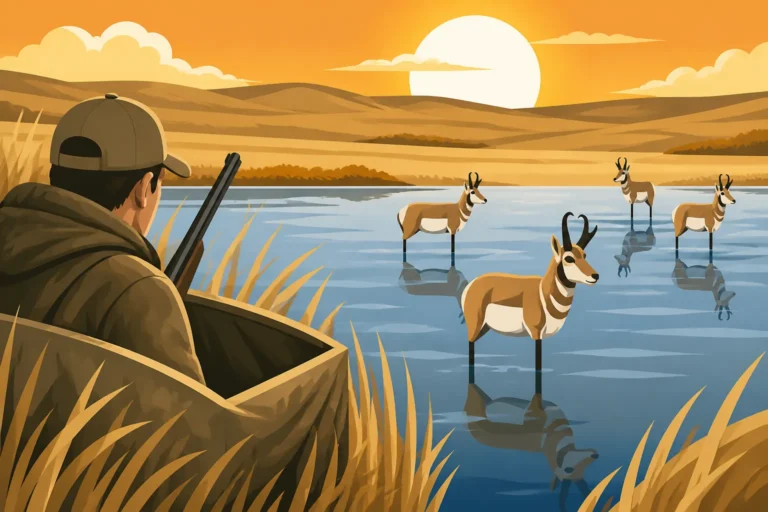
South Dakota is home to a fantastic array of big game, each with its own preferred habitat and behavior that influences your rifle setup. When we talk about open country, our minds usually go straight to the elusive Mule Deer on the West River Breaks and the incredibly fast Pronghorn Antelope on the South Dakota Prairie. Mule deer, while often found in the broken country of the West River, can also be spotted feeding in open fields, requiring similar long-range capabilities. They can be incredibly curious but also extremely skittish, especially if they've been pressured. Pronghorns, on the other hand, are built for speed and thrive in wide-open grasslands. They are known for their exceptional eyesight, making close approaches incredibly difficult. Their tendency to stand and stare at a perceived threat means you often have a limited window for a shot at significant distance. Additionally, prairie elk herds, while less common than in the Black Hills, also inhabit some of the more rugged, open areas and can present long-range opportunities. Knowing these animal behaviors helps tailor your gear towards accuracy and precision rather than brute stopping power at close range.
Environmental Factors to Consider
Beyond the distances, South Dakota's weather and terrain throw a few extra curveballs. Wind, oh the wind! It's practically a constant companion on the prairie, and it can dramatically impact bullet trajectory. A seemingly gentle breeze at your shooting position can be a significant crosswind downrange, making a huge difference in point of impact. Learning to compensate for wind calls on long prairie shots is an art that requires not just practice, but also a rifle and cartridge combination that can buck the wind effectively. Temperature swings are another factor; a warm October morning can quickly turn into a chilly afternoon, affecting barrel harmonics and powder burn. Mud can be a huge issue after a rain, making access treacherous and adding weight to your gear. Dust can get into optics and actions. The sheer physical demand of hiking through tall grass, crossing deep coulees, and carrying your rifle for miles means your setup needs to be durable, reliable, and not excessively heavy. You’ll be layering for South Dakota wind, but your rifle needs to be prepared for the elements just as much as you do.
Caliber Selection for the South Dakota Hunter
Choosing the right caliber is perhaps the most debated topic among hunters, and for South Dakota's open country, it's a critical decision. You need a cartridge that shoots flat, retains energy, and handles wind reasonably well, all while being comfortable enough for you to shoot accurately.
Best Calibers for Mule Deer and Antelope
When targeting West River mule deer and pronghorn, flat-shooting cartridges really shine. For mule deer, you're looking for a cartridge that can anchor a robust animal while still being able to reach out. Many seasoned South Dakota hunters gravitate towards cartridges like the .270 Winchester, 7mm-08 Remington, .30-06 Springfield, and various 6.5mm Creedmoor and 6.5 PRC options. The .270 Winchester, for instance, has a long-standing reputation as a fantastic deer cartridge, offering a good balance of velocity and manageable recoil. The 6.5mm Creedmoor and 6.5 PRC have quickly gained popularity for their excellent ballistic coefficients, meaning their bullets retain speed and resist wind drift exceptionally well. For the nimbler pronghorn, where shots can easily stretch beyond 300 yards, flatter trajectories are king. Here, options like the .243 Winchester, 6mm Creedmoor, and again, the 6.5mm cartridges are excellent. The .243 offers minimal recoil, making it easy to shoot accurately, and when paired with a quality bullet, it's more than sufficient for antelope. Ultimately, the Rifle Calibers for South Dakota Antelope and Rifle Choice for West River Mule Deer often overlap, emphasizing the need for a versatile, accurate round.
Versatile Calibers for Mixed Bag Hunting
Let’s be real, many of us aren’t just hunting one species in South Dakota; sometimes you have tags for deer and antelope, or you might spot a coyote while out hunting deer. For those seeking a truly versatile setup, cartridges that bridge the gap between medium-sized game and longer-range capabilities are ideal. The .30-06 Springfield and .308 Winchester remain stalwart choices for good reason. They offer a wide range of bullet weights, allowing you to tailor your load for anything from varmints to elk, should an opportunity arise. While not as inherently "flat" as some of the high-velocity magnums, their proven track record, widespread availability of ammunition, and reasonable recoil make them excellent all-around performers. Similarly, the 7mm Remington Magnum or .300 Winchester Magnum step up the game, providing increased velocity and energy for extended ranges, and would certainly be adequate for elk in the Black Hills, though they come with a noticeable increase in recoil. The key here is finding a cartridge that you can shoot accurately under field conditions, rather than simply chasing the highest muzzle velocity.
Recoil Management and Shot Placement
No matter how powerful or flat-shooting a caliber is, it’s useless if you can’t hit your target. Recoil is a major factor in accuracy, especially for follow-up shots or for hunters who are sensitive to it. Excessive recoil can lead to flinching, poor form, and ultimately, missed shots. For open country hunting, where a second, accurate shot might be necessary to ethically dispatch an animal, managing recoil is paramount. Lighter recoiling cartridges like the .243 Win or 6.5 Creedmoor allow for quicker sight recovery and more confident shooting. If you opt for a magnum, consider adding a muzzle brake or a heavier rifle setup to mitigate the kick. Recoil pads have also come a long way and can significantly improve comfort. Remember, terminal performance—how the bullet performs on impact—is crucial. A well-placed shot from a moderately powered cartridge is always superior to a poorly placed shot from a magnum. Focus on what you can shoot accurately and consistently, ensuring that your Shot Placement on a Pronghorn or mule deer is always ethical and effective.
| Caliber | Common Game | Pros | Cons | Typical Effective Range (yards) |
|---|---|---|---|---|
| .243 Winchester | Antelope, Deer | Low recoil, flat trajectory, light | Limited for larger game | 300-400 |
| 6.5 Creedmoor | Antelope, Deer | Excellent ballistics, low recoil, accurate | Less energy than magnums | 400-600 |
| .270 Winchester | Deer, Antelope, Elk | Flat trajectory, good energy, proven | More recoil than 6.5mm | 400-500 |
| .308 Winchester | Deer, Elk | Versatile, common ammo, moderate recoil | More trajectory drop than flatter rounds | 300-450 |
| .30-06 Springfield | Deer, Elk, Bear | Highly versatile, powerful, widespread | Noticeable recoil, less flat than magnums | 350-500 |
| 7mm Rem Magnum | Elk, Deer, Antelope | Flat, high energy, good for long range | Significant recoil, expensive ammo | 500-700+ |
| .300 Win Magnum | Elk, Deer, Bear | Powerful, long-range capability | Heavy recoil, expensive ammo | 500-800+ |
Optics: The Eye of Your South Dakota Rifle
Your scope is arguably as important as your rifle itself, especially when hunting in South Dakota's open country where clarity, light gathering, and precise adjustments are paramount. Don't skimp on glass; it's often the limiting factor in making a successful shot.
Magnification Ranges for Open Country
For vast landscapes, you need a scope that can help you resolve detail at long distances, but also one that isn't overkill for closer, faster shots. Most seasoned hunters in South Dakota will suggest variable power scopes with a magnification range that starts low, perhaps 3x or 4x, and goes up to 12x, 14x, or even 18x. A 3-9×40 or 3-12×42 has been the standard for decades, offering a good balance. However, if you anticipate regularly taking shots beyond 300 yards, stepping up to a 4-16x or 4.5-18x can provide that extra magnification to really pick out fine details on an animal, such as antler points on a Judging a Mule Deer Buck at Distance or the subtle body contours for Shot Placement on a Quartering Pronghorn. The ability to dial down to a lower power is crucial for quick target acquisition if an animal pops up closer than expected, or for navigating dense cover if you find yourself in a river bottom. Too much magnification on the low end can make it harder to find your target quickly, while not enough on the high end can leave you guessing on precise aiming points at extended ranges.
Reticle Choices and Ballistic Features
The reticle is your aiming point, and for open country, a simple crosshair might not cut it. Many hunters prefer a duplex reticle for its clean sight picture and ability to pick up quickly. However, for longer range shooting, a reticle with some form of bullet drop compensation (BDC) or a Christmas tree-style reticle with hash marks for both elevation and windage is invaluable. These reticles allow for quick holdover adjustments without having to dial your turrets, which can save precious seconds when a shot opportunity presents itself. If you plan to routinely shoot at different distances and want the utmost precision, scopes with exposed, resettable turrets are a game-changer. These allow you to "dial" the exact yardage into your scope, eliminating guesswork. Paired with a rangefinder and ballistic data for your specific load, this system offers incredible accuracy. Many modern scopes also come with features like zero stops, which prevent you from dialing past your zero, and parallax adjustment, which ensures your reticle and target are on the same focal plane, improving accuracy at all distances.
Mounting and Zeroing Your Scope
Having a great scope is only half the battle; it needs to be mounted properly and meticulously zeroed. Invest in high-quality rings and bases that match your rifle and scope's specifications. A solid mounting system is non-negotiable for maintaining zero under the bumps and jostles of a rigorous hunt. Many hunters prefer steel rings and bases for their durability. When mounting, ensure proper eye relief and that the reticle is level. Don't overtighten the rings, but make sure they are secure. After mounting, the real work begins: zeroing your rifle. For open country hunting in South Dakota, a 200-yard zero is a popular choice for many common deer and antelope cartridges. This provides a relatively flat trajectory out to 250-300 yards with minimal holdover. However, some prefer a 100-yard zero, especially if they plan to exclusively dial for elevation. Once zeroed, confirm your ballistic data by shooting at various distances out to your practical maximum range, ideally out to 400 or 500 yards. This process of Practicing Prone Shots on the Prairie at different distances, noting exact impacts, and understanding your bullet's flight path is critical. You can use tools like the GoHunt app to record your zeroes and ballistic data, making it easy to reference in the field.
Ammunition Selection and Ballistics
Once you’ve got your rifle and scope dialed in, the next crucial component is your ammunition. The bullet is the only part that actually touches the animal, so selecting the right one for South Dakota's big game is paramount for ethical and effective harvesting.
Bullet Construction for Terminal Performance
For mule deer and antelope, you want a bullet that expands reliably, transfers energy effectively, and retains enough weight to penetrate vital organs, even on longer shots where velocity has dropped. Traditional cup-and-core bullets like Hornady InterLock or Remington Core-Lokt are time-tested performers for deer-sized game at moderate velocities. However, for extended ranges or if you're concerned about potential bone impact, premium bullets truly shine. Bonded bullets, such as Federal Trophy Bonded Tip, Nosler AccuBond, or Hornady ELD-X, are designed to hold together better, expand consistently across a wider velocity range, and offer superior penetration. Solid copper or gilding metal bullets, like Barnes TTSX or Hornady CX, are also excellent choices, known for their deep penetration and near-100% weight retention. These bullets tend to be more expensive, but the peace of mind they offer when that once-in-a-lifetime shot presents itself is invaluable. Do your research, perhaps on platforms like GoHunt that provide detailed bullet performance data, and select a bullet known for reliable terminal performance on game up to the size of mule deer or smaller elk.
Understanding Ballistic Trajectory
Knowing your bullet's trajectory is non-negotiable for open country hunting. That means understanding how much your bullet drops at various distances and how much it drifts in the wind. Factors like muzzle velocity, bullet weight, and importantly, ballistic coefficient (BC) play a huge role. Higher BC bullets are more aerodynamic, meaning they retain velocity better and are less affected by wind. This is why many long-range enthusiasts favor sleeker, VLD (Very Low Drag) style bullets. Using a ballistic calculator or a rangefinding device with built-in ballistics (more on that later) to generate a "drop chart" or "come-up table" is an absolute must. This chart tells you exactly how many inches (or MOA/MRAD clicks) your bullet will drop at 100-yard increments. Remember, these are theoretical numbers; real-world conditions, especially South Dakota's variable winds, will always introduce variables. That’s why practicing and confirming these numbers in the field is so important.
Practical Range Testing and Doping Your Rifle
There's no substitute for range time when it comes to open country hunting. After zeroing, take your rifle to a long-distance range – 300, 400, 500 yards, or even further if possible. Shoot at these distances, observing your actual points of impact. This is where you truly "dope" your rifle, meaning you're gathering real-world data for your specific rifle, scope, and ammunition combination. Don't just trust the charts; verify them. Pay close attention to how much Reading Wind at Four Hundred Yards affects your bullet. Practice holding off for wind or dialing your turrets. Use different shooting positions you might encounter in the field, like prone with a bipod, or kneeling with shooting sticks. This not only builds confidence in your equipment but, more importantly, builds confidence in your own shooting abilities. The more you know exactly where your bullet is going under various conditions, the more prepared you'll be when that big buck steps out across a wide-open prairie.
Essential Accessories for Open Country Rifles
A great rifle and scope combination are foundational, but certain accessories can significantly enhance your effectiveness and comfort in South Dakota's expansive hunting grounds. These aren't just luxuries; they're vital tools.
Stability Tools: Bipods and Shooting Sticks
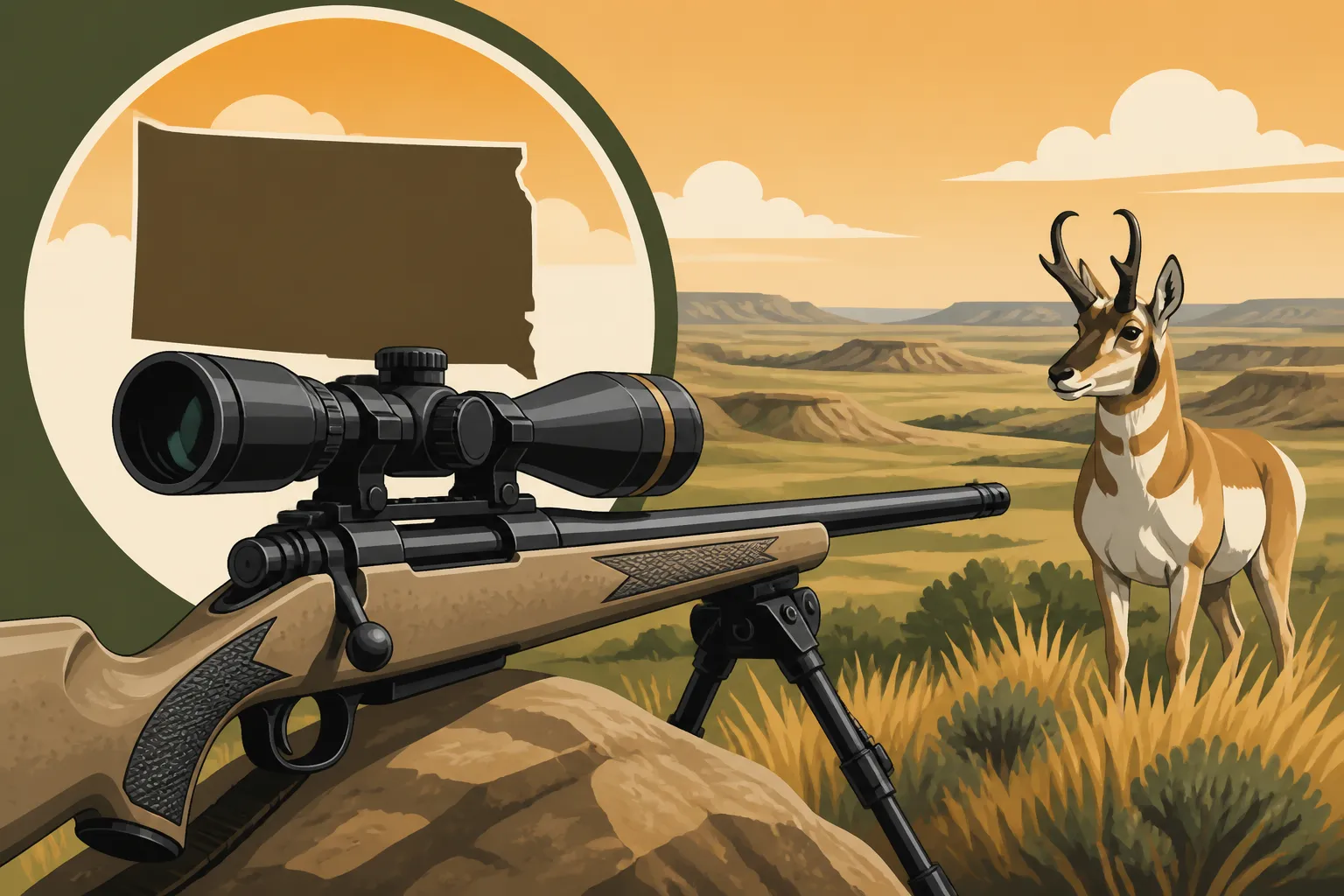
In open country, stable shooting platforms are paramount. Unlike hunting in dense timber where you might lean against a tree, the prairie offers few natural rests. This is where bipods and shooting sticks become indispensable. A good bipod, like those from Harris or Atlas, attaches directly to your rifle's sling swivel stud or an M-LOK rail. They allow for rock-solid stability when shooting prone, which is often the most stable position available in flat terrain. Many serious long-range hunters in South Dakota wouldn’t consider leaving home without one. For situations where going prone isn't possible due to tall grass, terrain, or the need for a quicker setup, shooting sticks are your best friend. From monopod, bipod, to tripod designs, they provide crucial stability for kneeling or standing shots. Brands like Bog-Pod or Primos Trigger Sticks are popular for their quick deployment and adjustability. Shooting Sticks and Bipods on the Prairie are not just convenient; they are often the difference between a clean kill and a frustrating miss when taking those longer shots in the field. Practice deploying them quickly and shooting from them to ensure seamless transitions in the field.
Rangefinding and Environmental Devices
Knowing the exact distance to your target is non-negotiable in open country. A reliable laser rangefinder is perhaps the most critical accessory after your rifle and scope. Look for one that can range out to 800-1000 yards or more, as animals might appear further than you can confidently shoot, and knowing that maximum range is helpful. Brands like Vortex, Leupold, and Sig Sauer offer excellent models. Some advanced rangefinders integrate ballistic calculators, giving you not just the distance, but also the holdover or click adjustments needed for your specific load, compensating for angle and even temperature or barometric pressure. This significantly speeds up the process of Rangefinding Across Open Ground and making an accurate shot. Additionally, a small Kestrel weather meter can be a powerful tool for serious long-range shooters. It provides real-time data on wind speed and direction, temperature, and atmospheric pressure, all of which influence bullet flight, allowing for incredibly precise adjustments when paired with your ballistic data. While perhaps overkill for casual hunters, for those pushing ethical limits, these devices are invaluable.
Carrying Comfort and Protection
Walking miles across the prairie with your rifle means comfort and protection are key. A good sling is essential for carrying your rifle comfortably and securely, keeping your hands free for binoculars or walking sticks. Padded, wide slings from brands like Butler Creek or Tenzing distribute weight better and prevent chafing. Make sure it's durable and won't slip on your shoulder. Beyond carrying, protecting your rifle from the elements and potential bumps is important. A quality rifle case, whether hard or soft, is a must for transport. For in-the-field protection, a neoprene scope cover can keep dust, dirt, and moisture off your valuable optic. When stalking, especially if you're crawling, a simple rifle sock or sleeve can prevent scratches and dings to your barrel and action. The goal is to keep your rifle ready for action, minimizing wear and tear while maximizing your comfort, allowing you to focus on the hunt. For those interested in advanced e-scouting and gear selection, platforms like GoHunt can provide a wealth of information on various accessories and their real-world applications.
Disclaimer
Always consult the current South Dakota Game, Fish and Parks regulations for the most up-to-date information on hunting seasons, licensing requirements, and legal hunting methods before planning any trip. This content is for informational purposes only and does not constitute legal or professional advice.