Hunting Near a South Dakota Reservation Line
Hunting near the borders of South Dakota's tribal reservations presents a unique set of challenges and questions for hunters. It's not always as simple as looking at a map and drawing a hard line; legal jurisdictions, land ownership, and local customs can create a confusing maze that, if not properly navigated, can lead to serious trouble. This guide will help you understand these complexities and provide actionable steps to ensure a legal and respectful hunt when you're operating close to reservation lines.
The Complexities of South Dakota Reservation Borders
The landscape of South Dakota is rich with history and culture, and part of that tapestry includes several large Native American reservations. These areas are sovereign nations within the state, meaning they have their own laws, their own governance, and often their own hunting regulations that are distinct from those of the state of South Dakota. For hunters, this creates a situation where a misstep can easily lead to a violation, even if you had no ill intent.
Understanding the Legal Framework
It’s crucial to understand that tribal lands operate under tribal law, which can differ significantly from state law. This isn't just about different bag limits or season dates; it can involve entirely different licensing systems, trespass rules, and enforcement procedures. Imagine crossing an invisible line while pursuing a pheasant or a deer, only to discover you've entered a jurisdiction where your state license means absolutely nothing. This is a very real possibility. Tribal game, fish, and parks departments manage wildlife within their boundaries, and their wardens have full authority to enforce those laws. It's not a matter of federal vs. state; it's a matter of separate sovereign governments. This distinction is often overlooked by hunters who are used to simply consulting a state hunting handbook.
Identifying Boundary Markers in the Field
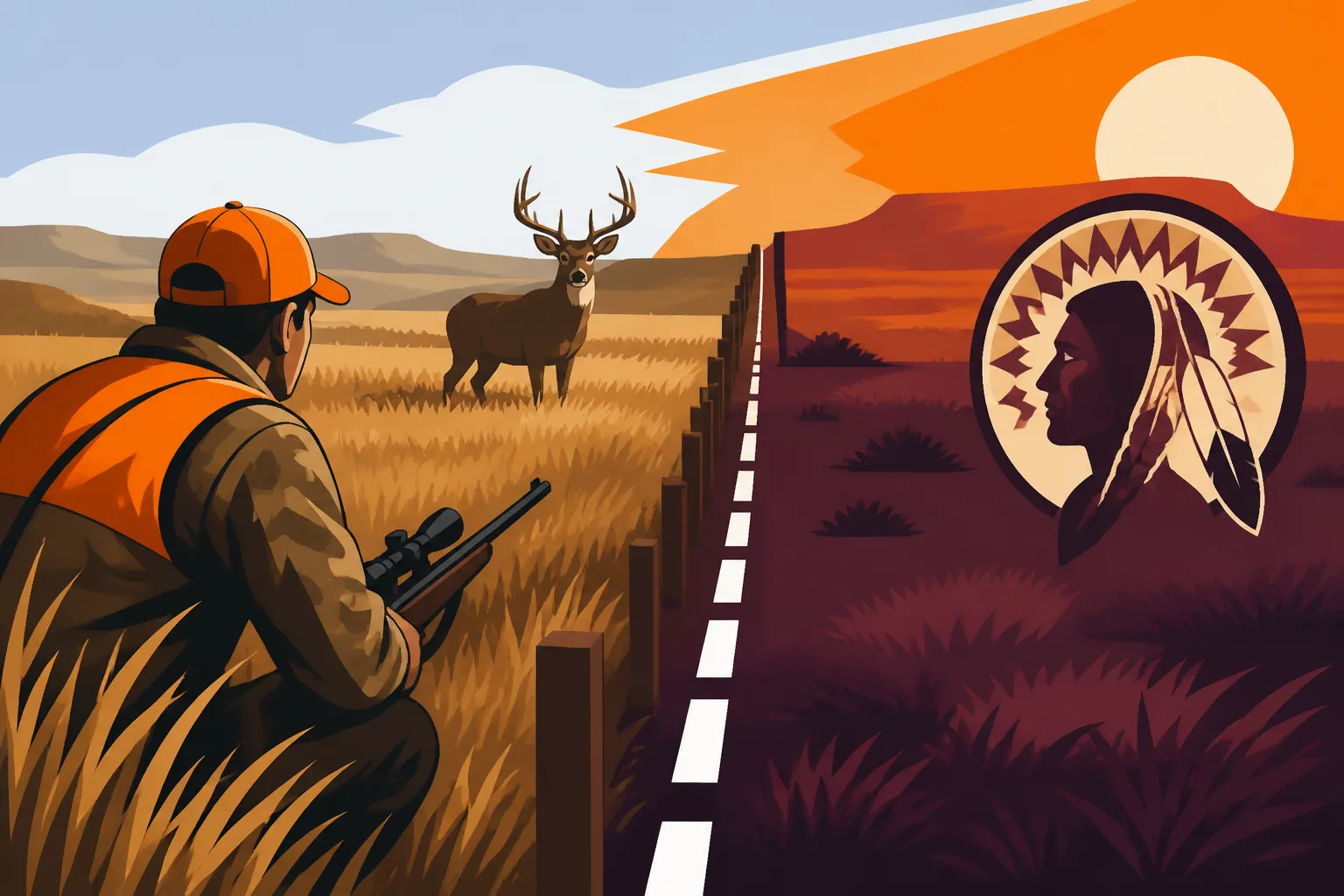
One of the biggest frustrations for hunters is the lack of clear, physical demarcation between state and tribal lands. You might expect fences or prominent signs every quarter-mile, but that's rarely the reality. Often, the transition can be subtle—a change in fence type, a different land use, or sometimes, literally nothing visible at all in vast stretches of prairie or timber. Reliance on physical signs alone is a recipe for disaster. This is where modern tools become indispensable. Mapping applications like onX Hunt are invaluable because they overlay property boundaries and ownership information directly onto a satellite map. You can see the lines, often down to the individual parcel, and critically, identify whether a specific piece of land is state, federal, private, or tribal. Without such tools, you're essentially hunting blind, hoping you don't stray. It's not just about knowing where the lines are, but understanding who owns or manages that specific piece of ground.
The Dynamic Nature of Jurisdictions
What might seem like a straightforward boundary on paper can be complicated by various factors. For instance, some state highways or county roads might run through a reservation, and the right-of-way might technically be state-controlled, while the land immediately adjacent is tribal. Similarly, there are often "checkerboard" areas where parcels of private land, tribal land, and perhaps even state or federal public land are intermingspersed. This patchwork can be incredibly confusing, especially if you're chasing a fast-moving animal. An antelope might start on public land, cross a private parcel, and disappear onto tribal ground in a matter of minutes. Knowing the rules for retrieval of game if it crosses into another jurisdiction is also vital, as those can also vary dramatically. Tribal Reservation Boundaries and Licences are not always intuitive, and it pays to do your homework.
Navigating Licensing and Regulations Across Jurisdictions
Once you understand the geographic complexities, the next hurdle is the legal one: having the correct licenses and knowing the applicable regulations. This is where most hunters get tripped up. Assuming your South Dakota state hunting license covers you everywhere within the state's geographical boundaries is a dangerous misconception.
State vs. Tribal Licenses
For hunting on tribal lands, you will almost always need a separate tribal hunting license in addition to any state licenses you hold for areas outside the reservation. These tribal licenses are issued by the respective tribal game and fish departments, and the application processes, costs, and availability can vary significantly from one reservation to another. Some tribal nations might have limited non-member tags, while others might have more readily available options. It's not uncommon for tribal license fees to be comparable to, or even higher than, state nonresident fees, reflecting the cost of wildlife management on their lands. Before you even consider setting foot on or near a reservation, contact the specific tribal game, fish, and parks department for the area you intend to hunt. Their websites or direct phone calls are the most reliable sources for current information. Remember, South Dakota has South Dakota Hunter Education and Licensing requirements that apply statewide, but tribal lands might have their own supplementary requirements or recognitions.
Overlapping Seasons and Bag Limits
Adding another layer of complexity, tribal hunting seasons and bag limits might not align with South Dakota's state seasons. You could be legally hunting pheasants on state or private land adjacent to a reservation, only for the tribal pheasant season to be closed, or have different shooting hours or bag limits. This means vigilance is key. It's not enough to check the state hunting handbook; you must also consult the specific tribal regulations for any reservation you are near.
Consider this hypothetical: you're hunting deer in a West River unit during the state rifle season. The deer moves into an adjacent reservation. If the tribal season for deer is closed, or if you don't possess a tribal license, you cannot legally pursue or harvest that animal. Even if both seasons are open, differing bag limits or antler restrictions could apply. This table illustrates how varied regulations can be, even within a single state:
| Regulation Aspect | South Dakota State Land Example | Cheyenne River Sioux Tribe Example | Oglala Sioux Tribe Example |
|---|---|---|---|
| Deer Season | Rifle: Mid-Nov to Early Dec | Varies, often longer seasons | Varies, specific units |
| Pheasant Limit | 3 roosters daily | 2 roosters daily | 4 roosters daily |
| Required License | SD State Hunting License | CRST Tribal License | OST Tribal License |
| Hunter Ed | Mandatory for under 16 | Often mandatory for all | Mandatory for under 18 |
| Access | Public land, WIA, private with permission | Tribal lands require tribal permission/license | Tribal lands require tribal permission/license |
Note: These are illustrative examples and actual regulations vary and change. Always consult official tribal and state resources.
Hunter Education Requirements
South Dakota has specific requirements for hunter education, particularly for younger hunters. However, tribal nations may have their own age cutoffs or require hunter education for all hunters, regardless of age, to hunt on their lands. Don't assume that if you're exempt from state hunter education (due to age or prior experience), you'll automatically be exempt on tribal lands. Always verify these details with the relevant tribal game and fish office. It's about being thorough and respecting their authority to manage their own resources and ensure safety within their territories. This diligence is part of being a responsible hunter.
Practical Strategies for Hunting Adjacent to Reservation Land
Given the complexities, how does a conscientious hunter actually approach hunting near these lines? It requires careful planning, good tools, and a healthy dose of respect and communication.
Pre-Hunt Scouting with Digital Tools
Before you ever leave home, your most powerful tool is digital mapping. Brands like onX Hunt offer subscription services that clearly delineate public, private, and crucially, tribal lands. Spend time reviewing the specific area you plan to hunt. Look for the boundaries. Identify any potential pinch points where state or private land might narrow and be surrounded by tribal ground. Understand the ownership of every parcel you might possibly walk onto or near. This E-Scouting Walk-In Areas Before the Season is not just for public lands; it's absolutely critical for any area near a reservation. Pin waypoints on your phone or GPS for these boundaries. Having this information literally in the palm of your hand can prevent accidental trespass and save you from a major headache. Another useful approach is to cross-reference with tools like GoHunt, which can sometimes offer broader data points on specific hunting units, though onX is generally more granular for property lines.
Communicating with Local Authorities and Landowners
If you intend to hunt state or private land right up to a reservation boundary, it's wise to contact the local South Dakota Game, Fish and Parks (GFP) conservation officer for that specific area. They often have an intimate knowledge of the local land ownership, common access points, and can offer valuable insights on potential issues. Equally important, if you're hunting private land adjacent to a reservation, make sure you have solid permission from the private landowner. They might have specific instructions or warnings about hunting close to the reservation line, perhaps due to previous issues or specific agreements they have with tribal members. Asking a South Dakota Landowner for Permission is always a good practice, and even more so in these sensitive areas. Sometimes, a friendly conversation with tribal elders or the tribal game and fish department can clear up misconceptions and foster goodwill, even if you don't intend to hunt on tribal land.
Avoiding Accidental Trespass
Accidental trespass is the biggest risk when hunting near reservation lines. Here's how to minimize it:
- Buffer Zones: Mentally (and digitally) create a buffer zone. Instead of hunting right up to the line, aim to stay 100-200 yards away from a tribal boundary unless you have explicit tribal permission and the correct tribal license. This gives you a margin for error, especially if you're tracking an animal or simply walking through thick cover.
- GPS/Phone Use: Keep your GPS device or phone with onX Hunt handy and frequently check your position. Don't rely solely on memory or "eyeballing" it. Modern smartphone batteries can drain quickly in cold weather or areas with poor signal, so carry a portable charger or a dedicated GPS unit.
- Know Retrieval Rules: Understand the rules for retrieving game. If you shoot an animal legally on state or private land and it crosses onto tribal land, you generally cannot pursue it without tribal permission and potentially a tribal license. Abandoning a legally shot animal is never ideal, but knowingly trespassing to retrieve it can lead to far worse consequences. It's a tough situation, but knowing the rules beforehand empowers you to make the right, legal decision. The South Dakota Trespass Law and Posted Land explicitly defines what constitutes trespass, and tribal laws have their own definitions.
Ethical Considerations and Respectful Hunting
Beyond the legalities, hunting near tribal reservations also involves important ethical and cultural considerations. Respect for tribal sovereignty and the people who live on these lands is paramount.
Understanding Tribal Sovereignty and Customs
Tribal nations have a deep spiritual and cultural connection to their land, water, and wildlife. Hunting, fishing, and gathering are often integral parts of their traditions and subsistence. Approaching these areas with a mindset of respect, rather than just as another boundary to navigate, is essential. Understand that these lands are not simply "public" or "private" in the conventional sense; they are homelands with inherent rights and governance. Being aware of and respecting local customs, such as sacred sites or specific community events, even if you're not on tribal land, can contribute to positive relations. The idea of Tribal Reservation Boundaries and Licences isn't just a bureaucratic hurdle; it's a recognition of self-governance.
The Importance of Communication and Local Knowledge
If you find yourself with questions or uncertainties, the best approach is always to seek out information directly from tribal authorities. A polite phone call to the tribal game and fish department can often clarify regulations or help you understand boundaries. Avoid relying on secondhand information or outdated maps. Building a reputation as a respectful, well-informed hunter who values the land and its people can go a long way. When you hunt near these areas, you are an ambassador for all hunters. This is especially true if you are a non-resident hunter; your actions reflect on the entire hunting community.
Contributing Positively to the Community
While your primary goal is hunting, consider how you can be a positive presence. Support local businesses, even if they are just outside reservation lines. If you encounter tribal members, offer a friendly greeting. Leave no trace of your presence and certainly no trash. Demonstrating responsible outdoor ethics and respect for the environment benefits everyone. If you're fortunate enough to gain permission to hunt on tribal lands with the appropriate licenses, consider that a privilege and conduct yourself accordingly. Your behavior shapes perceptions of hunters, and that's a responsibility we all share.
Navigating the complexities of hunting near South Dakota's reservation lines is a testament to being a thorough and respectful hunter. With careful planning, the right tools, and an understanding of legal and ethical boundaries, you can ensure your hunt is both successful and responsible.
Disclaimer
This article is for general informational purposes only and does not constitute professional advice. Laws, prices and regulations vary by location and change over time. Consult a qualified professional for guidance on your specific situation.