Hunting Near Custer and Hill City
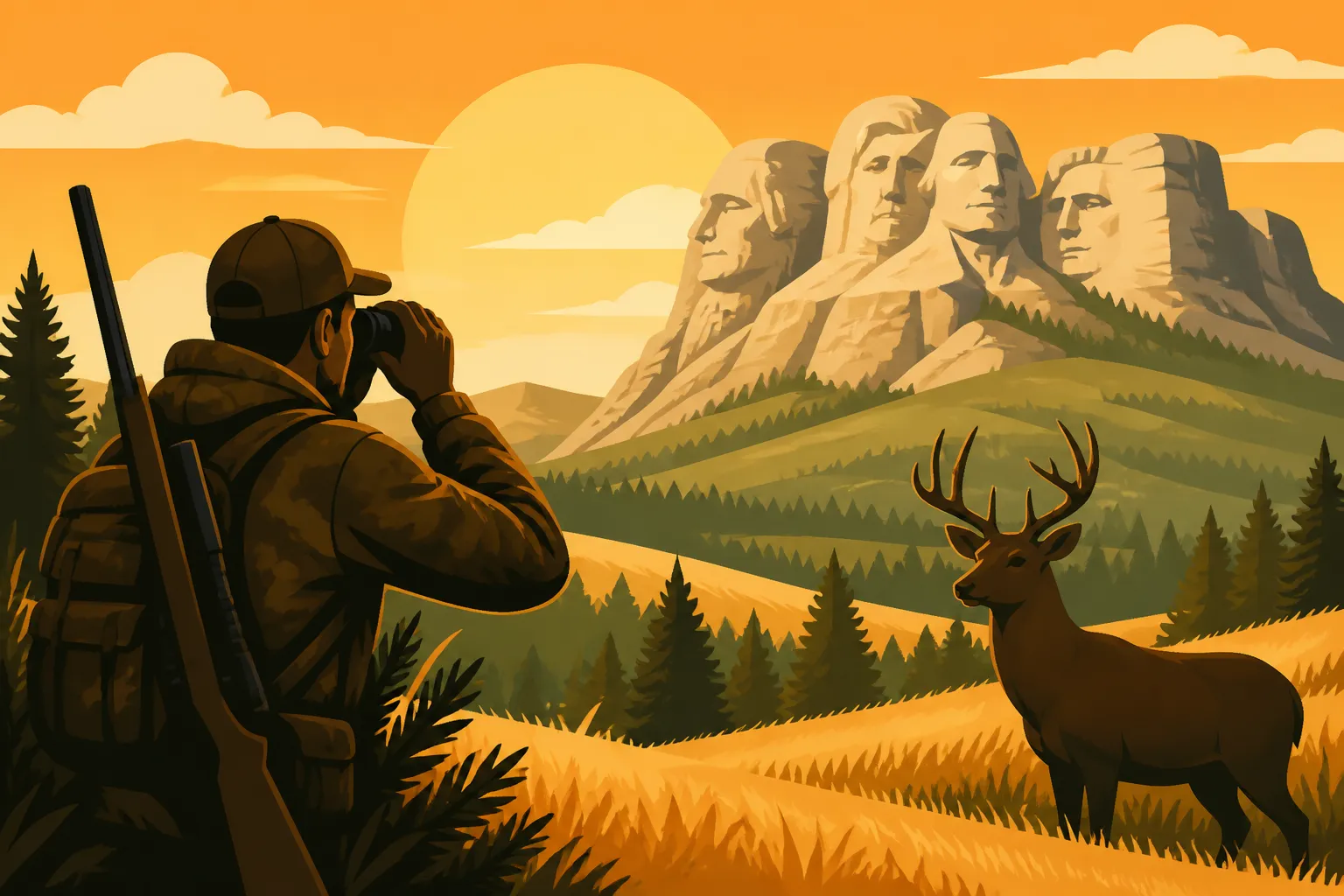
Hunting near the charming towns of Custer and Hill City in the Black Hills of South Dakota can feel like a completely different world compared to the vast open prairies. Many hunters, especially those accustomed to flatter landscapes, find themselves a bit overwhelmed by the steep terrain, dense timber, and the sheer scale of the national forest. It’s easy to get turned around, wonder where public land begins and ends, and question how to even approach hunting an area so different from what they know. This guide is here to help you unravel the unique challenges and incredible opportunities that await hunters in this rugged, picturesque corner of South Dakota, providing a clearer path to successful and enjoyable hunts amidst the pines and peaks.
Understanding the Black Hills Hunting Landscape
When you set your sights on hunting near Custer and Hill City, you're really looking at the heart of the Black Hills National Forest. This isn't your typical South Dakota pheasant country with expansive fields and cattail sloughs; it's a diverse, mountainous environment dominated by Ponderosa pine forests, steep canyons, and occasional open meadows. The elevation changes significantly, and the cover can be incredibly thick, making for a physically demanding but highly rewarding experience.
General Characteristics and Habitat
The Black Hills are often called an "island in the plains," and for good reason. Geologically and ecologically, they stand apart from the surrounding prairie. The dominant tree species is the Ponderosa pine, creating vast stretches of dark timber. However, intermixed with these forests, you'll find aspen groves, oak brush, scattered meadows, and riparian areas along creeks and drainages. These diverse habitats are crucial for supporting a wide array of wildlife, providing food, water, and thermal cover. Deer, elk, and other big game utilize these different zones throughout the year, moving between bedding areas in the dense timber and feeding grounds in more open pockets. Understanding these habitat preferences is your first step to locating game. For instance, elk often prefer the north-facing slopes with cooler, denser cover, while deer might be found browsing in oak thickets on south-facing hillsides, especially during colder months when they can catch more sun.
The terrain itself presents its own set of characteristics. You'll encounter steep ridges, deep draws, and rocky outcroppings that can be challenging to navigate, particularly when carrying gear or quartering out an animal. Unlike the prairie, visibility is often limited to relatively short distances due to the trees, making spot-and-stalk tactics less about glassing vast expanses and more about careful movement and listening. Weather can also be a significant factor; while prairie storms might bring blizzards, the Black Hills can see heavy snowfalls that make travel difficult or impossible on some forest roads. Always check conditions before heading out, especially as you consider Black Hills Forest Roads and Access.
Common Game Species in the Area
The Black Hills offers a diverse array of big game species, making it a highly sought-after destination for many hunters. The most prominent species you'll encounter are white-tailed deer and mule deer, often overlapping in their habitat. Whitetails tend to stick closer to the timbered creek bottoms and denser cover, while mule deer prefer more open, rugged slopes and rimrock country. Distinguishing between the two in the field is important for proper tag use and understanding their behavior.
Beyond deer, the Black Hills is home to a robust elk population. These majestic animals are a primary draw for many hunters, though drawing an elk tag here can be quite challenging due to demand and limited numbers. Elk in this region are often found higher up on the ridges and plateaus, frequently using the thick Ponderosa forests for cover and feeding in small clearings or along logging roads. Learning Black Hills Elk Hunting Tactics will be crucial if you're lucky enough to draw a tag. Additionally, the Black Hills harbors unique populations of bighorn sheep and mountain goats, though these are typically once-in-a-lifetime draw tags that are incredibly difficult to secure. For those looking for smaller game, the forests also hold wild turkeys, especially the Merriam's subspecies, which offer an exciting challenge in the spring and fall. Don't forget about predators either; mountain lions roam the Black Hills, and coyote hunting can be a year-round pursuit.
Navigating Public Access Around Custer and Hill City
The Black Hills National Forest forms the backbone of public hunting opportunities in this area, but it’s not the only game in town. Understanding where you can legally hunt, how to access it, and what regulations apply is paramount to a successful and stress-free trip. Many hunters feel overwhelmed by the patchwork of public and private land, especially when adjacent to Custer State Park.
Utilizing the Black Hills National Forest
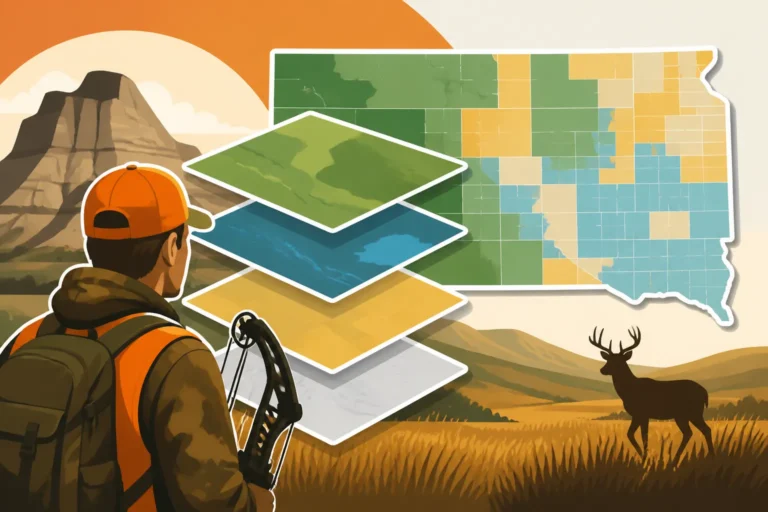
The vast majority of public hunting land around Custer and Hill City lies within the Black Hills National Forest. This federal land is generally open to hunting, trapping, and fishing in accordance with state and federal regulations. However, the sheer size of it, combined with varying terrain and access points, can be daunting. The best tool in your arsenal will be a good mapping application like onX Hunt. This brand allows you to clearly see land ownership boundaries, forest roads, trails, and topographical features right on your phone, making it indispensable for navigating the complex landscape and ensuring you stay on public ground. You can literally watch your dot move across the map, knowing precisely whether you're on National Forest land or if you're approaching a private parcel.
When planning your hunt, consider the access points. While some areas are easily reached by paved or gravel roads, others require hiking in on designated trails or even bushwhacking through dense timber. Motorized vehicle use is restricted to designated routes, so always consult a Motor Vehicle Use Map (MVUM) before venturing off-road. These maps are available from the U.S. Forest Service or through mapping apps. Remember that while the forest offers tremendous opportunity, it also demands respect for its rules. Camping is often allowed in dispersed sites, but fire restrictions are common, especially in dry periods. Always pack out what you pack in, and leave no trace. This forest is a resource for everyone, and responsible hunting helps ensure it remains open and healthy.
Identifying Other Public Lands
While the Black Hills National Forest is the dominant feature, there are other public land types to be aware of. Directly adjacent to Custer and Hill City is Custer State Park, a jewel of South Dakota's park system. It's important to understand that Custer State Park Hunting Rules are very specific and often involve special draw tags or highly controlled hunts. You cannot simply walk into Custer State Park with a general tag and expect to hunt. Its primary purpose is wildlife viewing and recreation, so hunting is highly restricted to manage specific wildlife populations like elk and bison through limited, highly competitive draw seasons. Always verify boundaries carefully; confusing Custer State Park with National Forest land can lead to significant issues.
Beyond the National Forest and Custer State Park, you might also find small parcels of School and Public Lands (SPL) managed by the state. These lands are typically marked with yellow signs and are generally open to public hunting, but always double-check the specific regulations for that parcel. These can be valuable pieces of ground, especially if they are surrounded by private land but offer walk-in access. Again, a tool like GoHunt or onX Hunt becomes invaluable here, as it layers these different land ownership types, making it easy to discern what's open to you. It takes the guesswork out of approaching a new area, letting you focus on the hunt itself rather than worrying about trespassing. Familiarizing yourself with these various land designations before you even leave home through e-scouting tools can save you a lot of time and potential headaches in the field.
Practical Hunting Considerations for the Region
Hunting in the Black Hills isn't just about finding game; it's about being prepared for the environment itself. The unique characteristics of this mountainous region demand a different approach to scouting, physical conditioning, and strategy compared to hunting on the open prairie.
Terrain and Physical Demands
Let's be real: hunting in the Black Hills is physically demanding. You're not strolling across flat fields here. You’ll be hiking up and down steep grades, often through dense timber, across rocky ground, and over fallen logs. A mile in the Black Hills feels a lot longer and more arduous than a mile on a level county road. If you're planning a trip, start a serious conditioning program well in advance. Incorporate plenty of incline walking, stair climbing, and ruck marching with a loaded pack. This physical preparation is absolutely crucial, not just for the hunt itself, but for the recovery of an animal if you are successful. Getting a deer or elk out of a steep, thick canyon is no easy feat and requires stamina and strength.
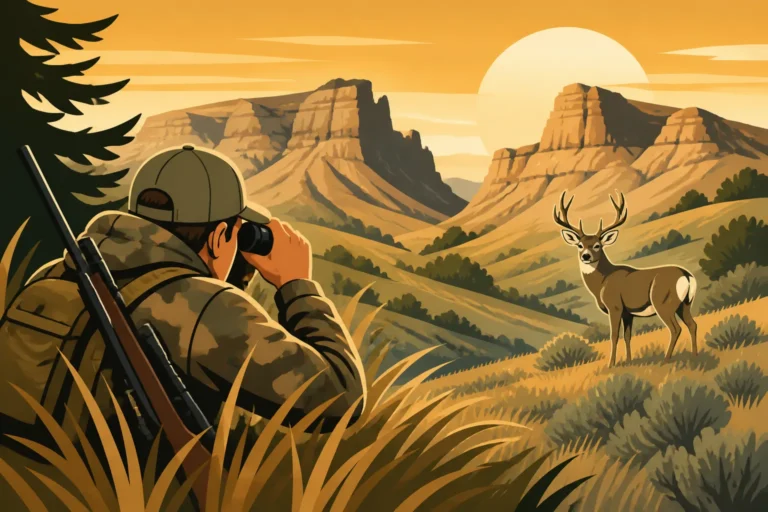
The terrain also dictates your hunting style. Long-range shooting opportunities are far less common than in West River country; shots are typically closer, often within 100-200 yards, in tighter windows through the trees. Because of the limited visibility, still-hunting and careful stalking become incredibly effective. Pay close attention to the wind, as thermals can shift dramatically in mountainous terrain throughout the day. What might be an uphill breeze in the morning could quickly become a downhill flow as the sun heats the slopes. Using binoculars or even a spotting scope is still useful, but often for picking apart small pockets of cover or confirming movement rather than surveying vast distances. Understanding how to use the terrain to your advantage for cover and concealment is key to closing the distance on game.
Dealing with Pressure and Finding Solitude
Just like any accessible hunting area, the Black Hills can see its share of hunting pressure, especially during the opening weekends of deer and elk seasons. Roads can be busy, and popular trailheads might have several vehicles. However, the sheer size and ruggedness of the National Forest also mean that solitude is readily available for those willing to work for it. Most hunters will stick close to roads or easily accessible trails. If you're willing to hike a few miles off the beaten path, especially into some of the steeper, less-traveled canyons or higher ridges, you'll dramatically increase your chances of finding undisturbed game and having a truly wild experience.
Consider hunting during weekdays if your schedule allows, as pressure often dips significantly after the first weekend. Also, think about targeting areas that require more effort to reach. These could be sections with no direct road access, requiring a long walk from a distant parking spot. Sometimes, hunting later in the season can also reduce pressure, though you'll need to be prepared for colder weather and potential snow. Using your mapping apps to identify areas with minimal roads or trails can guide you to these less-pressured zones. Don't be afraid to put in the legwork; the reward of encountering unpressured animals in a wild setting is what makes Black Hills hunting so special. You can certainly find great hunting spots, but they rarely just fall into your lap. For more ideas on finding less-pressured ground, check out Hunting Pressure Patterns on Walk-In Areas, keeping in mind that the principles of finding solitude apply broadly across different landscapes.
| Feature | Black Hills National Forest (Near Custer/Hill City) | South Dakota Prairie (General) |
|---|---|---|
| Primary Habitat | Ponderosa pine, aspen, oak, steep canyons, rocky terrain | Grasslands, crop fields, cattail sloughs, rolling hills |
| Dominant Game | Mule deer, whitetail, elk, turkey, bighorn, mountain goat | Pheasant, whitetail, mule deer, antelope, waterfowl |
| Access | Forest roads, trails; significant hiking often required | County roads, walk-in areas; often drive-up access |
| Visibility | Limited due to dense timber, broken by small clearings | Vast, open; long-range glassing common |
| Physical Demand | High (steep inclines, rugged terrain, thick brush) | Moderate (walking long distances, some uneven ground) |
| Hunting Style | Still-hunting, slow stalking, ambush from stand/blind | Driving, blocking, spot-and-stalk, decoying |
Essential Gear and Safety in the Black Hills
Hunting in the Black Hills, particularly around Custer and Hill City, means being prepared for a unique set of challenges that differ significantly from other hunting locales in South Dakota. The variable weather, dense terrain, and potential for remoteness demand specific gear and a strong emphasis on safety. Overlooking these aspects can quickly turn an enjoyable hunt into a precarious situation.
Preparing for Mountain Weather and Terrain
The weather in the Black Hills can be notoriously unpredictable. A crisp, sunny morning can quickly give way to a sudden thunderstorm in the afternoon, or even a snow squall, especially in the fall. Layering your clothing is absolutely essential. Start with a moisture-wicking base layer, add insulating layers like fleece or down, and top it off with a waterproof and windproof outer shell. Even if the forecast looks mild, always carry extra layers, including a warm hat and gloves. Nothing zaps your spirits and energy faster than being cold and wet in the backcountry. For a deeper dive into staying warm, consider Layering for South Dakota Wind, which, while focused on wind, shares principles applicable to Black Hills chill.
Your footwear is equally critical. Sturdy, waterproof hiking boots with excellent ankle support are a non-negotiable. You'll be traversing uneven, often rocky, and sometimes slippery terrain, and twisting an ankle miles from your vehicle is a serious problem. Trekking poles can also be a lifesaver, providing stability on steep ascents and descents, and helping to save your knees. Beyond clothing and footwear, a good quality pack is vital. You'll need enough space for extra layers, food, water, a first-aid kit, and enough room to carry out game if you're successful. A reliable headlamp, fire-starting supplies, a knife, and navigation tools (GPS, compass, and physical map as a backup) should always be in your pack. The Black Hills is not a place to skimp on preparedness.
Safety Protocols and Emergency Preparedness
Safety should always be your top priority. Given the remote nature of much of the Black Hills National Forest, you can't assume cell service will be available everywhere. Always carry a fully charged phone, but don't rely on it for navigation or emergencies. Consider investing in a satellite messenger device that can send emergency signals and communicate even without cell service. Before you head out, always tell someone your exact hunting plan, including where you'll be, your expected return time, and who to contact if you don't check in. This simple step can be a lifesaver. You might also want to review Leaving a Trip Plan Before a Hunt for more detailed advice.
Hunting with a partner or in a group is often safer in this terrain, as you can assist each other with navigation, game retrieval, and in case of an injury. If hunting alone, be extra vigilant and perhaps stick to areas where you are more confident in your abilities and navigation skills. Familiarize yourself with basic first aid and always carry a well-stocked First Aid Kit for a Prairie Hunt – the contents are universally helpful regardless of terrain. Be aware of wildlife, including mountain lions and bears, and know how to react in an encounter. Lastly, always practice safe firearm handling, especially when moving through dense cover with others. Clear communication within your hunting party is paramount to prevent accidents.
Scouting and Strategy for Success
Successfully hunting the Black Hills near Custer and Hill City is often less about luck and more about thorough preparation and a strategic approach. Given the challenging terrain and dense cover, knowing where to focus your efforts and how to adapt your tactics is key.
Effective Pre-Season Scouting Techniques
Pre-season scouting is paramount in the Black Hills. Since you can't cover every square mile on foot, start with extensive e-scouting from home. Utilize online satellite imagery and topographical maps, such as those found on onX Hunt or GoHunt. Look for areas with a mix of dense bedding cover (thick timber, north-facing slopes), open feeding areas (meadows, logging clearings, aspen patches), and water sources (creeks, springs). Identify natural travel corridors, saddles, and benches that animals might use to move between these areas. Pay close attention to elevation changes and potential pinch points. These digital tools allow you to virtually explore vast tracts of land, marking potential spots to check out in person. Scouting a South Dakota Unit From Home can provide excellent foundational knowledge for this step.
Once you have identified promising areas, try to make a pre-season trip or two to physically scout. Hike into those marked spots, looking for fresh sign: tracks, droppings, rubs, and beds. Confirm the cover density, assess water availability, and identify potential stand or blind locations if that's your preferred method. Pay attention to how game trails intersect different habitat types. This ground-truthing is invaluable; what looks good on a map might be impenetrable on the ground, or vice versa. Note prevalent wind directions for different times of day in potential hunting areas. If you're targeting elk, listen for bugles during early archery season or look for wallows and fresh elk sign. For deer, identify browse lines and rub activity.
Adapting Hunting Strategies to the Black Hills
Once the season opens, your strategy will need to adapt to the specific conditions of the Black Hills. Still-hunting is a highly effective tactic here. This involves moving incredibly slowly and deliberately through the woods, taking a few steps, then pausing for several minutes to glass, listen, and observe. The dense timber means you often won't see an animal until it's very close, so being stealthy and patient is crucial. Use the terrain to your advantage, moving along contours to minimize noise and stay out of sight. Pay attention to your wind direction, as animals in thick cover rely heavily on their sense of smell.
For elk hunting, especially if calling is involved, understanding how sound travels in the mountains is vital. Calling across a canyon can be effective, but elk often circle downwind, so having a partner in a strategic position can be advantageous. If you're Hunting Elk in Ponderosa Timber, focus on areas with thick stands, as elk feel secure in such cover. Ambush hunting from a ground blind or treestand near active trails or feeding areas can also be productive, particularly for deer, but requires careful setup and scent control. Remember, the Black Hills are rugged, so be prepared for a difficult pack out if you harvest an animal. Planning your extraction route beforehand can save a lot of grief. No matter your chosen strategy, persistence, patience, and physical readiness are the ultimate keys to success in this beautiful but challenging hunting ground.
Disclaimer
This article is for general informational purposes only and does not constitute professional advice. Laws, prices and regulations vary by location and change over time. Consult a qualified professional for guidance on your specific situation.