The First Year of the Walk-In Program
Finding places to hunt in South Dakota has always been a challenge for many, especially those who don't own land or have established connections with private landowners. The vastness of the prairie can be deceiving, as much of it is privately owned and often inaccessible. This guide aims to shed light on the origins of the South Dakota Walk-In Area (WIA) program, specifically diving into its critical first year, understanding the problems it sought to solve, and how those initial steps shaped the access opportunities hunters enjoy today.
What Sparked the Need for Walk-In Areas?
For generations, South Dakota has been a hunting destination, particularly renowned for its pheasants. However, as land use changed and populations grew, the availability of easily accessible hunting ground became a genuine headache for many. Hunters felt the squeeze, facing more "No Trespassing" signs and fewer opportunities to simply knock on a farmer's door for permission. This growing frustration laid the groundwork for a revolutionary idea: the Walk-In Area program.
The Growing Crisis of Access for Hunters
It's tough to deny the feeling of despair when you drive past prime habitat, only to see it locked behind fences with clear "No Hunting" signs. For resident hunters, this meant potentially fewer places to take their kids, or having to drive further and further from home. For non-residents, who often travel hundreds or even thousands of miles, the prospect of arriving in South Dakota only to find limited options was a significant deterrent. The state realized that if it wanted to maintain its hunting heritage and attract visiting hunters, something had to change. The common refrain was, "There's plenty of game, but nowhere to hunt it." This wasn't just about land ownership; it was about the increasing commercialization of hunting, with outfitters leasing large tracts, leaving public land and casual access at a premium.
This situation wasn't unique to South Dakota, but the sheer volume of prime agricultural and CRP land made the problem particularly acute. Hunters were often limited to Game Production Areas (GPAs) or federal lands, which, while valuable, couldn't meet the demand. There was a palpable tension between landowners, who had legitimate concerns about liability and property damage, and hunters desperate for a place to pursue game. Before the Walk-In program, planning a hunt meant endless hours of scouting, knocking on doors, or settling for crowded public spots.
The Vision for a Solution
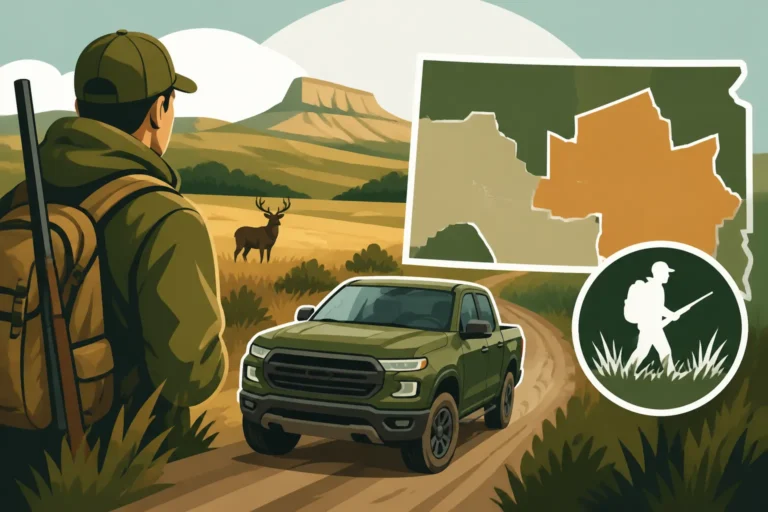
Faced with this growing access dilemma, the South Dakota Game, Fish and Parks (GFP) began exploring solutions. The vision was ambitious: to partner with private landowners to open up acres for public hunting, specifically for foot traffic only, thereby addressing both hunter access and landowner concerns. The idea was to create a program where landowners would receive a financial incentive to allow public hunting on their property, clearly delineated and managed by the state. This wasn't just about throwing money at the problem; it was about building a bridge between two often-conflicting interests. The goal was to expand hunting opportunities without infringing on landowner rights or overburdening the land with vehicle traffic.
This bold initiative recognized that South Dakota's hunting future was tied directly to its ability to provide accessible opportunities. By creating a voluntary program, it aimed to leverage the vast private land base, turning previously locked-up acres into accessible hunting grounds. It was a proactive step to ensure that the average hunter, whether a local farmer's kid or a visitor from across the country, could find a place to enjoy the state's incredible outdoor resources. The emphasis on "Walk-In" was key, promoting low-impact access and minimizing disturbance, which was often a concern for landowners. South Dakota Walk-In Areas Explained details more about how this system functions today.
The Unfolding of the Inaugural Walk-In Program Year
Implementing a program of this magnitude was no small feat. It required legislative action, landowner recruitment, clear mapping, and educating both the public and property owners. The first year was a period of trial and error, a crucial learning experience that would ultimately lay the foundation for what is now a cornerstone of South Dakota hunting.
Kicking Off the Program: Initial Acreage and Sign-Ups
When the Walk-In Area program officially launched, it was met with both hope and a healthy dose of skepticism. Would landowners truly sign up? Would hunters respect the rules? That first year saw a concerted effort by GFP staff to reach out to landowners, explain the benefits, and enroll parcels into the program. The initial acreage was modest compared to what it would eventually become, but it was a groundbreaking start. Landowners, often hesitant to open their property due to past negative experiences or liability fears, were cautiously optimistic about the state's guarantee of liability protection and the financial incentive. The initial emphasis was on lands with good habitat – grass, cattails, food plots – that directly benefited wildlife and, consequently, hunters.
Imagine the excitement when those first yellow "Walk-In Area" signs started appearing on fence posts! For hunters who had grown up watching prime ground sit idle, it was a breath of fresh air. Early maps, often physical rather than digital, started showing these new islands of public access. It was a significant shift in the landscape of hunting access, proving that a partnership between the state and private landowners could indeed open doors. Many initially enrolled smaller, less accessible tracts, perhaps testing the waters before committing larger portions of their property. How Many Acres Are in Walk-In Areas can give you an idea of the program's growth.
Early Challenges and Learnings
No new program comes without its bumps, and the first year of WIAs was no exception. One of the primary challenges was simply educating hunters about the new system. Where exactly were these areas? What were the specific rules? Some hunters, accustomed to general public land access, struggled with the "foot traffic only" rule, or understanding the exact boundaries of a WIA parcel. Imagine the confusion before ubiquitous mapping apps; hunters were relying on printed maps and often visual cues. Signage, while present, wasn't always perfectly clear or consistently maintained in every remote corner. Landowners, too, had a learning curve, sometimes dealing with hunters who pushed boundaries or didn't understand agricultural operations.
There were also practical challenges for GFP. Assessing habitat quality, negotiating contracts with diverse landowners, and ensuring timely payments were administrative hurdles. Hunters sometimes complained that specific parcels were poor quality or too small, overlooking the fact that every acre was a gain. Wildlife management also became a factor; some areas quickly saw increased pressure, which required monitoring. It became clear early on that effective communication and clear boundary marking were paramount for the program's long-term success. The early days were a foundational period, shaping the program's evolution into a more refined and hunter-friendly system.
First Impressions from the Field
Stepping onto a Walk-In Area for the first time was a unique experience for many hunters. For years, they'd driven past these fields, imagining the pheasants holding tight in the cover, or the deer moving through the draws. Now, with a yellow sign affirming permission, they could finally explore. The initial feeling was often one of discovery – a chance to hunt new ground, to stretch their legs and their dogs in territory previously off-limits. I remember hearing stories of hunters stumbling upon incredible pheasant flushes or finding a quiet corner that felt entirely their own, a stark contrast to the often-crowded Game Production Areas.
Of course, not every WIA was a hidden gem. Some were less productive than hoped, or saw heavy pressure on opening weekend. But the sheer opportunity was what truly resonated. It empowered hunters to be more adventurous in their scouting, knowing there was a growing network of access points across the state. Using tools that would later evolve into powerful mapping platforms like onX Hunt and GoHunt, hunters could start to identify these areas and plan their trips with unprecedented precision. The ability to simply pull off a gravel road, check a map, and walk into quality habitat without prior permission was revolutionary, changing the way many approached their South Dakota hunts forever. Hunting South Dakota Walk-In Areas offers current advice for maximizing these opportunities.
Initial Reception and Lasting Impact
The initial year of the Walk-In Area program was a proving ground. Its successes and shortcomings provided invaluable lessons that would guide its expansion and refinement, ultimately leading to the robust system we know today. The program didn't just open land; it changed the conversation around public access and landowner relations.
Hunter Feedback: A Mixed Bag
As with any new initiative, hunter feedback during that first year was a diverse chorus of appreciation and critique. On one hand, many were overjoyed. Finally, there was a concerted effort to increase access, and they were seeing the fruits of it in the field. Stories of successful hunts on previously inaccessible ground spread quickly, fueling optimism. Hunters appreciated the simplicity of the system – see a sign, walk in. This was a direct answer to the frustrations they'd voiced for years about dwindling options.
However, some voiced concerns. A common complaint revolved around the quality or consistency of some parcels. "I walked that WIA all day and didn't see a bird!" was a sentiment heard occasionally. Others noted that popular WIAs, especially those easily visible from roads, could become quite crowded, leading to a less-than-ideal hunting experience. This feedback, while sometimes critical, was vital. It helped GFP understand what hunters valued most and where improvements were needed, from habitat management within WIA parcels to better communication about expected hunting pressure. The program was iterative from the start, responding to the lived experiences of those it aimed to serve.
Landowner Perspectives and Program Buy-In
For the WIA program to succeed long-term, landowner buy-in was absolutely crucial. In its first year, many landowners participated cautiously, weighing the financial incentive against potential disruptions to their operations or privacy. The state's promise of liability protection was a significant factor, alleviating a major fear for many. For some, enrolling in the WIA program was a way to contribute to wildlife conservation while also generating a bit of income from lands they weren't actively farming or grazing. It was a tangible way to give back to the hunting community, which is often an important part of rural culture.
Over time, as landowners saw that most hunters respected their property and the rules, their confidence grew. The program provided a structured way for them to open their land without the hassle of individual requests or managing hunter traffic themselves. It was a win-win: hunters got access, and landowners received compensation and peace of mind. The early success stories from landowners, sharing positive experiences with their neighbors, were instrumental in encouraging others to join the program, contributing to its eventual massive scale. What South Dakota Pays Walk-In Landowners and Liability Protection for Walk-In Landowners explore these important aspects further.
Shaping the Future of Public Access
The lessons learned in that inaugural year of the Walk-In Area program were foundational. The state quickly recognized the immense value of clear, up-to-date mapping. While initially relying on paper maps, the demand for digital access was clear, paving the way for tools like the South Dakota Public Hunting Atlas, and subsequently, integrated mapping on apps like onX Hunt. This evolution made it infinitely easier for hunters to identify and navigate WIA parcels, reducing trespass incidents and improving the overall hunting experience.
The program's success also spurred continuous refinement of landowner contracts, incentive structures, and habitat management goals. It demonstrated that a large-scale, voluntary public access program could not only work but could thrive, fundamentally changing the landscape of hunting in South Dakota for the better. The WIA program became a model for other states and remains a critical component of South Dakota's outdoor heritage, providing millions of acres of accessible hunting ground year after year. It continues to grow and adapt, a testament to that ambitious first year and the ongoing commitment to hunter access. E-Scouting Walk-In Areas Before the Season and Using the South Dakota Public Hunting Atlas are excellent resources that showcase how these tools have evolved from those early, more challenging days.
Here's a look at some of the key initial goals versus the early realities of the Walk-In Area program:
| Aspect | Initial Goal | Early Reality |
|---|---|---|
| Hunter Access | Significantly increase hunting opportunities on private land. | Yes, new acres opened, but some were small or low quality. |
| Landowner Buy-In | Attract diverse landowners for broad participation. | Cautious interest, some reluctance due to past issues, liability protection was key. |
| Program Management | Efficiently manage contracts, payments, and mapping. | Administrative challenges, learning curve for staff and landowners. |
| Hunter Behavior | Hunters respect rules and land, minimizing negative impact. | Mostly positive, but some instances of rule-breaking, requiring education. |
| Habitat Quality | Focus on opening productive wildlife habitat. | Varied habitat quality, some excellent, some marginal. |
| Mapping & Info | Provide clear information on WIA locations and rules. | Initial reliance on paper maps, leading to some confusion; strong demand for digital. |
Disclaimer
This article is for general informational purposes only and does not constitute professional advice. Laws, prices and regulations vary by location and change over time. Consult a qualified professional for guidance on your specific situation.