Eastern and Hybrid Turkeys in South Dakota
When most folks picture turkey hunting in South Dakota, their minds often drift immediately to the majestic Ponderosa pine forests of the Black Hills, and rightly so—that's prime Merriam's country. But what many don't realize, or perhaps underestimate, is the distinct challenge and incredible reward of pursuing Eastern and hybrid turkeys found scattered across our diverse prairie and river bottom landscapes. This guide is here to pull back the curtain on these often-overlooked gobblers, offering a deep dive into their habitat, behaviors, and the unique tactics you'll need to fill your tag outside the mountain ranges.
Understanding South Dakota's Turkey Landscape Beyond the Black Hills
It's completely understandable why the Black Hills Merriam's dominate the conversation when it comes to South Dakota turkeys. They're iconic, visually stunning, and inhabit some truly breathtaking country. However, this focus sometimes means that the equally compelling, though different, turkey hunting opportunities elsewhere in the state get less attention. Don't let that fool you; the Eastern and hybrid populations offer their own brand of excitement, demanding a different skillset and often rewarding those who embrace the challenge of hunting more fragmented, harder-won habitat.
The Merriam's Shadow and Prairie Expectations
For many hunters, especially those traveling from out of state, the Black Hills represents the quintessential South Dakota turkey experience. You envision strutting gobblers against a backdrop of dark timber and granite outcroppings, calling readily to even modest yelps. There's a romance to it, and for good reason—it’s fantastic hunting. This strong image can lead to a bit of a mental disconnect when you start thinking about turkeys elsewhere in the state. You might wonder if there are even "real" turkeys outside the hills, or if they're just sparse, uncallable birds.
The reality on the prairie and along our river corridors is a different beast entirely. Here, the turkeys are often living in tighter pockets of cover, more attuned to the sounds of wind through cottonwoods than pines, and sometimes significantly warier due to denser human populations or different hunting pressures. If you come expecting the same open-country calling tactics that work on a Merriam's, you might find yourself frustrated. It’s a learning curve, for sure, but one that makes success feel all the more earned.
The Genetic Mix: Defining Easterns and Hybrids
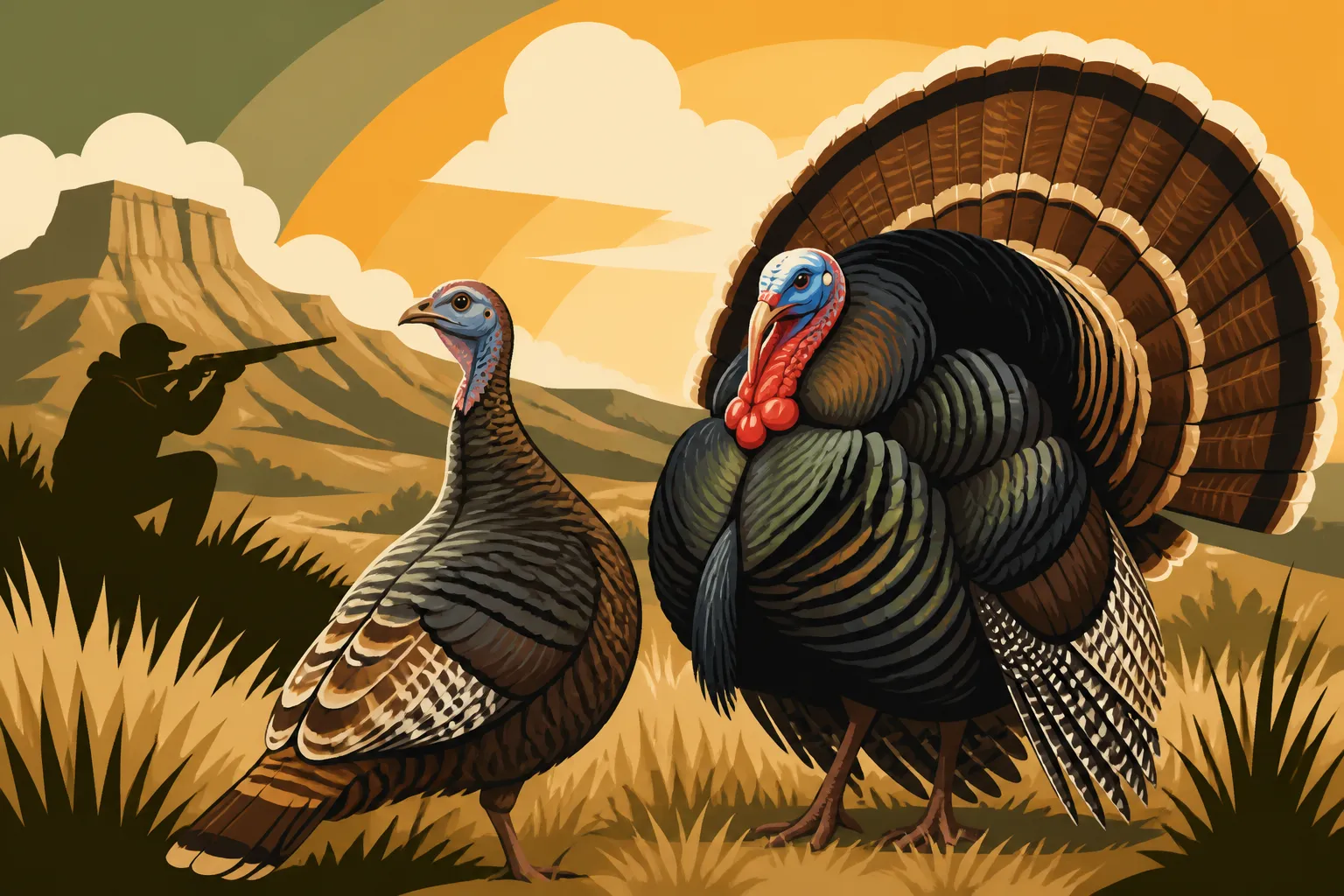
When we talk about turkeys in South Dakota outside the Black Hills, we're primarily referring to Easterns and various hybrid combinations. True Eastern turkeys (Meleagris gallopavo silvestris) are distinct from Merriam's (Meleagris gallopavo merriami) both genetically and in appearance. Easterns typically have dark, rich brown or even blackish body plumage with chestnut-brown tail feather tips and coverts. Their overall appearance is much darker than the buff-tipped Merriam's.
However, it's rare to find truly "pure" Easterns across much of South Dakota due to historical reintroductions and the natural expansion of different subspecies. What's more common, and often what makes these birds so fascinating, are the hybrids. These are turkeys that exhibit a genetic blend of Easterns and Merriam's, and sometimes even Rio Grandes. This interbreeding can result in birds with varying plumage, showing characteristics of both subspecies. You might see a bird with a darker body reminiscent of an Eastern, but with lighter tail feather tips, or perhaps a stronger iridescent sheen that hints at its mixed lineage. These hybrid zones are often where different subspecies ranges overlap, or where past stocking efforts used birds from various genetic backgrounds, leading to a unique, patchwork population that keeps you guessing when a gobbler steps into view.
Where Eastern and Hybrid Turkeys Roam in South Dakota
Unlike the vast, continuous forests of the Black Hills, the habitat for Eastern and hybrid turkeys across the rest of South Dakota is more fragmented and linear. These birds are masters of utilizing dense cover within an otherwise open landscape, making specific geographical features critical to their survival and your hunting success.
River Bottoms and Timbered Corridors
If you're looking for prime Eastern and hybrid turkey habitat, your eyes should immediately turn to South Dakota's river systems. The Missouri River and its vast timbered bottoms, along with significant tributaries like the James River, Big Sioux, and Vermillion, create vital corridors of life across the prairie. These areas provide everything a wild turkey needs: mature cottonwoods and other deciduous trees for roosting, dense undergrowth for thermal cover and nesting, and a consistent water source.
The interface between these timbered river bottoms and adjacent agricultural fields is especially crucial. Turkeys will often roost in the big trees along the river, then filter out into corn, soybean, or wheat fields to feed throughout the day. This provides ample forage and makes scouting these edges incredibly productive. Hunters targeting these areas will find themselves navigating dense stands of timber, fighting through thick brush, and often covering significant ground to intercept birds moving between roosts and feeding areas. Understanding these linear habitats can be a major advantage, allowing you to predict travel patterns more effectively. It's not unlike pursuing deer in these areas; in fact, much of the strategy for South Dakota Whitetail Hunting in River Bottoms overlaps with turkey hunting in the same spots.
Pockets of Prairie and Farm Country
Beyond the major river systems, Eastern and hybrid turkeys have managed to carve out a living in surprising pockets within the broader prairie and agricultural landscape. These birds are incredibly resilient and will utilize almost any substantial block of timber or heavy brush for survival. Think of the smaller, isolated woodlots surrounding farmsteads, the dense riparian zones along smaller creeks and drainages, or even large, mature shelterbelts planted decades ago for windbreaks.
These scattered patches of cover provide essential roosting sites and escape cover in an otherwise open world. While the birds might be more dispersed, they are often still present in huntable numbers. Finding these smaller, overlooked areas requires keen observation and often some good old-fashioned "boots on the ground" scouting, or using modern mapping tools. The challenge here is not just finding the birds, but also securing access, as many of these prime spots are on private land. However, these hidden gems can offer fantastic hunting opportunities for those willing to put in the effort. Just like Working South Dakota Shelterbelts for Roosters, understanding how birds use these linear features is key.
Hunting Strategies for Eastern and Hybrid Turkeys
Hunting these prairie and river bottom turkeys demands a different approach than what might work in the Black Hills. Their environment and likely genetic makeup lead to behaviors that require more nuanced calling, stealthier tactics, and a good dose of persistence.
Calling Techniques for Diverse Gobblers
Merriam's turkeys, particularly in less pressured areas, can be incredibly vocal and often respond aggressively to bold calling and visual decoys. They frequently come running across open ground to investigate. Eastern and hybrid turkeys, especially those that have been exposed to more hunting pressure in agricultural or fragmented habitats, can be much warier. They may gobble enthusiastically on the roost but then "hang up" at a distance, preferring to let the hen come to them.
This means versatility in your calling is paramount. While shock gobbling on the roost might help you locate birds, softer, more realistic calling once they're on the ground is often more effective. Mixing up yelps, clucks, purrs, and even subtle fly-down cackles can mimic a natural flock. Don't be afraid to go silent for extended periods; sometimes, the best call is no call at all, letting the anticipation build and urging a bird to commit to the last few yards. For scouting these types of areas, digital tools like GoHunt can be invaluable for identifying subtle terrain changes or cover pockets where birds might be holding, helping you decide where to set up your calls for maximum effect. Knowing when to be aggressive and when to be subtle often comes down to reading the bird's mood and the immediate surroundings.
Stealth, Scouting, and Access Challenges
Success with Eastern and hybrid turkeys often hinges on your ability to scout thoroughly, secure access, and execute a stealthy approach. Unlike vast national forest lands, much of the prime river bottom and shelterbelt habitat is privately owned. This means you'll likely need to spend time "door knocking" and building relationships with landowners to gain permission. It's a skill unto itself, but the rewards are often worth the effort.
For public land options, seek out Game Production Areas (GPAs) or Public Hunting Walk-In Areas (WIAs) that contain suitable timber or dense riparian zones. These can be goldmines, but often see more pressure, so getting in before daylight is critical. E-scouting tools, including those available through GoHunt, become incredibly powerful here, allowing you to analyze aerial imagery for those crucial strips of timber or secluded draws that hold turkeys. You can identify potential access points, property lines, and likely roosting spots from your computer, which saves valuable time and legwork on the ground. However, even with great e-scouting, nothing beats spending time listening for gobblers before the season to confirm their presence and patterns. E-Scouting Walk-In Areas Before the Season is a great way to use these tools.
When you're approaching your setup, move slowly and quietly. These birds have sharp eyes and ears, and the rustle of leaves or a snapped twig can send a wary gobbler heading the other way. Use the terrain to your advantage: draws, creek beds, and changes in elevation can help you get closer undetected. Knowing the South Dakota Turkey Season Dates and their varying shooting hours can also impact your morning strategy.
Here's a quick comparison of some key characteristics:
| Characteristic | Black Hills Merriam's | Prairie/River Bottom Eastern/Hybrid |
|---|---|---|
| Primary Habitat | Ponderosa pine forests, open hillsides | Deciduous river bottoms, shelterbelts, isolated woodlots, ag fields |
| Plumage | Lighter, buff-tipped tail feathers, iridescent copper/purple body | Darker body, chestnut/brownish tail tips, more green/bronze iridescence |
| Gobbling Behavior | Often aggressive and responsive to bold calling, may come to open areas | Can be wary, may hang up, often requires more subtle calling, often stick to cover |
| Hunting Pressure | Can be moderate to high in accessible areas | Varies greatly by location, often tied to private land access |
| Terrain | Mountainous, steep, dense timber | Flat to rolling prairie, dense riparian zones, agricultural interfaces |
| Typical Challenge | Navigating steep terrain, long-range calling | Gaining access, close-quarters stealth, wary birds, fragmented habitat |
Gear and Considerations for River Bottom and Prairie Turkeys
Successfully hunting these elusive Eastern and hybrid gobblers means having your gear dialed in for the specific conditions you'll encounter. From your choice of shotgun to your camouflage pattern, every detail plays a role in your effectiveness and comfort.
Shotguns, Chokes, and Ammunition Choices
When you're dealing with turkeys that can be exceptionally wary or might hang up at the edge of shotgun range, having a reliable and well-patterned firearm is critical. While a 12-gauge is a popular choice for its payload, a 20-gauge can also be highly effective, especially with modern ammunition. The key isn't just the gauge, but the combination of your choke and ammunition. A tight, extra-full choke is almost always preferred for turkey hunting to ensure a dense pattern of pellets at longer ranges. Pattern your shotgun with your chosen ammunition before the season; knowing exactly how your gun performs at various distances (20, 30, 40 yards) is non-negotiable.
Modern heavy shot loads, whether tungsten, bismuth, or specialized lead formulations, offer incredible performance, allowing for lethal shots even at extended ethical ranges. Shot sizes like 4, 5, or even 6, when properly patterned and delivered, will anchor a gobbler. Remember, the goal is to put as many pellets into the head and neck region as possible for a quick, humane kill. Don't overlook the importance of a good sling for carrying your shotgun through thick cover and across fields. Also, for general considerations about firearms in open country, some insights from Rifle Setup for South Dakota Open Country can translate to understanding weapon performance in wide-open spaces, even if the weapon itself is different.
Camouflage, Mobility, and Weather Preparedness
The diverse habitat of Eastern and hybrid turkeys—from dark river bottoms to open fields—demands versatile camouflage. Patterns that mimic deciduous timber and brown/green prairie grasses will serve you well. Avoid patterns that are too specific to dark evergreens if you'll primarily be in cottonwoods and brush. A good face mask or face paint and gloves are also essential for breaking up your human outline.
Mobility is key. You'll likely be doing a lot of walking, sometimes through thick brush, sometimes across muddy fields, and occasionally needing to quickly relocate to cut off a bird. Lightweight, durable clothing that allows for a full range of motion is important. Waterproof boots are a must-have for crossing damp ground, small creeks, or dealing with morning dew. Remember that South Dakota spring weather can be highly unpredictable; a warm, sunny morning can quickly turn into a cool, windy, or even rainy afternoon. Layering is crucial. Start with a moisture-wicking base layer, add insulating layers, and top it with a waterproof and windproof outer shell. This adaptability will keep you comfortable and focused, ready for whatever the prairie throws at you. For general advice on staying comfortable in changing conditions, consider the tips in Layering for South Dakota Wind. A small backpack with water, snacks, a rangefinder, binoculars, and a comfortable seat cushion will make long waits or quick moves much more manageable. Understanding Where South Dakota Turkeys Roost can also inform your morning setup and camouflage choices as you blend into the pre-dawn landscape.
Disclaimer
This article is for general informational purposes only and does not constitute professional advice. Laws, prices and regulations vary by location and change over time. Consult a qualified professional for guidance on your specific situation.